













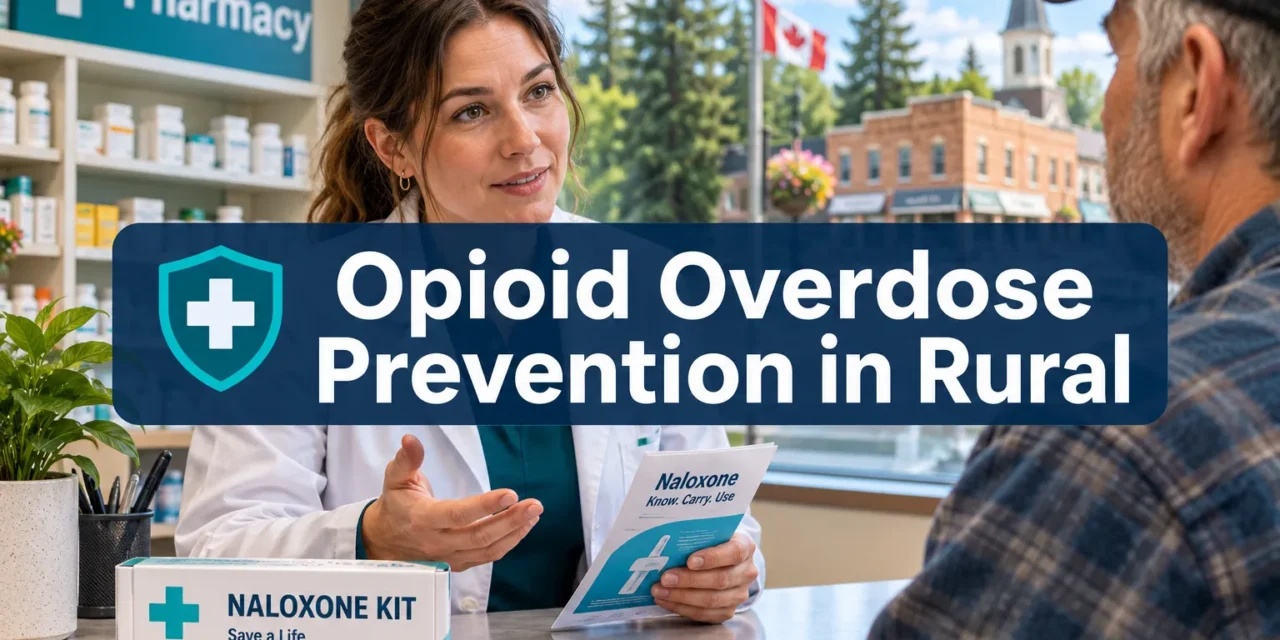
💊 Opioid Overdose Prevention in Rural Ontario: Naloxone, Fentanyl Risks, and Where Families Can Get Help
Last updated: October 31, 2026
Quick Answer
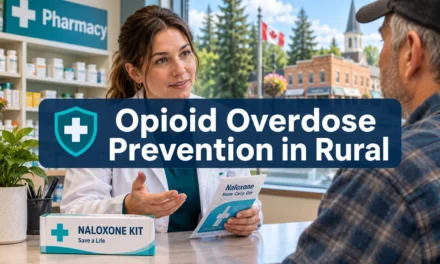
Opioid overdose prevention in rural Ontario centers on three things: carrying naloxone, recognizing fentanyl poisoning fast, and knowing where to get free kits and treatment support before a crisis hits. Naloxone is free across Ontario through pharmacies and public health units, no prescription or health card required, and it can reverse most opioid overdoses, including those involving fentanyl, when given quickly and followed by a call to 911.
Key Takeaways
- Naloxone is free in Ontario through pharmacies, public health units, and community programs, with no health card needed.[1][2]
- Fentanyl is far stronger than morphine or heroin and is often mixed into other drugs without the user’s knowledge, raising overdose risk sharply.[3]
- Thunder Bay saw a 20% rise in suspected opioid poisoning 911 calls in early 2026, and Windsor-Essex logged 30 overdose-related ER visits in one week in late September 2026, showing rural and mid-size communities remain at risk.[4]
- Naloxone can be given to anyone suspected of an opioid overdose, even if uncertain, because it does no harm to someone who isn’t overdosing.
- Survivors of an overdose face continued risk: Ontario data shows 2% had a repeat overdose within seven days of hospital discharge, and 6% within 30 days.[5]
- Rural public health units, including Thunder Bay District, Southeast Health Unit, and others, stock naloxone at pharmacies and branch offices across small towns.[2][4]
- Naloxone wears off faster than many opioids, so a second dose and continued monitoring are often necessary.
What Is Naloxone and How Does It Work to Reverse an Overdose
Naloxone is a medication that blocks opioid receptors in the brain, reversing the breathing suppression that causes death during an opioid overdose. It does not reverse overdoses caused by other drugs like cocaine or benzodiazepines, and it has no effect on someone who has not taken opioids.
Naloxone works by competing with opioids, including fentanyl, heroin, and prescription painkillers, for the same receptor sites in the brain. Once it attaches, it pushes the opioid molecules off those receptors, restoring normal breathing within two to five minutes. It comes in two forms available free in Ontario:
- Nasal spray (Narcan): pre-filled, no needle, easiest for most family members to use.
- Injectable naloxone: drawn from a vial with a syringe, used more often in clinical or harm-reduction settings.
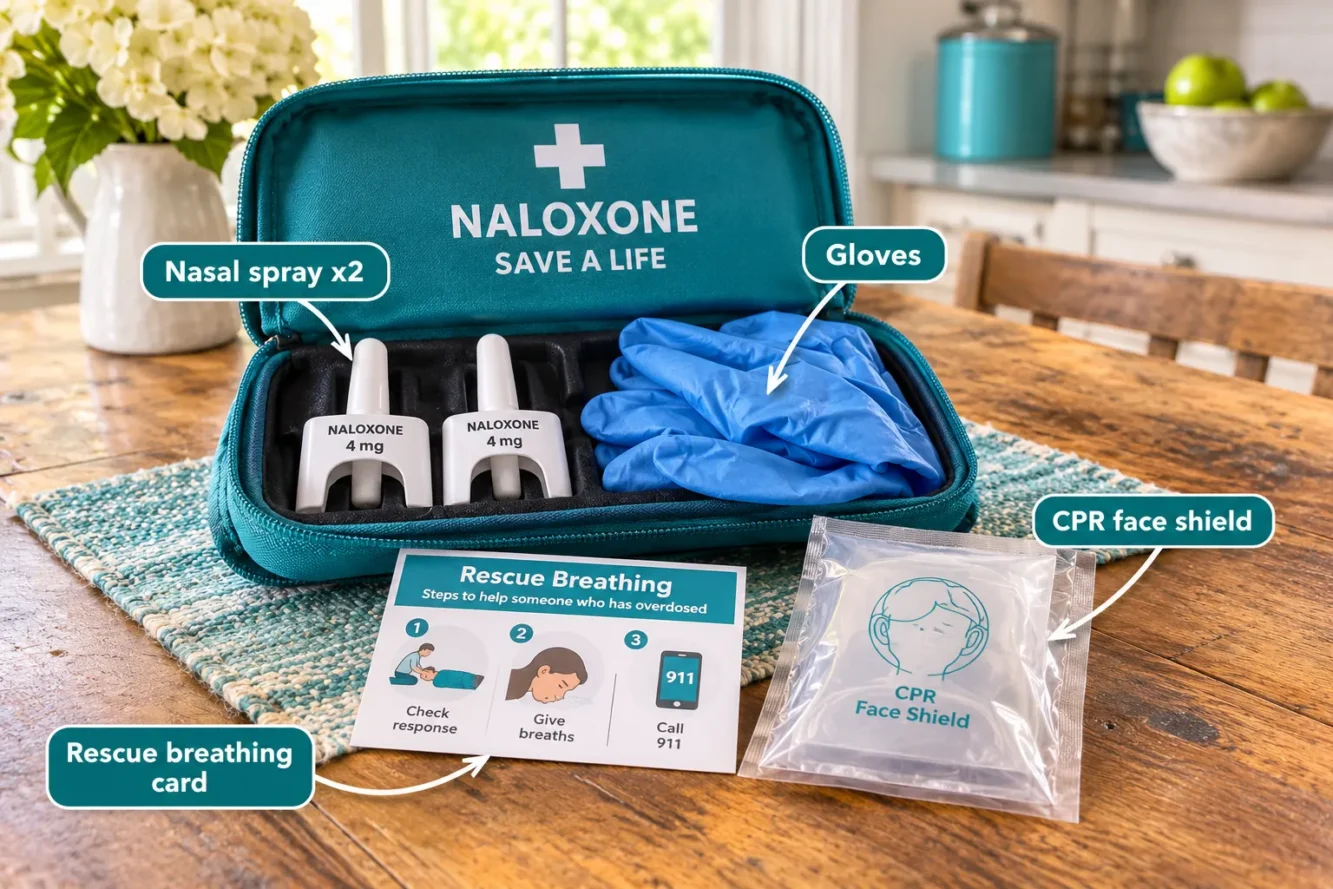
Choose the nasal spray kit if you are a parent, caregiver, or bystander with no medical training. It requires no injection and is simpler to use correctly under stress.
Why Is Fentanyl So Dangerous and How Is It Different From Other Opioids
Fentanyl is dangerous because it is many times more potent than morphine or heroin, meaning a tiny, invisible amount can cause a fatal overdose. Unlike prescription opioids, fentanyl found in the unregulated drug supply is unpredictable in strength and is frequently mixed into other substances without the buyer’s knowledge.
Toronto’s Drug Checking Service, analyzing 200 fentanyl samples collected between February 1 and March 19, 2026, found that unregulated fentanyl is often combined with other high-risk substances, which increases overdose risk and can require higher-than-usual naloxone doses to reverse an overdose.[3] National data shows 70% of apparent opioid toxicity deaths in early 2026 involved fentanyl analogues, confirming it remains the leading driver of overdose deaths across Canada, including Ontario.[6]
Common mistake: assuming a pill or powder is “safe” because it came from a trusted source. Fentanyl contamination can occur in pills pressed to look like prescription medication, and visual inspection cannot detect it.
Where Can You Get Naloxone in Rural Ontario for Free or Low Cost
Naloxone is available at no cost across rural Ontario through pharmacies, public health units, and community health centres, with no health card or prescription required. The Ontario Take-Home Naloxone Program distributes kits through hospitals, shelters, Aboriginal Health Access Centres, and outreach programs as well.[1]
Pickup locations include:
- Community pharmacies enrolled in the Ontario Naloxone Program for Pharmacies, including small-town locations such as Belleville, Cloyne, Bancroft, Napanee, Quinte West (Trenton), and Smiths Falls.[2]
- Public health units, such as the Thunder Bay District Health Unit’s Superior Points Harm Reduction Program, which serves communities including Manitouwadge through branch offices.[4]
- Hospital emergency departments and inpatient units.[1]
- Aboriginal Health Access Centres and community health centres.[1]
If the nearest pharmacy is far away, call the local public health unit first; many mail kits or arrange delivery through outreach workers in remote townships.
How Do You Use Naloxone Nasal Spray Step by Step
Using naloxone nasal spray involves checking for response, calling 911, spraying the dose into one nostril, and starting rescue breathing or CPR while waiting for help. The steps below apply to the free Narcan-style kits distributed across Ontario.
- Check responsiveness by shouting the person’s name and rubbing their chest firmly.
- Call 911 immediately and say “suspected opioid overdose.”
- Lay the person on their back, tilt the head slightly, and insert the nasal spray nozzle into one nostril.
- Press the plunger firmly to release the full dose.
- Begin rescue breathing or CPR if the person is not breathing normally.
- Wait two to five minutes; if there is no response, give a second dose in the other nostril.
- Stay with the person until paramedics arrive, even if they wake up.
Edge case: if the person vomits, turn them onto their side immediately to prevent choking, then continue monitoring breathing.
What Are the Signs Someone Is Having an Opioid Overdose
Signs of opioid overdose include slow or stopped breathing, blue or grey lips and fingertips, pinpoint pupils, and unresponsiveness to voice or touch. Snoring or gurgling sounds can indicate a partially blocked airway and should be treated as a medical emergency.
Watch for this combination:
- Breathing fewer than 10 times per minute, or not breathing at all
- Limp body and unresponsive to shaking or shouting
- Blue-tinged lips, nails, or skin
- Choking, gurgling, or snoring sounds
- Very small, pinpoint pupils
Example: a person who is slumped over, breathing slowly, and does not wake up when their name is called and their sternum is rubbed firmly should be treated as an overdose until proven otherwise.
Does Naloxone Actually Work on Fentanyl Overdoses
Yes, naloxone reverses fentanyl overdoses, but because fentanyl is so potent, more than one dose is often needed. Emergency responders and harm-reduction programs confirm that higher or repeated doses may be necessary when fentanyl or fentanyl analogues are involved.[3]
This is why every free naloxone kit in Ontario contains at least two doses, and why calling 911 remains essential even after naloxone is given: paramedics can provide additional doses and monitor for the opioid outlasting the naloxone’s effect.
What Should You Do After Giving Someone Naloxone
After giving naloxone, keep the person on their side, monitor their breathing, and stay with them until paramedics arrive, because naloxone wears off before many opioids do. A person who wakes up can fall back into overdose once the medication fades.
- Do not leave the person alone, even if they seem fully recovered.
- Watch for breathing to slow again within 30 to 90 minutes.
- Give a second naloxone dose if symptoms return and paramedics have not arrived.
- Tell paramedics exactly what was given and when.
Ontario research tracking 28,488 overdose survivors found that 2% had another overdose within seven days of hospital discharge and 6% within 30 days, underscoring why follow-up care and continued naloxone access matter after the immediate event.[5]
Can You Give Naloxone to Someone if You’re Not Sure They’re Overdosing
Yes, naloxone should be given whenever an opioid overdose is suspected, even without certainty, because it causes no harm if opioids are not involved. The medication only acts on opioid receptors, so giving it to someone who overdosed on another substance will not make things worse.
Decision rule: if someone is unresponsive, breathing abnormally, and there is any chance opioids are involved (prescription pills, injection drug use, unknown substances), give naloxone and call 911 without waiting for confirmation.
What Opioid Support and Treatment Services Exist in Remote Ontario Communities
Remote Ontario communities can access opioid treatment and harm-reduction services through public health units, Community Health Centres, Aboriginal Health Access Centres, and provincial virtual care lines, even where in-person addiction clinics are scarce. Public health units coordinate outreach workers who can connect families to opioid agonist treatment, counselling, and naloxone training.
- Thunder Bay District Health Unit’s Superior Points program supports surrounding townships, including Manitouwadge.[4]
- Southeast Health Unit lists multiple small-town naloxone and support access points.[2]
- Provincial funding announced in August 2026 expanded naloxone supply and distribution through emergency departments province-wide, including rural hospitals.[7]
Choose a Community Health Centre first if you need both addiction treatment referrals and naloxone training in one visit, since many combine both services under one roof.
Can Family Members Carry Naloxone Without a Prescription
Yes, family members and friends of someone at risk can carry naloxone without a prescription or health card under the Ontario Take-Home Naloxone Program. Kits are distributed directly to people at risk and to their support network, not only to the person using opioids.[1]
This matters for rural households where the nearest hospital or harm-reduction site may be 30 to 60 minutes away. Having a kit at home, in a vehicle, or at a workplace shortens the time between an overdose and the first dose of naloxone.
What Happens if You Give Naloxone and It Doesn’t Work
If naloxone does not produce a response within two to five minutes, give a second dose, continue rescue breathing, and wait for paramedics, since some overdoses, particularly those involving potent fentanyl analogues, need more than one dose. A lack of response after two doses does not mean naloxone has failed; it may mean the dose needs to be repeated again or that another medical issue is occurring alongside the overdose.
Common mistake: stopping after one dose and assuming naloxone “didn’t work.” Continue dosing and rescue breathing until paramedics take over.
How Many Times Can You Use Naloxone on One Person
Naloxone can be given multiple times to the same person during one overdose event, typically every two to five minutes until breathing improves or paramedics arrive. There is no strict upper limit in an emergency; the priority is restoring breathing and keeping the person stable.
Most take-home kits contain two doses, which is why calling 911 immediately is critical: paramedics carry additional supply for situations where more doses are required, particularly with high-potency fentanyl.
Common Mistakes People Make When Administering Naloxone
The most common mistakes are delaying the call to 911, giving only one dose when two are needed, and leaving the person alone once they wake up. Each of these can turn a reversible overdose into a fatal one.
- Waiting to see if the person “comes around” before calling for help
- Forgetting to turn the person on their side to prevent choking
- Assuming recovery is permanent and leaving before paramedics arrive
- Not telling paramedics what substances or doses were involved
How to Talk to Family Members About Overdose Risk and Prevention
Talking to family about overdose risk works best when it is framed as practical safety planning, not blame, focusing on recognizing symptoms and knowing where naloxone is kept at home. Rural families often benefit from having this conversation before a crisis, since response time from emergency services can be longer outside urban centers.
Practical approach:
- Keep a naloxone kit somewhere visible, like a kitchen drawer or vehicle glovebox, and tell every household member where it is.
- Explain the basic signs of overdose in plain language, using the breathing and skin-color cues above.
- Agree in advance that anyone can call 911 without fear of legal trouble; Canada’s Good Samaritan Drug Overdose Act protects callers and the person who overdosed from simple drug possession charges.
- Revisit the plan if a family member’s opioid use changes, including after a hospital discharge, when repeat-overdose risk is highest.[5]
Conclusion
Opioid overdose prevention in rural Ontario comes down to preparation: a naloxone kit in the house, a clear plan for recognizing an overdose, and a known path to local public health or pharmacy resources. Fentanyl’s unpredictable strength means any family touched by opioid use should treat naloxone access as a basic safety tool, not an afterthought. Start by picking up a free kit from a local pharmacy or public health unit, review the nasal spray steps with every adult in the household, and save the nearest Community Health Centre’s number for follow-up support after any overdose event.
References
- Ontario Take Home Naloxone Programs. ontario.ca.
- Naloxone. southeastph.ca.
- Torontos Drug Checking Service Report Feb7 20 2026. drugchecking.community.
- 9.7263119. cbc.ca.
- Opioid Overdose Survivors Face Higher Risk of Death Than Previously Thought Study Finds. ices.on.ca.
- Opioids Stimulants. health-infobase.canada.ca.
- Ontario Providing Support to Those Affected by Opioid Crisis. news.ontario.ca.
Meta Title: Opioid Overdose Prevention in Rural Ontario: Naloxone Guide
Meta Description: Learn naloxone use, fentanyl risks, and where rural Ontario families can get free help, training, and support for opioid overdose prevention.
Tags: opioid overdose prevention, naloxone training, fentanyl risks, rural Ontario health, take-home naloxone program, overdose response, harm reduction Ontario, opioid treatment services, public health units Ontario, naloxone nasal spray, Thunder Bay health, family overdose safety