





















Last updated: May 7, 2026
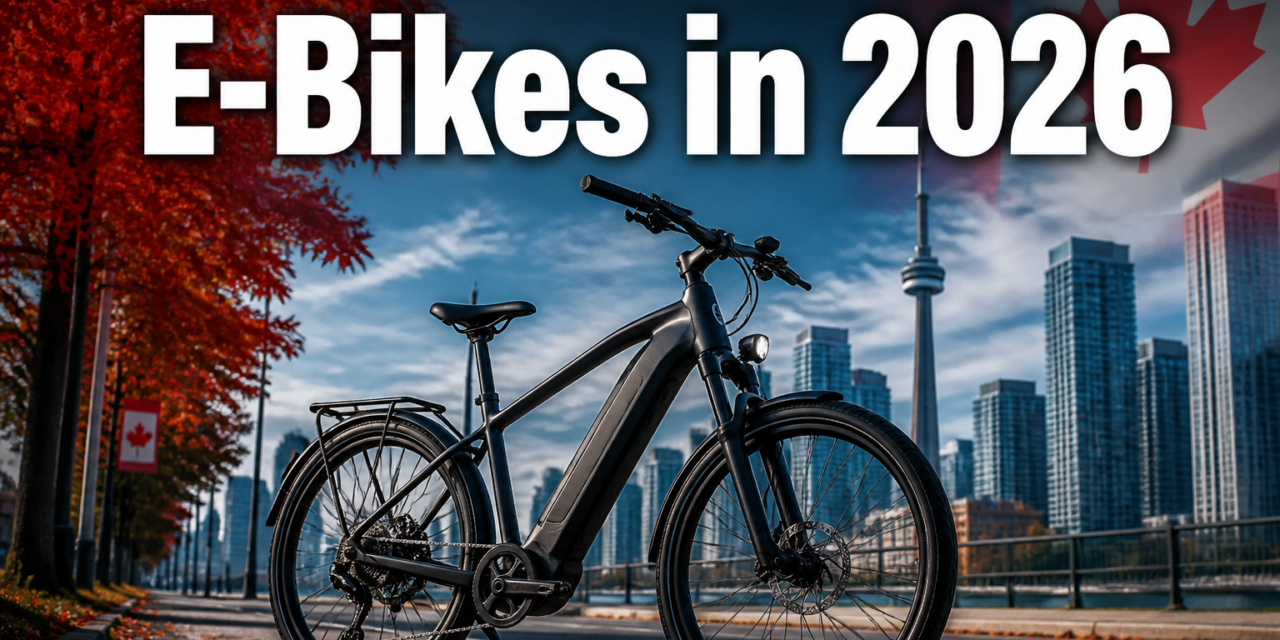
Quick Answer: The Canadian e-bike market in 2026 is bigger, more regulated, and more affordable than ever. New models from global and domestic brands are hitting shelves, several provinces have updated their e-bike classification rules, and battery technology has pushed average ranges well past 100 km per charge. Whether you’re commuting in Toronto or trail riding in British Columbia, there’s more to choose from — and more rules to know.
Canada’s e-bike market has grown steadily since 2020, and 2026 marks a turning point. Sales volume is estimated to have doubled compared to 2022 levels, driven by fuel costs, urban congestion, and expanded government rebate programs (estimate based on industry analyst projections from the Electric Mobility Canada 2025 annual report).
Three forces are shaping the market right now: better hardware, clearer rules, and shifting consumer expectations. Canadians aren’t just buying e-bikes for recreation anymore — they’re replacing car trips.
For more on bikes and cycling culture in Canada, the trend is clear: two wheels are becoming a serious transportation choice.
Several brands launched or expanded their Canadian lineups this year. Here are the standout categories:
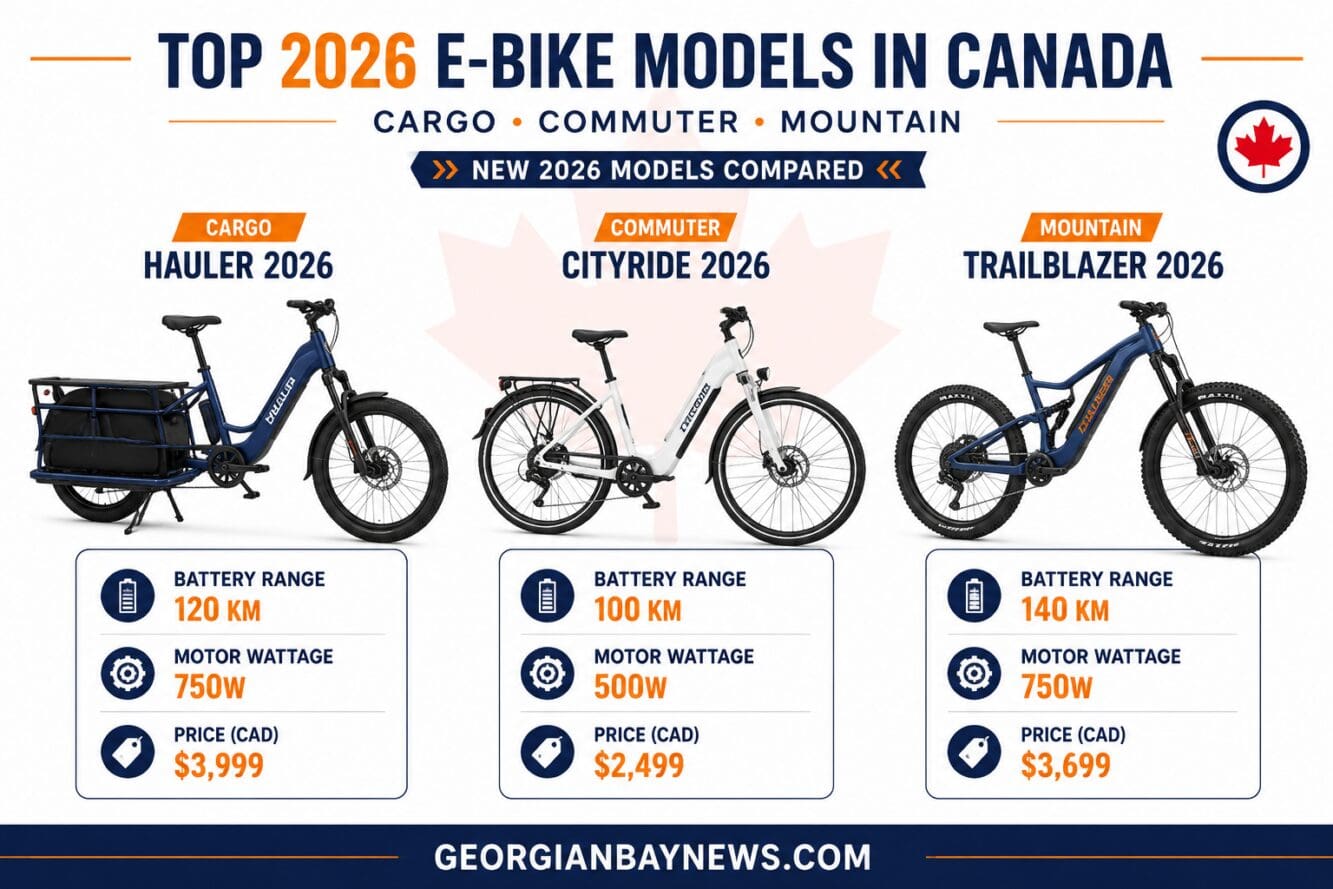
Cargo E-Bikes
Commuter E-Bikes
All-Terrain / Mountain
Choose a cargo e-bike if you have kids to transport or regular grocery runs. Choose a commuter model if your priority is range and comfort on paved roads. Choose all-terrain if you’re riding Ontario’s bike trails or BC’s mountain paths.
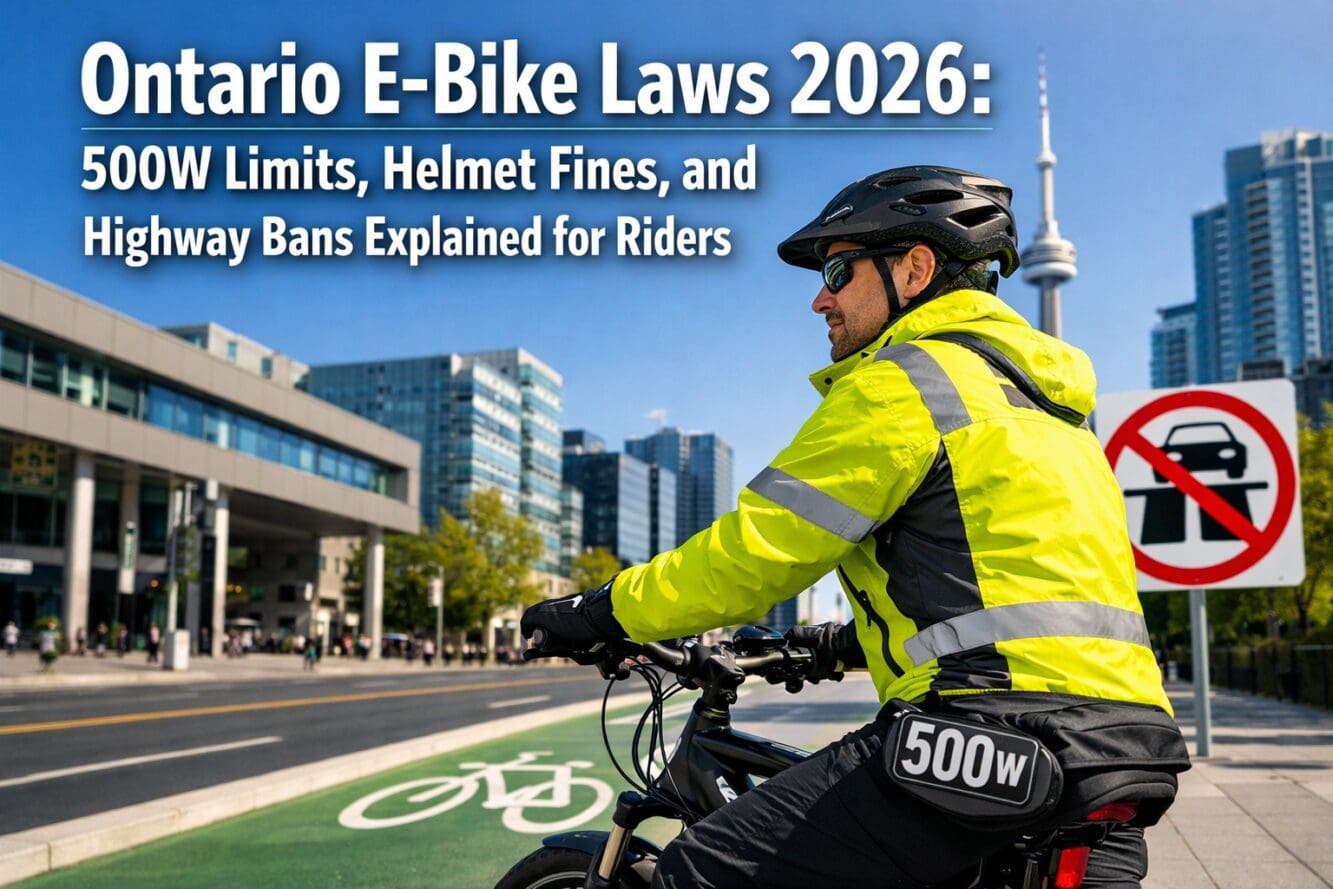
Canadian e-bike law is provincial, but 2026 has brought meaningful national alignment. The federal government’s 2025 transport framework encouraged provinces to adopt a three-class system:
| Class | Max Speed | Motor Power | Throttle Allowed? | Helmet Required? |
|---|---|---|---|---|
| Class 1 | 32 km/h | 500W | No (pedal assist only) | Varies by province |
| Class 2 | 32 km/h | 500W | Yes | Varies by province |
| Class 3 | 45 km/h | 500W | No (pedal assist only) | Yes (most provinces) |
Key 2026 rule changes by province:
Check your local bylaws before purchasing, especially if you plan to ride a Class 3 model.
Battery range is the single biggest improvement in 2026 e-bikes. Solid-state battery prototypes are entering early commercial production, but most consumer e-bikes this year use improved lithium-ion cells with higher energy density.
What this means practically:
This matters a lot for Canadian winters. Brands like Rad Power and Rocky Mountain have specifically engineered their 2026 batteries for cold climates.
Canada introduced new tariffs on Chinese-manufactured e-bikes in late 2025, following similar moves by the U.S. and EU. The result: entry-level models from Chinese brands like Lectric and Aventon have increased in price by an estimated 10–20% CAD.
However, this has also created an opening for Canadian and European brands to compete more effectively on price. Rad Power Bikes, which assembles some models domestically, has held its pricing relatively stable.
Budget guidance for 2026:
Beyond hardware and rules, several broader trends define the 2026 Canadian e-bike landscape.
1. Subscription and rental programs expanding
Cities like Ottawa and Calgary have added e-bikes to their public bike-share fleets. Monthly subscription models from private operators are also growing.
2. Integration with transit
Foldable e-bikes compatible with GO Transit and SkyTrain storage rules are selling strongly in the Greater Toronto and Vancouver areas.
3. Insurance becoming standard
Several insurers now offer standalone e-bike policies for $100–$250/year CAD, covering theft and liability. Some provinces are moving toward making third-party liability mandatory for Class 3 riders.
4. Bike Month momentum
Events tied to Bike Month across Canada are increasingly featuring e-bike demo days, reflecting how mainstream electric cycling has become.
5. Sustainability focus
Brands are publishing lifecycle carbon data. Buyers — especially younger Canadians — are factoring manufacturing footprint into purchase decisions. See our coverage on best electric bikes for context on how far the category has come in just two years.
Q: Do I need a licence to ride an e-bike in Canada?
A: For Class 1 and Class 2 e-bikes, no licence is required in most provinces. Class 3 e-bikes require a valid driver’s licence in Ontario and some other provinces as of 2026.
Q: Are e-bikes allowed on bike paths in Canada?
A: Class 1 and 2 e-bikes are generally allowed on bike paths. Class 3 e-bikes are restricted from many trails and shared paths, depending on the province or municipality.
Q: Is there a federal rebate for e-bikes in Canada in 2026?
A: There is no federal e-bike rebate currently active. Some provinces and municipalities offer incentives — check your local government’s active transportation programs.
Q: What is the best e-bike for Canadian winters?
A: Look for models with cold-optimized batteries, sealed drivetrains, and fender clearance for snow tires. Rad Power Bikes RadCity 5 Plus and Rocky Mountain Altitude Powerplay are frequently recommended for Canadian conditions.
Q: How fast can an e-bike legally go in Canada?
A: The legal motor-assisted limit is 32 km/h for Class 1 and 2, and 45 km/h for Class 3. Riders can pedal faster under their own power.
Q: Are Chinese e-bike brands still available in Canada?
A: Yes, brands like Aventon and Lectric are still sold in Canada, but prices have increased due to 2025 tariffs. Availability varies by retailer.
Q: Can I bring my e-bike on a plane or train in Canada?
A: Most airlines prohibit lithium batteries over 300Wh in checked luggage. VIA Rail allows folding e-bikes in some configurations. Always confirm with the carrier before travel.
The e-bike landscape in Canada has matured significantly in 2026. Better batteries, clearer rules, and a wider range of models mean there’s a genuine option for almost every rider and budget.
Actionable next steps:
E-bikes in 2026 aren’t a niche product anymore. For many Canadians, they’re becoming the most practical vehicle they own.
Content, illustrations, and third-party video appearing on GEORGIANBAYNEWS.COM may be generated or curated with AI assistance or reproduced pursuant to the fair dealing provisions of the Copyright Act, R.S.C. 1985, c. C-42. Attribution and hyperlinks to original sources are provided in acknowledgment of applicable intellectual property rights. Such referencing is intended to direct traffic to and support the original rights holders’ platforms.