


















🎯 Women’s Health Over 50: The Preventive Care Checklist Most Women Miss

Only 30 percent of women over 50 are up to date on all recommended preventive screenings, according to data from the U.S. Preventive Services Task Force. That gap is not a matter of neglect, it is largely a matter of awareness. Women’s Health Over 50: The Preventive Care Checklist Most Women Miss is not just a catchy phrase; it describes a real and measurable problem that affects thousands of women every year who feel healthy but are quietly missing critical early-detection windows.
After 50, the body changes in ways that are not always obvious. Hormones shift. Bone density drops. Cardiovascular risk climbs. And many of the conditions that become most dangerous in this decade develop without dramatic warning signs. Preventive care is the tool that closes that gap, but only if women know exactly what to ask for.
Key Takeaways
- Bone density screening is one of the most commonly skipped tests for women over 50, yet osteoporosis affects one in three women in this age group.
- Cardiovascular disease is the leading cause of death for women over 50, yet many women still associate heart disease primarily with men.
- Hormone changes after menopause directly affect cholesterol, blood pressure, and metabolic health, all of which require updated monitoring.
- Several cancer screenings change in frequency or type after 50, and many women are unaware of those updates.
- Mental and emotional health screenings are a legitimate part of preventive care and are frequently overlooked entirely.
The Screenings That Slip Through the Cracks
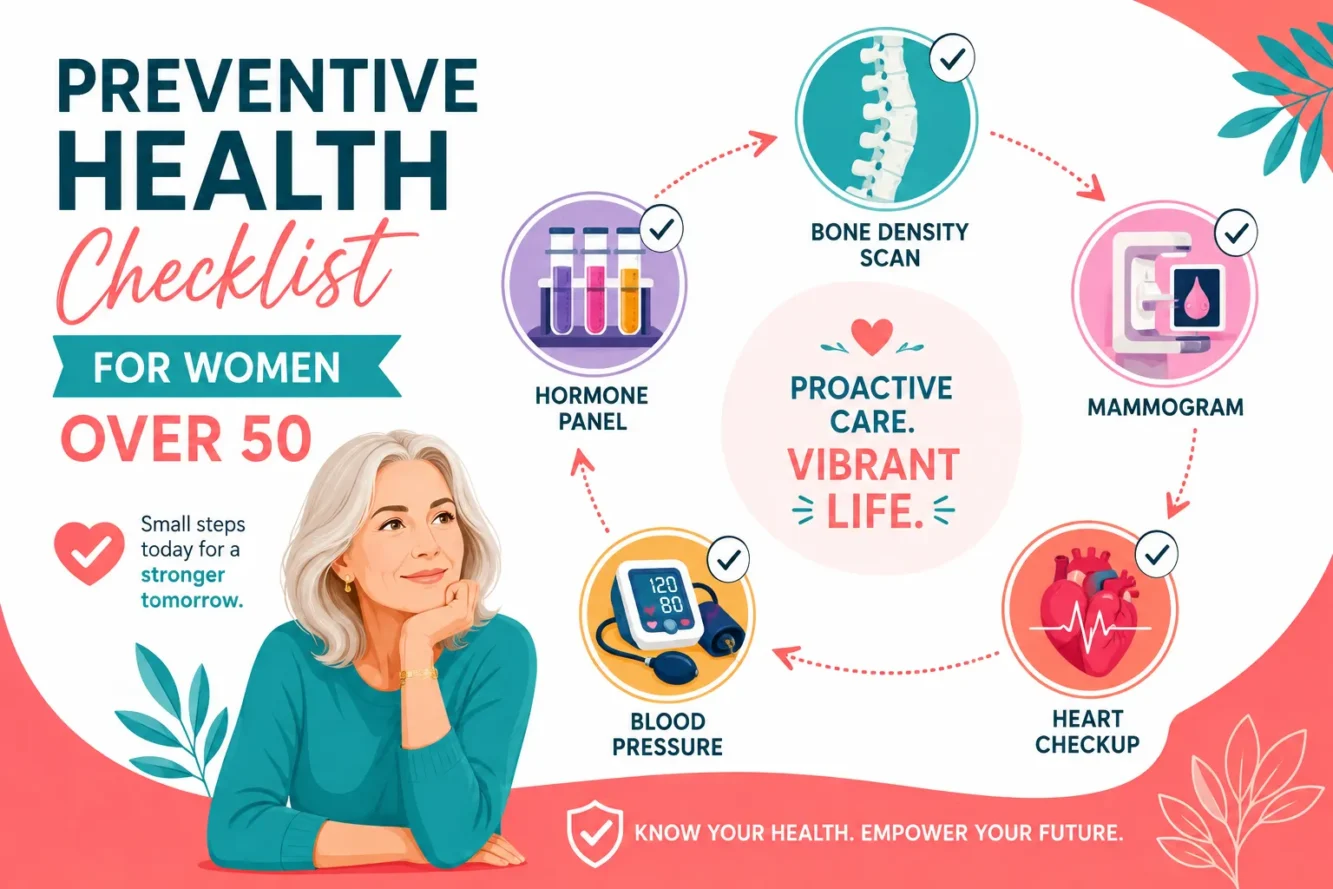
When most women think about preventive care after 50, they think mammograms. That awareness is well earned, breast cancer screening matters enormously. But Women’s Health Over 50: The Preventive Care Checklist Most Women Miss goes well beyond a single scan.
Here are the screenings most commonly skipped or delayed:
Bone Density (DEXA Scan)
Osteoporosis is often called a “silent disease” because bone loss produces no pain and no symptoms until a fracture occurs. Women should begin DEXA scans at 65, but women with risk factors, including early menopause, low body weight, or a family history of fractures, should start earlier, often at 50 or 55. Talk to a doctor about individual risk.
Colorectal Cancer Screening
Colonoscopies are recommended starting at age 45 for average-risk adults, yet compliance rates among women remain lower than among men. Stool-based tests are a valid alternative for those who prefer a less invasive option.
Cholesterol and Blood Pressure
Estrogen has a protective effect on the cardiovascular system. After menopause, that protection fades. LDL cholesterol often rises, and blood pressure can shift significantly. Annual monitoring is essential, not optional.
Thyroid Function
Thyroid disorders are significantly more common in women and become more prevalent after 50. Symptoms like fatigue, weight gain, and mood changes are easy to attribute to aging or menopause when the real cause is a thyroid imbalance. A simple TSH blood test can catch it early.
Diabetes Screening
Fasting blood glucose and A1C tests should be part of every annual physical after 50. Prediabetes is reversible when caught early, but only if it is caught.
| Screening | Recommended Starting Age | Frequency |
|---|---|---|
| Mammogram | 40-50 (varies by guideline) | Every 1-2 years |
| DEXA Bone Density | 65 (earlier if at risk) | Every 2 years |
| Colonoscopy | 45 | Every 10 years |
| Cholesterol Panel | 45+ | Every 5 years or annually |
| Blood Pressure | All adults | Annually |
| Thyroid (TSH) | 50+ | Every 5 years or as needed |
| Blood Glucose/A1C | 45+ | Every 3 years |
Cardiovascular Risk: The Most Underestimated Threat
Heart disease kills more women over 50 than any other condition. Yet surveys consistently show that women underestimate their personal cardiovascular risk. Part of this is cultural, heart attacks have long been portrayed as a male health event. Part of it is biological, women’s heart attack symptoms often differ from the classic chest-clutching presentation. Women may experience jaw pain, nausea, fatigue, or shortness of breath instead.
After menopause, the risk factors compound quickly. Reduced estrogen raises LDL cholesterol and lowers HDL. Blood vessels lose some flexibility. Stress becomes a more direct physical risk factor, not just an emotional concern.
Key cardiovascular checks after 50 should include:
- Blood pressure (target below 120/80)
- Full lipid panel including triglycerides
- Fasting blood glucose
- Body mass index and waist circumference
- Discussion of family history and personal risk score
Women who experience mental health crisis symptoms, persistent anxiety, depression, or social withdrawal, should also flag these with their doctor, as mental health and cardiovascular health are closely linked in this age group.
Hormones, Bones, and What Changes After Menopause
Menopause is not a single event, it is a transition that reshapes multiple body systems simultaneously. Estrogen and progesterone decline affects bone density, cardiovascular health, skin integrity, sleep quality, and cognitive sharpness.
What to discuss with a doctor:
- Whether hormone therapy is appropriate (benefits and risks vary by individual)
- Calcium and vitamin D levels, which directly support bone health
- Vaginal and urinary health changes, which are common but underreported
- Sleep disruption, which affects immune function and metabolic health
The connection between hormone health and overall wellness in this decade is stronger than many women realize. Proactive conversations with a healthcare provider, not waiting for symptoms to become severe, are the defining factor in outcomes.
Mental and Emotional Health: The Overlooked Checklist Item
Preventive care is not only physical. Depression screening is recommended for all adults, yet women over 50 are among the least likely to receive it during a routine visit. Life transitions in this decade, retirement, children leaving home, caring for aging parents, loss of connection to long-standing social networks, create genuine mental health risk.
Cognitive health also warrants attention. Baseline cognitive assessments can be valuable in the early 50s, providing a reference point for future comparisons. Early detection of cognitive decline dramatically expands the range of available interventions.
Conclusion: Take the Checklist Seriously
Women’s Health Over 50: The Preventive Care Checklist Most Women Miss is ultimately about one thing, acting before symptoms appear, not after. The screenings and conversations outlined here are not excessive or alarmist. They are the minimum standard of care for a decade when the body’s risks genuinely shift.
Actionable next steps for 2026:
- Book a comprehensive annual physical and bring a written list of the screenings above.
- Ask specifically about bone density, thyroid function, and cardiovascular risk, do not assume they are automatically ordered.
- Be honest with a healthcare provider about mental health, sleep quality, and any symptoms that feel “off.”
- Review family history and share it in detail, it directly affects which screenings are prioritized.
- Schedule follow-up appointments rather than waiting for the next annual visit.
Preventive care works. But only for the women who show up and ask the right questions.
Content, illustrations, and third-party video appearing on GEORGIANBAYNEWS.COM may be generated or curated with AI assistance or reproduced pursuant to the fair dealing provisions of the Copyright Act, R.S.C. 1985, c. C-42. Attribution and hyperlinks to original sources are provided in acknowledgment of applicable intellectual property rights. Such referencing is intended to direct traffic to and support the original rights holders’ platforms.