























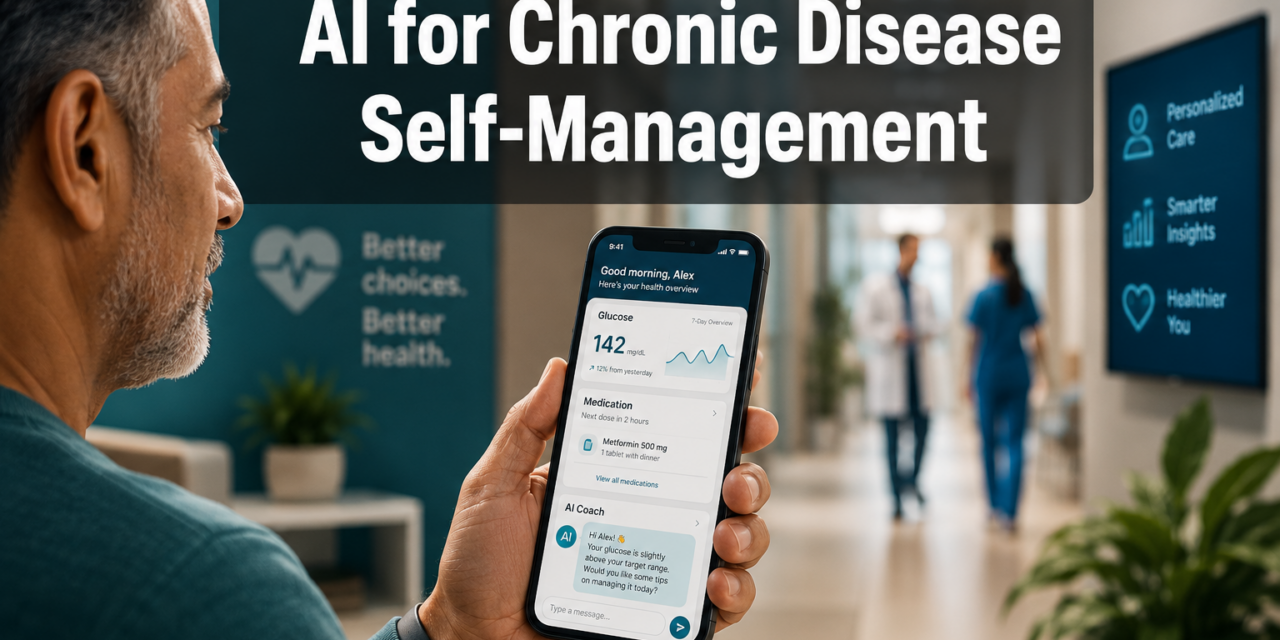
🩺 AI for Chronic Disease Self-Management: Digital Coaches Helping Patients Track Symptoms, Medications, and Lifestyle Changes

Last updated: June 30, 2026
Quick Answer: AI for chronic disease self-management refers to software tools and digital coaches that guide patients with conditions like diabetes, heart disease, or depression through daily symptom logging, medication reminders, and lifestyle adjustments. These tools use artificial intelligence to personalize feedback between clinical appointments. A growing body of research suggests they can improve patient engagement and self-care monitoring, though they work best as a complement to, not a replacement for, professional medical care. [1][2]
Key Takeaways
- AI digital coaches help patients with chronic conditions log symptoms, track medications, and adjust daily habits in real time.
- They are most effective for conditions with measurable daily data points: diabetes, hypertension, heart disease, COPD, and depression.
- A June 2026 meta-analysis found digital health interventions support self-care monitoring, but their effect on medication adherence and long-term behavior change is still being studied. [2]
- Most AI coaching apps cost between free (basic tier) and $30-$50 USD per month for premium features; some are covered through employer wellness plans.
- AI coaches do not replace doctors or therapists. They fill the gap between appointments.
- Data privacy varies widely by app. Look for HIPAA compliance (US) or equivalent standards before sharing health data.
- People with complex, unstable, or newly diagnosed conditions should use these tools only with clinician guidance.
- Common mistakes include over-relying on AI alerts, logging inconsistently, and ignoring red-flag symptoms the app flags.
What Is an AI Digital Coach for Chronic Disease Management
An AI digital coach for chronic disease management is a software application that uses artificial intelligence, including natural language processing and machine learning, to guide patients through the daily tasks of managing a long-term health condition. Unlike a static health app, an AI coach adapts its responses based on what a patient logs, asks, or reports over time.
These tools typically combine:
- Symptom tracking (daily check-ins, severity ratings)
- Medication reminders and adherence logs
- Lifestyle guidance (nutrition, sleep, physical activity)
- Conversational interfaces that respond to patient questions in plain language
German startup Oska Health, which raised €11 million in seed funding in early 2026, pairs AI with trained human health coaches to support high-risk patients between clinical visits. [3] Systems like VitalDiagnosis integrate wearable device data with large language models to provide 24/7 monitoring and proactive check-ins. [4]
How AI Health Coaches Help Track Symptoms and Medications
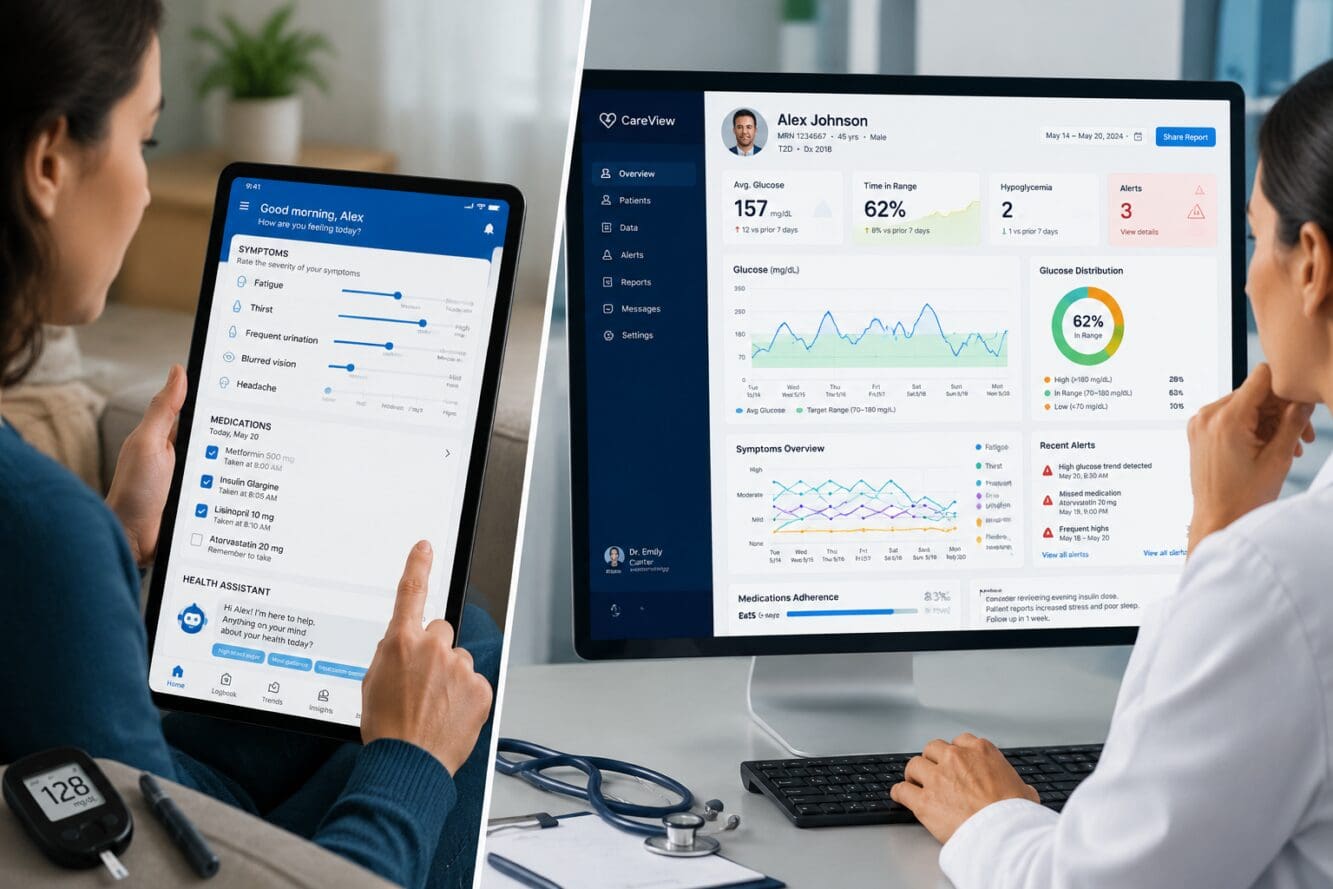
AI health coaches help by turning daily self-reporting into structured, actionable data. A patient logs how they feel, what they ate, or whether they took a medication. The AI identifies patterns, flags anomalies, and sends personalized nudges.
For medication tracking specifically, these tools:
- Send timed reminders based on a patient’s schedule
- Ask follow-up questions if a dose is missed
- Track side-effect reports and flag recurring issues for clinical review
For symptom tracking, AI coaches like PATRIKA, designed for Parkinson’s disease patients, use conversational journaling to collect clinically relevant information in a low-burden format. [6] Research on older adults with cardiovascular disease found that AI tools are most useful when they also support emotional engagement, not just data collection. [5]
What Chronic Diseases Work Best With AI Self-Management Tools
AI self-management tools work best for chronic conditions that generate frequent, measurable data points. The strongest evidence and most mature tools currently exist for:
| Condition | What AI Tracks | Example Tools |
|---|---|---|
| Type 2 Diabetes | Blood glucose, diet, activity | Glucose-monitoring apps, predictive digital twins [10] |
| Hypertension | Blood pressure logs, sodium intake | Connected cuff apps |
| Heart Disease | Heart rate, activity, symptoms | Wearable-integrated platforms [4] |
| Depression/Anxiety | Mood logs, sleep, medication | Conversational AI coaches |
| COPD | Breathing scores, inhaler use | Symptom diary apps |
| Parkinson’s Disease | Motor symptoms, medication timing | PATRIKA [6] |
Conditions with less frequent or harder-to-measure symptoms, such as fibromyalgia or rare autoimmune diseases, have fewer validated AI tools as of 2026. [9]
Best AI Apps for Managing Diabetes at Home
For diabetes specifically, the most effective AI tools connect continuous glucose monitor (CGM) data to a coaching layer that interprets trends and suggests adjustments. A January 2024 clinical trial demonstrated that a nurse-in-the-loop AI model using a predictive digital twin for Type 2 diabetes could deliver individualized feedback that improved patient outcomes. [10]
What to look for in a diabetes AI app:
- CGM or manual glucose log integration
- Carbohydrate and meal tracking with AI pattern analysis
- Medication and insulin reminder functions
- Clinician data-sharing dashboard
- Evidence of clinical validation, not just consumer ratings
MediKarma’s LifeStyle JILL, launched in March 2025, offers tailored guidance on nutrition, exercise, stress, sleep, and medication adherence for chronic disease patients including those managing diabetes. [8]
Can AI Coaches Replace My Doctor or Therapist
No. AI coaches are not a replacement for physicians, nurses, or mental health professionals. They fill the gap between appointments by providing daily support, but they cannot diagnose, prescribe, or respond to medical emergencies.
Where AI coaches add value:
- Between appointments, when patients have no one to ask
- For accountability on daily habits and medication schedules
- For patients in rural or underserved areas with limited access to frequent clinical visits (a relevant concern for communities across Southern Georgian Bay)
Where AI coaches fall short:
- Interpreting ambiguous or complex symptom combinations
- Responding to acute deterioration or mental health crises
- Providing the human judgment that clinical relationships require
A scoping review published in April 2025 confirmed that most AI technologies in this space remain in early developmental stages and need further research before they can be trusted for broader clinical integration. [9]
How Accurate Are AI Symptom Trackers for Chronic Conditions
Accuracy depends heavily on the quality of the underlying model, the consistency of patient input, and whether the tool has been clinically validated. A May 2026 systematic review of NLP-based chatbots for chronic disease self-management found that these tools can enhance patient engagement and adherence, but accuracy in interpreting complex symptom patterns varies. [1]
Factors that improve accuracy:
- Regular, consistent logging by the patient
- Integration with objective data sources (wearables, CGMs)
- Regular model updates based on real-world outcomes
Common accuracy limitations:
- AI may miss symptom combinations that suggest a serious change
- Self-reported data is inherently subjective
- Tools trained on narrow datasets may not generalize across populations
If an AI coach flags a symptom as concerning, treat it as a prompt to contact a clinician, not a diagnosis.
What Is the Difference Between AI Coaches and Regular Health Apps
Regular health apps are passive. They record what a patient enters but do not adapt or respond. AI coaches are active: they analyze patterns, ask follow-up questions, and adjust their guidance based on what they learn about a specific user.
| Feature | Regular Health App | AI Digital Coach |
|---|---|---|
| Personalized feedback | No | Yes |
| Conversational interface | No | Yes |
| Pattern detection | Basic | Advanced |
| Clinician data sharing | Rare | Common in newer platforms |
| Learns over time | No | Yes |
Panasonic’s Umi, unveiled at CES 2025 and built on Anthropic’s Claude, illustrates this shift: it moves beyond simple tracking to interactive goal-setting and health task management for families. [7] Being aware of staying safe with digital health tools is part of using them well.
How Much Do AI Chronic Disease Management Apps Cost
Most AI chronic disease apps use a freemium model. Basic symptom logging and reminders are often free. Advanced AI coaching, clinician dashboards, and wearable integrations typically cost $15-$50 USD per month.
Cost breakdown by tier:
- Free: Basic logging, generic reminders, limited AI interaction
- $10-$20/month: Personalized feedback, medication tracking, basic trend reports
- $30-$50/month: Full AI coaching, clinician data sharing, wearable integration
- Employer or insurer-covered: Some platforms are available at no cost through workplace wellness programs or chronic disease management benefits
Costs are shifting as the market matures. Enterprise-level platforms like Oska Health target health systems and insurers rather than individual consumers. [3]
Is My Health Data Safe With AI Coaching Apps
Data safety varies significantly between platforms. Patients should check for regulatory compliance before sharing sensitive health information.
What to look for:
- HIPAA compliance (United States) or PIPEDA compliance (Canada)
- Clear data retention and deletion policies
- Explicit opt-out from data sharing with third parties
- End-to-end encryption for data transmission
Red flags:
- Vague privacy policies that permit data sale to advertisers
- No mention of regulatory compliance
- Free apps with no clear business model (data monetization is often the product)
Being informed about smishing fraud and other digital safety risks is a good habit for anyone using health apps on their smartphone.
Who Should Not Use AI Digital Health Coaches
AI digital health coaches are not appropriate for everyone. Certain situations call for direct clinical supervision instead.
Avoid relying on AI coaches if you:
- Have a newly diagnosed or rapidly changing condition
- Are experiencing a mental health crisis or suicidal ideation
- Have complex multi-drug regimens requiring frequent clinical adjustment
- Are a child or adolescent without parental and clinical oversight
- Have cognitive impairments that make consistent self-reporting unreliable
For older adults, research published in March 2026 noted that AI self-management tools need to actively reinforce patient agency rather than create dependency or confusion. [5] Using a smart phone comfortably is also a practical prerequisite for most of these apps.
Common Mistakes People Make With AI Health Tracking
The most common mistake is treating AI alerts as medical diagnoses. AI coaches flag patterns; they do not confirm conditions or replace clinical judgment.
Other frequent errors:
- Logging inconsistently: AI pattern detection requires regular data. Skipping days creates gaps that distort the picture.
- Ignoring flagged symptoms: If the app raises a concern, contact a clinician. Do not dismiss it because you feel fine.
- Over-logging: Excessive detail entry leads to burnout and app abandonment within weeks.
- Not sharing data with your care team: The coaching loop is most effective when clinicians can see trends and adjust treatment accordingly.
- Choosing an app without clinical validation: Consumer ratings do not equal clinical evidence.
How Do I Know If an AI Coach Is Actually Helping My Condition
Set measurable benchmarks before starting. Track them at 30, 60, and 90 days.
Useful indicators:
- Medication adherence rate (are you taking doses on time more consistently?)
- Symptom frequency or severity scores over time
- Number of unplanned clinic visits or emergency contacts
- Self-reported confidence in managing your condition
A June 2026 meta-analysis found that digital health interventions show clearer benefits for self-care monitoring than for behavioral maintenance or medication adherence over the long term. [2] If your tracked metrics are not improving after 90 days, discuss the tool with your care team. It may need adjustment, or a different approach may suit your condition better.
Can AI Coaches Work Offline, and What Happens If the AI Misses Something Important
Most AI coaching apps require an internet connection for their core functions, including AI-driven feedback, cloud data sync, and clinician dashboards. Some apps store basic logs locally and sync when connectivity is restored, which can matter for patients in rural areas or regions with inconsistent coverage.
If an AI coach misses something important, the consequences depend on the severity. For minor symptom changes, a missed flag is an inconvenience. For serious deterioration, it could be dangerous. This is why AI coaches should always be paired with a clear escalation path: know when to call your doctor, and never wait for an app to tell you to seek emergency care.
Safeguards to put in place:
- Set a regular appointment with your clinician to review AI-generated data
- Keep an emergency contact list separate from the app
- Use wearables with independent alert functions (heart rate alarms, fall detection) as a backup layer
Conclusion
AI for chronic disease self-management is a practical, evidence-backed tool for patients who need daily support between clinical appointments. Digital coaches helping patients track symptoms, medications, and lifestyle changes are most effective when used consistently, paired with clinician oversight, and chosen based on clinical validation rather than marketing claims.
Actionable next steps:
- Talk to your doctor or care team before starting any AI coaching app. Ask if they can access your data.
- Choose a platform with documented regulatory compliance and clinical validation.
- Set 30-day benchmarks for symptom frequency, medication adherence, or another measurable outcome.
- Log consistently, even on good days. Pattern detection requires complete data.
- Treat any AI alert as a prompt to contact your clinician, not a self-contained answer.
For patients managing conditions like diabetes, heart disease, or depression, the right AI tool, used correctly, can meaningfully extend the reach of clinical care into everyday life. The technology is improving quickly, and 2026 is shaping up to be a pivotal year for its integration into mainstream chronic care pathways.
FAQ
What is an AI digital coach for chronic disease?
An AI digital coach is a software tool that uses artificial intelligence to guide patients through daily symptom logging, medication reminders, and lifestyle adjustments for long-term health conditions. It adapts its feedback based on what the patient reports over time.
Can an AI coach replace my doctor?
No. AI coaches support self-management between appointments but cannot diagnose, prescribe, or handle medical emergencies. They work best as a complement to professional care.
Which chronic diseases benefit most from AI self-management tools?
Type 2 diabetes, hypertension, heart disease, COPD, depression, and Parkinson’s disease currently have the most developed and validated AI tools available.
How much do AI health coaching apps cost?
Basic features are often free. Full AI coaching with clinician data sharing typically costs $15-$50 USD per month. Some platforms are covered through employer wellness or insurance benefits.
Is my health data safe with these apps?
Safety varies. Look for HIPAA (US) or PIPEDA (Canada) compliance, clear data deletion policies, and no third-party data selling before sharing sensitive health information.
How do I know if an AI coach is working for me?
Track measurable outcomes like medication adherence rate and symptom frequency at 30, 60, and 90 days. If metrics are not improving, discuss the tool with your care team.
Can AI coaching apps work without internet?
Most require internet for AI functions. Some store basic logs locally and sync later. This matters for patients in areas with limited connectivity.
What should I do if the AI misses a serious symptom?
Never rely solely on an app for safety. Keep a direct line to your care team, know your emergency escalation steps, and use wearables with independent alert functions as a backup.
Are AI coaches suitable for older adults?
They can be, but tools need to support patient agency and emotional engagement, not just data collection. Research from March 2026 emphasizes this for older adults with cardiovascular disease. [5]
What is the difference between an AI coach and a regular health app?
Regular apps passively record data. AI coaches actively analyze patterns, respond conversationally, and adapt guidance to individual users over time.
References
[1] journals.sagepub – https://journals.sagepub.com/doi/abs/10.1177/20552076261450385?mi=ehikzz&utm_source=openai
[2] pubmed.ncbi.nlm.nih.gov – https://pubmed.ncbi.nlm.nih.gov/42263266/?utm_source=openai
[3] Oska Health Raises E11million Seed Round To Scale Ai Powered Chronic Care Platform Digi26 – https://www.htworld.co.uk/news/digital-health/oska-health-raises-e11million-seed-round-to-scale-ai-powered-chronic-care-platform-digi26/?utm_source=openai
[4] arxiv – https://arxiv.org/abs/2601.15798?utm_source=openai
[5] arxiv – https://arxiv.org/abs/2603.23733?utm_source=openai
[6] arxiv – https://arxiv.org/abs/2503.03532?utm_source=openai
[7] Panasonic Unveils An Ai Powered Wellness Coach Powered By Anthropics Claude At Ces 2025 – https://techcrunch.com/2025/01/07/panasonic-unveils-an-ai-powered-wellness-coach-powered-by-anthropics-claude-at-ces-2025/?utm_source=openai
[8] Medikarma Unveils Lifestyle Jill The Ai Powered Healthcare Coach Revolutionizing Personalized Healthcare 302392179 – https://www.prnewswire.com/news-releases/medikarma-unveils-lifestyle-jill-the-ai-powered-healthcare-coach-revolutionizing-personalized-healthcare-302392179.html?utm_source=openai
[9] E59632 – https://www.jmir.org/2025/1/e59632/?utm_source=openai
[10] arxiv – https://arxiv.org/abs/2401.02661?utm_source=openai
Content, illustrations, and third-party video appearing on GEORGIANBAYNEWS.COM may be generated or curated with AI assistance or reproduced pursuant to the fair dealing provisions of the Copyright Act, R.S.C. 1985, c. C-42. Attribution and hyperlinks to original sources are provided in acknowledgment of applicable intellectual property rights. Such referencing is intended to direct traffic to and support the original rights holders’ platforms.
Much Appreciate You Sharing This Post - It Helps MUCH!!!