






















AI Diagnoses Heart Disease in Seconds: How Machine Learning Is Revolutionizing Cardiac Care
Imagine walking into your doctor’s office for a routine checkup. Within seconds of a simple heart scan, artificial intelligence detects a dangerous condition that traditional methods would have missed for years. This isn’t science fiction—it’s happening right now in hospitals and clinics across the globe. AI diagnoses heart disease in seconds: how machine learning is revolutionizing cardiac care represents one of the most significant medical breakthroughs of our time, transforming how physicians detect, diagnose, and treat cardiovascular conditions that affect millions of people worldwide. 💓
Heart disease remains the leading cause of death globally, claiming nearly 18 million lives each year. Yet many cardiac conditions go undetected until they become life-threatening emergencies. Traditional diagnostic methods often require expensive imaging, invasive procedures, or simply fail to catch subtle warning signs. Enter artificial intelligence—a game-changing technology that’s enabling doctors to identify heart problems with unprecedented speed and accuracy using tools as simple as a standard EKG strip or digital stethoscope.
Key Takeaways
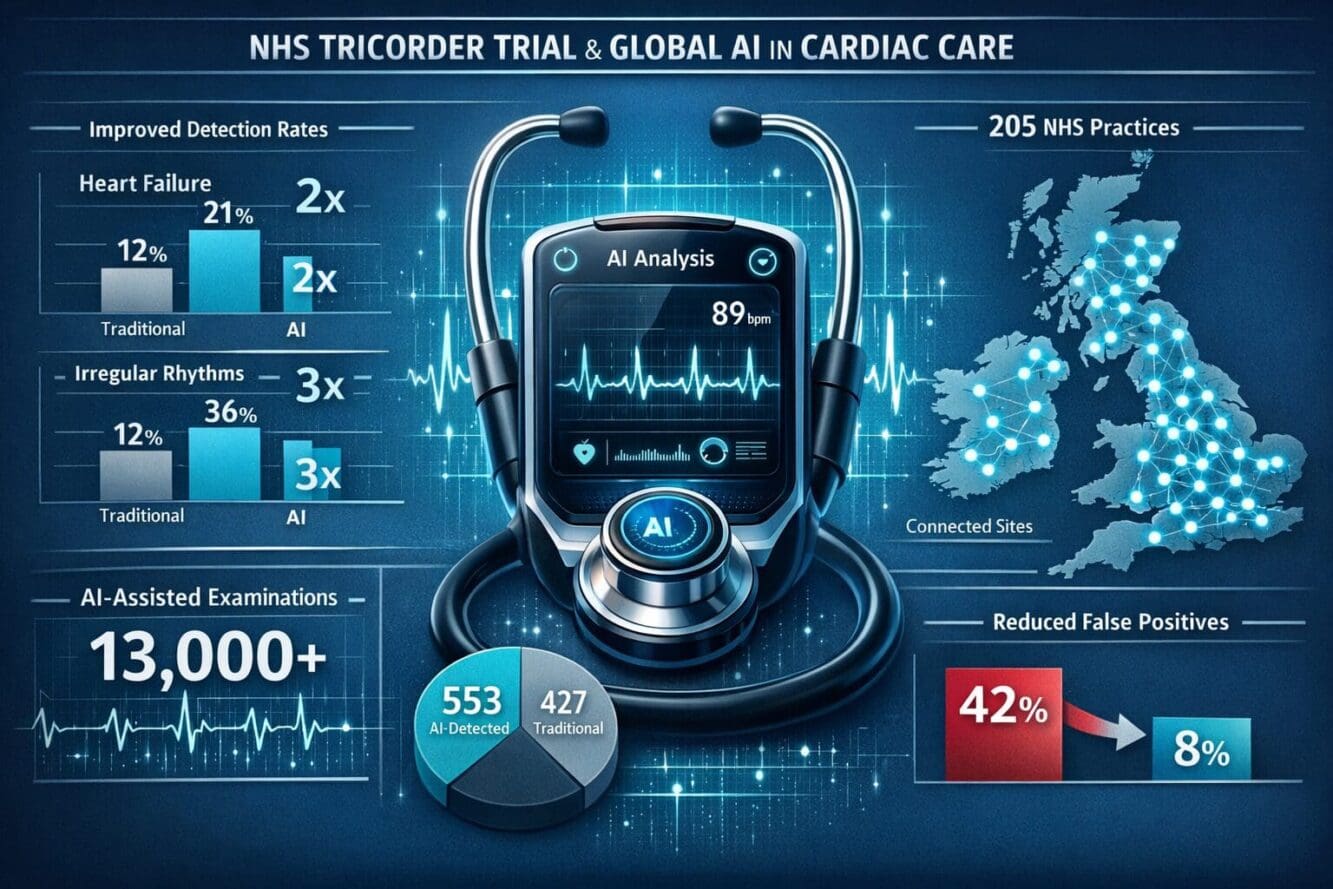
- AI-enabled stethoscopes detected nearly twice as many new heart failure cases and three times as many irregular heart rhythms compared to traditional examinations in a large-scale NHS trial involving over 1.5 million patients[1]
- University of Michigan researchers developed an AI model that diagnoses coronary microvascular dysfunction from a standard EKG, eliminating the need for expensive imaging or invasive procedures[4]
- AI ECG platforms improved STEMI (heart attack) detection by identifying 553 confirmed cases versus 427 with standard methods, while reducing false positives from 42% to just 8%[3]
- CardioKG technology trained on over 200,000 image-based traits can predict genes and drugs linked to heart disease, accelerating treatment discovery[2]
- Implementation challenges remain significant—despite proven effectiveness, many physicians don’t consistently use AI tools in routine practice, highlighting the gap between laboratory success and real-world adoption[1]
The University of Michigan Breakthrough: Detecting the Invisible
Coronary Microvascular Dysfunction—The Silent Threat
For years, cardiologists have struggled with a particularly challenging diagnostic problem: coronary microvascular dysfunction (CMD). This condition affects the smallest blood vessels in the heart—vessels so tiny they don’t show up on standard angiograms or CT scans. Patients with CMD experience real chest pain, reduced exercise capacity, and significantly increased risk of heart attacks, yet their major coronary arteries appear completely normal on conventional imaging.
Traditionally, diagnosing CMD required expensive, invasive procedures or specialized imaging that most healthcare facilities simply don’t have. Many patients—particularly women, who are disproportionately affected by this condition—went years without proper diagnosis or treatment.
The AI Solution: Reading Between the Lines
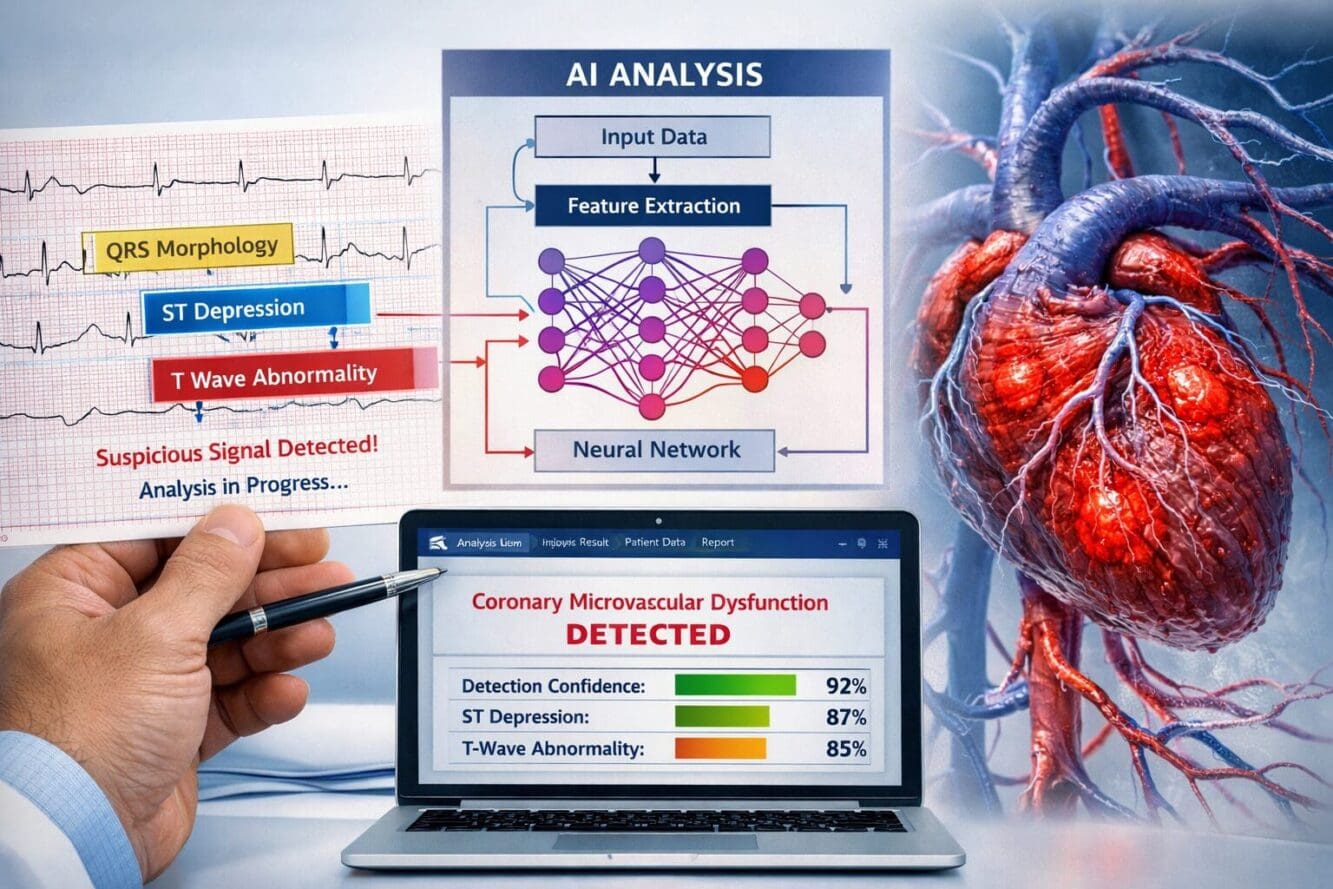
Researchers at the University of Michigan developed an artificial intelligence model that can detect coronary microvascular dysfunction from a simple, standard EKG strip—the same basic heart test that costs just a few dollars and takes minutes to perform[4]. This breakthrough represents a fundamental shift in cardiac diagnostics.
The AI model analyzes subtle patterns in the EKG waveform that human eyes cannot detect. By training on thousands of cases where patients had both EKGs and confirmed CMD diagnoses through advanced imaging, the machine learning algorithm learned to recognize the electrical signatures of microvascular disease.
Key advantages of this AI approach include:
- ✅ No invasive procedures required—just a standard EKG
- ✅ Results in seconds instead of weeks of waiting for specialized testing
- ✅ Accessible in any clinic with basic EKG equipment
- ✅ Cost-effective—eliminates need for expensive imaging
- ✅ Early detection before major cardiac events occur
This technology exemplifies how AI diagnoses heart disease in seconds: how machine learning is revolutionizing cardiac care by making sophisticated diagnostics accessible to everyone, not just patients at major medical centers.
How AI Diagnoses Heart Disease in Seconds: The Technology Behind the Revolution
Machine Learning Fundamentals in Cardiac Care
At its core, artificial intelligence in cardiac diagnostics works by recognizing patterns. Just as humans learn to identify faces or read handwriting through repeated exposure, machine learning algorithms analyze thousands or millions of cardiac data points to identify patterns associated with specific heart conditions.
The typical AI cardiac diagnostic process involves:
- Data Collection: Gathering massive datasets of cardiac images, EKGs, echocardiograms, and patient outcomes
- Training: The AI algorithm studies these examples, learning which patterns correlate with specific diseases
- Validation: Testing the AI on new cases it hasn’t seen before to ensure accuracy
- Refinement: Continuously improving the model based on real-world performance
- Clinical Implementation: Integrating the AI into physician workflows
Neural Networks and Deep Learning
Most advanced cardiac AI systems use deep learning neural networks—computational models inspired by how the human brain processes information. These networks contain multiple layers of artificial “neurons” that each detect different features in the data.
For example, in analyzing an EKG:
- Early layers might detect basic waveform shapes
- Middle layers identify complex rhythm patterns
- Deep layers recognize disease-specific signatures
- Final layers make diagnostic predictions with confidence scores
The beauty of deep learning is that the AI discovers these features on its own, often identifying patterns that medical experts never knew existed.
AI Diagnoses Heart Disease in Seconds: Real-World Clinical Trials and Results
The NHS TRICORDER Trial: Large-Scale Validation
In January 2026, Imperial College London published groundbreaking results from the TRICORDER trial—the first cluster randomized controlled implementation trial of clinical AI on a national scale in the United Kingdom[1]. This massive study involved:
- 205 NHS general practices
- Over 1.5 million registered patients
- Nearly 13,000 AI-assisted cardiac examinations over 12 months
- Real-world clinical settings (not controlled laboratory conditions)
The trial tested AI-enabled digital stethoscopes that could detect heart conditions during routine examinations. The results were remarkable when physicians actually used the technology as intended.
Detection Rate Improvements
| Condition | Traditional Method | AI-Assisted Method | Improvement |
|---|---|---|---|
| Heart Failure Cases | Baseline detection | Nearly 2x more detected | ~100% increase |
| Irregular Heart Rhythms | Baseline detection | 3x more detected | ~200% increase |
| Valvular Heart Disease | Baseline detection | More than 2x detected | >100% increase[5] |
These improvements represent thousands of patients who received earlier diagnoses and treatment—potentially preventing heart attacks, strokes, and premature deaths.
The Implementation Challenge
Despite these impressive results, the TRICORDER trial revealed a critical challenge: physician adoption. The AI stethoscope did not significantly increase overall heart failure diagnoses among all patients because many doctors didn’t use the device consistently in routine practice[1].
This highlights an important reality: technology alone isn’t enough. Successful implementation of AI in healthcare requires:
- 🔧 Workflow integration that doesn’t disrupt existing practices
- 📚 Adequate training for healthcare providers
- 💡 Clear value demonstration to busy clinicians
- 🤝 Cultural acceptance of AI as a diagnostic partner
As healthcare systems work to address these challenges, recruiting qualified healthcare workers who are comfortable with AI technology becomes increasingly important.
AI ECG Platforms: Revolutionizing Heart Attack Detection
The STEMI Challenge
ST-elevation myocardial infarction (STEMI)—a particularly dangerous type of heart attack—requires immediate intervention. Every minute of delay increases heart muscle damage and mortality risk. Traditional triage methods for identifying STEMI from EKGs have significant limitations:
- High false positive rates (~42%) that waste critical resources
- Missed diagnoses when EKG changes are subtle
- Variability in interpretation between different physicians
- Time delays in getting expert review
The Queen of Hearts AI Platform
In November 2025, UC Davis Health published research on the Queen of Hearts AI-based ECG platform that demonstrated dramatic improvements in STEMI detection[3]. The study reviewed records from more than 1,000 patients suspected of STEMI across three geographically diverse U.S. hospitals, with data collected between January 2020 and May 2024.
The results were striking:
- ✅ AI correctly identified 553 confirmed STEMI cases on initial ECG
- ⚠️ Standard triage detected only 427 cases—126 fewer
- 📉 False positives dropped from 42% to just 8%
- ⏱️ Faster activation of catheterization labs for true emergencies
This improvement means more lives saved and more efficient use of emergency cardiac resources. The reduction in false positives is particularly important—it prevents unnecessary emergency procedures and allows cardiac teams to focus on patients who truly need immediate intervention.
Geographic Diversity and Generalizability
One strength of the UC Davis study was its use of data from three geographically diverse hospitals. This demonstrates that the AI model works across different populations, healthcare settings, and regional variations—a critical factor for widespread adoption.
CardioKG: AI-Powered Drug Discovery and Treatment Development
Beyond Diagnosis: Accelerating Research
While most AI cardiac applications focus on diagnosis, researchers at Imperial College London’s Computational Cardiac Imaging Group developed CardioKG—a knowledge graph technology that could revolutionize how we discover new heart disease treatments[2].
Published in Nature Cardiovascular Research in January 2026, CardioKG represents a fundamentally different approach to medical AI. Instead of just identifying disease, it helps researchers understand the biological mechanisms behind cardiac conditions and identify potential treatments.
How CardioKG Works
The system integrates multiple data sources to create a comprehensive “knowledge graph” of cardiac disease:
Training Data:
- Over 200,000 image-based traits from heart imaging
- 4,280 UK Biobank participants with atrial fibrillation, heart failure, or heart attack
- 5,304 healthy participants for comparison
- 18 diverse biological databases containing genetic, molecular, and drug information[2]
By connecting patterns in heart imaging with genetic data, protein interactions, and known drug mechanisms, CardioKG can:
- Predict genes associated with specific cardiac conditions
- Identify drug repurposing opportunities—existing medications that might treat heart disease
- Suggest new therapeutic targets for drug development
- Accelerate research that would traditionally take years or decades
This technology demonstrates how AI diagnoses heart disease in seconds: how machine learning is revolutionizing cardiac care extends beyond the clinic into research laboratories, potentially shortening the timeline from discovery to treatment.
Advanced Imaging: Detecting Disease Before Symptoms Appear
Fast-RSOM Technology
In late January 2026, researchers announced development of fast-RSOM (fast raster-scanning optoacoustic mesoscopy)—an imaging technology that can visualize the smallest blood vessels in the body without invasive procedures[6].
This breakthrough could enable detection of cardiovascular disease years before symptoms appear by identifying microvascular changes that precede major cardiac events. The technology works by:
- 🔬 Using light and sound waves to create detailed images of tiny blood vessels
- 🚫 Requiring no invasive procedures or contrast agents
- ⚡ Providing real-time visualization of microvascular health
- 🎯 Detecting early changes that predict future disease
Combined with AI analysis, fast-RSOM could transform preventive cardiology by identifying at-risk patients long before they experience chest pain, shortness of breath, or other symptoms.
The Patient Experience: What AI Cardiac Care Means for You
Faster, More Accurate Diagnoses
For patients, AI-powered cardiac diagnostics translate to concrete benefits:
Speed: What once required weeks of appointments, specialized tests, and waiting for results can now happen in a single visit. An AI-analyzed EKG provides immediate insights that guide treatment decisions.
Accuracy: AI systems trained on millions of data points can detect subtle abnormalities that even experienced cardiologists might miss, leading to earlier intervention and better outcomes.
Accessibility: By making sophisticated diagnostics possible with standard equipment, AI brings advanced cardiac care to rural clinics, urgent care centers, and primary care offices—not just major medical centers. This democratization of healthcare technology is particularly important in areas where access to specialized medical care remains limited.
Cost-Effectiveness: Detecting disease with a $10 EKG instead of a $1,000 imaging study makes cardiac screening accessible to more people and reduces healthcare system costs.
Personalized Treatment Plans
AI doesn’t just diagnose—it helps predict which treatments will work best for individual patients. By analyzing patterns from thousands of similar cases, machine learning algorithms can suggest:
- 💊 Which medications are most likely to be effective
- 🏥 Whether invasive procedures are necessary
- 📊 What the patient’s likely disease progression looks like
- 🎯 Personalized risk factors to address
This level of personalization was impossible with traditional one-size-fits-all approaches to cardiac care.
Challenges and Limitations of AI in Cardiac Care
The Implementation Gap
As the NHS TRICORDER trial demonstrated, technological capability doesn’t automatically translate to clinical impact[1]. Several barriers prevent AI from reaching its full potential:
Physician Adoption: Many doctors remain skeptical of AI or simply don’t integrate it into their established workflows. Overcoming this requires better training, clearer evidence of benefit, and systems designed to enhance rather than replace clinical judgment.
Workflow Integration: AI tools that require extra steps, separate systems, or disruption to established routines face resistance. The most successful implementations seamlessly integrate into existing electronic health records and clinical workflows.
Regulatory Hurdles: Medical AI faces rigorous regulatory review to ensure safety and effectiveness. While necessary, this process can slow the adoption of beneficial technologies.
Data Privacy Concerns: AI systems require access to large amounts of patient data for training and operation, raising important questions about privacy, consent, and data security.
Algorithmic Bias and Equity
AI systems are only as good as the data they’re trained on. If training datasets don’t include diverse populations, the resulting AI may perform poorly for underrepresented groups. Researchers must ensure that cardiac AI works equally well across:
- Different racial and ethnic groups
- Male and female patients
- Various age ranges
- Different socioeconomic backgrounds
- Geographic regions with different disease patterns
Addressing these equity concerns is essential to ensure AI improves cardiac care for everyone, not just privileged populations.
The Human Element
AI should augment, not replace, physician judgment. The most effective approach combines:
- 🤖 AI’s pattern recognition and data analysis capabilities
- 👨⚕️ Physician’s clinical experience and holistic patient understanding
- 💬 Patient preferences and values
- 🔬 Ongoing research to refine and improve AI systems
The goal is human-AI collaboration, where each contributes their unique strengths to optimize patient care.
The Future of AI in Cardiac Care
Emerging Technologies on the Horizon
The current generation of cardiac AI is just the beginning. Researchers are developing:
Predictive AI: Systems that don’t just diagnose current disease but predict future cardiac events years in advance, enabling truly preventive medicine.
Continuous Monitoring: Wearable devices with AI analysis that provide 24/7 cardiac monitoring, alerting patients and physicians to concerning changes in real-time.
Integrated Diagnostic Platforms: AI systems that analyze multiple data sources simultaneously—EKG, echocardiogram, blood tests, genetic data, and lifestyle factors—to create comprehensive cardiac risk profiles.
Automated Treatment Optimization: AI that continuously adjusts medication dosing and treatment plans based on real-time patient response and outcomes data.
The Role of Preventive Screening
Research shows strong support for AI in preventive cardiac screening[7]. As these technologies become more accessible and affordable, we may see:
- Routine AI-analyzed EKGs as part of annual checkups
- School and workplace cardiac screening programs
- Home-based cardiac monitoring with AI analysis
- Population-level screening to identify high-risk individuals before symptoms develop
This shift toward prevention could dramatically reduce the burden of cardiovascular disease worldwide.
Global Health Impact
AI cardiac diagnostics have particular promise for developing countries and underserved regions where access to cardiologists and advanced imaging is limited. A smartphone-connected AI-enabled stethoscope or EKG device could bring sophisticated cardiac care to remote villages, refugee camps, and resource-limited settings.
The scalability of AI—once developed, it can be deployed anywhere at minimal cost—makes it a powerful tool for reducing global health disparities.
Practical Steps: Accessing AI-Enhanced Cardiac Care in 2026
For Patients
If you’re interested in AI-enhanced cardiac evaluation, consider these steps:
- Ask your primary care physician whether they use AI-enabled diagnostic tools
- Research medical centers in your area that have implemented AI cardiac programs
- Participate in clinical trials if you’re eligible—many institutions are still testing new AI systems
- Advocate for technology adoption by expressing interest to your healthcare providers
- Stay informed about new developments in cardiac AI through reputable medical sources
Remember that while AI is a powerful tool, it’s part of comprehensive cardiac care that includes lifestyle modifications, medication when appropriate, and regular monitoring.
For Healthcare Providers
Physicians and healthcare systems looking to implement AI cardiac diagnostics should:
- 📋 Evaluate available platforms for evidence-based effectiveness and regulatory approval
- 🎓 Invest in training to ensure clinical staff can use AI tools effectively
- 🔄 Integrate thoughtfully into existing workflows rather than adding separate systems
- 📊 Monitor outcomes to demonstrate value and identify areas for improvement
- 🤝 Engage patients in conversations about AI-assisted diagnosis
The growing need for healthcare workers who understand both clinical medicine and AI technology will continue to increase as these systems become standard practice.
Ethical Considerations and Patient Rights
Informed Consent and Transparency
Patients have the right to know when AI is being used in their diagnosis and treatment. Healthcare providers should:
- Clearly explain when AI analysis is part of the diagnostic process
- Describe how the AI system works in understandable terms
- Discuss the AI’s accuracy rates and limitations
- Ensure patients can opt out if they prefer traditional diagnostics
- Maintain physician responsibility for final diagnostic and treatment decisions
Data Usage and Privacy
AI systems require patient data for both development and operation. Important questions include:
- Who owns the data generated during AI-assisted diagnosis?
- How is patient information protected from breaches or misuse?
- Can patients control whether their data is used to train AI systems?
- What happens to data when AI companies are acquired or go out of business?
Healthcare systems must establish clear policies that protect patient privacy while enabling beneficial AI development.
Liability and Accountability
When AI contributes to a diagnostic error, who is responsible? Legal and ethical frameworks are still evolving around questions of:
- Physician liability when following AI recommendations
- AI developer responsibility for algorithmic errors
- Healthcare system accountability for implementation decisions
- Patient recourse when AI-assisted diagnosis goes wrong
Clear guidelines are essential as AI becomes more prevalent in cardiac care.
Conclusion: A New Era in Cardiac Medicine
AI diagnoses heart disease in seconds: how machine learning is revolutionizing cardiac care represents far more than a technological advancement—it’s a fundamental transformation in how we approach cardiovascular health. From University of Michigan’s breakthrough in detecting coronary microvascular dysfunction with simple EKGs[4] to the NHS trial demonstrating doubled detection rates for heart failure[1], from UC Davis’s dramatic improvement in heart attack identification[3] to Imperial College’s CardioKG accelerating drug discovery[2], artificial intelligence is delivering on its promise to save lives and improve outcomes.
The evidence is clear: AI can detect cardiac conditions faster, more accurately, and more accessibly than traditional methods alone. A standard EKG that once provided basic rhythm information now reveals hidden microvascular disease. A digital stethoscope doesn’t just amplify heart sounds—it identifies subtle patterns indicating valve problems or heart failure. An emergency room ECG doesn’t just suggest a possible heart attack—it confirms STEMI with 92% accuracy while eliminating false alarms.
Yet technology alone isn’t the answer. The TRICORDER trial’s implementation challenges remind us that human factors—physician adoption, workflow integration, training, and cultural acceptance—matter as much as algorithmic performance. The most successful future for cardiac AI lies in thoughtful human-AI collaboration where machine learning augments rather than replaces clinical expertise.
Take Action Today
Whether you’re a patient concerned about heart health, a physician considering AI tools, or simply someone interested in medical innovation, you can participate in this revolution:
- Schedule a cardiac checkup and ask about AI-enhanced diagnostics
- Support research through participation in clinical trials or advocacy for funding
- Stay informed about developments in cardiac AI through reliable medical sources
- Advocate for access to ensure AI benefits reach underserved communities
- Embrace prevention by addressing modifiable risk factors for heart disease
The future of cardiac care is already here—AI systems are diagnosing heart disease in seconds, identifying patients at risk years before symptoms appear, and guiding treatment decisions with unprecedented precision. As these technologies mature and implementation challenges are addressed, we move closer to a world where preventable cardiac deaths become rare, where diagnosis happens before disease advances, and where personalized treatment is available to everyone.
The revolution in cardiac care isn’t coming—it’s happening now. The question isn’t whether AI will transform how we detect and treat heart disease, but how quickly we can overcome implementation barriers to ensure everyone benefits from these life-saving innovations. For more information on how emerging technologies are transforming healthcare, stay connected with ongoing developments in this rapidly evolving field.
References
[1] Ai Enabled Stethoscopes Show Promise For Improving Diagnosis Of Cardiovascular Conditions Uk Trial Finds – https://www.imperial.ac.uk/news/articles/medicine/nhli/2026/ai-enabled-stethoscopes-show-promise-for-improving-diagnosis-of-cardiovascular-conditions-uk-trial-finds/
[2] Ai Powered Tool May Accelerate The Discovery Of Heart Disease Treatments – https://imperialbrc.nihr.ac.uk/2026/01/06/ai-powered-tool-may-accelerate-the-discovery-of-heart-disease-treatments/
[3] health.ucdavis.edu – https://health.ucdavis.edu/news/headlines/new-study-finds-ai-model-improves-heart-attack-detection/2025/11
[4] Ai Model Helps Diagnose Often Undetected Heart Disease Simple Ekg – https://www.michiganmedicine.org/health-lab/ai-model-helps-diagnose-often-undetected-heart-disease-simple-ekg
[5] Ai Stethoscope Doubles Detection Of Valvular Heart Disease – https://www.insideprecisionmedicine.com/topics/patient-care/ai-stethoscope-doubles-detection-of-valvular-heart-disease/
[6] sciencedaily – https://www.sciencedaily.com/releases/2026/01/260129080954.htm
[7] New Research Shows Strong Support Ai Preventive Cardiac Screening – https://www.dicardiology.com/content/new-research-shows-strong-support-ai-preventive-cardiac-screening
Some content and illustrations on GEORGIANBAYNEWS.COM are created with the assistance of AI tools.
GEORGIANBAYNEWS.COM shares video content from YouTube creators under fair use principles. We respect creators’ intellectual property and include direct links to their original videos, channels, and social media platforms whenever we feature their content. This practice supports creators by driving traffic to their platforms.