




















AI in Medical Diagnostics: From EKG Analysis to Cancer Treatment Design
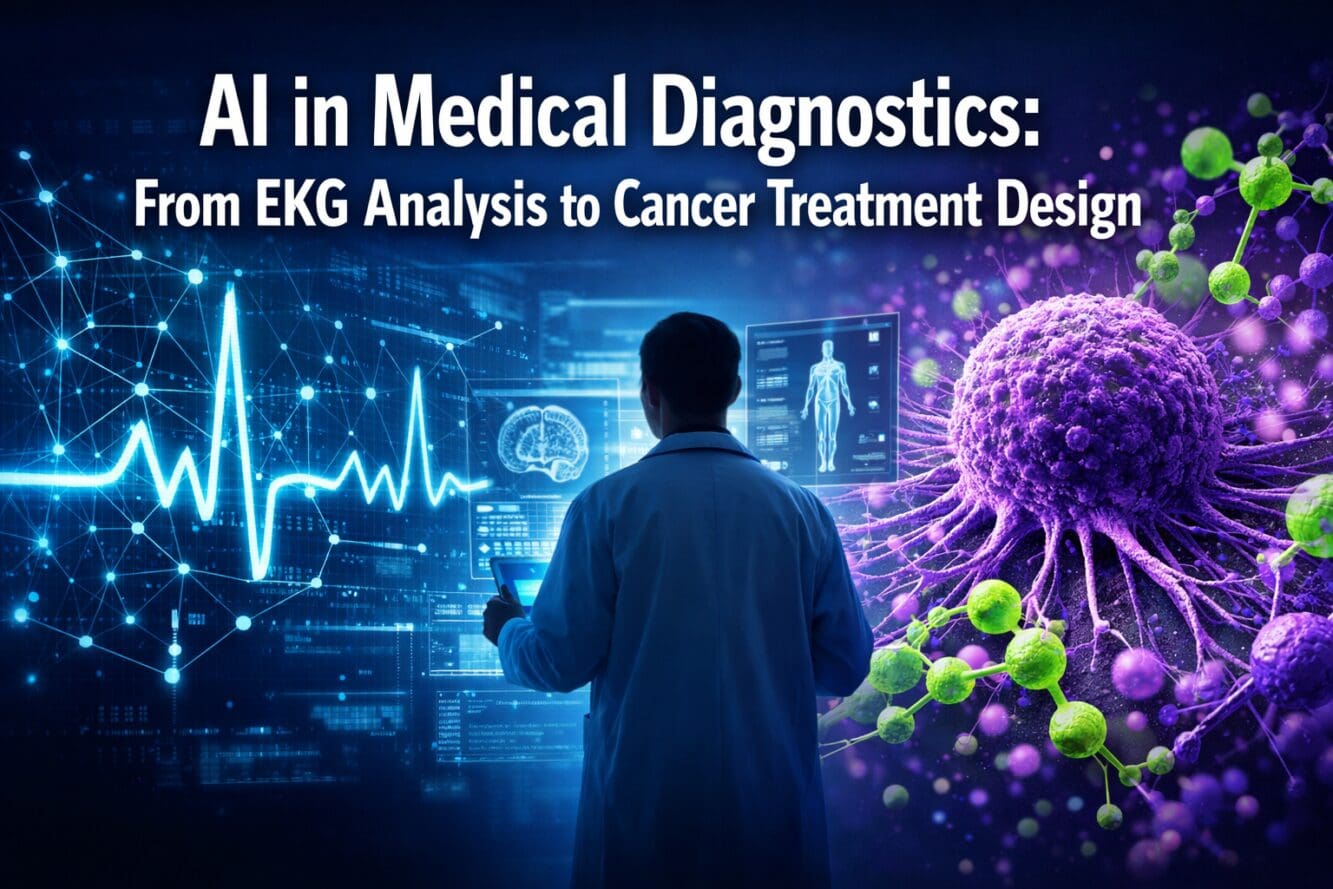
Imagine a world where a simple 10-second heart rhythm recording can predict your risk of cardiac arrest months before symptoms appear.
Picture an AI system that designs custom cancer-fighting molecules tailored to your unique tumor profile, all while you wait in the examination room. This isn’t science fiction—it’s the reality of AI in Medical Diagnostics: From EKG Analysis to Cancer Treatment Design in 2026.
Healthcare stands at a revolutionary crossroads. Artificial intelligence has moved beyond experimental trials into everyday clinical practice, transforming how physicians detect diseases, predict health outcomes, and design personalized treatments. From emergency rooms using AI to spot life-threatening conditions in minutes to oncology centers leveraging machine learning to craft precision therapies, the medical landscape is experiencing its most significant technological shift since the invention of medical imaging.
The integration of AI into medical diagnostics represents more than incremental improvement—it’s a fundamental reimagining of healthcare delivery. As hospitals worldwide adopt these technologies at unprecedented rates, patients and providers alike are witnessing breakthrough applications that were unimaginable just years ago.
Key Takeaways
- 71% of US hospitals now use predictive AI integrated with electronic health records, marking rapid clinical adoption across healthcare systems [1]
- AI-powered EKG analysis can identify cardiac abnormalities and predict future heart events from simple 10-second recordings with unprecedented accuracy
- Multi-cancer early detection tests use machine learning to identify multiple cancer types from blood samples before symptoms appear, revolutionizing screening programs [1]
- AI-designed treatment molecules are enhancing pancreatic cancer therapies and other difficult-to-treat conditions through computational drug discovery
- Real-time sepsis detection algorithms identify high-risk infections hours before traditional tests, enabling life-saving interventions within the critical “golden hour” [1]
The Revolution in Cardiac Diagnostics Through AI
How AI Transforms EKG Analysis
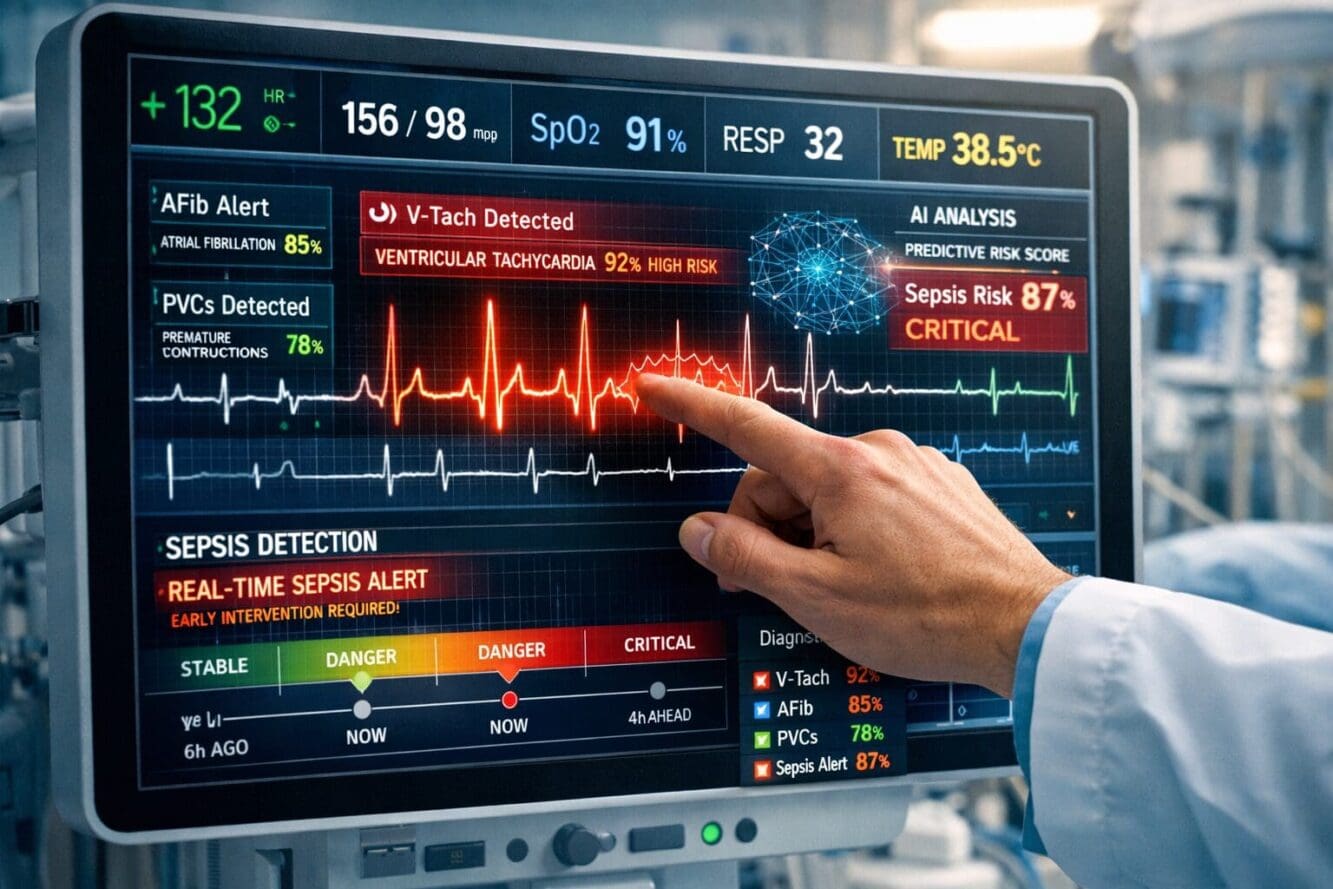
The electrocardiogram (EKG) has been a cornerstone of cardiac diagnostics for over a century, but artificial intelligence is unlocking hidden insights from these familiar squiggly lines. Modern AI systems can analyze a standard 10-second EKG strip and detect patterns invisible to even experienced cardiologists.
Traditional EKG interpretation relies on physicians identifying specific waveform abnormalities—irregular rhythms, ST-segment changes, or QT prolongation. While effective for acute conditions, this approach often misses subtle patterns that predict future cardiac events.
AI-powered EKG analysis works differently. Machine learning algorithms trained on millions of cardiac recordings can:
- 🔍 Detect atrial fibrillation even during normal rhythm periods
- 📊 Predict heart failure risk months before clinical symptoms
- ⚡ Identify low ejection fraction without echocardiography
- 🎯 Spot early signs of myocardial infarction in ambiguous cases
These capabilities stem from AI’s ability to recognize complex pattern combinations across multiple leads simultaneously, processing information at scales beyond human cognitive capacity.
Real-World Impact on Patient Outcomes
The clinical benefits extend far beyond diagnostic accuracy. AI-enabled cardiac monitoring systems continuously analyze vital signs, laboratory trends, and patient history to create real-time risk pictures that support clinical decision-making [1].
In emergency departments, AI triage systems prioritize patients based on cardiac risk scores derived from initial EKG readings, ensuring those at highest risk receive immediate attention. This collaborative intelligence between human clinicians and AI systems represents a new paradigm in cardiac care.
For patients with chronic health conditions requiring ongoing monitoring, wearable devices equipped with AI algorithms provide continuous cardiac surveillance, alerting healthcare providers to concerning changes before emergencies develop.
AI in Medical Diagnostics: Revolutionizing Infection Detection
The Sepsis Detection Breakthrough
Sepsis—a life-threatening response to infection—kills approximately 270,000 Americans annually. The key to survival lies in early detection and rapid antibiotic administration, ideally within the first hour of symptom onset. Traditional diagnostic approaches often miss this critical window.
AI algorithms in clinical settings now identify high-risk infection patterns hours before standard blood cultures return results [1]. These systems analyze multiple data streams simultaneously:
| Data Source | AI Analysis | Clinical Benefit |
|---|---|---|
| Vital Signs | Trend detection across temperature, heart rate, respiratory rate | Early warning 6-12 hours before sepsis criteria met |
| Laboratory Values | Pattern recognition in white blood cell counts, lactate levels | Prediction of organ dysfunction risk |
| Clinical Notes | Natural language processing of physician documentation | Integration of subjective clinical observations |
| Medication Records | Analysis of antibiotic responses and resistance patterns | Optimized treatment selection |
This multi-modal approach enables antibiotic administration within the “golden hour,” preventing organ failure that would otherwise require intensive care unit stays [1]. Hospitals implementing AI sepsis detection have reported significant reductions in mortality rates and ICU admission durations.
Beyond Sepsis: Comprehensive Infection Monitoring
The same AI principles extend to other infectious conditions. Machine learning models analyze chest X-rays to detect pneumonia patterns, differentiate bacterial from viral infections, and predict which patients will require hospitalization versus outpatient treatment.
For healthcare systems managing community health, these diagnostic capabilities prove especially valuable in resource-limited settings where specialist availability may be constrained.
Multi-Cancer Early Detection: AI’s Diagnostic Frontier
The Promise of Blood-Based Cancer Screening
Cancer remains most treatable when detected early, yet many cancers produce no symptoms until advanced stages. Multi-cancer early detection (MCED) tests represent one of the most exciting applications of AI in medical diagnostics, applying machine-learning models to circulating tumor DNA and biomarkers to identify multiple cancers simultaneously [1].
These blood-based tests require only a simple blood draw—some requiring just a few drops of blood—to screen for dozens of cancer types concurrently [2]. The AI algorithms analyze:
- 🧬 Circulating tumor DNA fragments with characteristic methylation patterns
- 🔬 Protein biomarkers associated with specific cancer types
- 📈 Genomic alterations indicating malignant transformation
- 🎯 Tissue-of-origin signals pinpointing where cancer originated
At CES 2026, healthcare technology showcases demonstrated remarkable advances in this field. Avalon Healthcare Solutions presented blood-based diagnostics capable of both targeting mutations leading to non-small cell lung cancer and pinpointing specific diagnosis and treatment approaches [2].
Integration into Primary Care Settings
The true revolution lies in deploying MCED tests within primary care and community settings [1], making advanced cancer screening accessible to populations previously underserved by traditional screening programs.
Unlike organ-specific tests like mammography or colonoscopy, MCED tests screen for multiple cancer types simultaneously, identifying malignancies in organs without established screening protocols—pancreatic, ovarian, and esophageal cancers, for example.
This comprehensive approach addresses a critical gap: approximately 71% of cancer deaths occur from cancers lacking recommended screening tests. By detecting these cancers before clinical symptoms emerge, MCED tests offer hope for significantly improving survival rates across the cancer spectrum.
AI-Designed Cancer Treatment: Precision Medicine Realized
From Diagnosis to Personalized Therapy
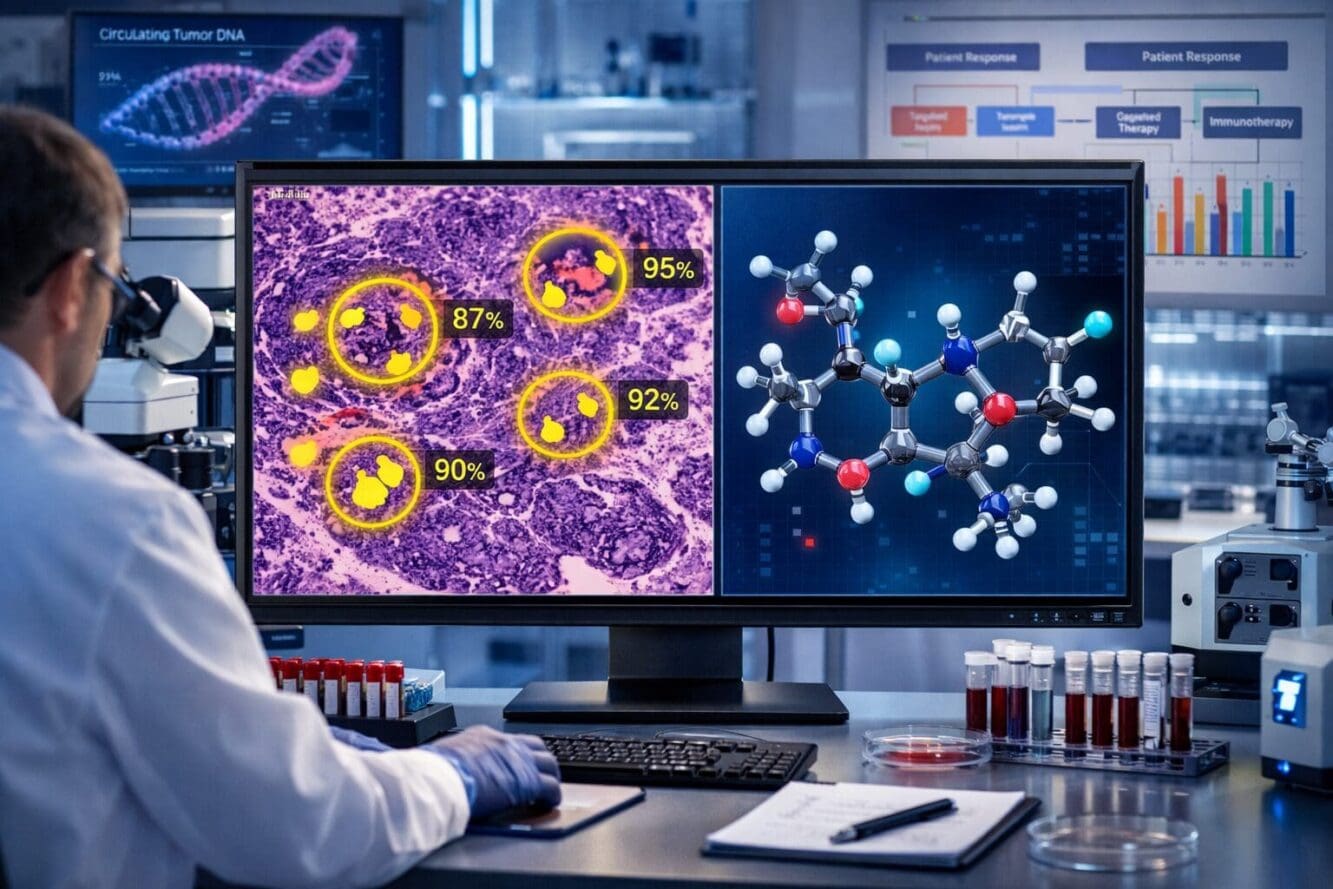
Detecting cancer early represents only half the battle—effective treatment requires precision targeting of each patient’s unique tumor biology. AI-designed treatment molecules are transforming oncology by enabling computational drug discovery tailored to individual cancer profiles.
Machine learning algorithms analyze vast databases of:
- Tumor genomic sequences
- Protein expression patterns
- Drug response data from thousands of patients
- Molecular structure-activity relationships
These systems can predict which drug combinations will prove most effective against specific tumor types, design novel molecules targeting previously “undruggable” proteins, and optimize treatment regimens to maximize efficacy while minimizing side effects.
Breakthrough Applications in Difficult Cancers
Pancreatic cancer—one of the deadliest malignancies with a five-year survival rate below 10%—exemplifies AI’s therapeutic potential. AI-designed molecules enhancing pancreatic cancer treatment target specific genetic mutations and metabolic vulnerabilities unique to pancreatic tumors [2].
The process works through:
- Tumor profiling: Comprehensive genomic and proteomic analysis of patient’s cancer
- AI prediction: Machine learning models identify targetable vulnerabilities
- Molecule design: Generative AI creates novel compounds or selects optimal existing drugs
- Treatment optimization: Algorithms determine ideal dosing, timing, and combinations
This represents a fundamental shift from the traditional “one-size-fits-all” chemotherapy approach to truly personalized cancer therapy.
Adaptive Radiation Therapy
Beyond pharmaceutical interventions, adaptive radiation therapy demonstrates AI assisting with treatment decisions beyond initial detection [5]. These systems continuously analyze tumor response during radiation treatment courses, automatically adjusting beam targeting and intensity to account for tumor shrinkage, patient positioning variations, and changes in surrounding healthy tissue.
The result: more precise radiation delivery, reduced damage to healthy organs, and improved tumor control—all achieved through real-time AI optimization.
AI in Medical Diagnostics: The Pathology Revolution
Addressing the Global Pathologist Shortage
Pathology—the microscopic examination of tissue samples—remains the gold standard for cancer diagnosis, yet the world faces a critical shortage. Approximately 100,000 pathologists must analyze 20 million new cancer cases annually [1], creating enormous workload pressures and potential diagnostic delays.
AI-enabled pathology systems are transforming this landscape. Digital pathology platforms equipped with machine learning can:
- ✅ Reduce time to detect metastatic deposits by up to 90%
- 📊 Boost sensitivity to nearly 100% for identifying cancer spread
- 🔬 Quantify tumor biomarkers with superhuman consistency
- 🎯 Predict treatment response based on histologic patterns
At CES 2026, demonstrations showcased AI-powered systems capable of analyzing entire tissue slides in minutes, highlighting suspicious regions for pathologist review and providing quantitative measurements of tumor characteristics [2].
The Foundation Model Revolution in Medical Imaging
Google’s recent release of MedGemma 1.5—an updated open-source multimodal generative AI model—represents a significant advancement in medical imaging analysis [3]. This foundation model offers:
- Expanded support for high-dimensional medical imaging (CT scans, MRI, histopathology)
- Improved anatomical localization across imaging modalities
- Integration capabilities with existing clinical workflows
- Availability on Hugging Face and Vertex AI for research and commercial use
Foundation models like MedGemma represent a shift from narrow, specialized algorithms to broader predictive capabilities. Rather than training separate AI systems for each diagnostic task, these comprehensive models can tackle multiple medical imaging challenges simultaneously.
The suite also includes MedASR, a medical speech recognition model optimized for clinical dictation [3], demonstrating how AI extends beyond image analysis to streamline entire diagnostic workflows.
Comprehensive Diagnostic Solutions: The Multi-Specialty Approach
Aidoc’s Groundbreaking FDA Clearance
In a landmark development for AI in medical diagnostics, Aidoc received FDA clearance for its comprehensive abdomen CT triage solution powered by a CARE foundation model [3]. This approval included 11 new indications, bringing the total to 14 approved detections including:
- Free air (indicating bowel perforation)
- Spinal fractures
- Hydronephrosis (kidney swelling)
- Bowel obstruction
- Pneumoperitoneum
- Other critical abdominal conditions
This represents the first multi-specialty triage AI built on a single algorithmic system [3]—a significant departure from previous single-indication AI tools. The implications are profound:
Traditional approach: Hospitals deploy separate AI algorithms for each condition, creating integration challenges and workflow complexity.
Foundation model approach: A single AI system analyzes imaging studies for multiple conditions simultaneously, providing comprehensive triage across specialties.
This efficiency gain proves especially valuable in emergency settings where rapid, accurate diagnosis across multiple organ systems can mean the difference between life and death. For emergency services responding to critical situations, such comprehensive diagnostic tools enhance response capabilities significantly.
Accelerating Adoption Across Healthcare Systems
The integration of AI into hospital systems has accelerated dramatically. 71% of US hospitals reported using predictive AI integrated with electronic health records in 2024, up from 66% in 2023 [1]. This rapid adoption reflects growing confidence in AI reliability and recognition of tangible clinical benefits.
Healthcare systems implementing AI diagnostics report:
- 🏥 Reduced diagnostic errors and improved accuracy
- ⏱️ Faster time-to-diagnosis for critical conditions
- 💰 Decreased healthcare costs through early intervention
- 👥 Improved patient satisfaction and outcomes
- 📉 Reduced clinician burnout through workflow optimization
Predictive Medicine: AI Forecasting Future Health
Simulating Health Timelines
Perhaps the most ambitious application of AI in medical diagnostics involves predicting disease onset years before symptoms appear. New foundational AI models analyzing millions of patient records can simulate “future health timelines,” predicting the onset of over 1,000 different diseases up to 20 years in advance [1].
This represents a paradigm shift from reactive medicine (treating diseases after they develop) to truly preventive healthcare (intervening before disease onset).
These predictive models integrate:
- Genetic risk factors
- Electronic health record data spanning decades
- Social determinants of health
- Environmental exposures
- Lifestyle factors
- Biomarker trends
The AI identifies subtle pattern combinations that precede disease development, enabling targeted interventions when prevention remains possible.
Traumatic Brain Injury: Minutes Instead of Hours
Traditional traumatic brain injury (TBI) diagnosis relies on CT imaging and clinical assessment, processes that can take hours in busy emergency departments. CES 2026 showcased AI-powered brain injury detection capability that operates in minutes [2], representing a significant acceleration from traditional diagnostic timelines.
These rapid-assessment tools prove particularly valuable in:
- Sports medicine settings requiring immediate concussion evaluation
- Rural emergency departments lacking neurology specialists
- Military and battlefield medicine contexts
- Mass casualty situations requiring rapid triage
For communities managing emergency response, such diagnostic speed can dramatically improve outcomes for trauma patients.
Virtual Care and AI-Enabled Patient Engagement
The Rise of Virtual Nurses
Generative AI agents—sometimes called “virtual nurses”—are emerging to engage patients in prevention and early detection [1]. These AI systems:
- 🗣️ Monitor symptoms through conversational interfaces
- 📅 Reinforce screening recommendations and appointment adherence
- 🚨 Escalate concerning symptoms to human clinicians
- 📚 Provide personalized health education
- 💊 Support medication adherence through reminders and education
Virtual nurses prove particularly valuable in communities with limited clinical staff access, extending healthcare reach to underserved populations. They operate 24/7, providing consistent patient support without the staffing constraints facing traditional healthcare systems.
Automated Breast Ultrasound and Beyond
Automated breast ultrasound exemplifies AI assisting with decision-making beyond simple detection [5]. These systems:
- Standardize imaging acquisition, reducing operator variability
- Automatically identify suspicious lesions requiring further evaluation
- Generate quantitative measurements for tracking changes over time
- Integrate findings with mammography and other imaging modalities
Similar technologies are emerging across medical specialties, from automated retinal screening for diabetic eye disease to AI-guided colonoscopy improving polyp detection rates.
Challenges and Considerations in AI Diagnostic Implementation
Regulatory Landscape Evolution
The rapid pace of AI development challenges traditional regulatory frameworks. The FDA and international regulatory bodies are adapting approval processes to accommodate AI’s unique characteristics:
- Continuous learning systems that improve over time
- Multi-indication platforms like Aidoc’s foundation model
- Generative AI creating novel diagnostic insights
- Algorithm transparency and explainability requirements
Regulatory updates aim to balance innovation encouragement with patient safety assurance, ensuring AI systems meet rigorous validation standards before clinical deployment [3].
Data Privacy and Security
AI diagnostic systems require vast amounts of patient data for training and operation, raising important privacy considerations:
- Secure data storage and transmission protocols
- De-identification processes protecting patient identity
- Consent frameworks for AI analysis of medical records
- Cybersecurity measures preventing unauthorized access
Healthcare organizations must implement robust data governance frameworks ensuring AI benefits don’t come at the expense of patient privacy.
Clinical Integration and Workflow
Successfully implementing AI in medical diagnostics requires more than accurate algorithms—it demands thoughtful integration into clinical workflows. Challenges include:
- Alert fatigue: Ensuring AI notifications enhance rather than overwhelm clinicians
- Training requirements: Educating healthcare professionals on AI capabilities and limitations
- Liability questions: Clarifying responsibility when AI assists diagnostic decisions
- Interoperability: Ensuring AI systems communicate effectively with existing health IT infrastructure
Organizations achieving successful AI adoption prioritize these integration considerations alongside technical performance.
The Future of AI in Medical Diagnostics: From EKG Analysis to Cancer Treatment Design
Emerging Technologies on the Horizon
The AI diagnostic revolution continues accelerating. Emerging developments include:
Quantum computing applications: Enabling molecular simulations for drug design at unprecedented scales
Federated learning: Training AI models across multiple institutions while preserving data privacy
Explainable AI: Systems that not only provide diagnoses but explain their reasoning in clinically meaningful terms
Ambient clinical intelligence: AI that passively monitors clinical encounters, automatically documenting findings and suggesting diagnoses
Wearable diagnostic devices: Consumer technologies providing continuous health monitoring with AI analysis
Democratizing Healthcare Access
Perhaps AI’s greatest promise lies in democratizing access to expert-level diagnostics. AI systems can:
- Bring specialist-level interpretation to rural and underserved communities
- Reduce healthcare costs through early detection and prevention
- Overcome language barriers through multilingual interfaces
- Provide consistent diagnostic quality regardless of clinician experience level
- Scale expertise beyond the limitations of human workforce availability
For communities facing healthcare access challenges, these capabilities represent transformative opportunities for health equity.
The Human-AI Partnership
Despite AI’s impressive capabilities, the future of medical diagnostics isn’t about replacing physicians—it’s about augmenting human expertise with computational power. The most effective diagnostic systems combine:
- AI’s pattern recognition and data processing speed
- Human clinical judgment and contextual understanding
- Patient preferences and values
- Ethical considerations requiring human wisdom
This collaborative intelligence model leverages each partner’s strengths, creating diagnostic capabilities exceeding what either could achieve alone [1].
Conclusion
AI in Medical Diagnostics: From EKG Analysis to Cancer Treatment Design represents far more than technological advancement—it’s a fundamental transformation in how healthcare identifies, predicts, and treats disease. From AI algorithms analyzing 10-second EKG strips to predict cardiac events months in advance, to machine learning systems designing personalized cancer therapies targeting individual tumor vulnerabilities, artificial intelligence is delivering on medicine’s long-standing promise of truly personalized, preventive care.
The statistics tell a compelling story: 71% of US hospitals now integrate predictive AI into electronic health records, AI-enabled pathology systems reduce detection time by 90% while approaching 100% sensitivity, and foundation models can predict over 1,000 diseases up to 20 years before onset. These aren’t future possibilities—they’re current realities transforming patient care in 2026.
Yet technology alone doesn’t create better healthcare. Success requires thoughtful integration into clinical workflows, robust regulatory frameworks ensuring patient safety, and commitment to equitable access ensuring AI’s benefits reach all communities, not just those with resources to implement cutting-edge systems.
Actionable Next Steps
For Healthcare Professionals:
- Explore AI diagnostic tools relevant to your specialty through professional societies and continuing education
- Participate in AI implementation planning at your institution to ensure clinical workflow integration
- Stay informed about regulatory developments and evidence supporting AI applications
For Healthcare Organizations:
- Assess current diagnostic workflows to identify high-impact opportunities for AI integration
- Develop data governance frameworks supporting AI while protecting patient privacy
- Invest in staff training ensuring successful AI adoption and utilization
For Patients:
- Ask healthcare providers about AI-assisted diagnostic options available for your conditions
- Participate in health screening programs incorporating multi-cancer early detection when appropriate
- Utilize AI-enabled patient engagement tools supporting preventive care and symptom monitoring
For Policymakers:
- Support regulatory frameworks balancing innovation with patient safety
- Address reimbursement policies ensuring AI diagnostic access regardless of socioeconomic status
- Invest in health IT infrastructure enabling AI integration across healthcare settings
The revolution in medical diagnostics is underway. By embracing AI’s capabilities while maintaining focus on patient-centered care, healthcare can fulfill its fundamental mission: detecting disease earlier, treating it more effectively, and ultimately preventing it altogether. The future of medicine isn’t artificial intelligence versus human expertise—it’s the powerful partnership between them, working together to create healthier communities for all.
References
[1] Ai Medical Diagnostics – https://diagnostics.roche.com/global/en/healthcare-transformers/article/ai-medical-diagnostics.html
[2] Ces 2026 Healthcare Ai Next Gen Diagnostics – https://sage-growth.com/blog/ces-2026-healthcare-ai-next-gen-diagnostics/
[3] Multi Condition Clearances Regulation Updates And Funding – https://www.signifyresearch.net/insights/multi-condition-clearances-regulation-updates-and-funding/
[4] Advances In Ai January 2026 – https://www.diagnosticimaging.com/view/advances-in-ai-january-2026
[5] The Insight Series Ai Digital Health – https://www.advamed.org/2026/01/30/the-insight-series-ai-digital-health/
[6] Ai 411 January 2026 – https://www.healthcare-brew.com/stories/2026/02/02/ai-411-january-2026
[7] Openai Ai As A Healthcare Ally Jan 2026 – https://cdn.openai.com/pdf/2cb29276-68cd-4ec6-a5f4-c01c5e7a36e9/OpenAI-AI-as-a-Healthcare-Ally-Jan-2026.pdf
[8] Ai Trends For 2026 How Ai Is Rewiring Clinical Workflows And Medical Devices – https://mofotech.mofo.com/topics/ai-trends-for-2026—how-ai-is-rewiring-clinical-workflows-and-medical-devices
Some content and illustrations on GEORGIANBAYNEWS.COM are created with the assistance of AI tools.
GEORGIANBAYNEWS.COM shares video content from YouTube creators under fair use principles. We respect creators’ intellectual property and include direct links to their original videos, channels, and social media platforms whenever we feature their content. This practice supports creators by driving traffic to their platforms.