





















BRICS Currency Challenge: Threat to US Dollar Dominance Post-Russia Sanctions
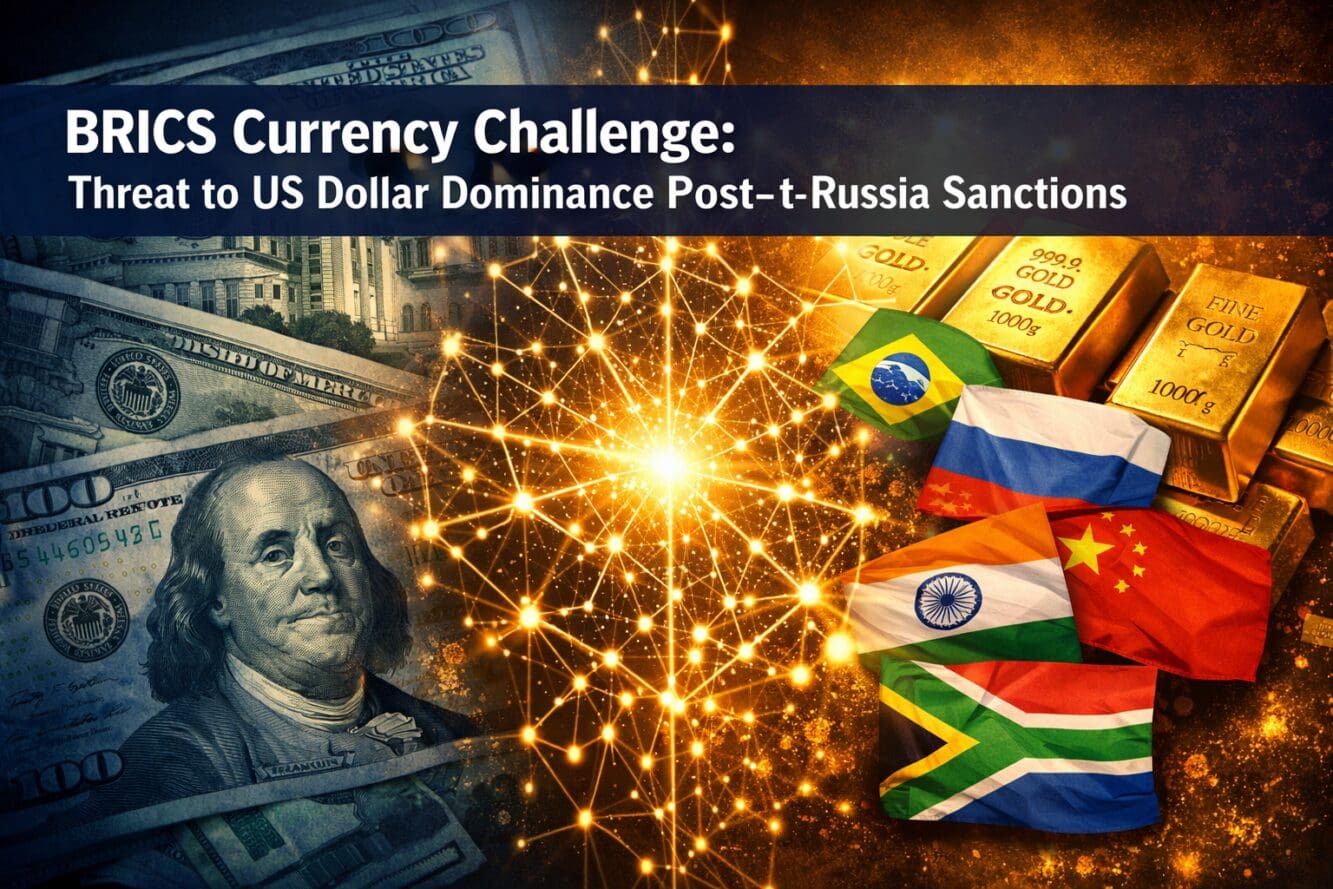
When Russia’s $300 billion in foreign reserves were frozen in 2022, the global financial landscape shifted dramatically. What seemed like a decisive Western sanction became the catalyst for the most significant challenge to US dollar supremacy in decades. The BRICS Currency Challenge: Threat to US Dollar Dominance Post-Russia Sanctions represents more than just economic maneuvering—it signals a fundamental restructuring of international finance driven by nations seeking alternatives to Western-controlled payment systems.
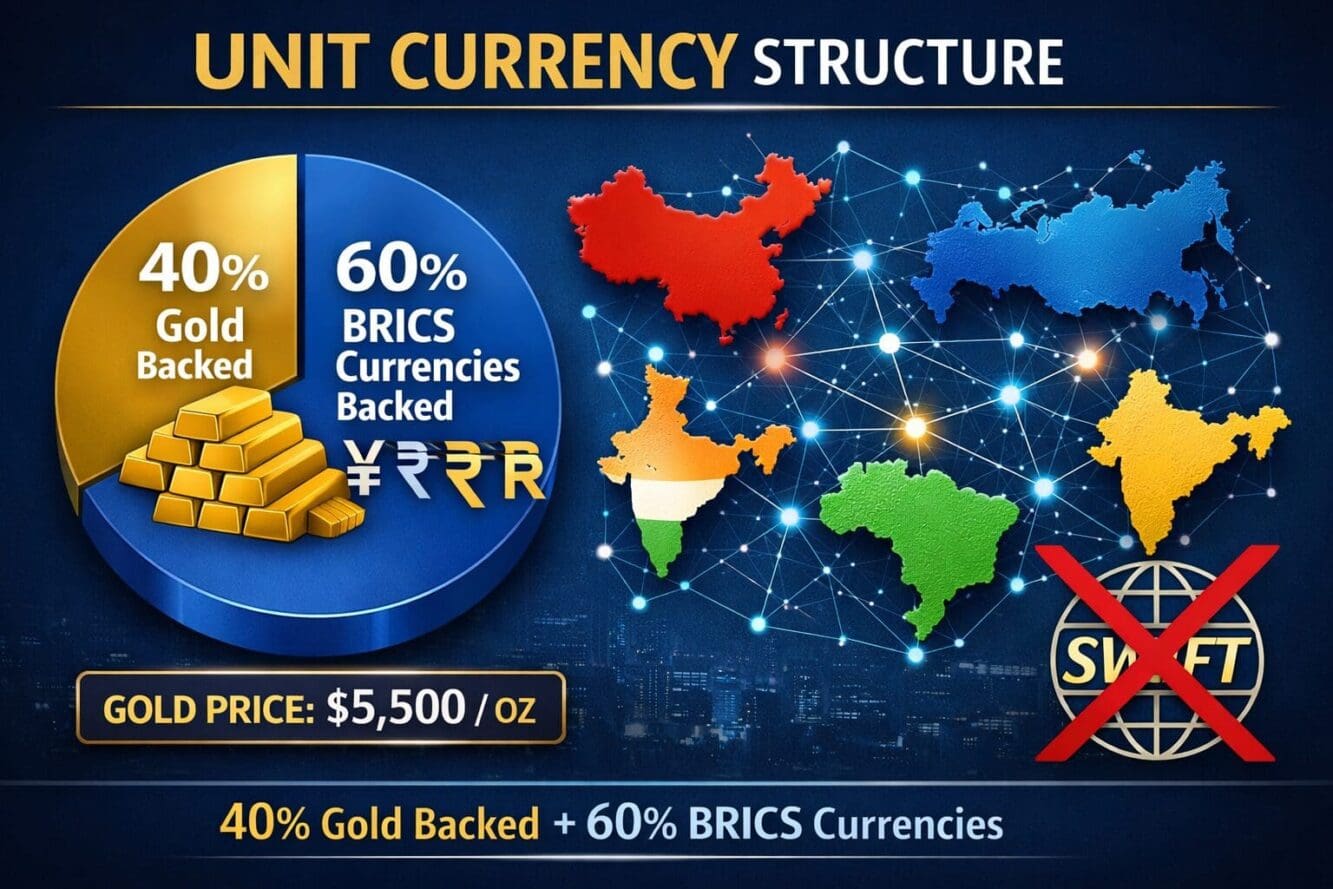
In January 2026, BRICS nations officially launched “the Unit,” a blockchain-based settlement currency backed 40% by gold and 60% by member currencies[1][4]. This development marks the bloc’s most concrete step toward building de-dollarization infrastructure, though internal disagreements and practical challenges continue to limit its immediate impact.
In January 2026, BRICS nations officially launched “the Unit,” a blockchain-based settlement currency backed 40% by gold and 60% by member currencies[1][4]. This development marks the bloc’s most concrete step toward building de-dollarization infrastructure, though internal disagreements and practical challenges continue to limit its immediate impact.https://www.youtube.com/watch?v=RgIVKTky8ss
Key Takeaways
- 🏦 The Unit launched in January 2026 as a blockchain-based settlement system backed by gold and BRICS currencies, designed to bypass SWIFT for cross-border trade[1][4]
- 💰 Gold backing strengthened with prices exceeding $5,500 per ounce in January 2026, providing solid asset foundation for the new currency system[5]
- 🌍 Russia’s frozen reserves ($300 billion) accelerated BRICS urgency to create alternative payment infrastructure independent of Western control[5]
- ⚠️ Internal divisions persist with India opposing common currency, Brazil prioritizing payment systems over full currency replacement, and China pursuing gradual renminbi internationalization[3]
- 📊 Limited immediate threat to dollar dominance according to Peterson Institute experts, though momentum for non-dollar oil trades (20% in 2023) shows gradual shift[2][3]
Understanding the BRICS Currency Challenge: Threat to US Dollar Dominance Post-Russia Sanctions
The BRICS Currency Challenge: Threat to US Dollar Dominance Post-Russia Sanctions emerged from a perfect storm of geopolitical tensions and economic necessity. When Western nations excluded Russia from the SWIFT payment system following the Ukraine invasion, they inadvertently demonstrated the weaponization potential of dollar-based infrastructure[5].
This financial isolation created urgency among BRICS members—Brazil, Russia, India, China, and South Africa—to develop alternatives that could protect them from similar sanctions in the future. The result was “the Unit,” a digital settlement currency that represents the bloc’s most ambitious attempt at financial independence.
What Is “The Unit”?
“The Unit” functions as a neutral settlement tool for cross-border trade between BRICS nations, structured with specific asset backing[1]:
| Component | Percentage | Details |
|---|---|---|
| Gold | 40% | Denominated in kilo bars, redeemable by participating entities |
| BRICS Currencies | 60% | Yuan, Rupee, Real, Ruble, Rand in proportional allocation |
| Technology | Blockchain | Immutable, instant transactions bypassing SWIFT |
New Development Bank President Dilma Rousseff publicly announced agreement in principle on this settlement currency, marking official commitment from BRICS leadership[2]. However, the system remains in pilot stage as a test platform rather than an immediate replacement for national currencies or the US dollar[1].
The blockchain technology framework enables instant, transparent transactions between member nations without relying on Western financial intermediaries. This technological independence represents a significant shift in how international trade settlements could function.
How Russia’s Frozen Reserves Accelerated De-Dollarization Efforts
The confiscation of $300 billion in Russian reserves following 2022 sanctions sent shockwaves through emerging economies[5]. Nations holding substantial dollar-denominated reserves suddenly faced an uncomfortable reality: their assets could be frozen if geopolitical winds shifted.
This realization transformed de-dollarization from theoretical discussion to urgent priority. Countries across the Global South began questioning the wisdom of maintaining reserves in currencies controlled by governments that might use them as leverage.
The Global South Perspective
For many developing nations, the BRICS currency initiative represents more than economics—it symbolizes financial sovereignty. The Global South has long operated within a financial system designed by and for Western powers, where dollar dominance meant vulnerability to decisions made in Washington.
The Unit offers an alternative framework where:
- ✅ Trade settlements occur without dollar conversion fees
- ✅ Sanctions risk decreases through diversified payment channels
- ✅ Gold backing provides tangible asset security
- ✅ Blockchain transparency reduces manipulation potential
However, enthusiasm varies significantly across the Global South. While some nations view BRICS initiatives as liberation from dollar hegemony, others recognize the economic risks of antagonizing their largest trading partner—the United States.
Internal Divisions Undermining the BRICS Currency Challenge
Despite public solidarity, the BRICS Currency Challenge: Threat to US Dollar Dominance Post-Russia Sanctions faces significant internal obstacles that limit its effectiveness[3].
India’s Opposition
India has explicitly opposed any common BRICS currency, fearing US trade reprisals that could devastate its export-dependent economy. With the United States as a major trading partner, India cannot afford the 100% tariffs threatened by former President Trump against nations creating dollar alternatives[2].
Brazil’s Cautious Approach
Brazil, holding the rotating BRICS presidency for 2025, officially stated there are no plans for significant steps toward a full BRICS currency[2]. Instead, Brazilian leadership prioritizes:
- Cross-border payment system development
- Blockchain technology exploration
- Gradual reduction of dollar dependency
- Maintaining positive US trade relations
This cautious stance reflects Brazil’s economic pragmatism over ideological commitment to de-dollarization.
China’s Separate Agenda
China pursues gradual renminbi internationalization while maintaining strict capital controls that contradict true currency openness[3]. Beijing views BRICS initiatives as complementary to—not replacement for—its own currency expansion efforts.
South Africa’s Risk Assessment
South Africa considers aggressive de-dollarization economically risky and likely to provoke damaging US sanctions[3]. As the smallest BRICS economy, South Africa has the most to lose from American economic retaliation.
The Missing Mandate
The 126-point Rio de Janeiro BRICS leaders’ declaration contains no mention of de-dollarization or initiatives to lessen the dollar’s role[3]. This glaring omission reveals the lack of consensus on challenging dollar dominance directly.
Oil Trade De-Dollarization: A Gradual Shift
Beyond official BRICS initiatives, market forces are driving currency diversification. In 2023, approximately one-fifth of oil trades were conducted using non-US dollar currencies[2]. This trend indicates growing momentum for alternatives independent of government-led programs.
The shift reflects practical considerations:
- 🛢️ Chinese yuan oil contracts offer direct settlement for Asian buyers
- 🛢️ Euro-denominated trades reduce currency conversion costs for European purchasers
- 🛢️ Rupee-ruble arrangements enable India-Russia energy transactions despite sanctions
While 20% represents a minority of global oil trade, the trajectory suggests continued erosion of dollar dominance in commodity markets. This organic de-dollarization may ultimately prove more sustainable than government-mandated currency systems.
Expert Assessment: Limited Immediate Threat
Analysts at the Peterson Institute for International Economics conclude that “the BRICS pose no serious threat to the dollar’s dominance”[2]. Their assessment cites fundamental challenges:
Macroeconomic Divergence
BRICS nations lack the economic convergence necessary for successful currency union. Their economies operate at different development stages with incompatible monetary policies, making coordinated currency management nearly impossible.
Trust Deficit
Currency dominance requires institutional trust that BRICS nations have not established. The US dollar benefits from:
- Transparent Federal Reserve policies
- Established legal frameworks
- Predictable governance structures
- Deep, liquid financial markets
BRICS members cannot replicate these trust-building institutions quickly, particularly given their own governance challenges and capital controls.
Network Effects
The dollar enjoys powerful network effects where its widespread use reinforces further adoption. Breaking this cycle requires not just an alternative currency, but an entire alternative financial ecosystem—a decades-long project.
Political Pressure and US Response
Former President Trump’s threat of 100% tariffs against nations creating dollar alternatives demonstrates American awareness of the challenge[2]. However, Kremlin spokesperson Dmitry Peskov dismissed the threat, highlighting the geopolitical tensions surrounding currency competition.
This political pressure creates a dilemma for BRICS nations: pursue financial independence and risk economic retaliation, or maintain dollar dependency and accept continued vulnerability. Most members have chosen a middle path—developing alternatives while avoiding direct confrontation.
For those interested in how American politics shapes global economic policy, the currency debate illustrates the intersection of domestic political posturing and international financial architecture.
Gold’s Role in the Currency Challenge
With gold prices reaching over $5,500 per ounce in January 2026, the precious metal provides substantial backing for the Unit[5]. This 40% gold composition offers tangible asset security that pure fiat currencies lack.
Gold backing serves multiple strategic purposes:
- 💎 Inflation hedge protecting against currency devaluation
- 💎 Universal value recognized across all cultures and economies
- 💎 Independence from any single nation’s monetary policy
- 💎 Historical precedent as trusted store of value
However, gold’s volatility also introduces risk. Price fluctuations could destabilize the Unit’s value, creating the same uncertainty BRICS nations seek to escape.
Technology as the Real Game-Changer
While currency composition matters, the blockchain technology underlying the Unit may prove more transformative than the currency itself[1]. Immutable, instant cross-border transactions represent a fundamental improvement over existing SWIFT infrastructure.
This technological advantage could enable:
- ⚡ Real-time settlement eliminating multi-day clearing periods
- ⚡ Reduced costs through disintermediation of correspondent banks
- ⚡ Enhanced transparency with auditable transaction records
- ⚡ Programmable money enabling smart contract functionality
The technology infrastructure being built for BRICS settlements could eventually support broader applications beyond member nations. This represents a longer-term threat to dollar dominance than the currency itself.
Those following developments in AI and technology may recognize parallels in how blockchain could disrupt traditional financial systems similarly to how artificial intelligence transforms other industries.
The Path Forward: Incremental Change, Not Revolution
The BRICS Currency Challenge: Threat to US Dollar Dominance Post-Russia Sanctions will likely unfold over decades rather than years. Immediate dollar replacement remains implausible given institutional, political, and economic obstacles.
However, incremental erosion appears inevitable:
- Bilateral trade agreements increasingly denominated in local currencies
- Regional payment systems reducing SWIFT dependency
- Commodity markets diversifying settlement currencies
- Central bank reserves gradually shifting toward gold and alternatives
- Technology platforms enabling dollar-bypassing transactions
This gradual process mirrors historical currency transitions, which typically span generations rather than occurring through sudden disruption.
Conclusion: A Multipolar Financial Future
The BRICS Currency Challenge: Threat to US Dollar Dominance Post-Russia Sanctions represents a significant milestone in the evolution toward a multipolar financial system. While the Unit faces substantial obstacles—internal disagreements, limited immediate adoption, and powerful network effects favoring the dollar—its January 2026 launch demonstrates concrete progress toward de-dollarization infrastructure.
The frozen Russian reserves that catalyzed this initiative revealed the vulnerability of dollar-dependent nations to geopolitical weaponization of finance. This lesson will not be forgotten by the Global South, even if immediate alternatives remain imperfect.
Actionable Next Steps
For policymakers, investors, and global citizens monitoring this transition:
- 📌 Track bilateral trade agreements between BRICS nations as indicators of practical de-dollarization
- 📌 Monitor gold price movements which directly impact the Unit’s asset backing strength
- 📌 Follow blockchain payment system adoption rates beyond BRICS membership
- 📌 Assess US policy responses to currency competition, particularly tariff threats
- 📌 Diversify currency exposure in investment portfolios to hedge against dollar depreciation
- 📌 Study historical currency transitions for context on realistic timelines and challenges
The dollar’s dominance will not disappear overnight, but the foundations for alternatives are being laid. Understanding this gradual transition helps navigate the emerging multipolar financial landscape that will define the coming decades.
As global economic power continues shifting toward emerging markets, the BRICS currency initiative—despite its current limitations—signals the beginning of a fundamental restructuring in how international commerce operates. Whether the Unit succeeds or fails, the momentum toward financial multipolarity appears irreversible.
References
[1] Brics Currency Where It Stands In 2026 The Unit – https://www.forerunner.com/blog/brics-currency-where-it-stands-in-2026-the-unit
[2] Brics Currency – https://investingnews.com/brics-currency/
[3] The Brics And De Dollarisation – https://internationalviewpoint.org/The-BRICS-and-de-dollarisation
[4] Watch – https://www.youtube.com/watch?v=S-ouRaRPpbE
[5] Brics Laying First Tracks For New Global Payment System – https://asiatimes.com/2026/01/brics-laying-first-tracks-for-new-global-payment-system/
Some content and illustrations on GEORGIANBAYNEWS.COM are created with the assistance of AI tools.
GEORGIANBAYNEWS.COM shares video content from YouTube creators under fair use principles. We respect creators’ intellectual property and include direct links to their original videos, channels, and social media platforms whenever we feature their content. This practice supports creators by driving traffic to their platforms.