





















FIFA World Cup Hotel Chaos in Toronto: Thousands of Reservations Released, Impacts on Fans and Local Economy
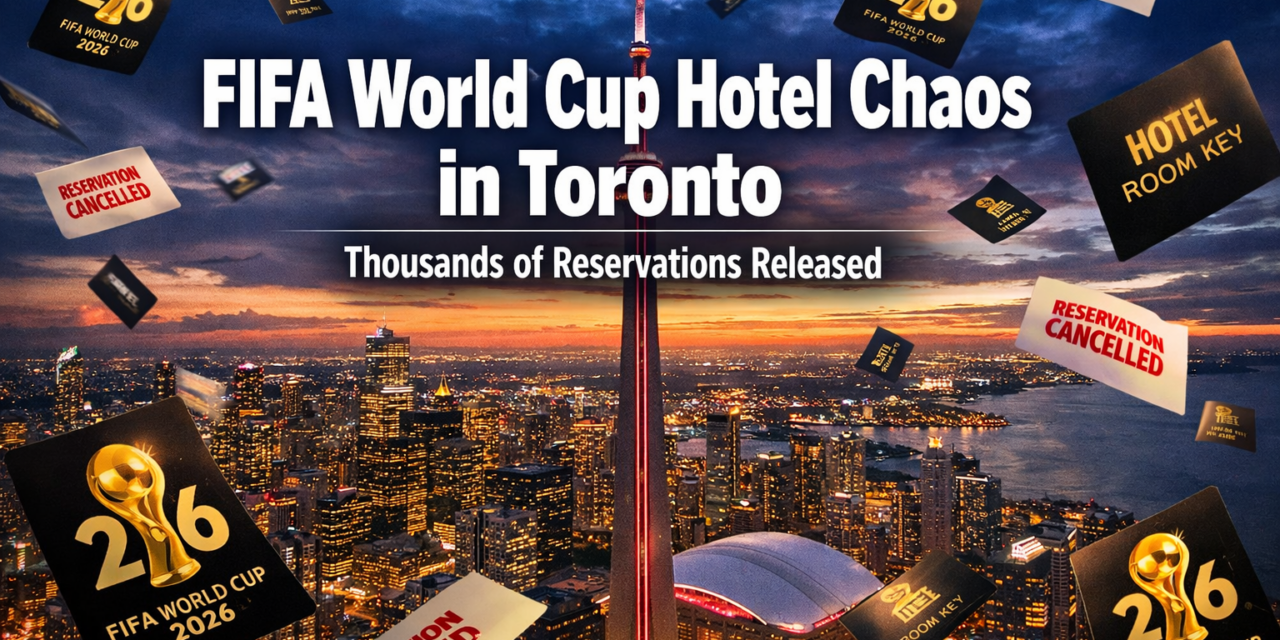
With barely 60 days until kickoff, FIFA quietly dropped thousands of Toronto hotel reservations back onto the open market — a move that sent shockwaves through the hospitality industry and left fans scrambling to understand what it means for their travel plans. The FIFA World Cup hotel chaos in Toronto, where thousands of reservations were released, is now creating both uncertainty and unexpected opportunity across the city’s tourism landscape. These rooms, originally locked down under contracts dating back to 2017, were meant for FIFA staff, media, and tournament stakeholders. Instead, they’re now flooding availability at a critical moment for one of the biggest sporting events ever held on Canadian soil [1].
Key Takeaways
- 🏨 FIFA released thousands of hotel rooms in Toronto originally booked for the June 11–July 2, 2026 tournament window, affecting properties near key venues like Toronto Stadium.
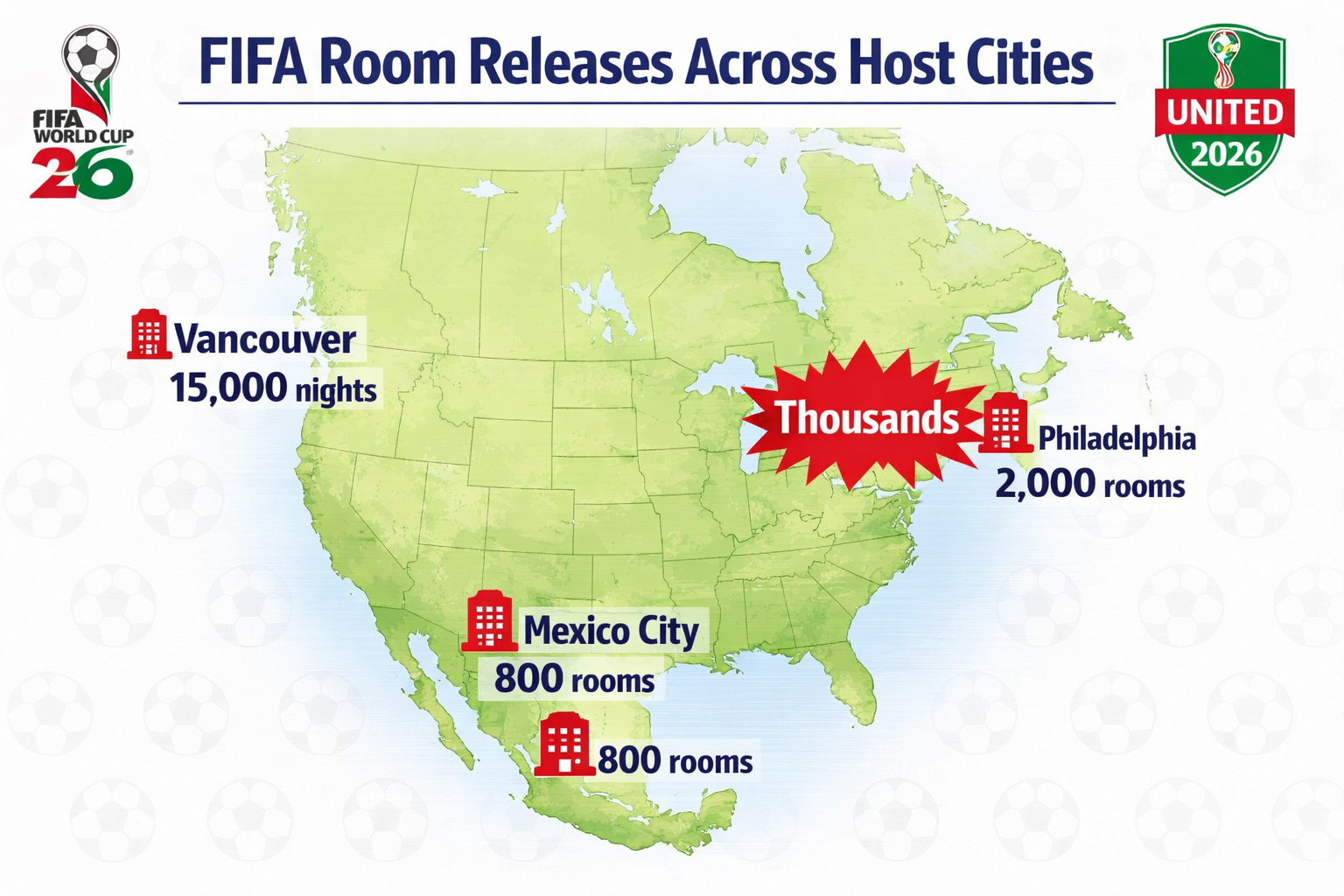
- 🌎 The problem is continent-wide. Vancouver lost approximately 15,000 hotel nights, Philadelphia saw ~2,000 cancellations, and Mexico City experienced ~800 [1][3].
- 💰 Short-term pricing disruption is real, but the influx of available rooms may actually benefit fans who haven’t yet booked accommodations.
- 📉 Hotels face revenue uncertainty as they scramble to re-sell premium inventory at potentially lower rates during peak tournament dates.
- ✅ Fans can take action now by monitoring newly released rooms for competitive pricing and flexible cancellation policies.
What Happened: FIFA’s Mass Room Release Explained
FIFA’s decision to release thousands of Toronto hotel bookings stems from what the organization describes as its “standard planning process” [1]. When Canada, the United States, and Mexico won the bid to co-host the 2026 FIFA World Cup, contracts were signed with hotels across all host cities as early as 2017. These agreements reserved massive blocks of rooms for nearly a decade — rooms earmarked for FIFA officials, broadcast teams, sponsors, and other tournament stakeholders.
As final attendance figures and staffing numbers were confirmed in early 2026, FIFA determined it no longer needed the full inventory. The result? A sudden wave of cancellations that caught many hoteliers off guard.
Hotel X Toronto, located steps from Toronto Stadium where Canada will play its historic first match, is among the properties directly impacted [1]. For a venue-adjacent hotel banking on World Cup demand, the timing couldn’t be more disruptive.
“While overbooking and subsequent cancellations are routine in World Cup planning, the 2026 volume has been unprecedented.” — Industry analysts [3]
How the FIFA World Cup Hotel Chaos in Toronto Compares to Other Host Cities
Toronto is far from alone. The FIFA World Cup hotel chaos has rippled across every host city in North America, though the scale varies dramatically.
| Host City | Estimated Rooms/Nights Released | Impact Level |
|---|---|---|
| 🇨🇦 Vancouver | ~15,000 hotel nights | 🔴 Severe |
| 🇨🇦 Toronto | Thousands of rooms | 🔴 Severe |
| 🇺🇸 Philadelphia | ~2,000 rooms | 🟡 Moderate |
| 🇺🇸 Boston | Significant (unspecified) | 🟡 Moderate |
| 🇲🇽 Mexico City | ~800 rooms | 🟢 Lower |
Vancouver has been hit hardest. The BC Hotel Association reported approximately 15,000 hotel nights released by FIFA — one of the most substantial cancellations among all World Cup host cities [1]. Philadelphia experienced roughly 2,000 room cancellations, while Mexico City saw a comparatively modest 800 [3].
The pattern reveals a troubling inconsistency in FIFA’s planning. Canadian cities appear disproportionately affected, raising questions about whether the organization overestimated its accommodation needs north of the border. For context, those interested in how global economic dependencies shape major events will find parallels in the way international organizations manage cross-border logistics.
The Economic Ripple Effect on Toronto’s Hospitality Sector
The financial implications extend well beyond empty rooms. Toronto’s hospitality industry had been preparing for the World Cup for years, with hotels investing in renovations, staffing increases, and premium pricing strategies built around guaranteed FIFA bookings.
Revenue Losses and Repricing Pressure
Hotels that held FIFA-contracted rooms at negotiated rates now face a difficult choice:
- Re-list rooms at market rates — which may be lower than FIFA’s contracted prices
- Compete aggressively with newly available inventory from other affected properties
- Absorb the loss if rooms go unsold during what was supposed to be a guaranteed sellout period
For independent hotels and smaller chains, this disruption is especially painful. Large international brands have the marketing budgets and loyalty programs to pivot quickly. Smaller operators don’t.
The Broader Tourism Ecosystem
The chaos doesn’t stop at hotel front desks. Restaurants, transportation services, tour operators, and retail businesses had all built projections around full hotel occupancy during the tournament window. With local events and community celebrations already planned around World Cup tourism, the knock-on effects could dampen the economic boost that host cities were counting on.
Toronto’s tourism board had projected the World Cup would generate hundreds of millions in visitor spending. Those projections now carry significant uncertainty.
What This Means for Fans: Opportunity Amid the Chaos
Here’s the silver lining: the FIFA World Cup hotel chaos in Toronto may actually work in fans’ favor.
For months, World Cup travelers have faced sky-high accommodation prices and limited availability. The sudden release of thousands of rooms changes the equation dramatically.
🎯 Fan Travel Tips for 2026 World Cup in Toronto
Book now, but choose flexible cancellation policies. Newly released rooms are hitting booking platforms daily. Lock in rates while monitoring for better deals.
Look beyond downtown. Properties in surrounding areas — including the Georgian Bay region — offer competitive rates and are within driving distance of Toronto venues.
Compare across platforms. Hotels may list released rooms at different prices on different booking sites. Check direct hotel websites, aggregators, and last-minute deal apps.
Consider alternative accommodations. Short-term rentals, hostels, and university housing often become available during major events. Community-driven options may also emerge as local organizations respond to demand.
Monitor transportation logistics. With hotel locations potentially shifting, fans should also stay updated on transit options and transportation changes that may affect their commute to match venues.
Join fan forums and alert services. Real-time information sharing among the fan community has proven invaluable during past tournaments.
Pro tip: Hotels near Toronto Stadium, including Hotel X, may offer last-minute deals as they rush to fill released inventory. Set price alerts for properties within a 2-kilometer radius of the venue.
FIFA’s Response and the Accountability Question
FIFA has maintained that the room releases are part of routine event planning [1]. The organization argues that large-scale sporting events always involve preliminary overbooking followed by adjustments as operational needs become clearer.
However, critics point out several problems with this explanation:
- The scale is unprecedented. Previous World Cups saw cancellations, but not at this volume across this many cities [3].
- The timing is problematic. Releasing rooms roughly 60 days before kickoff leaves hotels minimal time to recover lost revenue.
- Communication was lacking. Many hoteliers reported learning about cancellations with little advance notice, making it difficult to plan alternative sales strategies.
The situation has drawn attention from local government officials and tourism boards who are now calling for greater transparency in how FIFA manages its accommodation contracts for future events. For those following how major organizations navigate public scrutiny, the parallels in accountability and communication failures are striking.
Looking Ahead: Will the Market Stabilize Before Kickoff?
The good news is that demand for World Cup accommodations remains extremely strong. Canada is hosting matches in a FIFA World Cup for the first time, and the Canadian men’s national team’s participation has generated enormous domestic interest.
Industry experts predict that most released rooms will be absorbed by the market within weeks, particularly for high-demand match days. The key variables include:
- Canada’s match schedule — Games featuring the host nation will drive the highest accommodation demand
- Knockout round progression — If Toronto hosts elimination matches, late-tournament demand could spike dramatically
- International fan travel patterns — The timing of visa approvals and flight bookings from participating nations will influence absorption rates
Hotels that act quickly to reprice and market their newly available inventory stand to recover much of the lost revenue. Those that wait may find themselves competing in an increasingly crowded marketplace.
For fans planning to enjoy live entertainment and cultural events alongside World Cup matches, the expanded hotel availability could make the overall experience more accessible and affordable.
Conclusion
The FIFA World Cup hotel chaos in Toronto — with thousands of reservations released just weeks before the tournament — represents a significant disruption to the city’s hospitality sector and a planning failure that has affected host cities across North America. Yet within this chaos lies genuine opportunity for fans, local businesses, and the broader tourism ecosystem.
Here’s what to do next:
- ✅ Fans: Start searching for newly available rooms immediately. Prices are in flux, and early movers will secure the best deals.
- ✅ Hotels: Reprice aggressively and invest in digital marketing to capture demand from fans who previously couldn’t find rooms.
- ✅ Local businesses: Prepare for a potentially more distributed visitor pattern, with fans staying in a wider range of neighborhoods and surrounding communities.
- ✅ Policymakers: Push for binding transparency requirements in future FIFA host city agreements to prevent this scale of last-minute disruption.
The World Cup is still coming to Toronto. The rooms are still there. The fans are still coming. The question is whether the city’s hospitality industry can turn FIFA’s planning misstep into an unexpected win. ⚽
References
[1] Fifa Releases Thousands Of Toronto Hotel Rooms Ahead Of World Cup – https://toronto.citynews.ca/2026/04/18/fifa-releases-thousands-of-toronto-hotel-rooms-ahead-of-world-cup/
[3] World Cup Has A Massive Hotel Problem – https://www.thestreet.com/travel/world-cup-has-a-massive-hotel-problem
Content, illustrations, and third-party video appearing on GEORGIANBAYNEWS.COM may be generated or curated with AI assistance or reproduced pursuant to the fair dealing provisions of the Copyright Act, R.S.C. 1985, c. C-42. Attribution and hyperlinks to original sources are provided in acknowledgment of applicable intellectual property rights. Such referencing is intended to direct traffic to and support the original rights holders’ platforms.