










Functional Longevity Mindset Shift: Why Seniors Are Ditching Anti-Aging for Strength, Mobility, and Independence in 2026
Last updated: May 14, 2026
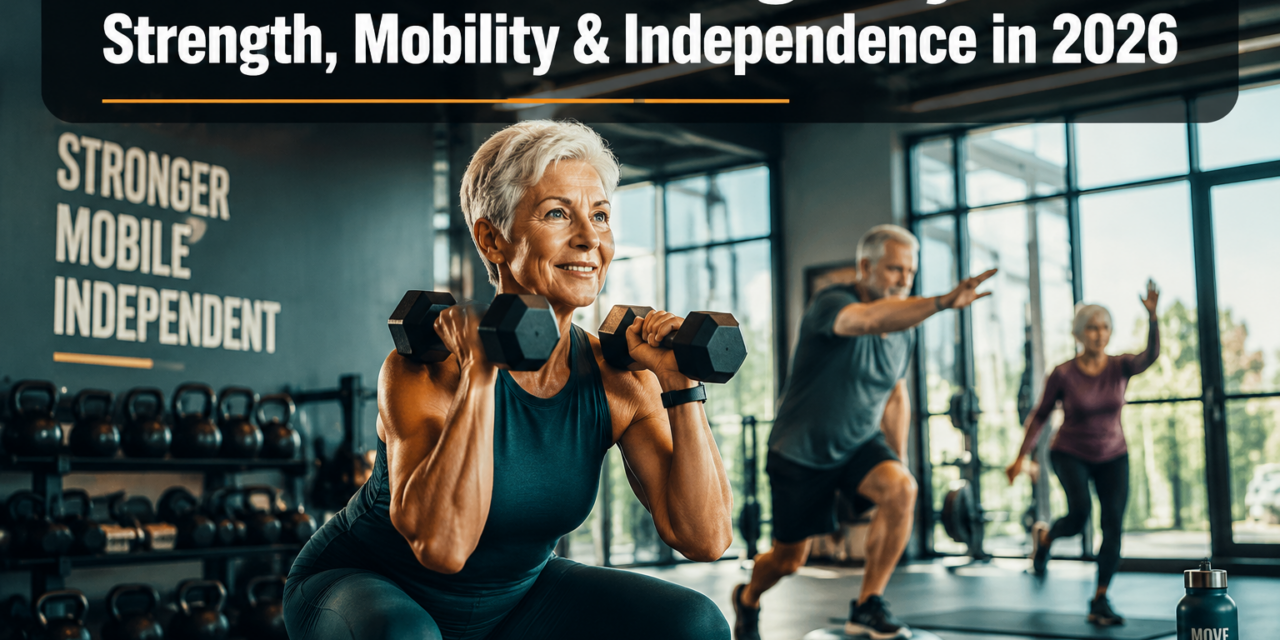
Quick Answer: The functional longevity mindset shift represents a fundamental change in how adults over 50 approach aging. Instead of chasing youthful appearance, seniors in 2026 are prioritizing muscle strength, balance, mobility, and cognitive clarity — the physical capacities that make independent living possible for decades longer. This shift is backed by wellness science, driven by consumer demand, and reshaping fitness programming across North America and beyond.
Key Takeaways
The “anti-aging” framework is rapidly losing relevance among adults over 50, replaced by a healthspan-first approach focused on function, not appearance [1]
Three core pillars drive healthy aging in 2026: physical activity, nutrition, and sleep — with lean muscle mass and mobility as critical markers [1]
Functional fitness programs now include strength training, aqua aerobics, dance, and balance work — all targeting real-life movements like stair climbing and carrying groceries [2]
Fall prevention has moved from afterthought to central fitness goal, with CDC-aligned programs integrating balance exercises into every senior wellness plan [4]
Cognitive health is now treated as a proactive longevity strategy, not a reactive medical concern [1]
“Exercise snacking” — short bursts of novel mental and physical activity — is gaining traction as a sustainable approach for older adults [3]
Purpose, social contribution, and mentorship are now recognized as measurable health factors, not soft wellness extras [1]
AI tools can now predict cognitive decline years before symptoms appear, enabling earlier preventive action [5]
What Is the Functional Longevity Mindset Shift?
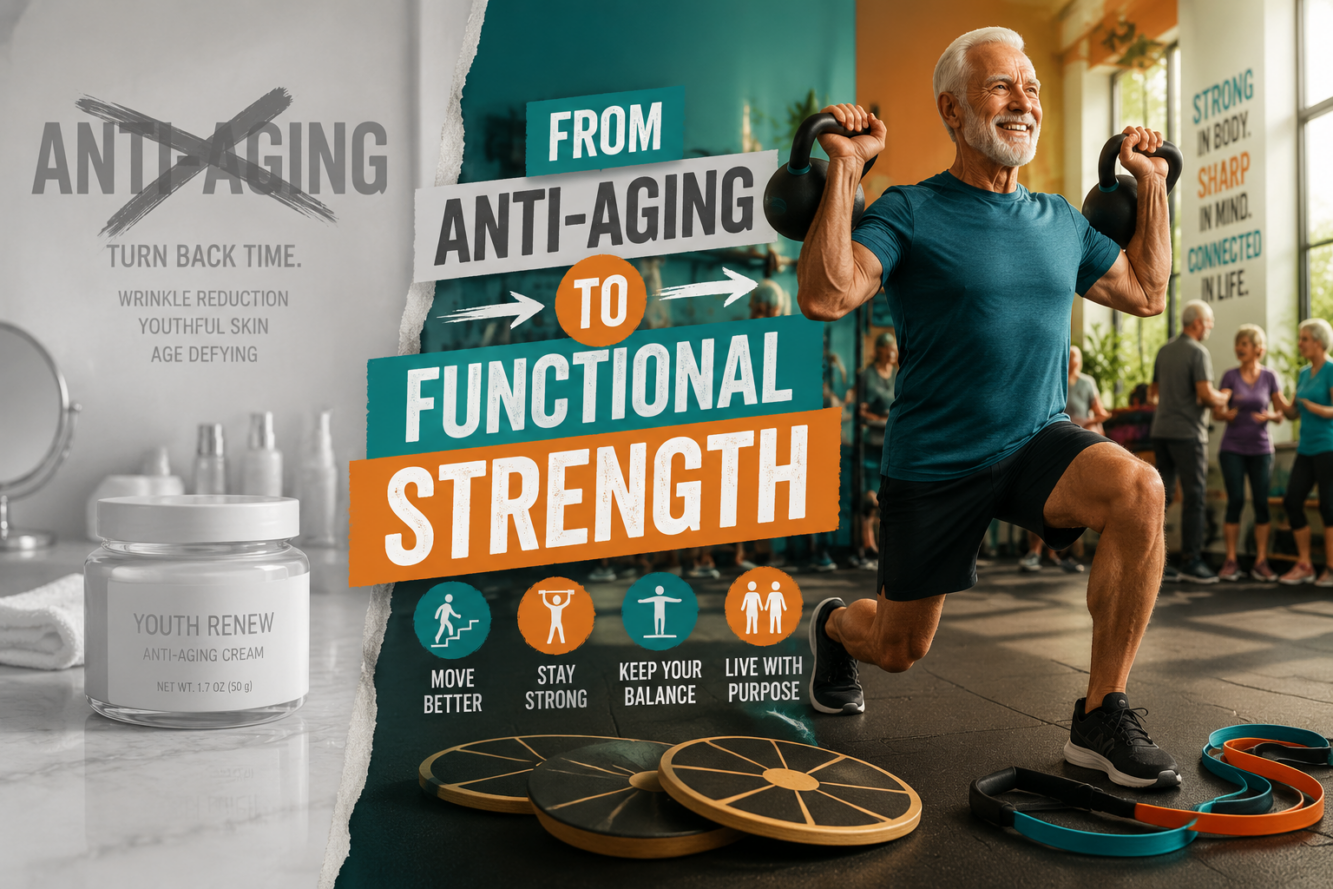
The functional longevity mindset shift is the move away from aging defined by appearance toward aging defined by capability. Adults over 50 are no longer asking “How do I look younger?” — they’re asking “How do I stay strong enough to live on my own terms?”
According to the Global Wellness Institute, the concept of “anti-aging” is rapidly losing relevance among older adults, replaced by a framework that prioritizes strength, mobility, cognitive clarity, and independence [1]. The goal is no longer a longer lifespan — it’s a longer healthspan: more years lived with autonomy and purpose.
“Longer lives lived with strength, clarity, autonomy and purpose are now the achievement — not simply longer lifespans.” — Global Wellness Institute, 2026 [1]
Why Are Seniors Moving Away from Anti-Aging Culture?
Anti-aging culture promised to slow the clock through creams, procedures, and cosmetic interventions. The functional longevity mindset shift rejects that premise because appearance-focused goals don’t prevent falls, preserve muscle mass, or keep the brain sharp.
Several forces are driving this cultural pivot in 2026:
Science has caught up: Healthspan research now clearly links muscle mass and mobility to survival and quality of life, not just aesthetics
Consumer fatigue: Adults over 50 are increasingly skeptical of products promising to “reverse aging” with no functional benefit
Community programming: Senior living communities and wellness brands have redesigned their offerings around movement, cognition, and purpose — not appearance [2]
Economic reality: Maintaining independence reduces long-term care costs, making functional fitness a financial strategy as much as a health one
What Does Functional Fitness Actually Look Like for Seniors?
Functional fitness for seniors focuses on movements that support everyday life. It has evolved well beyond generic chair exercises into a diverse range of programming that builds real-world capability [2].
Common functional fitness activities in 2026:
ActivityPrimary BenefitEveryday ApplicationStrength trainingMuscle mass, bone densityCarrying groceries, rising from chairsAqua aerobicsLow-impact cardio and resistanceJoint health, balanceTai chi / yogaBalance, flexibilityFall prevention, postureDance classesCoordination, cognitive engagementSocial connection, agilityOutdoor walking groupsCardiovascular healthStamina, mood regulation
The key principle: every exercise should map to something a person actually does in daily life. Seniors at communities like those profiled by Thrive Senior Living are no longer training for aesthetics — they’re training to climb stairs confidently and get up from the floor without help [2].
For those looking to stay active outdoors, activities like berry picking in Ontario offer a surprisingly functional workout combining walking, balance, and light resistance — exactly the kind of movement-integrated daily life that wellness experts now recommend [4].
How Is Fall Prevention Shaping the Functional Longevity Movement?
Fall prevention has become a central objective of senior wellness in 2026, not an afterthought. CDC-aligned programs now build balance training directly into core fitness goals rather than treating it as a separate medical concern [4].
Key fall-prevention strategies now standard in senior programming:
Balance-focused exercises (single-leg stands, heel-to-toe walking)
Functional strength work targeting legs, hips, and core
Gentle low-impact movement: yoga, tai chi, water aerobics
Short, consistent daily activity sessions rather than occasional intense workouts
Common mistake: Many seniors skip balance training because it feels too easy or too basic. In fact, balance work is one of the highest-return investments in long-term independence — and it’s most effective when started before a fall occurs, not after.
Movement is also being woven into daily routines rather than isolated to gym sessions. Morning stretching, walking with friends, and group fitness classes that feel social rather than clinical are replacing the intimidating “workout” model [4]. Programs like bowling down barriers initiatives in local communities show how recreational activities can double as functional movement opportunities for older adults.
What Role Does Cognitive Health Play in Functional Longevity?
Cognitive health has become one of the most proactive pillars of aging well in 2026. Brain fitness is no longer treated as something to preserve reactively after decline begins — it’s actively cultivated through daily habits [1].
Strategies seniors are using to build cognitive reserve:
“Exercise snacking” for the brain: Short bursts of high-novelty activity — learning basic coding, digital photography, or navigating without GPS — build mental flexibility [3]
Social engagement: Regular interaction with others reduces isolation and strengthens memory networks
Sleep optimization: Sleep is now recognized as a primary driver of cognitive longevity, not a passive recovery tool
Lifelong learning: Creative expression, music, and new skill acquisition stimulate neural pathways
On the technology side, AI-powered tools are showing real promise. A speech-analysis AI model predicted Alzheimer’s progression with 78.2% accuracy, and a system developed by Mass General Brigham can forecast cognitive decline years before symptoms emerge — enabling preventive interventions rather than reactive treatment [5].
Structured brain-health programs combining digital exercises, social interaction, and physical activity are becoming standard offerings at senior communities and healthcare providers [6]. Locally, programs like choir revolution and celebration of woman in song events demonstrate how creative and musical engagement supports the kind of cognitive stimulation experts now recommend for long-term brain health.
Why Does Purpose Matter as Much as Physical Fitness?
Purpose is no longer a soft wellness concept — research increasingly links meaning, social contribution, and a sense of usefulness to improved physical health, cognitive resilience, and emotional wellbeing [1].
Senior wellness programs in 2026 are integrating purpose-driven activities directly into their core offerings:
Mentorship roles within community programs
Volunteer opportunities aligned with personal values
Leadership positions in group fitness or creative projects
Intergenerational engagement that creates mutual benefit
The business in motion speaker series model — where experienced professionals share knowledge with younger audiences — is a strong example of how structured contribution supports both cognitive engagement and emotional wellbeing for older adults [4].
Seniors who feel useful and connected show measurably better health outcomes. This has pushed wellness brands and senior living operators to move beyond fitness programming and into what might be called “life design” — helping older adults build routines that feel meaningful, not just medically sound.
FAQ
Q: What is the difference between anti-aging and functional longevity?
Anti-aging focuses on slowing or reversing visible signs of aging (wrinkles, grey hair, skin texture). Functional longevity focuses on preserving the physical and cognitive capacities needed for independent living — strength, balance, mobility, and mental clarity.
Q: At what age should someone start a functional longevity approach?
Earlier is better, but it’s never too late. Most experts recommend starting strength and balance training in your 40s or 50s, well before decline becomes noticeable. Adults in their 70s and 80s also see significant gains from functional fitness programs.
Q: Is strength training safe for seniors?
Yes, when properly programmed. Resistance training is one of the most evidence-supported interventions for preserving muscle mass and bone density in older adults. Starting with light weights and proper form under guidance is the standard recommendation.
Q: What is “exercise snacking” for seniors?
Exercise snacking refers to short, frequent bouts of physical or cognitive activity spread throughout the day — rather than one long session. A 10-minute walk, a balance exercise before lunch, and an evening stretch routine collectively deliver strong health benefits [3].
Q: How does sleep connect to functional longevity?
Sleep is when the brain consolidates memory, clears metabolic waste, and repairs tissue. Poor sleep accelerates cognitive decline and reduces physical recovery. Sleep optimization is now considered a primary longevity strategy, not a secondary concern [1].
Q: Can AI tools really predict cognitive decline?
Emerging AI tools show genuine promise. A speech-analysis model achieved 78.2% accuracy in predicting Alzheimer’s progression, and Mass General Brigham’s system can flag risk years before symptoms appear [5]. These tools are not yet standard clinical practice but are being integrated into preventive care programs.
Q: What makes functional fitness different from regular exercise?
Functional fitness is designed around real-life movements — squatting, reaching, carrying, stepping — rather than isolated muscle groups. The goal is always to improve what you can do in daily life, not how you look or how much you can lift in isolation.
Q: How do seniors find functional fitness programs near them?
Senior living communities, YMCAs, community recreation centers, and hospital-affiliated wellness programs are the most common sources. Many now offer aqua aerobics, balance classes, and strength training specifically designed for adults over 60.
Conclusion: Actionable Next Steps for the Functional Longevity Shift
The functional longevity mindset shift is not a trend — it’s a structural change in how aging is understood, measured, and lived. Adults over 50 who embrace this shift gain something far more valuable than a younger appearance: the physical and cognitive capacity to live independently, purposefully, and confidently for decades longer.
Start here in 2026:
Audit your current activity — Does it build strength, balance, and mobility? If not, add one functional exercise this week.
Add one cognitive challenge — Learn a new micro-skill, join a choir, or take a class in something unfamiliar.
Prioritize sleep — Treat 7-8 hours as a non-negotiable health intervention, not a luxury.
Find a purpose anchor — Volunteer, mentor, or lead something that connects your skills to a community need.
Ask your healthcare provider about preventive brain-health screening tools now available through forward-thinking clinics.
The seniors thriving in 2026 aren’t chasing youth. They’re building strength for the decades ahead.
References
[1] Aging Well Initiative Trends For 2026 – https://globalwellnessinstitute.org/global-wellness-institute-blog/2026/04/03/aging-well-initiative-trends-for-2026/
[2] Senior Well Trends 2026 – https://thrivesl.com/blog/senior-well-trends-2026/
[3] The New Age Of Vitality Mastering Proactive Health And Brain Fitness In 2026 – https://dmvliving.com/blog/the-new-age-of-vitality-mastering-proactive-health-and-brain-fitness-in-2026
[4] Senior Wellness Programs Trends 2026 – https://www.nationalchurchresidences.org/blog/senior-wellness-programs-trends-2026/
[5] 8 Innovative Aging Trends To Watch In 2026 – https://distance.physiology.med.ufl.edu/about/articles/8-innovative-aging-trends-to-watch-in-2026/
[6] Five New Aging Trends To Watch In 2026 – https://ncro.org/five-new-aging-trends-to-watch-in-2026/
Content, illustrations, and third-party video appearing on GEORGIANBAYNEWS.COM may be generated or curated with AI assistance or reproduced pursuant to the fair dealing provisions of the Copyright Act, R.S.C. 1985, c. C-42. Attribution and hyperlinks to original sources are provided in acknowledgment of applicable intellectual property rights. Such referencing is intended to direct traffic to and support the original rights holders’ platforms.