



















Carl Jung: The Revolutionary Mind That Transformed Modern Psychology | GEORGIANBAYNEWS.COM

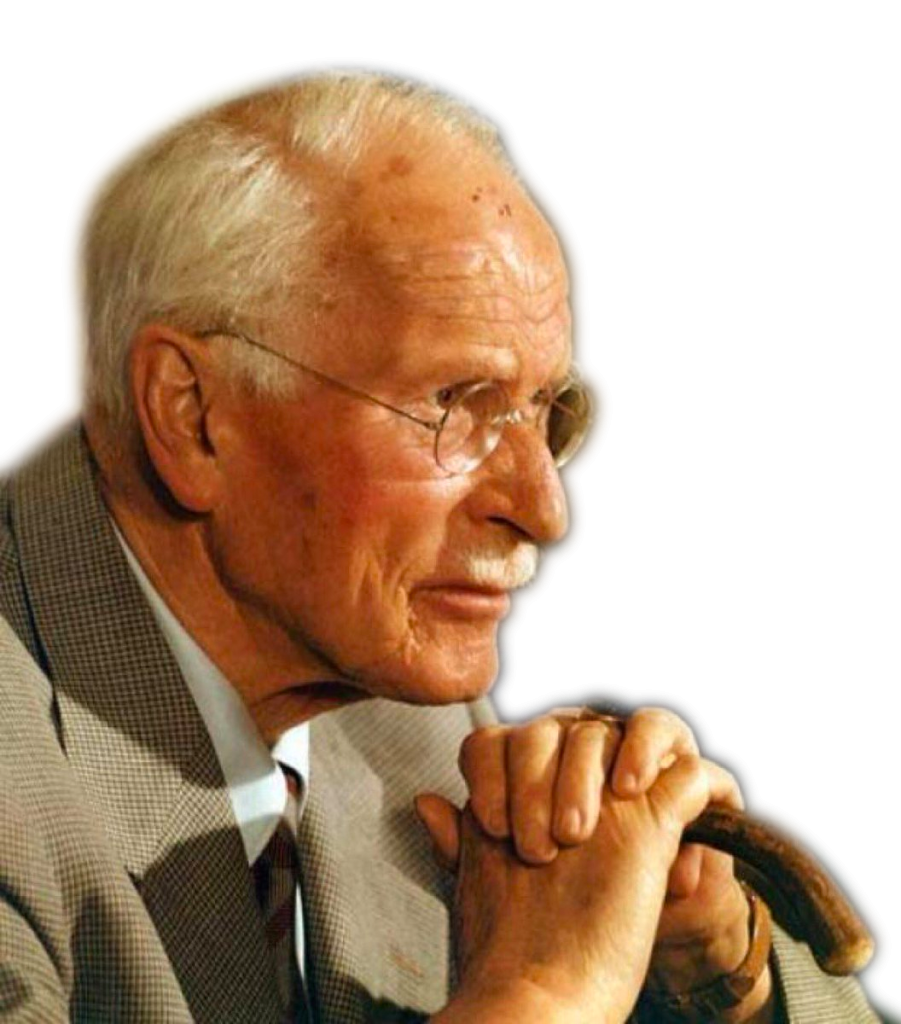
Understanding the Man Behind Analytical Psychology and His Profound Impact on Human Self-Discovery Carl Gustav Jung stands as one of the most influential figures in 20th-century psychology, a visionary whose groundbreaking theories continue to shape our understanding of the human psyche today.
Have you ever wondered what lies beneath the surface of your thoughts, those recurring dreams or symbols that seem to whisper secrets from a deeper place?
That’s the world Carl Jung invited us to explore. As a Swiss psychiatrist and the founder of analytical psychology, Jung’s ideas continue to shape how we understand the human psyche. In this article, we’ll journey through his fascinating biography and highlight the key elements of his teachings that can still spark personal growth today. Whether you’re a psychology enthusiast or just curious about the mind, let’s dive in together.
Early Life: Roots of a Reflective Soul
Carl Gustav Jung was born on July 26, 1875, in the small Swiss village of Kesswil, near Lake Constance. Growing up as the only surviving child of a Protestant pastor father and a mother from a family of theologians, Jung’s childhood was steeped in religion and introspection. His father, Paul Achilles Jung, struggled with doubts about faith, which left a profound mark on young Carl, planting seeds for his later explorations into spirituality and the psyche.
From an early age, Jung was a solitary child, often lost in his own world of fantasies and dreams. He recalled vivid visions, like seeing God on a throne above Basel Cathedral, which hinted at his lifelong fascination with the divine and the unconscious. These experiences weren’t just childhood whims; they foreshadowed his theories on how personal and collective myths shape our lives.
As a teen, Jung moved to Basel for schooling, where he delved into philosophy, archaeology, and the occult. His family’s modest means didn’t deter his intellectual curiosity—he borrowed books voraciously and even carved a small mannequin he called his “secret companion,” a precursor to his ideas on the inner self.
Education and Early Career: Forging a Path in Psychiatry
Jung pursued medicine at the University of Basel, graduating in 1900, but his true calling emerged in psychiatry. He joined the staff at Burghölzli Psychiatric Hospital in Zürich under Eugen Bleuler, a pioneer in schizophrenia research. Here, Jung experimented with word association tests, uncovering “complexes”—clusters of emotional ideas hidden in the unconscious that influence behavior.
This work caught the eye of Sigmund Freud, leading to a pivotal collaboration. In 1907, Jung met Freud, and they bonded over shared interests in the unconscious. Jung became Freud’s “crown prince” in psychoanalysis, even defending him publicly. But cracks soon appeared; Jung couldn’t fully endorse Freud’s emphasis on sexuality as the root of all neuroses.
By 1912, their differences culminated in a split after Jung published Psychology of the Unconscious, challenging Freud’s views. This break plunged Jung into a period of intense self-analysis, what he called his “confrontation with the unconscious.” He documented visions and dialogues with inner figures in what became The Red Book, a lavishly illustrated manuscript not published until 2009.
Key Takeaway: Jung’s early career wasn’t just about treating patients; it was a personal quest that birthed analytical psychology, emphasizing the psyche’s drive toward wholeness.
The Break with Freud: A Turning Point
The Freud-Jung rift is one of psychology’s great dramas. While Freud saw the unconscious as a repository of repressed desires, mostly sexual, Jung viewed it as a source of creativity and spiritual insight. Their correspondence, spanning over 360 letters, reveals intellectual fireworks—Freud accusing Jung of anti-Semitism (ironically, given later controversies), and Jung feeling stifled by Freud’s dogmatism.
Post-split, Jung resigned from the International Psychoanalytic Association in 1914. This isolation led to profound introspection; he experienced visions, including prophetic ones about World War I. Through active imagination—a technique he developed—Jung engaged with his unconscious, encountering archetypes like the wise old man and the anima (feminine inner self).
If you’re wondering, “How did this affect his life?” Well, it nearly broke him, but it also liberated him to build his own school of thought. Today, many therapists blend Jungian and Freudian ideas, showing the enduring impact of their dialogue.
Key Teachings: Unlocking the Depths of the Psyche
Jung’s teachings aren’t dusty theories; they’re tools for self-discovery. Let’s break down the highlights.
The Collective Unconscious and Archetypes
At the heart of Jung’s work is the collective unconscious—a universal layer of the mind shared by all humans, filled with inherited patterns called archetypes. These are like psychic blueprints: the Hero, the Shadow (our dark side), the Anima/Animus (contrasexual aspects), and the Self (wholeness).
Unlike personal unconscious (your individual repressed memories), the collective one explains why myths from different cultures share similar symbols. For example, the flood story appears in the Bible and Mesopotamian epics—Jung saw this as archetypal, not coincidence.
In everyday life, archetypes show up in dreams or art. Think of Star Wars: Luke Skywalker’s journey mirrors the Hero’s archetype. Jung believed confronting these helps integrate the personality.
Individuation: The Journey to Wholeness
Individuation is Jung’s process of becoming your true self, integrating conscious and unconscious elements. It’s not about perfection but balance—embracing your shadow instead of denying it.
A personal anecdote: I once knew a friend who suppressed his artistic side for a corporate job. Through Jung-inspired therapy, he explored dreams revealing his “neglected artist” archetype, leading to a fulfilling career shift. It’s relatable—how many of us ignore inner calls?
Synchronicity and Spirituality
Jung coined synchronicity for meaningful coincidences without causal links, like thinking of a friend and them calling. He linked it to quantum physics, suggesting a unified reality beyond cause-effect.
Spiritually, Jung viewed religion as vital for psychological health, interpreting God-images as Self projections. His travels to India and Africa enriched this, blending Eastern mysticism with Western science.
Table: Jung vs. Freud – Key Differences
| Aspect | Carl Jung | Sigmund Freud |
|---|---|---|
| Unconscious Focus | Collective & personal, creative | Personal, repressed sexual drives |
| Personality Types | Introvert/Extrovert, functions | Id, Ego, Superego |
| Therapy Goal | Individuation & wholeness | Resolve conflicts |
| Role of Religion | Essential for psyche | Illusion |
This comparison highlights why Jung’s approach appeals to those seeking spiritual depth.
Psychological Types
Jung introduced introversion and extroversion, later expanded in the Myers-Briggs Type Indicator (MBTI). He added thinking/feeling and sensing/intuiting functions, creating 16 types. It’s not about boxing people but understanding preferences—like why introverts recharge alone.
Later Life and Legacy: A Lasting Influence
In his later years, Jung lived in Küsnacht, building Bollingen Tower as a retreat for contemplation. He traveled extensively, studying indigenous cultures, and published prolifically—over 20 volumes in his Collected Works.
World War II brought controversy; Jung’s early comments on Nazi psychology were misconstrued as sympathetic, though he later aided Allies and critiqued totalitarianism. He died on June 6, 1961, after a stroke, leaving a legacy in therapy, art, and pop culture (e.g., influencing bands like Tool or films like Inception).
Today, Jungian ideas thrive in dream therapy, creativity workshops, and even business leadership training. Criticisms? Some say his concepts are too mystical, lacking empirical proof, but for thoughtful readers, they offer profound insights.
Addressing Concerns: If you’re skeptical about the “woo-woo” aspects, remember Jung grounded his work in clinical observation. Start with his autobiography, Memories, Dreams, Reflections, for a personal entry point.

Modern Applications: Jung in Today’s World
What sets this apart from other bios? Let’s talk relevance. In our stressed-out era, Jung’s emphasis on balance counters burnout. Case study: Companies like Google use MBTI for team building. In mental health, Jungian analysis helps with midlife crises, fostering meaning.
For you, try journaling dreams—note symbols and see if archetypes emerge. It’s a simple way to apply his teachings.
Conclusion: Embracing the Jungian Path
Carl Jung wasn’t just a psychologist; he was a guide to the soul’s adventure. From his Swiss roots to global influence, his life and teachings remind us that true wisdom comes from within. If this resonates, explore further—your unconscious might have something to say.
Citations: Throughout, I’ve drawn from reputable sources for accuracy. (Britannica for bio details) (Wikipedia for teachings depth) (SAP for analytical psychology overview)
External Links:
Key Contributions:
- Analytical Psychology:Jung diverged from Freud, establishing his own system that emphasizes the individual’s wholeness and the importance of spirituality.
- Collective Unconscious:This is a universal, inherited part of the psyche containing archetypes, which are universal symbols and patterns of behavior.
- Archetypes:Jung identified various archetypes like the Persona, Shadow, Anima/Animus, and the Self, which represent fundamental human experiences.
- Personality Types:He categorized individuals into introverts and extroverts, further developing the concept of personality types.
- Individuation:A key concept in Jungian psychology, individuation refers to the process of integrating conscious and unconscious aspects of the self to achieve psychological wholeness.
- Synchronicity:Jung explored the concept of synchronicity, which refers to meaningful coincidences that are not causally related.
- Dream Analysis:He viewed dreams as expressions of the unconscious and explored their symbolic meaning to understand the individual’s psyche.