






















U.S. actions near Venezuela portend an oily catastrophe
By David Suzuki
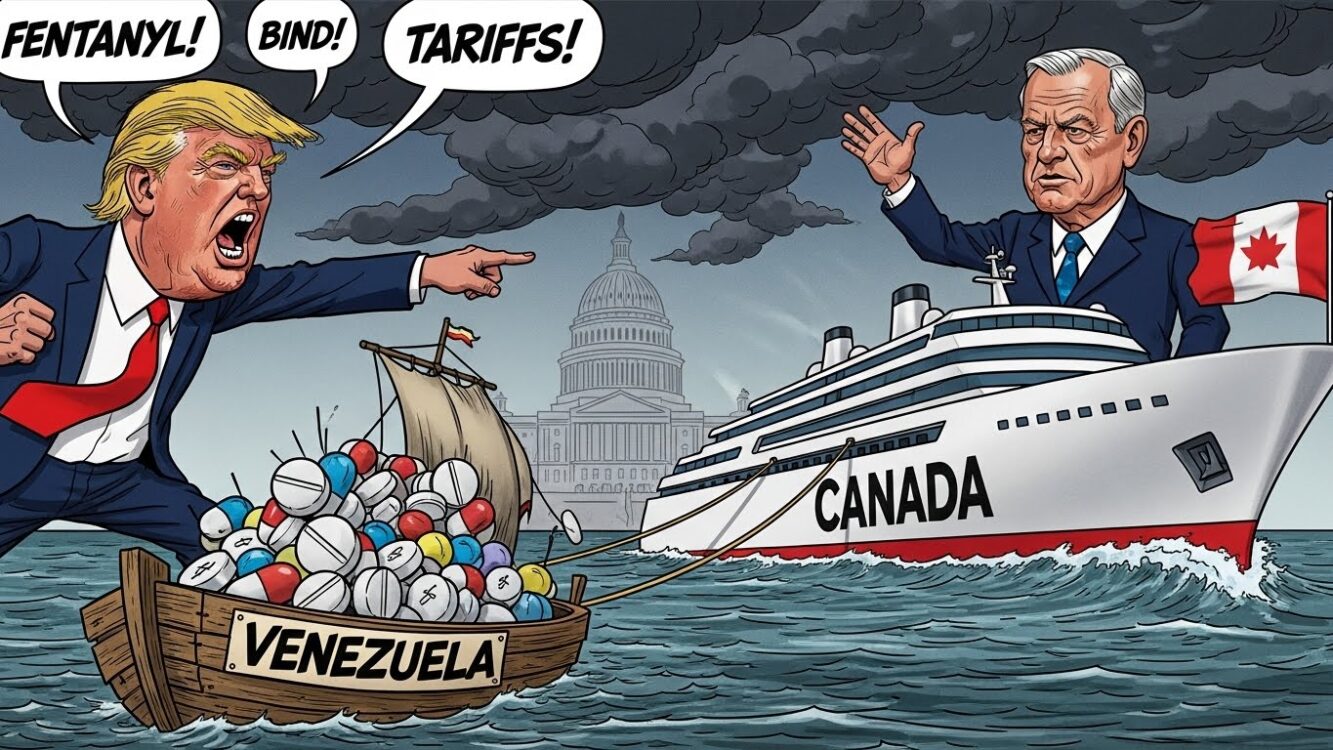
Canada’s government has been silent about the United States killing people on boats off the Venezuela coast. Whether or not the boats were being used to transport drugs (and there’s no evidence they were), these appalling acts have been labelled “war crimes” — or “murders,” since no war has been officially declared… yet.
The U.S. administration first claimed the boats were transporting fentanyl, but Venezuela doesn’t produce or supply much, if any, of the drug. U.S. President Donald Trump also used alleged fentanyl smuggling from Canada to justify imposing heavy tariffs on us.
The U.S. has since said the boats were carrying cocaine and/or that those aboard were “terrorists.” Trump has also indicated the U.S. could invade Venezuela. At least nine warships — including “aircraft carriers, guided-missile destroyers, and amphibious assault ships capable of landing thousands of troops” — along with nuclear-powered submarines and fighter and spy planes, are positioned within striking range of the South American country, the BBC reports.
If it isn’t drugs, and it likely isn’t that Venezuela is run by an autocratic, ostensibly socialist government (which the U.S. has also labelled “terrorist”), what is it about?
Consider what Canada and Venezuela have in common. As is often the case, it’s about oil. Venezuela sits on the largest proven reserves in the world — about 300 billion barrels — most of it “extra heavy” oilsands oil. Canada has slightly more than half that amount in its oilsands, but of denser bitumen.
Since his 2024 election, Trump and his cronies have been eyeing fossil fuel and critical mineral resources from South America to Canada to Greenland. Some in the U.S. are making no secret of the real goal in Venezuela.
“Venezuela for the American oil companies will be a field day because it will be more than a trillion dollars in economic activity,” Republican Representative Maria Salazar recently told Fox Business. “The Venezuelans have the largest reserves of oil in the world, more than Saudi Arabia. This is going to be a windfall for us when it comes to fossil fuels.”
People in the U.S. and worldwide are rightly dismayed by the boat killings, but the bigger picture is more disturbing.
“To initiate a war of aggression is not only an international crime, it is the supreme international crime differing from other war crimes in that it contains within itself the accumulated evil of the whole,” Associate U.S. Supreme Court Justice and Chief Prosecutor Robert Jackson said at the start of the Nuremberg Military Tribunal of Nazi war criminals.
Beyond war crimes, invading and killing for the sake of polluting, climate-altering fuels and the oligarchs that profit from them is a crime against humanity.
United Nations secretary general António Guterres has rightly stated, “Our addiction to fossil fuels is pushing humanity to the brink. We face a stark choice: Either we stop it — or it stops us. We are digging our own graves.”
The oil, gas and coal interests that still exercise tremendous influence over global economies are becoming desperate in the face of a shifting reality. Renewable energy — from sun, wind, geothermal and energy storage — is now more efficient and much cheaper than fossil fuel energy, with costs dropping rapidly as dirty fuel costs rise. Renewable energy also allows for greater energy independence and stability and more equitable distribution of benefits.
The accelerating impacts of global heating are impossible to ignore or deny: floods, droughts, water shortages, agricultural failures, plant and animal extinctions, increasing heat- and extreme weather–related illness, death and migration crises.
The Trump administration demonstrates the desperation and stupidity of this fossil-fuelled madness. The president has called climate change a “hoax” and has promoted fossil fuel expansion while overturning small but significant gains his country has made on climate policy and regulation.
Why has Canada been silent about the recent boat attacks? We could be next in the crosshairs. Is it part of our prime minister’s strategy to not “poke the bear”? Or is it because Canada remains a major player in the insane global push to continue exploiting a dirty, outmoded fuel — albeit one that could be incredibly valuable if used more wisely and sparingly?
Regardless, it’s time for Canada to step up and help lead the necessary and growing transition from fossil fuels to safer, healthier, cleaner energy.
David Suzuki is a scientist, broadcaster, author and co-founder of the David Suzuki Foundation. Written with David Suzuki Foundation Senior Writer and Editor Ian Hanington.
Learn more at davidsuzuki.org.
REFERENCES:
Silent about the United States killing people:
Venezuela doesn’t produce or supply:
https://www.politifact.com/article/2025/sep/22/Trump-Venezuela-boat-strikes-drugs-trafficking
Justify imposing heavy tariffs on us:
https://www.bbc.com/news/articles/cn93e12rypgo
The U.S. could invade Venezuela:
https://www.bbc.com/news/articles/c7810w37vwdo
Largest proven oil reserves in the world:
https://www.oilsandsmagazine.com/news/2016/2/15/why-venezuela-is-albertas-biggest-competitor
Maria Salazar recently told Fox Business:
https://www.newsweek.com/gop-rep-says-us-may-go-in-to-venezuela-11102970
Robert Jackson said:
https://www.counterpunch.org/2025/12/05/venezuela-wars-of-aggression-and-nuremberg-law
António Guterres has rightly stated:
https://fossilfueltreaty.org/blog/your-number-is-up-fossil-fuels
More efficient and much cheaper:
https://davidsuzuki.org/story/electrotech-not-fossil-fuels-will-power-the-future
Accelerating impacts of global heating :