
























Canada’s Hockey Powerhouse: Three Generations of Elite Talent with Crosby, McDavid, and Célaberni 🏒


🏒 When hockey fans discuss international dominance, one nation consistently rises above the rest. Canada’s Hockey Powerhouse: Three Generations of Elite Talent with Crosby, McDavid, and Célaberni represents an unprecedented assembly of star power that spans over two decades of excellence. As the 2026 international hockey season unfolds, Canada finds itself in a unique position—fielding three distinct generations of elite talent simultaneously, creating a depth chart that rivals any team in history and positioning the nation for continued medal contention against fierce competitors like the United States.
Key Takeaways
- Three-generational depth: Canada’s roster features Sidney Crosby (veteran leadership), Connor McDavid (prime superstar), and emerging talent Célabrani, creating unprecedented lineup flexibility
- McDavid’s dominance continues: The Oilers captain leads the NHL with 96 points post All-Star Break and set a new speed record at 24.61 mph in 2025-26[2][4]
- Strategic advantage: This multi-generational approach provides Canada with experienced playoff performers, peak-performance scorers, and fresh young talent
- USA rivalry intensifies: The three-generation model gives Canada a competitive edge in medal contention against America’s rising hockey program
- Historical significance: This marks the first time Canada has successfully integrated three distinct hockey generations at elite international competition level
The Evolution of Canada’s Three-Generation Model
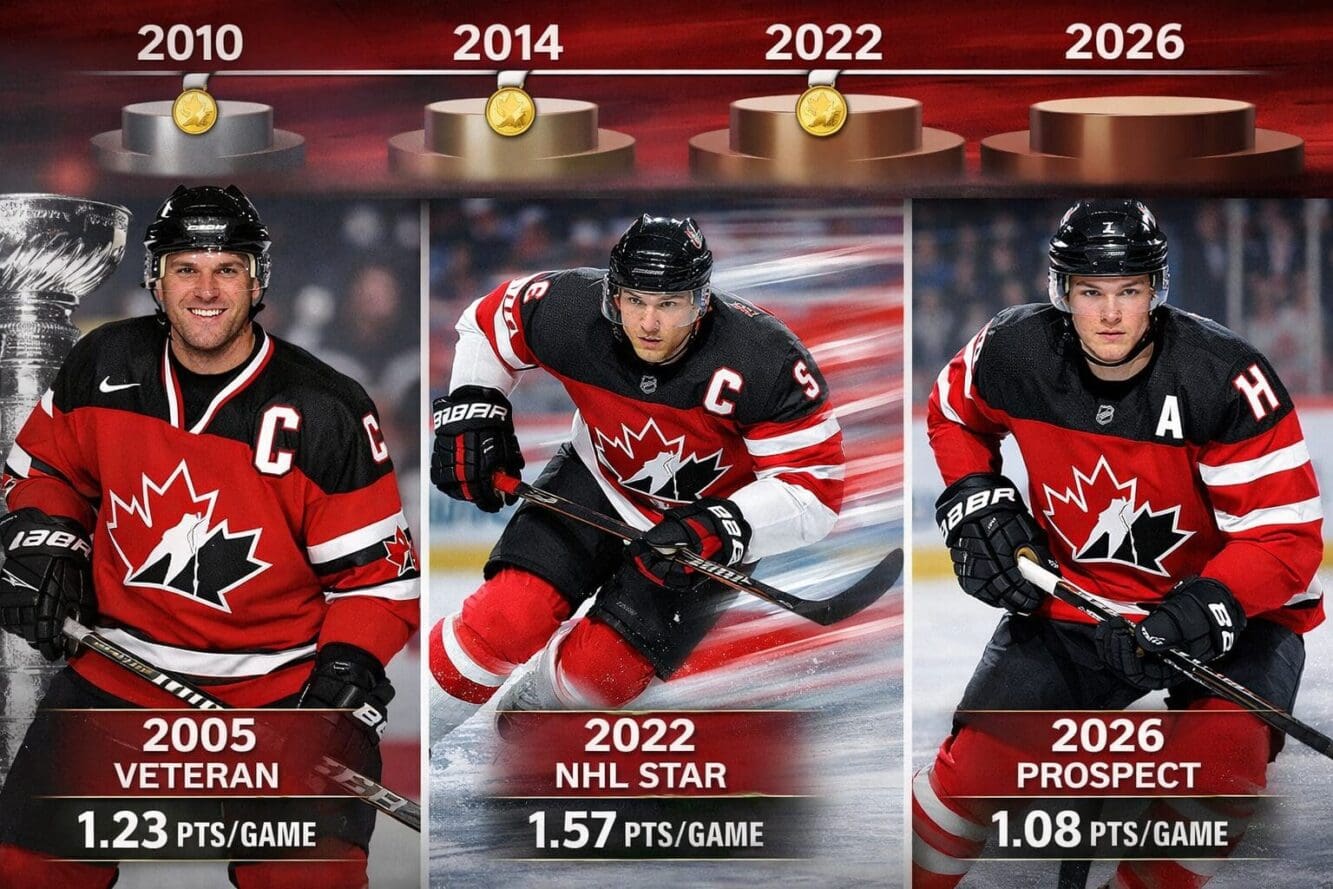
The concept of Canada’s Hockey Powerhouse: Three Generations of Elite Talent with Crosby, McDavid, and Célabrani didn’t happen by accident. It represents decades of strategic player development, careful roster management, and the fortunate timing of exceptional talent emerging at different intervals.
First Generation: The Crosby Era (2005-Present)
Sidney Crosby emerged as Canada’s golden boy during the mid-2000s, delivering Olympic gold medals and establishing himself as one of hockey’s greatest leaders. His veteran presence brings invaluable playoff experience and clutch performance under pressure. At this stage of his career, Crosby serves as the emotional anchor and provides mentorship to younger players while still contributing offensively.
Second Generation: The McDavid Dynasty (2015-Present)
Connor McDavid represents the peak performance generation—a player in his absolute prime who dominates the NHL scoring race year after year. During the 2025-26 season, McDavid has demonstrated why he’s considered the world’s best player. He leads the NHL in points with 67 through 38 games and accumulated an astounding 31 points during an 11-game scoring streak[3].
His post All-Star Break performance showcases sustained excellence: 34 goals and 62 assists for 96 points across 58 games[2]. Perhaps most impressively, McDavid achieved the highest skating speed in NHL EDGE tracking history at 24.61 mph during the season opener on October 8, 2025[4].
Third Generation: The Célabrani Wave (2020s-Present)
The emergence of young talents like Célabrani represents Canada’s future. These players bring fresh energy, modern training techniques, and fearless play that complements the experience of their veteran teammates. This generation grew up idolizing Crosby and McDavid, creating natural chemistry and understanding of what excellence requires.
Why Canada’s Hockey Powerhouse Matters for Medal Contention
The strategic value of Canada’s Hockey Powerhouse: Three Generations of Elite Talent with Crosby, McDavid, and Célabrani becomes crystal clear when examining international tournament dynamics.
Depth Chart Advantages
| Generation | Role | Key Strengths | Tournament Value |
|---|---|---|---|
| Crosby Era | Leadership & Experience | Playoff composure, face-off expertise | Clutch moments, mentorship |
| McDavid Dynasty | Offensive Firepower | Speed, playmaking, scoring | Game-breaking plays |
| Célabrani Wave | Energy & Depth | Fresh legs, fearless play | Momentum shifts |
This roster construction allows coaches to deploy different line combinations based on game situations. Need a defensive stand? Deploy experienced veterans. Require offensive explosion? Unleash McDavid with supporting cast. Want to wear down opponents? Roll fresh young talent.
Matchup Flexibility Against USA
The United States has developed formidable hockey programs, but Canada’s three-generation approach provides unique tactical advantages:
- Experience edge: Crosby’s generation has won multiple international tournaments
- Speed differential: McDavid’s 24.61 mph skating speed creates mismatches[4]
- Depth sustainability: Fresh talent prevents fatigue during tournament play
- Psychological advantage: Opponents must prepare for vastly different playing styles
Statistical Dominance: The Numbers Behind the Powerhouse
Numbers don’t lie, and Canada’s Hockey Powerhouse: Three Generations of Elite Talent with Crosby, McDavid, and Célabrani produces remarkable statistics that justify the hype.
McDavid’s 2025-26 Season Breakdown
Connor McDavid’s current season exemplifies why Canada possesses such a significant advantage:
- Assists leader: McDavid leads the entire NHL with 33 assists[3]
- Points per game: Maintaining elite production throughout the season
- Scoring streak: 31 points (12 goals, 19 assists) during an 11-game stretch[3]
- Consistency: 96 points in 58 post All-Star Break games demonstrates sustained excellence[2]
These statistics represent just one player from one generation. When combined with Crosby’s playoff expertise and emerging talent from younger players, the cumulative effect creates an overwhelming competitive advantage.
Historical Context
🏅 Canada has historically dominated international hockey, but the current three-generation model represents something unprecedented. Previous eras relied heavily on single-generation dominance—the Gretzky era, the Lemieux era, or the Crosby era. Now, for the first time, Canada fields simultaneous generational talents who complement rather than compete with each other.
The USA Challenge: Why Three Generations Matter
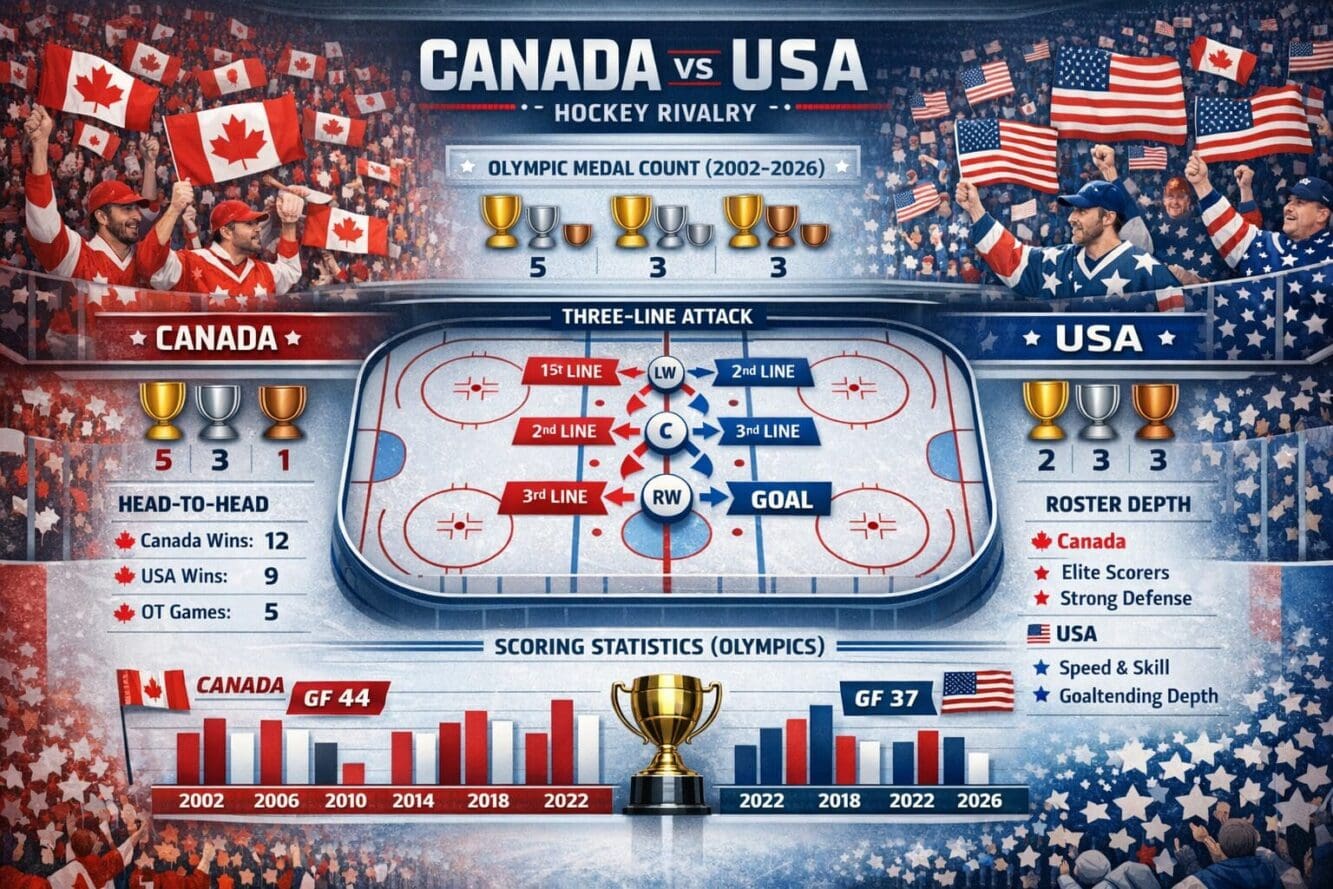
The rivalry between Canada and the United States defines international hockey. As American programs continue improving, Canada’s Hockey Powerhouse: Three Generations of Elite Talent with Crosby, McDavid, and Célabrani provides the strategic depth necessary to maintain supremacy.
American Hockey’s Rising Threat
The USA has invested heavily in youth development, college programs, and professional pathways. American players now compete at the highest NHL levels, creating legitimate threats in international competition. However, the United States typically relies on one or two generational talents rather than the three-tier system Canada employs.
Canada’s Counter-Strategy
The three-generation model offers several tactical responses to American challenges:
- Roster depth: Injuries or poor performance from one generation doesn’t cripple the team
- Style versatility: Different generations bring different playing styles
- Tournament endurance: Fresh legs available throughout long tournaments
- Mentorship acceleration: Young players develop faster learning from multiple veteran generations
Building the Future: Lessons from the Three-Generation Model
What can hockey programs worldwide learn from Canada’s Hockey Powerhouse: Three Generations of Elite Talent with Crosby, McDavid, and Célabrani?
Development Pipeline Success
Canada’s success stems from:
- Continuous talent identification: Scouting and developing players across all age groups simultaneously
- Player retention: Keeping elite talent engaged with national programs throughout careers
- Cultural investment: Making national team participation prestigious and meaningful
- Strategic patience: Not forcing young players into roles before they’re ready
International Competition Implications
This model changes how nations approach tournament roster construction. Rather than selecting the “best available players,” successful programs must now consider generational balance, role definition, and long-term sustainability.
Conclusion: The Powerhouse Advantage in 2026 and Beyond
Canada’s Hockey Powerhouse: Three Generations of Elite Talent with Crosby, McDavid, and Célabrani represents more than just roster depth—it embodies a strategic philosophy that maximizes competitive advantage across multiple dimensions. With McDavid posting 96 points in 58 post All-Star Break games and achieving record-breaking skating speeds of 24.61 mph[2][4], combined with Crosby’s championship experience and emerging young talent, Canada possesses an unprecedented combination of skill, speed, and hockey intelligence.
As the 2026 international season progresses, this three-generation model positions Canada as the clear favorite for medal contention against the United States and other hockey nations. The tactical flexibility, depth chart advantages, and statistical dominance create a formidable challenge for any opponent.
Actionable Next Steps
For hockey fans and analysts following international competition:
✅ Monitor roster announcements to see how coaches utilize three-generation depth
✅ Track statistical trends comparing Canadian players across generations
✅ Analyze matchup strategies when Canada faces USA in tournament play
✅ Follow emerging talent from the youngest generation to identify future stars
✅ Study tournament results to evaluate the effectiveness of this multi-generational approach
The era of Canada’s Hockey Powerhouse: Three Generations of Elite Talent with Crosby, McDavid, and Célabrani has arrived, and it promises to redefine international hockey excellence for years to come. As these three generations converge on the ice, they create something greater than the sum of their parts—a true hockey powerhouse built to dominate the world stage.
References
[1] Connor Mcdavid 4712 – https://www.rotowire.com/hockey/player/connor-mcdavid-4712
[2] Splits – https://www.cbssports.com/nhl/players/2178633/connor-mcdavid/splits/
[3] officepools – https://www.officepools.com/nhl/entity/player/6743
[4] Nhl Edge Stats Leaders For 2025 2026 Season – https://www.nhl.com/news/nhl-edge-stats-leaders-for-2025-2026-season
[5] Connor Mcdavid – https://www.espn.com/nhl/player/gamelog/_/id/3895074/connor-mcdavid
[6] Connor Mcdavid 8478402 – https://www.nhl.com/oilers/player/connor-mcdavid-8478402
Some content and illustrations on GEORGIANBAYNEWS.COM are created with the assistance of AI tools.
GEORGIANBAYNEWS.COM shares video content from YouTube creators under fair use principles. We respect creators’ intellectual property and include direct links to their original videos, channels, and social media platforms whenever we feature their content. This practice supports creators by driving traffic to their platforms.
Much Appreciate You Sharing This Post - It Helps MUCH!!!