

















🇨🇦 Federal Government Approves $4B Natural Gas Pipeline Expansion in BC: Environmental Impacts, Job Creation, and First Nations Consultations

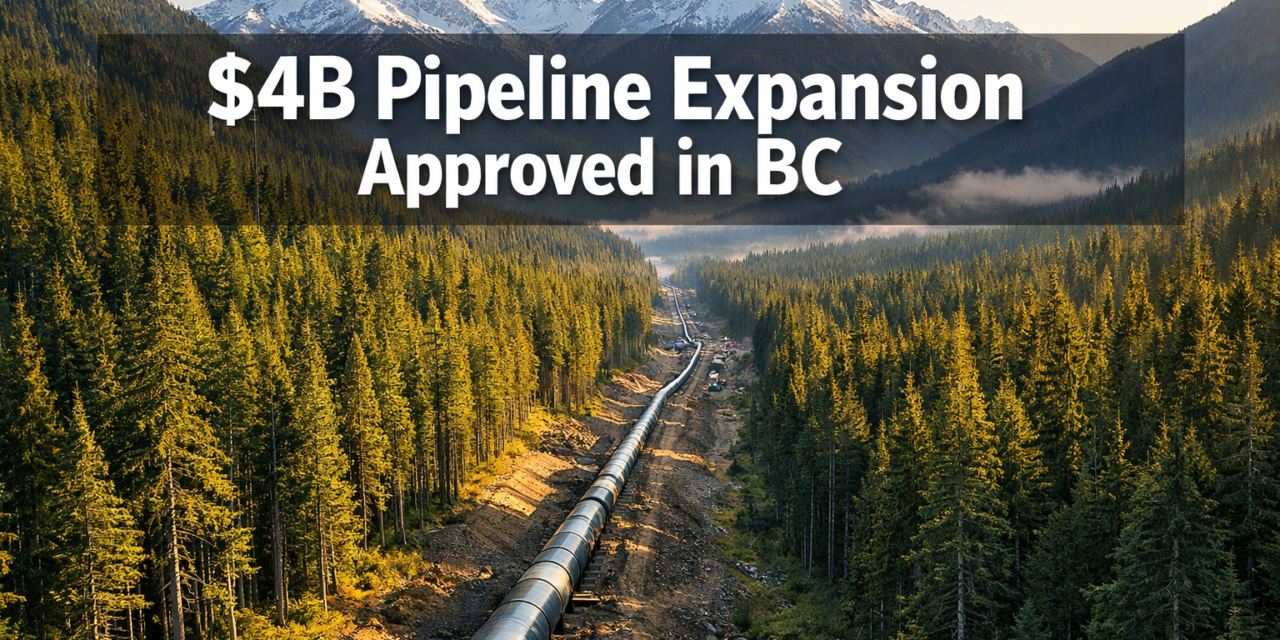
On April 24, 2026, a single government announcement set the stage for one of Canada’s most consequential energy decisions this decade. The federal government approves $4B natural gas pipeline expansion in BC — a project known as the Sunrise Expansion Program — igniting a fierce national debate that pits economic prosperity against environmental stewardship and Indigenous rights [2]. With 2,500 jobs on the line, over $3 billion in projected GDP growth, and 139 kilometres of new pipeline slicing through British Columbia’s landscape, the stakes could not be higher for communities on every side of the issue.
Minister of Energy and Natural Resources Tim Hodgson confirmed the approval, clearing the way for Enbridge Inc. to begin expanding the Westcoast natural gas pipeline system [2]. Construction is set to start in July 2026, with a targeted completion date of late 2028 [1]. The project will add up to 300 million cubic feet per day of additional transportation capacity to a system that already moves 3.6 billion cubic feet daily across 2,900 kilometres of pipeline [1][2].
Key Takeaways
- 💰 $4 billion investment by Enbridge Inc. to expand BC’s Westcoast natural gas pipeline system, adding 139 km of new pipeline.
- 👷 2,500 peak construction jobs expected, with over $3 billion in GDP contributions and $700 million in tax revenue.
- 🌲 Environmental concerns remain significant, with critics questioning the project’s alignment with Canada’s climate commitments.
- 🤝 Indigenous partnership is central — 38 First Nations groups hold approximately 12.5% ownership of the existing pipeline through the Stonlasec8 Alliance.
- 📅 Construction begins July 2026, with an in-service target of late 2028.
What the Sunrise Expansion Program Involves: Federal Government Approves $4B Natural Gas Pipeline Expansion in BC
The Sunrise Expansion Program is not a brand-new pipeline. Instead, it involves constructing 11 pipeline looping segments — essentially parallel lines running alongside the existing Westcoast system — along with additional natural gas compression capacity and upgrades to current facilities [2].
Here is a quick snapshot of the project’s core details:
| Project Detail | Specification |
|---|---|
| Total Investment | $4 billion |
| New Pipeline Length | ~139 kilometres |
| Capacity Addition | 300 million cubic feet/day |
| Existing System Length | 2,900 kilometres |
| Current System Capacity | 3.6 billion cubic feet/day |
| Construction Start | July 2026 |
| Target Completion | Late 2028 |
| Peak Construction Jobs | 2,500 |
The expansion runs through northeast British Columbia, a region already home to significant natural gas extraction and processing operations [3]. By looping alongside existing infrastructure rather than carving entirely new routes, the project aims to minimize its physical footprint — though critics argue the environmental impact remains substantial.

Economic Benefits: Job Creation and GDP Growth
Thousands of Jobs and Billions in Revenue
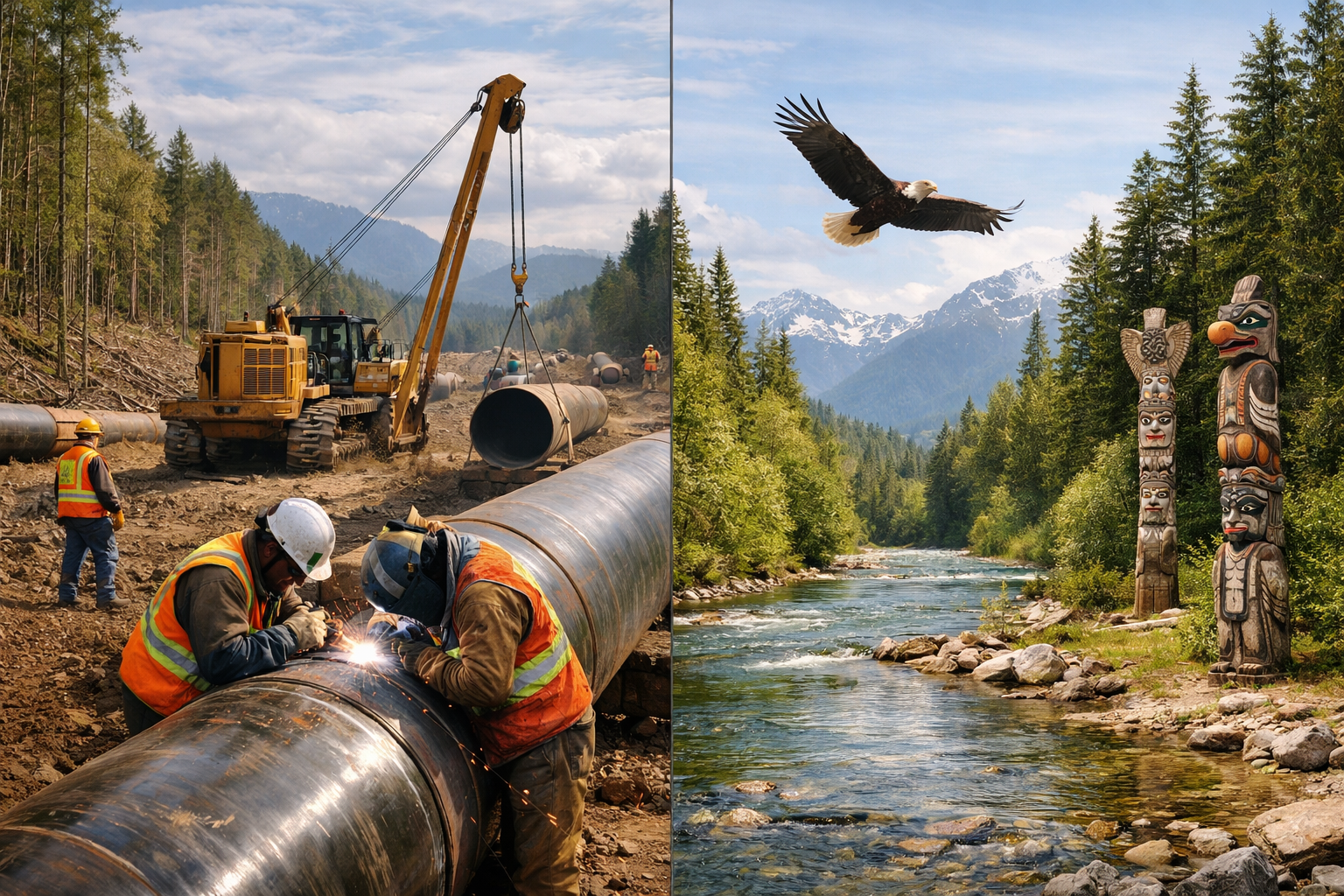
One of the strongest arguments in favour of the expansion is its economic impact. The federal government estimates the project will create approximately 2,500 jobs during peak construction, with positions available for local communities and Indigenous groups [2]. These are not just pipeline-laying roles — they include engineering, logistics, environmental monitoring, and support services.
Beyond direct employment, the numbers tell a compelling story:
- 📈 $3 billion+ in projected GDP contributions
- 🏥 $700 million+ in combined federal and provincial tax revenue, earmarked for public infrastructure like roads, hospitals, and schools [1]
- 🏗️ $52 million already spent by Enbridge on hiring and procuring services from Indigenous businesses [2]
“The Sunrise Expansion Program represents a significant economic opportunity for British Columbia and Canada.” — Government of Canada [2]
For communities in northeast BC that depend heavily on the energy sector, the approval signals economic stability at a time when affordable housing and community investment remain pressing national concerns. The tax revenue alone could fund critical public services for years to come.
The broader economic ripple effect extends well beyond the construction phase. Increased pipeline capacity supports downstream industries, including LNG export terminals, petrochemical plants, and heating fuel distribution networks across western Canada and into the United States.
Environmental Impacts: The Climate Debate Intensifies
A $4 Billion Bet on Fossil Fuel Infrastructure
Not everyone is celebrating. Environmental groups have raised serious concerns about approving a massive fossil fuel infrastructure project while Canada pursues ambitious emissions reduction targets. The core question: Can Canada meet its 2030 and 2050 climate goals while expanding natural gas capacity by 300 million cubic feet per day?
Key environmental concerns include:
- 🌍 Increased greenhouse gas emissions from both the expanded transportation capacity and upstream gas extraction
- 🐟 Habitat disruption along the 139-kilometre construction corridor, affecting waterways, wildlife migration routes, and old-growth forest
- 💧 Water quality risks during construction, particularly near river crossings in ecologically sensitive areas
- 🔥 Long-term carbon lock-in — investing $4 billion in gas infrastructure creates economic pressure to keep it operating for decades
Supporters counter that natural gas is a transition fuel — cleaner than coal and oil — and that expanding domestic capacity reduces reliance on imports with higher carbon footprints. The shift to cleaner energy is a complex, multi-decade process, and proponents argue natural gas plays a necessary bridging role.
The government has attached over 50 conditions to the approval, including requirements for environmental monitoring, habitat restoration, and emissions reporting [2]. Whether these conditions are sufficient to address the scale of the environmental challenge remains hotly debated.
Many Canadians continue to express strong opinions on both sides. As public sentiment around climate action intensifies, the Sunrise Expansion will likely become a flashpoint in the 2026 political landscape.
First Nations Consultations and Indigenous Ownership: Federal Government Approves $4B Natural Gas Pipeline Expansion in BC
A New Model for Indigenous Partnership?
Perhaps the most nuanced dimension of this approval involves Indigenous communities. Unlike previous pipeline controversies that saw First Nations groups largely sidelined, the Sunrise Expansion features a significant Indigenous ownership component.
The existing Westcoast pipeline system is approximately 12.5 percent owned by the Stonlasec8 Indigenous Alliance Limited Partnership, which represents 38 Indigenous groups in British Columbia [2]. This ownership stake gives these nations a direct financial interest in the pipeline’s success — and a seat at the decision-making table.
Additional Indigenous engagement highlights include:
- ✅ $52 million+ already invested in Indigenous hiring and business procurement [2]
- ✅ Employment opportunities specifically designated for Indigenous workers during construction
- ✅ Ongoing consultation processes with affected First Nations communities
- ✅ Revenue-sharing arrangements tied to pipeline operations
This model represents a significant evolution from past projects. The Great Bear Sea Initiative has shown what Indigenous-led environmental stewardship can look like, and the Sunrise Expansion’s ownership structure attempts to blend economic participation with meaningful partnership.
However, not all Indigenous voices are united in support. Some First Nations communities along the pipeline route have expressed concerns about environmental risks to traditional territories, water sources, and culturally significant lands. The consultation process, while more robust than in previous decades, still faces criticism from groups who feel their concerns were not adequately addressed before the approval was granted.
Indigenous ownership and economic participation are critical, but they must not come at the expense of genuine consent and environmental protection.
The tension between economic opportunity and environmental protection within Indigenous communities mirrors the broader national debate — and there are no easy answers.
What Happens Next: Timeline and Key Milestones
With the federal approval secured, the project moves into its execution phase. Here is the expected timeline:
- July 2026 — Construction begins on the first looping segments [2]
- 2026–2028 — Phased construction across all 11 pipeline segments, with peak employment of 2,500 workers
- Late 2028 — Targeted in-service date for the expanded system [1]
- Ongoing — Environmental monitoring and compliance with the 50+ conditions attached to the approval
Enbridge will need to navigate potential legal challenges, seasonal construction restrictions in environmentally sensitive areas, and the logistical complexity of building alongside an active pipeline system. Community engagement will continue throughout the construction period, with local initiatives and celebrations serving as important touchpoints for maintaining positive relationships.
The project’s success — measured not just in cubic feet of gas delivered but in community trust maintained — will set the template for future energy infrastructure decisions across Canada. The way communities provide input on major developments will be closely watched by policymakers and industry leaders alike.
Conclusion
The federal government’s approval of the $4 billion Sunrise Expansion Program represents a defining moment for Canadian energy policy in 2026. The project delivers undeniable economic benefits — 2,500 jobs, $3 billion in GDP, and $700 million in tax revenue — while raising legitimate questions about environmental sustainability and the pace of Canada’s energy transition.
The Indigenous ownership model, with 38 First Nations holding a 12.5% stake through the Stonlasec8 Alliance, offers a promising framework for future resource development. Yet genuine reconciliation requires more than financial participation — it demands that dissenting Indigenous voices are heard and respected.
Here is what to watch for in the coming months:
- 📋 Monitor construction progress and environmental compliance reports starting July 2026
- 🗣️ Follow Indigenous community responses as construction begins on traditional territories
- 📊 Track whether the projected economic benefits materialize as promised
- 🌱 Watch for legal challenges from environmental organizations
Whether the Sunrise Expansion becomes a model for responsible resource development or a cautionary tale about carbon lock-in will depend on how rigorously its conditions are enforced — and whether Canada can walk the tightrope between economic growth and climate responsibility.
References
[1] Federal Government Natural Gas Pipeline Expansion – https://globalnews.ca/news/11815564/federal-government-natural-gas-pipeline-expansion/
[2] The Government Of Canada Approves The Sunrise Expansion Program – https://www.canada.ca/en/natural-resources-canada/news/2026/04/the-government-of-canada-approves-the-sunrise-expansion-program.html
[3] Enbridge Gets Federal Approval For 4b Natural Gas Pipeline Expansion In Bc 12187888 – https://www.biv.com/news/enbridge-gets-federal-approval-for-4b-natural-gas-pipeline-expansion-in-bc-12187888
Content, illustrations, and third-party video appearing on GEORGIANBAYNEWS.COM may be generated or curated with AI assistance or reproduced pursuant to the fair dealing provisions of the Copyright Act, R.S.C. 1985, c. C-42. Attribution and hyperlinks to original sources are provided in acknowledgment of applicable intellectual property rights. Such referencing is intended to direct traffic to and support the original rights holders’ platforms.
Much Appreciate You Sharing This Post - It Helps MUCH!!!