


















First Year of Medical Priority Dispatch System Brings Faster, Smarter Emergency Response to Simcoe County
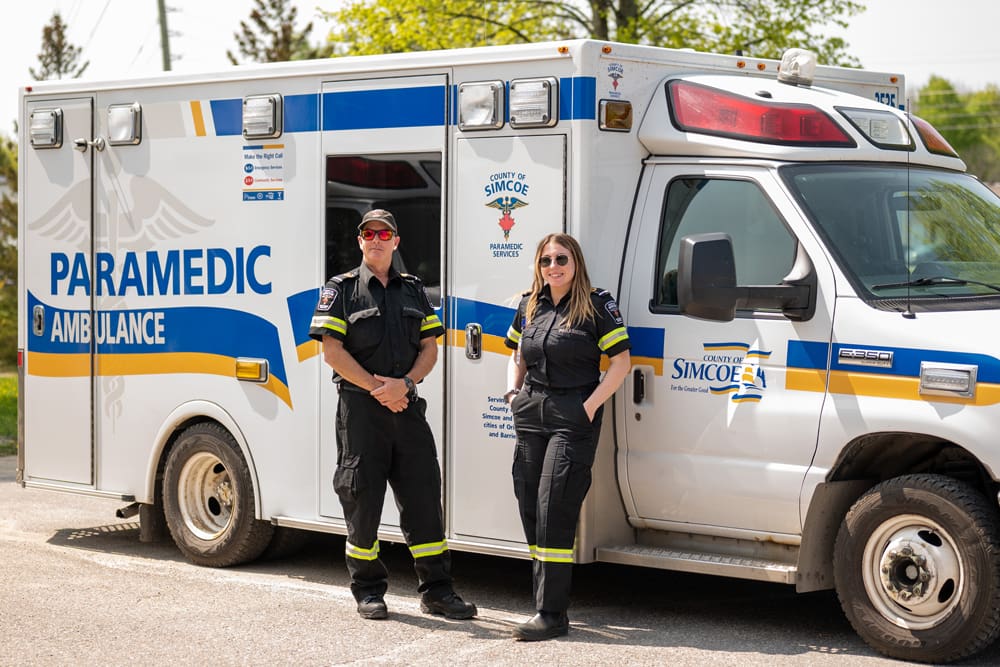
Midhurst/January 28, 2026 – The County of Simcoe is marking one year since the Government of Ontario implemented the Medical Priority Dispatch System (MPDS) across the region, and Paramedic Services are reporting clear improvements in how emergency calls are assessed and resources are deployed.
In November 2024, the Georgian Central Ambulance Communications Centre (CACC), which provides emergency medical dispatch services to Simcoe County, York Region, Beausoleil First Nation and Rama First Nation, transitioned from the longstanding Dispatch Priority Card Index II to MPDS. The evidence-based system, used in more than 35,000 emergency communication centres worldwide, is designed to ensure the right help reaches the right patient at the right time. After a full year in operation, results show the system is achieving its goal.
Over the past year, County of Simcoe Paramedic Services has seen a 38 per cent reduction in life threatening dispatches, demonstrating more accurate triage and fewer unnecessary lights‑and‑sirens responses. Dispatchers are now better able to distinguish between levels of medical urgency, ensuring the most critical patients receive immediate attention. While less urgent calls may experience longer wait times, overall response times continue to meet or exceed provincial standards, as life‑threatening emergencies are prioritized without compromising care for others. This has led to a 21 per cent improvement in response times for the most urgent, life-threatening calls, ensuring that patients with the highest needs are prioritized effectively.
MPDS also enhances coordination across the province’s integrated ambulance network by supporting Ontario’s long‑standing “seamless principle,” which requires that the closest appropriate ambulance respond to a patient, regardless of municipal or regional boundaries. Because response is based on proximity rather than geography, MPDS enables call centres across the province to share information effortlessly with neighbouring regions. Dispatchers can view the general status and location of nearby units, reducing duplicate responses and ensuring that life‑threatening emergencies receive the fastest, most effective care. Only urgent calls are shared across borders, while less‑acute incidents remain with the local service.
Through this change, ambulance distribution is based on data, not geography. Through the County of Simcoe Paramedic Service Rapid Deployment Plan, resources are positioned where emergency risk is highest, using historical call patterns, population density, and hospital demand. Crews often wait in strategic standby locations rather than stations to maintain broad coverage, and deployment levels shift between day and night. System pressures, such as hospital offload delays, increased time spent on each call, and the differing challenges of urban and rural environments, also influence how many ambulances are available and where they are positioned at any given time.
“MPDS has strengthened our emergency response system and helped ensure that residents with the most urgent needs receive faster, more appropriate care,” said Warden Basil Clarke. “We are proud of the work our County of Simcoe Paramedics and dispatch teams have done over the past year, and we remain committed to supporting a system that keeps our communities safe.”
Paramedics remind the community that everyone plays a role in effective emergency response. If calling 911 on for yourself or someone else, please provide clear and accurate information to call takers, as this helps ensure patients are properly prioritized and that urgent help is sent where it’s needed most.
To learn more about MPDS, visit www.simcoe.ca/mpds.
County of Simcoe is composed of sixteen member municipalities and provides crucial public services to County residents in addition to providing paramedic and social services to the separated cities of Barrie and Orillia. Visit our website at simcoe.ca.