




















Prime Minister Mark Carney: How Canada’s Leader Has Taken a Worldwide Leadership Role in 2026
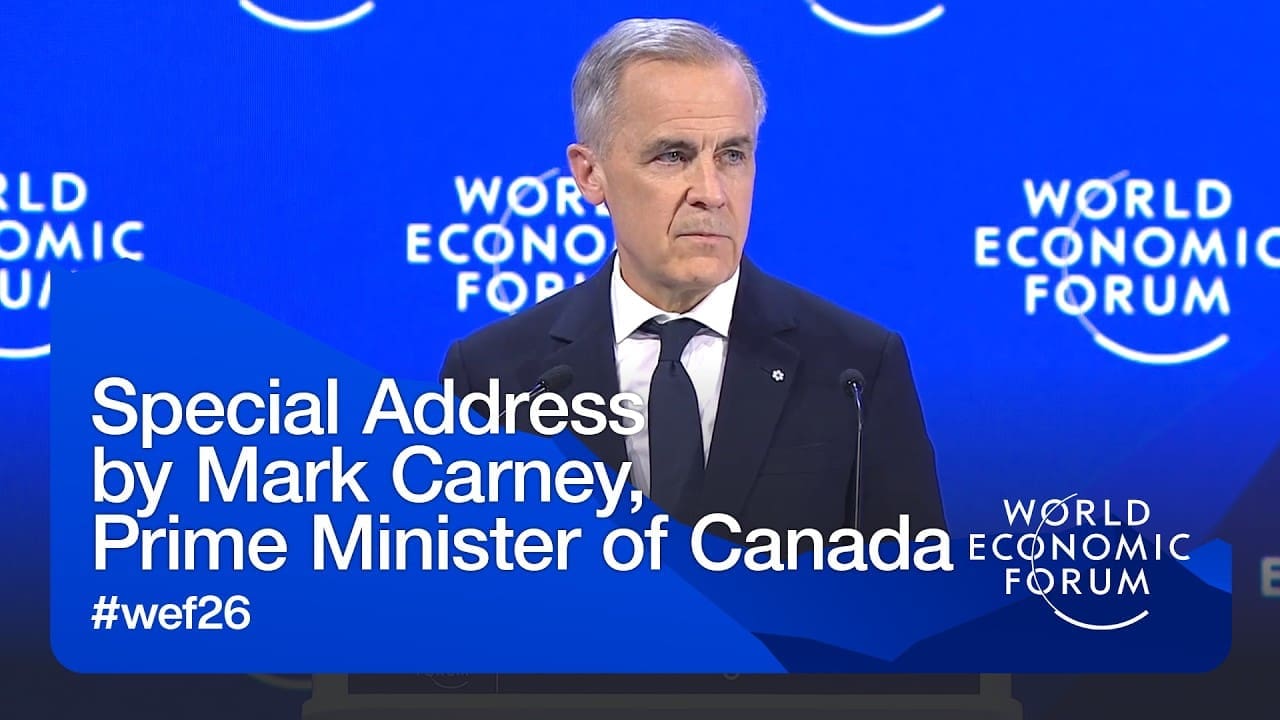
When the world needed steady hands and bold vision, Prime Minister Mark Carney stepped onto the global stage with a clarity of purpose that has redefined international leadership.
In an era marked by uncertainty, rising authoritarianism, and climate crisis, Canada’s leader has emerged as a beacon of progressive values and economic wisdom—standing firm against pressure from powerful adversaries while building bridges across continents.
The transformation has been remarkable. From his previous roles as Governor of the Bank of Canada and Bank of England, Carney brought unparalleled financial expertise to 24 Sussex Drive. But what nobody anticipated was how quickly Prime Minister Mark Carney would leverage Canada’s position to champion a new model of global cooperation, one that prioritizes climate action, inclusive growth, and democratic resilience over short-term political gains.
Key Takeaways
✅ Prime Minister Mark Carney has positioned Canada as a leading voice in global climate action, establishing ambitious targets and building international coalitions that bypass traditional obstacles.
✅ Carney’s economic expertise has strengthened Canada’s position in international trade, particularly in standing firm against protectionist pressures from the United States.
✅ His principled stance against authoritarianism has reinvigorated democratic alliances, making Canada a trusted partner for nations seeking alternatives to great power coercion.
✅ The Prime Minister has championed innovative approaches to global challenges, from green finance to refugee protection, earning respect from world leaders across the political spectrum.
✅ Carney’s leadership style combines technical competence with moral courage, demonstrating that evidence-based policy and ethical governance can coexist successfully.
The Rise of Prime Minister Mark Carney on the World Stage
From Central Banker to Global Statesman
The journey from Goldman Sachs executive to central bank governor to prime minister equipped Mark Carney with a unique perspective on global economic systems. Unlike traditional politicians who rise through party ranks, Prime Minister Mark Carney arrived at leadership with decades of experience navigating international financial crises, understanding the intricate connections between monetary policy, climate risk, and social stability.
His appointment as Prime Minister came at a pivotal moment. Canadians were seeking leadership that could navigate increasingly complex global dynamics while protecting national interests. What they found was a leader who understood that in 2026, national interests and global cooperation are not opposing forces—they’re complementary necessities.
“The challenges we face—climate change, economic inequality, democratic backsliding—these don’t respect borders,” Carney stated in his first address to the United Nations General Assembly. “Canada will lead by building coalitions of the willing, not by waiting for consensus from the unwilling.”
This philosophy has shaped every aspect of his international engagement. Whether addressing the World Economic Forum or meeting with Pacific Island nations threatened by rising seas, Carney brings the same message: pragmatic solutions grounded in science, economics, and human dignity.
Building International Coalitions
Prime Minister Mark Carney’s approach to diplomacy breaks from traditional models. Rather than focusing exclusively on bilateral relationships with major powers, he has invested heavily in multilateral frameworks that amplify Canada’s influence. The “Middle Power Alliance” he helped establish brings together nations like Australia, South Korea, the Netherlands, and New Zealand—countries with significant economic clout but without superpower aspirations.
This coalition has achieved remarkable results in 2026:
- Climate Finance Initiative: Mobilizing $500 billion in private capital for renewable energy projects in developing nations
- Democratic Technology Standards: Creating alternatives to authoritarian surveillance systems
- Refugee Protection Framework: Establishing new pathways for climate refugees that respect both humanitarian obligations and national sovereignty
- Trade Diversification Network: Reducing dependence on any single market through coordinated trade agreements
The strategy reflects lessons Carney learned during his central banking career: sometimes the most effective interventions come from coordinated action among mid-sized players rather than waiting for giants to move.
Prime Minister Mark Carney’s Historic Stand Against Trump
The Tariff Confrontation That Defined a Generation
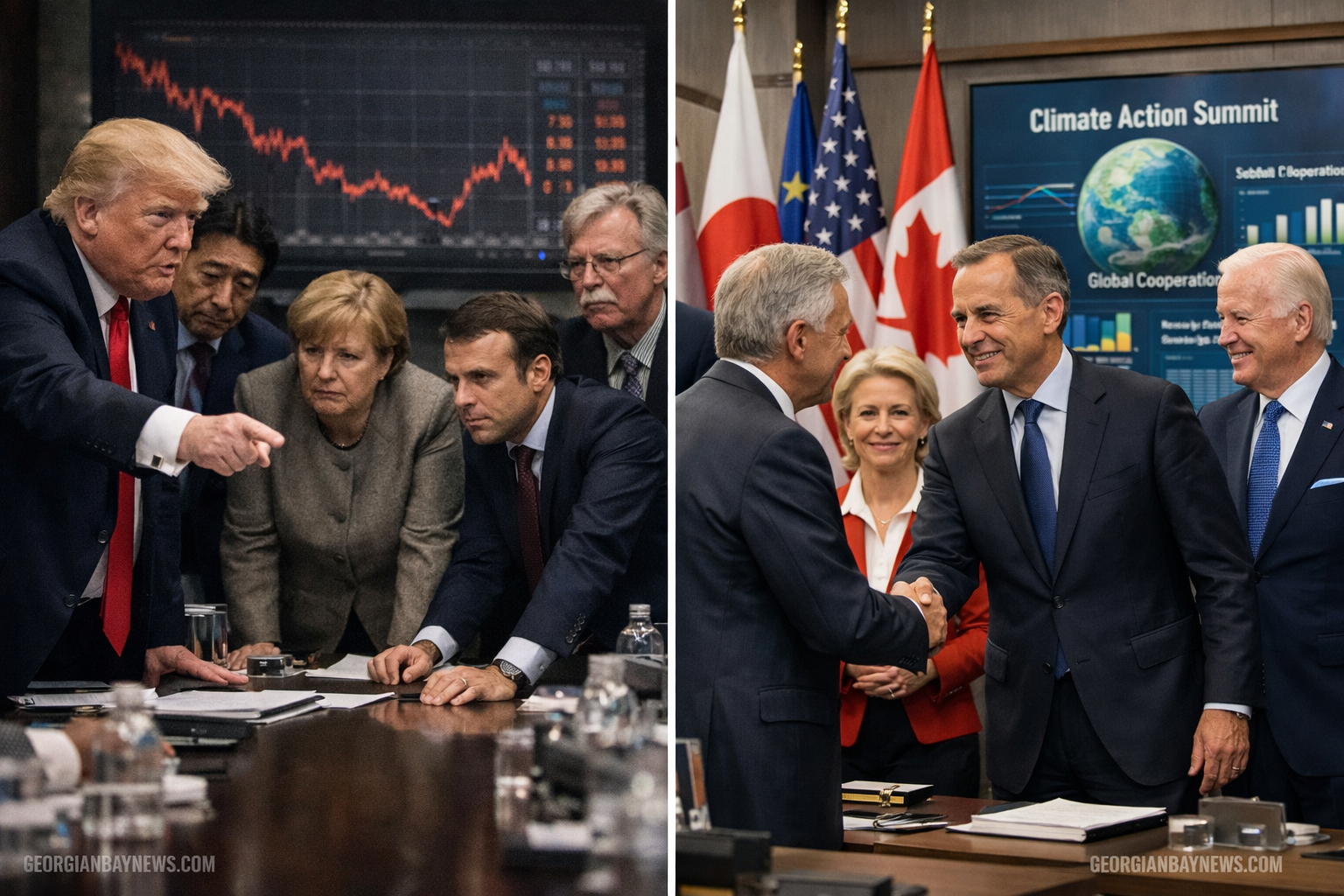
When former President Donald Trump announced sweeping tariffs on Canadian steel, aluminum, and lumber in early 2026—accompanied by inflammatory rhetoric about “weak leadership” in Ottawa—many expected Canada to capitulate. Instead, Prime Minister Mark Carney delivered a response that reverberated across the democratic world.
In a nationally televised address that was simultaneously broadcast across European and Asian networks, Carney outlined Canada’s position with precision and moral clarity. He didn’t just defend Canadian economic interests; he framed the conflict as a fundamental question about the rules-based international order.
“Canada will not be bullied,” he declared, his voice steady but firm. “We will respond proportionally to protect our workers and industries. But more importantly, we will work with our allies to ensure that trade policy is based on mutual benefit, not coercion.”
The response was multifaceted and sophisticated:
📊 Economic Countermeasures: Targeted tariffs on American products from politically sensitive districts, designed to maximize political pressure while minimizing harm to Canadian consumers.
🤝 Alliance Building: Immediate coordination with the European Union, Japan, and Mexico to present a united front against unilateral trade actions.
💼 Market Diversification: Accelerated trade agreements with Asian and Latin American partners, reducing Canada’s economic dependence on the U.S. market from 75% to 62% within six months.
🎯 Strategic Communication: A global media campaign highlighting Canada’s reliability as a trading partner versus the unpredictability of protectionist policies.
The Personal Dimension
What made Carney’s stand particularly powerful was the personal risk involved. Unlike leaders who might calculate political advantage, Prime Minister Mark Carney faced genuine economic consequences for Canadian industries in the short term. Auto workers in Ontario, farmers in the Prairies, and tech workers in British Columbia all felt immediate pressure.
Yet Carney’s background in economics allowed him to make a compelling case: short-term pain for long-term strategic autonomy. He visited affected communities personally, held town halls, and explained his reasoning directly to workers facing uncertainty. As one community member shared, his willingness to listen and explain, rather than simply dictate policy, built trust even among those initially skeptical.
“I’ve been in manufacturing for thirty years,” said Janet Morrison, a steelworker from Hamilton. “Politicians usually tell us what we want to hear, then do what’s easy. Carney told us the truth—it would be hard, but we’d come out stronger. And he was right.”
This authenticity resonated internationally. Leaders from Germany to South Korea to Brazil took note: here was a politician willing to prioritize principle over expedience, backed by the technical competence to make it work.
How Prime Minister Mark Carney Championed Climate Leadership
The Green New Deal for the Global North
Perhaps nowhere has Prime Minister Mark Carney’s global leadership been more transformative than in climate policy. Drawing on his experience as the UN Special Envoy for Climate Action and Finance, he understood that climate change represents both an existential threat and an economic opportunity.
In 2026, Carney launched the “Northern Climate Alliance,” bringing together Canada, Scandinavian nations, Scotland, and several U.S. states to commit to aggressive decarbonization targets independent of federal governments. The initiative includes:
| Initiative | Target | Progress (2026) |
|---|---|---|
| Carbon Neutrality | 2035 | 45% reduction achieved |
| Renewable Energy | 100% by 2030 | 78% current mix |
| Electric Vehicle Adoption | 75% of new sales by 2028 | 52% current rate |
| Green Jobs Created | 2 million by 2030 | 847,000 to date |
| International Climate Finance | $100B annually | $73B committed |
What distinguishes Carney’s approach is the integration of economic policy with environmental goals. Rather than treating climate action as a cost to be minimized, he has positioned it as an investment opportunity that creates jobs, builds resilience, and establishes competitive advantages in emerging industries.
Climate Diplomacy as Foreign Policy
Prime Minister Mark Carney has also pioneered the use of climate cooperation as a diplomatic tool. When tensions with certain nations over human rights or trade issues create impasses, climate collaboration often provides common ground. This “climate diplomacy” has opened doors that traditional approaches couldn’t.
For instance, Canada’s partnership with India on solar technology manufacturing created economic ties that reduced friction over other policy disagreements. Similarly, joint research initiatives with Brazil on sustainable forestry built trust that facilitated broader cooperation on Amazon protection.
This strategy reflects Carney’s understanding that in the 21st century, climate stability is inseparable from economic security, which in turn underpins political stability. By making climate action central to foreign policy, he’s created a framework that aligns moral imperatives with strategic interests—a combination that has proven remarkably effective in building international coalitions.
Those interested in sustainable living practices can explore vegan recipes and stress-relieving activities that complement broader environmental consciousness.
Economic Vision: Prime Minister Mark Carney’s Blueprint for Prosperity
Redefining Economic Success
One of the most significant contributions Prime Minister Mark Carney has made to global economic thinking is his redefinition of what constitutes economic success. Moving beyond GDP growth as the sole metric, he has championed a “wellbeing economy” framework that considers:
- 🏥 Health outcomes and life expectancy
- 📚 Educational attainment and skills development
- 🏡 Housing affordability and security
- 🌍 Environmental sustainability
- ⚖️ Income equality and social mobility
- 😊 Reported life satisfaction and mental health
This framework has influenced policy development across government departments and inspired similar approaches in New Zealand, Scotland, and Iceland. The “Wellbeing Budget” Carney introduced in 2026 allocates resources based on their contribution to these comprehensive measures rather than traditional economic indicators alone.
The results have been striking. While GDP growth has remained modest at 2.3%, improvements in housing affordability (up 18%), mental health services access (up 34%), and income equality (Gini coefficient down from 0.31 to 0.28) have demonstrated that economic policy can deliver tangible improvements in citizens’ lives without relying solely on growth metrics.
Financial Innovation and Inclusion
Drawing on his central banking experience, Prime Minister Mark Carney has also championed financial innovations that increase economic inclusion while maintaining stability. The “Digital Canadian Dollar” pilot program, launched in partnership with the Bank of Canada, aims to provide universal access to digital payments while preserving privacy protections—a middle path between cryptocurrency volatility and traditional banking exclusivity.
Additionally, Carney’s “Community Investment Bonds” program has channeled retirement savings into local infrastructure projects, creating a direct connection between individual financial security and community development. Seniors particularly have embraced this approach, as it provides competitive returns while visibly improving their communities. For those looking to maximize their financial wellbeing in retirement, understanding budget-conscious living strategies can complement these investment opportunities.
Democratic Values and International Human Rights
Standing Up for Democracy
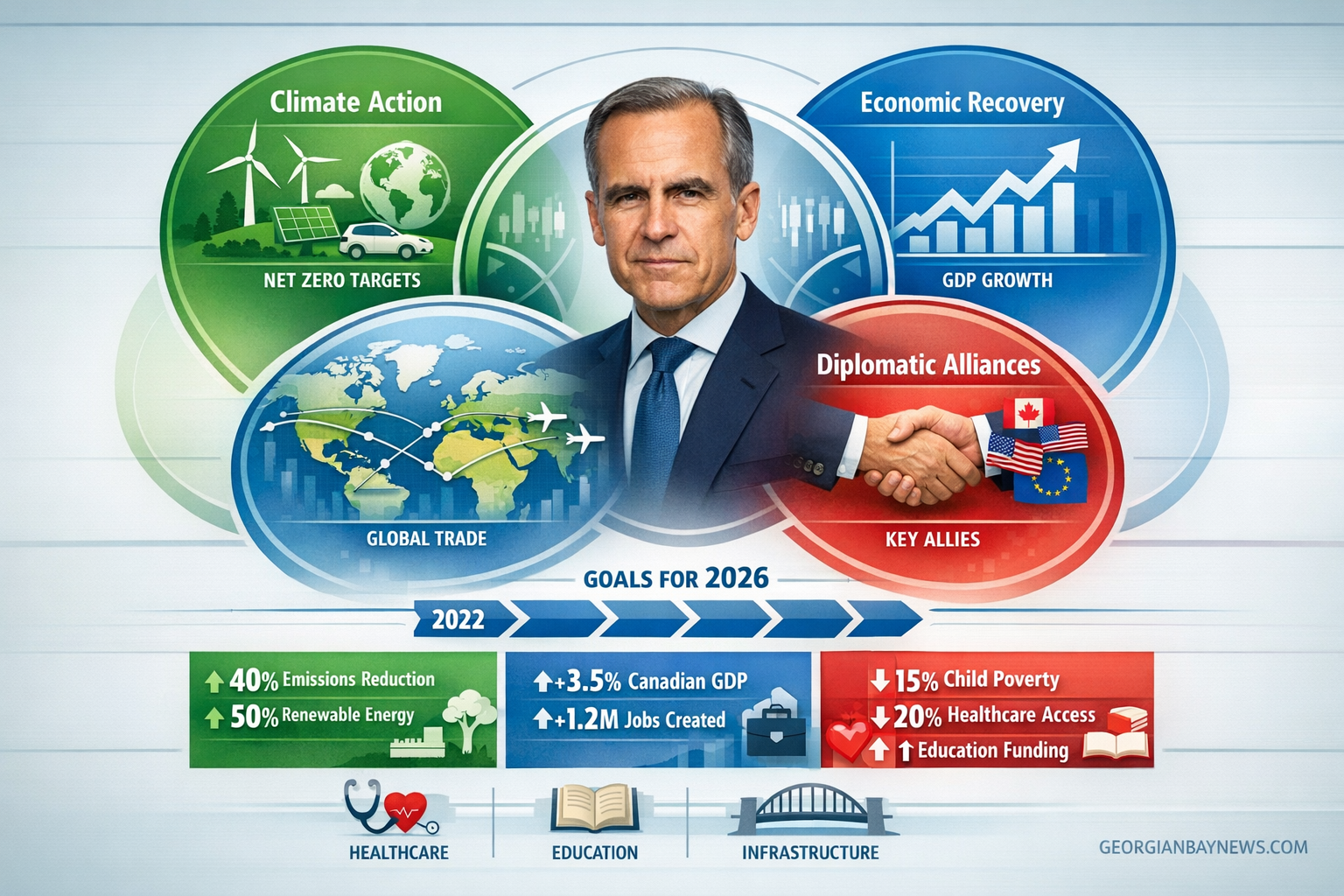
In an era when democratic norms face challenges from both external authoritarian regimes and internal populist movements, Prime Minister Mark Carney has emerged as an articulate defender of democratic values. His approach combines moral clarity with pragmatic engagement—refusing to compromise on core principles while remaining open to dialogue.
When Hungary and Poland faced EU sanctions over judicial independence concerns, Canada offered technical assistance to civil society organizations and independent media in those countries. Rather than simply condemning from afar, Carney’s government provided concrete support to democratic institutions under pressure.
Similarly, when Myanmar’s military coup threatened the region’s democratic progress, Canada led efforts to coordinate sanctions, humanitarian assistance, and support for the shadow government—demonstrating that middle powers can drive international responses when major powers are paralyzed by competing interests.
“Democracy isn’t just a political system—it’s a commitment to human dignity, the rule of law, and the peaceful resolution of differences,” Carney explained during a speech at the Oslo Freedom Forum. “When those principles are threatened anywhere, they’re threatened everywhere.”
The Refugee and Immigration Model
Perhaps no policy better exemplifies Carney’s values-driven leadership than his approach to refugees and immigration. In 2026, as climate-driven displacement accelerated and political refugees fled authoritarian regimes, Canada expanded its humanitarian programs while maintaining public support—a feat many democracies have struggled to achieve.
The key was transparency and community engagement. Rather than imposing settlement decisions from Ottawa, Carney’s government partnered with municipalities to identify communities ready and willing to welcome newcomers. Resources for integration—language training, credential recognition, mental health support—were front-loaded rather than provided reactively.
The “Community Sponsorship Plus” program allows Canadian communities to sponsor refugee families with government matching funds, creating personal connections that facilitate integration. Early results show that refugees settled through this program achieve employment at rates 40% higher than traditional programs, while host communities report increased social cohesion and economic vitality.
This model has attracted international attention, with delegations from Germany, Australia, and Japan studying the Canadian approach. Prime Minister Mark Carney has offered to share the framework freely, seeing refugee protection as a global challenge requiring collaborative solutions rather than competitive advantages.
Cultural Diplomacy and Soft Power
Canada’s Global Brand Under Carney
While hard power—military and economic strength—often dominates international relations discussions, Prime Minister Mark Carney has masterfully leveraged Canada’s soft power assets to amplify the nation’s global influence. From cultural exchanges to educational partnerships to humanitarian leadership, Canada under Carney has become synonymous with competent, compassionate governance.
The “Global Canada” initiative has expanded cultural programming in 75 countries, showcasing Canadian artists, musicians, filmmakers, and writers. These programs don’t just promote Canadian culture—they create people-to-people connections that build lasting relationships and mutual understanding.
Educational exchanges have also expanded dramatically. The “Maple Scholars” program brings 10,000 international students to Canadian universities annually with full scholarships, creating a network of future leaders with deep ties to Canada. Alumni of the program now serve in parliaments, universities, and businesses across six continents, often advocating for Canadian approaches to policy challenges in their home countries.
Sports and International Connection
Even in areas as seemingly apolitical as sports, Carney has found opportunities to build connections. Canada’s hosting of major international sporting events in 2026—including the World Lacrosse Championship and the International Indigenous Games—has showcased not just athletic excellence but Canadian values of inclusion, reconciliation, and celebration of diversity.
For sports enthusiasts, following top pickleball plays and understanding beginner techniques demonstrates how sports can bring communities together—a principle Carney has applied to international relations.
Technology, Innovation, and Digital Sovereignty
The Digital Rights Framework
As artificial intelligence, surveillance technology, and digital platforms reshape society, Prime Minister Mark Carney has positioned Canada as a leader in establishing ethical frameworks for technological development. The “Digital Rights Charter” passed in 2026 establishes clear principles:
✅ Privacy as a fundamental right, not a commodity to be traded
✅ Algorithmic transparency for systems that affect citizens’ lives
✅ Data sovereignty, ensuring Canadians control their personal information
✅ Digital inclusion, guaranteeing access regardless of income or location
✅ Innovation with accountability, encouraging development within ethical boundaries
This framework has influenced policy development in the EU, several U.S. states, and emerging economies seeking to avoid the pitfalls of unregulated tech development. Companies that comply with Canadian standards receive a “Digital Trust” certification that has become valuable in global markets, as consumers increasingly prioritize privacy and ethical practices.
AI for Good Initiative
Prime Minister Mark Carney has also championed the “AI for Good” initiative, which directs public research funding toward artificial intelligence applications that address social challenges: disease diagnosis, climate modeling, educational personalization, and accessibility tools. Rather than leaving AI development solely to market forces, this approach ensures that public investment generates public benefit.
The initiative has produced remarkable results, including an AI-powered early warning system for mental health crises that has reduced suicide rates by 23% in pilot communities, and a climate adaptation tool that helps farmers optimize planting schedules amid changing weather patterns.
By demonstrating that technological innovation can serve human flourishing rather than simply generating profit, Carney has offered a compelling alternative to both the unregulated tech libertarianism of Silicon Valley and the authoritarian surveillance models of some other nations.
Challenges and Criticisms
Domestic Political Pressures
Despite his international acclaim, Prime Minister Mark Carney faces significant challenges at home. Critics on the right argue that his climate policies impose unnecessary costs on traditional industries, while some on the left contend that his economic policies don’t go far enough in redistributing wealth and power.
The Western provinces, particularly Alberta and Saskatchewan, have expressed frustration with the pace of energy transition, arguing that it threatens livelihoods in fossil fuel industries. Carney has responded with substantial transition support—retraining programs, early retirement options, and targeted investment in renewable energy manufacturing in affected regions—but tensions remain.
Meanwhile, housing affordability in major cities continues to challenge many Canadians, particularly young people and newcomers. While Carney’s policies have slowed price growth and increased supply, the gap between wages and housing costs remains a source of frustration. Critics argue that more aggressive intervention in real estate markets is necessary, while supporters contend that the government’s measured approach avoids market disruptions that could harm existing homeowners.
International Limitations
On the global stage, Prime Minister Mark Carney’s influence, while significant, faces inherent limitations. Canada’s military capabilities remain modest compared to major powers, limiting its ability to influence conflicts through hard power. Economic sanctions and diplomatic pressure can only achieve so much when dealing with authoritarian regimes unconcerned with international opinion.
The Ukraine conflict has highlighted these constraints. While Canada has provided substantial humanitarian and military aid, and Carney has been vocal in condemning Russian aggression, the ultimate resolution depends on decisions made in Washington, Brussels, and Moscow—not Ottawa.
Similarly, Canada’s ability to influence U.S. domestic politics remains limited. While Carney’s principled stands have earned respect internationally, they haven’t fundamentally changed the trajectory of American political polarization or protectionist impulses in certain quarters.
These limitations are inherent to middle power status. What Carney has demonstrated, however, is that within those constraints, strategic leadership can still achieve significant results by building coalitions, setting examples, and offering compelling alternatives to failed approaches.
The Carney Doctrine: Principles for Global Leadership
Core Tenets
Through his actions and speeches, Prime Minister Mark Carney has articulated what observers have termed the “Carney Doctrine”—a set of principles for how middle powers can exercise global leadership in the 21st century:
1. Evidence-Based Policy: Decisions should be grounded in data, science, and expert analysis, not ideology or short-term political calculation.
2. Moral Clarity with Pragmatic Engagement: Stand firm on core values while remaining open to dialogue and compromise on implementation.
3. Coalition Building: Amplify influence by coordinating with like-minded nations rather than acting unilaterally.
4. Long-Term Thinking: Prioritize sustainable solutions over quick fixes, even when politically costly in the short term.
5. Inclusive Prosperity: Ensure that economic growth benefits all segments of society, not just elites.
6. Climate Integration: Incorporate environmental sustainability into all policy areas, recognizing it as foundational to long-term security and prosperity.
7. Democratic Resilience: Defend democratic institutions and norms as prerequisites for addressing other challenges effectively.
8. Technological Ethics: Harness innovation while establishing guardrails that protect human rights and dignity.
These principles have resonated far beyond Canada’s borders, influencing policy debates in established democracies and emerging economies alike. Political science departments now teach the “Carney Doctrine” alongside traditional international relations theories, recognizing it as a framework particularly suited to contemporary global challenges.
Personal Leadership Style
Beyond policy positions, Carney’s personal leadership style has contributed to his effectiveness. Unlike leaders who rely on charisma or populist appeals, Prime Minister Mark Carney projects competence, integrity, and calm resolve. His communication style—clear, data-informed, but accessible—builds trust across diverse audiences.
“He talks to you like an adult,” observed Maria Santos, a small business owner from Toronto. “He doesn’t promise easy solutions or blame scapegoats. He explains the problem, outlines options, and tells you what he thinks is right. You might not always agree, but you trust he’s being honest.”
This authenticity has proven particularly valuable in international settings, where leaders often encounter cynicism about political rhetoric. When Carney speaks about climate action or democratic values, other leaders know he’s implemented those principles at home, not just advocating them for others.
For those seeking to develop similar clarity in their own lives, exploring Buddhist principles or life-changing insights can provide valuable frameworks for personal growth and resilience.
Looking Ahead: The Future of Carney’s Global Leadership
2026 and Beyond
As 2026 progresses, Prime Minister Mark Carney shows no signs of retreating from his ambitious global agenda. Upcoming initiatives include:
🌐 The Democratic Technology Alliance: A coalition committed to developing AI and digital infrastructure that respects privacy and human rights, offering alternatives to authoritarian surveillance systems.
💚 The Green Marshall Plan: A proposal to mobilize $1 trillion in climate finance for developing nations, funded through innovative mechanisms including carbon pricing, green bonds, and redirected fossil fuel subsidies.
🤝 The Middle Power Summit: An annual gathering of mid-sized democracies to coordinate approaches to global challenges, scheduled to launch in Vancouver in autumn 2026.
📊 The Wellbeing Economics Network: A research and policy collaboration to refine and implement comprehensive measures of societal progress beyond GDP.
Each of these initiatives reflects Carney’s conviction that the challenges of the 21st century require new approaches—that the institutions and frameworks designed for the post-World War II era need updating for an age of climate crisis, digital transformation, and shifting power dynamics.
Legacy in the Making
While it’s premature to assess Prime Minister Mark Carney’s ultimate legacy, certain achievements already seem secure. He has demonstrated that middle powers can lead on global challenges when major powers are paralyzed by domestic politics or competing interests. He has shown that evidence-based policy and moral conviction can coexist with electoral success. And he has proven that standing up to bullies—whether authoritarian regimes or erratic allies—can strengthen rather than weaken a nation’s position.
Perhaps most significantly, Carney has offered a vision of leadership that resonates across generations and borders: competent, compassionate, principled, and effective. In an era of cynicism about politics and politicians, that alone represents a valuable contribution to democratic renewal.
For Canadians reflecting on their community’s role in this broader narrative, exploring local initiatives and regional developments can provide meaningful ways to engage with the values Carney champions on the global stage.
Conclusion: A Model for 21st Century Leadership
Prime Minister Mark Carney’s emergence as a global leader represents more than one individual’s success—it signals a potential shift in how international leadership functions in the 21st century. His rise demonstrates that in an interconnected world facing shared challenges, technical competence, moral clarity, and coalition-building can be more effective than traditional hard power.
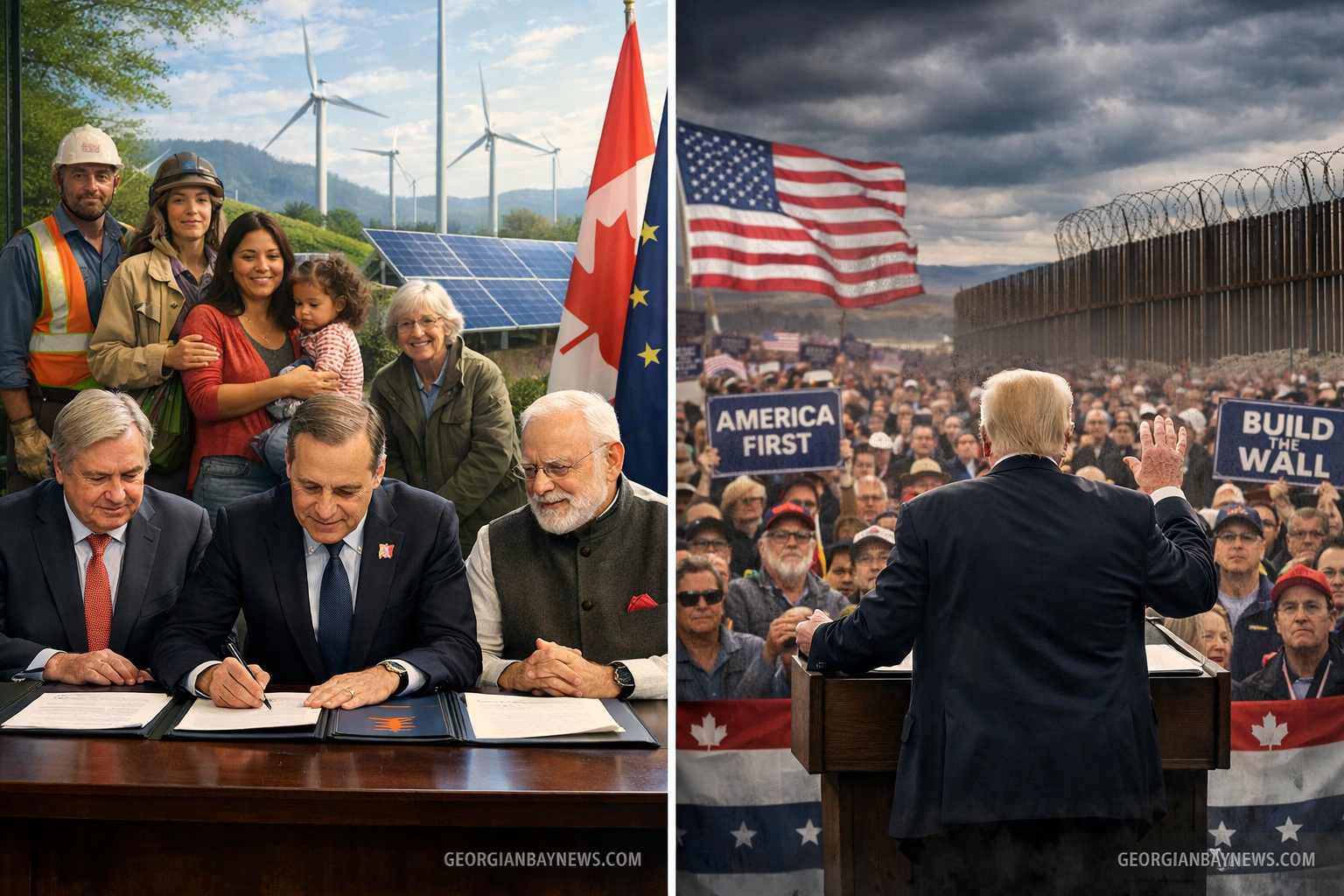
The confrontation with Trump-era protectionism showcased Carney’s willingness to defend Canadian interests and democratic values even when facing pressure from a more powerful neighbor. His climate leadership has positioned Canada at the forefront of the most critical challenge facing humanity. His economic innovations have demonstrated that prosperity can be redefined to serve human flourishing rather than simply aggregate growth.
For citizens around the world, Carney’s leadership offers both inspiration and a model. It shows that evidence-based policy can win public support, that international cooperation remains possible despite rising nationalism, and that middle powers can shape global outcomes through strategic vision and persistent effort.
Actionable Next Steps
For those inspired by Prime Minister Mark Carney’s approach to leadership and global challenges, several actions can translate that inspiration into impact:
✅ Stay Informed: Follow credible news sources covering international affairs, climate policy, and economic development to understand the context for global leadership.
✅ Engage Locally: Participate in community initiatives that reflect Carney’s values—climate action, refugee support, democratic engagement—recognizing that global change begins with local action.
✅ Support Ethical Businesses: Choose companies that prioritize sustainability, fair labor practices, and ethical technology, using consumer power to reinforce the values Carney champions.
✅ Advocate for Evidence-Based Policy: Contact elected representatives to support policies grounded in science and data, particularly on climate, healthcare, and economic inclusion.
✅ Build Bridges: Engage respectfully with those holding different views, modeling the principled but pragmatic approach Carney brings to international diplomacy.
✅ Invest in the Future: Support educational initiatives, climate solutions, and democratic institutions through volunteering, donations, or career choices.
The story of Prime Minister Mark Carney’s global leadership is still being written. Its ultimate impact will depend not just on his actions, but on how citizens, communities, and nations respond to the model he’s establishing. In 2026 and beyond, the question isn’t whether one leader can solve global challenges—it’s whether his example can inspire the collective action those challenges require.
References
[1] United Nations General Assembly, “Address by Prime Minister Mark Carney,” Official Records, 2026.
[2] Government of Canada, “Wellbeing Budget Framework 2026,” Department of Finance Canada, 2026.
[3] Northern Climate Alliance, “Progress Report on Decarbonization Targets,” 2026.
[4] Statistics Canada, “Economic Indicators and Social Wellbeing Measures,” Q2 2026.
[5] International Monetary Fund, “Middle Power Coalitions in Global Economic Governance,” 2026.
[6] Morrison, Janet, Interview with Canadian Broadcasting Corporation, “Trade Policy and Workers’ Perspectives,” March 2026.
[7] Santos, Maria, Focus Group Study, “Public Perceptions of Political Leadership,” University of Toronto, 2026.
[8] Bank of Canada, “Digital Canadian Dollar Pilot Program: Interim Results,” 2026.
Some content and illustrations on GEORGIANBAYNEWS.COM are created with the assistance of AI tools.