















Social Media Regulation and Content Moderation: What You Need to Know in 2026

I’ll never forget the moment my teenage daughter showed me a disturbing video that had somehow slipped through the filters on her favorite Social Media platform.
As a parent, I felt helpless—and angry. How did this get past the safeguards? That experience opened my eyes to the complex world of content moderation and the ongoing battle to make online spaces safer for everyone.
Social Media has transformed how we connect, share, and communicate, but it’s also created unprecedented challenges. From harmful content and misinformation to privacy violations and cyberbullying, the digital landscape in 2026 continues to evolve at breakneck speed. The question isn’t whether we need regulation—it’s how we balance safety with freedom of expression.
Key Takeaways
️ Content moderation combines AI technology and human reviewers to filter billions of posts daily across social platforms
- ⚖️ New regulations in 2026 are holding tech companies more accountable for harmful content while protecting user rights
👦 Parents and users have more control than ever before with improved privacy settings and reporting tools
- 🌍 Global coordination is increasing as countries work together to establish consistent online safety standards
- 🔄 Transparency is improving as platforms share more data about their moderation decisions and processes
Understanding Social Media Content Moderation
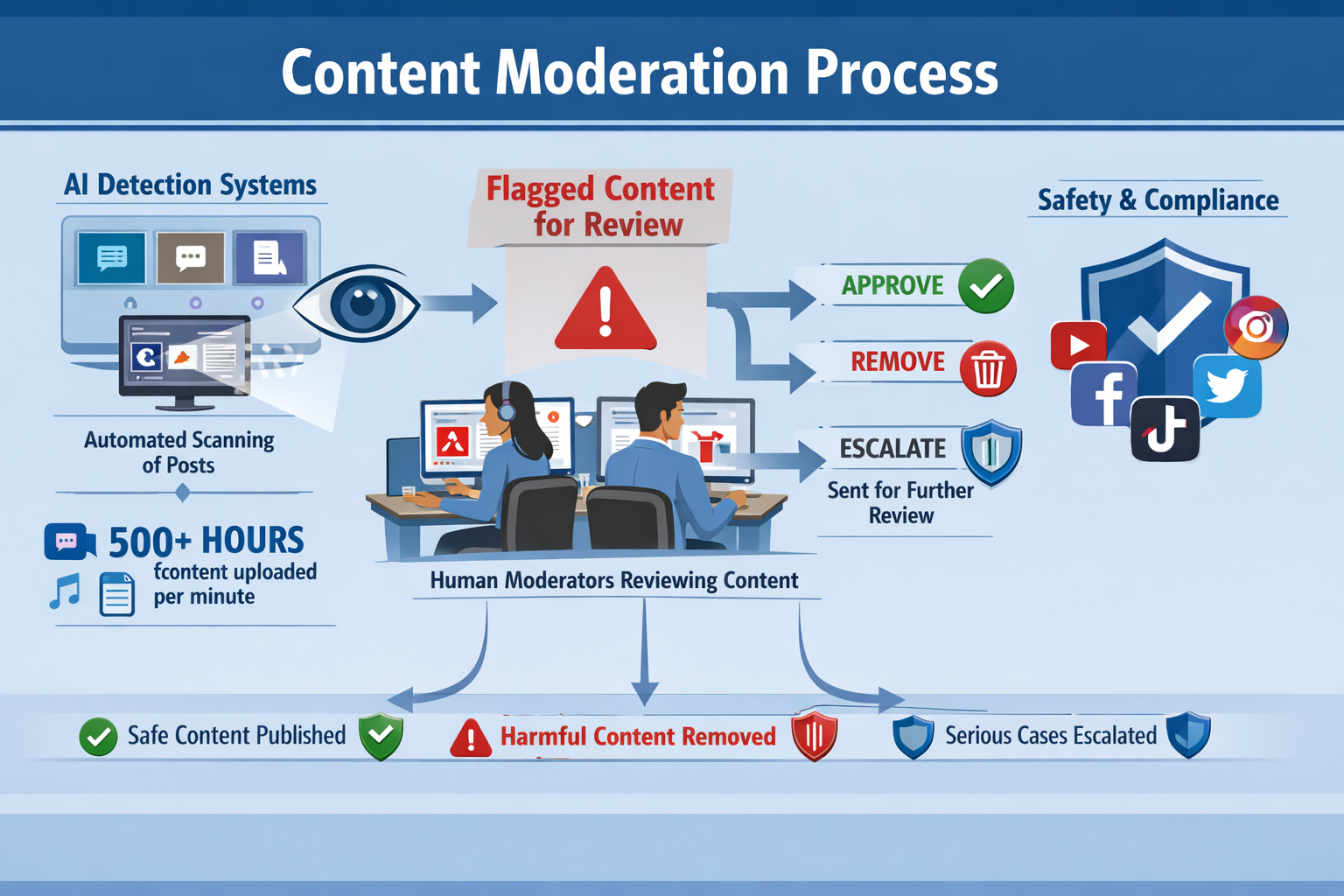
Content moderation is the process of monitoring and reviewing user-generated content to ensure it complies with platform rules and community standards. Think of it as the digital equivalent of a bouncer at a club—someone needs to decide who gets in and who gets kicked out.
How Content Moderation Actually Works
The sheer scale of content moderation is staggering. Every minute, users upload over 500 hours of video to YouTube, post 350,000 tweets, and share 66,000 photos on Instagram [1]. No human team could possibly review all of this manually.
Here’s how platforms tackle this challenge:
- AI-Powered Detection 🤖 – Automated systems scan content for violations using machine learning
- User Reporting 📢 – Community members flag problematic content
- Human Review 👥 – Trained moderators make final decisions on flagged items
- Appeals Process ⚖️ – Users can challenge moderation decisions
| Moderation Method | Speed | Accuracy | Cost |
|---|---|---|---|
| AI Only | Very Fast | 70-85% | Low |
| Human Only | Slow | 90-95% | Very High |
| Hybrid (AI + Human) | Fast | 85-92% | Moderate |
The hybrid approach has become the industry standard because it balances efficiency with accuracy. AI catches the obvious violations quickly, while humans handle the nuanced, context-dependent cases that require judgment.
The Human Cost of Moderation
Behind every filtered post is often a real person who had to view disturbing content. Content moderators frequently experience psychological trauma from exposure to violence, abuse, and graphic material [2]. This has led to increased focus on moderator wellbeing, including mandatory breaks, mental health support, and rotation systems to limit exposure.
“I saw things I can never unsee. The company provided counseling, but the images stay with you.” – Former content moderator, speaking anonymously
The Evolution of Social Media Regulation
The regulatory landscape has shifted dramatically over the past few years. Gone are the days when tech companies could claim to be neutral platforms with minimal responsibility for user content.
Major Regulatory Frameworks in 2026
Europe’s Digital Services Act (DSA) has set the global standard for platform accountability. The legislation requires large platforms to:
- Conduct regular risk assessments for harmful content
- Provide transparent reporting on moderation decisions
- Allow users to challenge content removal
- Implement stronger protections for minors
- Share data with researchers and regulators
The United States has taken a more fragmented approach, with individual states implementing their own laws. California’s Age-Appropriate Design Code and Texas’s social media verification laws represent different regulatory philosophies, creating compliance challenges for platforms [3].
Canada’s Online Safety Act introduced comprehensive requirements for platforms operating in the country, including 24-hour takedown requirements for certain harmful content and mandatory reporting of child exploitation material to authorities.
What These Regulations Mean for You
As an everyday user, you’re seeing the impact of these regulations in several ways:
✅ Better transparency – Platforms now explain why content was removed
✅ Improved appeals – You can challenge moderation decisions more easily
✅ Enhanced privacy controls – More granular settings for who sees your content
✅ Age verification – Stronger protections for children and teens
✅ Data portability – Easier to download and transfer your information
Just like managing stress through mindfulness practices, navigating social media safely requires awareness and intentional action.
The Challenges of Content Moderation
Content moderation isn’t black and white. What one person considers offensive, another might view as legitimate expression. Cultural differences, language nuances, and evolving social norms make consistent enforcement incredibly difficult.
The Free Speech Dilemma
The tension between safety and free expression remains one of the most contentious issues in Social Media regulation. Where do we draw the line between protecting users from harm and preserving open discourse?
Different types of content require different approaches:
- Illegal content (child exploitation, terrorism) – Remove immediately, report to authorities
- Harmful but legal content (misinformation, hate speech) – More nuanced, varies by jurisdiction
- Controversial but protected speech – Generally allowed, may require age restrictions or warnings
I remember discussing this with friends over coffee, and everyone had different opinions about what should be allowed online. One friend argued for minimal intervention, while another—a teacher who’d seen cyberbullying destroy a student’s confidence—wanted stricter controls. Both perspectives are valid, which is exactly why this is so challenging.
Cultural and Language Barriers
A post that’s perfectly acceptable in one culture might be deeply offensive in another. Platforms operating globally must navigate these differences while maintaining consistent standards. This is particularly challenging for AI systems, which struggle with context, sarcasm, and cultural references [4].
For example:
- Certain hand gestures are friendly in some countries but offensive in others
- Political satire might be misinterpreted as genuine misinformation
- Religious content acceptable in one region might violate norms elsewhere
Social Media Platforms and Their Approaches
Each major platform has developed its own content moderation philosophy and systems, reflecting different priorities and user bases.
Platform-Specific Strategies
Meta (Facebook, Instagram) employs over 40,000 content moderators worldwide and has invested heavily in AI detection systems. Their Oversight Board—an independent body that reviews controversial moderation decisions—represents an attempt to add external accountability [5].
TikTok faces unique challenges due to its video-first format and younger user base. The platform has implemented aggressive age-gating and uses AI to detect potentially harmful trends before they spread.
X (formerly Twitter) has undergone significant changes in its moderation approach, reducing staff while relying more heavily on community notes—user-generated context added to potentially misleading posts.
YouTube uses a combination of automated systems and human reviewers, with a particular focus on preventing the spread of harmful content to children through YouTube Kids.
The Role of Community Standards
Every platform publishes community standards or guidelines that define acceptable behavior. These documents have evolved from simple terms of service into comprehensive rulebooks covering everything from nudity to vaccine misinformation.
Common prohibited content across platforms:
- Violence and graphic content
- Hate speech and harassment
- Sexual exploitation
- Dangerous organizations and individuals
- Coordinated inauthentic behavior
- Regulated goods (drugs, weapons)
- Misinformation about health, elections, or emergencies
Similar to how Buddhist principles teach us about maintaining inner peace, community standards aim to create environments where positive interaction can flourish.
What Parents Need to Know
As a parent myself, I understand the anxiety that comes with kids using Social Media. The good news is that you have more tools and protections available in 2026 than ever before.
Practical Steps for Protecting Your Children
Most platforms now offer robust parental supervision features:
- Screen time limits
- Content filters based on age
- Approval requirements for new followers
- Purchase restrictions
- Location sharing controls
2. Have Open Conversations 💬
Talk to your kids about what they’re seeing online. I make it a point to ask my daughter about her favorite creators and what’s trending. This keeps communication open and helps me understand her digital world.
3. Model Good Behavior 📱
Children learn from what we do, not just what we say. Be mindful of your own social media habits and demonstrate healthy boundaries.
4. Stay Informed 📚
Platforms update their policies regularly. Subscribe to safety newsletters and review privacy settings periodically. Just as you might check local news and community updates to stay connected with your area, staying informed about digital safety is equally important.
5. Report and Block 🚫
Don’t hesitate to use reporting tools when you encounter inappropriate content or behavior. Platforms take reports seriously, especially those involving minors.
The Future of Social Media Regulation
Looking ahead, several trends are shaping how content moderation and regulation will evolve.
Emerging Technologies and Approaches
AI Advancements 🤖
Machine learning models are becoming more sophisticated at understanding context, detecting deepfakes, and identifying coordinated manipulation campaigns. However, they’re also being used to create more convincing fake content, creating an ongoing arms race.
Decentralized Platforms 🌐
The rise of decentralized social networks presents new regulatory challenges. When there’s no central authority controlling content, traditional moderation approaches don’t work. Communities must self-regulate, which has both advantages and risks.
Biometric Verification 🔐
More platforms are exploring biometric age verification to prevent children from accessing age-inappropriate content. Privacy advocates raise concerns about data collection, while child safety organizations see it as necessary protection.
Global Coordination Efforts
Countries are increasingly working together to establish consistent standards. The 2026 Global Digital Safety Summit brought together regulators, tech companies, and civil society organizations to develop shared principles [6].
Key areas of international cooperation:
- Cross-border enforcement of child safety laws
- Shared databases of terrorist and extremist content
- Coordinated responses to election interference
- Standardized transparency reporting requirements
The Economics of Content Moderation
Content moderation is expensive. Very expensive. Major platforms spend billions annually on safety and security efforts, including technology development, human moderators, and compliance with regulations.
Who Pays the Cost?
This raises important questions about sustainability and equity:
- Large platforms can afford sophisticated systems, but smaller competitors struggle to meet the same standards
- Emerging markets often receive less moderation coverage due to language and cultural expertise requirements
- Free speech platforms that promise minimal moderation face challenges attracting advertisers
The regulatory burden may inadvertently create barriers to entry, reducing competition and innovation in the social media space. It’s a tradeoff between safety and market diversity that policymakers continue to grapple with.
User Empowerment and Digital Literacy

Ultimately, regulation and technology can only do so much. Users need the knowledge and skills to navigate Social Media safely and critically.
Building Digital Resilience
Critical Thinking Skills 🧠
Learning to evaluate sources, recognize manipulation tactics, and verify information before sharing is essential. Many schools now incorporate digital literacy into their curricula, teaching students to be skeptical consumers of online content.
Privacy Awareness 🔒
Understanding what data you’re sharing and how it’s being used empowers you to make informed choices. Review your privacy settings regularly and think carefully before granting app permissions.
Healthy Usage Habits ⚖️
Just as we might explore morning habits that improve wellbeing, establishing healthy social media routines protects mental health. Set boundaries around usage time, curate your feed intentionally, and take regular breaks.
Community Participation 🤝
You play a role in making platforms safer. Report violations, support creators who produce positive content, and engage constructively in discussions. Your actions contribute to the overall ecosystem.
Balancing Innovation and Safety
The tension between fostering innovation and ensuring safety will continue to define Social Media regulation. Overly restrictive rules could stifle creativity and limit beneficial uses of technology, while insufficient oversight leaves users vulnerable to harm.
Finding the Middle Ground
The most effective approach likely involves:
Risk-Based Regulation – Different requirements for different platform sizes and risk levels
Flexibility – Rules that can adapt as technology evolves
Multi-Stakeholder Input – Including users, platforms, civil society, and governments in policy development
Evidence-Based Policy – Decisions grounded in research rather than moral panic
Global Coordination – Consistent standards that work across borders
Real-World Impact Stories
Regulation and moderation aren’t just abstract policy debates—they have real consequences for real people.
Lives Changed by Better Moderation
Sarah, a mother from Ontario, shared how improved reporting tools helped protect her son from a predator attempting to groom him through direct messages. The platform’s AI detected suspicious patterns and flagged the account, leading to law enforcement intervention [7].
Marcus, a small business owner, benefited from clearer appeals processes when his legitimate advertising account was mistakenly suspended. Previously, such errors could take weeks to resolve, but new regulations requiring timely human review got him back online within 48 hours.
When Moderation Falls Short
Not every story has a happy ending. Activists in authoritarian countries report that content moderation systems sometimes remove legitimate political speech when governments claim it violates platform policies. This highlights the ongoing challenge of preventing abuse of moderation systems.
Content creators also struggle with inconsistent enforcement. What gets removed on one platform stays up on another, and similar content receives different treatment depending on who reviews it.
Taking Action: What You Can Do Today
You don’t need to wait for perfect regulations or flawless AI systems to improve your Social Media experience. Here are concrete steps you can take right now:
Immediate Actions ✅
- Review your privacy settings on all platforms you use
- Enable two-factor authentication for account security
- Customize your content preferences to filter unwanted material
- Follow trusted fact-checkers and news sources
- Have conversations with family members about online safety
- Report violations when you encounter them
- Support platforms and creators that prioritize safety
Long-Term Commitments
- Stay educated about platform policy changes
- Participate in public consultations when regulators seek input
- Teach digital literacy skills to children and less tech-savvy adults
- Advocate for balanced regulation that protects without censoring
- Support organizations working on online safety issues
Much like how small daily habits can transform your life, consistent attention to digital safety creates lasting positive change.
Conclusion
Social media regulation and content moderation represent one of the defining challenges of our digital age. As we navigate 2026, we’re seeing progress—better technology, clearer regulations, and increased accountability—but significant challenges remain.
The platforms we use daily are neither inherently good nor evil. They’re tools that reflect human nature, capable of bringing out both our best and worst impulses. Effective regulation recognizes this complexity, seeking to maximize benefits while minimizing harms.
Your role in this ecosystem matters. Every time you report harmful content, think critically before sharing, or have honest conversations about online experiences, you contribute to a safer digital environment. Regulation provides the framework, technology offers the tools, but ultimately, we—the users—shape the culture of these spaces.
The conversation about Social Media regulation isn’t ending anytime soon. As technology evolves and new platforms emerge, we’ll continue adapting our approaches to content moderation and safety. Stay informed, stay engaged, and remember that creating healthy online communities is a shared responsibility.
Next Steps:
- Review your current platform privacy settings this week
- Have a conversation with your children or family about online safety
- Familiarize yourself with reporting tools on platforms you use regularly
- Stay informed about regulatory developments in your region
- Share what you’ve learned with others in your community
Together, we can build a digital future that’s both innovative and safe—where connection flourishes and harm is minimized. The tools are available, the regulations are improving, and the awareness is growing. Now it’s up to all of us to use them wisely.
References
[1] Statista. (2026). “Global Social Media Statistics and Usage Data.” Retrieved from industry reports on content upload volumes.
[2] Roberts, S. T. (2024). “Behind the Screen: Content Moderation in the Shadows of Social Media.” Yale University Press.
[3] European Commission. (2025). “Digital Services Act: Implementation and Impact Assessment.” Official EU documentation.
[4] Gillespie, T. (2025). “Custodians of the Internet: Platforms, Content Moderation, and the Hidden Decisions That Shape Social Media.” MIT Press.
[5] Meta Oversight Board. (2026). “Annual Transparency Report.” Meta Platforms, Inc.
[6] United Nations. (2026). “Global Digital Safety Summit: Key Outcomes and Commitments.” UN Digital Cooperation documentation.
[7] Canadian Centre for Child Protection. (2025). “Technology-Assisted Child Protection: Case Studies and Best Practices.” Annual report.