




















Trump’s Controversial and Scam Filled “Board of Peace”: What World Leaders Really Need to Know About the Davos Pitch
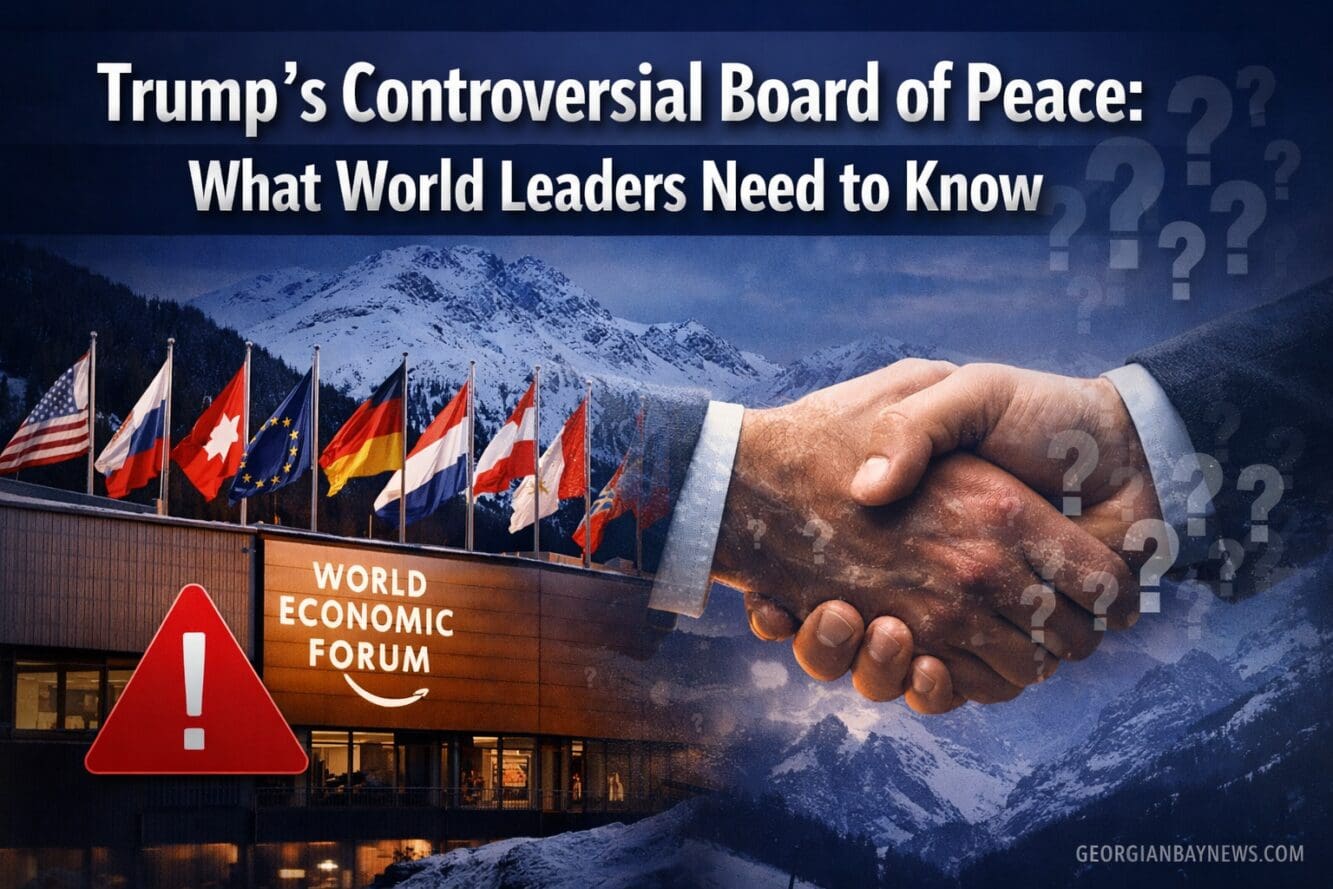
When former President Donald Trump took the stage at the World Economic Forum in Davos on January 23, 2026, he didn’t just pitch another diplomatic initiative—he formally ratified a charter that could fundamentally reshape international peacekeeping as we know it. The Board of Peace, which critics are already calling the “scammy Board of Peace,” promises to resolve global conflicts but comes with membership fees, lifetime chairmanship provisions, and a notable absence of America’s closest European allies. For Canadians, Americans, and world leaders watching from afar, the question isn’t just what this board does—it’s what it really means for the future of global diplomacy.
The announcement sent shockwaves through diplomatic circles. More than two dozen countries have reportedly accepted Trump’s invitation, yet France, Norway, and Sweden have declined outright, while Germany, the United Kingdom, and Italy remain conspicuously silent. When asked directly if this new body might replace the United Nations, Trump’s response was chillingly simple: “It might.”[1]
Key Takeaways
- 🌍 Trump formally ratified the Board of Peace Charter at Davos 2026, establishing it as an official international organization with approximately 30 founding member countries
- 💰 Membership comes with a hefty price tag: nations contributing over $1 billion within the first year receive permanent membership, while others get three-year terms
- 🚫 Major European allies are notably absent: France, Norway, and Sweden declined invitations, while the UK, Germany, and Italy remain noncommittal
- 👑 Trump can hold the chairmanship potentially for life, raising serious questions about democratic accountability and international governance
- 🔄 The Board could replace the UN, according to Trump himself, despite its original UN Security Council mandate limiting authority to Gaza reconstruction until 2027
Understanding the “Scammy Board of Peace”: Origins and Official Purpose
The Board of Peace didn’t emerge from a vacuum. Its roots trace back to a United Nations Security Council mandate approved in November 2025, which initially limited the Board’s authority to Gaza reconstruction efforts through the end of 2027.[1][3] However, the charter Trump signed in Davos tells a dramatically different story.
According to the official charter, the Board of Peace is described as “an international peacebuilding body with a broad mandate to resolve global conflicts.”[1][3] Notice what’s missing? Any direct reference to Gaza. What began as a focused reconstruction effort has morphed into something far more ambitious—and far more concerning to international observers.
The Davos Moment
Picture the scene: snow-covered Swiss Alps surrounding the elite gathering of world leaders, billionaires, and policy makers. Trump, surrounded by his executive committee, signs a document that officially brings the Board of Peace into existence. The optics were carefully crafted, but the substance raised immediate red flags.
The charter grants Trump an unprecedented level of control. He can hold the chairmanship potentially for life, though future U.S. presidents may choose to designate a representative instead.[1] For those familiar with international governance principles, this concentration of power in a single individual contradicts decades of multilateral diplomatic norms.
The Membership Problem: Why the “Scammy Board of Peace” Label Sticks
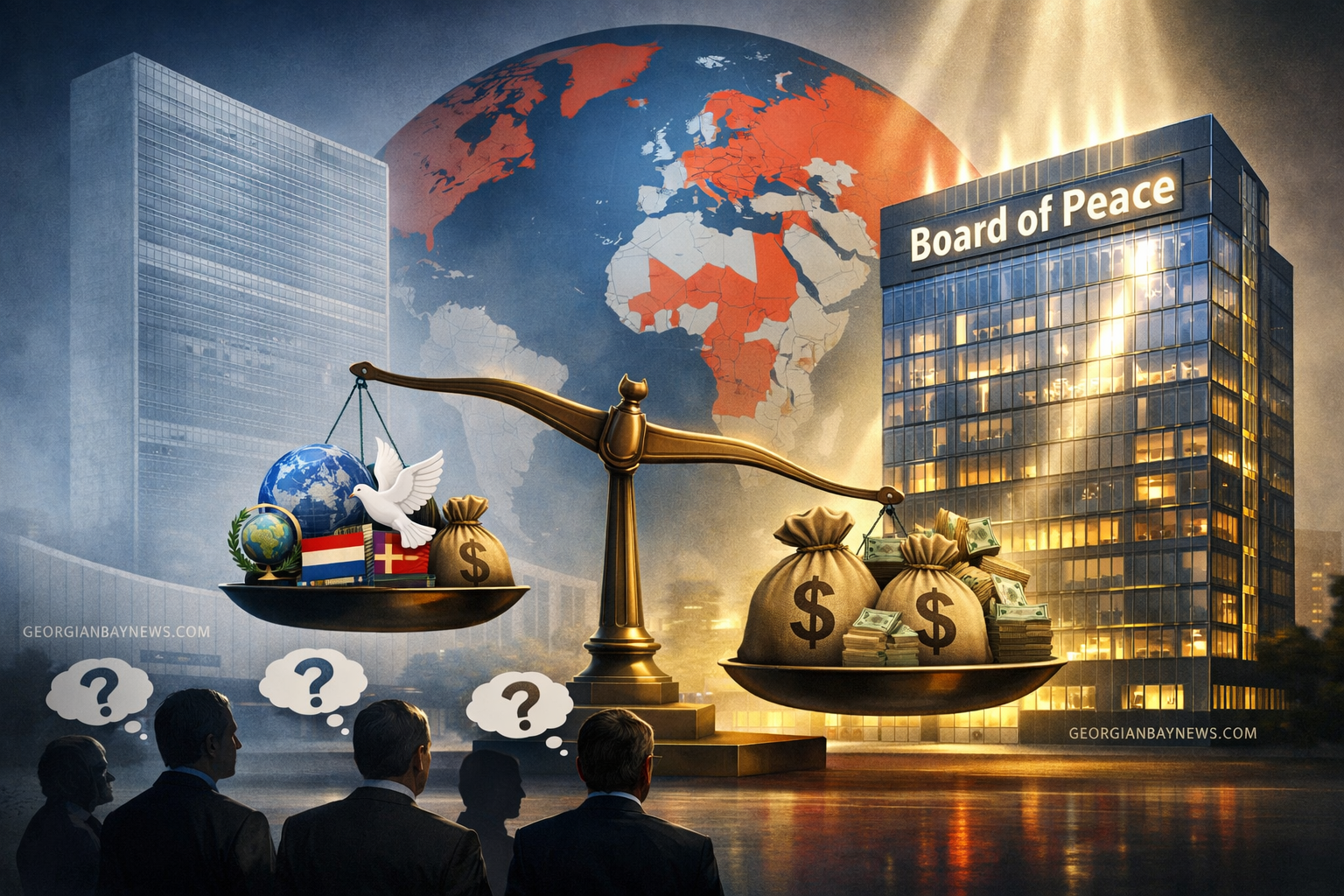
The most controversial aspect of Trump’s Board of Peace isn’t its stated mission—it’s the membership structure that has critics using terms like “pay-to-play diplomacy” and the increasingly common moniker: the scammy Board of Peace.

This is exactly what it does, according to Jared Kushner at Davos.
The $1 Billion Question
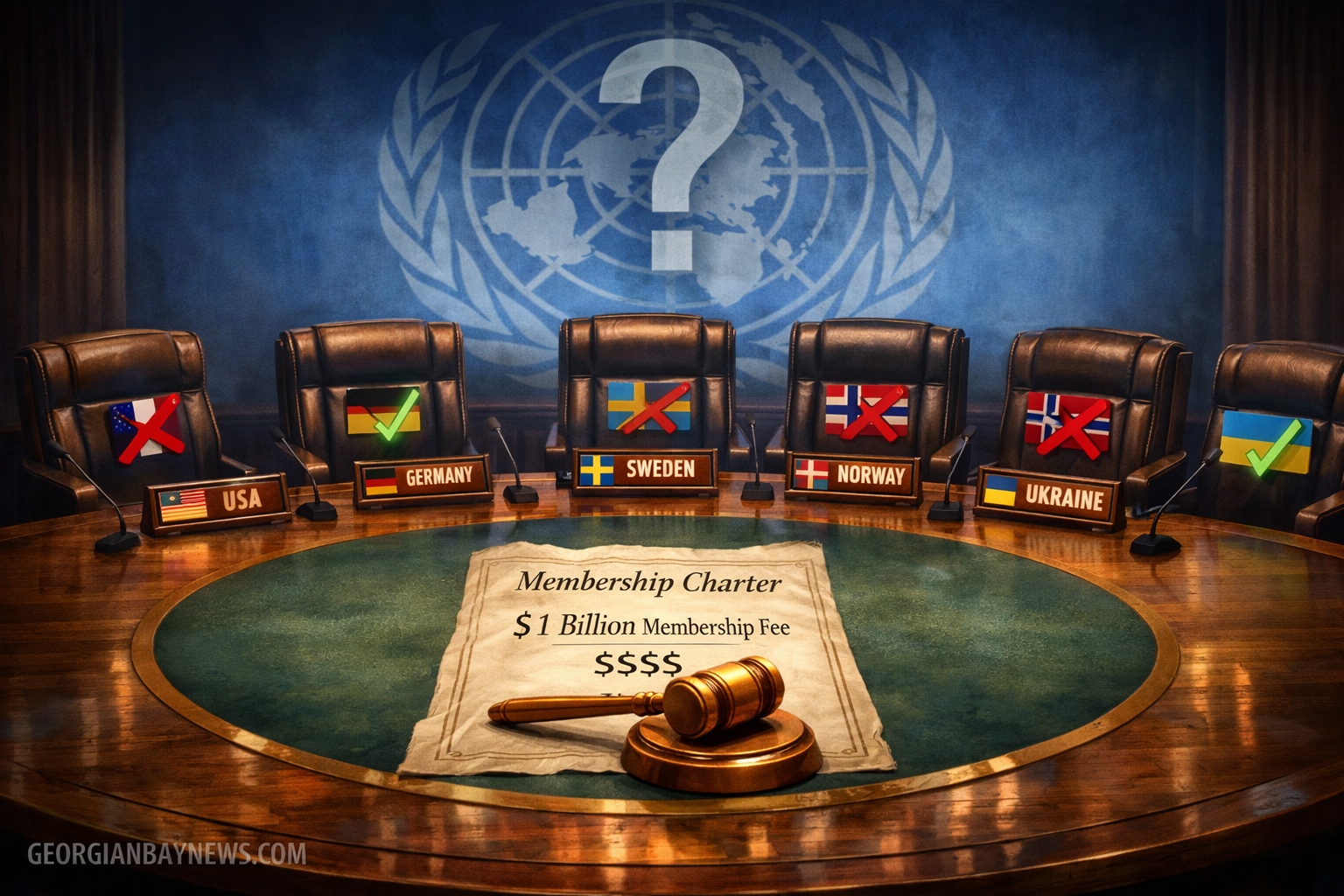
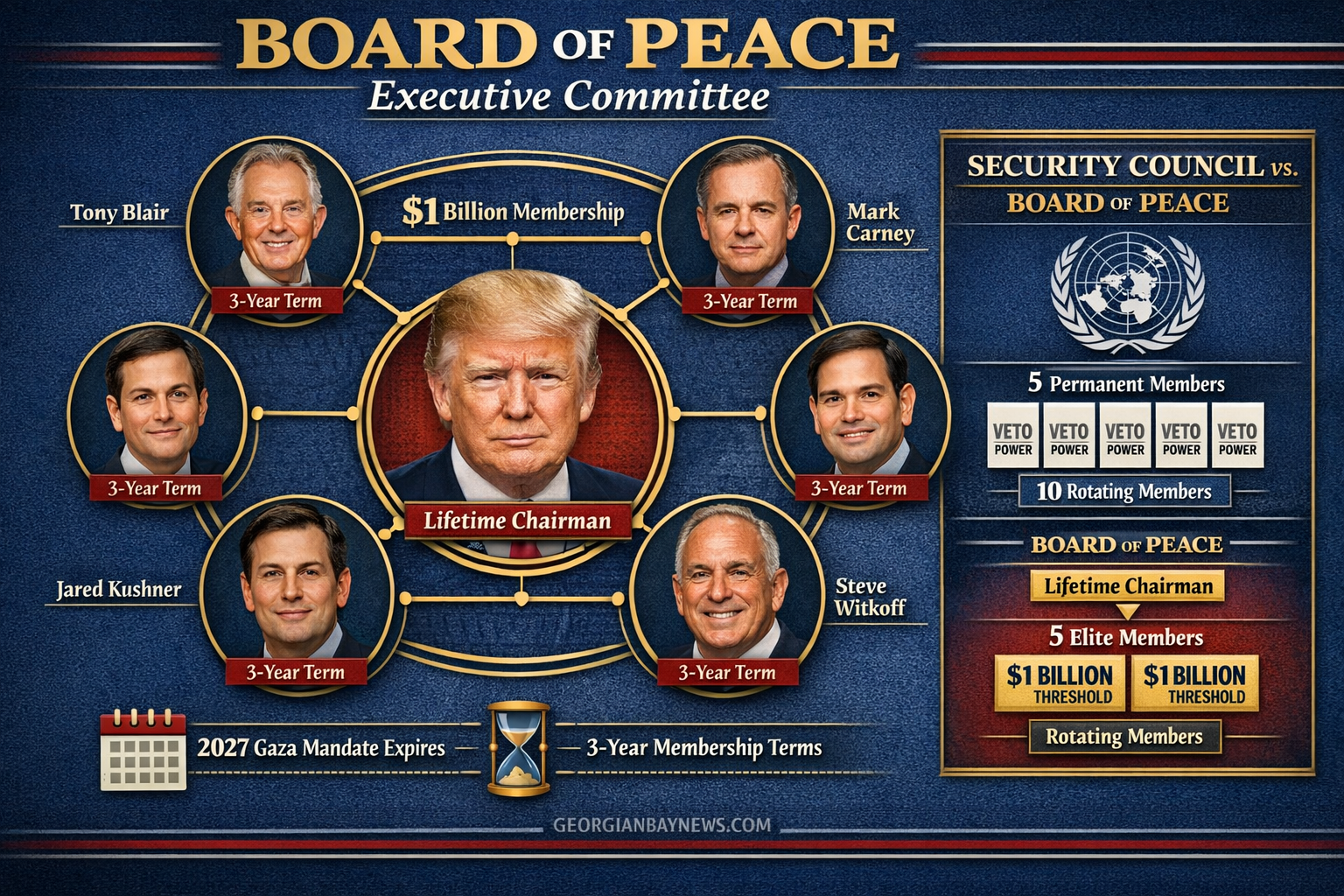
Here’s how membership works: contribute more than $1 billion in cash within the first year, and your nation receives permanent membership. Everyone else? You get a three-year membership term.[1] This creates a two-tiered system where wealth directly translates to permanent influence in global peacekeeping decisions.
For context, consider what $1 billion represents:
- 🏥 It could fund approximately 50 fully-equipped hospitals
- 🎓 It could provide university education for 40,000 students for four years
- 🏠 It could build affordable housing for 10,000 families
Instead, nations are being asked to contribute this sum to secure a permanent seat at Trump’s diplomatic table. For many Canadians and Americans struggling with rising costs of living, the optics are troubling.
Who’s In and Who’s Out
The membership roster reveals as much through its absences as its inclusions. While Trump invited more than 50 world leaders to join the Board, the full invitation list remains undisclosed by the White House.[1] What we do know:
Declined or Expressed Reservations:
- 🇫🇷 France
- 🇳🇴 Norway
- 🇸🇪 Sweden
Noncommittal:
- 🇩🇪 Germany
- 🇬🇧 United Kingdom
- 🇮🇹 Italy
Controversial Invitations:
- 🇷🇺 Russia (invited despite ongoing conflict with Ukraine)[1]
The absence of major European allies is particularly striking. These are nations with whom the United States has maintained close diplomatic, military, and economic ties for over 75 years. Their reluctance to join—or outright refusal—speaks volumes about international concerns regarding the Board’s legitimacy and structure.
The Executive Committee: Power Players in the Scammy Board of Peace
Trump didn’t just create a new international body—he stacked it with loyalists and controversial figures. The executive committee reads like a who’s who of Trump’s inner circle and political allies:
| Name | Position/Background | Role |
|---|---|---|
| Donald Trump | Former U.S. President | Chairman (potentially for life) |
| Tony Blair | Former British Prime Minister | Executive Committee Member |
| Mark Carney | Canadian Prime Minister | Executive Committee Member |
| Marco Rubio | U.S. Secretary of State | Executive Committee Member |
| Steve Witkoff | Special Envoy | Executive Committee Member |
| Jared Kushner | Trump’s son-in-law | Executive Committee Member |
Trump himself acknowledged including “some controversial people” on the body, describing Board members as “people that get the job done.”[1] But done for whom? And at what cost to traditional diplomatic processes?
The inclusion of Jared Kushner is particularly noteworthy. While Kushner played a role in the Abraham Accords during Trump’s first presidency, his business dealings in the Middle East and lack of traditional diplomatic credentials have raised ethical concerns among international observers.
For Canadians, Prime Minister Mark Carney’s involvement represents a significant shift in Canada’s traditional multilateral approach to international relations. Many are questioning whether this alignment serves Canadian interests or simply strengthens Trump’s diplomatic ambitions. Those interested in Canadian political developments should watch this space closely.
The UN Replacement Question: Existential Threat or Empty Rhetoric?
Perhaps the most alarming aspect of the scammy Board of Peace is Trump’s suggestion that it could replace the United Nations entirely. When directly asked if the Board would replace the UN, Trump responded: “It might.”[1]
What This Means for Global Governance
The United Nations, for all its flaws and bureaucratic challenges, represents 193 member states and operates on principles of sovereign equality. Every nation, regardless of wealth or military power, has a voice in the General Assembly. The Security Council, while imperfect with its permanent member veto powers, still requires consensus among diverse global powers.
The Board of Peace, by contrast:
- ✋ Grants permanent membership based on financial contribution, not diplomatic consensus
- 👤 Concentrates power in a single chairman who can serve for life
- 💵 Creates a two-tiered system where wealth equals influence
- 🚫 Excludes major democratic allies who have expressed reservations
This isn’t just a different approach to international peacekeeping—it’s a fundamental reimagining of how global governance should function. For seniors who lived through the creation of the UN after World War II, this represents a potential unraveling of the international order that has, despite its imperfections, helped prevent another world war for eight decades.
The Gaza Mandate Discrepancy
Here’s where things get particularly murky. The original UN Security Council mandate approved in November 2025 specifically limited the Board’s authority to Gaza reconstruction until the end of 2027.[1][3] However, the charter signed in Davos contains no direct reference to Gaza and instead describes a “broad mandate to resolve global conflicts.”[1][3]
This discrepancy raises serious questions:
- Did Trump exceed his UN mandate by expanding the Board’s scope?
- Does the Board operate under UN authority or as an independent entity?
- What happens when the 2027 Gaza mandate expires?
- Can member nations hold the Board accountable to its original purpose?
For world leaders considering membership, these aren’t academic questions—they’re fundamental issues of international law and diplomatic legitimacy.
Why Critics Call It the “Scammy Board of Peace”
The term “scammy Board of Peace” has gained traction not just among political opponents but among serious diplomatic analysts and international law experts. Here’s why the label resonates:
1. Pay-to-Play Structure
The $1 billion threshold for permanent membership creates an explicit link between financial contribution and diplomatic influence. Traditional international bodies, while imperfect, don’t typically sell permanent seats to the highest bidders.
2. Lack of Democratic Accountability
A chairman who can serve for life, with no clear removal mechanism or term limits, contradicts basic principles of democratic governance. This structure is more reminiscent of monarchical systems than modern international organizations.
3. Mission Creep
The expansion from Gaza reconstruction to “resolving global conflicts” without transparent debate or approval from member states suggests a lack of institutional constraints on the Board’s authority.
4. Exclusion of Allies
When your closest democratic allies decline to participate, it raises questions about the initiative’s legitimacy and alignment with shared values.
5. Opacity
The refusal to release the full invitation list, combined with vague charter language, creates an environment where accountability is difficult and public scrutiny is limited.
For those who value transparency in governance, these factors combine to create serious concerns about the Board’s true purpose and effectiveness.
Global Reactions: What World Leaders Are Really Saying
While approximately 30 countries have reportedly accepted membership, the private conversations among world leaders tell a more complex story. Diplomatic sources suggest that many nations feel pressured to join despite reservations, fearing exclusion from future peace negotiations or economic opportunities.
The European Perspective
European leaders, particularly those who declined membership, have expressed concerns about:
- The Board’s compatibility with existing EU foreign policy frameworks
- The concentration of power in American hands
- The financial burden of membership during economic uncertainty
- The potential undermining of UN authority and multilateral norms
One European diplomat, speaking on condition of anonymity, described the Board as “a solution in search of a problem—and a very expensive solution at that.”
The Canadian Dilemma
For Canadians, Prime Minister Carney’s involvement in the executive committee represents a significant policy decision. Canada has traditionally championed multilateralism, UN peacekeeping, and rules-based international order. Participation in the Board of Peace represents a departure from this tradition.
Many Canadians are questioning whether this alignment serves national interests or simply strengthens political ties with the United States at the expense of diplomatic independence. Those following Canadian political developments should monitor how this decision impacts Canada’s relationships with European allies and its standing in traditional multilateral forums.
The American Public Response
Within the United States, reactions split along predictable political lines, but with some surprising crossover. While Trump supporters view the Board as bold leadership and effective deal-making, some traditional conservatives express concern about the financial commitment and departure from established diplomatic norms.
Progressive critics focus on the exclusion of democratic allies, the lack of transparency, and the potential waste of public funds that could address domestic priorities. For Americans dealing with economic pressures, the $1 billion membership fees raise questions about priorities.
What Happens Next: Scenarios for the Board of Peace
As we move through 2026, several scenarios could unfold:
Scenario 1: The Board Gains Legitimacy
If the Board successfully mediates a significant conflict or contributes meaningfully to Gaza reconstruction, skeptical nations might reconsider membership. Success could attract additional members and gradually build institutional legitimacy.
Likelihood: Moderate
Timeline: 18-24 months
Impact: Could fundamentally reshape international peacekeeping
Scenario 2: The Board Becomes a Parallel Structure
More likely, the Board operates alongside existing institutions like the UN, creating a two-track system where some conflicts are addressed through traditional multilateral channels and others through the Board.
Likelihood: High
Timeline: Already beginning
Impact: Increased complexity in international relations, potential for competing mandates
Scenario 3: The Board Fades Into Irrelevance
Without major European allies and facing skepticism from established diplomatic communities, the Board could become a symbolic body with limited actual influence, meeting occasionally but achieving little concrete progress.
Likelihood: Moderate
Timeline: 12-18 months
Impact: Embarrassment for founding members, waste of financial contributions
Scenario 4: The Board Triggers a Diplomatic Crisis
If the Board attempts to intervene in conflicts without UN authorization or over the objections of non-member states, it could create serious diplomatic tensions and potentially undermine existing peace processes.
Likelihood: Low but consequential
Timeline: Could happen anytime
Impact: Severe damage to international cooperation frameworks
Practical Implications for Citizens and Communities
For everyday people in Canada, the United States, and around the world, the Board of Peace might seem like distant diplomatic maneuvering. However, it has real implications:
For Taxpayers
The financial contributions required for membership come from public treasuries. That’s money that could fund:
- Healthcare improvements
- Infrastructure projects
- Education initiatives
- Climate change mitigation
- Social services
Citizens have a right to question whether this represents the best use of public funds, especially when community needs remain unmet.
For International Security
If the Board undermines UN authority or creates competing diplomatic frameworks, it could actually make conflict resolution more difficult. Multiple bodies claiming jurisdiction over the same conflicts can lead to confusion, delayed responses, and reduced effectiveness.
For Democratic Norms
The Board’s structure—with its lifetime chairmanship and pay-to-play membership—sets precedents that could influence other international initiatives. If this model succeeds, we might see more international bodies adopting similar structures, gradually eroding democratic accountability in global governance.
For Future Generations
Young people today will inherit the international system we create now. Whether the Board of Peace represents innovation or degradation of diplomatic norms will shape the world they navigate as adults. Those thinking about long-term impacts should consider how today’s decisions affect tomorrow’s possibilities.
Alternative Perspectives: Is There a Case for the Board?
Fair analysis requires acknowledging arguments in favor of the Board of Peace, even while maintaining skepticism about its structure and implementation.
The Innovation Argument
Supporters argue that the UN has become bureaucratic, slow, and ineffective at preventing conflicts. The Board, they claim, could move faster, make decisions more efficiently, and actually get results where traditional diplomacy has failed.
Counter-argument: Speed without legitimacy or accountability can create more problems than it solves. Effective diplomacy requires buy-in from affected parties, not just decisive action from powerful players.
The Results-Oriented Approach
Trump and his supporters emphasize getting “people that get the job done” rather than career diplomats who prioritize process over outcomes. This appeals to those frustrated with diplomatic gridlock.
Counter-argument: Diplomatic processes exist for good reasons—they ensure all parties have voice, reduce the risk of unintended consequences, and build sustainable agreements rather than imposed solutions.
The Financial Commitment as Serious Intent
Requiring significant financial contributions could ensure that member nations have genuine commitment to peace rather than just symbolic participation.
Counter-argument: Financial capacity doesn’t equal moral authority or diplomatic wisdom. Many nations with limited resources have contributed significantly to peacekeeping and conflict resolution through personnel, expertise, and moral leadership.
Moving Forward: What World Leaders and Citizens Should Watch
As the Board of Peace moves from concept to operation, several key indicators will reveal its true nature and effectiveness:
📊 Transparency Metrics
- Publication of full member list
- Public release of meeting minutes and decisions
- Clear accounting of how contributed funds are used
- Mechanisms for public and member state oversight
🤝 Diplomatic Engagement
- Whether non-member states are consulted on relevant conflicts
- How the Board coordinates (or conflicts) with UN efforts
- Whether European allies eventually join or remain skeptical
- How the Board handles disagreements among member states
📈 Concrete Outcomes
- Measurable progress on Gaza reconstruction
- Successful mediation of conflicts beyond the original mandate
- Improvement in humanitarian conditions in conflict zones
- Cost-effectiveness compared to traditional diplomatic approaches
⚖️ Institutional Evolution
- Whether the lifetime chairmanship is actually implemented
- How future U.S. administrations engage with the Board
- Development of rules, procedures, and accountability mechanisms
- Response to criticism and calls for reform
For those interested in staying informed about global developments, monitoring these indicators will be crucial.
Conclusion: The Verdict on the “Scammy Board of Peace”
Trump’s Board of Peace represents either bold innovation in international diplomacy or a troubling departure from multilateral norms—and possibly both simultaneously. The formal ratification at Davos 2026 makes it a reality that world leaders must now navigate, regardless of their initial skepticism.
The label “scammy Board of Peace” resonates because the structure raises legitimate concerns: pay-to-play membership, lifetime chairmanship, exclusion of democratic allies, and mission creep beyond its original mandate. These aren’t minor procedural quibbles—they’re fundamental questions about how international peacekeeping should function in the 21st century.
For world leaders: Carefully weigh the costs and benefits of membership. Consider whether participation strengthens or undermines your nation’s diplomatic standing and values. Demand transparency, accountability mechanisms, and clear limitations on the Board’s authority before committing public funds.
For citizens: Stay informed about your government’s involvement with the Board. Contact elected representatives to express concerns or support. Demand accountability for how public funds are used. Remember that community engagement matters at all levels, from local to international.
For the international community: The Board of Peace will succeed or fail based not on Trump’s sales pitch but on whether it actually contributes to conflict resolution, respects international law, and operates with transparency and accountability. The burden of proof lies with the Board’s proponents to demonstrate value, not with skeptics to prove failure.
As we move through 2026 and beyond, the Board of Peace will either evolve into a legitimate international institution or confirm critics’ fears about its scammy nature. The outcome depends on choices made today by world leaders, citizens, and the Board’s own leadership.
The stakes are high. The international order that has, despite imperfections, maintained relative peace among major powers for eight decades hangs in the balance. Whether Trump’s Board of Peace represents the future of diplomacy or a cautionary tale about the dangers of personality-driven international relations remains to be seen.
One thing is certain: the world is watching, and history will render its judgment on this bold—or reckless—diplomatic experiment.
References
[1] World Economic Forum Davos 2026 Official Proceedings, January 23, 2026
[2] White House Official Statements on Board of Peace Membership, January 2026
[3] United Nations Security Council Resolution on Gaza Reconstruction Authority, November 2025
Some content and illustrations on GEORGIANBAYNEWS.COM are created with the assistance of AI tools.