



















Last updated: March 22, 2026
Quick Answer
A&W is one of the most historically important names in North American fast food because it helped define the franchise restaurant model, popularized root beer stands and drive-ins, and still operates as a relevant brand in 2026.[2] Its story matters not only for nostalgia, but because A&W continues to expand, refresh its menu, and adapt its business structure in ways that set it apart from many competitors.[4][6]

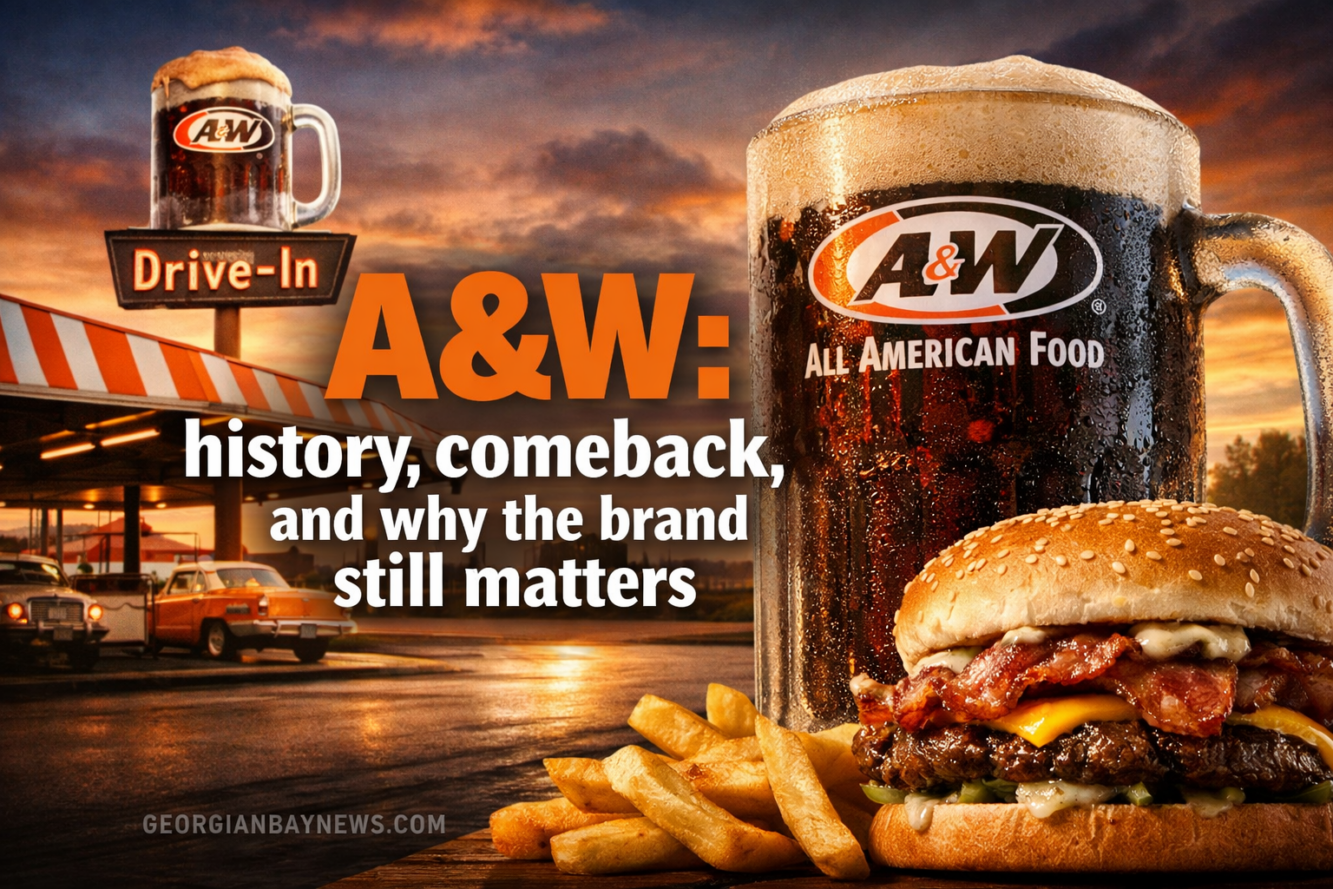
A&W is a restaurant brand best known for root beer, burgers, and its early role in franchising. A&W matters because it helped shape how fast-food chains expanded across North America long before the modern burger giants dominated the market.[2]
A&W started with a simple but memorable product: root beer served cold, often in heavy glass mugs. That sounds ordinary now, but in the age of roadside travel, it was a small luxury. A family could pull over, order a drink and a hot meal, and turn a stop into an outing.
A&W was not just selling food. It was selling the experience of the American road.
That early identity gave A&W several advantages:
A useful decision rule: Choose A&W as a case study if the goal is to understand restaurant history, franchising, or roadside dining culture. Choose another chain if the goal is strictly modern quick-service scale.
A&W began as a root beer business, and the brand name came from the surnames of its early founders. The company’s roots trace back to the early 20th century, when roadside beverage stands became a natural fit for a growing car-owning public.[2]
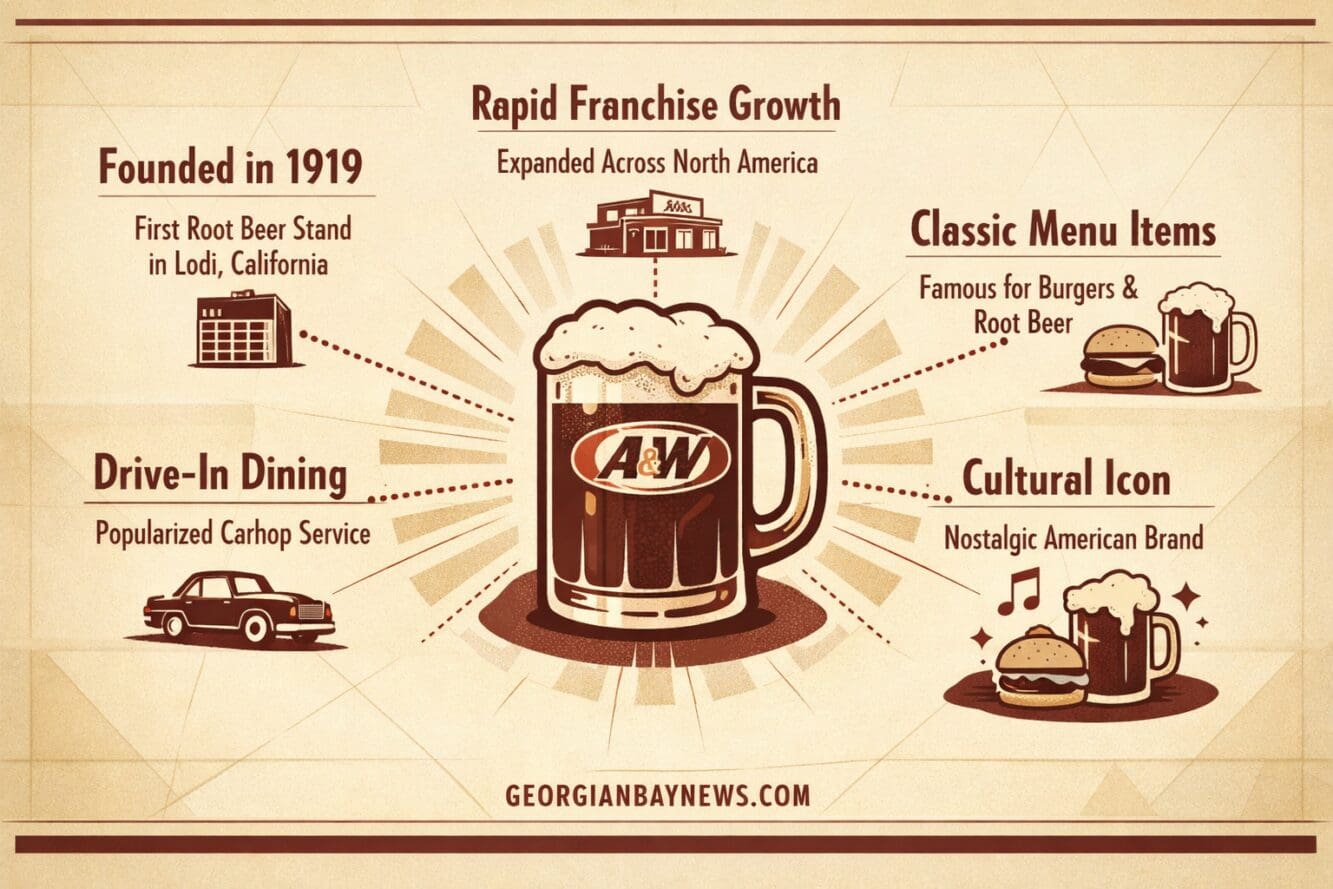
The origin story is part business history, part Americana. At a time when travel by automobile was changing daily life, a cold mug of root beer offered immediate appeal. A&W’s earliest locations capitalized on traffic, convenience, and novelty.
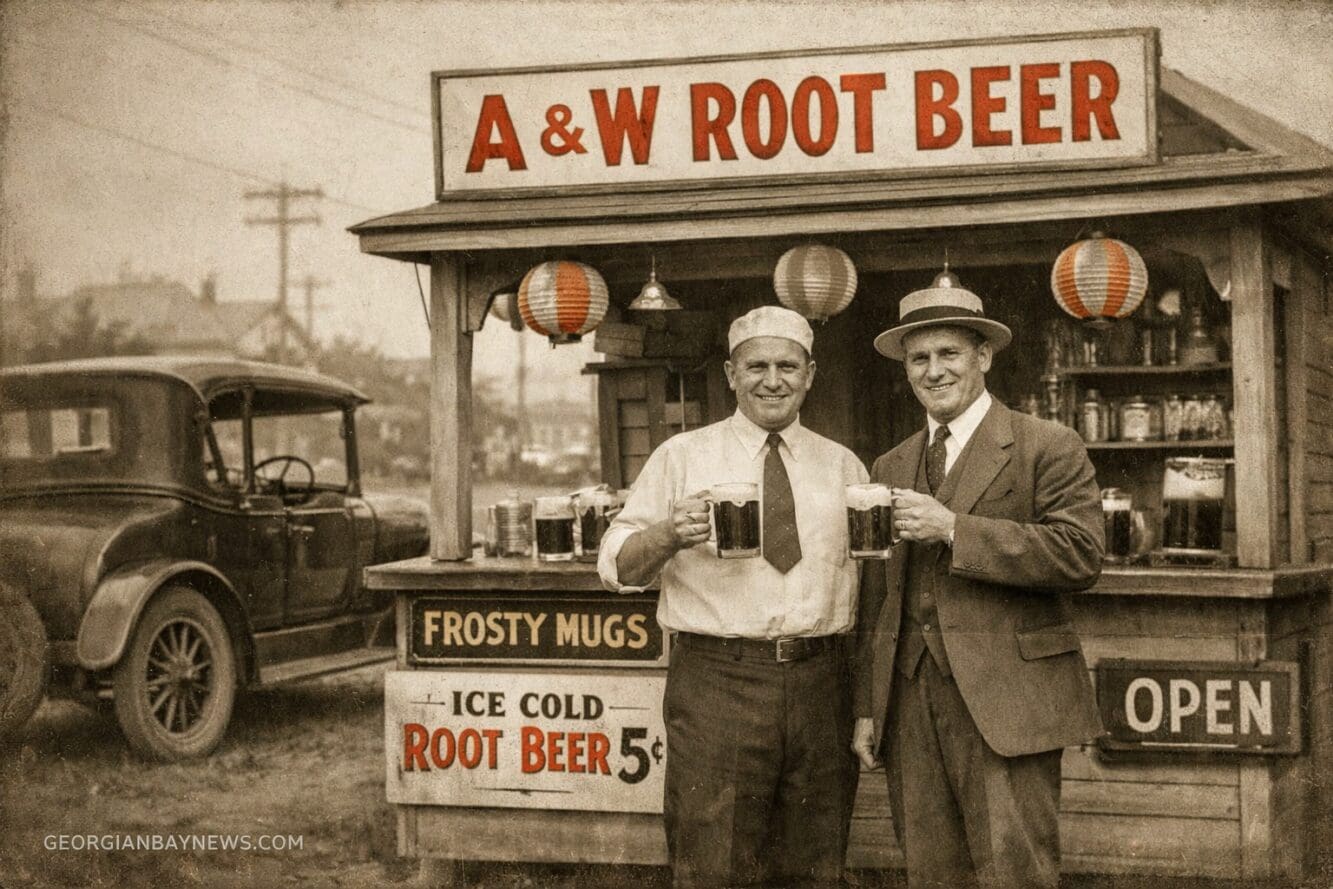
A short anecdotal image captures the era well: a summer afternoon, a dusty road, children in the back seat, and a stop at an A&W stand where the mugs were colder than expected and the service felt cheerful. That memory, repeated thousands of times, built the brand.
Common mistake: Many people assume A&W was always a burger chain. In reality, the beverage identity came first, and food expanded around it.
A&W helped normalize restaurant franchising by proving that a recognizable brand and repeatable operating system could scale across locations. That is one reason it is still cited as a foundational name in franchise history.[2]
A&W’s significance goes beyond menu items. The brand showed that restaurant success could be packaged into a system:
That structure later became standard across the fast-food industry. Recent reporting has also highlighted a key distinction in the United States: A&W Restaurants is described as the only major fast-food chain in America owned entirely by its franchisees, which sets it apart from chains shaped by private equity or heavy centralized control.[2]
Edge case: A&W’s history can be confusing because the Canadian and American businesses evolved separately. When comparing ownership or growth, check which market is being discussed.
A&W became iconic because it combined product, place, and timing. The root beer, frosted mugs, and drive-in format fit perfectly with the rise of suburban travel and family dining.
The brand’s most durable symbols remain easy to recognize:
For many people, A&W is tied to memory. A grandparent remembers a first car date. A parent remembers pulling off the highway with restless kids. A child remembers the novelty of a cold mug that looked different from every other soda cup.
If local nostalgia interests readers, nearby community stories about food culture and gathering places, such as a local live lunch feature or a new sweet spot in the beach area, show how food brands become part of civic memory.
A&W in 2026 is not just surviving on nostalgia; it is actively updating leadership, growing in selected markets, and refining its menu. That matters because long-lived restaurant brands often fail when they stop adapting.[4][6]
Brent Todd was named Chief Operating Officer effective March 2, 2026, following the retirement of his predecessor.[6] That leadership transition signals operational continuity at a time when restaurant brands are under pressure to modernize.
There are also concrete signs of momentum:
Choose this interpretation if the question is practical: A&W remains relevant where heritage is paired with disciplined operations and local franchise investment.
A&W’s menu has expanded from root beer and classic burgers to include broader vegetarian and plant-based choices. That shift reflects changing consumer expectations, especially in Canada.[1]
Recent menu developments include:
| Menu trend | What changed | Why it matters |
|---|---|---|
| Classic core | Burgers, fries, onion rings, root beer remain central | Preserves brand identity |
| Vegetarian options | Masala Veggie Burger, Crispy Veggie Burger, Spicy Piri-Piri Potato Buddy Burger added permanently in 2025 | Responds to demand [1] |
| Plant-based expansion | A new plant-based burger joined the permanent Canadian menu in September 2025 | Broadens audience [1] |
Common mistake: Assuming every A&W location has the same menu. A&W menus vary by country and operator structure.
Readers interested in broader lifestyle and food choices may also enjoy practical local guides like where to find water refill stations in Collingwood or community wellness topics such as healthy ageing habits.
No, A&W Canada and A&W Restaurants in the United States are separate businesses. That separation affects ownership, menu development, marketing, and financial reporting.
This difference explains why one reader may talk about a premium Canadian burger experience while another remembers a classic American roadside stand. Both are talking about A&W, but not always the same corporate entity.
Quick comparison:
A related business note: A&W Food Services and Pret A Manger announced a long-term development plan in 2024, suggesting broader strategic ambitions.[1]
For readers who like local history and place-based storytelling, Museum Month in Collingwood and Sidelaunch Days shipbuilding history offer similar examples of how brands and communities preserve memory.
A&W’s main strength is brand heritage backed by recognizable products, but its scale and visibility are lower than some larger fast-food rivals. That makes it appealing to some audiences and less relevant to others.
Choose A&W if:
Consider alternatives if:
A&W comes from the surnames of its early founders and became the brand name for the restaurant chain.[2]
A&W is widely recognized as America’s oldest franchised restaurant chain.[2]
Yes. A&W Restaurants announced expansion plans in the Kansas City metropolitan area.[4]
Yes. Root beer remains one of A&W’s defining products and a core part of its identity.
No. A&W also has a major presence in Canada, though the Canadian and U.S. businesses are separate.
Yes. A&W added permanent vegetarian options in 2025, and a plant-based burger was added to the permanent Canadian menu later that year.[1]
Brent Todd was appointed Chief Operating Officer effective March 2, 2026.[6]
A&W endures because it is more than a fast-food logo. It is a piece of franchise history, a symbol of roadside dining, and a brand still trying to prove that heritage can coexist with adaptation. In 2026, the clearest lesson from A&W is simple: longevity matters only when a company keeps evolving.
Next steps:
[1] Index – https://awincomefund.mediaroom.com/index.php?s=2429&l=100&mobile=No
[2] Watch – https://www.youtube.com/watch?v=WPXoFj_UDXI
[4] Aw Restaurants To Expand In Kansas City – https://www.qsrmagazine.com/news/aw-restaurants-to-expand-in-kansas-city/
[5] Aw Food Services Reports 176m Q3 Profit Up From 65m A Year Earlier 11360403 – https://www.biv.com/news/retail-manufacturing/aw-food-services-reports-176m-q3-profit-up-from-65m-a-year-earlier-11360403
[6] money.tmx – https://money.tmx.com/quote/AW:LQN/news/7466157160724198
Content, illustrations, and third-party video appearing on GEORGIANBAYNEWS.COM may be generated or curated with AI assistance or reproduced pursuant to the fair dealing provisions of the Copyright Act, R.S.C. 1985, c. C-42. Attribution and hyperlinks to original sources are provided in acknowledgment of applicable intellectual property rights. Such referencing is intended to direct traffic to and support the original rights holders’ platforms.