

















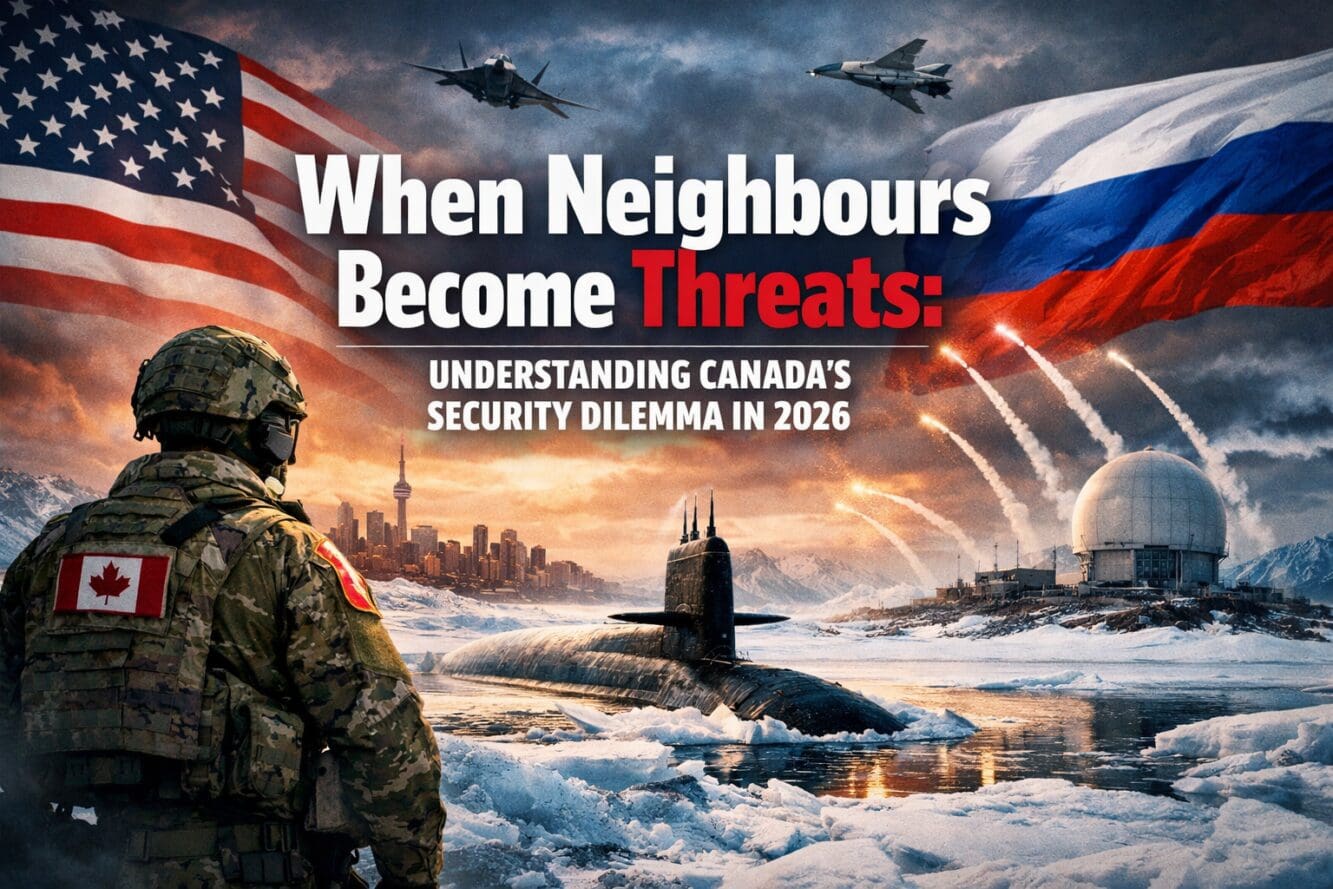
When Neighbours Become Threats: Understanding Canada’s Security Dilemma in 2026
I still remember the day my neighbour of fifteen years suddenly put up a fence between our properties without warning. One morning we were sharing coffee over the hedge, and the next, there was a six-foot barrier. That personal experience of a relationship shifting overnight gave me a tiny glimpse into what Canada faces on a much larger, more consequential scale. Canada’s security landscape has transformed dramatically, and the threats we face today aren’t just from distant adversaries—they’re emerging from relationships we once took for granted.
As a Canadian who’s spent years following geopolitical developments, I’ve watched our national security conversation evolve from polite diplomatic discussions to urgent strategic planning. The comfortable assumptions that guided our security policy for generations are crumbling, and we’re facing a reality that many of us never imagined: our closest relationships might become our biggest vulnerabilities.
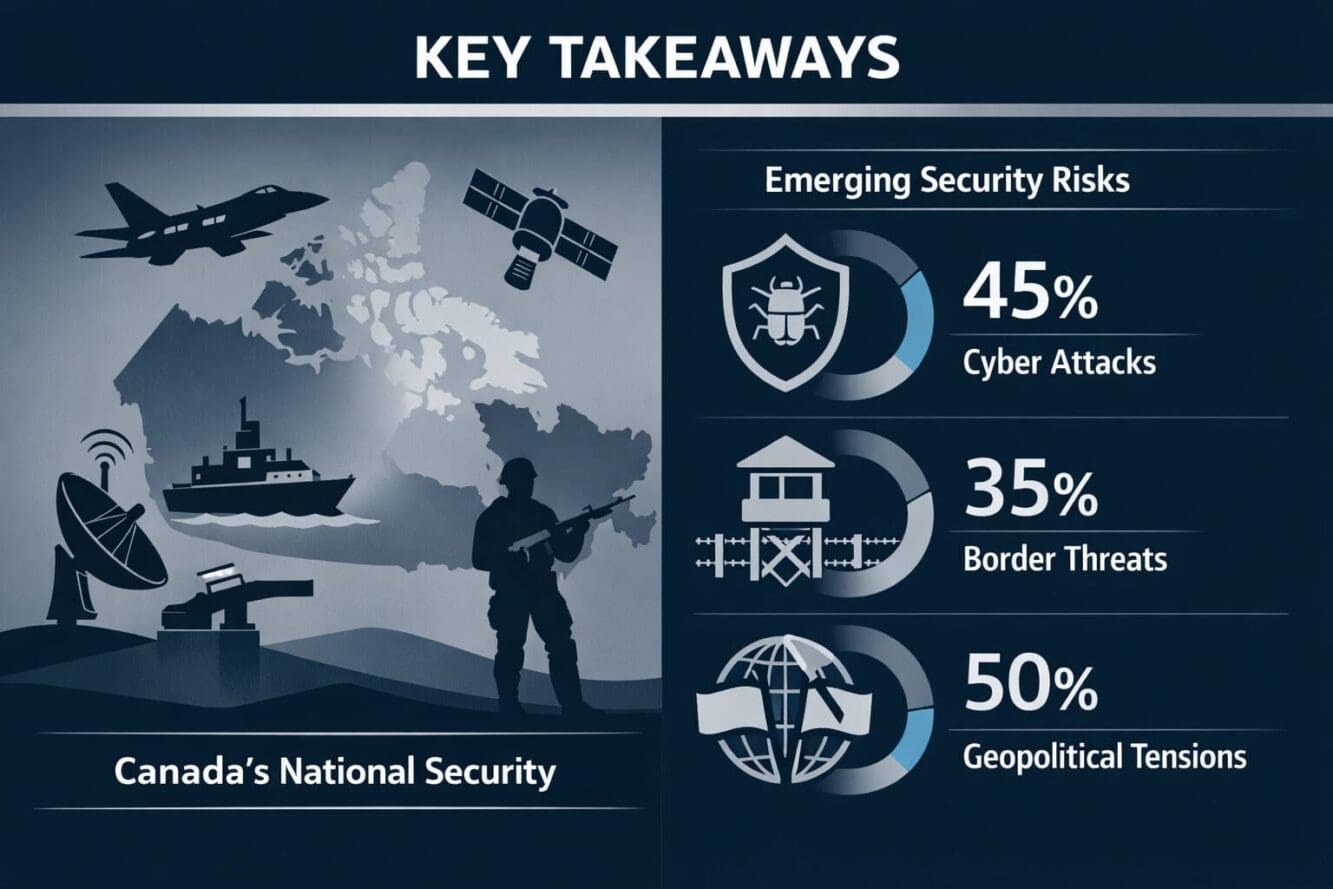
Key Takeaways
️ Canada’s security environment has fundamentally shifted since 2020, with traditional alliances facing unprecedented strain and new threats emerging from unexpected sources
- 🌍 Geographic proximity no longer guarantees friendship—economic interests, political polarization, and resource competition are reshaping North American relationships
- 💰 Defense spending must increase significantly to address modern threats including cyber warfare, Arctic sovereignty challenges, and potential border security issues
- 🤝 Diversifying international partnerships beyond traditional allies is essential for Canada’s long-term security and economic resilience
- 👥 Individual Canadians have a role to play in national security through awareness, preparedness, and civic engagement
The Historical Foundation of Canada’s Security
How We Got Here: A Century of Comfortable Assumptions
For most of our modern history, Canada’s security strategy rested on a simple foundation: geography and friendship. We had the Americans to the south—our largest trading partner, cultural cousin, and military ally. We had the Atlantic and Pacific Oceans as natural barriers. We had the Arctic as a frozen buffer zone. And we had our membership in NATO and other international organizations as insurance policies.
I grew up hearing my grandfather, a Korean War veteran, talk about the “undefended border”—that 8,891-kilometer line between Canada and the United States that represented the world’s longest peaceful frontier. It was a source of pride, a symbol of trust, and a fundamental assumption in our national identity.
The post-World War II security architecture worked beautifully for decades. Canada could maintain a relatively modest military, focus on peacekeeping rather than warfare, and invest heavily in social programs instead of defense infrastructure. We were the “honest broker,” the “peacekeeper,” the “middle power” that punched above its weight through diplomacy rather than military might.
The Cracks in the Foundation
But foundations can crack, and ours started showing stress fractures around 2016. The election of Donald Trump marked a turning point in how Americans viewed international relationships, including the one with Canada. Suddenly, trade agreements were “disasters,” allies were “freeloaders,” and the predictable patterns of diplomacy gave way to transactional unpredictability.
I watched friends in the diplomatic corps struggle to adapt. One colleague who’d spent twenty years building relationships with American counterparts told me over drinks in Ottawa: “The rulebook we’ve been using? It doesn’t apply anymore. We’re making this up as we go.”
The Trump administration imposed tariffs on Canadian steel and aluminum—products from one of America’s closest allies—using a “national security” justification that shocked many Canadians [1]. When a Canadian prime minister could be described as “dishonest and weak” by an American president, it became clear that the old assumptions about neighbourly relations no longer held.
Beyond the Southern Border
While much attention focused on Canada-US relations, other security challenges were emerging:
- China’s growing influence in Canadian politics, economy, and infrastructure
- Russia’s Arctic ambitions and increased military activity in the North
- Cyber threats from state and non-state actors targeting critical infrastructure
- Climate change creating new security vulnerabilities and resource competition
- Domestic extremism fueled by international disinformation campaigns
A comprehensive look at Ontario’s natural treasures reminds us what we’re protecting—not just borders and policies, but the incredible landscapes and communities that define Canadian life.
Understanding Modern Threats to Canada’s Security
The Changing Nature of Threats
Canada’s security challenges in 2026 look fundamentally different from those of previous generations. Modern threats don’t respect borders, don’t wear uniforms, and don’t always announce themselves with military buildups.
Let me break down the five major threat categories we’re facing:
| Threat Type | Description | Impact Level | Likelihood |
|---|---|---|---|
| Cyber Warfare | Attacks on critical infrastructure, government systems, and private sector | Very High | Very High |
| Economic Coercion | Trade restrictions, investment controls, supply chain manipulation | High | High |
| Disinformation | Foreign interference in elections, social division, undermining trust | High | Very High |
| Military Pressure | Arctic sovereignty challenges, airspace incursions, naval presence | Medium | Medium |
| Climate Security | Resource competition, migration pressures, infrastructure stress | High | Very High |
The Southern Neighbour Question
The elephant in the room—or perhaps more accurately, the elephant next door—is the United States. With Trump’s return to the political spotlight and the possibility of another administration focused on “America First” policies, Canada’s security planners face uncomfortable questions.
What happens if the United States:
- Withdraws from NATO or significantly reduces its commitment?
- Imposes punitive trade measures that cripple Canadian industries?
- Demands access to Canadian resources (water, minerals, energy) on unfavorable terms?
- Closes the border to Canadian goods or people during a crisis?
- Pursues foreign policies that directly contradict Canadian interests?
These aren’t far-fetched scenarios anymore. During the COVID-19 pandemic, we saw how quickly borders could close and supply chains could be weaponized. The 3M mask controversy, where the US government initially tried to prevent exports of N95 masks to Canada, showed how quickly “neighbourly cooperation” could evaporate during a crisis [2].
I spoke with a retired Canadian general who put it bluntly: “We’ve built our entire security posture on the assumption that the Americans will always have our back. That assumption is now a liability.”
The Cyber Dimension
While we worry about traditional military threats, the most active battlefield is digital. Canada’s security infrastructure faces constant cyber attacks from sophisticated state actors.
In 2023 alone, the Canadian Centre for Cyber Security reported:
- Over 2,340 cyber incidents affecting federal institutions
- Ransomware attacks on critical infrastructure including hospitals and municipalities
- Foreign interference operations targeting elections and public discourse
- Intellectual property theft affecting Canadian businesses and research institutions [3]
The scary part? Most Canadians have no idea this digital war is happening. We go about our daily lives while hostile actors probe our power grids, water systems, financial networks, and government databases.
Just as maintaining mental wellness requires daily habits, maintaining national cyber security requires constant vigilance and investment.
Arctic Sovereignty: The Melting Frontier
Climate change has transformed the Arctic from a frozen buffer zone into a contested frontier. As ice melts, new shipping routes open, resource extraction becomes feasible, and military positioning becomes strategically valuable.
Russia has dramatically increased its Arctic military presence, building new bases, deploying advanced weapons systems, and conducting regular exercises [4]. China, despite being nowhere near the Arctic, has declared itself a “near-Arctic state” and is investing heavily in Arctic research and infrastructure.
Canada’s Arctic sovereignty claims face challenges we’re not adequately prepared to address. Our aging fleet of patrol vessels, limited surveillance capabilities, and sparse northern infrastructure leave us vulnerable to encroachment.
I visited Iqaluit last year and spoke with local residents about security concerns. One Inuit elder told me: “We’ve been here for thousands of years. Now everyone wants our backyard, and the government in Ottawa seems surprised.”
The China Factor
Canada’s relationship with China has deteriorated significantly since the Meng Wanzhou affair and the subsequent detention of Michael Kovrig and Michael Spavor. What was once a promising economic partnership has become a security headache.
Chinese interference in Canadian elections, intimidation of diaspora communities, theft of intellectual property, and investment in critical infrastructure all pose serious security challenges [5]. The question isn’t whether China is a threat to Canada’s security—it’s how we balance economic interests with security imperatives.
Domestic Vulnerabilities
External threats are only part of the equation. Canada faces internal security challenges including:
- Radicalization and extremism across the political spectrum
- Critical infrastructure vulnerabilities in aging systems
- Supply chain dependencies on potentially hostile nations
- Social polarization that makes us easier to manipulate
- Economic inequality that creates instability and resentment
The principles of resilience and inner strength that help individuals cope with adversity also apply to nations facing security challenges.
Canada’s Security Response: Where We Stand Today
Defense Spending: The Uncomfortable Truth
Let’s talk money. Canada’s security requires investment, and we’ve been chronically underinvesting for decades.
As of 2026, Canada spends approximately 1.4% of GDP on defense—well below the NATO target of 2% that we committed to [6]. To put this in perspective:
Canadian Defense Spending Compared to Allies (% of GDP):
- United States: 3.5%
- United Kingdom: 2.3%
- France: 2.1%
- Poland: 4.0%
- Canada: 1.4%
This isn’t just about meeting arbitrary targets. Underfunding means:
- ⚠️ Aging equipment that’s less effective and more dangerous for personnel
- ⚠️ Recruitment and retention challenges
- ⚠️ Limited capacity to respond to multiple simultaneous threats
- ⚠️ Reduced influence in international security discussions
- ⚠️ Increased dependence on allies who may not always be reliable
I’ve heard the arguments against increased defense spending: “We need that money for healthcare, education, social programs.” These are legitimate concerns. But here’s the thing—you can’t have robust social programs if your sovereignty is compromised.
Current Military Capabilities
Let’s be honest about where Canada’s military stands:
Strengths:
- ✅ Highly trained, professional personnel
- ✅ Strong special forces capabilities
- ✅ Excellent reputation for peacekeeping and training missions
- ✅ Advanced cyber defense capabilities (though underfunded)
- ✅ Strategic geographic position
Weaknesses:
- ❌ Aging fighter jet fleet (CF-18s being replaced, but slowly)
- ❌ Inadequate Arctic patrol capabilities
- ❌ Limited naval assets for coastal defense
- ❌ Insufficient air defense systems
- ❌ Outdated equipment across multiple domains
A military analyst I interviewed put it this way: “We have a Cadillac military on a Chevette budget. Something has to give.”
The NORAD Partnership
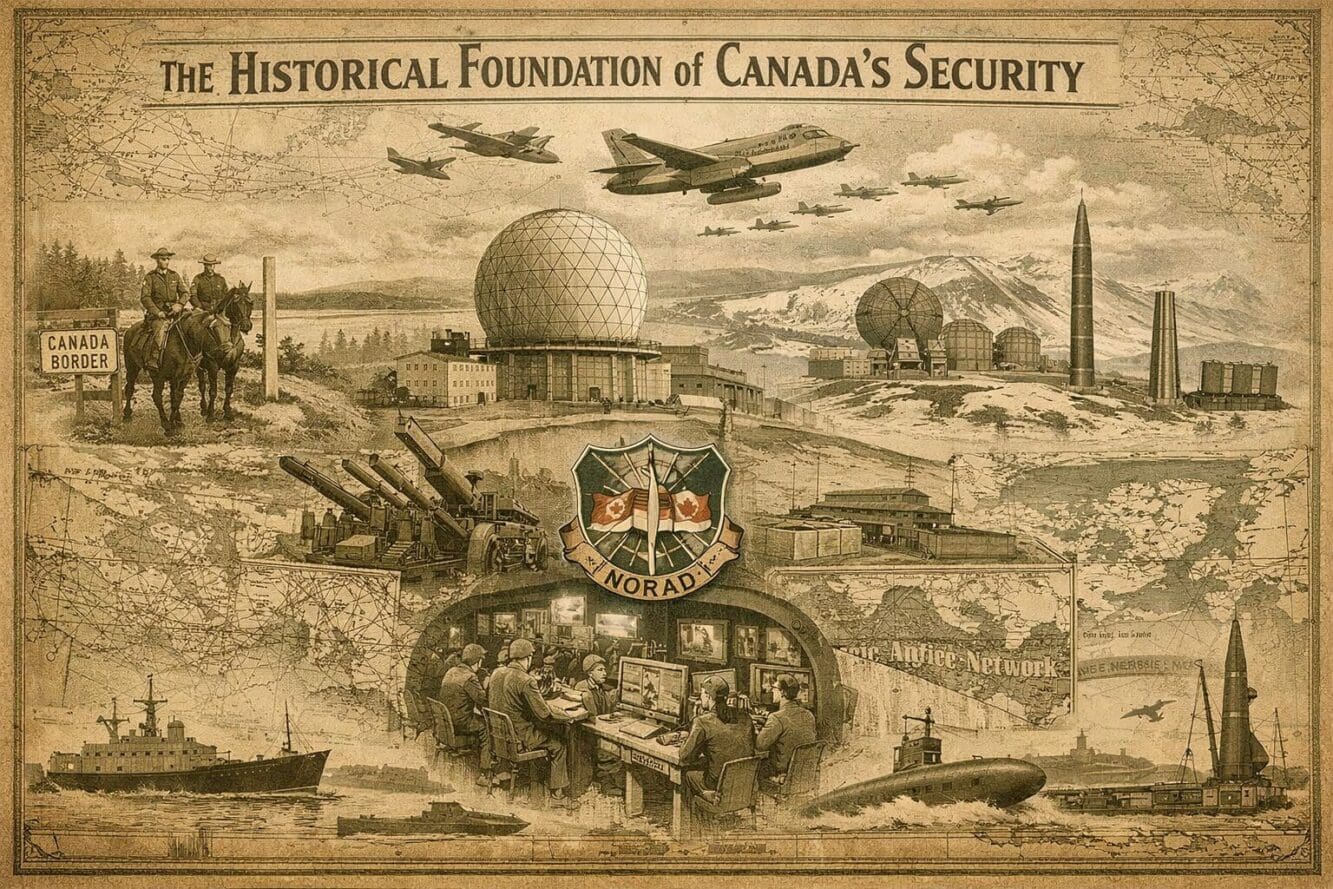
The North American Aerospace Defense Command (NORAD) remains a cornerstone of Canada’s security architecture. This binational command, established in 1958, provides aerospace warning and control for North America.
But NORAD needs modernization. The current system relies on aging infrastructure that can’t adequately detect modern threats like hypersonic missiles and advanced cruise missiles. The estimated cost of NORAD modernization? Between $15-40 billion over the next decade [7].
The question is whether the United States will continue to view Canada as an equal partner or increasingly as a security liability that needs to be managed.
Intelligence and Surveillance
Canada participates in the Five Eyes intelligence alliance (along with the US, UK, Australia, and New Zealand), giving us access to intelligence sharing that would be impossible to replicate independently.
However, our own intelligence gathering capabilities are limited. The Canadian Security Intelligence Service (CSIS) and Communications Security Establishment (CSE) are chronically underfunded compared to their international counterparts.
Border Security in a New Era
The Canada-US border, once barely monitored, has become increasingly militarized since 9/11. But new challenges are emerging:
- Irregular migration driven by climate change and global instability
- Drug trafficking, particularly fentanyl
- Potential for terrorists to exploit the border
- Economic migration if US-Canada relations deteriorate
- The need to balance security with trade efficiency
Much like communities must adapt to changing circumstances, our border security must evolve to meet new realities.
Diplomatic Efforts
Canada has traditionally punched above its weight diplomatically. Our reputation as honest brokers, our multicultural society, and our commitment to multilateralism have given us influence disproportionate to our military or economic power.
But that influence is waning. As the world becomes more multipolar and transactional, “soft power” matters less. Countries increasingly respect capability and resolve rather than moral authority.
What Canadians Can Do: Personal and Collective Action
Individual Preparedness
Canada’s security isn’t just the government’s responsibility—it’s ours too. Here’s what individual Canadians can do:
🏠 Home and Family Preparedness:
- Emergency supplies: Maintain 72 hours of food, water, and essential supplies
- Communication plans: Establish family communication protocols for emergencies
- Financial resilience: Build emergency savings to weather economic disruptions
- Information literacy: Learn to identify disinformation and foreign propaganda
- Community connections: Build relationships with neighbours for mutual support
Just as simple daily habits can transform personal wellbeing, small preparedness actions can significantly improve household security.
💻 Cyber Security:
- Use strong, unique passwords for all accounts
- Enable two-factor authentication wherever possible
- Be skeptical of unsolicited communications
- Keep software and systems updated
- Protect personal information carefully
️ Civic Engagement:
- Stay informed about security issues from reliable sources
- Contact elected representatives about security priorities
- Participate in democratic processes
- Support fact-based journalism
- Resist polarization and division
Community-Level Action
Communities can enhance Canada’s security through:
- Resilience planning: Develop local emergency response capabilities
- Critical infrastructure protection: Identify and protect essential local services
- Social cohesion: Build bridges across demographic and political divides
- Economic diversification: Reduce dependence on single industries or trading partners
- Education: Promote security awareness and preparedness
The community spirit demonstrated in local events shows how Canadians can come together when needed.
Advocacy and Political Pressure
Citizens can influence national security policy by:
- Demanding accountability: Hold politicians accountable for security commitments
- Supporting defense investment: Accept that security has a cost
- Promoting strategic thinking: Push for long-term planning over short-term politics
- Encouraging innovation: Support Canadian defense industry and technology
- Building consensus: Work across party lines on security issues
Supporting Canadian Industries
Economic security is national security. Support Canadian businesses, particularly in strategic sectors:
- Technology and cyber security companies
- Defense contractors and manufacturers
- Resource industries with Canadian ownership
- Agricultural producers
- Clean energy developers
Education and Awareness
Knowledge is power. Educate yourself and others about:
- Canada’s security challenges and opportunities
- How government and military institutions work
- International relations and geopolitics
- Technology and cyber threats
- Climate security implications
Many Canadians are more informed about American politics than Canadian security policy. That needs to change.
Building Resilient Mindsets
Perhaps most importantly, we need to develop mental and emotional resilience. The world is becoming more uncertain and potentially threatening. Rather than succumbing to fear or denial, we need to:
- Accept reality: Acknowledge threats without catastrophizing
- Stay informed: Follow developments without becoming overwhelmed
- Maintain perspective: Remember Canada’s strengths and advantages
- Build confidence: Develop skills and capabilities that increase self-reliance
- Foster hope: Work toward positive outcomes while preparing for challenges
The therapeutic insights about regret and life choices remind us that action beats paralysis—true for personal life and national security.
The Path Forward: Strategic Recommendations for Canada’s Security
Short-Term Priorities (1-2 Years)
Immediate actions Canada must take:
1. Accelerate Defense Procurement
- Fast-track fighter jet replacement program
- Acquire modern air defense systems
- Invest in Arctic patrol capabilities
- Modernize naval fleet
2. Strengthen Cyber Defenses
- Increase funding for CSE and CSIS
- Protect critical infrastructure from cyber attacks
- Develop offensive cyber capabilities as deterrent
- Partner with private sector on security
3. Enhance Border Security
- Deploy advanced surveillance technology
- Increase personnel at key crossing points
- Improve intelligence sharing with allies
- Prepare for potential migration pressures
4. Build Strategic Reserves
- Stockpile critical medical supplies
- Ensure food security through domestic production
- Maintain energy reserves and production capacity
- Secure supply chains for essential goods
5. Counter Foreign Interference
- Strengthen election security measures
- Combat disinformation campaigns
- Protect diaspora communities from intimidation
- Enforce foreign agent registration
Medium-Term Strategy (3-5 Years)
Building sustainable security infrastructure:
1. Achieve NATO Spending Target
- Commit to 2% GDP defense spending
- Create long-term funding stability
- Invest in Canadian defense industry
- Modernize across all military domains
2. Diversify International Partnerships
- Strengthen ties with European allies
- Build relationships with Indo-Pacific democracies
- Expand intelligence sharing beyond Five Eyes
- Lead on specific security initiatives
3. Develop Arctic Strategy
- Build permanent northern infrastructure
- Deploy year-round surveillance capabilities
- Strengthen Indigenous partnerships in the North
- Assert sovereignty through presence
4. Enhance Economic Security
- Reduce dependence on single trading partners
- Protect critical industries and technologies
- Screen foreign investments more rigorously
- Build domestic supply chain resilience
5. Invest in Innovation
- Support Canadian defense technology companies
- Develop AI and autonomous systems capabilities
- Lead in cyber security innovation
- Create next-generation surveillance systems
Long-Term Vision (10+ Years)
Transforming Canada’s security posture:
1. Become Strategically Autonomous While maintaining alliances, develop the capability to defend Canadian territory and interests independently if necessary. This doesn’t mean isolationism—it means having options.
2. Lead on Climate Security Position Canada as a global leader in addressing security challenges created by climate change, including:
- Arctic governance frameworks
- Climate migration policies
- Resource sharing agreements
- Environmental security cooperation
3. Build a Security Culture Transform how Canadians think about security from something “the government handles” to a shared responsibility requiring active citizenship.
4. Develop Comprehensive Resilience Create systems that can absorb shocks and continue functioning during:
- Economic disruptions
- Cyber attacks
- Natural disasters
- Pandemic events
- Political instability
5. Shape the International Order Rather than simply adapting to changing global dynamics, actively work to shape international institutions, norms, and partnerships in ways that serve Canadian interests and values.
The Cost of Inaction
Let’s be clear about what happens if Canada fails to address these security challenges:
- 💔 Reduced sovereignty: Increasing dependence on allies who may not share our interests
- 💔 Economic vulnerability: Susceptibility to coercion and exploitation
- 💔 Diminished influence: Loss of voice in international affairs
- 💔 Territorial encroachment: Challenges to Arctic and maritime claims
- 💔 Social instability: Increased polarization and foreign manipulation
- 💔 Infrastructure failure: Critical systems compromised by attacks or neglect
The question isn’t whether we can afford to invest in Canada’s security—it’s whether we can afford not to.
Conclusion: Securing Canada’s Future Together
As I sit here writing this in early 2026, I’m reminded of a conversation I had with my daughter last week. She’s fourteen, and she asked me a simple question: “Dad, will Canada still be safe when I’m your age?”
I paused before answering, because the honest truth is complicated. The world is changing faster than at any point in modern history. The assumptions that kept Canada secure for generations are crumbling. The neighbour we trusted implicitly has become unpredictable. New threats emerge daily in domains we barely understand.
But here’s what I told her, and here’s what I believe: Canada’s security isn’t guaranteed, but it’s achievable. We have advantages that many nations would envy—vast resources, educated population, strong institutions, and a tradition of resilience. What we need is the will to act.
The Choice Before Us
We stand at a crossroads. One path leads to continued complacency, underfunding, and wishful thinking. That path ends with diminished sovereignty, increased vulnerability, and a future where we’re at the mercy of others’ decisions.
The other path requires investment, difficult choices, and a fundamental shift in how we think about security. It means spending money we’d rather use elsewhere. It means acknowledging uncomfortable truths about former friends. It means taking responsibility for our own protection.
The choice seems obvious, but making it requires political courage and public support.
What Success Looks Like
Imagine a Canada in 2036 that has:
✨ Military capabilities sufficient to defend our territory and interests independently ✨ Cyber defenses that protect our critical infrastructure from sophisticated attacks
✨ Economic resilience that makes us difficult to coerce or manipulate ✨ Arctic sovereignty backed by presence and capability, not just legal claims ✨ International partnerships diversified beyond traditional allies ✨ Social cohesion resistant to foreign manipulation and domestic extremism ✨ Citizen awareness where security is understood as a shared responsibility
This isn’t fantasy—it’s achievable with sustained effort and investment.
Your Next Steps
Don’t wait for government to solve everything. Start today:
This Week:
- Review your family’s emergency preparedness
- Improve your cybersecurity practices
- Learn about one security issue affecting Canada
- Share this information with friends and family
This Month:
- Build a 72-hour emergency kit
- Contact your MP about defense spending
- Support Canadian businesses in strategic sectors
- Attend a community resilience meeting
This Year:
- Develop comprehensive family emergency plans
- Build financial resilience with emergency savings
- Engage in civic processes around security issues
- Help build community preparedness networks
Just as personal transformation requires consistent small actions, national security requires sustained individual and collective effort.

A Message of Hope
Despite the serious challenges we face, I’m optimistic about Canada’s future. We’ve overcome greater threats before. We’ve adapted to changing circumstances throughout our history. We have the resources, talent, and values to meet this moment.
What we need is awareness, will, and action. That’s where you come in.
Canada’s security isn’t just about military hardware or government policy—it’s about millions of Canadians understanding the challenges we face and taking responsibility for addressing them. It’s about communities building resilience. It’s about citizens demanding better from their leaders while also stepping up themselves.
The neighbour to our south may have become unpredictable. New threats may emerge from unexpected directions. The comfortable assumptions of the past may no longer apply.
But Canada endures. We adapt. We overcome.
And we do it together.
The question my daughter asked—”Will Canada still be safe when I’m your age?”—has an answer. But that answer depends on the choices we make today, the investments we prioritize tomorrow, and the vigilance we maintain every day.
The future of Canada’s security isn’t written yet. We’re writing it right now, with every decision, every action, every moment of awareness or complacency.
What will you write?
The Ambassador