















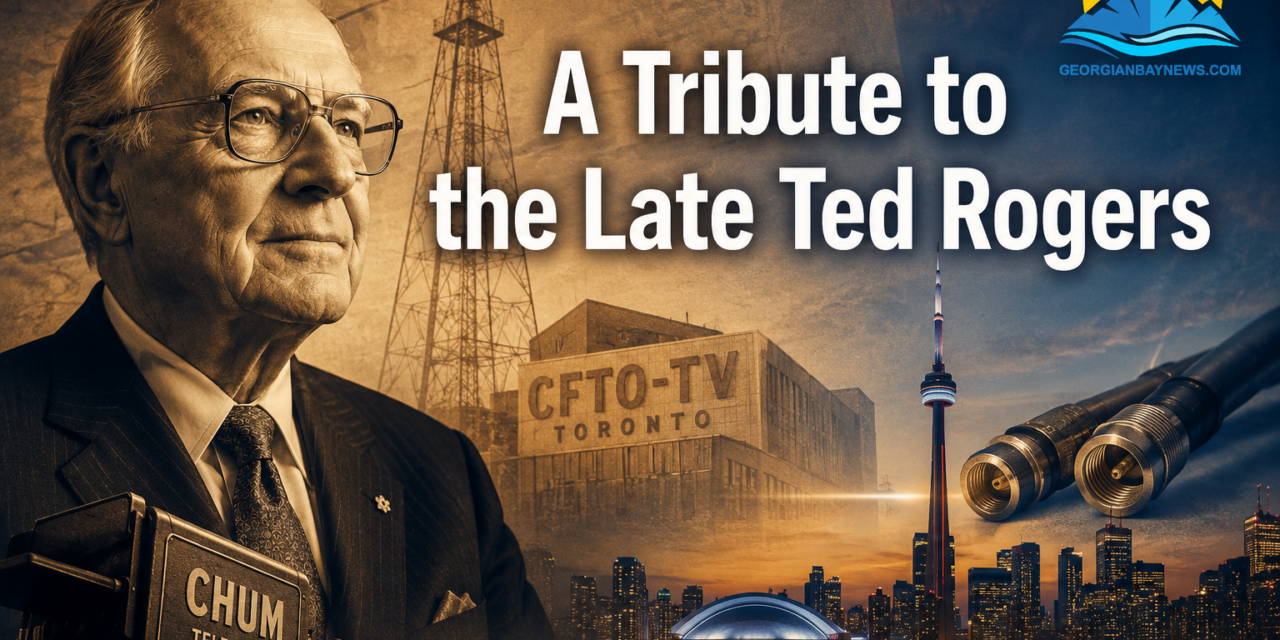
🇨🇦 A Tribute to the Late Ted Rogers: The Canadian Visionary Who Connected a Nation
Last updated: June 28, 2026
Quick Answer
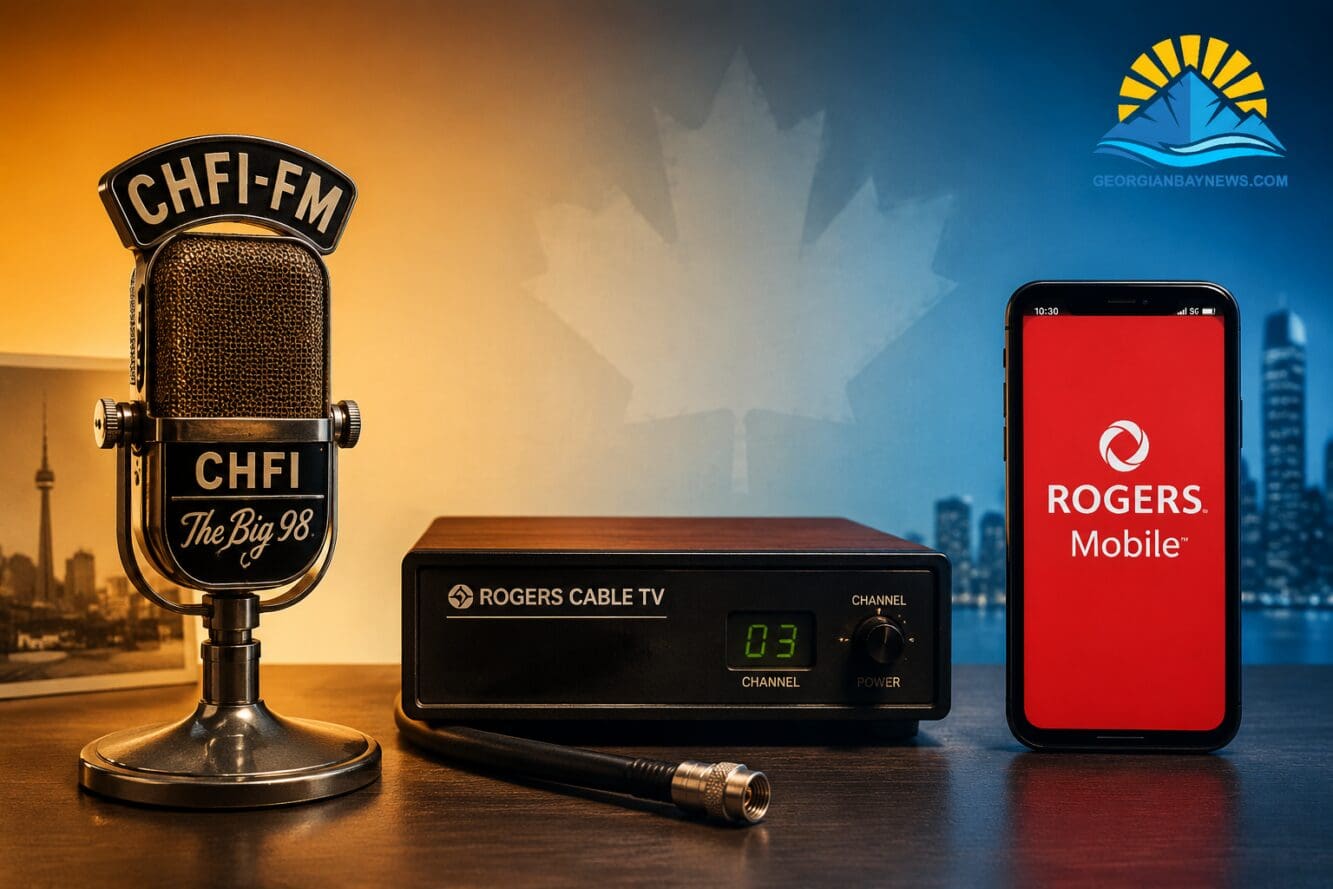
Ted Rogers (1933–2008) was the Canadian entrepreneur who built Rogers Communications into one of North America’s largest media and telecom empires. He pioneered FM radio in Canada, championed cable television through Rogers Cable, launched Rogers TV community programming, and bet his fortune on wireless when most executives dismissed it, creating Rogers Mobile. His relentless drive and willingness to take on massive debt reshaped how Canadians watch, listen, and communicate.
Key Takeaways
- Ted Rogers founded the Rogers Communications empire, anchored by Rogers Cable, Rogers TV, and Rogers Mobile (now Rogers Wireless).
- He died on December 2, 2008, at age 75, from congestive heart failure.
- At his death, his estimated net worth was around USD 5.7 billion, making him one of Canada’s wealthiest individuals.
- His father, Edward S. Rogers Sr., invented the batteryless radio in 1925, a legacy Ted carried forward.
- The Ted Rogers School of Management at Toronto Metropolitan University stands as a major philanthropic legacy.
- Rogers Communications today serves over 11 million wireless subscribers and owns the Toronto Blue Jays.
- His autobiography, Relentless, captures his bold, debt-fueled business philosophy.
Who Was Ted Rogers and Why Is He Important?
Edward Samuel “Ted” Rogers Jr. was a Canadian business titan who transformed his family’s broadcasting roots into a coast-to-coast media and telecom giant. He matters because he didn’t just run a company — he built much of the infrastructure that carries Canadian voices, shows, and data today. From cable lines strung through Ontario suburbs to the cellular networks blanketing the country, his fingerprints are everywhere.
He was inducted into the Canadian Business Hall of Fame and frequently ranked among the most influential business leaders in the nation’s history.
Ted Rogers Early Life and Background
Ted Rogers was born on May 27, 1933, in Toronto. His father, Edward S. Rogers Sr., was the inventor of the batteryless radio tube, a breakthrough that powered the early years of broadcasting. When Ted was just five years old, his father died suddenly, and the family lost most of its business assets.
That loss shaped him. He often said he was driven to rebuild what his father started. He studied at Upper Canada College, then earned a law degree from Osgoode Hall before pivoting fully into broadcasting.
Ted Rogers Career Highlights and Accomplishments
His career reads like a series of bold gambles that paid off:
- 1960: Bought Toronto’s CHFI-FM, then a struggling station, and helped popularize FM radio in Canada.
- 1967: Entered cable television, eventually building Rogers Cable into the country’s largest provider.
- 1979: Acquired Canadian Cablesystems and Premier Communications, consolidating his position.
- 1985: Founded Cantel, the wireless venture that became Rogers Mobile, against widespread skepticism.
- 1994: Acquired Maclean Hunter, adding magazines and more cable assets.
- 2000: Bought the Toronto Blue Jays.
- 2004: Purchased the remaining stake in Rogers Wireless, fully consolidating the wireless empire.
The History of Rogers TV, Rogers Cable, and Rogers Mobile
This is the spine of the Rogers story, and it’s worth tracing carefully.
Rogers Cable began in 1967 when Ted acquired a small cable license covering parts of Toronto. Through the 1970s and 1980s, he aggressively bought up cable franchises across Ontario and beyond, often taking on enormous debt that worried analysts. By the 1990s, Rogers Cable served millions of Canadian households.
Rogers TV (originally Rogers Cable 10) launched as community programming required by Canadian broadcasting regulations. It became a training ground for local journalists and a fixture for municipal coverage, high school sports, and community events. Many Canadian broadcasters got their start there.
Rogers Mobile was the riskiest bet. In 1985, Ted launched Cantel (later rebranded Rogers Cellular, then Rogers Wireless, then Rogers Mobile in marketing). Critics called mobile phones a niche product. Ted disagreed, and he was right. Today Rogers Wireless is one of Canada’s “Big Three” carriers.
For more on Canadian media evolution, see our coverage of broadcasting and communications.
Ted Rogers Net Worth and Business Empire
At the time of his death in 2008, Ted Rogers’ net worth was estimated at approximately USD 5.7 billion by Forbes, making him one of the richest people in Canada. His business empire included:
| Division | Business |
|---|---|
| Rogers Cable | Largest cable TV provider in Canada |
| Rogers Wireless / Mobile | Major national cellular carrier |
| Rogers Media | Magazines, radio, Sportsnet, Citytv |
| Rogers Sports | Toronto Blue Jays, Rogers Centre |
| Rogers TV | Community television channels |
)
How Did Ted Rogers Die and When?
Ted Rogers died on December 2, 2008, at his home in Toronto, from congestive heart failure. He was 75. He had battled heart problems for years and undergone multiple surgeries, but stayed actively involved in running the company nearly until the end.
His death prompted national tributes from the Prime Minister, business leaders, and Canadians whose lives his networks had touched.
Ted Rogers Family and Children
Ted married Loretta Anne Robinson in 1963. They had four children: Lisa, Edward, Melinda, and Martha. The family remains deeply involved in Rogers Communications through the Rogers Control Trust, which holds voting control of the company. Edward Rogers III has played a particularly visible role in the company’s governance, including the well-publicized 2021 boardroom dispute.
Ted Rogers Philanthropy and Charitable Work

Ted and Loretta Rogers gave hundreds of millions of dollars to Canadian institutions. Highlights include:
- A CAD 15 million gift to Ryerson University (now Toronto Metropolitan University) in 2007, which renamed its business school the Ted Rogers School of Management.
- Major contributions to The Hospital for Sick Children (SickKids) in Toronto.
- A CAD 130 million pledge from the Rogers family to cardiac research at SickKids, University Health Network, and The Hospital for Sick Children, announced after his death.
Ted Rogers vs Other Canadian Business Leaders
Ted Rogers is often compared with peers like the Thomson family, Galen Weston, and Jim Pattison. What set him apart was his appetite for debt and his focus on infrastructure. While others built retail or media empires through cash flow, Ted borrowed heavily to lay cable and build wireless towers — a strategy that terrified bankers but ultimately built one of Canada’s most valuable companies.
Ted Rogers Quotes and Legacy
His autobiography, Relentless: The True Story of the Man Behind Rogers Communications (2008), is full of memorable lines. Among the most quoted:
“The best is yet to come.”
That phrase became his unofficial motto and is engraved on his memorial.
Ted Rogers Awards and Recognition
- Officer of the Order of Canada (1990)
- Companion of the Canadian Business Hall of Fame
- B’nai Brith International Award of Merit
- Multiple honorary doctorates from Canadian universities
How Is Ted Rogers Remembered in Canada?
He’s remembered as a builder. His name sits on the Rogers Centre stadium, the Ted Rogers School of Management, and Rogers Communications itself. For many Canadians, his legacy is more practical: the cable that brought TV to their living room, the cell signal in their pocket, and the Blue Jays games on Sportsnet.
Ted Rogers’ Impact on Rogers Communications Today
Rogers Communications in 2026 remains one of Canada’s largest companies, with over 11 million wireless subscribers and major holdings in media and sports — including the completed acquisition of Shaw Communications in 2023, which extended its reach across Western Canada. The company’s culture still reflects Ted’s “relentless” ethos: aggressive expansion, infrastructure investment, and willingness to make big bets.
FAQ
When was Ted Rogers born?
May 27, 1933, in Toronto, Ontario.
When did Ted Rogers die?
December 2, 2008, at age 75, from congestive heart failure.
What was Ted Rogers’ net worth?
Approximately USD 5.7 billion at the time of his death, per Forbes.
Who runs Rogers Communications now?
The Rogers family retains voting control through a trust, with Edward Rogers III as Chair of the Board.
What is the Ted Rogers School of Management?
It’s the business school at Toronto Metropolitan University, renamed in 2007 after a major gift from Ted and Loretta Rogers.
Did Ted Rogers write a book?
Yes — Relentless: The True Story of the Man Behind Rogers Communications, published in 2008.
What companies did Ted Rogers own?
Rogers Cable, Rogers Wireless/Mobile, Rogers Media (Sportsnet, Citytv, Maclean’s), Rogers TV, and the Toronto Blue Jays.
Conclusion
A tribute to the late Ted Rogers is really a tribute to a builder’s mindset — one that took risks others wouldn’t and reshaped how a country communicates. To honour his legacy, learn more about Canadian media history through our business and society coverage, explore related Canadian leadership stories, or visit the Ted Rogers School of Management to see his philanthropic vision in action. His phrase still applies to the company and the country he helped wire together: the best is yet to come.
Sources
- Rogers, Ted. Relentless: The True Story of the Man Behind Rogers Communications. HarperCollins, 2008.
- Forbes Billionaires List, 2008.
- Rogers Communications Inc. corporate history, rogers.com.
- Canadian Business Hall of Fame, Laureate profile.
- Toronto Metropolitan University, Ted Rogers School of Management history.
Content, illustrations, and third-party video appearing on GEORGIANBAYNEWS.COM may be generated or curated with AI assistance or reproduced pursuant to the fair dealing provisions of the Copyright Act, R.S.C. 1985, c. C-42. Attribution and hyperlinks to original sources are provided in acknowledgment of applicable intellectual property rights. Such referencing is intended to direct traffic to and support the original rights holders’ platforms.