



















🎯 Pickleball Coaching Tips from Pros: Drills, Tactics, and Mindset Lessons You Can Use in Your Local League
Last updated: June 30, 2026
Quick Answer
Professional pickleball players rely on structured drills, strategic positioning, and mental discipline to dominate matches. Recreational players can apply these same principles through focused practice on dinking control, third-shot drops, cross-court placement, and mindset management. By training with purpose and adopting pro-level tactics, local league players can see measurable improvement within weeks of consistent practice.
Key Takeaways
- Cooperative dinking drills at the kitchen line build paddle control and patience essential for net play
- Deep serves and returns control point tempo and limit opponents’ offensive options
- Cross-court shots should comprise roughly 70% of your placements for better margins and fewer errors
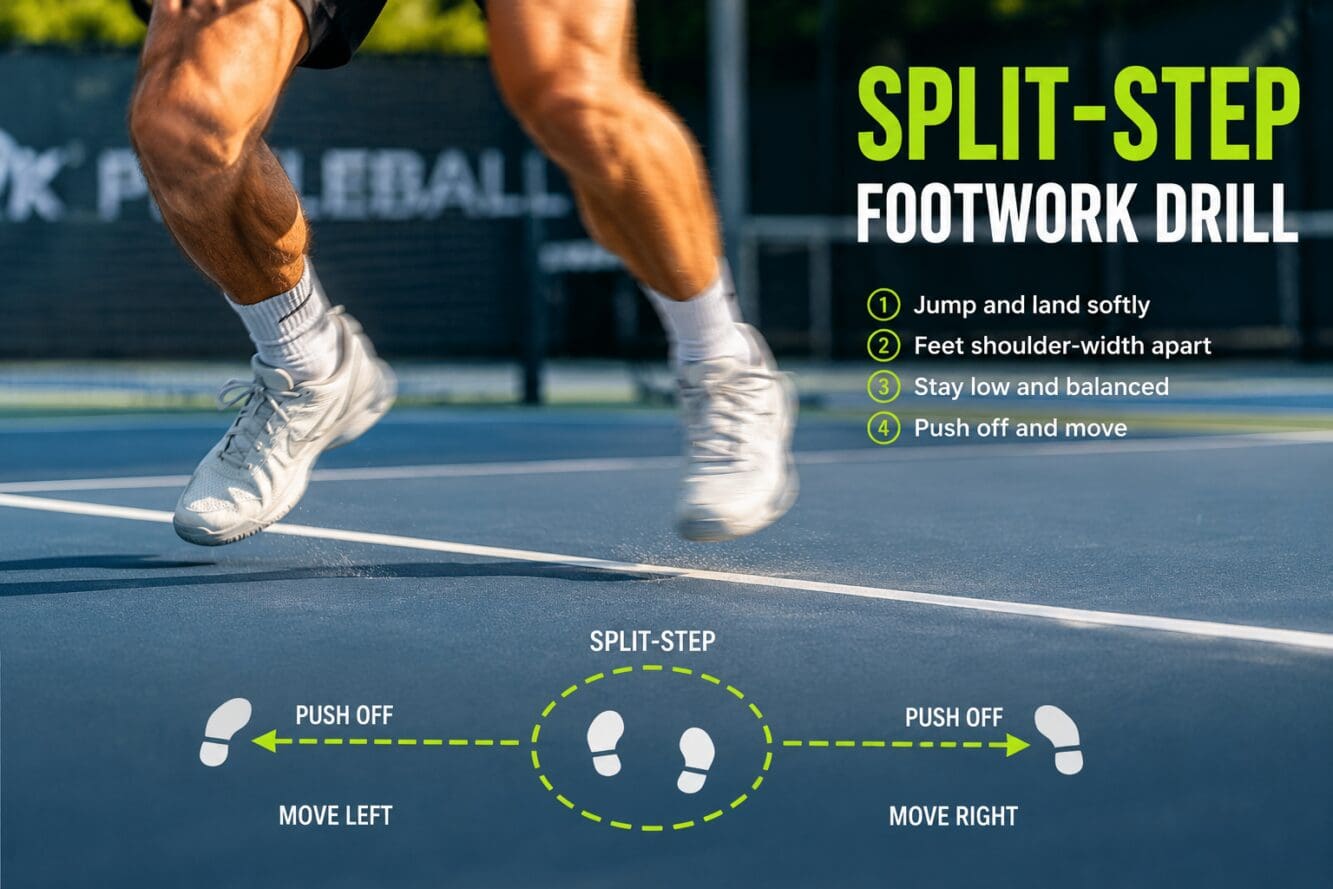
- Split-step footwork before each opponent’s shot improves reaction time and court positioning
- Mental resilience through point-by-point focus and breathing techniques separates good players from great ones
- Third-shot drops require dedicated practice with a goal of 10 consecutive kitchen landings
- Solo practice with ball machines or wall drills accelerates skill development between partner sessions
- Tournament preparation demands structured practice plans that simulate match pressure and fatigue
- Partner communication with early “mine” and “yours” calls prevents confusion and improves doubles coverage
- Targeting opponents’ backhands creates offensive opportunities as most players have weaker backhand responses
What Are the Best Pickleball Drills for Beginners
Beginners should focus on three foundational drills: consistent serve placement, baseline groundstroke rallies, and basic dinking at the kitchen line. Start with 10-minute blocks on each skill, emphasizing control over power. The serve drill involves hitting 20 serves to each service box, aiming for depth within three feet of the baseline. Groundstroke rallies with a partner should target 15-20 consecutive hits, focusing on keeping the ball in play rather than winners.
Essential beginner drill sequence:
- Serve accuracy drill: Place targets in deep corners of service boxes; aim for 15 out of 20 successful placements
- Baseline rally drill: Stand at baseline with partner, maintain rally for 20 hits minimum, focus on consistent contact
- Kitchen line dinking: Start three feet from net, execute soft dinks cross-court, build to 10 consecutive exchanges
- Split-step practice: Have partner feed balls while you practice split-step timing before each shot
The key mistake beginners make is rushing to advanced shots before mastering basics. Spend at least three weeks on fundamental drills before adding spin or power variations. Choose cooperative drills over competitive ones initially, as building consistency matters more than winning points at this stage.
How Do Pro Pickleball Players Improve Their Serve
Professional players treat the serve as a strategic weapon, not just a way to start the point. They prioritize depth and placement over speed, aiming to land serves within two feet of the baseline to push opponents back and limit aggressive returns. Pros practice serves for 15-20 minutes daily, targeting specific zones and varying spin to keep opponents guessing [3].
Pro serve improvement techniques:
- Target zone training: Place cones or markers in service box corners; hit 50 serves per session to specific targets
- Depth control practice: Aim for serves that land between the baseline and three feet inside; deep serves force defensive returns
- Spin variation drills: Alternate between topspin and slice serves to develop multiple serve types for different situations
- Consistency tracking: Record serve success rate weekly; pros maintain 90%+ first-serve percentage in practice
Pro players also analyze their serve statistics after matches, identifying patterns in which serves generate weak returns. They adjust serve placement based on opponent weaknesses, particularly targeting backhand sides. The serve motion should be repeatable and relaxed, with power coming from hip rotation rather than arm strength alone.
Pickleball Dinking Technique Tips from Professionals
Professional dinking relies on soft hands, patience, and precise paddle control at the kitchen line. Pros engage in cooperative dinking drills where partners aim for 20-30 consecutive cross-court dinks, building muscle memory and touch [1]. The goal is controlling pace and placement rather than attempting winners, forcing opponents into errors through consistency.
Key dinking fundamentals from pros:
- Paddle position: Keep paddle face slightly open, positioned between waist and chest height for quick reactions
- Soft grip pressure: Hold paddle with 4-5 out of 10 grip firmness; tension creates pop and loss of control
- Weight transfer: Shift weight forward into each dink using legs rather than arms for better control
- Cross-court preference: Aim 70% of dinks cross-court for larger margin over lower net center [3]
The most common dinking mistake is hitting too hard or trying to end points prematurely. Pros understand that dinking battles can last 15-20 shots, and patience wins these exchanges. Practice dinking with a specific target zone in the opponent’s kitchen, aiming for balls that land within two feet of the kitchen line. This depth prevents opponents from attacking while maintaining rally control.
What’s the Difference Between Pickleball and Tennis Strategy
Pickleball strategy emphasizes net control and soft game tactics, while tennis prioritizes baseline power and court coverage. In pickleball, the kitchen line represents the dominant court position, whereas tennis players often control points from the baseline. Pickleball’s non-volley zone creates unique tactical considerations absent in tennis, requiring patience and touch over raw power [5].
Strategic differences between sports:
| Aspect | Pickleball | Tennis |
|---|---|---|
| Dominant position | Kitchen line (net) | Varies by style (baseline/net) |
| Shot emphasis | Placement and touch | Power and spin |
| Rally pace | Controlled, strategic | Variable, often faster |
| Serve advantage | Minimal (must bounce) | Significant (can volley) |
| Third shot | Critical transition shot | Less specialized |
In pickleball, the third-shot drop serves as the key transition shot to advance from baseline to net, a concept without direct tennis equivalent. Tennis allows immediate net rushing after serve, while pickleball’s two-bounce rule forces strategic patience. Pickleball players must master soft game skills like dinking, whereas tennis players can rely more on power shots to end points.
The scoring system also affects strategy: pickleball’s rally scoring in 2026 leagues means every point matters equally, while tennis’s game-set structure allows for strategic point concession. Choose pickleball tactics that emphasize consistency and positioning over power if transitioning from tennis.
How to Develop a Winning Mindset in Pickleball
A winning mindset in pickleball centers on point-by-point focus, emotional control, and positive self-talk regardless of score. Professional players maintain composure by treating each point as independent, using deep breathing between points to reset mentally and physically [3]. This approach prevents negative momentum from cascading and keeps players present rather than dwelling on errors or anticipating outcomes.
Mental game strategies from pros:
- Breathing protocol: Take two deep breaths between every point; inhale for four counts, exhale for six counts
- Positive self-talk: Replace “don’t miss” thoughts with specific technical cues like “contact out front”
- Routine consistency: Develop pre-serve and pre-return routines that trigger focus and confidence
- Error management: Acknowledge mistakes with a paddle tap, then immediately visualize the correct execution
Pro players understand that pickleball matches are won through consistency rather than spectacular shots. They focus on controllable factors like effort, positioning, and shot selection rather than outcomes or opponent performance. When facing adversity, pros simplify their game plan, returning to high-percentage shots until rhythm returns.
The mistake recreational players make is letting one bad point affect the next three. Develop a physical reset gesture (adjusting strings, touching paddle to thigh) that signals your brain to move forward. Practice this mental discipline during casual games so it becomes automatic in competitive situations.
Common Pickleball Mistakes Beginners Make
Beginners commonly rush to the net without proper transition shots, hit too hard when control matters more, and neglect footwork fundamentals. The most frequent error is attempting to volley from inside the kitchen, resulting in faults that gift points to opponents. New players also tend to hit balls at shoulder height or higher aggressively instead of letting them bounce, missing opportunities for controlled responses [3].
Top mistakes and corrections:
- Mistake: Standing flat-footed between shots | Fix: Implement split-step as opponent contacts ball
- Mistake: Hitting every shot with maximum power | Fix: Use 60-70% power for better control and consistency
- Mistake: Poor third-shot execution | Fix: Practice third-shot drops daily until 7 out of 10 land in kitchen [2]
- Mistake: Weak backhand avoidance | Fix: Dedicate 40% of practice time to backhand development
- Mistake: Inadequate partner communication | Fix: Call “mine” or “yours” before ball crosses net [3]
Beginners also fail to recognize when they’re out of position, leading to desperate lunges and errors. Pros use small adjustment steps to maintain balance and optimal positioning. Another common mistake is watching successful shots instead of immediately recovering to ready position, leaving gaps opponents can exploit.
The grip mistake beginners make is holding the paddle too tightly, creating tension that reduces touch and increases arm fatigue. Hold the paddle firmly enough to control it but loose enough to adjust quickly. Practice grip pressure awareness during drills, checking that you maintain 4-5 out of 10 firmness throughout rallies.
Best Pickleball Footwork Drills to Practice
Quality footwork separates recreational players from competitive ones, enabling better positioning, balance, and shot execution. The split-step drill forms the foundation: as your opponent contacts the ball, perform a small hop landing on the balls of your feet in ready position. This timing allows quick directional changes and improves reaction speed [3].
Essential footwork drills:
- Lateral shuffle drill: Place cones 10 feet apart; shuffle side-to-side touching each cone, maintain low athletic stance, complete 10 repetitions
- Forward-backward drill: Start at baseline, sprint to kitchen line, backpedal to baseline, repeat 8 times with proper split-step at each end
- Star drill: Position at center of court, touch each corner and return to center using proper footwork, complete pattern 5 times
- Shadow swing drill: Move through court executing shots without ball, focusing on footwork and recovery steps between imaginary shots
The adjustment step drill teaches small positioning corrections: have a partner feed balls slightly off-center while you practice taking 1-2 small steps rather than lunging. This builds the habit of moving your feet to the ball instead of reaching with your arm, improving consistency and reducing injury risk.
Pro players never stop moving between shots, maintaining active feet with small bounce steps that keep them ready. Practice this constant motion during casual games until it becomes automatic. The common footwork mistake is taking too few, too large steps instead of many small adjustment steps that maintain balance.
How Often Should I Practice Pickleball to Improve
Meaningful improvement requires 3-4 practice sessions weekly, with each session lasting 60-90 minutes and including structured skill work, not just recreational play. Professional players dedicate 10-15 hours weekly to practice, but recreational players see significant gains with 4-6 hours of focused training [6]. The key is structured practice that targets specific weaknesses rather than simply playing games.
Effective practice schedule structure:
- Session 1 (90 minutes): Serve practice (20 min), groundstroke drills (30 min), dinking drills (20 min), match play (20 min)
- Session 2 (60 minutes): Third-shot drop practice (25 min), footwork drills (15 min), volleys (20 min)
- Session 3 (75 minutes): Solo ball machine work (30 min), doubles positioning drills (25 min), competitive games (20 min)
- Session 4 (60 minutes): Weakness focus session based on match analysis, game situation practice
Rest days matter as much as practice days for skill consolidation and injury prevention. Schedule at least two complete rest days weekly, particularly if playing multiple sessions. The improvement timeline for dedicated recreational players shows noticeable gains in 3-4 weeks, significant skill jumps at 3 months, and plateau breaking requiring 6-12 months of consistent work.
Solo practice accelerates improvement between partner sessions. Use wall drills for dinking and volleys, ball machine work for groundstrokes and serves, or footwork drills that require no partner [4]. Dedicate 20-30% of practice time to solo work targeting specific technical weaknesses.
Pickleball Positioning and Court Awareness Tips
Proper court positioning in doubles requires both partners at the kitchen line whenever possible, maintaining side-by-side formation with 6-8 feet between players. This positioning maximizes court coverage while minimizing gaps opponents can exploit. The player hitting the ball should move slightly forward, while the partner holds position, creating a staggered line that covers lobs and drives [5].
Positioning principles from pros:
- Kitchen line dominance: Advance to kitchen line within first 3-4 shots; this position controls net and forces opponents into defensive shots
- Center line responsibility: Player nearest center line takes balls down the middle; this prevents confusion and uses forehand advantage
- Lateral movement coordination: Move as a unit side-to-side; when one player shifts, partner mirrors movement maintaining spacing
- Depth awareness: Recognize when opponents are back versus forward; adjust aggression and shot selection accordingly
Court awareness includes tracking both opponents’ positions, not just the ball. Pros scan opponent positioning during ball flight to identify weaknesses and open court areas. The common mistake is focusing solely on the ball, missing opportunities to exploit poor opponent positioning or leaving yourself vulnerable to angled shots.
The “stay connected” principle means maintaining proper spacing with your partner throughout the point. If one player is pulled wide, the partner shifts toward center to cover the middle gap. Practice this coordinated movement during drills until it becomes instinctive during competitive play.
How to Train for Pickleball Tournament Play
Tournament preparation requires simulating match pressure, managing physical fatigue across multiple games, and developing pre-match routines that optimize performance. Start tournament training 4-6 weeks before competition, gradually increasing practice intensity and incorporating back-to-back games that replicate tournament scheduling [6].
Tournament training program:
- Weeks 1-2: Build base fitness with 3-4 practice sessions weekly, focus on technical consistency and shot variety
- Weeks 3-4: Add pressure drills where points or games have consequences; practice playing from behind scenarios
- Weeks 5-6: Simulate tournament format with multiple matches in single day; practice between-game recovery and nutrition
- Week of tournament: Reduce volume by 40%, focus on maintaining rhythm and mental preparation
Physical conditioning for tournaments includes cardiovascular endurance for long days and leg strength for sustained lateral movement. Incorporate 20-30 minutes of cardio training twice weekly and bodyweight exercises (squats, lunges, planks) three times weekly during tournament prep.
Mental preparation involves visualizing successful shot execution and developing coping strategies for adversity. Create a pre-match routine that includes specific warm-up drills, breathing exercises, and positive affirmations. Practice this routine before every training session so it becomes automatic on tournament day.
The nutrition mistake players make is inadequate hydration and fuel between matches. Develop a between-game protocol that includes 16-20 ounces of water, easily digestible carbohydrates, and 5-10 minutes of active recovery movement.
What Mental Game Strategies Do Pro Pickleball Players Use
Professional players employ specific mental techniques to maintain focus, manage pressure, and recover from errors quickly. They use process-oriented thinking, focusing on shot execution and positioning rather than score or outcome. This approach keeps attention on controllable factors and prevents anxiety about results [3].
Pro mental game techniques:
- Anchor words: Choose 1-2 words that trigger desired mental state (examples: “smooth,” “patient,” “aggressive”); repeat silently before key points
- Between-point routine: Develop consistent 10-15 second routine that includes physical reset, deep breath, and strategic thought
- Pressure reframing: View high-pressure points as opportunities rather than threats; pros embrace rather than fear crucial moments
- Selective amnesia: Immediately forget errors after brief acknowledgment; pros maintain 5-second maximum for dwelling on mistakes
Pros also use pre-match visualization, spending 10-15 minutes mentally rehearsing successful shot patterns and tactical scenarios. This mental practice activates similar neural pathways as physical practice, improving confidence and preparation.
The confidence-building strategy pros use is maintaining a success journal, recording three things done well after each session or match. This creates positive mental reference points to draw from during difficult moments. Review this journal before important matches to reinforce confidence in your abilities.
Pickleball Coaching Certification Programs
Coaching certification programs provide structured training in teaching methodology, skill progression, and player development. The Professional Pickleball Registry (PPR) and USA Pickleball offer tiered certification levels from beginner instructor to master professional. These programs typically require 16-40 hours of coursework, practical teaching demonstrations, and written examinations.
Certification pathway options:
- Level 1 (Instructor): Basic teaching skills, rules knowledge, fundamental stroke mechanics; suitable for teaching beginners and recreational players
- Level 2 (Coach): Advanced tactics, drill design, player assessment, and program development; qualifies for club and league coaching
- Level 3 (Professional): Elite player development, competitive strategy, sports psychology, and business management; for full-time coaching careers
Certification costs range from $200-$600 depending on level and organization, with renewal requirements every 2-3 years including continuing education credits. The investment makes sense if you plan to teach regularly, want credibility with students, or need insurance coverage for coaching activities.
Non-certified players can still share knowledge through informal coaching, but certification provides structured teaching frameworks and liability protection. Choose certification if you’re teaching more than 5 hours weekly or charging for instruction. For casual help with friends or league mates, focus on learning solid fundamentals yourself before attempting to teach others.
How to Practice Pickleball Alone at Home
Solo practice develops specific skills without requiring partners or court time. Wall drills effectively simulate dinking and volley exchanges, with the wall returning balls at realistic speeds and angles. Mark a target zone on the wall at kitchen line height (34 inches) and practice sustained rallies, aiming for 25-50 consecutive contacts [4].
Effective solo practice methods:
- Wall dinking: Stand 7-8 feet from wall, execute soft dinks to marked target zone, focus on paddle control and consistent contact point
- Serve practice: Use driveway or garage, place targets at serve depth, complete 50 serves per session to specific zones
- Footwork patterns: Practice split-step, lateral shuffles, and forward-backward movement without ball, focusing on proper form and balance
- Ball machine drills: Program specific shot patterns (cross-court, down-line, mixed); complete 100-150 ball sessions targeting weaknesses [4]
Shadow swings without a ball develop muscle memory and proper mechanics. Practice full stroke motions in slow motion, focusing on contact point, follow-through, and weight transfer. Complete 20-30 repetitions of each shot type (forehand, backhand, volley, overhead) as part of warm-up or cool-down routines.
The at-home conditioning work that supports on-court performance includes core strengthening, balance training, and flexibility work. Dedicate 15-20 minutes three times weekly to planks, single-leg balance exercises, and dynamic stretching focused on shoulders, hips, and ankles.
Best Pickleball Drills for Doubles Play
Doubles-specific drills emphasize partner coordination, court coverage, and strategic shot selection. The four-person dinking drill places all players at the kitchen line executing controlled cross-court dinks, building touch and patience essential for doubles success [1]. Progress to competitive dinking where one team attempts to create attackable balls while the other maintains defensive control.
Essential doubles drills:
- Transition drill: One team starts at baseline, other at kitchen line; baseline team practices third-shot drops and advancing while net team works on putting away weak drops [2]
- Middle ball drill: Feed balls down center line; partners practice communication and decision-making on who takes middle shots
- Lob defense drill: Net team practices overhead smashes while baseline team executes defensive lobs; emphasizes positioning and recovery
- Switching drill: Create situations requiring partners to switch sides; practice calling “switch” and executing crossover movements smoothly
The Pickleball Coaching Tips from Pros emphasize that doubles success requires treating your partnership as a single unit that moves together. Practice synchronized lateral movement where both players shift as one, maintaining proper spacing throughout the point. This coordination prevents gaps and ensures consistent court coverage.
Communication drills specifically practice early calling of “mine,” “yours,” “bounce,” and “switch.” Make these calls before the ball crosses the net to eliminate confusion during actual play [3]. The team that communicates clearly and early typically wins close matches against equally skilled opponents who don’t.
FAQ
What is the fastest way to improve at pickleball?
Focus on one specific weakness at a time through structured 20-30 minute drill blocks, practice 3-4 times weekly, and play against opponents slightly better than you. Improvement accelerates when you target specific skills rather than just playing games.
How long does it take to get good at pickleball?
Most recreational players reach intermediate level (3.0-3.5 rating) within 6-12 months of consistent practice, while advancing to advanced level (4.0+) typically requires 2-3 years of dedicated training and competitive play.
Should I practice pickleball alone or with a partner?
Both are valuable: solo practice develops specific technical skills and conditioning, while partner practice builds game sense and tactical awareness. Dedicate 70% of time to partner work and 30% to solo skill development for balanced improvement.
What is the most important shot in pickleball?
The third-shot drop is the most critical shot, as it enables the serving team to transition from baseline to the dominant kitchen line position. Mastering this shot dramatically improves win percentage in competitive play.
How do I stop making unforced errors in pickleball?
Reduce power to 60-70% of maximum, aim for larger target zones (cross-court rather than down-line), and implement a split-step before each shot to improve balance. Most unforced errors result from hitting too hard or being off-balance.
What should I practice first as a beginner?
Master serve consistency and depth first, as every point starts with serve or return. Aim for 90% serve success rate and depth within three feet of baseline before adding spin or placement variations.
How important is physical fitness for pickleball?
Fitness becomes increasingly important at higher levels, but recreational players benefit more from skill development than conditioning. Focus on pickleball-specific fitness like lateral movement, quick starts and stops, and sustained play endurance.
What is the best paddle for improving my game?
Paddle selection matters less than consistent practice at recreational levels. Choose a mid-weight paddle (7.8-8.4 ounces) with medium grip size that feels comfortable during extended play, then focus on skill development rather than equipment upgrades.
How do I find a pickleball coach?
Contact local clubs and recreation centers for certified instructors, search USA Pickleball’s coach directory, or ask advanced players at your courts for recommendations. Group clinics offer affordable coaching for beginners, while private lessons accelerate improvement for intermediate players.
What’s the difference between 3.0 and 4.0 players?
The 4.0 player demonstrates consistent third-shot drops, sustained dinking rallies, strategic shot selection, and strong court positioning, while 3.0 players have developing skills in these areas with less consistency and strategic awareness.
Should I play pickleball every day?
Playing daily increases injury risk and prevents proper recovery. Schedule 3-4 playing days weekly with rest days in between for optimal improvement and injury prevention, particularly for players over 40.
How do I practice when I don’t have a court?
Use wall drills for dinking and volleys, practice serves in driveway or garage with targets, complete footwork patterns and shadow swings at home, and use resistance bands for pickleball-specific strengthening exercises.
Conclusion
Pickleball Coaching Tips from Pros translate directly to local league success when applied through structured practice and strategic thinking. The drills, tactics, and mindset lessons outlined here provide a comprehensive improvement framework that recreational players can implement immediately. Focus on mastering fundamental skills like dinking, third-shot drops, and court positioning before adding advanced techniques.
Start by selecting 2-3 specific weaknesses to address over the next month. Dedicate focused practice time to these areas using the drills described, track your progress weekly, and adjust your training plan based on results. Remember that professional players built their skills through thousands of hours of deliberate practice, not just casual play.
The mental game separates good players from great ones at every level. Implement the breathing protocols, develop consistent routines, and maintain point-by-point focus during competitive play. These mental strategies provide immediate benefits even while physical skills continue developing.
Join structured practice groups or clinics at your local club to accelerate improvement through quality repetitions and feedback. Combine this group work with solo practice sessions targeting your specific weaknesses. Most importantly, embrace the learning process and celebrate small improvements rather than fixating on outcomes. Consistent application of these pro-level coaching tips will elevate your game and make you a more valuable partner and formidable opponent in your local league.
References
[1] 7 Pickleball Drills That Actually Work For Every Level – https://www.thedinkpickleball.com/7-pickleball-drills-that-actually-work-for-every-level/?utm_source=openai
[2] Pickleball Strategy Basics – https://thecourtscout.com/blog/pickleball-strategy-basics/?utm_source=openai
[3] Pickleball Tips – https://www.pickletip.com/pickleball-tips/?utm_source=openai
[4] Pickleball Ball Machine Drills – https://empowerpickleball.com/pickleball-ball-machine-drills/?utm_source=openai
[5] Pickleball Strategy Guide How To Win More Points Games And Matches – https://pickleball.com/docs/en/article/pickleball-strategy-guide-how-to-win-more-points-games-and-matches?utm_source=openai
[6] Pickleball Practice Plan – https://pickleball-wiki.com/pickleball-practice-plan/?utm_source=openai
Meta Title: Pickleball Coaching Tips from Pros for Local League Play
Meta Description: Master pro-level pickleball drills, tactics, and mindset strategies. Improve your dinking, serves, positioning, and mental game for local league success.
Tags: pickleball coaching, pickleball drills, pickleball strategy, dinking technique, third shot drop, pickleball mindset, doubles tactics, pickleball training, local league play, court positioning, footwork drills, tournament preparation