

















🐈 5 WORDS Your Cat Truly UNDERSTANDS (Backed by SCIENCE)
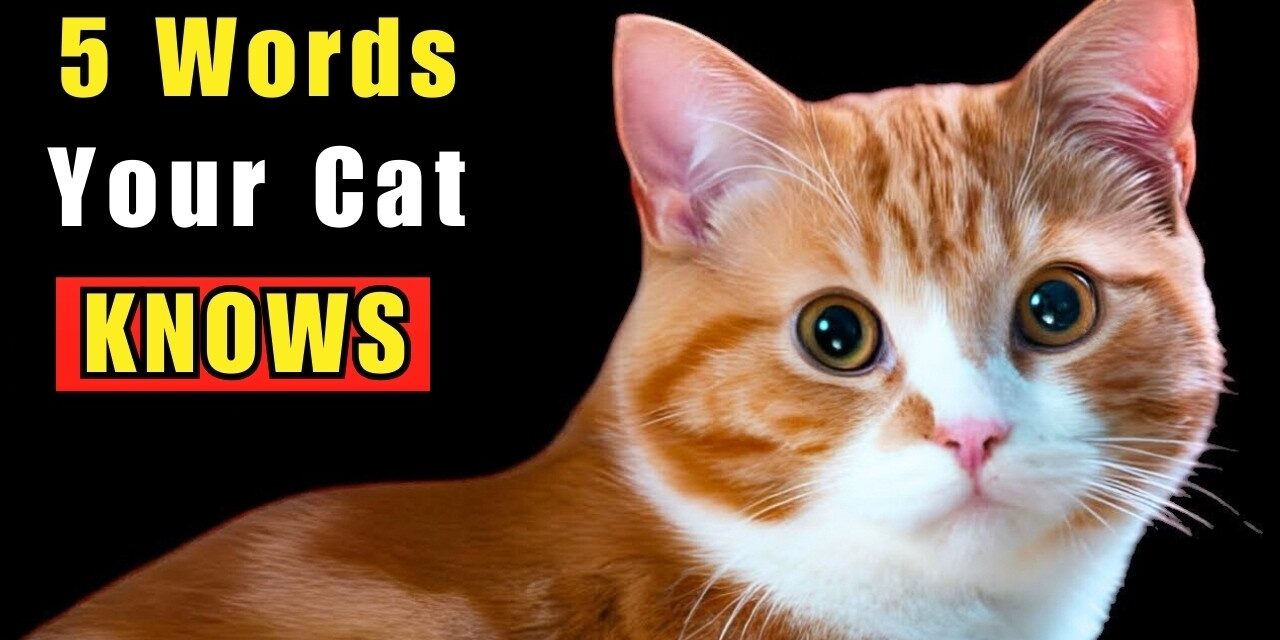
Cats understand more than many people realize! Here’s what research shows:
Their name — Cats can recognize their own name and distinguish it from similar-sounding words, even if they often choose not to respond.
Human emotions — Cats pick up on their owner’s mood through tone of voice, body language, and even facial expressions. They tend to behave differently around stressed or sad owners.
Cause and effect — Cats understand basic causality, like knowing that rattling a treat bag means food is coming, or that a certain door leads outside.
Object permanence — Unlike very young infants, cats know that objects still exist when hidden. This is why they’ll wait patiently by a mouse hole.
Routine and time — Cats have a strong internal clock and learn schedules well, often waking owners up at the same time daily or anticipating feeding times.
Social relationships — Cats understand who you are, recognizing their owner’s voice and scent even after long separations, and they distinguish familiar people from strangers.
Some human words and gestures — Cats can learn to associate certain words (like “treat,” “no,” or their name) with outcomes. Some can even follow a pointing gesture to find food.
Other cats’ intentions — They read feline body language expertly — tail position, ear angle, posture — to gauge whether another cat is friendly or threatening.
What they don’t fully grasp: abstract concepts, complex instructions, or why you’re mad that they knocked your glass off the table (they may just find that part fun regardless).
The biggest misconception is that cats are indifferent — they’re actually quite socially attuned, just more selective than dogs about showing it.
Content, illustrations, and third-party video appearing on GEORGIANBAYNEWS.COM may be generated or curated with AI assistance or reproduced pursuant to the fair dealing provisions of the Copyright Act, R.S.C. 1985, c. C-42. Attribution and hyperlinks to original sources are provided in acknowledgment of applicable intellectual property rights. Such referencing is intended to direct traffic to and support the original rights holders’ platforms.