
















🔥 Canadians and the World Should Brace for ‘Relentless Heat’: What to Expect and How to Prepare
Last updated: July 1, 2026
Quick Answer
Canadians and the world should brace for ‘relentless heat’ this summer, with the World Meteorological Organization and Environment and Climate Change Canada warning of longer, hotter, and more frequent heat waves through 2030. Southern Ontario, Quebec, the Prairies, and B.C.’s interior face the highest risk. Prepare now by making a cooling plan, checking on vulnerable neighbours, and knowing the difference between a heat advisory and a heat warning.
Key Takeaways
- Heat waves in 2026 are projected to be longer and more intense than the 2021 B.C. “heat dome” that killed 619 people.
- Environment Canada issues a heat warning when temperatures hit 30-31°C for two or more days (varies by region); an advisory is a lower-tier alert.
- Seniors, young children, people with chronic illness, and outdoor workers face the highest risk.
- You can stay cool without AC using cross-ventilation, wet towels, cool showers, and public cooling centres.
- Climate change driven by fossil fuel emissions is the main cause of the trend.
- Check on elderly neighbours at least twice a day during a warning.
What Does ‘Relentless Heat’ Mean for Canada?
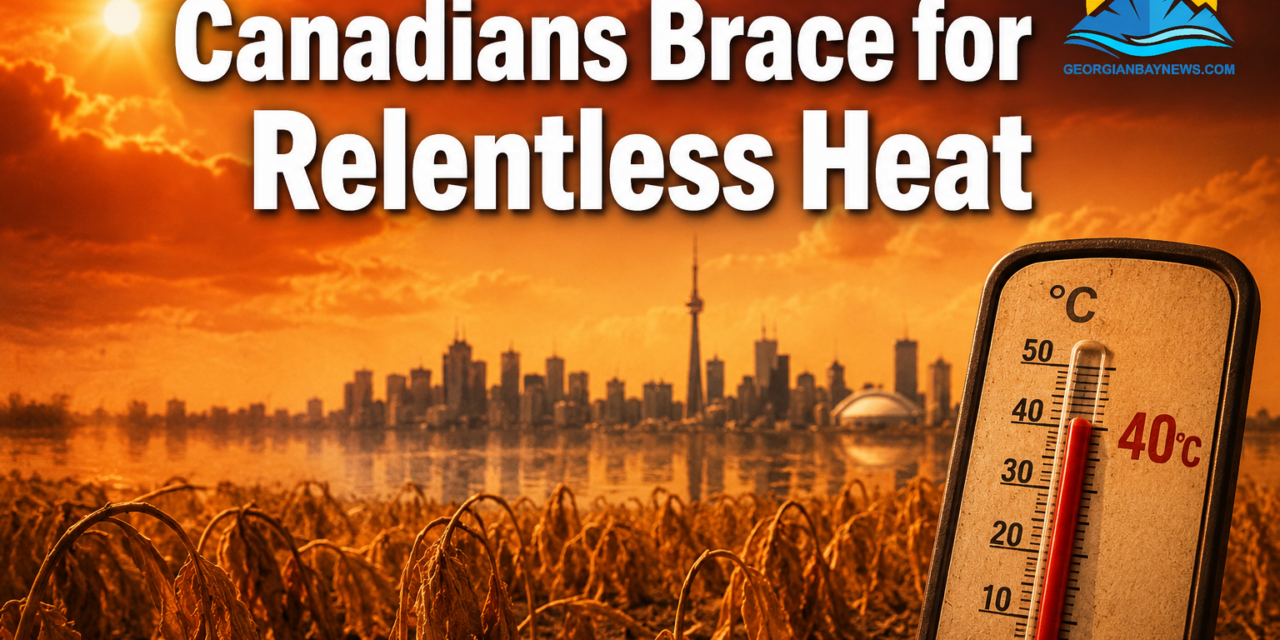
‘Relentless heat’ means multi-day stretches of dangerously high daytime temperatures paired with warm overnight lows that don’t let the body recover. Environment and Climate Change Canada uses the phrase to describe heat events lasting five days or more, often with humidex values above 40.
For Canada, this shift matters because our homes, hospitals, and power grids were built for a cooler climate. Even a few degrees above normal can overload systems and cause deaths, as the 2021 B.C. event showed.
How Hot Will It Get This Summer in Canada?
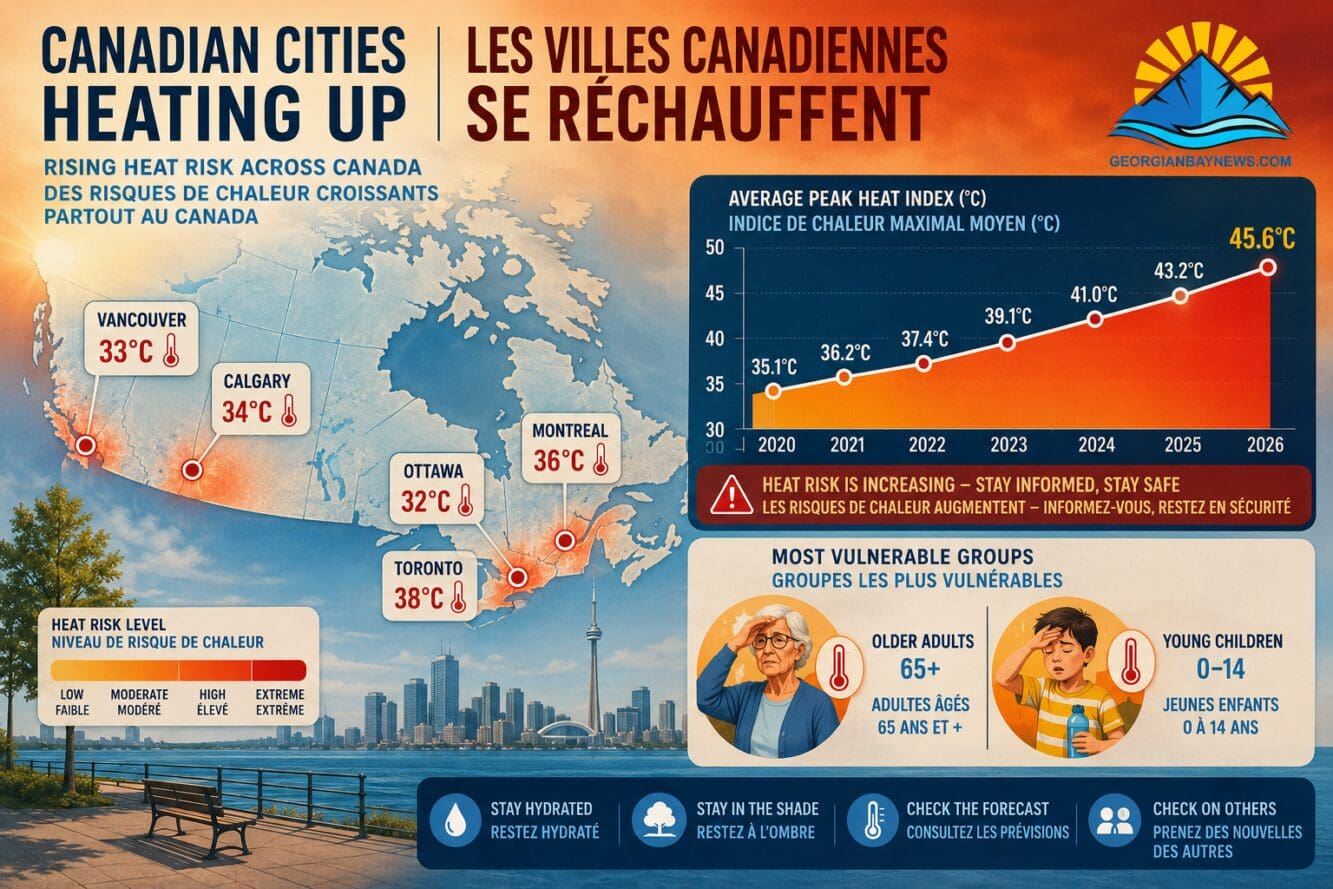
Forecasts from Environment Canada’s seasonal outlook point to above-normal temperatures across nearly all of the country from June through September 2026. Southern Ontario and Quebec could see multiple stretches above 35°C, while the Prairies may push past 38°C.
- Toronto/Montreal: Expected peaks of 35-37°C with humidex near 45.
- Ottawa/Windsor corridor: Multiple heat warnings likely.
- Kamloops and B.C. Interior: Sustained 38°C+ possible.
- Calgary/Edmonton: Warmer and drier than average, with wildfire smoke risk.

Which Parts of Canada Will Be Affected by Extreme Heat?
Almost every province will feel it, but risk concentrates in the south. The Windsor-Quebec City corridor, southern Prairies, and B.C.’s Okanagan and Fraser Valley are hotspots. Even Atlantic Canada and parts of the Arctic are trending warmer than historical norms.
Northern communities face a different problem: infrastructure built on permafrost is failing as the ground thaws, and few homes have any cooling at all.
Which Canadian Cities Are Most Vulnerable to Heat?
Cities with dense housing, limited tree canopy, and older populations rank highest. Montreal, Toronto, Hamilton, Vancouver, and Windsor top most vulnerability indexes.
| City | Key Risk Factor | AC Coverage (approx.) |
|---|---|---|
| Montreal | Older apartments, urban heat island | ~55% |
| Vancouver | Low AC adoption, aging population | ~40% |
| Toronto | High-rise heat retention, density | ~80% |
| Windsor | Highest humidex in Canada | ~85% |
| Calgary | Rapid warming, wildfire smoke | ~50% |
What’s Causing the Extreme Heat in Canada and Globally?
The main driver is human-caused climate change from burning fossil fuels, amplified in 2026 by a lingering El Niño transition and record-warm ocean temperatures. The WMO confirmed 2024 as the hottest year on record, and 2025-2026 continued the trend.
Canada is warming at roughly twice the global average, and the Arctic at nearly four times. Some are exploring cleaner energy options like small modular nuclear reactors and solar power to cut emissions long-term.
How Does This Compare to Previous Heat Waves in Canada?
The 2021 Western North America heat dome remains the benchmark: Lytton, B.C. hit 49.6°C before burning down, and 619 people died in B.C. alone. Recent modeling suggests events of similar or greater intensity are now roughly 150 times more likely than in a pre-industrial climate (World Weather Attribution, 2021).
Compared to the 1990s, Canadian summers now average 1.5-2°C warmer, and heat-wave days have roughly doubled in most southern cities.
How Long Will the Relentless Heat Last?
Individual heat waves in 2026 are expected to last 5-10 days, with brief cooler breaks in between. The broader warming trend, however, is not a short-term event. Scientists at NASA and the IPCC say heat extremes will keep intensifying for decades unless global emissions drop sharply.
“The era of global warming has ended; the era of global boiling has arrived.” — UN Secretary-General António Guterres, 2023
What Are the Health Risks of Extreme Heat Exposure?
Heat kills more Canadians than any other weather hazard. Risks range from mild to fatal:
- Heat cramps — painful muscle spasms from fluid loss.
- Heat exhaustion — heavy sweating, weakness, nausea, headache.
- Heat stroke — medical emergency; body temp above 40°C, confusion, no sweating. Call 911.
- Worsening chronic conditions — heart disease, kidney disease, and mental health issues all spike during heat waves.
Who Is Most at Risk During Extreme Heat Events?
The highest-risk groups are seniors 65+, infants and young children, pregnant people, those with heart or lung disease, people on certain medications (like diuretics or antipsychotics), outdoor workers, and people who are unhoused. Social isolation is a major risk multiplier — most 2021 heat-dome deaths were people who lived alone.
What Heat Wave Alerts or Warnings Are in Effect?
Check Environment Canada’s Weather Alerts page daily during summer. Local public health units (Toronto Public Health, Santé Montréal, Vancouver Coastal Health) issue their own alerts triggering cooling centre openings and wellness checks.
What’s the Difference Between a Heat Advisory and Heat Warning?
A heat warning is the higher-tier alert, issued when forecast temperatures meet regional criteria (e.g., 31°C daytime plus 20°C overnight for two days in southern Ontario). A heat advisory or “special weather statement” is a lower-tier heads-up that conditions could become dangerous.
Rule of thumb: Advisory = plan ahead. Warning = act now.
What Should Canadians Do to Prepare for a Heat Wave?
Start before the first hot day. A basic prep checklist:
- Identify the coolest room in your home.
- Buy or borrow a fan; check AC filters if you have one.
- Locate your nearest cooling centre, library, or mall.
- Stock electrolyte drinks and easy-to-eat cold food.
- Make a check-in plan with at least two vulnerable people.
- Know the signs of heat stroke.
- Never leave kids or pets in a parked car — ever.
How to Stay Cool During a Heat Wave Without AC
You have more options than you think:
- Close blinds and windows during the day; open at night for cross-breeze.
- Take cool (not cold) showers or foot baths.
- Wear a damp shirt or wrap a wet towel around your neck.
- Sleep on the lowest floor of your home.
- Visit air-conditioned public spaces: libraries, malls, community centres, movie theatres.
- Use a fan with a bowl of ice in front of it for DIY cooling.
- Avoid using the oven; eat cold meals like salads and fruit.
How to Help Elderly Neighbours During Heat Waves
Knock on their door at least twice a day. Ask directly: “Are you drinking water? Is your place too hot?” Bring cold water, help them get to a cooling centre, and make sure their phone works. If they seem confused, dizzy, or aren’t sweating despite the heat, call 911. Building a habit of neighbourly connection year-round makes summer check-ins easier.
FAQ
Is it safe to exercise outside during a heat warning?
Not during peak hours (11 a.m.-4 p.m.). Move workouts to early morning or evening, and cut intensity.
Do fans work in extreme heat?
Fans help below about 35°C. Above that, they can actually push hot air onto the body and worsen dehydration.
Can pets get heat stroke?
Yes. Never walk dogs on hot pavement, and never leave any pet in a vehicle.
Are cooling centres free?
Yes, all municipal cooling centres in Canada are free and open to the public.
How much water should I drink?
Roughly 2-3 litres a day for most adults during a heat wave; more if active. Sip regularly rather than chugging.
Does drinking alcohol help me cool down?
No. Alcohol and caffeine both dehydrate you and worsen heat effects.
Will my power stay on?
Grid strain is possible. Keep phones charged and have a backup plan.
Conclusion
Relentless heat is the new normal, not a one-off. The practical response is straightforward: know your local alerts, prepare your home, and look out for the people around you who can’t cool themselves. Bookmark Environment Canada’s alert page, save your nearest cooling centre address, and pick two neighbours to check on this week. Small steps now prevent tragedies later.
For more local coverage on climate, safety, and community, visit Georgian Bay News and follow updates on storm and stress-reduction topics.
Sources
- Environment and Climate Change Canada, Seasonal Outlook, 2026.
- World Meteorological Organization, State of the Global Climate report, 2024.
- World Weather Attribution, Western North America Heatwave analysis, 2021.
- BC Coroners Service, Extreme Heat Death Review Panel, 2022.
- Health Canada, Extreme Heat Events guidance, 2020.
Content, illustrations, and third-party video appearing on GEORGIANBAYNEWS.COM may be generated or curated with AI assistance or reproduced pursuant to the fair dealing provisions of the Copyright Act, R.S.C. 1985, c. C-42. Attribution and hyperlinks to original sources are provided in acknowledgment of applicable intellectual property rights. Such referencing is intended to direct traffic to and support the original rights holders’ platforms.