
















2026 Pro Pickleball Shake-Up: New Brand Partnerships, Youth Stars Emerging, and Paddle Tech Shifts Explained

Last updated: February 24, 2026
Professional pickleball is experiencing its most transformative year yet. The 2026 Pro Pickleball Shake-Up: New Brand Partnerships, Youth Stars Emerging, and Paddle Tech Shifts Explained reveals how record-breaking sponsorship deals, revolutionary foam core technology, and a wave of young talent are reshaping the sport’s competitive and commercial landscape. With at least 25 professional players switching paddle sponsors in early 2026 and equipment contracts potentially reaching $10 million, the business of pickleball has entered a new era.[2][5]
Key Takeaways
- Anna Leigh Waters signed a potentially $10 million+ deal with Franklin Pickleball—the largest equipment sponsorship in pickleball history[5]
- At least 25 pro players announced new paddle sponsors in January 2026, including major moves from JOOLA, Selkirk, and CRBN[2][4]
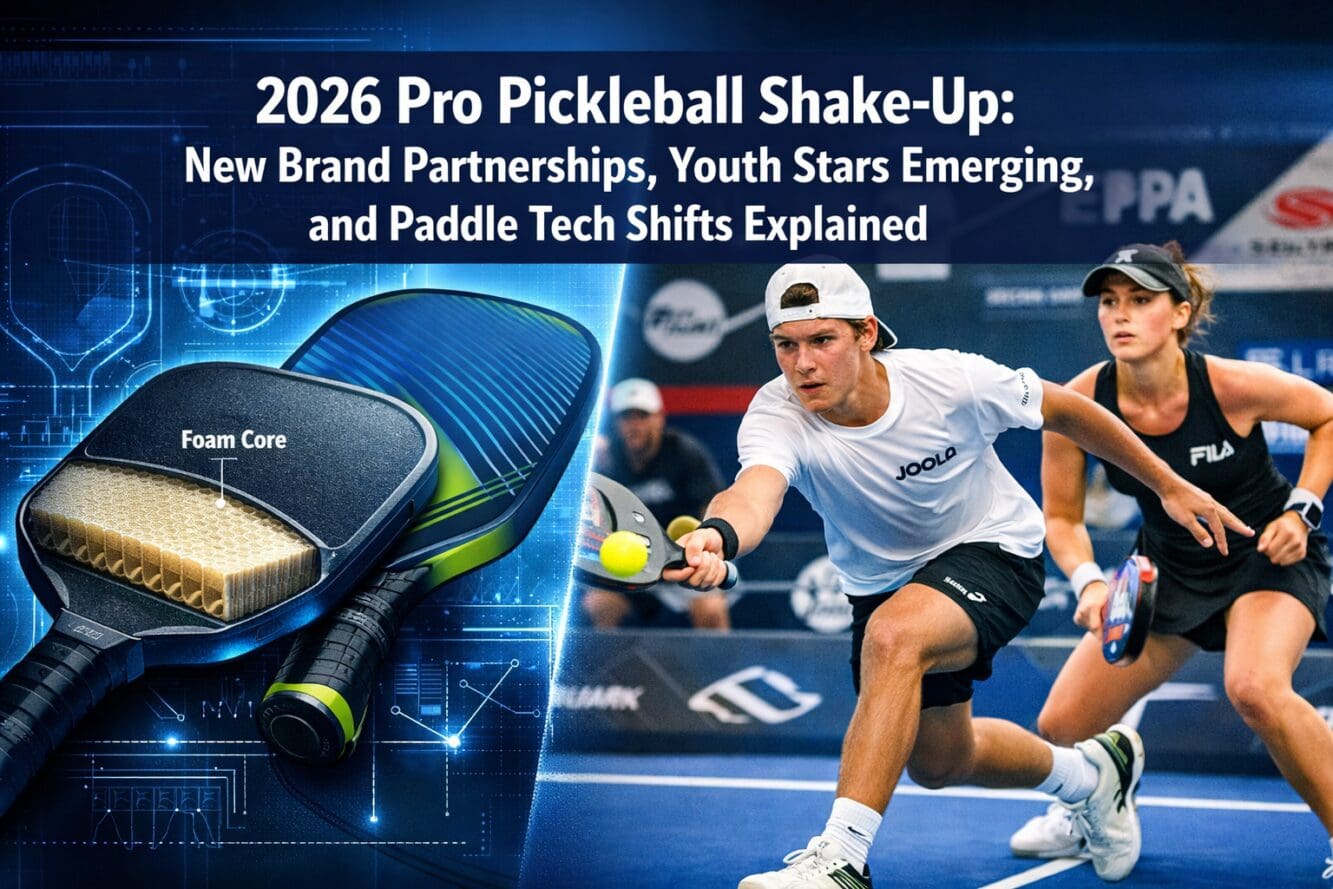
- Foam core paddle technology has replaced traditional honeycomb as the industry standard for professional equipment
- JOOLA launched the PRO V paddle with pre-orders opening February 24, 2026, developed with input from Ben Johns and other top pros
- Chinese megabrand Li-Ning entered the U.S. market, bringing significant manufacturing resources to professional pickleball
- Andre Agassi partnered with Team Marketing (UEFA Champions League agency) to launch the World Series of Pickleball in Las Vegas[1]
- DUPR became USA Pickleball’s official exclusive rating system following Agassi’s $8 million investment[6]
- Youth stars like 18-year-old Anna Leigh Waters are commanding unprecedented endorsement deals and reshaping marketing strategies
- Vietnamese brands Facolos and Sypik are competing for top Asian talent and expanding internationally
- Franklin’s pro roster now includes five elite players, positioning the brand as a major competitive force
Quick Answer
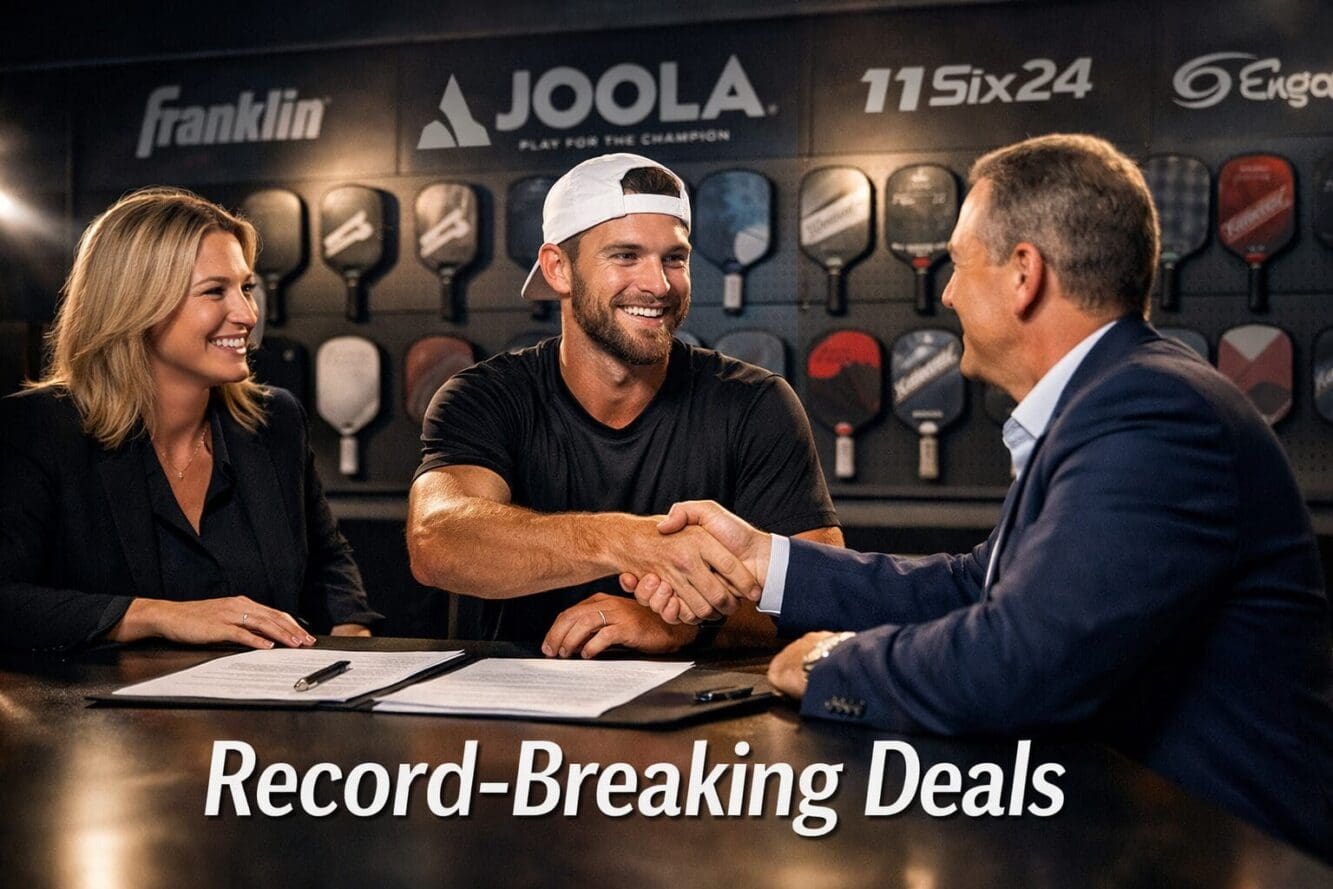
The 2026 professional pickleball season has seen unprecedented change across three major areas: brand partnerships (with record-breaking sponsorship deals exceeding $10 million), youth star emergence (led by 18-year-old Anna Leigh Waters’ 585-day undefeated streak), and paddle technology shifts (from honeycomb to foam core construction). At least 25 top-ranked players switched equipment sponsors in January 2026, while new international brands entered the U.S. market and revolutionary Gen-4 foam paddles became the professional standard.[2][5]
What’s Driving the 2026 Pro Pickleball Shake-Up in Brand Partnerships?
The sponsorship landscape transformed dramatically in early 2026 because professional pickleball reached a commercial tipping point where equipment brands could justify multi-million dollar investments in athlete endorsements.
Anna Leigh Waters’ Franklin deal represents the watershed moment. After seven years with Paddletek (signed when she was just 11 years old), the world’s #1-ranked player secured what industry insiders estimate could be pickleball’s first $10 million contract.[5] The deal spans signature paddles, balls, and accessories—though notably excludes apparel and shoes, allowing Waters to maintain separate agreements for those categories.
Franklin’s aggressive roster building didn’t stop there. The brand now features:
- Anna Leigh Waters (women’s singles #1)
- Hayden Patriquin (top men’s player)
- Parris Todd (rising star)
- Megan Fudge (doubles specialist)
- Will Howells (international talent)
Why brands are spending more: Equipment companies recognize that pickleball’s growth trajectory mirrors early-stage tennis in the 1970s. With participation rates climbing and professional tour viewership increasing, athlete endorsements deliver measurable ROI through both direct sales and brand credibility.
The JOOLA Exodus and 11Six24 Opportunity
Three prominent players departed JOOLA in January 2026: Dekel Bar, Eric Oncins, and Brandon French.[2][5] Bar immediately signed with 11Six24, while Oncins joined Engage. This mass departure suggests either contract disputes or competitors offering significantly better terms.
What this means for recreational players: When top pros switch brands, their previous equipment often sees price reductions. The paddles these athletes used in 2025 remain high-quality options at potentially lower costs.
How Are Youth Stars Emerging in the 2026 Pro Pickleball Shake-Up?
Young players are dominating professional pickleball in ways that would have seemed impossible five years ago. Anna Leigh Waters exemplifies this trend—she turned pro at age 12 and by 18 has achieved a 585-day undefeated streak in singles matches.[5]
The youth advantage comes from three factors:
- Early specialization: Players like Waters started training in pickleball-specific skills before developing habits from tennis or other racquet sports
- Physical peak timing: Late teens and early twenties represent optimal hand-eye coordination, reaction time, and recovery capacity
- Marketing appeal: Brands recognize that young stars attract both current players and the next generation of participants
Junior Development Programs Paying Off
The investment in youth development from 2020-2024 is now producing professional-level talent. Programs that identified promising 10-14 year-olds and provided structured coaching are seeing their graduates sign professional contracts.
Yuta Funemizu’s Diadem deal represents international youth talent entering the U.S. professional scene. As Japan’s top-ranked player, Funemizu brings both skill and access to Asian markets—a valuable combination for equipment brands seeking global expansion.[5]
Common mistake to avoid: Don’t assume youth stars lack experience. Many teenage pros have logged more competitive pickleball hours than recreational players twice their age.
What Paddle Tech Shifts Define the 2026 Pro Pickleball Shake-Up?
The transition from honeycomb polypropylene cores to foam construction represents the most significant equipment innovation in pickleball’s competitive history.
Traditional honeycomb cores featured a plastic grid structure that was lightweight and affordable but had limitations:
- Compressed over time, losing performance
- Created inconsistent feel across the paddle face
- Produced the characteristic “pop” sound
- Developed dead zones with repeated impact
Modern foam cores (especially full-foam “Gen-4” designs) deliver:
- ✅ Consistent energy return across the entire face
- ✅ Broader sweet spots for more forgiving play
- ✅ Superior durability without performance degradation
- ✅ Reduced vibration and arm fatigue
- ✅ Quieter sound signature for noise-sensitive venues
JOOLA PRO V Launch: Professional Input Drives Design
JOOLA opened pre-orders for the PRO V paddle on February 24, 2026, with delivery by March 3. The development process included direct feedback from Ben Johns, Tyson McGuffin, Kate Fahey, Lea Jansen, Anna Bright, and Brooke Buckner—a who’s-who of professional talent.[2]
Federico Staksrud’s signature “Kosmos” shape launches alongside the PRO V, representing the trend toward player-specific paddle geometries rather than one-size-fits-all designs.
| Paddle Feature | Honeycomb Core (2024) | Foam Core (2026) |
|---|---|---|
| Sweet spot size | 60-70% of face | 85-95% of face |
| Durability | 6-12 months | 18-24+ months |
| Vibration | Moderate-high | Low |
| Sound level | 75-80 dB | 65-70 dB |
| Price range | $80-150 | $120-220 |
| Pro adoption | 40% | 85%+ |
Choose foam cores if: You prioritize consistent performance, play frequently (3+ times weekly), or experience arm discomfort with traditional paddles.
Stick with honeycomb if: You’re budget-conscious, prefer traditional paddle feel, or play recreationally (1-2 times monthly).
How Do New Brand Partnerships in 2026 Challenge Pricing Norms?
The influx of international brands and record sponsorship deals is creating unexpected pricing dynamics in the professional equipment market.
Vietnamese brands Facolos and Sypik entered the U.S. market aggressively by signing recognizable pros. Gabe Tardio joined Facolos after leaving PIKKL, while Quang Duong departed Sypik (with rumors suggesting a move to another Vietnamese brand, Wika).[2][5]
Chinese megabrand Li-Ning’s entry brings manufacturing scale that could disrupt pricing across the industry. As one of China’s largest sports brands, Li-Ning has resources to compete directly with established pickleball companies while potentially offering lower price points.
The Premium Paddle Paradox
Professional endorsements traditionally drive prices up—but increased competition is preventing the price inflation seen in tennis and golf equipment. Here’s why:
Factors pushing prices higher:
- Pro endorsement costs passed to consumers
- Advanced materials (foam cores, carbon fiber faces)
- Research and development investments
- Limited production runs for signature models
Factors keeping prices competitive:
- New manufacturers entering the market
- Direct-to-consumer sales models
- Previous generation equipment remaining viable
- Recreational players resisting $200+ paddles
The result: Top-tier professional paddles range from $150-220, while functionally similar models from newer brands cost $100-140.
What Role Does the World Series of Pickleball Play in the 2026 Shake-Up?
Andre Agassi’s partnership with Team Marketing—the agency that commercialized the UEFA Champions League—signals professional pickleball’s ambitions to reach mainstream sports status.[1]
Team Marketing brings proven expertise in transforming regional competitions into global commercial properties. Their involvement suggests:
- Substantial prize purses attracting top talent
- Celebrity participation creating mainstream media coverage
- Amateur divisions providing grassroots engagement
- Las Vegas venue offering entertainment-sports crossover appeal
Why this matters for the sport: When tennis legends like Agassi invest time and reputation (not just money) into pickleball infrastructure, it validates the sport’s professional viability and attracts additional institutional investment.
DUPR’s Official Rating System Partnership
USA Pickleball’s December 2025 announcement making DUPR the official exclusive rating system followed Agassi’s $8 million investment in acquiring a controlling interest.[6] This vertical integration—where the same entity influences both player ratings and professional competitions—creates a unified ecosystem similar to tennis’s ATP ranking system.
For professional players: A standardized rating system across all USA Pickleball events provides clearer pathways from amateur to professional status and more consistent seeding in tournaments.
How Are Equipment Brands Adapting to the 2026 Pro Pickleball Landscape?
Established brands are responding to the sponsorship shake-up with distinct strategies that reveal their market positioning.
Paddletek’s Rebuild After Waters
Losing Anna Leigh Waters after seven years represented a significant blow to Paddletek’s brand identity. The company responded by signing three strong players: Zane Navratil, Riley Newman, and Connor Garnett.[2] This “ensemble cast” approach distributes marketing across multiple athletes rather than relying on a single superstar.
The risk: No individual player commands Waters’ market recognition. The opportunity: Three players provide more content, broader demographic appeal, and reduced vulnerability to injury or retirement.
Selkirk’s Roster Turnover
Rachel Rohrabacher’s departure to Friday Pickleball continues Selkirk’s pattern of roster changes. The brand maintains strong market share through product innovation rather than athlete endorsements—a strategy that works when your paddles win independent performance tests.
For players considering Selkirk: The brand’s focus on technology over celebrity endorsements often means better value, as you’re paying for engineering rather than marketing costs.
CRBN’s Double Departure
Both Vivienne David and Thomas Wilson announced the end of their CRBN partnerships in January 2026.[5] David simultaneously announced her retirement from professional competition, while Wilson’s next move remains unannounced.
What this signals: CRBN may be shifting strategy toward recreational market dominance rather than professional tour presence—a viable approach given that 99%+ of paddle sales go to non-professional players.
What Should Recreational Players Know About Pro Equipment Changes?
The professional sponsorship carousel creates specific opportunities and considerations for recreational players looking to upgrade equipment.
When Pro Switches Create Value
Timing matters: When a top player switches brands, their previous sponsor often:
- Discounts remaining inventory of that player’s signature model
- Offers “last year’s pro paddle” at 20-40% off
- Bundles older professional models with balls or bags
Example: After Waters left Paddletek, her signature Bantam EX-L model (originally $169) appeared at retailers for $119-129—still a high-performance paddle at a mid-range price.
The Technology Trickle-Down Effect
Foam core technology developed for professional paddles is now appearing in recreational models at lower price points. Brands like Bread & Butter (Loco model) and Ronbus (Quanta R3) offer full-foam construction for $130-160.[2]
Decision framework for choosing equipment:
- If you play 1-2 times monthly: Previous-generation honeycomb paddles ($80-120) provide excellent value
- If you play 1-2 times weekly: Current mid-range foam cores ($120-160) offer the best performance-to-cost ratio
- If you play 3+ times weekly or compete: Professional-grade foam cores ($160-220) justify the investment through durability and consistency
- If you’re brand-loyal to a specific pro: Wait 2-3 months after they switch sponsors for potential discounts on their previous equipment
Don’t Chase Pro Specs Blindly
Common mistake: Buying the exact paddle a professional uses without considering skill level differences. Pros generate paddle speed and spin that recreational players cannot replicate—meaning a paddle optimized for professional play may not suit your game.
Better approach: Understand the characteristics you need (power vs. control, weight, grip size) and test paddles that match those requirements, regardless of professional endorsements.
For guidance on improving your technique with any paddle, check out our guide to perfecting the pickleball volley.
How Are International Brands Changing Professional Pickleball?
The 2026 season marks the first time international manufacturers have competed seriously for top American professional talent.
Asian Market Expansion
Vietnamese brands (Facolos, Sypik, and potentially Wika) are leveraging lower manufacturing costs and proximity to production facilities to offer competitive sponsorship deals. Gabe Tardio’s move to Facolos and Quang Duong’s activity with Vietnamese brands demonstrate this trend.[2][5]
Japanese development: Yuta Funemizu’s Diadem deal represents Japan’s growing pickleball infrastructure. As the sport expands in Asia, expect more international players entering the U.S. professional circuit with equipment sponsorships from their home markets.[5]
Chinese manufacturing scale: Li-Ning’s entry brings the resources of a company that competes with Nike and Adidas in China. Their ability to produce high-quality equipment at scale could pressure established pickleball brands on both price and innovation.
The Kawamoto Sisters and Proton
Jackie and Jade Kawamoto’s signing with Proton illustrates how sibling pairs create marketing leverage. Brands value family narratives that resonate with recreational players who often introduce relatives to the sport.[2]
Why this matters: Equipment companies are learning that pickleball’s social nature makes “family-friendly” athlete partnerships more valuable than individual star power alone.
What’s Next for the 2026 Pro Pickleball Shake-Up?
Several developments will likely unfold as the 2026 season progresses:
The Johnson Siblings’ Next Move
Jorja and JW Johnson announced the end of their Franklin partnership, making them prime targets for competing brands.[4][5] Their next deal will indicate whether Franklin’s aggressive roster building (adding Waters while losing the Johnsons) represents a strategic shift or contract negotiation breakdown.
Brands likely pursuing the Johnsons: JOOLA (rebuilding after departures), Selkirk (always active in recruiting), or a new entrant seeking instant credibility.
Quiet Paddle Technology Adoption
While not directly related to sponsorships, the rise of quiet paddle designs affects professional equipment choices. USA Pickleball’s quiet paddle category and community noise concerns are pushing manufacturers toward sound-dampening technologies.[2]
Professional impact: Expect signature paddles from 2026 deals to feature quieter construction, even though noise isn’t a factor in professional venues. Brands want recreational players to buy the same equipment pros use—and recreational venues increasingly require quiet paddles.
Prize Money and Sponsorship Correlation
As prize purses increase (driven by events like the World Series of Pickleball), professional players gain negotiating leverage with equipment sponsors. The logic: “I’m earning $X in tournament winnings, so my endorsement value is $Y.”
Watch for: Mid-tier professionals (ranked 10-30) securing better sponsorship deals in late 2026 as brands recognize that tournament success doesn’t always correlate with marketing value.
Conclusion
The 2026 Pro Pickleball Shake-Up: New Brand Partnerships, Youth Stars Emerging, and Paddle Tech Shifts Explained reveals a sport at a critical growth inflection point. Record-breaking sponsorship deals exceeding $10 million, revolutionary foam core technology becoming the professional standard, and at least 25 top players switching equipment sponsors demonstrate that pickleball has evolved from recreational pastime to serious professional sport with substantial commercial infrastructure.[2][5]
Key takeaways for different stakeholders:
For recreational players: Take advantage of discounted professional equipment as players switch sponsors, but prioritize paddle characteristics that match your skill level over professional endorsements. Foam core technology offers real performance benefits worth the premium for frequent players.
For aspiring professionals: The youth star trend (exemplified by Anna Leigh Waters’ success from age 12-18) shows that early specialization and structured development programs create pathways to professional careers. DUPR’s official rating system provides clearer advancement metrics.[6]
For equipment brands: International competition (Li-Ning, Vietnamese manufacturers) and professional roster turnover require either significant athlete investment or differentiation through technology and direct-to-consumer strategies.
For the sport overall: Andre Agassi’s partnership with Team Marketing and the World Series of Pickleball signal that professional pickleball is attracting the institutional expertise that transformed tennis, golf, and other sports into global commercial properties.[1]
Next steps:
- Research current equipment deals at retailers for discounted professional paddles from players who switched sponsors
- Test foam core paddles if you haven’t experienced the technology shift firsthand
- Follow professional roster announcements for the Johnson siblings and other unsigned talent
- Watch the World Series of Pickleball when it launches to understand how professional pickleball is being packaged for mainstream audiences
- Consider DUPR rating if you’re tracking competitive progress, as it’s now the official USA Pickleball system
The 2026 season is just beginning, and the professional landscape will continue evolving as brands compete for talent, technology advances, and new markets open internationally. Whether you’re a recreational player benefiting from better equipment options or a fan watching the sport mature, this year represents a pivotal moment in pickleball’s transformation from backyard game to professional sport.
FAQ
Q: What is the biggest paddle sponsorship deal in pickleball history?
Anna Leigh Waters’ 2026 Franklin Pickleball contract is estimated to potentially exceed $10 million, making it the largest equipment sponsorship in the sport’s history. The deal includes signature paddles, balls, and accessories but excludes apparel and shoes.[5]
Q: Why are so many pros switching paddle sponsors in 2026?
At least 25 professional players changed sponsors in early 2026 due to contract expirations, better financial offers from competing brands, and the entry of new international manufacturers with significant resources. The market maturation allows brands to justify larger investments in athlete endorsements.[2][4]
Q: What is foam core paddle technology?
Foam core paddles use dense or floating foam construction instead of traditional polypropylene honeycomb. This provides more consistent energy return, broader sweet spots, better durability, reduced vibration, and quieter sound—making them the preferred choice for 85%+ of professional players in 2026.[2]
Q: How does Anna Leigh Waters’ age affect her sponsorship value?
At 18 years old with a 585-day undefeated streak, Waters represents both current dominance and long-term marketing potential. Her youth appeals to brands seeking to attract the next generation of players while her proven success validates the investment.[5]
Q: Should recreational players buy the same paddles as professionals?
Not necessarily. Professional paddles are optimized for players who generate extreme paddle speed and spin. Recreational players should prioritize characteristics matching their skill level (power vs. control, weight, grip size) rather than blindly following professional endorsements.
Q: What is DUPR and why does it matter?
DUPR (Dynamic Universal Pickleball Rating) became USA Pickleball’s official exclusive rating system in December 2025 following Andre Agassi’s $8 million investment. It provides standardized player ratings across all USA Pickleball events, creating clearer pathways from amateur to professional status.[6]
Q: Are international brands competitive with established pickleball companies?
Yes. Vietnamese brands (Facolos, Sypik) and Chinese manufacturer Li-Ning are signing top professionals and bringing manufacturing scale that challenges established brands on both price and innovation. Gabe Tardio and Yuta Funemizu’s deals with international brands demonstrate their competitiveness.[2][5]
Q: What happened to the Johnson siblings’ Franklin sponsorship?
Jorja and JW Johnson announced the end of their Franklin partnership in early 2026, making them high-value free agents. Their next deal will indicate whether Franklin’s strategy of adding Anna Leigh Waters while losing the Johnsons represents a deliberate shift or negotiation breakdown.[4][5]
Q: How much do professional pickleball paddles cost in 2026?
Top-tier professional paddles with foam core technology range from $150-220, while functionally similar models from newer brands cost $100-140. Previous-generation honeycomb paddles remain available at $80-120 and still offer good performance for recreational players.
Q: What is the World Series of Pickleball?
Andre Agassi’s Agassi Sports Entertainment partnered with Team Marketing (the agency behind UEFA Champions League commercialization) to launch the World Series of Pickleball in Las Vegas. The event will feature substantial prize purses, celebrity participation, and both professional and amateur divisions.[1]
Q: When should I buy a new paddle after a pro switches sponsors?
Wait 2-3 months after a professional announces a new sponsor. Their previous brand often discounts remaining inventory of signature models by 20-40%, providing high-performance equipment at mid-range prices.
Q: Do quiet paddles affect professional play?
While noise isn’t a factor in professional venues, pros are increasingly using quiet paddle technology because brands want recreational players to buy the same equipment. Community noise concerns and venue requirements are driving this trend even at the professional level.[2]
References
[1] Andre Agassi Pickleball World Series Team Marketing February 2026 – https://www.sportspro.com/news/finance-investment/andre-agassi-pickleball-world-series-team-marketing-february-2026/
[2] Pro Pickleball Players New Paddle Apparel Equipment Deals 2026 – https://thekitchenpickle.com/blogs/news/pro-pickleball-players-new-paddle-apparel-equipment-deals-2026
[4] Tracking All The New Pro Paddle Deals In 2026 – https://www.thedinkpickleball.com/tracking-all-the-new-pro-paddle-deals-in-2026/
[5] Several Pros Are Moving Paddle Sponsors In 2026 Were Tracking Where They Go – https://pickleball.com/gear/several-pros-are-moving-paddle-sponsors-in-2026-were-tracking-where-they-go
[6] Partnerships – https://usapickleball.org/category/partnerships/
Content, illustrations, and third-party video appearing on GEORGIANBAYNEWS.COM may be generated or curated with AI assistance or reproduced pursuant to the fair dealing provisions of the Copyright Act, R.S.C. 1985, c. C-42. Attribution and hyperlinks to original sources are provided in acknowledgment of applicable intellectual property rights. Such referencing is intended to direct traffic to and support the original rights holders’ platforms.
Much Appreciate You Sharing This Post - It Helps MUCH!!!