


















3 Morning Exercises for Seniors | GEORGIANBAYNEWS.COM

Picture this: It’s 7:30 AM, and 72-year-old Margaret from Collingwood starts her day not with a cup of coffee, but with three simple exercises that have transformed her mobility and energy levels. Six months ago, she struggled to get out of bed without pain. Today, she’s leading her local seniors’ walking group through the Georgian Bay trails.
The secret? A consistent morning exercise routine designed specifically for older adults.
Exercising for seniors doesn’t have to mean expensive gym memberships or complicated equipment. In fact, the most effective morning routines for older adults focus on simple, safe movements that can be done right at home. Whether you’re in Vancouver, New York, or anywhere in between, these three foundational exercises can help you start your day with strength, balance, and confidence.
Key Takeaways 🎯
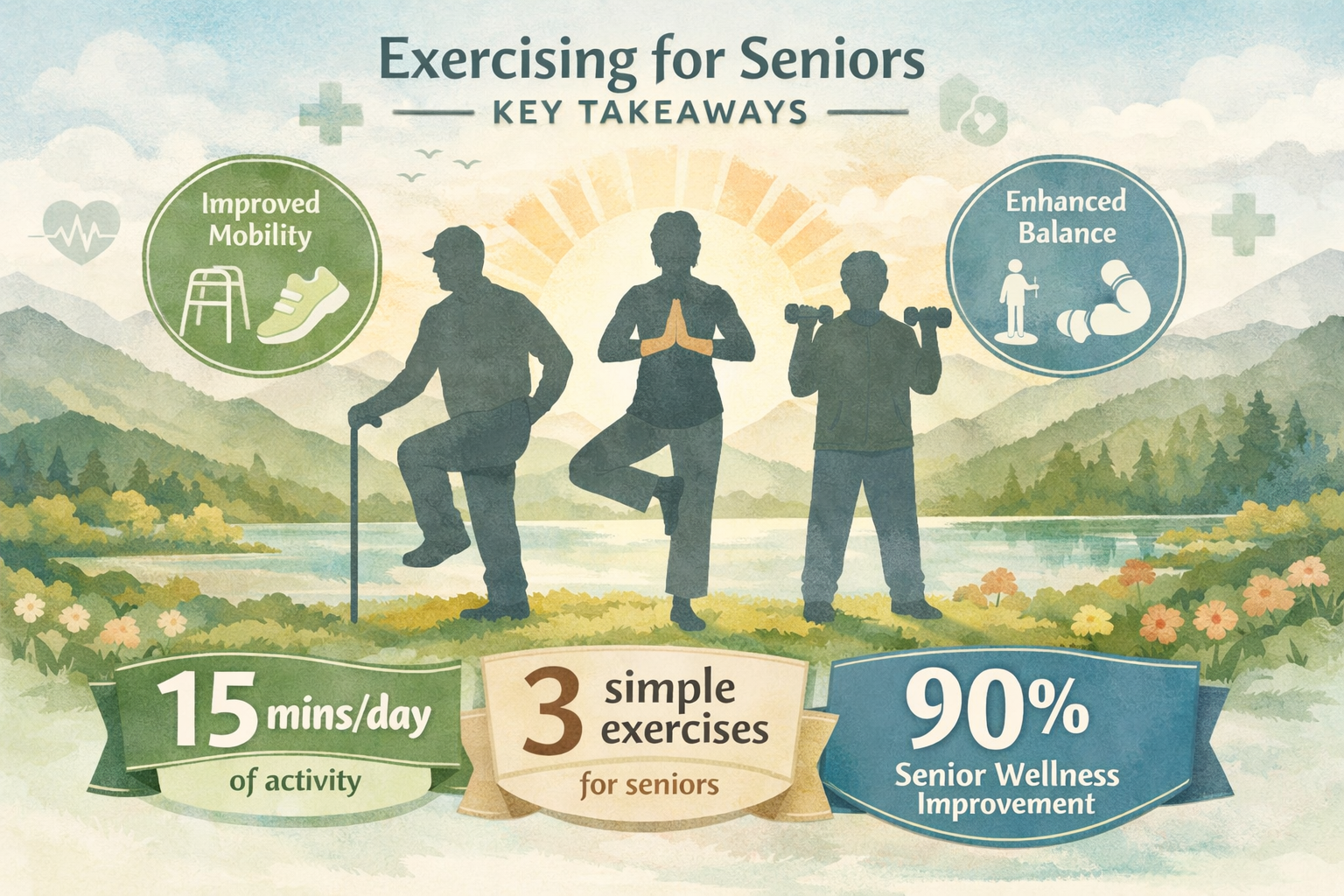
- Morning exercise is ideal for seniors because body temperature is optimal, joints are less stiff after gentle warm-up, and it establishes a consistent routine
- The three best morning exercises include seated leg extensions, gentle standing marches, and arm circles—all requiring no equipment
- Safety comes first: Always start slowly, listen to your body, and consult healthcare providers before beginning any new exercise program
- Consistency beats intensity: Even 10-15 minutes daily provides more benefits than occasional intense workouts
- Modifications matter: Each exercise can be adapted to individual mobility levels and physical conditions
Why Morning Exercise Matters for Exercising for Seniors 🌞
The early hours offer unique advantages for older adults looking to stay active. Research shows that morning exercise can improve sleep quality, enhance mental clarity throughout the day, and reduce the risk of falls—a leading cause of injury among seniors [1].
Dr. Sarah Chen, a geriatric specialist at Toronto General Hospital, explains: “When seniors exercise in the morning, they’re setting a positive tone for the entire day. The body’s cortisol levels are naturally higher in the morning, which can actually help with energy and motivation.”
Beyond the physiological benefits, morning routines create structure. For many retirees, having a purposeful start to the day combats feelings of aimlessness and provides a sense of accomplishment before breakfast. This psychological boost shouldn’t be underestimated—morning habits that promote happiness have been shown to improve overall quality of life.
The Science Behind Senior Fitness
As we age, our bodies undergo natural changes: muscle mass decreases (a condition called sarcopenia), bone density reduces, and balance becomes more challenging [2]. However, these changes aren’t inevitable or irreversible. Regular exercise, particularly strength and balance training, can slow or even reverse many age-related declines.
Benefits of consistent morning exercise for seniors include:
- 🦴 Improved bone density and reduced osteoporosis risk
- 💪 Maintained muscle mass and functional strength
- ⚖️ Better balance and coordination, reducing fall risk by up to 30%
- 🧠 Enhanced cognitive function and memory
- ❤️ Cardiovascular health improvements
- 😊 Elevated mood and reduced depression symptoms
- 🩺 Better management of chronic conditions like arthritis and diabetes
Many seniors find that incorporating stress-relieving stretches into their morning routine provides both physical and mental benefits.
Exercise #1: Seated Leg Extensions for Strength 💺
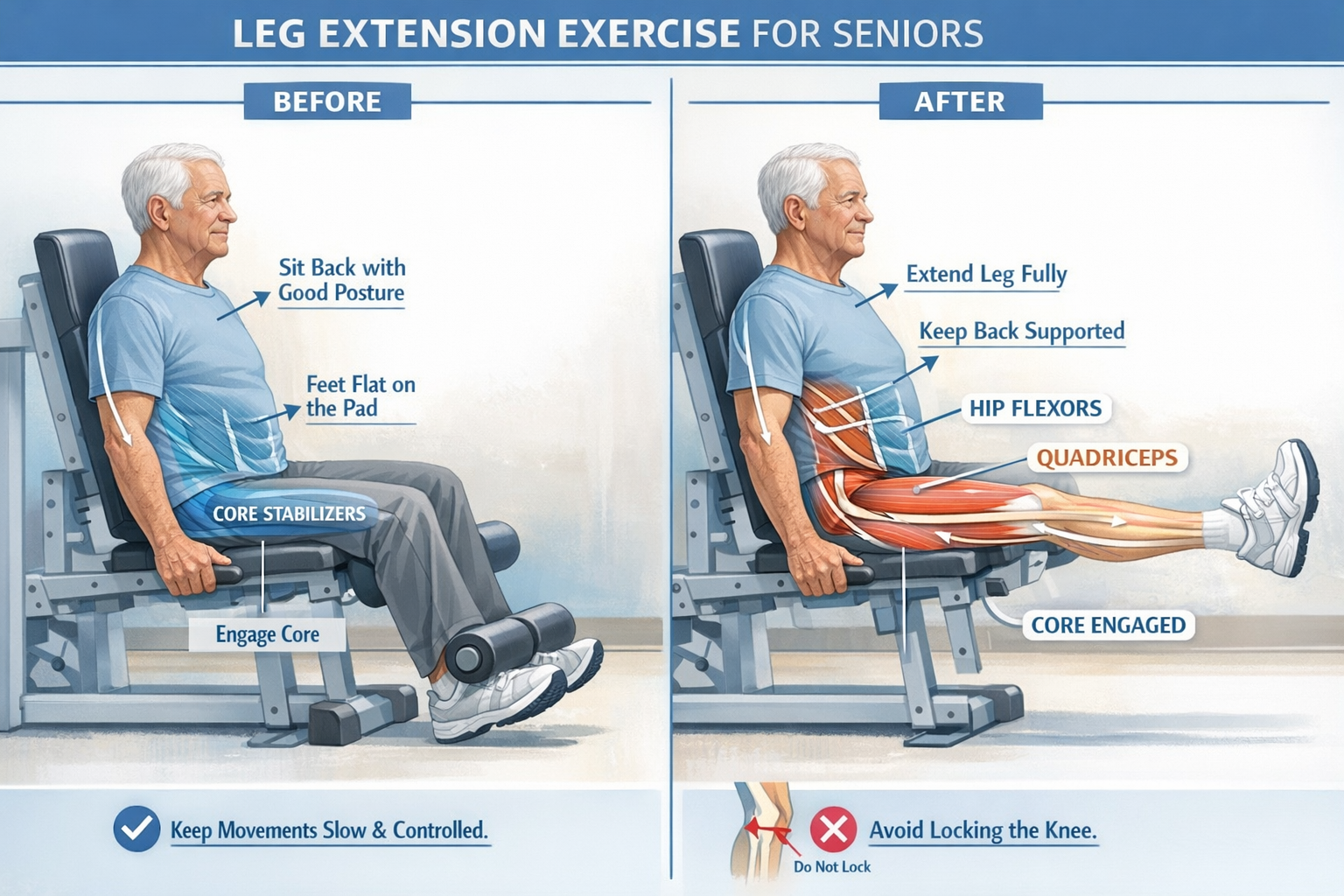
Let’s start with one of the safest and most effective exercises for building lower body strength: seated leg extensions. This movement targets the quadriceps (front thigh muscles) and hip flexors, which are essential for walking, climbing stairs, and getting up from chairs.
How to Perform Seated Leg Extensions
Starting Position:
- Sit in a sturdy, armless chair with your back fully supported
- Place feet flat on the floor, hip-width apart
- Hands can rest on the sides of the chair or on your thighs
- Engage your core by gently pulling your belly button toward your spine
The Movement:
- Slowly extend your right leg until it’s parallel to the floor (or as high as comfortable)
- Flex your foot, pointing toes toward the ceiling
- Hold for 2-3 seconds, feeling the contraction in your thigh
- Slowly lower your foot back to the starting position
- Repeat 10-12 times, then switch to the left leg
- Complete 2-3 sets on each side
Safety Tips and Modifications ⚠️
Do:
- Keep your back pressed against the chair throughout
- Move slowly and with control
- Breathe steadily (exhale on the extension, inhale on the return)
- Stop if you feel sharp pain (mild muscle fatigue is normal)
Don’t:
- Lock your knee at full extension
- Swing or use momentum
- Hold your breath
- Rush through the repetitions
Modifications:
- If full extension is difficult: Only lift your leg halfway or even just a few inches
- For added challenge: Add a resistance band around your ankles or wear light ankle weights (1-2 pounds maximum)
- For balance concerns: Perform the exercise with one hand holding the chair armrest
Robert, a 68-year-old from Collingwood, shares his experience: “I started with just lifting my leg a few inches. After three weeks, I could do full extensions. Now, getting out of my car is so much easier!”
Exercise #2: Gentle Standing Marches for Balance and Cardio 🚶
Standing marches are a fantastic low-impact exercise that improves balance, coordination, and cardiovascular health while being gentle on the joints. This exercise mimics the natural walking motion and helps maintain the functional fitness needed for daily activities.
How to Perform Standing Marches
Starting Position:
- Stand next to a sturdy counter, table, or chair back for support
- Feet should be hip-width apart
- Stand tall with shoulders back and down
- Look straight ahead, not down at your feet
The Movement:
- Lift your right knee to a comfortable height (aim for hip level if possible, but even a few inches is beneficial)
- Lower your right foot back to the floor with control
- Immediately lift your left knee to the same height
- Continue alternating legs in a marching motion
- March for 30-60 seconds, rest for 30 seconds, then repeat
- Complete 3-5 sets
Enhancing Your March 🎵
Arm Movement:
Adding coordinated arm movements increases the cardiovascular benefit and improves coordination. As you lift your right knee, swing your left arm forward (bent at 90 degrees). As you lift your left knee, swing your right arm forward. This opposite arm-leg pattern is the natural walking motion.
Tempo Variations:
- Slow march: Focus on balance and control (1 second per step)
- Moderate march: Natural walking pace (2 steps per second)
- High knees: Lift knees higher for increased intensity (only if balance allows)
Safety Considerations 🛡️
This exercise requires more balance than seated movements, so safety is paramount:
- Always have support nearby: Keep one hand on a counter or chair back, especially when starting
- Wear proper footwear: Non-slip shoes with good support (no socks on slippery floors)
- Use a non-slip mat: Place one under your feet for added security
- Start slowly: Begin with just 10-15 seconds and gradually increase duration
- Don’t lift too high: Comfort and control matter more than height
For those interested in more comprehensive balance and flexibility work, exploring chair yoga options can provide additional benefits.
Modifications:
- For balance concerns: Keep both hands on support and simply lift heels off the ground in an alternating pattern
- For added challenge: March without holding on (only if balance is excellent)
- Seated version: Perform the same movement while sitting in a chair, lifting knees alternately
Maria, 74, from Georgian Bay, notes: “I started holding onto my kitchen counter with both hands. Now I only need one finger for balance. My physical therapist says my gait has improved significantly!”
Exercise #3: Gentle Arm Circles for Upper Body Mobility 🔄
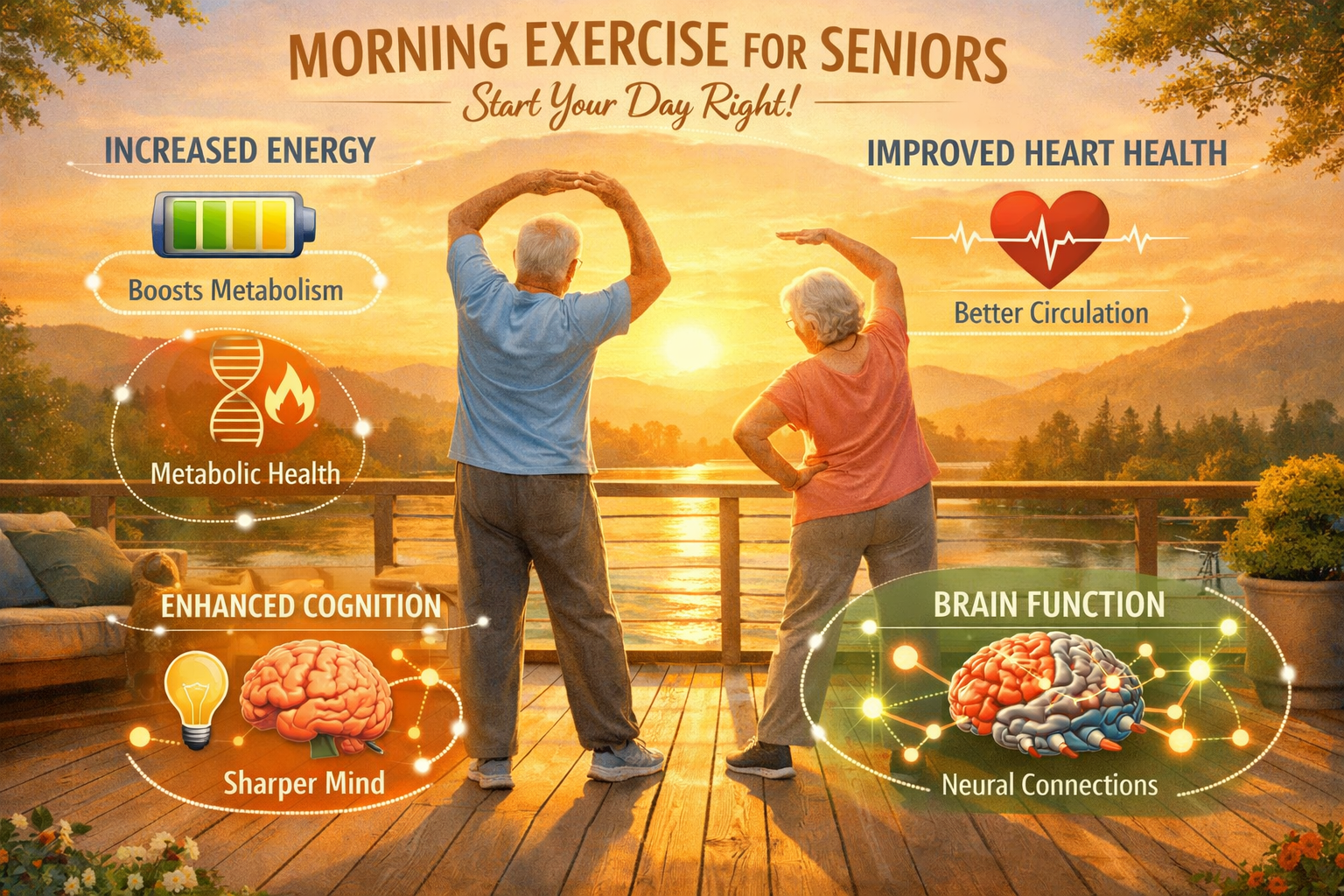
Upper body mobility is often overlooked in senior fitness, yet it’s crucial for daily tasks like reaching for items, dressing, and maintaining good posture. Arm circles are a simple but effective way to maintain shoulder flexibility and strength.
How to Perform Arm Circles
Starting Position:
- Stand with feet hip-width apart (or sit in a chair if standing balance is challenging)
- Arms relaxed at your sides
- Shoulders back and down, chest open
- Core gently engaged
The Movement:
Small Circles (Warm-up):
- Extend both arms out to the sides at shoulder height
- Make small circular motions (about the size of a dinner plate)
- Complete 10 circles forward, then 10 circles backward
- Lower arms and rest for 10 seconds
Medium Circles:
- Extend arms out to the sides again
- Make medium-sized circles (about the size of a hula hoop)
- Complete 10 circles forward, then 10 circles backward
- Lower arms and rest for 10 seconds
Large Circles (if comfortable):
- Extend arms out to the sides
- Make large, sweeping circles using your full range of motion
- Complete 5-8 circles forward, then 5-8 circles backward
- Lower arms gently
Proper Form and Breathing 🫁
Key Form Points:
- Keep shoulders relaxed (don’t hunch them up toward your ears)
- Maintain a stable core—don’t let your torso sway
- Move smoothly without jerking
- Keep your neck neutral (don’t crane forward)
Breathing Pattern:
- Inhale for half the circle
- Exhale for the second half
- Never hold your breath
Safety and Modifications ⚕️
Stop immediately if you experience:
- Sharp pain in the shoulder
- Dizziness
- Numbness or tingling in the arms
- Chest discomfort
Modifications:
- For limited shoulder mobility: Keep arms lower (at waist or chest height instead of shoulder height)
- For shoulder pain: Make only small circles and reduce range of motion
- For added challenge: Hold light weights (1-2 pounds) or water bottles
- Seated version: Perform the same movements while sitting in a sturdy chair
Alternative Arm Exercises:
If arm circles cause discomfort, try these alternatives:
- Shoulder shrugs: Lift shoulders toward ears, hold 3 seconds, release
- Wall push-ups: Stand facing a wall, place hands on wall at shoulder height, lean in and push back
- Arm raises: Lift arms forward to shoulder height, lower slowly
James, an 81-year-old retired teacher from Ontario, shares: “I couldn’t reach the top shelf in my kitchen before starting these exercises. After two months of daily arm circles, I’ve regained so much mobility. It’s the little things that make life easier.”
For those looking to expand their exercise routine, improving circulation through leg exercises can complement upper body work beautifully.
Creating Your Complete Morning Routine for Exercising for Seniors 📅
Now that you know the three essential exercises, let’s put them together into a complete, sustainable morning routine.
The 15-Minute Morning Exercise Sequence
| Time | Activity | Duration |
|---|---|---|
| 0:00-2:00 | Gentle warm-up (march in place, shoulder rolls) | 2 minutes |
| 2:00-6:00 | Seated leg extensions (both legs, 2-3 sets) | 4 minutes |
| 6:00-10:00 | Standing marches (3-5 sets with rest periods) | 4 minutes |
| 10:00-13:00 | Arm circles (small, medium, large) | 3 minutes |
| 13:00-15:00 | Cool-down (deep breathing, gentle stretches) | 2 minutes |
Weekly Progression Plan 📈
Week 1-2: Foundation
- Focus on learning proper form
- Complete exercises at a comfortable pace
- Use modifications as needed
- Exercise 3-4 days per week
Week 3-4: Building Consistency
- Aim for 5-6 days per week
- Gradually increase repetitions
- Reduce reliance on modifications
- Add 1-2 extra sets
Week 5-6: Advancement
- Exercise 6-7 days per week
- Increase intensity slightly (higher knees, larger circles)
- Consider adding light resistance
- Track improvements in a journal
Week 7+: Maintenance and Variety
- Continue daily practice
- Add variety with new exercises
- Set new goals (longer duration, more sets)
- Consider joining a senior fitness class or group
Tips for Long-Term Success 🏆
1. Make it a Habit:
Exercise at the same time every morning. Consistency is more important than intensity. Link your exercise routine to an existing habit—for example, exercise right after your morning coffee or before breakfast.
2. Track Your Progress:
Keep a simple journal noting:
- Date and time
- Exercises completed
- How you felt
- Any modifications used
- Improvements noticed
3. Stay Motivated:
- Exercise with a friend or family member
- Join online senior fitness communities
- Celebrate small victories
- Focus on how you feel, not just what you can do
4. Listen to Your Body:
Some days will feel easier than others. That’s normal. Adjust intensity based on how you feel, but try to do something every day, even if it’s just 5 minutes.
5. Combine with Healthy Habits:
Exercise is just one piece of the wellness puzzle. Pair your morning routine with:
- Proper hydration (drink water before and after)
- Nutritious breakfast (consider healthy plant-based options)
- Adequate sleep (7-9 hours)
- Social connection
Many communities offer excellent resources for active seniors. For instance, local YMCA programs often provide senior-specific fitness classes and support.
Safety Guidelines and When to Seek Medical Advice 🩺
While these exercises are generally safe for most seniors, it’s essential to approach any new fitness program thoughtfully.
Before Starting: Medical Clearance ✅
Consult your healthcare provider before beginning if you have:
- Heart disease or have had a heart attack
- High blood pressure (uncontrolled)
- Recent surgery or injury
- Severe arthritis or joint problems
- Balance disorders or history of falls
- Osteoporosis (severe)
- Chronic obstructive pulmonary disease (COPD)
- Any condition that affects your ability to exercise safely
Warning Signs to Stop Exercise Immediately 🛑
Stop exercising and seek medical attention if you experience:
- Chest pain or pressure
- Severe shortness of breath
- Dizziness or lightheadedness
- Nausea or vomiting
- Irregular heartbeat
- Pain that doesn’t resolve with rest
- Sudden weakness or numbness
General Safety Principles 🔐
Environment:
- Exercise in a well-lit, clutter-free space
- Ensure adequate ventilation
- Keep a phone nearby in case of emergency
- Remove tripping hazards (rugs, cords, pets)
- Wear appropriate clothing (not too loose or too long)
Hydration:
- Drink water before, during, and after exercise
- Keep a water bottle within reach
- Watch for signs of dehydration (dry mouth, fatigue, dark urine)
Temperature:
- Exercise in a comfortable temperature (not too hot or cold)
- Dress in layers that can be removed
- Avoid exercising immediately after eating (wait 30-60 minutes)
Medication Considerations:
Some medications can affect exercise capacity:
- Blood pressure medications may cause dizziness
- Diabetes medications require careful monitoring during exercise
- Pain medications may mask warning signs
- Discuss timing of medications with your doctor
Beyond the Basics: Expanding Your Exercising for Seniors Journey 🌟
Once you’ve mastered these three foundational exercises and established a consistent routine, you might want to explore additional activities to keep things interesting and continue progressing.
Complementary Activities for Seniors
Low-Impact Cardio:
- Walking (outdoors or on a treadmill)
- Swimming or water aerobics
- Stationary cycling
- Dancing
Flexibility and Balance:
- Yoga (specifically designed for seniors)
- Tai Chi
- Pilates (modified for older adults)
- Stretching routines
Strength Training:
- Light resistance bands
- Small hand weights (2-5 pounds)
- Bodyweight exercises
- Functional fitness activities
Social Fitness:
- Group exercise classes
- Walking clubs
- Pickleball (increasingly popular among seniors)
- Community center programs
Mental Wellness and Exercise 🧘
Physical exercise and mental health are deeply interconnected. Many seniors find that combining physical activity with mindfulness practices enhances both. Consider incorporating Buddhist principles of mindfulness into your exercise routine, or explore how micro-habits can improve self-regulation.
Nutrition to Support Your Exercise Program 🥗
Proper nutrition fuels your exercise and recovery. Focus on:
- Protein: Essential for muscle maintenance (lean meats, fish, beans, eggs)
- Calcium and Vitamin D: Critical for bone health (dairy, fortified foods, supplements if needed)
- Hydration: Water, herbal teas, and water-rich foods
- Whole grains: Provide sustained energy
- Fruits and vegetables: Offer antioxidants and vitamins
Budget-conscious seniors might appreciate affordable meal ideas that support an active lifestyle.
Real Stories: Seniors Thriving Through Morning Exercise 💬
Dorothy, 79, Vancouver:
“I started these three exercises after a minor fall scared me. I was so worried about losing my independence. Six months later, I’m not just doing these exercises—I’ve joined a seniors’ hiking group and we explore trails every weekend. My doctor reduced my blood pressure medication because my numbers improved so much.”
Frank, 71, Georgian Bay:
“As a retired firefighter, I thought I knew about fitness. But aging humbled me. These simple morning exercises seemed too easy at first, but they’ve been transformative. I’ve regained flexibility I lost over the past decade, and my chronic back pain has decreased by about 70%.”
Patricia, 83, New York:
“I live alone, and some days I don’t see anyone until the afternoon. My morning exercise routine gives me purpose and structure. I feel accomplished before 8 AM! Plus, my grandchildren notice I’m more active when they visit. I can keep up with them now.”
These stories remind us that it’s never too late to start. Whether you’re 65 or 95, your body can respond positively to consistent, appropriate exercise.
Conclusion: Your Journey to Better Health Starts Tomorrow Morning 🌅
Exercising for seniors doesn’t require a complete lifestyle overhaul or expensive equipment. These three simple exercises—seated leg extensions, standing marches, and arm circles—form the foundation of a sustainable morning routine that can dramatically improve your quality of life.
The benefits extend far beyond physical health. Regular morning exercise provides structure, boosts confidence, improves mood, and helps maintain the independence that every senior values. It’s about more than just moving your body; it’s about investing in your future self.
Your Action Plan for Tomorrow Morning ✨
Tonight:
- Set your alarm 20 minutes earlier than usual
- Lay out comfortable exercise clothing
- Clear a safe space for your exercises
- Place a sturdy chair in your exercise area
- Fill a water bottle and place it nearby
Tomorrow Morning:
- Wake up and hydrate (drink a glass of water)
- Do a 2-minute gentle warm-up
- Complete your three exercises using the guidelines above
- Cool down with deep breathing
- Celebrate your accomplishment!
This Week:
- Exercise 3-4 mornings
- Focus on proper form over quantity
- Note how you feel in a simple journal
- Share your new routine with a friend or family member
This Month:
- Build up to 5-6 days per week
- Gradually increase repetitions and intensity
- Consider exploring additional senior fitness resources
- Schedule a check-in with your healthcare provider to share your progress
Remember Margaret from the beginning of this article? She started exactly where you are now—with a decision to try something new. Six months later, she’s leading walking groups and inspiring other seniors in her community.
Your journey begins with a single morning, a single exercise, a single decision to invest in yourself.
The sun will rise tomorrow. Will you rise with it, ready to move, strengthen, and thrive?
Your future self is counting on the decision you make today. Make it count. 💪🌞
References
[1] American College of Sports Medicine. (2023). “Exercise and Physical Activity for Older Adults.” Medicine & Science in Sports & Exercise, 55(4), 640-656.
[2] National Institute on Aging. (2024). “Exercise and Physical Activity: Your Everyday Guide from the National Institute on Aging.” U.S. Department of Health and Human Services.