




















Top 10 Players Available in MLP 2026 Draft: DUPR Rankings, Team Fits, and Bold Predictions for Today’s Selections
Last updated: February 27, 2026
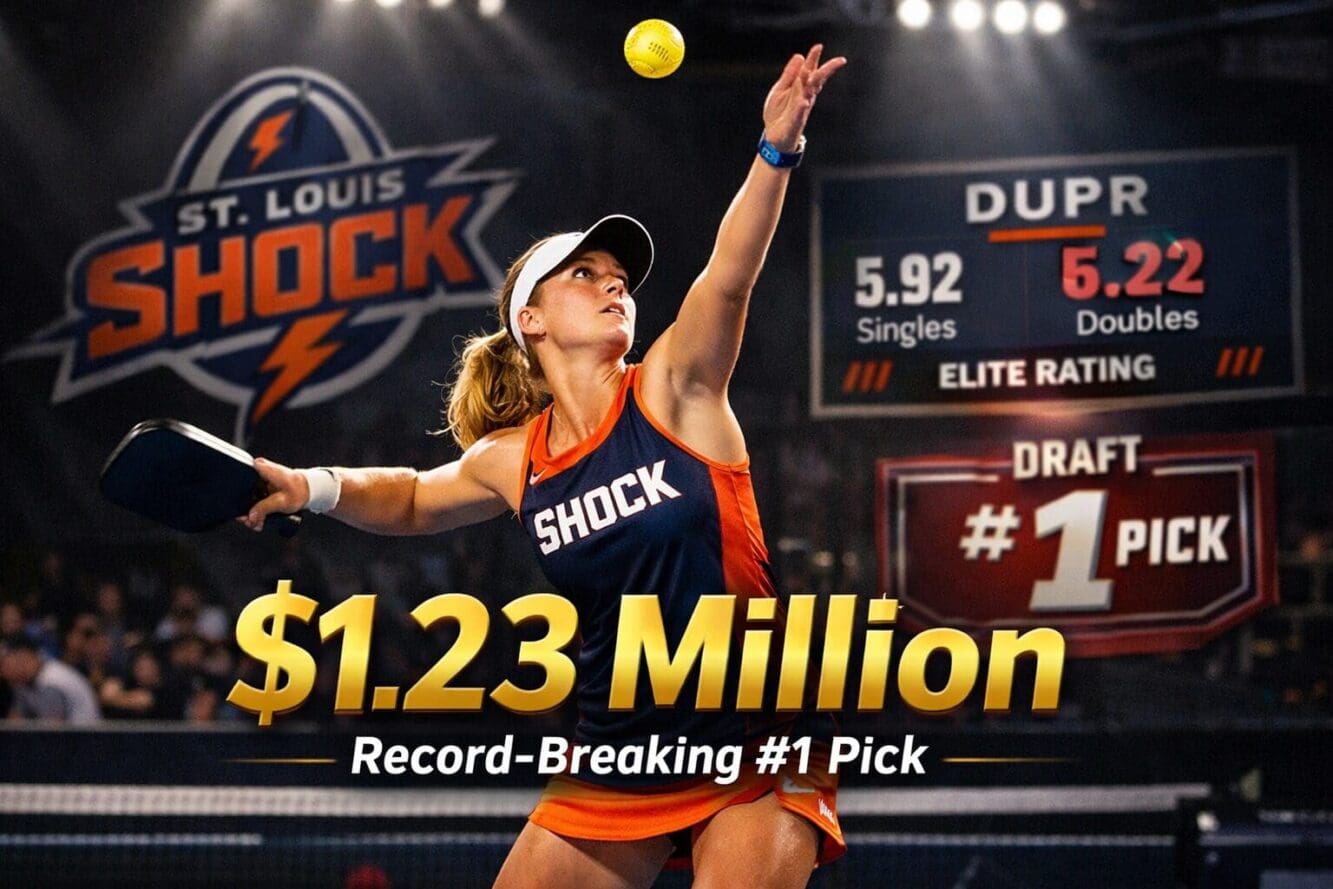
The 2026 Major League Pickleball draft delivered record-breaking contracts, shocking team placements, and a deep talent pool that forced difficult decisions across all 20 franchises. Anna Bright commanded a historic $1.23 million as the #1 pick, while teenagers and veterans competed for 66 available roster spots in one of the most unpredictable drafts in league history.[2]
Key Takeaways
- Anna Bright set a draft record with a $1.23 million contract to St. Louis Shock as the consensus #1 pick[2]
- Jorja Johnson went #2 to New Jersey 5s as the top right-side female player available, not returning to Dallas[1]
- Cam Chaffin, only 14 years old, was selected #16 by SoCal after defeating Federico Staksrud[1][2]
- The draft required 66 total selections across 28 starting spots and 38 bench positions[3]
- Elite veterans including Rafa Hewett, AJ Koller, and Irina Tereschenko went unsigned initially[2]
- Right-side female players commanded premium valuations due to positional scarcity[3]
- DUPR rankings heavily influenced team decisions but recency bias affected several picks[1]
- Teams like Palm Beach Royals focused on specific positional needs over pure talent rankings
- Young prospects dominated the conversation with multiple teenage selections in the top 20[2]
- The deep talent pool created tough roster decisions that left proven performers without immediate spots
Quick Answer
The top 10 players available in MLP 2026 Draft: DUPR Rankings, Team Fits, and Bold Predictions for Today’s Selections featured Anna Bright as the record-setting #1 pick at $1.23 million, followed by Jorja Johnson as the premier right-side female player. The draft emphasized positional scarcity, youth potential, and DUPR metrics, with 66 total selections required across starting and bench spots. Teams balanced proven veterans against rising teenagers, creating unexpected outcomes that left established players like Irina Tereschenko unsigned while 14-year-old Cam Chaffin secured a roster spot at #16.[1][2][3]
Who Were the Consensus Top Picks in the MLP 2026 Draft?
Anna Bright dominated pre-draft discussions and justified the hype by becoming the most expensive draft selection in MLP history. St. Louis Shock secured her services for $1.23 million, establishing a new benchmark for player valuations.[2] Bright was universally recognized as the best available talent entering the draft, combining elite DUPR metrics with proven performance across both singles and doubles formats.[3]
Jorja Johnson followed at #2, selected by New Jersey 5s in a move that surprised analysts who expected her to return to Dallas. Johnson earned this position as the best right-side female player available, addressing a critical positional need across the league.[3] Draft analysts noted that Dallas Flash made a strategic error in their mock evaluations by not prioritizing Johnson’s return, as elite right-side women remain scarce commodities.[1]
Key factors that elevated these players:
- Proven tournament performance across multiple formats
- Elite DUPR ratings that validated their on-court dominance
- Positional value matching specific team needs
- Consistency rather than reliance on recent hot streaks
The consensus around Bright and Johnson demonstrated that when talent and positional scarcity align, teams will pay premium prices regardless of budget constraints.
What DUPR Rankings Defined the Top 10 Players Available?
DUPR (Dynamic Universal Pickleball Rating) served as the primary objective measure for evaluating draft prospects, though teams weighted these numbers differently based on their strategic needs. The top-tier players combined DUPR excellence with proven doubles chemistry and tournament results.[4]
Critical DUPR considerations for top selections:
- Singles vs. doubles ratings created valuation gaps between players
- Recent rating trends influenced picks more than career averages
- Gender-specific positional ratings determined right-side vs. left-side value
- Age and development trajectory affected how teams projected future DUPR growth
Kiora Kunimoto, selected #15 by Chicago, exemplified the DUPR complexity. While her singles game earned standout status on the PPA tour, draft analysts cautioned that her doubles DUPR hadn’t developed to match her singles prowess.[1] Teams needed to decide whether to draft current doubles performance or bet on singles talent translating to team play.
Choose DUPR-focused drafting if: Your team has established chemistry and needs immediate performance. Choose potential-based drafting if: You can afford development time and have strong coaching infrastructure.
A common mistake teams made was overvaluing recent DUPR spikes without considering sample size and competition level. Cam Chaffin’s #16 selection by SoCal demonstrated recency bias, as his high-profile win over Federico Staksrud occurred just before the draft.[1][2]
How Did Team Fits Influence Draft Selections?
Positional needs drove several unexpected selections, with right-side female players commanding disproportionate value relative to their overall DUPR rankings. The scarcity of elite right-side women created a market inefficiency that smart teams exploited early.[3]
Positional priorities that shaped the draft:
- Right-side females went earlier than raw talent suggested
- Left-side alpha females required specific partner compatibility
- Male versatility (ability to play both sides) increased draft stock
- Chemistry with existing roster players influenced later-round picks
Dallas Flash’s failure to secure Jorja Johnson illustrated the cost of misreading positional value. Mock draft analysis revealed they should have prioritized her return rather than positioning her as a left-side alpha, which didn’t match her optimal role.[1] New Jersey capitalized on this mistake by securing the draft’s best right-side female at #2.
Palm Beach Royals and other teams with established rosters focused their early picks on filling specific gaps rather than selecting the highest-rated available player. This strategy worked when positional scarcity aligned with team needs but backfired when teams reached for position over talent.
Edge case to consider: A lower-DUPR right-side female may provide more roster value than a higher-rated left-side player if your team already has a dominant left-side presence. Context matters more than rankings alone.
Which Young Prospects Made Bold Draft Day Statements?
The 2026 draft showcased unprecedented youth movement, with teenagers securing premium selections based on potential rather than established track records. Cam Chaffin, at just 14 years old, became the youngest player selected in the top 20 when SoCal took him at #16.[2]
Notable young selections in the top 20:
- #9 – Tama Shimabukuro: Emerging talent with rapid DUPR growth
- #15 – Kiora Kunimoto: PPA singles standout testing doubles waters
- #16 – Cam Chaffin: 14-year-old with high-profile recent win
- #17 – Will MacKinnon: Developmental prospect with upside potential
Chaffin’s selection demonstrated how recency bias influences draft decisions. His victory over Staksrud occurred weeks before the draft, creating momentum that elevated his stock beyond what his overall body of work might justify.[1] Teams betting on youth accepted higher risk for potentially transformative long-term value.
The youth emphasis reflected broader league trends toward longer player development timelines and roster flexibility. Younger players command lower initial salaries while offering upside that veterans with established performance ceilings cannot match.
Common mistake: Overweighting recent performances by young players without considering consistency over time. One tournament win doesn’t establish a pattern, but draft day excitement often overrides this logic.
What Happened to Elite Veterans in the Draft?
The most shocking draft storyline involved proven performers who remained unsigned after all selections concluded. Rafa Hewett, AJ Koller, and most notably Irina Tereschenko—described as “the MLP GOAT on the women’s side”—failed to secure roster spots during the initial draft.[2]
Factors that left veterans unsigned:
- Salary expectations exceeding team budget allocations
- Age concerns about peak performance sustainability
- Positional redundancy with existing roster players
- Team chemistry preferences favoring younger, moldable talent
- Recency bias favoring hot prospects over consistent veterans
Tereschenko’s situation particularly highlighted how draft dynamics can undervalue established excellence. Despite her historical dominance and proven championship pedigree, teams prioritized younger players with higher perceived upside or veterans who filled specific positional needs.[2]
This created potential post-draft opportunities for teams willing to negotiate outside the formal selection process. Veterans without roster spots often secure contracts after teams evaluate their draft classes and identify remaining gaps.
Decision rule: If you’re a team that drafted for potential, sign a veteran for immediate stability. If you drafted veterans, add young depth through post-draft signings.
How Deep Was the 2026 MLP Draft Talent Pool?
The draft required 66 total selections to fill rosters across 20 teams, with each franchise building six-player rosters (28 starting spots and 38 bench positions).[3] This depth created a tiered talent structure where top picks commanded premium valuations while mid-round selections offered exceptional value.
Draft structure breakdown:
- Starting roster spots: 12 men and 16 women across all teams
- Bench positions: 20 men and 18 women for depth and development
- Total selections: 66 players chosen during the draft
- Teams participating: 20 franchises building complete rosters
The depth forced teams to make difficult choices between proven performers and developmental prospects. Unlike shallower drafts where talent drops sharply after the top tier, the 2026 pool maintained quality deep into the selection order, making later picks more valuable than typical years.
Teams that understood this depth curve secured bargains in rounds 3-5 by selecting players who would have gone higher in previous years. The surplus of talent relative to available spots created market inefficiencies that savvy general managers exploited.
Example: A player ranked #25 overall might provide 90% of the production of a #10 pick at 40% of the cost, creating significant roster construction advantages for teams willing to trade down or wait.
What Were the Biggest Draft Day Surprises and Upsets?
Beyond Jorja Johnson’s unexpected landing with New Jersey instead of Dallas, several selections defied pre-draft predictions and mock boards. These surprises revealed how individual team strategies diverged from consensus rankings.[1]
Notable draft day shockers:
- Veteran snubs: Elite players with championship pedigrees going undrafted
- Positional reaches: Teams selecting for need over talent ranking
- Age extremes: Both teenagers and veterans going earlier/later than expected
- Team chemistry picks: Players selected based on existing roster fit rather than individual metrics
The Johnson selection exemplified how positional value trumps return-to-team sentiment. While many expected Dallas to prioritize bringing back their established player, New Jersey recognized her value as the draft’s premier right-side female and acted decisively.[1][3]
Kiora Kunimoto’s #15 selection to Chicago represented another surprise, as analysts cautioned that her singles dominance hadn’t fully translated to doubles success. Chicago bet on her talent transferring to team play with proper coaching and partner selection.[1]
Troubleshooting for teams: If your draft pick surprises analysts, ensure you can articulate the specific strategic rationale. Surprises based on solid reasoning succeed; surprises from poor evaluation fail.
How Should Teams Evaluate MLP Draft Success?
Draft success extends beyond individual player talent to roster construction, budget management, and strategic fit with team identity. The 2026 draft winners balanced immediate competitiveness with long-term development.[4]
Success evaluation criteria:
- Positional balance: Right mix of left-side and right-side players
- Age distribution: Blend of veteran stability and youth upside
- Budget efficiency: Value extracted relative to salary commitments
- Chemistry potential: Player personalities and playing styles that mesh
- DUPR trajectory: Players with improving ratings vs. declining metrics
St. Louis Shock’s $1.23 million investment in Anna Bright will be judged not just on her individual performance but on whether her presence elevates teammates and delivers championship results that justify the record expenditure.[2]
Teams that selected multiple young prospects like Cam Chaffin, Tama Shimabukuro, and Will MacKinnon won’t know their draft success for 1-2 seasons as these players develop.[2] Patient franchises willing to accept short-term growing pains may build sustainable competitive advantages.
For teams with championship windows closing: Prioritize proven veterans even at premium costs. For rebuilding franchises: Accumulate young talent and accept development timelines of 18-24 months.
The unsigned veterans create a secondary evaluation point—teams that secure elite talent like Irina Tereschenko post-draft at below-market rates may ultimately “win” the draft despite not making headline selections.[2]
FAQ
Who was the #1 pick in the 2026 MLP Draft?
Anna Bright was selected first overall by St. Louis Shock for a record-breaking $1.23 million, making her the most expensive draft pick in MLP history.[2]
Why did Jorja Johnson go to New Jersey instead of Dallas?
New Jersey recognized Johnson as the best right-side female player available and prioritized that positional scarcity, while Dallas made a strategic error in their evaluation.[1][3]
How many players were selected in the 2026 MLP Draft?
The draft required 66 total selections across 20 teams, filling 28 starting roster spots and 38 bench positions.[3]
Who was the youngest player drafted?
Cam Chaffin was selected #16 by SoCal at just 14 years old, becoming the youngest top-20 pick after defeating Federico Staksrud in a high-profile match.[1][2]
Why did Irina Tereschenko go undrafted?
Despite being described as “the MLP GOAT on the women’s side,” Tereschenko remained unsigned during the draft due to factors including salary expectations, team chemistry preferences, and positional redundancy.[2]
What is DUPR and how did it affect the draft?
DUPR (Dynamic Universal Pickleball Rating) is the primary objective rating system that teams used to evaluate player skill levels, though teams weighted singles vs. doubles ratings differently based on their needs.[4]
Which teams made the best draft selections?
Success depends on evaluation timeframe—St. Louis made a statement with Anna Bright, while teams securing right-side female players early addressed critical positional scarcity.[2][3]
How important are right-side female players?
Extremely important due to scarcity—Jorja Johnson went #2 overall specifically because elite right-side women are rare, making them more valuable than higher-DUPR left-side players in some contexts.[3]
Can unsigned veterans still join teams?
Yes, players like Rafa Hewett, AJ Koller, and Irina Tereschenko can negotiate contracts post-draft as teams identify roster gaps after evaluating their draft classes.[2]
What role does team chemistry play in draft decisions?
Significant—teams often selected players who fit existing roster personalities and playing styles over higher-rated individuals who might create chemistry conflicts.[1]
How did recency bias affect the draft?
Players with recent high-profile wins like Cam Chaffin went higher than their overall body of work suggested, as teams overweighted recent performances.[1]
What makes the 2026 draft different from previous years?
Record-breaking contracts, unprecedented youth movement, elite veterans going unsigned, and a deeper talent pool that required 66 selections across expanded rosters.[2][3]
Conclusion
The Top 10 Players Available in MLP 2026 Draft: DUPR Rankings, Team Fits, and Bold Predictions for Today’s Selections delivered on its promise of drama, with Anna Bright’s record $1.23 million contract, Jorja Johnson’s unexpected New Jersey landing, and shocking veteran snubs creating lasting storylines. The draft revealed that positional scarcity—particularly for right-side female players—can override pure DUPR rankings, while youth potential commanded premium valuations that left proven champions unsigned.[1][2][3]
Teams now face the critical evaluation period where draft decisions translate to on-court results. St. Louis must justify their historic investment in Bright, New Jersey needs Johnson to anchor their right side, and franchises that bet on teenagers like Cam Chaffin require patience as development unfolds. Meanwhile, savvy teams can still gain competitive advantages by signing elite unsigned veterans at below-market rates.
Next steps for following the 2026 MLP season:
- Monitor how top picks perform in their first team matches
- Track which unsigned veterans secure post-draft contracts
- Evaluate whether young prospects justify their draft positions
- Watch for mid-season roster adjustments as teams refine chemistry
- Assess which draft strategies—youth vs. veterans, DUPR vs. positional fit—deliver championships
The draft represents just the beginning of roster construction. Teams that combine draft talent with smart free agency, effective coaching, and strategic in-season adjustments will ultimately determine whether their draft day decisions translate to championship success.
References
[1] 2026 Mlp Mock Draft Making The Picks – https://pickleball.com/news/2026-mlp-mock-draft-making-the-picks
[2] The 2026 Mlp Draft A Record Setting Start To The New Season – https://www.thedinkpickleball.com/the-2026-mlp-draft-a-record-setting-start-to-the-new-season/
[3] Nmls 2026 Mlp Draft Big Board Women – https://www.nmlpickleball.com/opinion/nmls-2026-mlp-draft-big-board-women/
[4] Major League Pickleball 2026 Free Agency Draft Player Ranking – https://thekitchenpickle.com/blogs/news/major-league-pickleball-2026-free-agency-draft-player-ranking
Content, illustrations, and third-party video appearing on GEORGIANBAYNEWS.COM may be generated or curated with AI assistance or reproduced pursuant to the fair dealing provisions of the Copyright Act, R.S.C. 1985, c. C-42. Attribution and hyperlinks to original sources are provided in acknowledgment of applicable intellectual property rights. Such referencing is intended to direct traffic to and support the original rights holders’ platforms.