




















Artemis II Launch Timeline: Jeremy Hansen’s Training Milestones as Canada’s First Moon Orbiter in 2026
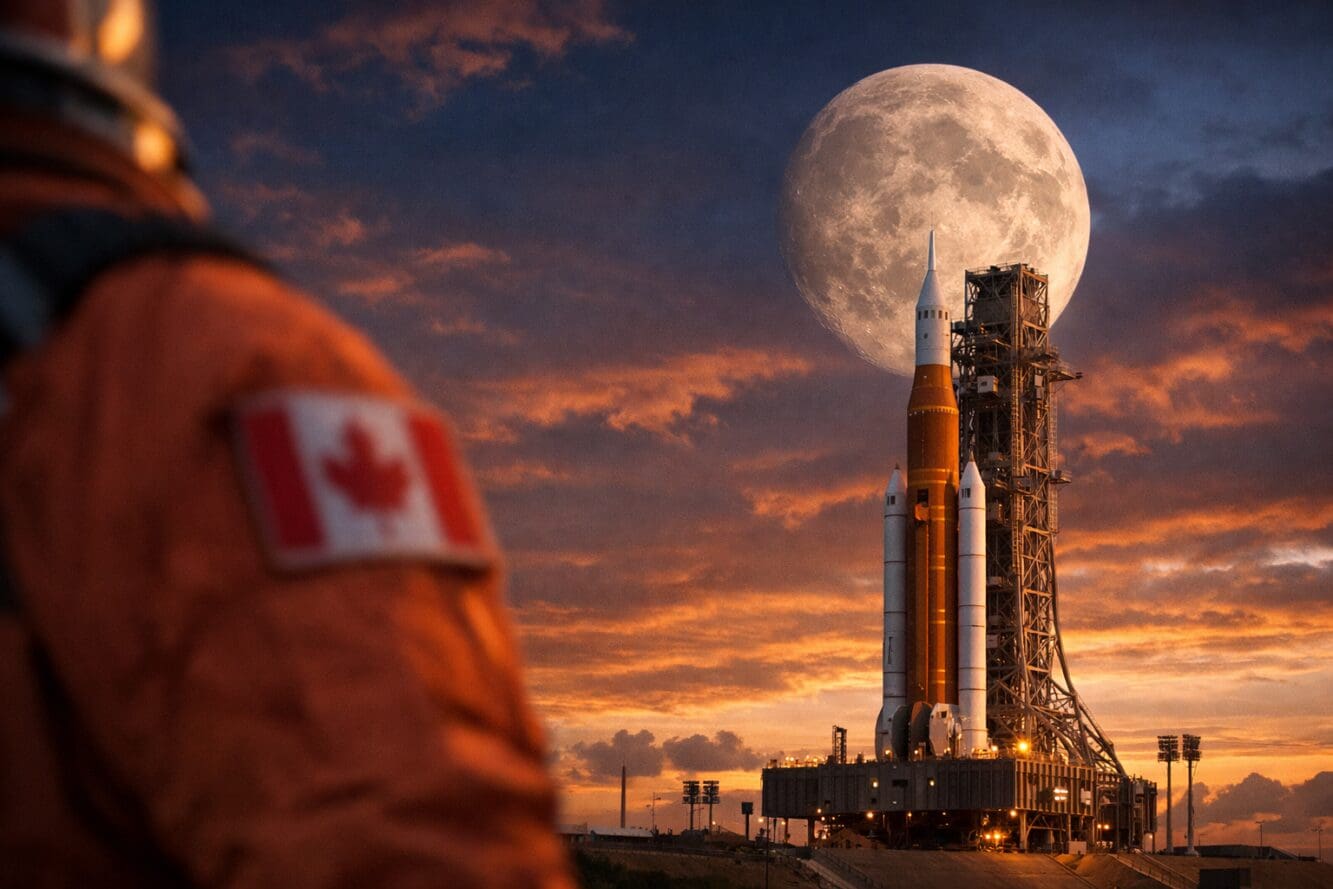
When Jeremy Hansen straps into the Orion spacecraft later this year, he will become the first Canadian astronaut — and the first non-American — to fly around the Moon. The Artemis II launch timeline has been a rollercoaster of technical setbacks, weather delays, and now even solar radiation concerns. Yet every challenge brings the four-person crew one step closer to a mission that will redefine deep-space exploration. Here is everything you need to know about Jeremy Hansen’s training milestones as Canada’s first Moon orbiter in 2026, including the latest schedule updates, technical hurdles, and how you can watch history unfold live.
Key Takeaways
- 🚀 Current target window: NASA is aiming for an early April 2026 launch after three consecutive delays caused by cold weather, a hydrogen leak, and a helium flow issue [2].
- 🔧 Ongoing repairs: The SLS rocket was rolled back to the Vehicle Assembly Building on February 25, 2026, for helium system fixes, battery replacements, and range safety checks [1][5].
- 🇨🇦 Canadian milestone: Jeremy Hansen will be the first Canadian and first non-American astronaut to orbit the Moon.
- ☀️ Solar radiation warning: A February 2026 study suggests delaying the mission until late 2026 due to predicted solar superflare activity [3].
- 📺 Live coverage: NASA will stream every stage of the launch, offering a once-in-a-generation viewing opportunity for space fans worldwide.
Why the Artemis II Launch Timeline Keeps Shifting
Three Delays in Quick Succession
Artemis II was originally slated for a February 2026 liftoff. That date slipped to early March after extreme cold gripped Florida’s Space Coast, making launch conditions unsafe. A second delay followed when engineers discovered a hydrogen leak during the wet dress rehearsal — a critical fueling test that simulates launch-day procedures. Then, even after a successful dress rehearsal, a helium flow problem in the Interim Cryogenic Propulsion Stage (ICPS) forced a third postponement to early April [2].
“Each delay, while frustrating, reflects NASA’s unwavering commitment to crew safety over schedule pressure.”
The Helium Flow Fix
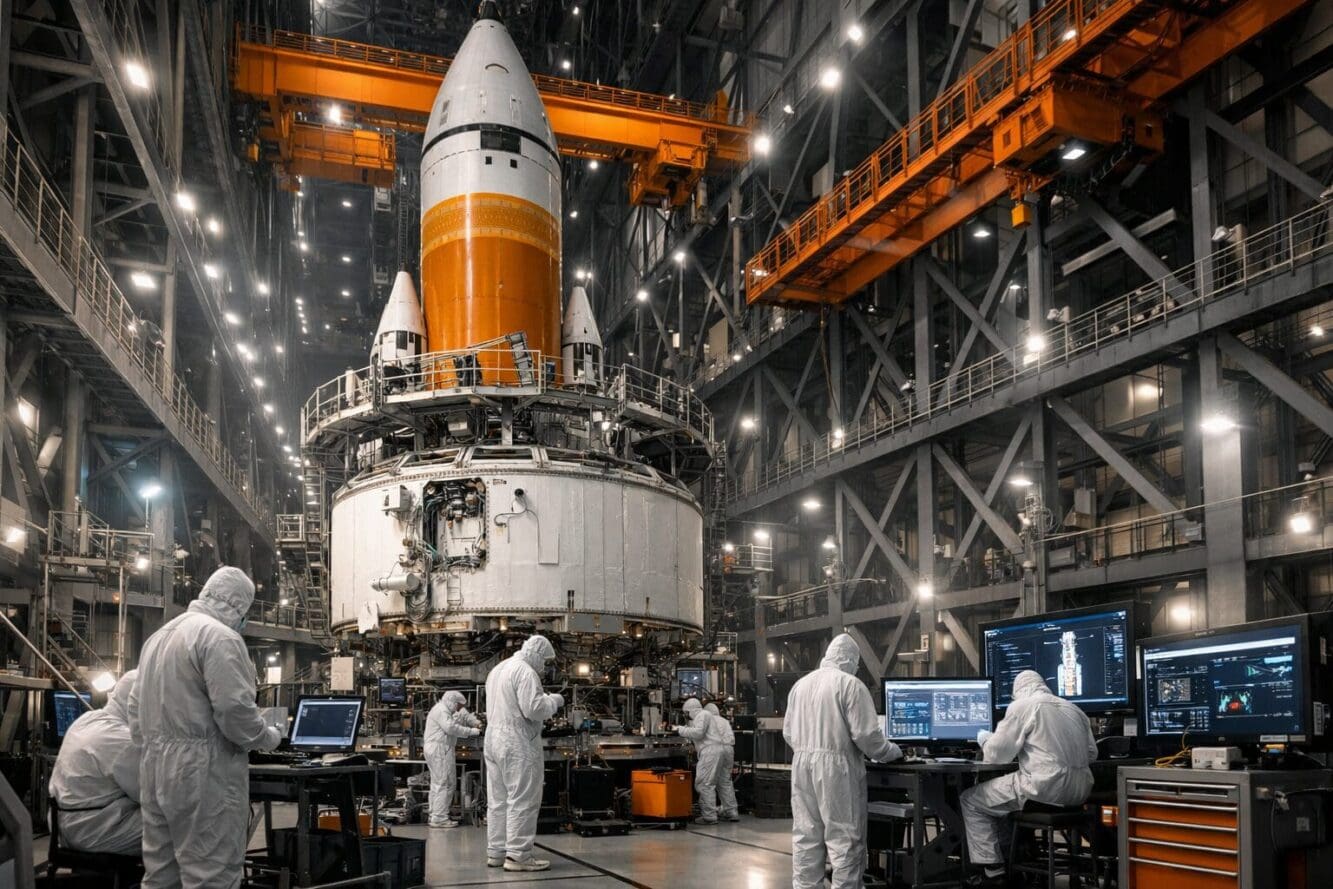
On February 25, 2026, the SLS rocket and Orion spacecraft were rolled back from Launch Pad 39B to the Vehicle Assembly Building (VAB) at Kennedy Space Center [1]. Inside the VAB, teams are now:
| Task | Purpose |
|---|---|
| End-to-end helium system testing | Identify and resolve the ICPS flow anomaly |
| Flight termination system battery replacement | Ensure range safety hardware is fresh |
| Range safety inspections | Satisfy Eastern Range requirements for launch |
These repairs must be completed and verified before NASA can set a firm launch date [5]. The crew — including Hansen — were released from quarantine on February 21, 2026, and have returned to Houston to continue training while engineers work through the fix [1].
Jeremy Hansen’s Training Milestones as Canada’s First Moon Orbiter in 2026
From Fighter Pilot to Lunar Explorer
Jeremy Hansen is a Colonel in the Canadian Armed Forces, a former CF-18 fighter pilot, and a Canadian Space Agency (CSA) astronaut selected in 2009. His path to the Moon has included:
- Spacewalk and robotics training at NASA’s Neutral Buoyancy Laboratory in Houston
- Orion spacecraft systems certification, covering navigation, life support, and emergency procedures
- Launch and re-entry simulation in high-fidelity mockups and centrifuge runs
- Wilderness survival exercises to prepare for off-nominal landing scenarios
- Crew resource management drills alongside NASA astronauts Reid Wiseman (commander), Victor Glover (pilot), and Christina Koch (mission specialist)
Hansen’s selection for Artemis II was announced in April 2023, making him the face of Canada’s deep-space ambitions. His training intensified throughout 2024 and 2025, with the final months focused on integrated mission simulations that run the entire 10-day flight profile from launch to splashdown.
As Canadians look for ways to celebrate unity and national pride, Hansen’s mission offers a powerful new chapter in the country’s story — a reminder that Canadian talent reaches far beyond Earth’s atmosphere.
What the Mission Looks Like
Artemis II will send four astronauts on a roughly 10-day journey around the Moon and back. Key mission phases include:
- Launch & Earth orbit checkout — SLS propels Orion into low Earth orbit for systems verification.
- Trans-lunar injection — The ICPS fires to send Orion toward the Moon.
- Lunar flyby — The crew passes behind the far side of the Moon at an altitude of about 8,900 km.
- Return & splashdown — Orion re-enters Earth’s atmosphere and lands in the Pacific Ocean.
This will be the first crewed mission beyond low Earth orbit since Apollo 17 in 1972 — more than half a century ago.
Solar Superflare Concerns Could Push the Timeline Further
A study published on February 13, 2026, warns that predicted solar superflare activity through mid-2026 could expose the Artemis II crew to elevated radiation levels during their lunar flyby [3]. The researchers recommend delaying the launch until late 2026, when solar activity is expected to subside.
NASA has not officially responded to the recommendation, but radiation shielding and mission abort protocols are already built into Orion’s design. The agency will weigh the study’s findings against engineering readiness and launch window availability.
For those interested in how scientific research shapes real-world decisions, the University of Guelph’s technology study at Collingwood offers a local example of evidence-based innovation in action.
NASA’s Bigger Picture: Accelerating the Artemis Program
Beyond Artemis II, NASA’s administrator has announced plans to increase the launch cadence to once per year, up from the current pace of roughly one mission every three years [2]. This acceleration is designed to:
- Maintain crew and ground team proficiency between missions
- Build momentum toward Artemis III, which aims to land astronauts on the lunar surface
- Reduce per-mission costs through operational efficiency
The Artemis program also recently added a new mission to its architecture and updated its long-term lunar exploration roadmap [5]. These changes signal that the Moon is not just a destination — it is a proving ground for eventual crewed missions to Mars.
Environmental considerations remain part of the broader conversation around large-scale technology programs. Readers curious about energy and environmental topics may find our coverage of climate and fuel challenges and nuclear waste risks relevant context.
How to Watch the Artemis II Launch Live 📺
When NASA sets a firm launch date, live coverage will be available through several channels:
| Platform | Where to Find It |
|---|---|
| NASA TV | nasa.gov/live and the NASA app |
| YouTube | NASA’s official YouTube channel [4] |
| Social media | NASA and CSA accounts on X, Facebook, and Instagram |
| Local watch parties | Check community event boards for gatherings near you |
Tips for the Best Viewing Experience
- Set alerts on the NASA app for schedule changes and countdown milestones.
- Start watching early — pre-launch commentary typically begins 2–3 hours before liftoff.
- Invite friends and family — this is a once-in-a-generation event perfect for shared viewing.
Local communities across Canada are expected to host watch parties and STEM events. If you enjoy community gatherings, events like the Strawberry Moon Festival and Canada Day celebrations in Collingwood show how communities come together around shared moments of pride and wonder.
STEM Inspiration: What Hansen’s Mission Means for the Next Generation 🌟
Jeremy Hansen’s journey from a small-town Ontario upbringing to lunar orbit is a powerful story for young Canadians interested in science, technology, engineering, and math. His mission demonstrates that:
- Canadian expertise is world-class and valued by international partners.
- Persistence pays off — Hansen trained for over a decade before receiving a flight assignment.
- STEM careers open extraordinary doors, from fighter jet cockpits to deep-space capsules.
Parents, teachers, and mentors can use the Artemis II mission as a springboard for hands-on learning. Building model rockets, tracking the Moon’s phases, or exploring community programs and public events are all ways to connect young learners with the excitement of space exploration.
Conclusion
The Artemis II launch timeline continues to evolve, but the destination remains the same: sending Jeremy Hansen and three NASA crewmates around the Moon in 2026. Technical challenges — from hydrogen leaks to helium flow anomalies to solar radiation warnings — have pushed the schedule to early April at the earliest, with the possibility of a further shift to late 2026 [2][3].
Here is what you can do right now:
- Follow NASA and the Canadian Space Agency on social media for real-time updates.
- Download the NASA app and enable launch notifications.
- Plan a watch party with friends, family, or your local school to share the moment.
- Talk to young people about STEM careers — Hansen’s story is proof that the sky is not the limit.
Canada’s first Moon orbiter is almost ready to fly. Stay informed, stay inspired, and get ready to witness history. 🚀🇨🇦
References
[1] Nasa To Rollback Artemis Ii Rocket Spacecraft – https://www.nasa.gov/blogs/missions/2026/02/22/nasa-to-rollback-artemis-ii-rocket-spacecraft/
[2] Nasa Delays Artemis Ii Launch Early April Update Artemis Program – https://www.foxweather.com/earth-space/nasa-delays-artemis-ii-launch-early-april-update-artemis-program
[3] Artemis 2 Moon Mission Shouldnt Launch Until Late 2026 New Analysis Of Solar Superflares Suggests – https://www.space.com/space-exploration/artemis/artemis-2-moon-mission-shouldnt-launch-until-late-2026-new-analysis-of-solar-superflares-suggests
[4] Watch – https://www.youtube.com/watch?v=eCbQtyUopOM
[5] Nasa Adds Mission To Artemis Lunar Program Updates Architecture – https://www.nasa.gov/news-release/nasa-adds-mission-to-artemis-lunar-program-updates-architecture/
Content, illustrations, and third-party video appearing on GEORGIANBAYNEWS.COM may be generated or curated with AI assistance or reproduced pursuant to the fair dealing provisions of the Copyright Act, R.S.C. 1985, c. C-42. Attribution and hyperlinks to original sources are provided in acknowledgment of applicable intellectual property rights. Such referencing is intended to direct traffic to and support the original rights holders’ platforms.