



















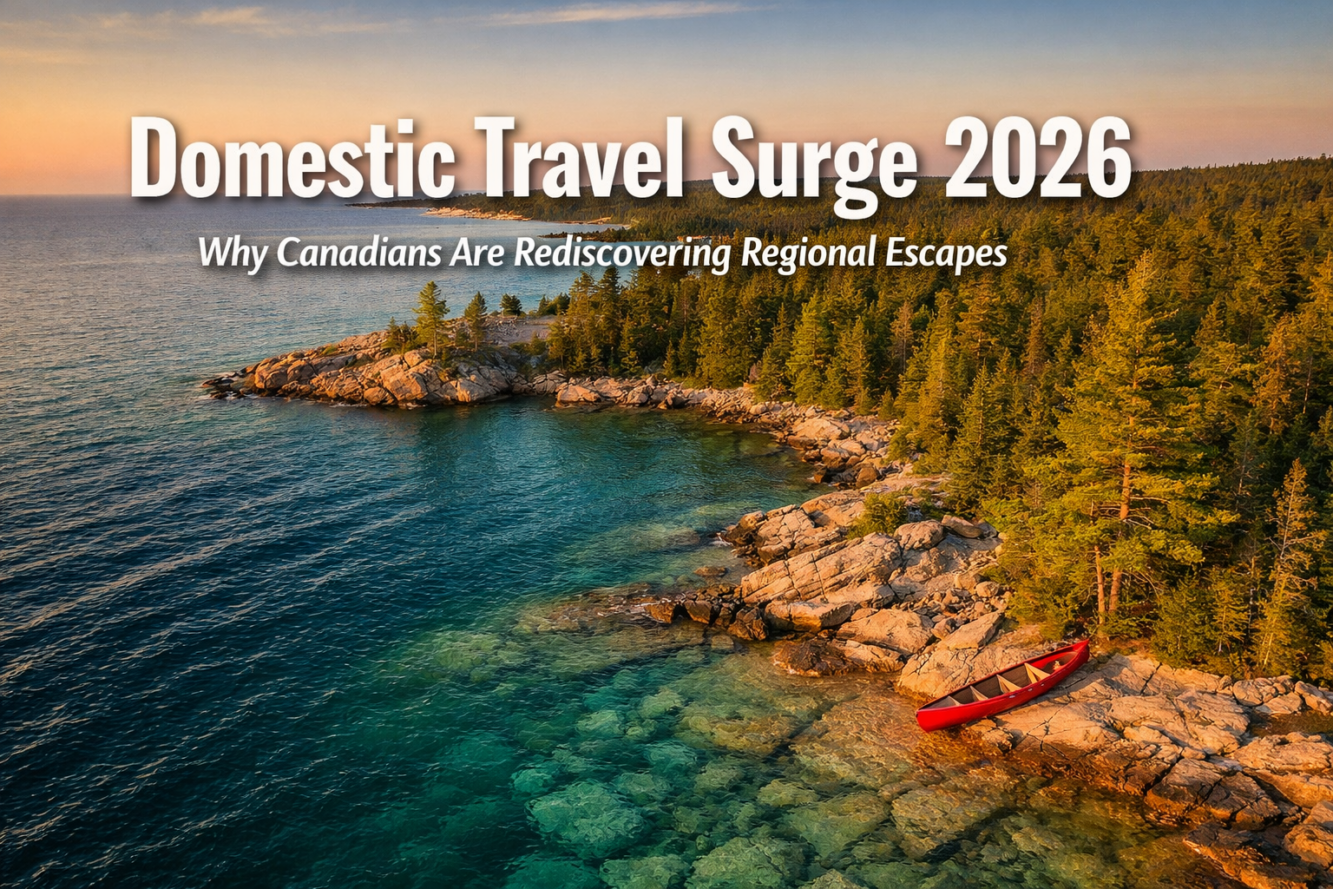
Domestic Travel Surge 2026: Why Canadians Are Rediscovering Regional Escapes and Supporting Local Tourism
Last updated: March 23, 2026
Quick Answer: Canadian vacation spending is projected to hit $47.6 billion in 2026, a 22% jump from 2025, and Canada itself now tops the destination wishlist for 37% of travellers [3][4]. Political tensions, border concerns, and a weak dollar are pushing Canadians away from U.S. trips and toward regional escapes closer to home. The result is a measurable boost for local tourism economies, from small-town festivals to lakeside getaways.
Key Takeaways
- Canada is the #1 destination choice for 37% of Canadians in 2026, ahead of Europe at 25% [4]
- 62% of Canadians are less likely to visit the U.S. this year compared to 2025 [4]
- Total vacation spending is forecast at $47.6 billion, with the average household budgeting $4,169 per trip [3]
- Drive travel is up while domestic flights remain flat, signaling a shift toward road trips [5]
- Political/cultural climate is the top deterrent for U.S. travel, cited by 57% of respondents [4]
- 63% of Canadians cite financial barriers as a factor in travel decisions, but many are adjusting plans rather than cancelling [3]
- Hotel occupancy is forecast at 66% nationally, with Average Daily Rate rising to $216 [5]
- Canadian-resident trips to the U.S. dropped 25.4% year-over-year through 2025, and the decline continues into early 2026 [8]
- Regional destinations and small towns stand to benefit most from redirected travel spending
What Is Driving the Domestic Travel Surge in 2026?
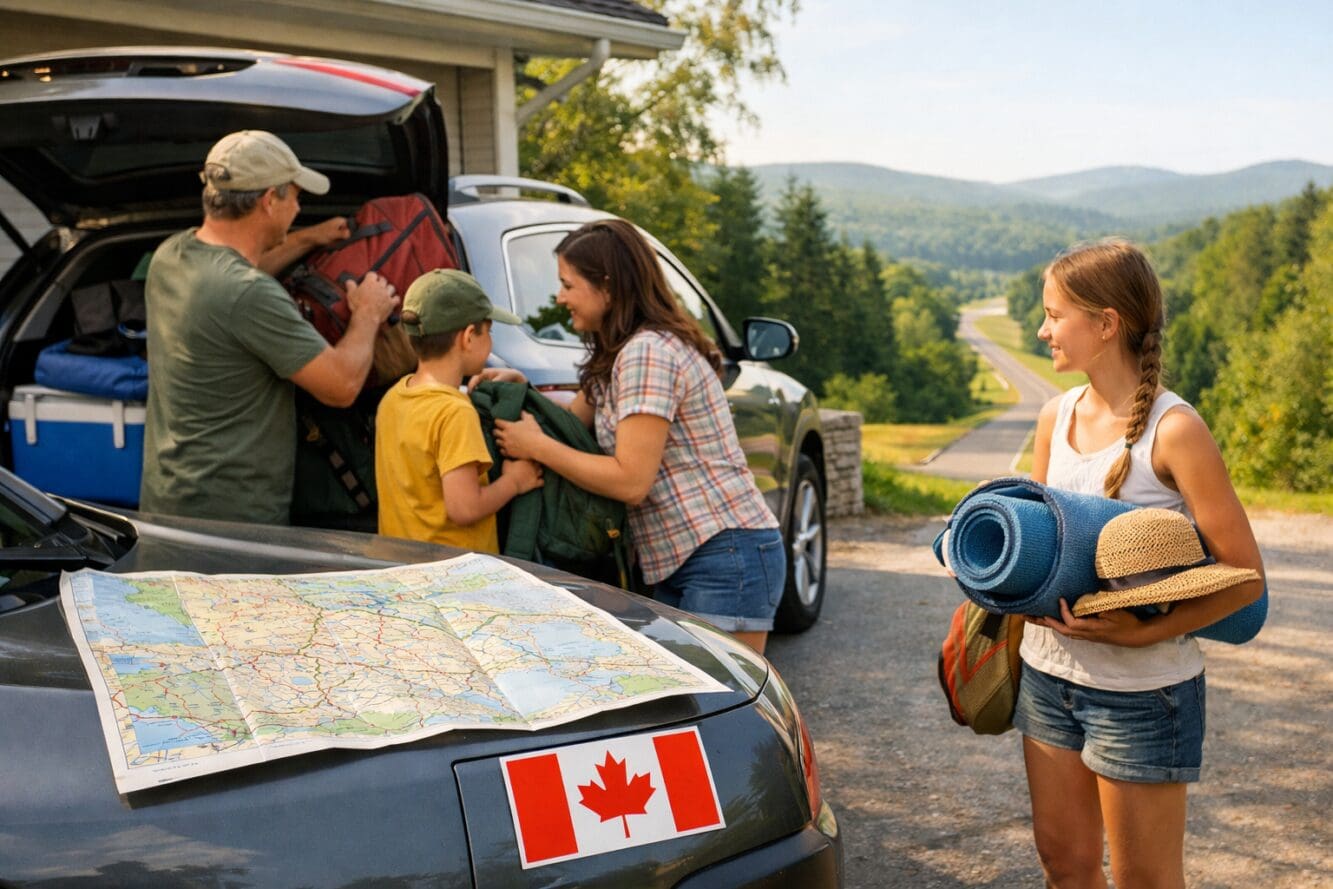
Three forces are converging to keep Canadians closer to home: political friction with the United States, a weak Canadian dollar, and a growing sense of national pride that makes exploring Canada feel both practical and patriotic.
Political and border concerns rank as the single biggest factor. According to a TravelPress/Flight Centre Canada survey, 57% of Canadians say the political and cultural climate in the U.S. is deterring them from visiting, while 53% point to border hassles and travel restrictions [4]. These aren’t minor inconveniences — they represent a “structural” shift in how Canadians think about cross-border travel, not just a seasonal blip [4].
Financial pressure adds another layer. With 63% of Canadians citing financial barriers and 36% specifically mentioning economic uncertainty, the math favours domestic trips [3]. A four-hour drive to Georgian Bay or the Laurentians costs a fraction of a flight to Florida, especially when the exchange rate eats into every U.S. dollar spent.
National sentiment ties it together. The desire to support Canadian businesses and communities has become a genuine motivator. When travellers choose a local bed-and-breakfast over an international resort chain, they’re making both an economic and emotional decision.
“62% of Canadians say they are less likely to visit the U.S. in 2026 compared to 2025, with only 8% more likely to visit.” — TravelPress/Flight Centre Canada [4]
How Much Are Canadians Spending on Domestic Travel in 2026?
Total Canadian vacation spending is projected to reach $47.6 billion in 2026, up 22% from 2025, with the average household allocating $4,169 per vacation [3].
That’s a significant jump, and it reflects pent-up demand after what Ipsos/Allianz Global Assistance Canada described as a “soft” 2025 for travel intentions [3]. Here’s how the spending picture breaks down:
| Metric | 2025 | 2026 (Projected) | Change |
|---|---|---|---|
| Total vacation spending | ~$39 billion | $47.6 billion | +22% |
| Average household budget | ~$3,400 (est.) | $4,169 | Notable increase |
| National hotel ADR | ~$210 | $216 | +~3% |
| Hotel occupancy (national) | ~65% | 66% | Flat to slight gain |
Sources: Ipsos/Allianz [3], CBRE Hotels [5]
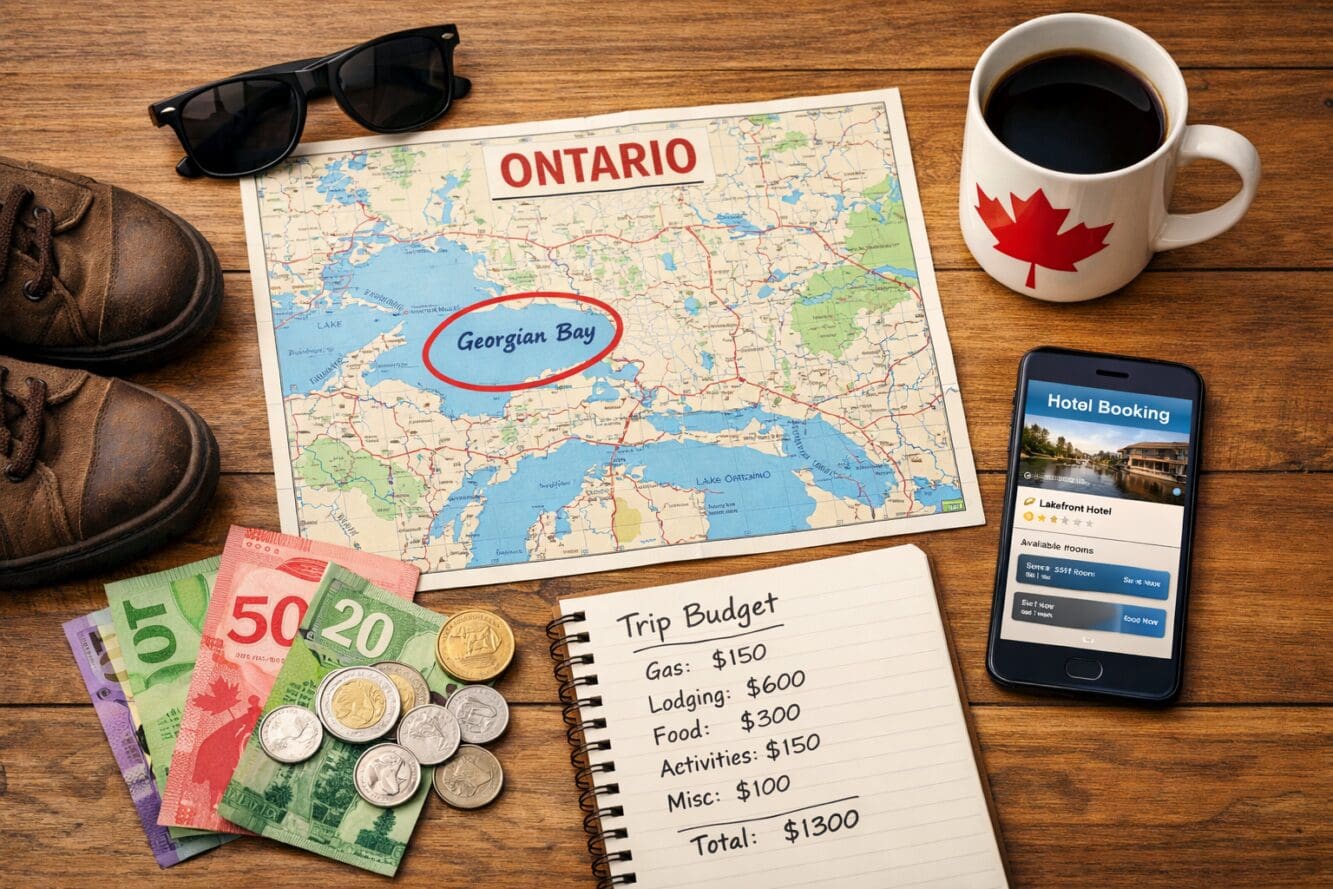
A few important caveats: 48% of Canadians who are determined to travel say they’ll adjust their plans because of the weak dollar [3]. “Adjusting” typically means choosing domestic over international, driving instead of flying, or shortening trip length. This is good news for Canadian destinations but means travellers are watching their budgets carefully.
Common mistake: Assuming higher total spending means everyone is spending more. In reality, some households are spending significantly more on premium domestic experiences (think luxury lodges, guided excursions) while others are trimming costs by camping or staying with family. The average masks real variation.
Why Are Canadians Avoiding the U.S. in 2026?
The pullback from U.S. travel is steep and accelerating. Canadian-resident return trips to the U.S. dropped 25.4% year-over-year in 2025, and February 2026 data shows trips down another 14.5% compared to the prior 12 months [8][7].
The reasons, ranked by how often Canadians cite them [4]:
- Political/cultural climate — 57%
- Border hassles and travel restrictions — 53%
- Safety and security concerns — 46%
- Cost and exchange rate — 44%
This isn’t a single-issue phenomenon. When four separate concerns all score above 44%, the reluctance runs deep. And because these factors reinforce each other (a hostile political climate makes border crossings feel more stressful, which makes the cost feel less worthwhile), the shift is likely to persist even if one factor improves.
Where is the money going instead? Canada takes the top spot at 37%, followed by Europe at 25% [4]. Europe’s rise as an alternative is notable — it suggests that Canadians with larger budgets aren’t simply staying home but are actively redirecting spending to destinations that feel more welcoming. For those watching how tariffs affect consumer behaviour, the travel data tells a parallel story about shifting economic relationships.
Which Canadian Regions Are Benefiting Most From the Domestic Travel Surge?
Drive-to destinations within two to five hours of major cities are seeing the strongest gains. CBRE Hotels analysis confirms that drive travel is up year-over-year while domestic air travel remains flat [5], which points directly to regional escapes rather than cross-country flights.
Regions positioned to benefit:
- Ontario’s Georgian Bay and Simcoe County corridor — Close to the Greater Toronto Area, with a mix of waterfront towns, ski resorts, and cultural events. Communities like Collingwood offer live summer concert series, music festivals, and local food experiences that appeal to weekend travellers.
- Quebec’s Eastern Townships and Laurentians — Accessible from Montreal, with strong agritourism and outdoor recreation.
- British Columbia’s Okanagan and Vancouver Island — Wine country and coastal escapes for Western Canadians.
- Atlantic Canada — Nova Scotia, New Brunswick, and PEI benefit from the “discover your own country” sentiment, though distance limits drive-trip appeal for Ontario and Western residents.
- Alberta’s Rockies corridor — Banff and Jasper remain perennial draws, now with less competition from U.S. national parks.
Choose regional if: the goal is a budget-friendly trip with lower transportation costs, shorter travel time, and direct support for local economies. Choose cross-country domestic if: there’s a specific bucket-list destination and the budget allows for flights.
How Does the Domestic Travel Surge Support Local Tourism Economies?
When Canadians choose a weekend in a small Ontario town over a week in Arizona, the economic ripple effect is direct and measurable. Every dollar spent at a local restaurant, independent hotel, or farmers’ market stays in that community longer than money spent at an international chain.

Concrete ways local economies benefit:
- Accommodation revenue — Even with national occupancy projected at just 66%, regional hotspots near major cities can exceed that significantly during peak weekends [5]. Higher Average Daily Rates ($216 projected nationally) mean more revenue per room [5].
- Food and beverage — Small-town restaurants and local delis see increased foot traffic from visitors who might otherwise eat at chain restaurants in U.S. border towns.
- Events and culture — Festivals, film events, and museum programming draw visitors who spend on tickets, parking, shopping, and meals.
- Outdoor recreation — Guided tours, equipment rentals, and park fees generate income for seasonal operators.
Edge case to watch: Not all communities are equipped to handle a sudden influx. Small towns with limited accommodation, parking, or restaurant capacity can experience “over-tourism” stress even at modest visitor numbers. Municipal planning matters — communities that invest in infrastructure and transit solutions will capture more benefit with less friction.
What Should Canadian Travellers Know Before Planning a Regional Escape?
Domestic travel in 2026 is straightforward, but a few practical considerations can make the difference between a great trip and a frustrating one.
Planning checklist:
- Book early for peak weekends. With more Canadians staying domestic, popular destinations fill up faster than in previous years. Long weekends in July and August are especially competitive.
- Budget for higher accommodation costs. The projected $216 national ADR is an average — waterfront properties and resort towns often charge significantly more [5].
- Consider midweek travel. Rates drop and crowds thin Tuesday through Thursday. This is the single easiest way to save money and have a better experience.
- Check local events before booking. A town hosting a major festival might mean higher prices and sold-out rooms, or it might be exactly the experience you want. Either way, know in advance.
- Pack for variable weather. Canadian regional travel often means microclimates. Georgian Bay in July can swing from 30°C afternoons to 15°C evenings.
- Support local businesses intentionally. Choose independent restaurants, shops, and guides over national chains when possible. The economic impact is more concentrated.
Common mistake: Treating a domestic trip as “less important” than an international one. Canadians who plan their regional escapes with the same care they’d give a European vacation consistently report higher satisfaction.
Will This Domestic Travel Trend Last Beyond 2026?
The factors driving the domestic surge — political tensions, currency weakness, and national pride — show no signs of reversing quickly. CBRE Hotels describes the U.S. travel pullback as “structural” rather than seasonal [5], and Desjardins Economic Studies data confirms the decline is accelerating, not stabilizing [8].
Factors that could sustain the trend:
- Continued political uncertainty in the U.S.
- Persistent Canadian dollar weakness against the U.S. dollar
- Growing infrastructure and marketing investment by Canadian tourism boards
- Social media amplifying “discover Canada” content (the virtual and social media landscape plays a real role in destination discovery)
Factors that could reverse it:
- A significant improvement in Canada-U.S. relations
- Canadian dollar appreciation making U.S. travel affordable again
- Domestic price inflation that erodes the cost advantage of staying home
The most likely scenario is a sustained but gradually moderating trend. Even if U.S. travel recovers somewhat, the “rediscovery” of Canadian destinations has introduced many travellers to places they didn’t previously consider. That awareness doesn’t disappear overnight.
Pros and Cons of the Domestic Travel Surge for Canadians
| Pros | Cons |
|---|---|
| Lower transportation costs (drive vs. fly) | Popular spots may become overcrowded |
| Direct support for Canadian communities | Accommodation prices rising (ADR up to $216) [5] |
| No border hassles or passport concerns | Limited warm-weather options in shoulder seasons |
| Shorter travel time means more vacation days | Some regions lack tourism infrastructure |
| Discover underrated Canadian destinations | Fewer “exotic” or beach-focused options |
| Stronger Canadian dollar stays in Canada | Weather unpredictability in many regions |
Conclusion
The domestic travel surge of 2026 is real, measurable, and driven by forces that go beyond a single news cycle. With $47.6 billion in projected vacation spending [3], 37% of Canadians naming their own country as their top destination [4], and U.S. travel declining by double digits [8], the shift toward regional escapes is reshaping how tourism dollars flow across the country.
Actionable next steps for Canadian travellers:
- Start planning summer trips now — popular regional destinations are booking faster than usual.
- Explore within a 2-5 hour drive radius — this is where the best value and strongest local impact overlap.
- Look for community events and festivals — they’re the backbone of small-town tourism and often the highlight of a trip.
- Budget realistically — $4,169 is the average household allocation, but midweek travel and camping can stretch that significantly [3].
- Share your experiences — social media posts about Canadian destinations help other travellers discover places they might not have considered.
The best part of this trend? Canadians are finding out that the regional escapes in their own backyard are worth the trip — and that supporting local tourism feels as good as it sounds.
FAQ
How much will the average Canadian household spend on vacation in 2026?
The average Canadian household is expected to allocate $4,169 per vacation in 2026, according to Ipsos/Allianz Global Assistance Canada [3].
What percentage of Canadians are avoiding U.S. travel in 2026?
62% of Canadians say they are less likely to visit the U.S. in 2026 compared to 2025 [4].
What is the top travel destination for Canadians in 2026?
Canada itself, with 37% of Canadians ranking it as their number one destination. Europe is second at 25% [4].
Why are Canadians choosing domestic travel over U.S. trips?
The top reasons are political/cultural climate concerns (57%), border hassles (53%), safety concerns (46%), and unfavourable exchange rates (44%) [4].
Is domestic air travel increasing in Canada?
No. Domestic air passenger numbers are flat year-over-year, while drive travel is increasing, indicating Canadians prefer road trips to reduce costs [5].
What is the projected hotel occupancy rate in Canada for 2026?
National hotel occupancy is forecast at approximately 66%, with an Average Daily Rate of $216 [5].
How much did Canadian travel to the U.S. decline?
Canadian-resident return trips to the U.S. dropped 25.4% year-over-year in 2025, with early 2026 data showing a further 14.5% decline [8].
Are Canadians cancelling vacations due to the weak dollar?
Not most of them. While 63% cite financial barriers, 48% of those determined to travel are adjusting plans (choosing cheaper destinations or shorter trips) rather than cancelling entirely [3].
What types of Canadian destinations are benefiting most?
Drive-to destinations within two to five hours of major cities, particularly waterfront towns, ski resort communities, and areas with strong festival and cultural programming [5].
Is this domestic travel trend temporary?
Experts describe the shift as “structural” rather than seasonal, meaning it’s likely to persist for multiple years even if some contributing factors improve [5].
References
[1] Canadian Tourism Statistics – https://wifitalents.com/canadian-tourism-statistics/
[2] Travel And Tourism – https://www.statcan.gc.ca/en/subjects-start/travel_and_tourism
[3] Canadian Travel Spending Set Soar 2026 Travel Intentions Rebound Soft 2025 – https://www.ipsos.com/en-ca/canadian-travel-spending-set-soar-2026-travel-intentions-rebound-soft-2025
[4] Canadians Continue To Shift Travel Priorities In 2026 – https://www.travelpress.com/canadians-continue-to-shift-travel-priorities-in-2026/
[5] Will Canadian Patriotism Sustain Domestic Travel In 2026 – https://www.cbre.ca/press-releases/will-canadian-patriotism-sustain-domestic-travel-in-2026
[6] Canada To Us Travel Decline Whats Behind The Drop In Visitor Numbers For 2026 – https://www.travelandtourworld.com/news/article/canada-to-us-travel-decline-whats-behind-the-drop-in-visitor-numbers-for-2026/
[7] U S Travel From Canada Falls Again To Start 2026 – https://skift.com/2026/02/11/u-s-travel-from-canada-falls-again-to-start-2026/
[8] Canada Travel 23 February 2026 – https://www.desjardins.com/en/savings-investment/economic-studies/canada-travel-23-february-2026.html
Content, illustrations, and third-party video appearing on GEORGIANBAYNEWS.COM may be generated or curated with AI assistance or reproduced pursuant to the fair dealing provisions of the Copyright Act, R.S.C. 1985, c. C-42. Attribution and hyperlinks to original sources are provided in acknowledgment of applicable intellectual property rights. Such referencing is intended to direct traffic to and support the original rights holders’ platforms.