






















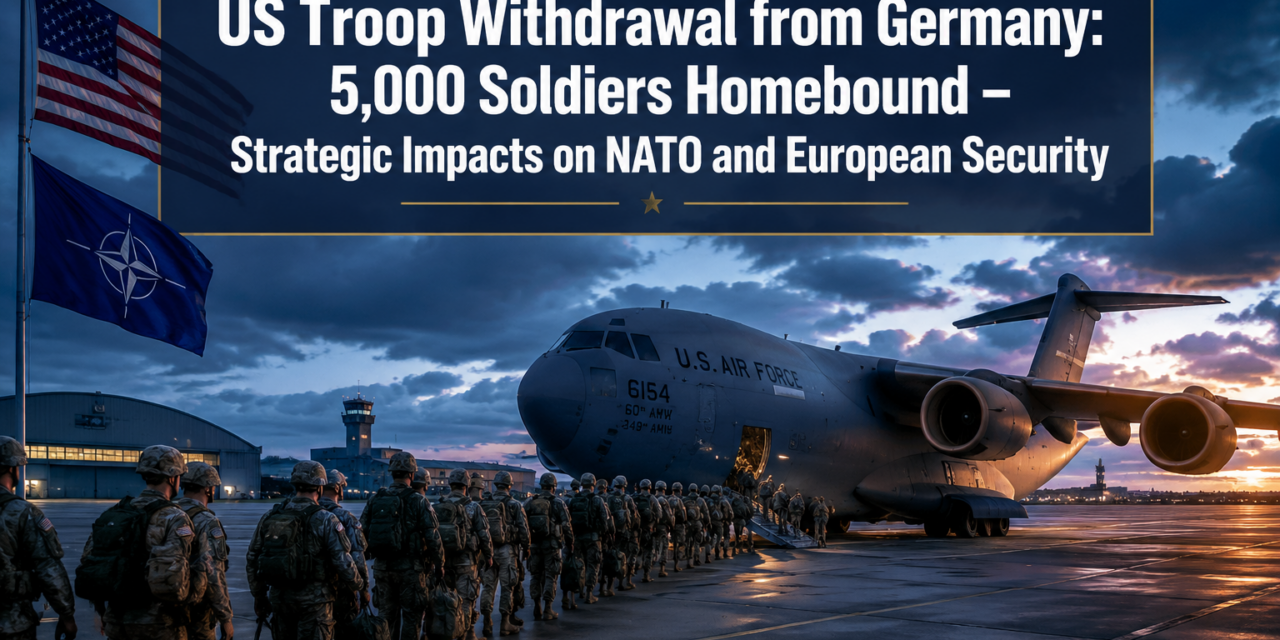
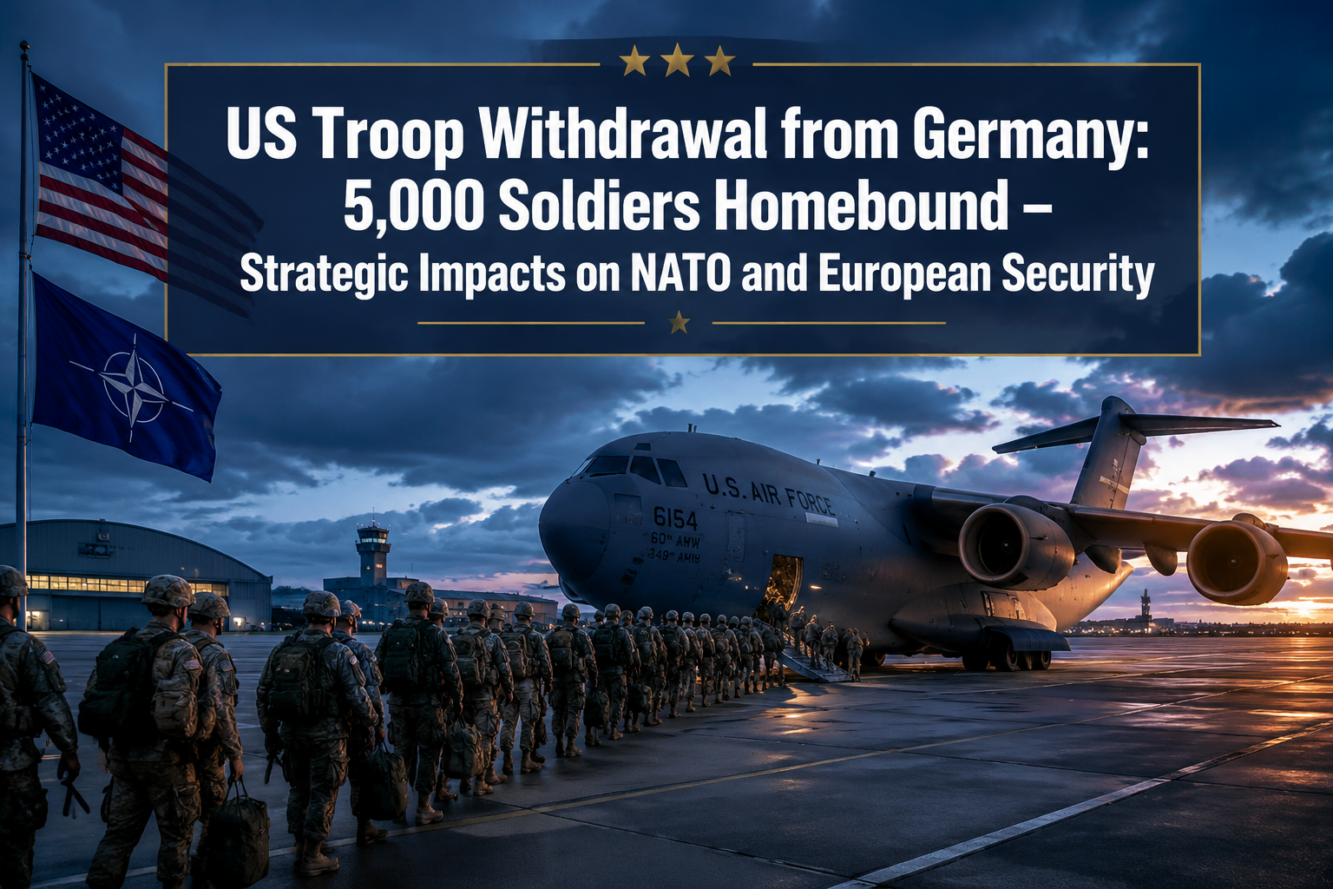
US Troop Withdrawal from Germany: 5,000 Soldiers Homebound – Strategic Impacts on NATO and European Security
Last updated: May 13, 2026
Quick Answer
The U.S. Department of Defense has ordered the withdrawal of approximately 5,000 troops from Germany over the next 6 to 12 months, representing roughly 14% of the current American military presence there [1]. This move, directed by Defense Secretary Pete Hegseth, has triggered serious debate about NATO cohesion, European self-defense capacity, and the reliability of U.S. security commitments at a time of heightened Russian aggression in Eastern Europe [3].
Key Takeaways
🪖 5,000 U.S. troops will leave Germany within 6–12 months, reducing the American force there from approximately 40,000 [1][5]
📋 The directive follows a Pentagon-led “comprehensive review of force posture in Europe” — not a sudden political impulse [3]
🇩🇪 German Defense Minister Boris Pistorius called the move “anticipated” and said Germany is ready to take on more defense responsibility [4]
⚠️ Congressional legislation in the 2026 defense bill bars the Pentagon from dropping Europe-wide troop levels below 76,000 without congressional approval [5]
🌍 NATO is actively assessing the decision, with spokesperson Allison Hart urging Europe to “invest more in defense” [4]
🇷🇺 Critics, including top Republicans and senior Democrats, warn the withdrawal could embolden Russia [5]
💶 Broader trans-Atlantic tensions — including U.S. auto tariffs and a reversal on long-range missile deployment in Germany — compound the security concerns [6]
🔁 This follows an October 2025 reduction of 3,500 troops near NATO’s Ukrainian border, which alarmed Romania [1]
Why Is the U.S. Withdrawing 5,000 Troops from Germany Now?
The Pentagon framed the decision as the result of a structured review, not a reactive move. Defense Secretary Pete Hegseth issued the directive, with spokesperson Sean Parnell stating it “follows a comprehensive review of the Department’s force posture in Europe and acknowledges the requirements and conditions on the ground” [3].
The political backdrop matters, though. The withdrawal aligns with President Donald Trump’s longstanding pressure on NATO allies to spend more on their own defense and reflects ongoing friction with German Chancellor Friedrich Merz over U.S. military engagement policy in Iran [1]. It also follows the October 2025 drawdown of 3,500 troops near NATO’s Ukrainian border, which gave Romania little warning and rattled alliance confidence [1].
Bottom line: The 5,000-troop figure is significant but not catastrophic on its own. The concern is the pattern it represents.
What Does the US Troop Withdrawal from Germany Mean for NATO Unity?
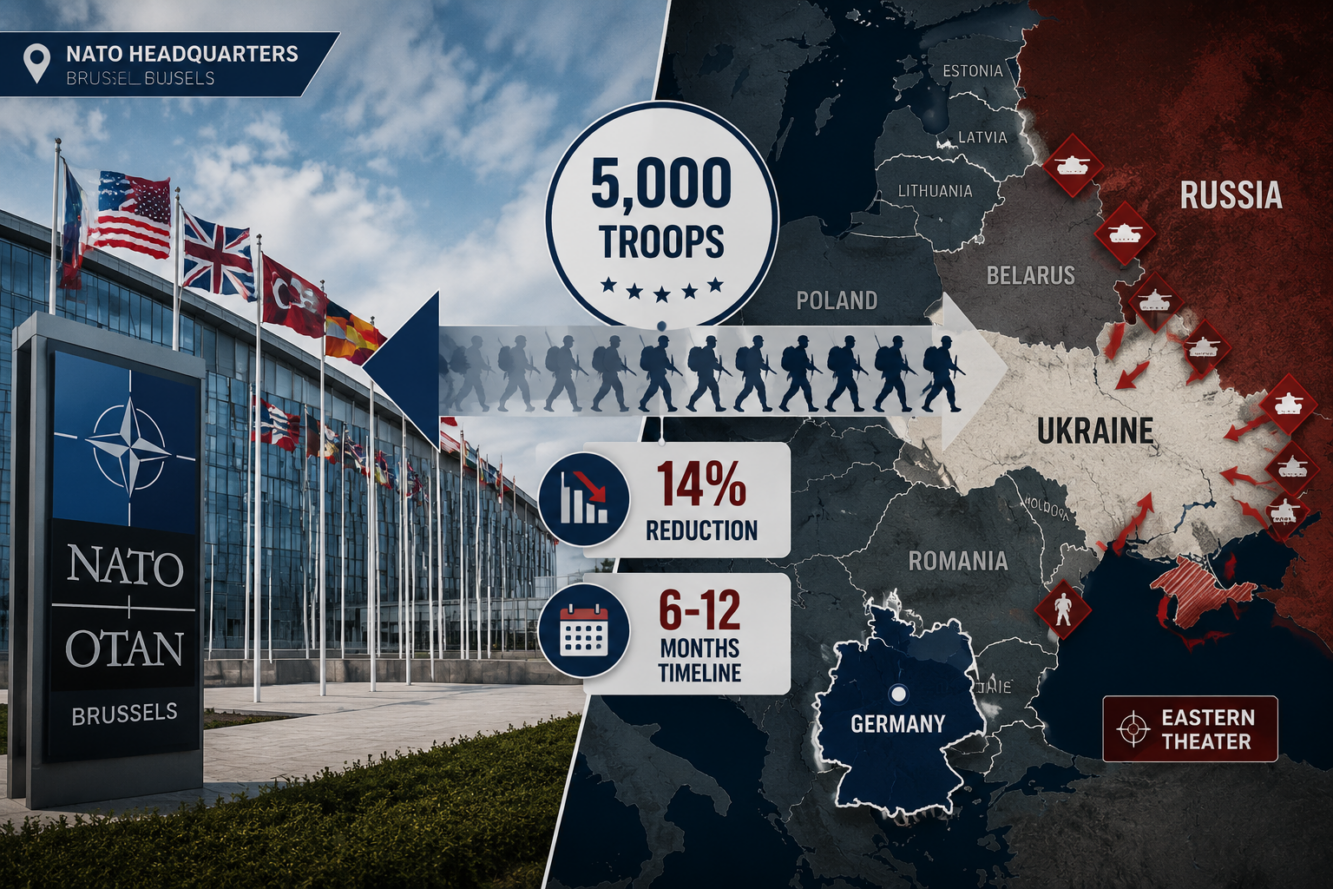
NATO is treating this carefully. Alliance spokesperson Allison Hart confirmed the organization is “collaborating with the US to comprehend the intricacies of their decision regarding troop presence in Germany,” with a full evaluation expected to take 6 to 12 months [2].
Hart also used the moment to push a broader message: the situation “highlights the necessity for Europe to continue investing more in defense and assume a greater share of responsibility for our mutual security” [4].
What this means for alliance cohesion:
Eastern European members — especially Poland, Romania, and the Baltic states — are watching closely, given their proximity to Russia
The withdrawal reinforces pressure on European NATO members to hit and exceed the 2% GDP defense spending target
Trust in automatic U.S. reinforcement commitments, already strained, faces further scrutiny
Germany itself has signaled readiness to absorb the shift, but smaller allies lack that buffer [4][5]
“The withdrawal could embolden Russia.” — Representative Adam Smith (D-WA), ranking Democrat on the House Armed Services Committee [5]
How Does Congress Factor Into the Withdrawal Timeline?
Congress has built a legal guardrail into the process. The 2026 defense bill includes legislation — passed with overwhelming bipartisan support — that prevents the Pentagon from unilaterally reducing total U.S. troop levels in Europe below 76,000 without explicit congressional approval [5].
With roughly 80,000 to 100,000 U.S. personnel stationed across Europe depending on rotations and exercises [1], the 5,000-troop Germany reduction alone does not breach that threshold. But it narrows the margin considerably.
Key constraint: If additional drawdowns are ordered — in Germany or elsewhere in Europe — the Pentagon would need Congress on board. Top Republicans have already signaled resistance, warning the administration directly about the risks of further reductions [5].
What Is Germany’s Response to Losing 5,000 American Soldiers?
Germany’s reaction has been measured and notably self-reliant. Defense Minister Boris Pistorius described the withdrawal as “anticipated” and “foreseeable,” emphasizing that Germany is prepared to assume greater responsibility for its own defense [4].
This posture reflects Germany’s broader post-2022 defense pivot, accelerated after Russia’s full-scale invasion of Ukraine. Berlin has significantly increased its defense budget and is no longer treating U.S. presence as a permanent guarantee.
Choose this framing if… you’re assessing European defense readiness: Germany’s response is the strongest signal yet that major NATO members are genuinely recalibrating, not just reacting rhetorically.
What Are the Broader Strategic Risks Beyond the Troop Numbers?
The 5,000-soldier figure is only part of the story. Analysts warn that the wider context of U.S.-European relations poses risks that go beyond any single troop adjustment [6].
Compounding factors include:
IssueImpact on European SecurityU.S. auto tariffs on European goodsEconomic strain reduces defense budget flexibilityReversal on long-range missiles in GermanyWeakens deterrence posture against RussiaIran policy disagreements with MerzSignals diverging strategic prioritiesOctober 2025 Romania troop cutDemonstrated willingness to act without allied consultation [1]Ongoing Ukraine conflictElevates the cost of any perceived NATO weakness
The Wall Street Journal noted that these combined pressures — economic and military — represent a more serious long-term threat to European security than the troop withdrawal alone [6].
Conclusion: What Should Policymakers and Observers Do Next?
The US Troop Withdrawal from Germany — 5,000 soldiers homebound — is a concrete policy action with ripple effects that will play out over the next 6 to 12 months across NATO structures, European defense budgets, and U.S. domestic politics. The strategic impacts on NATO and European security are real, but manageable if Europe responds with coordinated action.
Actionable steps for key stakeholders:
European NATO members should accelerate defense spending commitments and formalize burden-sharing agreements that don’t depend on U.S. troop presence
The U.S. Congress should use its legal authority under the 2026 defense bill to ensure any further reductions go through proper review
NATO leadership should fast-track its assessment of the Germany decision and publish clear deterrence benchmarks for Eastern Europe
Analysts and journalists should track whether this withdrawal is a one-time adjustment or the opening move in a broader U.S. retrenchment from Europe
The pattern established by back-to-back troop reductions in 2025 and 2026 is what demands the most scrutiny — not any single number.
FAQ
Q: How many U.S. troops are currently in Germany?
Approximately 40,000 U.S. troops are stationed in Germany, making it the largest American military presence in Europe. The 5,000-troop withdrawal represents about 14% of that total [1][5].
Q: Who ordered the troop withdrawal from Germany?
Defense Secretary Pete Hegseth issued the directive following a Pentagon review of U.S. force posture in Europe [3].
Q: Will the withdrawal breach the congressional limit on European troop levels?
Not on its own. The 2026 defense bill sets a floor of 76,000 U.S. troops in Europe. With 80,000 to 100,000 currently deployed across the continent, the Germany reduction alone stays above that threshold [5].
Q: How has Germany responded to the withdrawal?
German Defense Minister Boris Pistorius called it “anticipated” and said Germany is ready to take on greater defense responsibility [4].
Q: What does NATO say about the withdrawal?
NATO is assessing the decision and has called on European members to increase defense investment and assume more responsibility for collective security [2][4].
Q: Does this withdrawal signal a U.S. exit from NATO?
No formal exit has been announced. However, the withdrawal is part of a broader pattern of U.S. pressure on European allies and signals a shift in how Washington expects the alliance burden to be shared [6].
Q: What happened with U.S. troops near Ukraine’s border in 2025?
In October 2025, the U.S. confirmed plans to cut 3,500 troops near NATO’s borders with Ukraine, with little warning to allies including Romania [1].
Q: Could Russia benefit from this withdrawal?
Critics, including senior members of both parties in Congress, argue the withdrawal could embolden Russia by signaling reduced U.S. commitment to European defense [5].
References
[1] U.S. To Withdraw 5,000 Troops From Germany In Next 6 To 12 Months – https://www.pbs.org/newshour/world/u-s-to-withdraw-5000-troops-from-germany-in-next-6-to12-months
[2] NATO Assessing Details Of US Troop Withdrawal From Germany – https://www.aljazeera.com/news/2026/5/2/nato-assessing-details-of-us-troop-withdrawal-from-germany
[3] Europe Allies Germany Troop Withdrawal US – https://www.npr.org/2026/05/02/nx-s1-5808891/europe-allies-germany-troop-withdrawal-us
[4] BBC News – US Troop Withdrawal from Germany – https://www.bbc.com/news/articles/cd9pn541jjlo
[5] Top Republicans Warn Trump on Germany Troop Withdrawals – https://www.nbcnews.com/world/europe/top-republicans-warn-trump-germany-troop-withdrawals-putin-rcna182595
[6] U.S. Troop Withdrawal Expands Yawning Rift Between U.S. and Europe – https://www.wsj.com/world/europe/u-s-troop-withdrawal-expands-yawning-rift-between-u-s-and-europe-2f5c49cc
Content, illustrations, and third-party video appearing on GEORGIANBAYNEWS.COM may be generated or curated with AI assistance or reproduced pursuant to the fair dealing provisions of the Copyright Act, R.S.C. 1985, c. C-42. Attribution and hyperlinks to original sources are provided in acknowledgment of applicable intellectual property rights. Such referencing is intended to direct traffic to and support the original rights holders’ platforms.