



















Protecting Seniors from Phone, Email, and Online Fraud: A 2026 Guide for North Americans
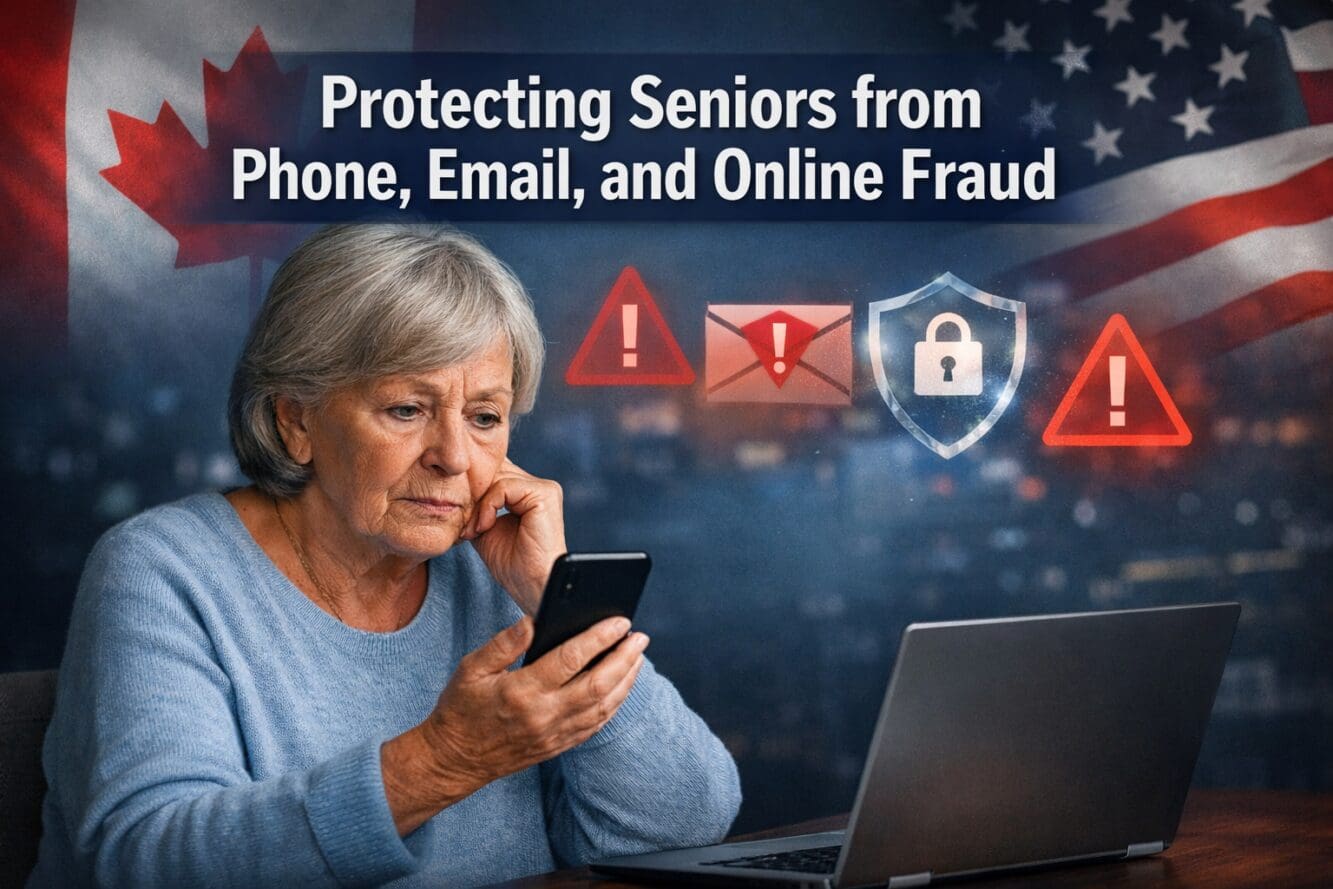
When 78-year-old Cathy from the Town of The Blue Mountains received a call claiming her grandson was in jail and needed $5,000 immediately, her heart raced. The voice sounded urgent, desperate. She nearly withdrew her savings before a bank teller asked a simple question: “Did you call your grandson directly?” That moment of pause saved Margaret from losing her retirement fund to scammers who prey on grandparents’ love and fear.
Phone, email, and online fraud targeting seniors has reached epidemic proportions across Canada and the United States in 2026. Criminals exploit trust, technological unfamiliarity, and isolation to steal billions of dollars annually from older adults. Understanding these threats and implementing protective strategies can mean the difference between financial security and devastating loss.
Key Takeaways
- Seniors lose over $3 billion annually to phone, email, and online fraud in North America, with many cases going unreported
- The “grandparent scam,” phishing emails, and tech support fraud are the three most common schemes targeting older adults
- Verification before action is the golden rule: always confirm requests through independent contact methods
- Two-factor authentication and password managers provide essential protection against digital fraud
- Family conversations and community support create powerful defense networks against scammers
Understanding the Scope of Phone, Email, and Online Fraud
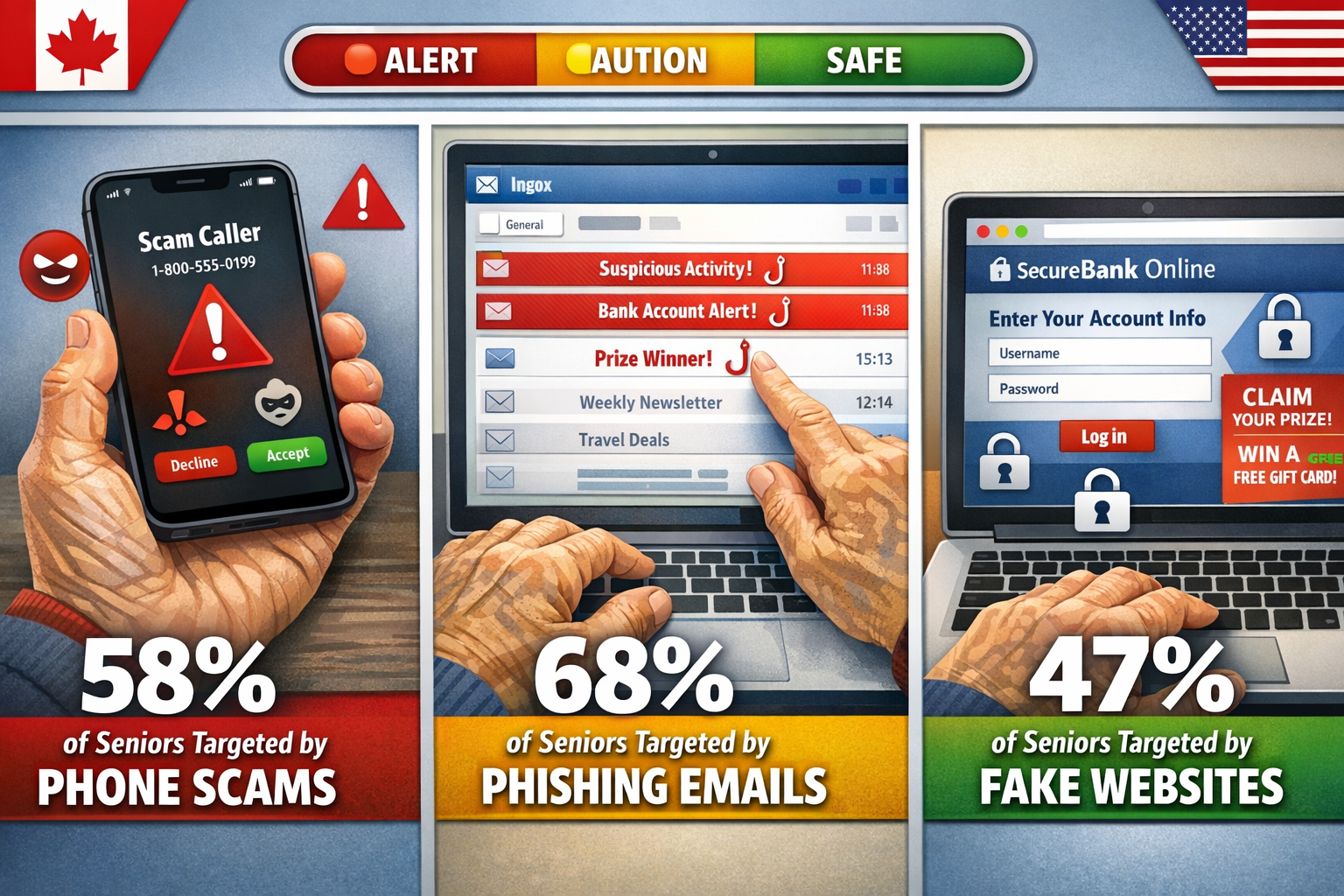
The landscape of fraud targeting seniors has evolved dramatically. In 2026, scammers use sophisticated technology, psychological manipulation, and detailed personal information harvested from social media to create convincing schemes.
Why Seniors Are Targeted
Fraudsters specifically target older adults for several calculated reasons:
Financial factors:
- Accumulated savings and home equity
- Regular pension or Social Security income
- Access to retirement accounts and investments
- Generally better credit scores
Social and psychological factors:
- Tendency toward politeness and helpfulness
- Less familiarity with digital security practices
- Potential cognitive decline affecting judgment
- Social isolation increasing vulnerability to friendly contact
Generational trust:
- Raised in era when people were more trusting
- Less suspicious of authority figures
- Uncomfortable being confrontational or hanging up
The statistics paint a sobering picture. According to the FBI’s Internet Crime Complaint Center, Americans over 60 lost $3.1 billion to fraud in 2025, representing a 84% increase from 2021[1]. Canadian seniors face similar threats, with the Canadian Anti-Fraud Centre reporting losses exceeding $530 million in 2025[2].
Common Types of Phone, Email, and Online Fraud Schemes
📞 Phone Fraud Tactics
The Grandparent Scam
This emotionally manipulative scheme remains devastatingly effective. Scammers call seniors pretending to be a grandchild in trouble—arrested, in an accident, or stranded abroad. They create urgency, beg the victim not to tell parents, and demand immediate wire transfers.
Warning signs:
- Calls requesting secrecy from other family members
- Demands for immediate payment via wire transfer, gift cards, or cryptocurrency
- Claims of emergencies requiring instant action
- Requests to send money to unfamiliar addresses
Government Impersonation
Fraudsters pose as IRS agents, Social Security Administration officials, or Canadian Revenue Agency representatives, claiming problems with taxes, benefits, or legal issues.
Red flags:
- Threats of arrest or legal action
- Demands for payment via unusual methods
- Requests for Social Security or Social Insurance numbers
- Aggressive, threatening tone
Tech Support Scams
Callers claim to be from Microsoft, Apple, or internet providers, warning about computer viruses or security breaches. They request remote access to “fix” problems while actually installing malware or stealing information.
📧 Email Fraud Schemes
Phishing Attacks
These emails impersonate legitimate organizations—banks, government agencies, or familiar companies—requesting personal information or urgent action.
Common characteristics:
- Generic greetings (“Dear Customer”)
- Urgent language creating panic
- Suspicious sender addresses
- Links to fake websites mimicking real ones
- Requests for passwords or account numbers
Romance Scams
Criminals create fake online profiles, develop relationships over weeks or months, then request money for emergencies, travel, or business opportunities. While discussing maintaining happiness and emotional well-being is important, seniors should be cautious about online relationships that quickly turn to financial requests.
Lottery and Prize Scams
Emails announce winnings from contests never entered, requiring “processing fees” or “taxes” before claiming prizes.
💻 Online Fraud Techniques
Investment Scams
Fraudulent investment opportunities promise unrealistic returns with little risk. Cryptocurrency scams have exploded in 2026, targeting seniors unfamiliar with digital currencies.
Charity Fraud
Fake charities emerge after natural disasters or during holiday seasons, exploiting seniors’ generosity.
Online Shopping Scams
Counterfeit websites sell non-existent products or collect payment information without delivering goods.
Protecting Yourself: Practical Prevention Strategies
For Phone Security
Implement these protective measures:
- Screen all calls using caller ID or voicemail
- Register phone numbers with the National Do Not Call Registry (US) or National Do Not Call List (Canada)
- Verify caller identity independently by looking up official numbers
- Never provide personal information to unsolicited callers
- Hang up on suspicious calls without guilt or explanation
- Use call-blocking technology available through phone providers
“The most powerful word against scammers is ‘no,’ followed closely by the click of hanging up.” — Elder Fraud Prevention Specialist
For Email Protection
Essential email safety practices:
| Security Measure | Implementation | Benefit |
|---|---|---|
| Spam filters | Enable in email settings | Blocks most phishing attempts |
| Verify sender addresses | Hover over sender name | Reveals actual email address |
| Avoid clicking links | Type URLs directly | Prevents visiting fake sites |
| Use unique passwords | Password manager | Limits breach damage |
| Enable 2FA | Account security settings | Adds verification layer |
Never click email links requesting:
- Password resets you didn’t initiate
- Account verification for services you don’t use
- Urgent action on financial accounts
- Personal information updates
For Online Safety
Create a secure digital environment:
✅ Install and update security software regularly
✅ Use strong, unique passwords for every account
✅ Enable two-factor authentication wherever available
✅ Verify website security (look for “https” and padlock icon)
✅ Research companies before making purchases
✅ Monitor financial accounts weekly for unauthorized transactions
✅ Limit social media sharing of personal details
Just as staying informed about local news helps seniors stay connected to their community, staying informed about fraud tactics provides essential protection.
Building a Support Network
Family Involvement
Create open communication channels:
Families should have regular conversations about scams without judgment. Adult children can help by:
- Discussing recent fraud attempts in the news
- Offering to review suspicious communications
- Setting up security features on devices
- Establishing code words for family emergency verification
- Monitoring accounts with permission
Similar to how community programs bring people together, family involvement creates protective networks against isolation and fraud.
Community Resources
Available support systems:
🏛️ Government agencies:
- FBI’s Internet Crime Complaint Center (IC3)
- Canadian Anti-Fraud Centre
- State/Provincial consumer protection offices
- Local police departments with elder fraud units
📚 Educational programs:
- Senior center fraud prevention workshops
- Library technology training sessions
- AARP Fraud Watch Network
- Bank-sponsored security seminars
🤝 Peer support:
- Neighborhood watch programs
- Senior community groups
- Online forums for sharing experiences
- Volunteer fraud prevention advocates
What to Do If You’ve Been Targeted
Immediate Actions
If you suspect you’ve been scammed:
- Stop all communication with the suspected scammer immediately
- Don’t send additional money or information
- Document everything: save emails, record phone numbers, note dates and times
- Contact your financial institution if you’ve shared account information or sent money
- Change passwords for all potentially compromised accounts
- Run security scans on your computer
Reporting Procedures
United States:
- Report to FBI IC3: www.ic3.gov
- File complaint with FTC: reportfraud.ftc.gov
- Contact local police department
- Notify state attorney general’s office
Canada:
- Report to Canadian Anti-Fraud Centre: 1-888-495-8501
- Contact local police
- Notify provincial consumer protection agency
- Report to Competition Bureau if applicable
Important: Reporting helps authorities track patterns and potentially catch criminals, even if recovery seems unlikely.
Emotional Recovery
Fraud victims often experience shame, embarrassment, and depression. Remember:
- You are not alone: millions of intelligent people fall victim annually
- It’s not your fault: scammers are professional criminals
- Seek support: talk to family, friends, or counselors
- Learn and move forward: use the experience to strengthen defenses
Resources like stress-relieving practices can help manage the emotional aftermath of fraud attempts.
Technology Tools for Enhanced Protection
Essential Software and Services
For computers and smartphones:
🛡️ Antivirus/Anti-malware:
- Norton 360
- McAfee Total Protection
- Bitdefender
- Windows Defender (built-in for Windows)
🔐 Password Managers:
- LastPass
- 1Password
- Dashlane
- Bitwarden (free option)
📱 Call Blocking Apps:
- Nomorobo
- RoboKiller
- Hiya
- Truecaller
Browser Safety Extensions
Install these free browser extensions for added protection:
- HTTPS Everywhere: Forces secure connections
- Privacy Badger: Blocks tracking
- uBlock Origin: Blocks malicious ads
- Web of Trust (WOT): Rates website safety
Recognizing Red Flags: A Quick Reference Guide
🚨 Universal warning signs across all fraud types:
- Requests for immediate action or decision
- Demands for unusual payment methods (gift cards, wire transfers, cryptocurrency)
- Pressure to keep communication secret
- Offers that seem too good to be true
- Requests for remote computer access
- Unsolicited contact requesting personal information
- Poor grammar or spelling in professional communications
- Mismatched email addresses or website URLs
- Threats of legal action or account closure
- Requests to confirm information they should already have
Trust your instincts. If something feels wrong, it probably is. Taking time to verify is always better than rushing into a decision you’ll regret.
Special Considerations for Different Fraud Types
Healthcare and Medicare Fraud
Scammers target seniors with fake insurance cards, unnecessary medical equipment, or fraudulent Medicare claims.
Protection strategies:
- Never share Medicare number except with trusted healthcare providers
- Review Medicare Summary Notices carefully
- Report unsolicited offers for free medical equipment
- Verify all healthcare providers through official channels
Real Estate and Reverse Mortgage Scams
Fraudsters exploit home equity through fake reverse mortgages or deed theft schemes.
Safeguards:
- Consult with family or trusted advisors before major financial decisions
- Work only with licensed, verified mortgage professionals
- Understand all terms before signing documents
- Monitor property records for unauthorized changes
Subscription Traps
Fake “free trials” that automatically convert to expensive subscriptions.
Prevention:
- Read all terms before providing payment information
- Set calendar reminders for trial end dates
- Use virtual credit card numbers for trials
- Review bank statements monthly for unauthorized charges
Creating Your Personal Fraud Prevention Plan
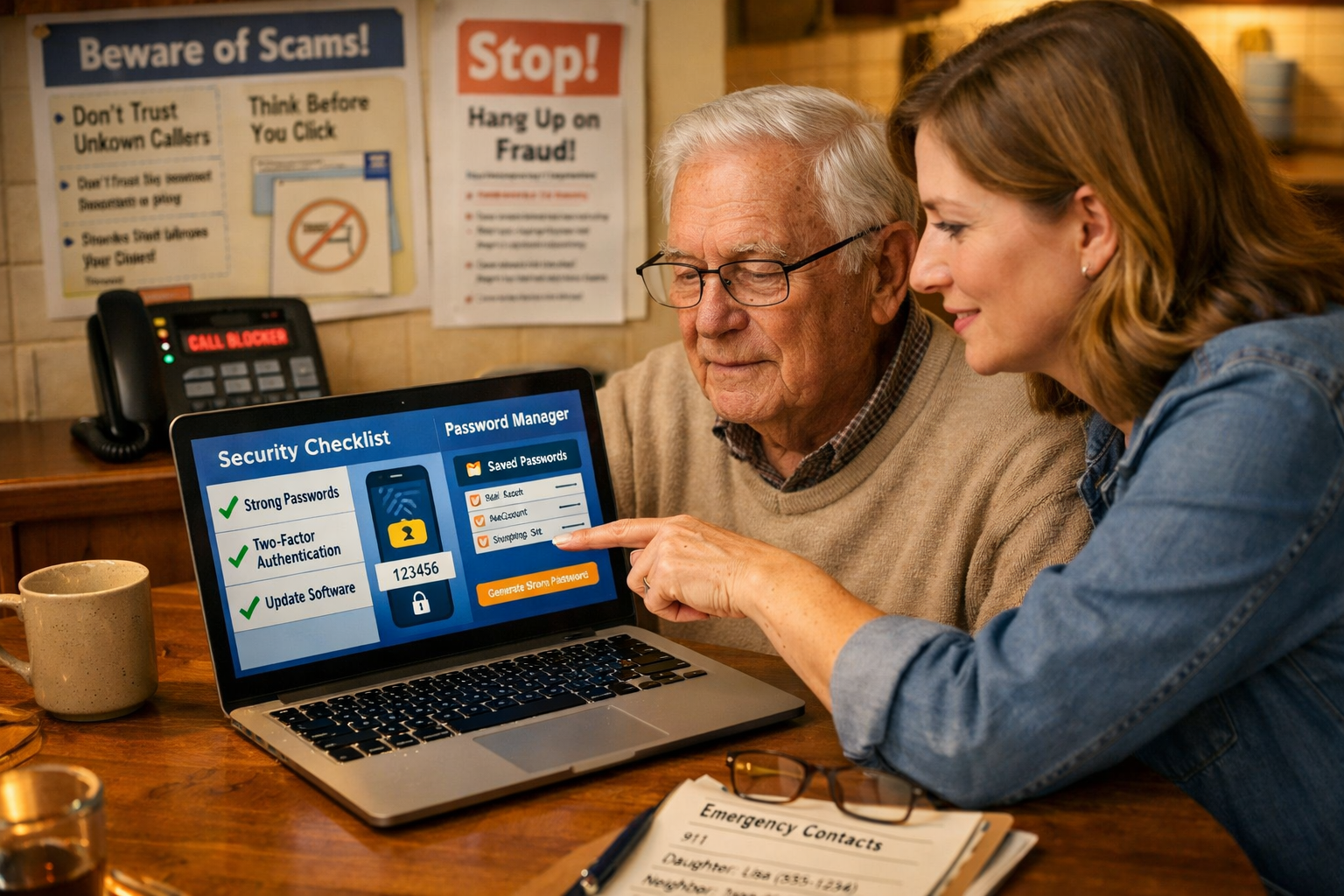
Step-by-Step Action Plan
Week 1: Assessment
- Review current security practices
- List all financial accounts and online profiles
- Identify areas of vulnerability
- Gather important contact numbers
Week 2: Implementation
- Install security software
- Set up password manager
- Enable two-factor authentication
- Register for credit monitoring
Week 3: Education
- Research common scams
- Attend fraud prevention workshop
- Share information with friends
- Create family communication plan
Week 4: Maintenance
- Schedule monthly account reviews
- Set up automatic security updates
- Establish routine for verifying unusual requests
- Join fraud alert services
Monthly Security Checklist
✓ Review all financial account statements
✓ Check credit reports (free annually)
✓ Update passwords for key accounts
✓ Clear browser history and cookies
✓ Update security software
✓ Review privacy settings on social media
✓ Verify no unauthorized account changes
✓ Delete suspicious emails without opening
The Role of Financial Institutions
Banks and credit unions have implemented protective measures for senior customers:
Available services:
- Transaction alerts via text or email
- Spending limits on certain transaction types
- Trusted contact designations
- Enhanced verification for large withdrawals
- Fraud prevention training for tellers
- Delayed processing for suspicious requests
Don’t hesitate to ask your bank about:
- Special protections for senior accounts
- Fraud monitoring services
- Educational resources
- Procedures for reporting suspicious activity
Many institutions now train staff to recognize elder fraud patterns and intervene appropriately, similar to how Margaret’s bank teller saved her from the grandparent scam.
Legal Protections and Rights
Consumer Protection Laws
Both Canada and the United States have laws protecting seniors from fraud:
United States:
- Senior Safe Act (protects financial professionals who report suspected fraud)
- Elder Justice Act (coordinates federal response to elder abuse)
- State-specific elder financial abuse laws
Canada:
- Criminal Code provisions against fraud
- Provincial consumer protection acts
- Banking regulations requiring fraud prevention measures
Power of Attorney Considerations
While powers of attorney help manage affairs, they can also create vulnerability if misused.
Protective measures:
- Choose trusted individuals carefully
- Consider co-agents requiring joint approval
- Specify limited versus general powers
- Require regular accounting
- Review and update documents regularly
Staying Informed in 2026 and Beyond
Fraud tactics constantly evolve. Staying current requires ongoing education:
Reliable information sources:
- AARP Fraud Watch Network newsletters
- FBI’s Elder Fraud webpage
- Canadian Anti-Fraud Centre updates https://antifraudcentre
- Consumer Financial Protection Bureau alerts
- Local senior center workshops
Just as staying connected to community news keeps you informed about local issues, subscribing to fraud alert services keeps you aware of emerging threats.
Teaching Others: Becoming a Fraud Prevention Advocate
Once you’ve strengthened your own defenses, consider helping others:
Ways to contribute:
- Share information at senior centers
- Discuss scams with friends over coffee
- Post warnings on community bulletin boards
- Volunteer with fraud prevention organizations
- Mentor less tech-savvy peers
Conversation starters:
“Have you heard about the latest scam going around?”
“Let me show you how I protect myself online.”
“Would you like help setting up two-factor authentication?”
Creating a culture of openness around fraud attempts reduces shame and increases reporting, making entire communities safer.
Conclusion: Empowerment Through Knowledge
Phone, email, and online fraud targeting seniors represents a serious and growing threat, but knowledge and preparation provide powerful protection. By understanding common schemes, implementing security measures, building support networks, and maintaining healthy skepticism, seniors can confidently navigate the digital world while safeguarding their financial security and personal information.
Remember Margaret from our opening story? After her close call, she attended fraud prevention workshops, installed call-blocking software, and now helps other seniors in her community recognize scams. What could have been a devastating loss became an opportunity for empowerment and community service.
Your Next Steps Today:
- Right now: Register your phone with the Do Not Call Registry
- This week: Enable two-factor authentication on email and financial accounts
- This month: Have a conversation with family about verification procedures
- Ongoing: Stay informed, stay skeptical, and stay connected to your community
The best defense against fraud is an informed, prepared, and connected community of seniors who look out for one another. You have the power to protect yourself and help others do the same.
If you receive a suspicious contact: Pause. Verify independently. Report. These three simple steps can save thousands of dollars and countless hours of stress.
Stay safe, stay informed, and remember: it’s always okay to hang up, delete the email, or say “I need to verify this first.” Your financial security and peace of mind are worth protecting.
References
[1] Federal Bureau of Investigation. (2025). “2025 Elder Fraud Report.” Internet Crime Complaint Center.
[2] Canadian Anti-Fraud Centre. (2025). “Annual Report on Fraud Targeting Seniors.” Royal Canadian Mounted Police.
Some content and illustrations on GEORGIANBAYNEWS.COM are created with the assistance of AI tools.