
















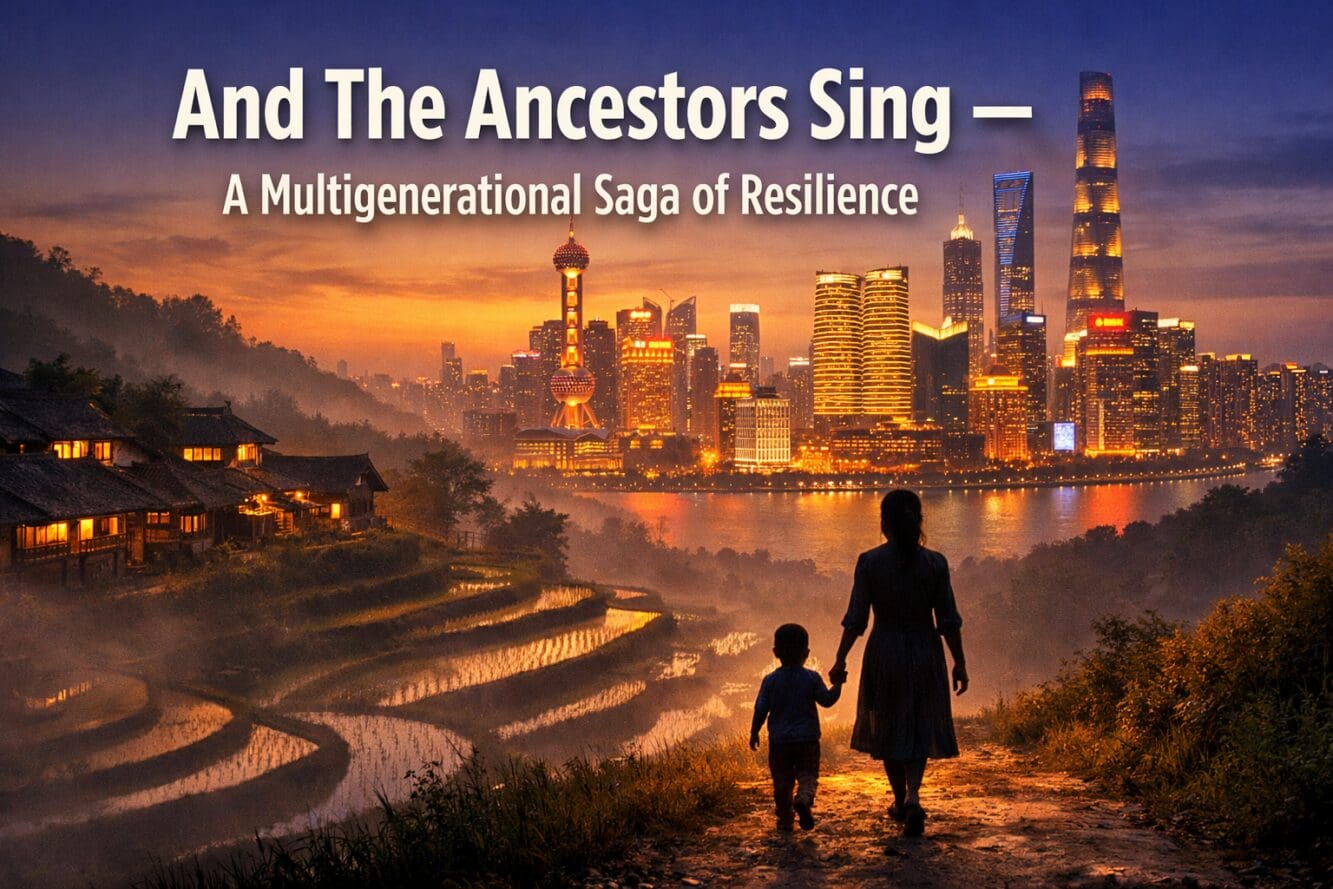
And The Ancestors Sing by Sheniz Chaddah: Multigenerational Saga of Resilience from Cultural Revolution to Modern Canada

Last updated: February 23, 2026
Important note: The author of this novel is Radha Lin Chaddah, not Sheniz Chaddah. The book is set primarily in post-Cultural Revolution China (1978–2000), with narrative centers in rural Da Long village and Shanghai. Some online listings have circulated with incorrect author attribution; this article uses the verified name from the publisher and distributor [6].
Key Takeaways
- And The Ancestors Sing is a 432-page multigenerational novel by Radha Lin Chaddah, published February 3, 2026, by Rising Action and distributed by Simon & Schuster [6].
- The story spans from 1978 to roughly 2000, following two primary characters — Lei and LuLu — through rural displacement, urban migration, and survival in a rapidly changing China.
- Core themes include the hukou system (China’s residency-based social divide), family sacrifice, mental health, exploitation, and the magnetic pull of home.
- Kirkus Reviews praised Chaddah for writing “with clarity and warmth” and for illuminating mental health struggles within the context of globalization [5].
- The novel is marketed for fans of Pachinko by Min Jin Lee and The Island of Sea Women by Lisa See, and has drawn comparisons to The Mountains Sing and The Leavers [3].
- Chaddah holds an MD, JD, and MPH from Harvard, and practiced medicine in Boston, New York, and Beijing — giving the novel grounded authenticity about Chinese society portersquarebooks.com.
- Available in trade paperback ($18.99), eBook, and audiobook formats [6].
- The book resonates strongly with Canadian and North American immigrant readers who recognize the emotional weight of leaving home, even though the novel’s setting is China rather than Canada.
Quick Answer

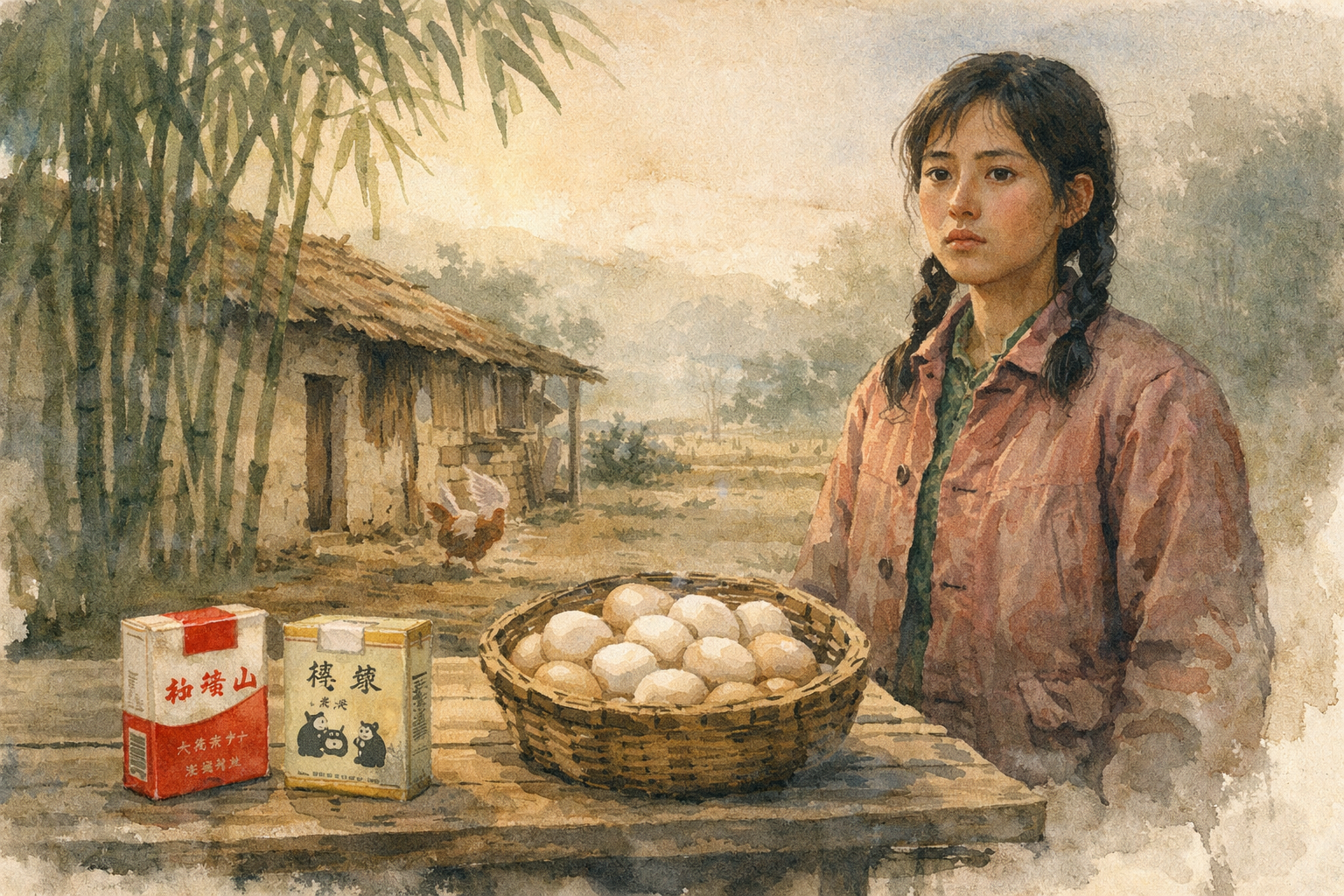
And The Ancestors Sing by Radha Lin Chaddah is a sweeping family saga set in post-Cultural Revolution China, not Canada, following the intertwined lives of Lei — a woman bartered into marriage for cigarettes and eggs in 1978 — and LuLu, a sixteen-year-old migrant who turns to sex work in Shanghai to keep her family alive. Released just three weeks ago on February 3, 2026 [6], the novel has already earned critical praise from Kirkus Reviews [5] and strong reader response on Goodreads [3]. For readers in Canada and across North America who carry their own migration stories, the themes of displacement, sacrifice, and belonging hit close to home.
What Is And The Ancestors Sing About?
The novel opens in 1978, as the Cultural Revolution recedes into memory but its damage lingers in every village and family. Lei, a young woman in rural China, is bartered away into marriage — the price is two cartons of cigarettes and a handful of eggs portersquarebooks.com. She arrives in her new husband’s village, Da Long, and is met with indifference. When disaster strikes, Lei and her husband are forced to join the massive wave of rural-to-urban migration sweeping China, leaving behind children they may never see again.
The second narrative thread follows LuLu, a sixteen-year-old who arrives in Shanghai with nothing but ambition. Denied a factory job because she lacks the proper residency papers — a consequence of the hukou system — she turns to sex work to prevent her family from starving. When a powerful client offers her a path to security, LuLu faces a choice that defines the rest of her life: accept a future that could lift her family out of poverty, or risk everything for autonomy portersquarebooks.com.
These two storylines weave together across decades, revealing how one family’s choices ripple through generations. The novel doesn’t offer easy villains or tidy resolutions. Instead, it shows how systems — economic, political, social — shape individual lives in ways that are often invisible until the damage is done.
The publisher describes it as “a sweeping, multigenerational story of sacrifice, survival, and the unbreakable pull of home” [6].
For readers interested in how global economic forces reshape individual lives, this novel provides a deeply personal lens. It also connects to broader conversations about climate action and sustainable development that continue to drive migration patterns worldwide.
Who Is Radha Lin Chaddah, and Why Does Her Background Matter?
Radha Lin Chaddah is not a typical debut novelist. Born in London to an East Indian father and a Malaysian Chinese mother, she grew up across Kenya, the UK, and the United States. She holds a biology degree from the University of Chicago, an MD and JD from the University of Illinois, and a Master of Public Health from Harvard University. She completed internal medicine residency training and practiced at Massachusetts General Hospital/Harvard Medical School portersquarebooks.com.
Over two decades, Chaddah and her family lived in Boston, New York City, Taipei, Shanghai, Beijing, Princeton, and Philadelphia. She practiced primary care medicine in Boston, NYC, and Beijing, and worked extensively on patient advocacy and mental health stigma reduction.
Why this matters for the novel: Chaddah’s years living and working in China — combined with her medical training — give the book a specificity that purely research-based fiction often lacks. The mental health dimensions of the story, which Kirkus Reviews singled out for praise [5], reflect her professional expertise. The depictions of the hukou system, factory conditions, and urban survival draw from firsthand observation of Chinese society during the period the novel covers.
This combination of medical, legal, and cross-cultural experience is rare in literary fiction. It shows in the novel’s refusal to simplify its characters’ choices into moral binaries.
| Author Detail | Fact |
|---|---|
| Full name | Radha Lin Chaddah |
| Heritage | East Indian (father), Malaysian Chinese (mother) |
| Education | Biology (U of Chicago), MD + JD (U of Illinois), MPH (Harvard) |
| Medical practice | Massachusetts General Hospital / Harvard Medical School; also Beijing |
| Countries lived in | UK, Kenya, USA, Taiwan, China |
| Cities in China | Taipei, Shanghai, Beijing |
For those who appreciate stories rooted in intergenerational engagement and the passing of wisdom across family lines, Chaddah’s own multicultural biography adds another layer of credibility.
How Does the Novel Portray the Hukou System and Rural-to-Urban Migration?
The hukou system is the engine that drives much of the novel’s conflict. In China, the household registration system (hukou) historically divided the population into rural and urban categories. Where you were registered determined your access to education, healthcare, housing, and employment. If you migrated to a city without urban hukou, you were effectively a second-class citizen — present but unrecognized.
The novel states this bluntly: officials divided people into “hukou-holding city dwellers” and “unregistered migrants,” making resource distribution “simple: the haves kept getting to have” probinism.com.
This isn’t just background detail. It’s the reason LuLu can’t get a factory job. It’s the reason Lei’s children are left behind in the village. It’s the mechanism through which the state sorts human beings into categories of deserving and undeserving — a dynamic that readers familiar with immigration systems in Canada, the United States, or Europe will recognize immediately.
Key aspects of the hukou system as depicted in the novel:
- Employment barriers: Without urban registration, migrants were locked out of formal employment, pushing many into informal or dangerous work.
- Education gatekeeping: Children of migrants often couldn’t attend urban schools, forcing families to choose between staying together and giving their children a future.
- Healthcare access: Unregistered migrants had limited or no access to urban medical services.
- Social stigma: The system created a visible underclass within Chinese cities, where millions of people lived and worked but had no legal standing.
The real-world scale of this migration was enormous. Research cited by probinism.com notes that China’s rural migrant population reached 291 million by 2017. The novel captures the human reality behind that number — what it feels like to be one of those 291 million, or to be a child left behind by parents who had no other choice.
This resonates deeply for Canadian readers who have witnessed or experienced the challenges of immigration systems that determine who belongs and who doesn’t. The parallels to debates around affordable housing and newcomer integration in Canadian communities are hard to miss.
What Themes Make This Multigenerational Saga of Resilience Stand Out?
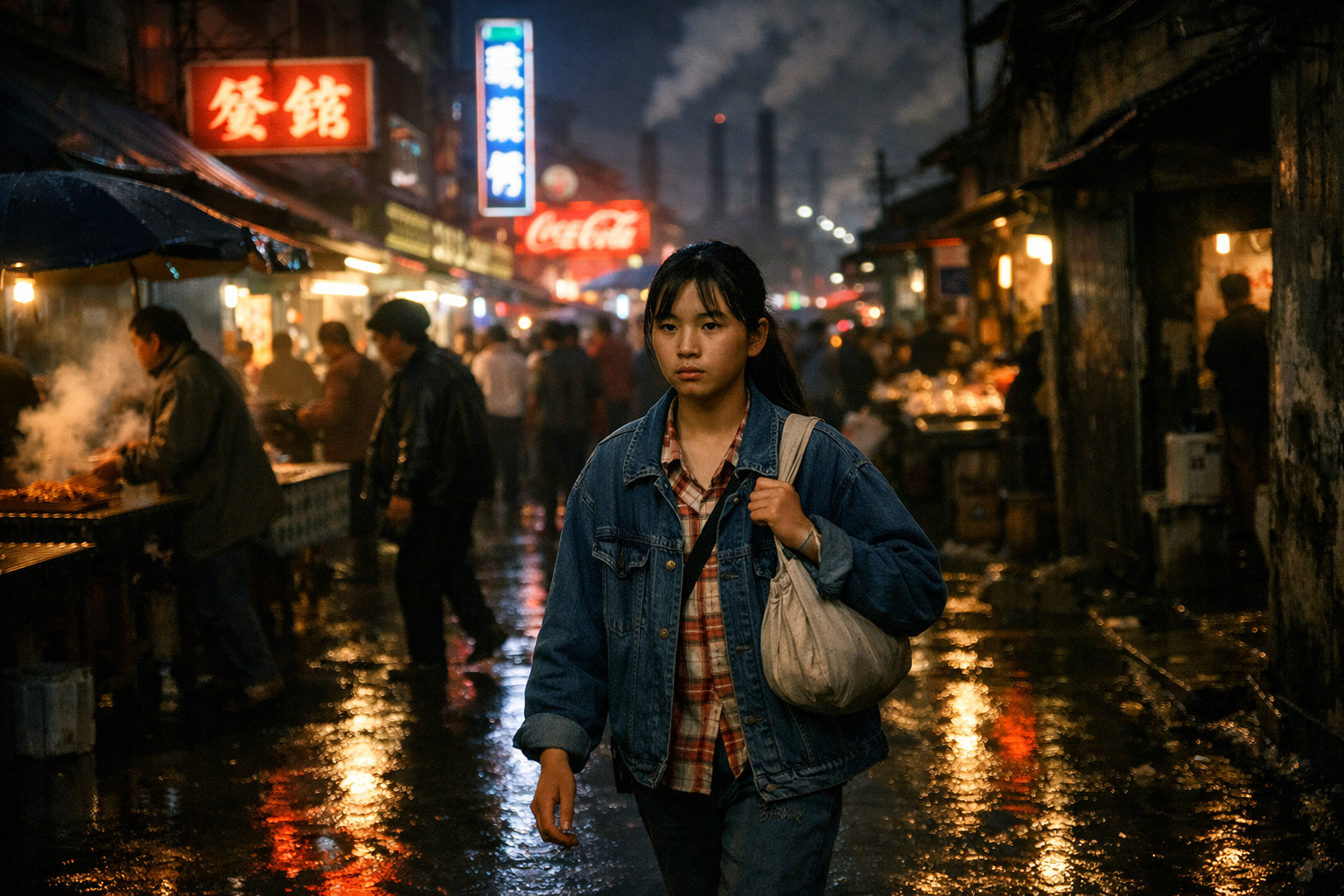
Several themes distinguish And The Ancestors Sing from other novels in the multigenerational saga genre.
Family Sacrifice as a Double-Edged Sword
The novel refuses to romanticize sacrifice. When Lei leaves her children behind to migrate to the city, it’s not presented as noble — it’s presented as devastating. The children don’t understand. The parents carry guilt that reshapes their personalities for decades. Chaddah shows that sacrifice can be both necessary and destructive, sometimes at the same time.
Mental Health Across Generations
Kirkus Reviews specifically praised the novel for “illuminating mental health struggles and the way they impact people’s lives” [5]. This isn’t a novel where trauma is mentioned once and then resolved. The psychological consequences of displacement, exploitation, and family separation accumulate across generations. Characters develop anxiety, depression, and coping mechanisms — some healthy, some not — that echo forward through the family line.
For readers interested in the intersection of mental wellness and daily life, the novel’s treatment of these themes aligns with growing awareness about finding peace through mindfulness and breathing practices as tools for managing inherited stress.
The Meaning of “Home”
Perhaps the novel’s most persistent question: What does home mean when you’ve been forced to leave it? Is it the village you were born in? The city where you built a life? The people you left behind? Chaddah doesn’t answer this question — she lets it sit with the reader, uncomfortable and unresolved.
Systemic Inequality as a Character
The hukou system, the gaokao (national college entrance exam), factory labor conditions, and the sex trade aren’t just settings. They function almost as characters in the novel — forces with their own logic and momentum that shape human lives regardless of individual merit or effort.
Exploitation Without Easy Villains
LuLu’s turn to sex work is depicted without judgment or sensationalism. The novel shows how economic systems create conditions where exploitation becomes a rational choice — and how the people who exploit others are themselves often trapped in systems they didn’t design.
How Does And The Ancestors Sing Compare to Similar Novels?
The publisher positions the book alongside Pachinko by Min Jin Lee and The Island of Sea Women by Lisa See portersquarebooks.com. Goodreads reviewers have also compared it to The Mountains Sing by Nguyễn Phan Quế Mai and The Leavers by Lisa Ko [3].
| Novel | Setting | Time Span | Core Theme | Shared Element with And The Ancestors Sing |
|---|---|---|---|---|
| Pachinko (Min Jin Lee) | Korea / Japan | 1910s–1980s | Identity, discrimination, belonging | Multi-generational family saga across political upheaval |
| The Island of Sea Women (Lisa See) | Jeju Island, Korea | 1930s–2000s | Female friendship, war, survival | Women’s resilience against systemic forces |
| The Mountains Sing (Nguyễn Phan Quế Mai) | Vietnam | 1920s–present | War, family separation, memory | Grandmother-granddaughter narrative across political trauma |
| The Leavers (Lisa Ko) | China / USA | Contemporary | Immigration, identity, motherhood | Undocumented migration, parent-child separation |
| The Immortal Woman (Su Chang) | China / Canada | Cultural Revolution–present | Family secrets, immigration | Chinese historical fiction with immigrant lens |
Choose And The Ancestors Sing if you want a novel that focuses specifically on the hukou system and China’s internal migration, with strong medical and psychological realism. Choose Pachinko if you prefer a broader geographic and cultural scope. Choose The Leavers if you want a story centered on the immigrant experience in North America.
Another recent debut, The Immortal Woman by Su Chang (House of Anansi Press, 2025), covers similar historical ground from a Chinese Canadian perspective 49thshelf.com. Readers interested in the Cultural Revolution’s long shadow would benefit from reading both.
For those who enjoy stories that preserve cultural heritage and historical memory, exploring UNESCO World Heritage sites offers a visual companion to the literary experience.
Where Can Canadian Readers Buy And The Ancestors Sing?
The novel is available through multiple channels:
- Simon & Schuster (distributor): simonandschuster.com/books/And-The-Ancestors-Sing/Radha-Lin-Chaddah/9781998672202 [6]
- Trade paperback: $18.99 USD, 432 pages, ISBN 9781998672202
- eBook: Available via Bookshop.org
- Audiobook: Available via Libro.FM
- Independent bookstores: Listed at Porter Square Books, Bookmarks, and other independents portersquarebooks.com
Canadian readers can order through any bookstore that carries Simon & Schuster titles, including Indigo/Chapters and independent bookshops.
What Author Events Are Scheduled for 2026?
Radha Lin Chaddah has been actively touring since the book’s release. Confirmed events include:
- February 4, 2026: Main Point Books, with special guest host Elise Juska [2]
- February 21, 2026: Barnes & Noble Encinitas, 2:00 PM PT, featuring discussion with Kathy Parrish MD [1]
- February 22, 2026: Chevalier’s Books, Los Angeles, 4:00–5:30 PM [4]
These events typically include readings, author Q&A, and book signings. Check the individual venue websites for the most current details and any virtual attendance options.
For readers in the Georgian Bay area who enjoy live cultural events and performances, keeping an eye on local bookstore calendars for potential future tour stops is worthwhile.
Why Does This Novel Resonate with Canadian Immigrant Readers?
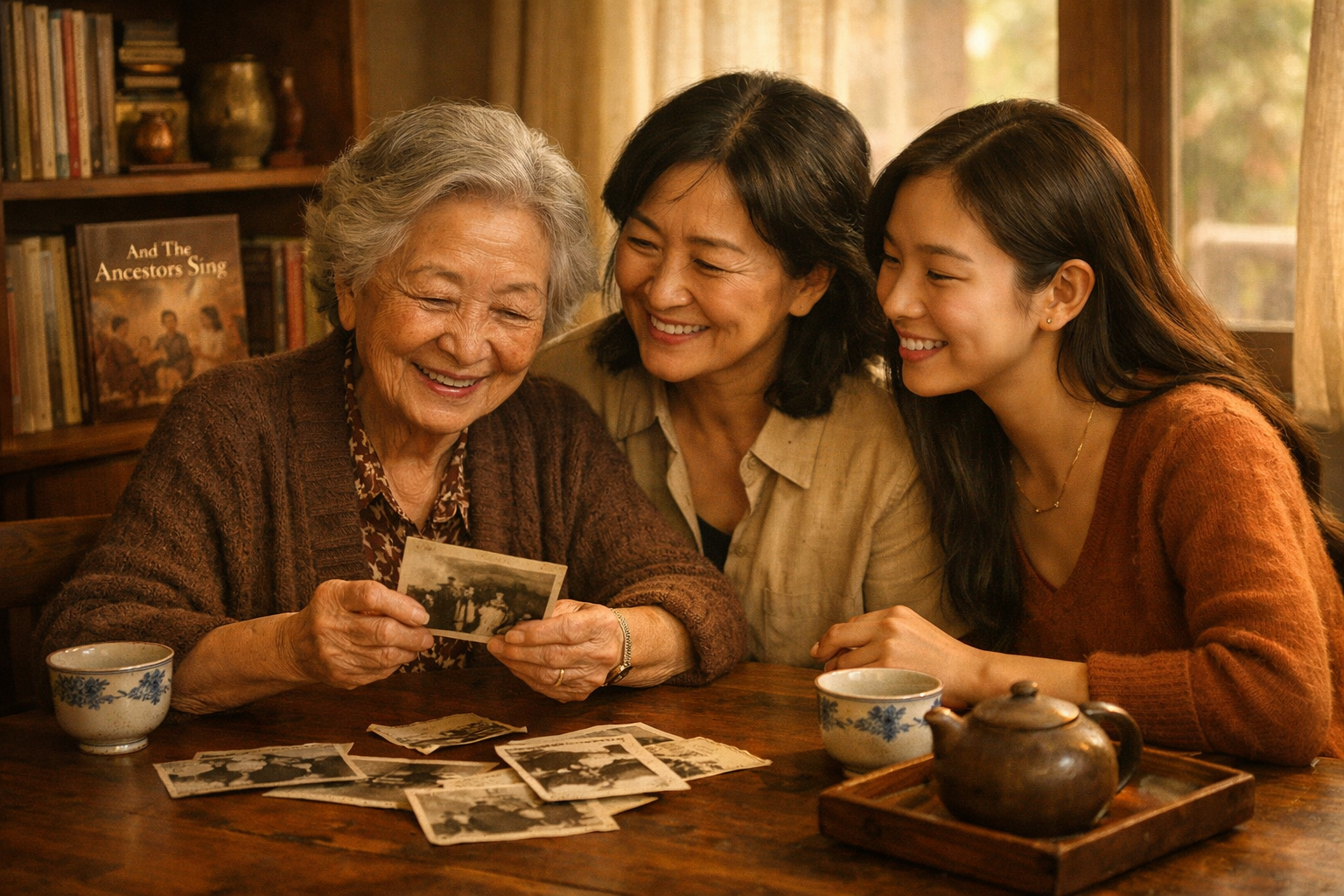
Although And The Ancestors Sing is set entirely in China, its emotional core speaks directly to the immigrant experience in Canada and across North America. The novel’s central questions — What do you owe your family? What do you lose when you leave home? How do systems decide who gets to belong? — are universal questions that Canadian readers from diverse backgrounds carry with them.
Canada’s own history of immigration policy, from the Chinese Exclusion Act to the points-based system, creates a readership uniquely attuned to stories about bureaucratic sorting of human beings. When the novel describes the hukou system dividing people into those who “get to have” and those who don’t, Canadian readers may recognize echoes of their own family histories.
The novel also speaks to the experience of left-behind children — a phenomenon well documented in both Chinese and Canadian contexts, where parents migrate for work and children remain with grandparents or relatives. The emotional weight of this separation, rendered with clinical precision and deep empathy by Chaddah, is one of the book’s most affecting elements.
For communities that value telling their stories and preserving heritage, this novel serves as both mirror and window — reflecting familiar pain while opening a view into a specific historical and cultural context.
Who Should Read This Book (and Who Shouldn’t)?
Read it if you:
- Enjoy multi-generational family sagas with morally complex characters
- Are interested in modern Chinese history, particularly the post-Cultural Revolution period
- Appreciate novels that address mental health with nuance and specificity
- Want fiction that illuminates systemic inequality without preaching
- Loved Pachinko, The Island of Sea Women, or The Mountains Sing
Skip it if you:
- Prefer light, fast-paced reads with clear heroes and villains
- Are uncomfortable with depictions of exploitation, sex work, or trauma
- Want a novel set in Canada (despite some online descriptions, this book is set in China)
- Prefer plots that wrap up neatly
As probinism.com notes, the novel “goes into exploitation, trauma, and systemic cruelty” — it’s not a comfortable read, but it’s a rewarding one.
Frequently Asked Questions
Who wrote And The Ancestors Sing?
The author is Radha Lin Chaddah. Some online sources have incorrectly attributed the book to “Sheniz Chaddah,” but the verified author name from the publisher (Rising Action) and distributor (Simon & Schuster) is Radha Lin Chaddah [6].
Is the novel set in Canada?
No. The novel is set in post-Cultural Revolution China, primarily in rural Da Long village and Shanghai, spanning from 1978 to approximately 2000 portersquarebooks.com. However, its themes resonate strongly with Canadian immigrant readers.
How many pages is the book?
432 pages in the trade paperback edition [6].
What is the hukou system?
China’s household registration system, which historically divided the population into rural and urban categories and determined access to education, healthcare, employment, and social services. It is a central plot mechanism in the novel probinism.com.
Is this book appropriate for younger readers?
The novel deals with mature themes including sex work, exploitation, trauma, and systemic violence. It is best suited for adult readers.
What format is the book available in?
Trade paperback ($18.99), eBook (via Bookshop.org), and audiobook (via Libro.FM) [6].
How has the book been reviewed?
Kirkus Reviews praised Chaddah for writing “with clarity and warmth” and highlighted the novel’s treatment of mental health and globalization [5]. Goodreads reviewers have compared it favorably to Pachinko and The Mountains Sing [3].
Is the author Chinese?
Radha Lin Chaddah was born in London to an East Indian father and a Malaysian Chinese mother. She lived and worked in China for many years, including practicing medicine in Beijing portersquarebooks.com.
When was the book published?
February 3, 2026 [6].
Where can I meet the author?
Author events have been scheduled at Barnes & Noble Encinitas [1], Main Point Books [2], and Chevalier’s Books in Los Angeles [4]. Check the publisher’s website for additional tour dates.
What does the title mean?
The title refers to the ancestral pull that shapes characters’ decisions across generations — the idea that the voices and sacrifices of those who came before continue to influence the living, even when families are separated by distance and circumstance.
Is this a debut novel?
Yes. And The Ancestors Sing is Radha Lin Chaddah’s debut novel [6].
Conclusion
And The Ancestors Sing by Radha Lin Chaddah is a significant debut that deserves attention from readers who care about family, migration, and the systems that shape human lives. Released just weeks ago, it arrives at a moment when conversations about immigration, belonging, and intergenerational trauma are more relevant than ever — in Canada and globally.
Actionable next steps:
- Order the book through Simon & Schuster or your local independent bookstore.
- Check for author events near you — Chaddah’s book tour is ongoing through February and March 2026 [1][2][4].
- Pair it with a companion read like The Immortal Woman by Su Chang or Pachinko by Min Jin Lee for a broader perspective on Asian multigenerational fiction.
- Start a book club discussion — the novel’s moral complexity and systemic themes make it ideal for group conversation. Consider discussion questions around the hukou system, family sacrifice, and what “home” means across generations.
- Share the correct author attribution — if you see the book listed under “Sheniz Chaddah,” note that the verified author is Radha Lin Chaddah.
This is a novel that stays with you. It doesn’t offer comfort, but it offers something better: understanding.
References
[1] 9780062203060 0 – https://stores.barnesandnoble.com/event/9780062203060-0
[2] Radha Lin Chaddah Special Guest Elise Juska – https://mainpointbooks.com/event/2026-02-04/radha-lin-chaddah-special-guest-elise-juska
[3] 230600972 And The Ancestors Sing – https://www.goodreads.com/book/show/230600972-and-the-ancestors-sing
[4] And Ancestors Sing – https://chevaliersbooks.com/event/2026-02-22/and-ancestors-sing
[5] And The Ancestors Sing – https://www.kirkusreviews.com/book-reviews/radha-lin-chaddah/and-the-ancestors-sing/
[6] simonandschuster – https://www.simonandschuster.com/books/And-The-Ancestors-Sing/Radha-Lin-Chaddah/9781998672202
Additional sources consulted: probinism.com, portersquarebooks.com, bookmarksnc.org, 49thshelf.com
Content, illustrations, and third-party video appearing on GEORGIANBAYNEWS.COM may be generated or curated with AI assistance or reproduced pursuant to the fair dealing provisions of the Copyright Act, R.S.C. 1985, c. C-42. Attribution and hyperlinks to original sources are provided in acknowledgment of applicable intellectual property rights. Such referencing is intended to direct traffic to and support the original rights holders’ platforms.
Much Appreciate You Sharing This Post - It Helps MUCH!!!