
















Beaver River Rat Race in Clarksburg, Thornbury: A Historic Spring Tradition That Drew Thousands
Last updated: February 19, 2026
Key Takeaways
- The Beaver River Rat Race ran from spring 1957 through the early 1980s, bringing 30,000-40,000 spectators to small Ontario towns
- Competitors built homemade vessels from diverse materials and raced down the Beaver River between Heathcote and Clarksburg each April
- The event ended because risks became too significant, but its legacy lives on through digital archives maintained by The Blue Mountains Public Library
- The race route covered the Beaver River corridor through Heathcote, Slabtown, and into Clarksburg and Thornbury
- Modern preservation efforts allow anyone worldwide to explore photographs, stories, and archival materials from this unique Canadian tradition
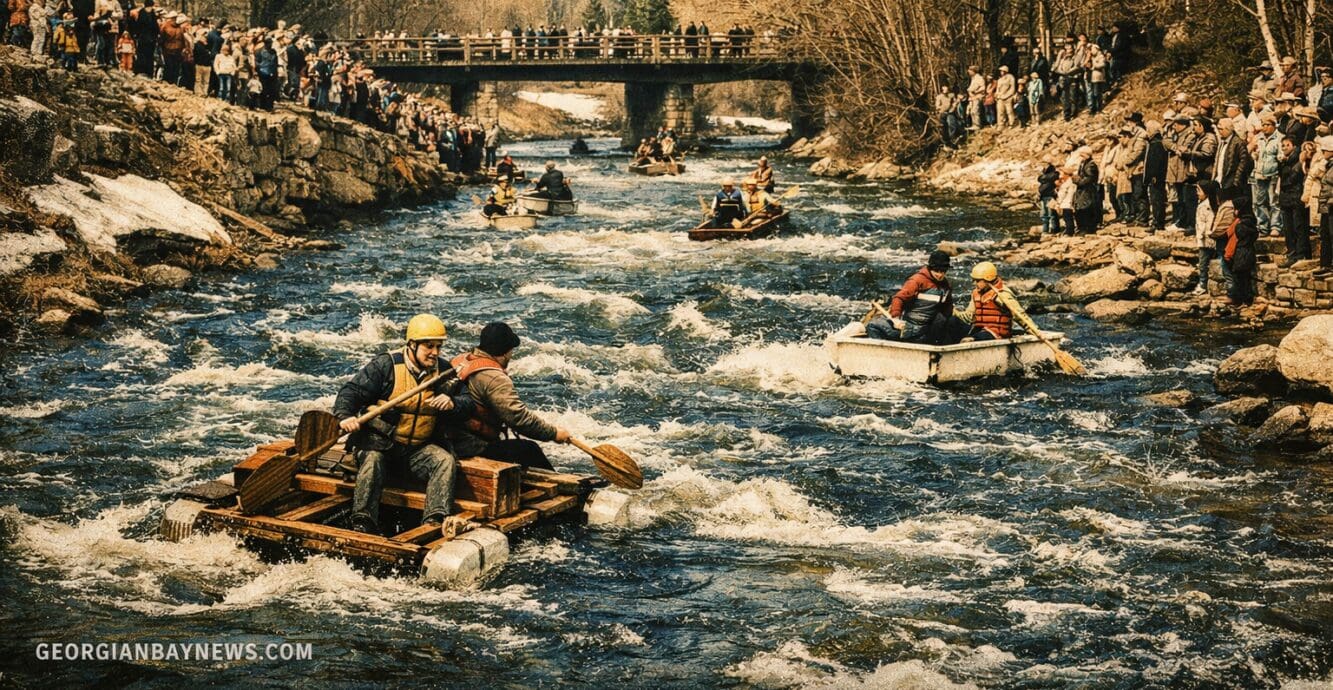
The Beaver River Rat Race in Clarksburg, Thornbury was a legendary spring river race that ran for over two decades (1957 – early 1980s) along Ontario’s Beaver River. Participants built creative homemade vessels and navigated rushing spring waters while tens of thousands of spectators lined the riverbanks. The event stopped due to safety concerns but remains preserved through digital collections that celebrate this remarkable piece of Canadian community history.
What Was the Beaver River Rat Race in Clarksburg, Thornbury?
The Beaver Valley Rat Race was a community river racing event where participants built homemade watercraft and navigated the Beaver River during spring thaw conditions. The race officially began in spring 1957 when 2-3 homemade vessels launched on the Beaver River in Heathcote, marking the start of what would become a beloved regional tradition[2][4].
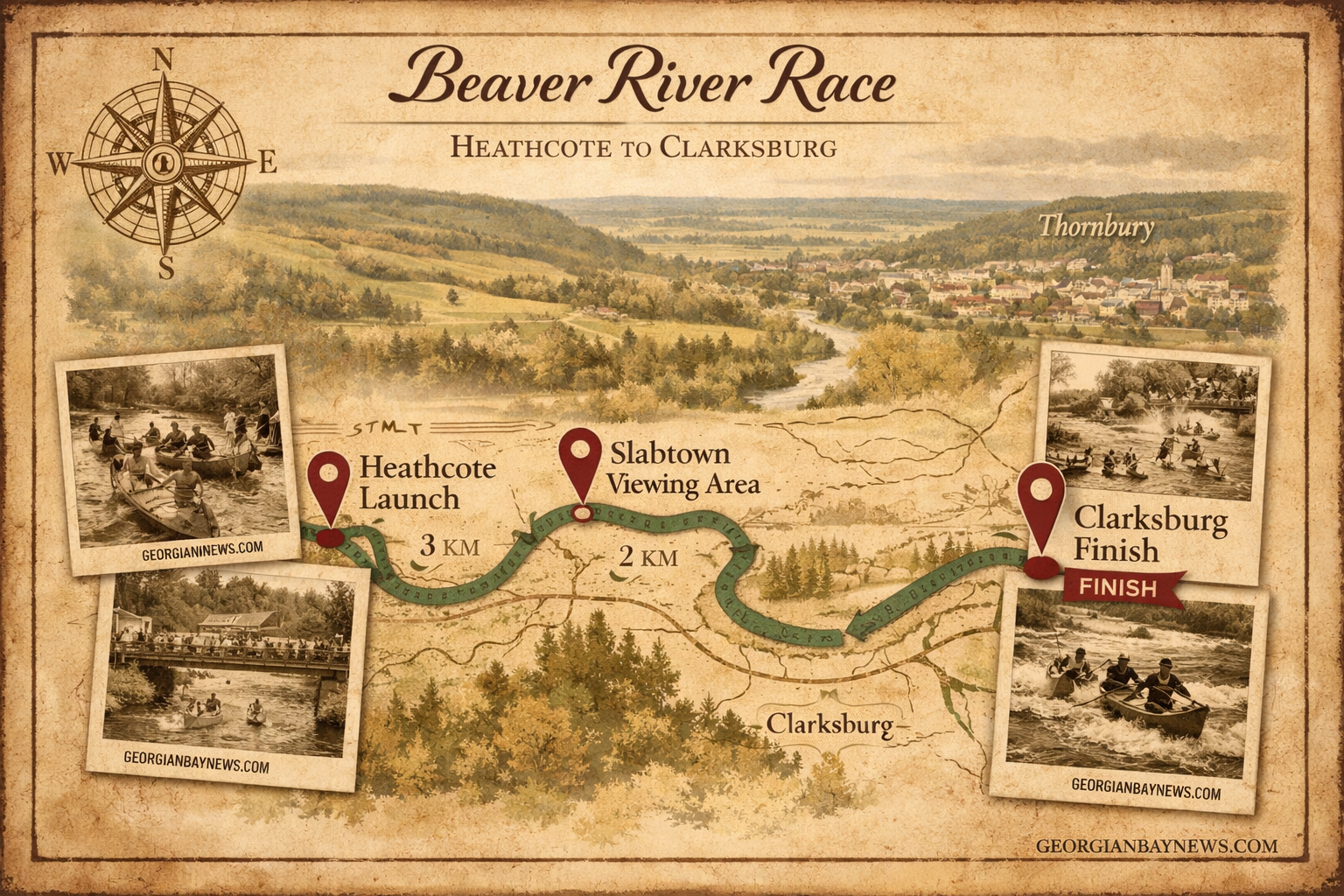
The event took place each April along the Beaver River, running between Heathcote and Clarksburg in what was then Collingwood Township. Spectators gathered at key viewing points including Heathcote and Slabtown to watch the creative vessels navigate the rushing spring waters[1].
Key characteristics included:
- Homemade vessels constructed from a wide range of materials
- Creative and entertaining vessel designs that showcased builder ingenuity
- Spring timing that coincided with river thaw and high water levels
- Massive community participation and spectator attendance
- Route through multiple small towns in the Beaver Valley region
The race represented more than just competition—it became a celebration of community spirit, creativity, and the arrival of spring in Ontario’s Grey County region.
Where Did the Beaver River Rat Race Take Place?
The race route followed the Beaver River through several communities in what is now The Blue Mountains municipality. The primary race corridor ran from Heathcote to Clarksburg, with Thornbury also playing a significant role in the event’s geography and community support[1].
Primary locations:
- Heathcote: Launch point where vessels entered the water
- Slabtown: Key spectator viewing area along the route
- Clarksburg: Finish line and celebration area
- Thornbury: Adjacent community that supported and attended the event
The Beaver River itself provided the natural racecourse, with spring conditions creating challenging rapids, currents, and obstacles that tested both vessel construction and navigator skill. The river’s path through the Beaver Valley offered scenic backdrops of rolling hills, farmland, and small-town Ontario charm.
Choose Heathcote as your starting point if you’re tracing the historical route today—the community still exists and provides access to the upper Beaver River where the adventure began each spring.
When Did the Beaver River Rat Race Run and Why Did It End?
The Beaver River Rat Race in Clarksburg, Thornbury operated from 1957 through the early 1980s, spanning more than two decades of spring celebrations[1][2]. The event consistently took place in April each year, timed to coincide with spring thaw when the Beaver River ran high and fast with melting snow and spring rains[1].
Timeline highlights:
- Spring 1957: First race with 2-3 homemade vessels[2][4]
- Late 1950s-1970s: Peak popularity period
- Peak attendance: 30,000-40,000 spectators in the tiny communities[8]
- Early 1980s: Event discontinued due to safety concerns[1]
The race stopped because risks became too much over time[1]. As the event grew in popularity, the combination of unpredictable spring river conditions, increasingly ambitious vessel designs, and massive crowds created safety challenges that organizers could no longer manage responsibly.
Common mistake: Some assume the race ended due to lack of interest. In reality, it remained popular until safety concerns forced its discontinuation—a responsible decision that prioritized participant and spectator wellbeing over entertainment.
How Were Vessels Built for the Race?
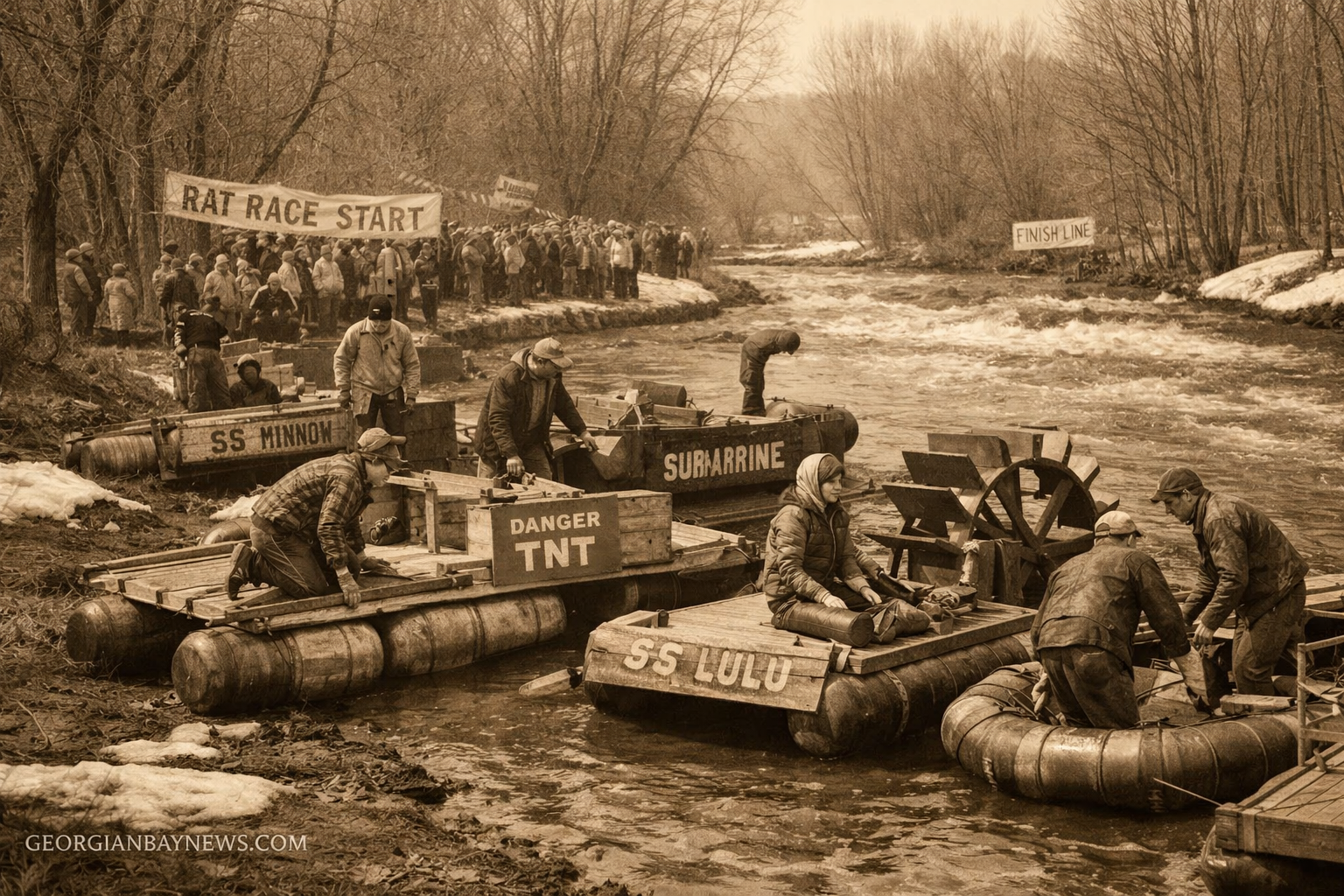
Participants constructed vessels from a wide range of materials with designs that ranged from practical to wildly entertaining[1]. Unlike modern regulated races, the Beaver Valley Rat Race encouraged creativity and innovation without strict construction guidelines.
Common construction approaches:
- Repurposed barrels and drums lashed together as flotation
- Wooden frame rafts with waterproofed decking
- Modified canoes and small boats with added features
- Completely original designs using farm materials and household items
- Decorative elements that entertained crowds while serving structural purposes
The lack of strict rules meant builders could experiment freely. Some vessels prioritized speed and maneuverability, while others focused on spectacle and humor. The variety of designs became one of the event’s defining characteristics, ensuring no two races looked the same.
Decision rule: Choose durability over speed if you were building for the Beaver River—spring conditions included debris, rocks, and unpredictable currents that could destroy lightweight vessels quickly.
What Was the Community Impact of the Beaver River Rat Race?
The race brought 30,000-40,000 people to the tiny towns of Clarksburg, Heathcote, and Thornbury[8]—a staggering number that transformed these small communities each April. For context, these towns had populations measured in hundreds, not thousands, making the influx of spectators a massive economic and social event.
Community benefits included:
- Significant economic boost for local businesses during early spring
- Regional identity and pride centered on this unique tradition
- Intergenerational participation with families building vessels together
- Media attention that put Beaver Valley communities on provincial maps
- Social cohesion as neighbors collaborated on builds and event support
The event also created lasting memories and connections. Families who attended in the 1960s and 1970s still share stories about the creative vessels, the excitement of spring racing, and the community atmosphere that made the Beaver Valley Rat Race special.
For those interested in how communities build traditions around local events, exploring the affordable housing and community development initiatives in the region today shows how Beaver Valley continues to evolve while honoring its heritage.
How Is the Beaver River Rat Race Preserved Today?
The Beaver Valley Rat Race now exists as a digitized online collection maintained by The Blue Mountains Public Library and the Craigleith Heritage Depot[1][2]. This preservation effort ensures that future generations can explore this unique piece of Canadian community history, even though the physical event no longer takes place.
Digital archive features:
- Historical photographs from race events spanning the 1950s-1980s
- Personal stories and memories from participants and spectators
- Archival materials documenting race organization and community involvement
- Submission portal for community members to contribute additional materials
- Free public access through the library’s online collections platform
The library actively accepts digital submissions of photographs, stories, and archival materials related to the race[1][2]. This crowdsourced approach enriches the collection with diverse perspectives and previously unseen materials from family archives.
Access the collection: Visit The Blue Mountains Public Library’s online collections to explore digitized materials[1]. The collection serves researchers, history enthusiasts, former participants, and anyone curious about unique Canadian traditions.
Edge case: If you have family photographs or stories from the Beaver River Rat Race, you can contribute to the digital archive regardless of where you live now. The library welcomes submissions from former residents who have relocated across Canada, the United States, or internationally.
What Can Modern Communities Learn from the Beaver River Rat Race?
The Beaver River Rat Race demonstrates how grassroots community events can create lasting cultural impact without corporate sponsorship or professional organization. The race succeeded because it embraced local creativity, welcomed broad participation, and celebrated community identity during a specific seasonal moment.
Lessons for modern event organizers:
- Embrace local geography: The Beaver River and spring thaw created natural timing and setting
- Encourage creativity over competition: Vessel variety mattered more than winning
- Build intergenerational appeal: Families participated together across age groups
- Accept organic growth: The event expanded naturally through word-of-mouth
- Know when to stop: Organizers ended the race when safety became paramount
Modern communities in the Beaver Valley region continue this tradition of creative community building. The area hosts various cultural and recreational events that honor local heritage while adapting to contemporary safety standards and community needs.
For those interested in how regions maintain cultural identity while growing, exploring arts and culture initiatives in the area shows this ongoing commitment to community-centered programming.
Common mistake: Trying to recreate historical events exactly as they were. Instead, modern communities should extract the principles—creativity, inclusivity, local identity—and apply them to new events that fit current contexts and safety standards.
How Does the Beaver River Rat Race Compare to Other Regional Traditions?
The Beaver Valley Rat Race shares characteristics with other spring thaw celebrations across Canada and northern United States, but its scale and longevity made it distinctive. Similar events existed in other communities, but few attracted 30,000-40,000 spectators to towns with populations under 1,000.
Comparison with similar events:
| Feature | Beaver Valley Rat Race | Typical River Races | Modern Festivals |
|---|---|---|---|
| Duration | 25+ years (1957-1980s) | Often 5-10 years | Ongoing with permits |
| Attendance | 30,000-40,000 | 1,000-5,000 | Varies widely |
| Vessel rules | Minimal restrictions | Moderate guidelines | Strict safety codes |
| Timing | Spring thaw (April) | Summer months | Year-round options |
| Preservation | Digital archive | Often undocumented | Active events |
The race’s timing during unpredictable spring conditions added risk but also excitement that summer events couldn’t match. The rushing water, debris, and variable weather created authentic challenges that tested both vessels and navigators.
For context on how the region celebrates community traditions today, the Thornbury Turkey Trot represents a modern iteration of community-centered events in the same geographic area[3].
Who Should Care About the Beaver River Rat Race in 2026?
The Beaver River Rat Race matters to multiple audiences, each finding different value in this historical tradition. Understanding who benefits from knowing this history helps explain why preservation efforts continue decades after the last race.
Key audiences:
- Local residents: Understanding community heritage and identity
- History researchers: Studying grassroots event organization and community traditions
- Event organizers: Learning from successful community engagement models
- Seniors: Reconnecting with memories and sharing stories with younger generations
- Educators: Teaching about regional history and community development
- Tourism professionals: Promoting Beaver Valley heritage and cultural tourism
- Canadians broadly: Appreciating unique regional traditions across the country
The race also interests international audiences studying community resilience, creative problem-solving, and how small towns create cultural significance beyond their population size. The event demonstrates that meaningful traditions don’t require major cities or massive budgets—just community commitment and creativity.
For seniors who participated in or attended the races, the digital archives provide opportunities to share experiences with family members and contribute to historical preservation. For younger generations, the race offers insights into how their communities built identity and celebration before digital entertainment dominated leisure time.
FAQ
What years did the Beaver River Rat Race operate?
The race ran from spring 1957 through the early 1980s, spanning more than 25 years of annual spring events[1][2].
Where exactly did the race take place?
The race route followed the Beaver River from Heathcote to Clarksburg, with spectator viewing areas at Heathcote, Slabtown, and Clarksburg. Thornbury was part of the broader community support network[1].
How many people attended the Beaver River Rat Race?
At its peak, the race attracted 30,000-40,000 spectators to the small communities of Clarksburg, Heathcote, and Thornbury[8].
Why did the Beaver River Rat Race end?
The event stopped because risks became too significant over time, with safety concerns for participants and spectators ultimately leading to discontinuation in the early 1980s[1].
What kinds of vessels did people build?
Participants constructed vessels from a wide range of materials including barrels, wood, repurposed boats, and creative original designs. The variety and entertainment value mattered as much as functionality[1].
When during the year did races occur?
Races took place each April, timed to coincide with spring thaw when the Beaver River ran high and fast with melting snow and spring rains[1].
Can I still see photos and stories from the race?
Yes, The Blue Mountains Public Library maintains a digitized online collection with photographs, stories, and archival materials accessible to anyone worldwide[1][2].
Can I contribute my own photos or memories?
The library accepts digital submissions of photographs, stories, and archival materials from anyone with Beaver Valley Rat Race memories or materials[1][2].
What communities were involved in the race?
Heathcote, Slabtown, Clarksburg, and Thornbury all participated, with the race route running through what is now The Blue Mountains municipality in Grey County, Ontario.
Were there rules about vessel construction?
The race had minimal restrictions, encouraging creativity and diverse designs rather than strict construction guidelines. This freedom contributed to the event’s entertainment value and community participation.
How does this compare to modern river races?
Modern events typically have stricter safety regulations, smaller attendance, and summer timing. The Beaver Valley Rat Race’s spring conditions and massive crowds made it unique[1][8].
Is there anything similar happening in the area today?
While the original race doesn’t continue, the Beaver Valley region hosts various community events that honor local heritage and encourage community participation, though with modern safety standards.
Conclusion: Preserving Community Heritage for Future Generations
The Beaver River Rat Race in Clarksburg, Thornbury represents more than just a quirky historical event—it demonstrates how small communities create meaningful traditions that resonate for generations. From its humble beginning with 2-3 homemade vessels in 1957 to its peak attracting 40,000 spectators, the race embodied creativity, community spirit, and the celebration of spring in rural Ontario.
The event’s discontinuation in the early 1980s due to safety concerns shows responsible decision-making, but its preservation through digital archives ensures the stories, photographs, and memories remain accessible worldwide. The Blue Mountains Public Library’s ongoing collection efforts allow anyone to explore this unique piece of Canadian heritage.
Next steps for different audiences:
For local residents: Visit the digital archives and consider contributing family photographs or stories to enrich the collection[1].
For history enthusiasts: Explore the broader local history collections maintained by The Blue Mountains Public Library to understand regional development[5].
For event organizers: Study the race’s grassroots success model while incorporating modern safety standards into community events.
For seniors with memories: Share your experiences with younger family members and consider submitting materials to the archive.
For visitors: Plan a trip to the Beaver Valley region to explore the communities where this remarkable tradition took place and experience the area’s ongoing cultural offerings.
The Beaver Valley Rat Race proves that community traditions don’t need massive budgets or professional organization to create lasting impact. They need creativity, local participation, and commitment to shared celebration—lessons that remain relevant for communities worldwide in 2026 and beyond.
References
[1] Beaver River Rat Race – https://bluemountains.librariesshare.com/beaver-river-rat-race/
[2] Beaver River Rat Race Online Exhibit – https://www.thebluemountainslibrary.ca/online-collections/beaver-river-rat-race-online-exhibit
[3] Thornbury Turkey Trot – https://www.tcrotary.ca/stories/thornbury-turkey-trot
[4] Riot Of Spring – https://onthebaymagazine.com/riot-of-spring/
[5] Local History – https://www.thebluemountainslibrary.ca/online-collections/local-history
[8] Beaver River Rat Race – https://www.mountainlifemedia.ca/2015/04/beaver-river-rat-race/
Some content and illustrations on GEORGIANBAYNEWS.COM are created with the assistance of AI tools.
GEORGIANBAYNEWS.COM shares video content from YouTube creators under fair use principles. We respect creators’ intellectual property and include direct links to their original videos, channels, and social media platforms whenever we feature their content. This practice supports creators by driving traffic to their platforms.