















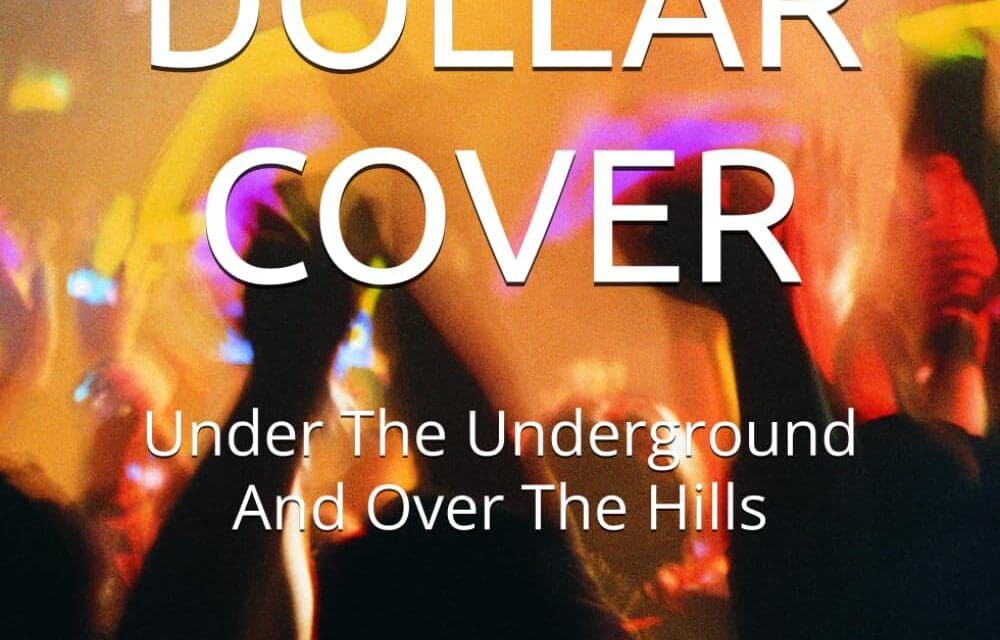
Book Excerpt from “Two Dollar Cover – Under The Underground and Over The Hill” by Bill Monahan

Sharing is SO MUCH APPRECIATED!


One of the best stories came from a well-known Owen Sound musician. Steve Dickinson told me that his brother Larry was “the real talent in the family”. I learned that Larry was on a lot of lists of who to call when somebody wanted a guitar player. But Steve’s story was unlike anything I’d ever heard.
As a songwriter, Steve had recorded a collection of original songs for his third CD, working with producer Rick Hutt, who had produced Anne Murray and The Northern Pikes. The resulting album, called “Good Old Days”, had a distinctive classic rock sound. More distinctive than anything was Steve’s powerful vocals. When Rick Hutt noted the similarity between Steve’s voice and that of Bob Segar, he suggested that he send a tape to The Silver Bullet Band, Segar’s original backing band.
As it turned out the Silver Bullet Band had been on hiatus for years, waiting for Segar to decide if he was going to go out on the road again. When sax player Alto Reed heard Steve’s tape, he was instantly excited at the idea of being able to play again with a vocalist of that caliber.
They began working together and released an album called “Tonight We Ride” in 2009. The adventure took Steve to Detroit where he became acquainted with the musical community there. That included Ray Minhinnett, long time lead guitarist for Frankie Miller’s Full House Band. He and Steve became friends.
Frankie Miller was a Scottish blues harp player and singer from the sixties who had written songs for many British artists of the period and had recently fallen on hard times. Now some of those who had benefitted from his talents were coming together to help out.
“Double Take”, the Frankie Miller tribute album, had been initiated by Rod Stewart. He had contacted Miller’s family looking for unreleased songs he might record. He discovered a cache of eighteen songs and decided to pull together world-class singers to record them with Miller’s band. Frankie Miller, who sang just one song on the album, had been forced to retire from performing in 1994 after suffering a brain hemorrhage. When Ray Minhinnett was brought into the project, he made sure the producers became aware of Dickinson’s vocal talent and Steve was hired to add a song to the album, which included contributions from the likes of Willie Nelson, Elton John, Rod Stewart, Joe Walsh, and Huey Lewis, among others.
Steve told me about the surreal experience of touring Europe as a Bob Segar clone working with the original band. At one point he and another band member were standing outside the arena during intermission, taking a smoke break, when he saw a crowd running toward them. They watched them curiously until the guy with him hollered, “They’re coming for you! They think you’re Bob Segar!”
What should have been a lift-off to a big career didn’t happen. Steve came home to deal with family matters and wasn’t able to get anything going again. When I talked to him, he was intent on getting back into music locally.
“At the end of the day,” he said, “I don’t sing any different in England than I do here.”
To purchase Bill’s book: CLICK HERE
Remember Toronto’s Queen West scene in the 80’s and 90’s?
Clubs like The El Mocambo and The Horseshoe Tavern were world famous. Local original bands played in clubs every night for a $2 cover. Original live music was everywhere, supported by The Spirit of Radio and programs like The New Music on CITY-TV. There was an abundance of unclassifiable artists, each doing their thing and making waves. Toronto was a hub of the burgeoning Canadian music business. There were the name bands on their way to world acclaim, then there was the underground – indie labels that catered to niche markets. Under the underground there was an even lower level, nurtured in small basements like Fat Albert’s Coffee House, where money meant nothing and originality was all that mattered. That’s where Amatish Music came from, an indie label trying to create its own genre. It’s Bill Monahan’s story of his own exploration in search of what songs do to us, what process creates them, and how they reach the public. From early explorations of Yorkville when Joni Mitchell still played The Riverboat, a muddy weekend at Woodstock, an evening on the set of “Going Down The Road”, and a taste of the “hippie commune” life, the story goes on to follow the quixotic adventures of an idealist in search of a song, and the colourful cast of characters encountered along the way. Pick up a copy and lose yourself in a world that used to be.
To purchase Bill’s book: CLICK HERE
Sharing is SO MUCH APPRECIATED!