





















Budget-Conscious Global Eating: Building Nutritious International Meals Under $2.50 Per Serving
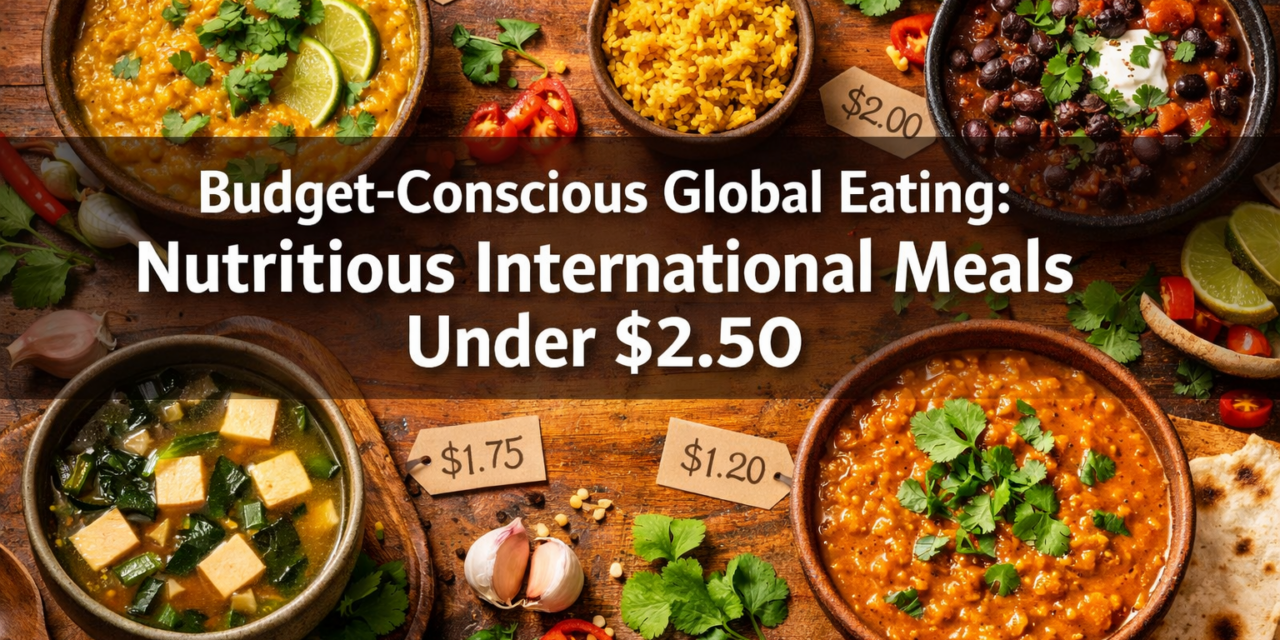
Across the developing world, families have fed themselves well for generations — not despite limited budgets, but because of them. Traditional cuisines from India, Ethiopia, Mexico, and Morocco were engineered around affordable, nutrient-dense staples long before “budget meal prep” became a social media trend. Budget-Conscious Global Eating: Building Nutritious International Meals Under $2.50 Per Serving is not a compromise — it is, in many ways, a return to the smartest food traditions on earth.
Key Takeaways
- 🌍 Traditional cuisines from developing nations naturally prioritize low-cost, high-nutrition ingredients like lentils, legumes, and whole grains.
- 💰 Nutritious international meals can consistently be built for under $2.50 per serving with smart ingredient sourcing.
- 🛒 Buying near-expired dairy, stocking sale proteins, and using dried legumes over canned can cut costs by 30–50%. [1]
- 🌶️ Global spice blends add rich flavor without adding significant cost.
- 📊 Meal planning around 5–7 core pantry staples is the most reliable framework for staying under budget.
Why Global Cuisines Are the Ultimate Budget-Eating Blueprint
The world’s most flavorful food traditions were born from necessity. Indian dal, Moroccan harira soup, Ethiopian misir wat, and Mexican frijoles de olla all share a common DNA: legumes, grains, aromatics, and spice — ingredients that cost very little and deliver enormous nutritional value.
Lentils, for example, provide roughly 18 grams of protein per cooked cup and cost as little as $0.10–$0.20 per serving when purchased dried in bulk. Brown rice, a staple across Asia and Latin America, costs under $0.15 per serving. When these ingredients form the backbone of a meal, hitting the $2.50 per serving target becomes straightforward rather than stressful. [5]
💬 “The most nutritious diets in the world are also, historically, the most affordable — because they were designed by people who couldn’t afford to waste anything.”
This insight is the foundation of Budget-Conscious Global Eating: Building Nutritious International Meals Under $2.50 Per Serving — and it reframes the challenge entirely. Instead of stripping meals down to bland basics, the goal is to borrow wisdom from culinary traditions that have always made little go a long way.
The Core Pantry: 7 Staples That Power International Meals
Building a global budget kitchen starts with stocking the right foundation. The following staples appear across dozens of world cuisines and keep per-serving costs well below the $2.50 ceiling:
| Ingredient | Avg. Cost Per Serving | Key Cuisines |
|---|---|---|
| Dried red lentils | $0.12 | Indian, Ethiopian, Turkish |
| Brown rice | $0.15 | Japanese, Mexican, West African |
| Canned/dried chickpeas | $0.18 | Moroccan, Middle Eastern, Indian |
| Canned tomatoes | $0.20 | Italian, Mexican, North African |
| Eggs | $0.25–$0.35 | Global |
| Dried black beans | $0.14 | Mexican, Cuban, Brazilian |
| Oats | $0.10 | Scottish, American, Indian (upma) |
Pairing two or three of these staples with a small amount of aromatics — onion, garlic, ginger, cumin, turmeric, paprika — produces meals that are both nutritionally complete and culturally authentic.
One proven cost-cutting strategy: purchase near-expiry dairy products (plain yogurt, paneer) at 30–50% discounts to add protein and creaminess to dishes like Indian raita or Turkish cacık. [1] These small savings compound quickly across a week of cooking.
Budget-Conscious Global Eating: Building Nutritious International Meals Under $2.50 Per Serving — Meal Ideas by Region
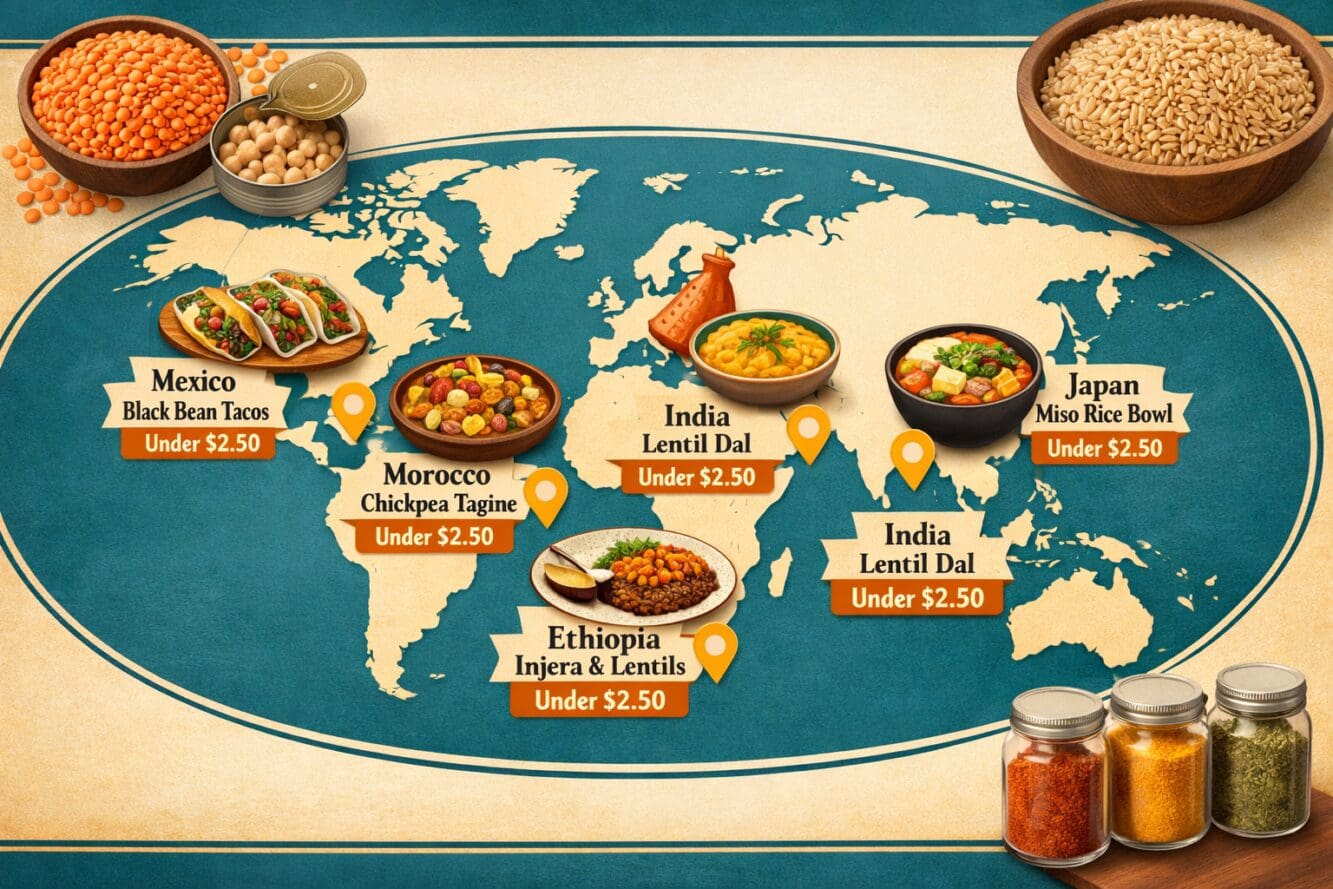
🇮🇳 South Asia: Dal Tadka (~$0.85/serving)
Red lentils simmered with turmeric, cumin, and canned tomatoes, finished with a ghee-fried garlic tadka. Served over rice. Protein: ~16g. Cost: under $1.00.
🇲🇽 Mexico: Black Bean Tacos (~$1.40/serving)
Seasoned black beans with cumin, chili powder, and lime, served in corn tortillas with shredded cabbage. Fiber: ~14g per serving. Cost: under $1.50.
🇲🇦 Morocco: Chickpea Harira Soup (~$1.60/serving)
Chickpeas, lentils, tomatoes, and warm spices (cinnamon, ginger, coriander) in a rich broth. One of the most complete budget meals in global cuisine.
🇯🇵 Japan: Miso Rice Bowl (~$1.80/serving)
Brown rice topped with soft-boiled egg, steamed greens, and a miso-sesame drizzle. Miso paste costs roughly $0.08 per serving and delivers gut-healthy probiotics.
🇪🇹 Ethiopia: Misir Wat (~$1.20/serving)
Spiced red lentil stew cooked with berbere spice blend and served with flatbread. Berbere can be made at home from pantry spices for pennies per batch.
Smart Shopping Strategies That Keep Costs Under Control
Achieving Budget-Conscious Global Eating: Building Nutritious International Meals Under $2.50 Per Serving consistently requires more than just recipe selection — it demands intentional shopping habits:
- Buy dried over canned wherever possible (30–40% cheaper per serving) [5]
- Shop at ethnic grocery stores — South Asian, Latin, and Middle Eastern markets routinely price staples 20–40% lower than mainstream supermarkets
- Build meals around weekly sales rather than fixed recipes [1]
- Batch cook grains and legumes on weekends to reduce weeknight cooking time and food waste
- Freeze surplus portions — soups, stews, and bean dishes freeze exceptionally well
For those interested in how community-based living can further reduce food costs through shared resources, cohousing communities are emerging as a practical model worth exploring.
Nutrition doesn’t have to suffer at low price points. Lentils, beans, eggs, and whole grains together cover the full spectrum of essential amino acids, complex carbohydrates, iron, and B vitamins. Pairing legumes with grains — as virtually every traditional cuisine already does — creates complete protein profiles without meat. [5]
Staying informed about food and health trends also helps budget eaters make smarter choices. For example, understanding the surprising link between everyday beverages and mental health can guide decisions about what to drink alongside budget meals. Similarly, dermatologist insights on everyday wellness habits remind us that total health extends beyond the plate.
For readers curious about how global cultures preserve their food and heritage traditions, this exploration of UNESCO World Heritage sites offers rich context on why traditional practices — including food culture — matter deeply.
Those interested in the broader economics of everyday spending will find value in understanding how tariffs affect consumer food costs — a timely consideration for anyone trying to maintain a grocery budget in 2026.
Conclusion: Start With One Bowl, Build a Global Kitchen
The path into budget-conscious global eating doesn’t require a complete pantry overhaul. Start with one dish — a pot of dal, a bowl of harira, or a simple miso rice bowl — and build from there.
Actionable next steps for 2026:
- ✅ Stock three core staples this week: dried lentils, brown rice, canned tomatoes
- ✅ Visit a local ethnic grocery store and compare prices on legumes and spices
- ✅ Batch cook one global staple dish on the weekend and portion it for three meals
- ✅ Explore one new cuisine per month using the regional meal ideas above
- ✅ Track per-serving costs using a simple notes app to stay accountable
The world’s greatest food cultures have always known that eating well on a budget is not only possible — it is an art form. Budget-Conscious Global Eating: Building Nutritious International Meals Under $2.50 Per Serving is simply the modern name for a very old and very wise way of living.
References
[1] How To Make Nutritious Meals For 1 Dollar Day Per Person – https://budgetsaresexy.com/how-to-make-nutritious-meals-for-1-dollar-day-per-person/
[2] Watch – https://www.youtube.com/watch?v=-byaO73WHcw
[5] Meals Under 2 Dollars – https://www.eatlove.is/blog/meals-under-2-dollars
Content, illustrations, and third-party video appearing on GEORGIANBAYNEWS.COM may be generated or curated with AI assistance or reproduced pursuant to the fair dealing provisions of the Copyright Act, R.S.C. 1985, c. C-42. Attribution and hyperlinks to original sources are provided in acknowledgment of applicable intellectual property rights. Such referencing is intended to direct traffic to and support the original rights holders’ platforms.