





















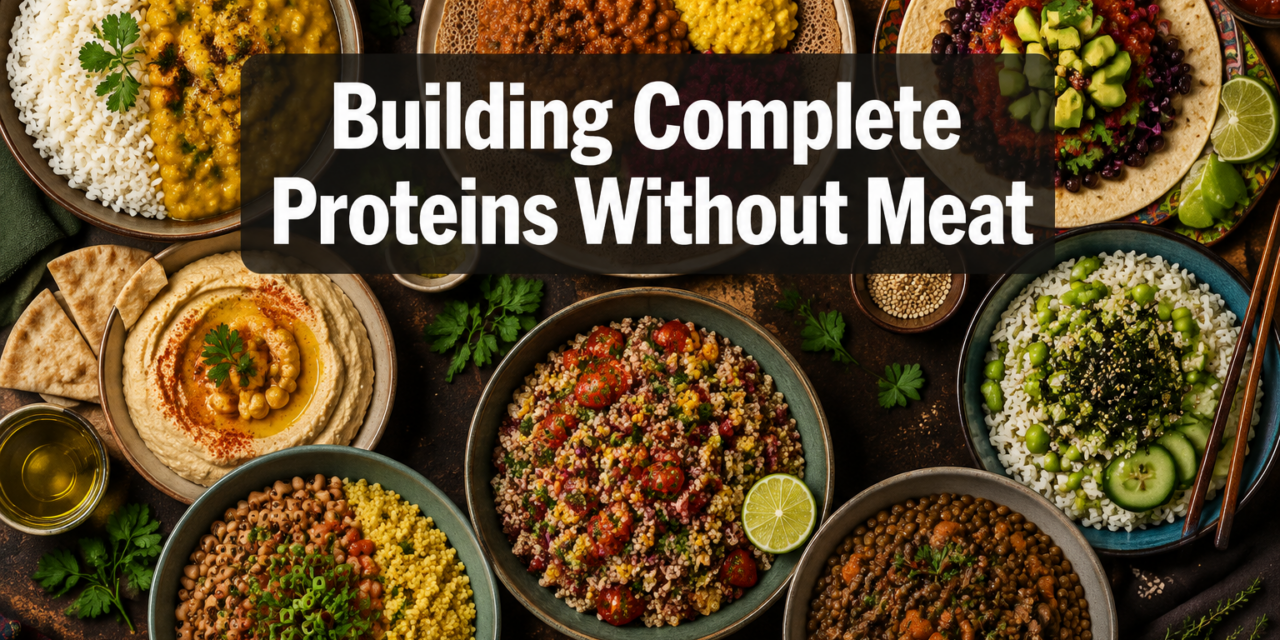
Protein is the #1 diet trend of 2026, according to the International Food Information Council — yet millions of people worldwide have been building complete proteins without meat for centuries, using nothing more than grains, legumes, and culinary wisdom passed down through generations [4].
The science is straightforward: most legumes are rich in lysine but low in methionine, while most grains offer the opposite profile. Combine them, and the amino acid gaps fill in. The result? A complete protein that rivals meat — no lab required.
Building Complete Proteins Without Meat: Grain and Legume Combinations from 8 Global Cuisines for 2026 Plant-Based Eating is not a new concept. It is an ancient one that modern nutrition is finally catching up to.
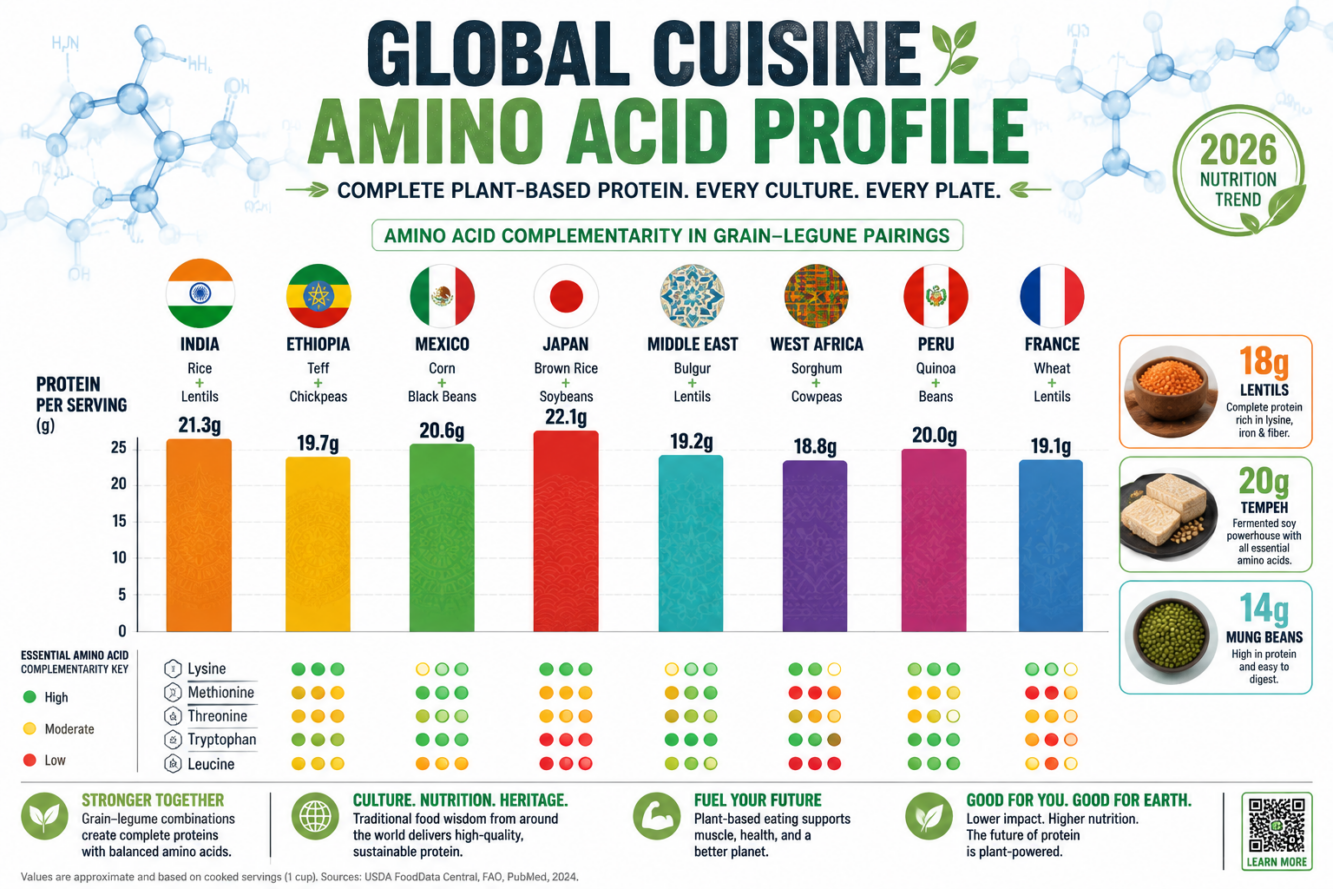
Every protein is built from 20 amino acids, nine of which the body cannot produce on its own. Animal proteins contain all nine in adequate ratios — hence the label “complete.” Most plant proteins do not, but pairing complementary plant foods closes that gap entirely [5].
Here is a quick breakdown of why the combination works:
| Nutrient Gap | Legumes | Grains | Combined Result |
|---|---|---|---|
| Lysine | ✅ High | ❌ Low | ✅ Complete |
| Methionine | ❌ Low | ✅ High | ✅ Complete |
| Tryptophan | Moderate | Moderate | ✅ Adequate |
| Overall protein | 14–20g/cup | 5–8g/cup | ✅ 19–28g/meal |
💬 “You don’t need to eat complementary proteins at the same meal. The body maintains a pool of amino acids from foods eaten throughout the day.” — Healthline Nutrition [5]
Fava beans and almond proteins are among the fastest-growing plant-based proteins globally in 2026, though pea, soy, and wheat still dominate tracked product launches [1]. Meanwhile, whole-food legumes like lentils, chickpeas, edamame, and mung beans are surging as traditional plant-based meat products plateau [4].
Dal (lentil stew) paired with basmati rice is perhaps the world’s most consumed grain-legume combination. Lentils deliver approximately 18g of protein per cooked cup [2], while rice contributes methionine. Together, they cover all essential amino acids. Spiced with turmeric, cumin, and ginger, dal-rice is a nutritional powerhouse hiding in plain sight. YouTube channels like Hebbar’s Kitchen offer hundreds of regional dal variations with full nutritional breakdowns.
Ethiopian injera (fermented teff flatbread) paired with misir wot (spiced red lentils) is a textbook example of grain-legume synergy. Teff is one of the few grains with a notably complete amino acid profile on its own [5], making this pairing exceptionally protein-dense. The fermentation process also improves digestibility and bioavailability. Cooking demos on YouTube from Ethiopian diaspora creators show exactly how to prepare this combination at home.
Corn tortillas and black beans — the backbone of Mexican cuisine — form a complete protein with impressive fiber content. Corn is low in lysine; black beans are rich in it. Together, they deliver sustained energy and amino acid completeness. Pea protein demonstrates similar versatility in modern plant-based product development [2], but traditional bean-corn combinations remain unmatched for affordability and cultural depth. Exploring beans as a nutritional staple reveals just how central legumes are to global food security.
Brown rice paired with edamame (young soybeans) is a clean, minimalist Japanese combination that delivers both complete protein and essential fatty acids. Edamame is one of the few plant foods considered a complete protein on its own, making this pairing doubly effective.
Whole wheat pita and hummus (chickpea-based) is a Mediterranean staple with deep roots in Lebanese and Israeli cuisines. Chickpeas are rich in lysine; wheat provides methionine. Hummus also delivers healthy fats from tahini (sesame paste), adding omega-6 fatty acids to the profile. Hemp seeds and chia seeds, similarly rich in complete proteins and essential fatty acids, are gaining traction as 2026 complement options [2].
Millet and black-eyed peas form the protein backbone of dishes like thiébou niébé in Senegal. Millet is gluten-free, high in magnesium, and pairs beautifully with black-eyed peas’ lysine content. Mung beans offer a similar profile — approximately 14g of protein per cooked cup, high in fiber, folate, and magnesium [2] — and reflect traditional Asian approaches gaining modern attention. The growing focus on biodiversity in food systems supports wider adoption of these underutilized crops.
Quinoa is one of the rare grains that is itself a complete protein, containing all nine essential amino acids [5]. Paired with lentils, the combination becomes extraordinarily protein-dense. Peruvian cuisine uses this pairing in soups, salads, and grain bowls. Quinoa, oats, wild rice, sprouted grains, spelt, and teff are all tracked as comprehensive grain-legume protein sources for plant-based eaters [5].
French Puy lentils served alongside whole grain sourdough represent Europe’s understated grain-legume tradition. Green lentils are firmer, earthier, and slightly lower in starch than red varieties — ideal for salads and warm dishes alike. Tempeh, a fermented soy product offering 20g of protein per 100g, is increasingly paired with whole grains like brown rice as cardiac health organizations highlight its benefits [6].
Plant-based proteins currently hold the largest market share in the global protein alternatives market, driven by soy and pea protein adoption [7]. This momentum supports the broader shift toward whole-food grain-legume combinations as the foundation of 2026 plant-based eating. The business of plant-based nutrition continues to evolve rapidly, with whole-food options outpacing processed alternatives.
Curious about how biofuel and food crop competition affects legume availability? Or how China’s innovative edge in food technology is reshaping plant protein supply chains? These intersecting trends are shaping what ends up on plates globally in 2026.
| Cuisine | Grain | Legume | Est. Protein/Meal |
|---|---|---|---|
| India | Basmati rice | Red lentils | ~22g |
| Ethiopia | Teff injera | Red lentils | ~20g |
| Mexico | Corn tortilla | Black beans | ~18g |
| Japan | Brown rice | Edamame | ~24g |
| Middle East | Whole wheat pita | Chickpeas | ~19g |
| West Africa | Millet | Black-eyed peas | ~17g |
| Peru | Quinoa | Green lentils | ~26g |
| France | Whole grain bread | Puy lentils | ~21g |
Building Complete Proteins Without Meat: Grain and Legume Combinations from 8 Global Cuisines for 2026 Plant-Based Eating is less about following a trend and more about rediscovering what billions of people already know: nature provides everything needed for complete nutrition, and global cuisines have been proving it for millennia.
Actionable next steps:
The world’s oldest cuisines have already solved the plant-based protein puzzle. The only step left is to cook.
[1] Plant Based Trends 5 Top Global Trend For 2026 – https://www.innovamarketinsights.com/trends/plant-based-trends-5-top-global-trend-for-2026/ [2] Plant Based Protein Sources For 2025 – https://www.toxigon.com/plant-based-protein-sources-for-2025 [3] Best Plant Based Protein Powders – https://www.forbes.com/sites/forbes-personal-shopper/article/best-plant-based-protein-powders/ [4] 2026 Nutrition Trends – https://www.llcc.edu/news/2026-nutrition-trends [5] Protein For Vegans Vegetarians – https://www.healthline.com/nutrition/protein-for-vegans-vegetarians [6] Best Plant Protein Sources Heart Health Rcna265927 – https://www.today.com/health/diet-fitness/best-plant-protein-sources-heart-health-rcna265927 [7] Protein Alternatives Market Research Report 144100434 – https://finance.yahoo.com/sectors/healthcare/articles/protein-alternatives-market-research-report-144100434.html