






















Buying Bulk Food Items to Hedge Against Inflation and Fuel Charges: A Complete 2026 Guide

Sharing is SO MUCH APPRECIATED!


Last updated: April 28, 2026
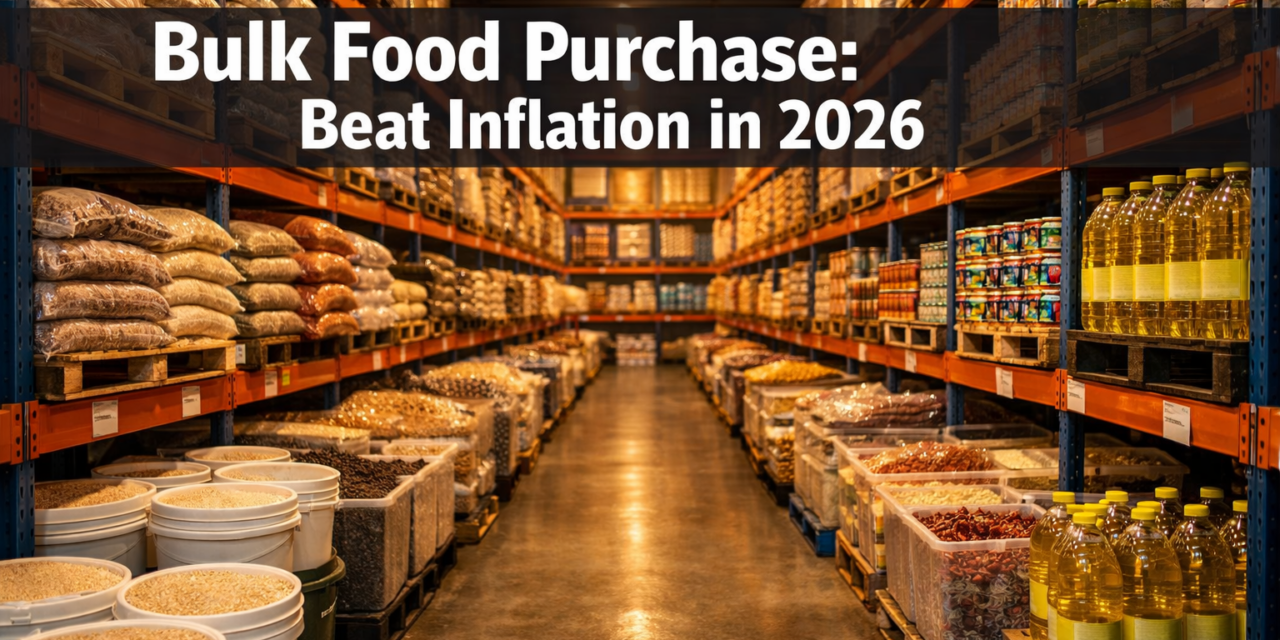
Quick Answer: Buying bulk food items to hedge against inflation and fuel charges is one of the most practical ways households can protect their grocery budgets. Purchasing staple foods in large quantities locks in today’s prices before costs rise further, reduces per-unit spending, and cuts down on the number of shopping trips needed — which directly lowers fuel costs. The strategy works best with shelf-stable foods that have long storage lives and are used regularly.
Key Takeaways
- 🛒 Bulk buying locks in current prices, protecting against future food price increases.
- ⛽ Fewer shopping trips mean less fuel spent — a direct, measurable saving.
- 📦 The best bulk foods are shelf-stable, nutrient-dense, and used frequently.
- 💰 Per-unit costs at warehouse stores (Costco, Sam’s Club) are typically 20–40% lower than standard retail, according to consumer price comparisons.
- 🧂 The top 9 foods to stockpile include rice, beans, oats, pasta, canned tomatoes, cooking oil, lentils, honey, and salt.
- ⚠️ Avoid bulk buying perishables or foods your household rarely eats — waste cancels out savings.
- 📅 Rotate stock using a first-in, first-out system to maintain freshness.
- 🏠 Adequate dry storage space is essential before committing to large purchases.
Why Food Prices Keep Rising — And Why It Matters in 2026
Food inflation has remained persistently high across North America and globally. Supply chain disruptions, rising energy costs, and ongoing tariff pressures have all contributed to grocery bills climbing faster than general inflation in many regions. For Canadian households near areas like Georgian Bay, fuel surcharges added to delivery costs have compounded the problem at the retail level.
Buying bulk food items to hedge against inflation and fuel charges isn’t a new concept — it’s a time-tested financial strategy. When prices are expected to rise, purchasing more at today’s price is functionally equivalent to earning a guaranteed return on that spending.
The Top 9 Food Items to Stockpile and Save Money

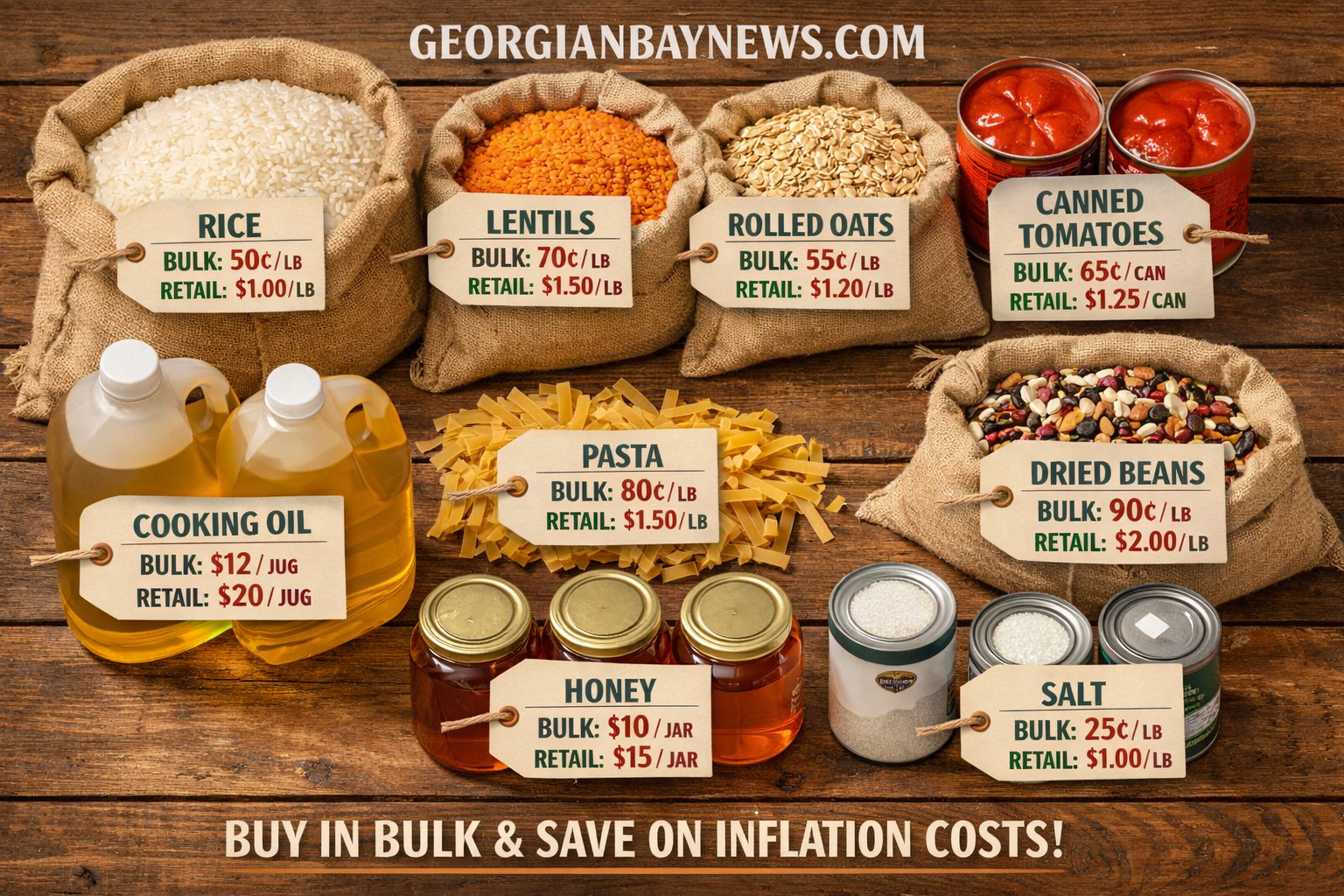
These nine foods offer the best combination of long shelf life, nutritional value, low per-unit cost, and versatility. All are available in bulk at warehouse retailers or through local suppliers like a Collingwood farmers market.
| # | Food Item | Shelf Life (Stored Properly) | Why It’s Worth Stockpiling |
|---|---|---|---|
| 1 | White Rice | 25–30 years (sealed) | Calorie-dense, versatile, extremely low cost per serving |
| 2 | Dried Beans | 8–10 years | High protein, pairs with almost anything — explore bean-based meal ideas |
| 3 | Rolled Oats | 2–5 years | Cheap breakfast staple, rich in fibre |
| 4 | Pasta (Dry) | 2–5 years | Fast to cook, low cost, family-friendly |
| 5 | Canned Tomatoes | 3–5 years | Base for dozens of meals, holds nutritional value well |
| 6 | Cooking Oil | 1–2 years | Essential for cooking; prices spike with fuel costs |
| 7 | Dried Lentils | 4–5 years | Fast-cooking protein source, no soaking required |
| 8 | Honey | Indefinite (sealed) | Natural sweetener, antimicrobial properties, never truly expires |
| 9 | Salt | Indefinite | Preservation, flavour, and essential electrolyte |
Decision rule: If a food item appears in your household’s meals at least twice per week and can be stored dry, it belongs in your bulk pantry.
How Buying Bulk Reduces Fuel Charges Directly
Every grocery trip costs money in fuel, time, and vehicle wear. Households that shop weekly instead of monthly spend significantly more on transportation costs over a year. By building a deep pantry through bulk purchasing, families can consolidate trips to once or twice monthly.
For rural households — including many in Ontario’s Georgian Bay region — this is especially meaningful. A single trip to a warehouse store 45 minutes away, done once a month instead of four times, can save a meaningful amount in gas at 2026 fuel prices.
Practical fuel-saving steps:
- Plan one large monthly bulk run to a warehouse retailer.
- Supplement with small, local top-up trips for fresh produce only.
- Track your trip frequency before and after — the savings become visible quickly.
- Consider combining bulk shopping trips with other errands to maximize each drive.
What Does Buying Bulk Food Items to Hedge Against Inflation Actually Cost Upfront?
The upfront cost is the main barrier. A well-stocked bulk pantry covering 2–3 months of staples for a family of four could cost $400–$800 CAD depending on the items chosen. That’s a real investment, but it’s one that pays back over time.
Ways to manage the upfront cost:
- Start with just two or three items from the top-9 list above.
- Add one bulk item per shopping trip until the pantry is established.
- Use warehouse club memberships (Costco, Sam’s Club) — annual fees are typically recovered within a few bulk purchases.
- Watch for big harvest seasons when local growers offer bulk pricing on produce for canning or freezing.
Common Mistakes to Avoid When Stockpiling Food
Bulk buying fails when it’s done without a plan. The most common errors:
- Buying what you don’t eat. A 20kg bag of quinoa is a waste if your family won’t touch it.
- Ignoring storage conditions. Heat, humidity, and light degrade food faster. Use airtight containers in a cool, dark space.
- Not rotating stock. Always move older items to the front. First in, first out.
- Overbuying oils and fats. These go rancid faster than most people expect. Buy only a 3-month supply at a time.
- Forgetting about benefits beyond price — bulk buying also reduces packaging waste, which matters for environmentally conscious households.
Is Bulk Buying Right for Every Household?
Bulk buying works best for households with storage space, predictable eating habits, and some upfront cash flow. It’s less suitable for:
- Single-person households with limited storage (though smaller bulk quantities still help).
- Renters with no dry storage area.
- Households with highly varied or specialty diets where staples rotate constantly.
For those exploring broader financial resilience strategies, understanding how business and economic pressures drive food prices can sharpen purchasing decisions. Economic commentators like Ali Velshi have covered inflation’s household impact extensively.
FAQ
Q: How much money can bulk buying actually save?
A: Per-unit savings at warehouse stores typically range from 20–40% compared to standard grocery retail, based on widely reported consumer comparisons. Fuel savings add further value for households that reduce trip frequency.
Q: Does bulk food actually last as long as claimed?
A: Yes, when stored correctly. White rice in sealed mylar bags can last decades. Dried beans and pasta last 2–10 years in airtight containers kept below 70°F (21°C).
Q: Is a warehouse club membership worth it for bulk food buying?
A: For most families of three or more, yes. Membership fees are generally recovered within two to three large bulk shopping trips.
Q: What’s the single best food to start stockpiling?
A: White rice. It’s the cheapest calorie source per dollar, stores the longest, and is used across nearly every cuisine.
Q: Can bulk buying help with fuel charges specifically?
A: Yes. Fewer shopping trips directly reduce fuel spending. For households driving 20+ minutes to a grocery store, consolidating to monthly bulk trips can save $30–$60/month in fuel costs (estimate based on average Canadian fuel prices in 2026).
Q: Should I buy bulk organic or conventional?
A: Conventional bulk staples offer the best cost-per-calorie value for hedging purposes. Reserve organic purchases for items where it matters most to your household.
Conclusion: Start Small, Build a Resilient Pantry
Buying bulk food items to hedge against inflation and fuel charges doesn’t require a survivalist mindset or a massive budget. It requires a list, a bit of storage space, and a willingness to spend slightly more upfront to spend significantly less over time.
Actionable next steps for 2026:
- Choose three items from the top-9 list that your household already eats regularly.
- Price them at your nearest warehouse store versus your standard grocery store.
- Buy a 2–3 month supply of those three items on your next shopping trip.
- Set a calendar reminder to restock before supplies run low — not after.
- Gradually expand your bulk pantry one category at a time.
The households that act on this strategy now will be better positioned when the next price spike hits — and based on current economic trends, that’s a matter of when, not if.
References
- Statistics Canada. (2024). Consumer Price Index, food components. https://www150.statcan.gc.ca
- U.S. Bureau of Labor Statistics. (2024). Consumer Price Index — Food at home. https://www.bls.gov/cpi/
- USDA Economic Research Service. (2023). Food Price Outlook. https://www.ers.usda.gov/data-products/food-price-outlook/
Content, illustrations, and third-party video appearing on GEORGIANBAYNEWS.COM may be generated or curated with AI assistance or reproduced pursuant to the fair dealing provisions of the Copyright Act, R.S.C. 1985, c. C-42. Attribution and hyperlinks to original sources are provided in acknowledgment of applicable intellectual property rights. Such referencing is intended to direct traffic to and support the original rights holders’ platforms.
Sharing is SO MUCH APPRECIATED!