






















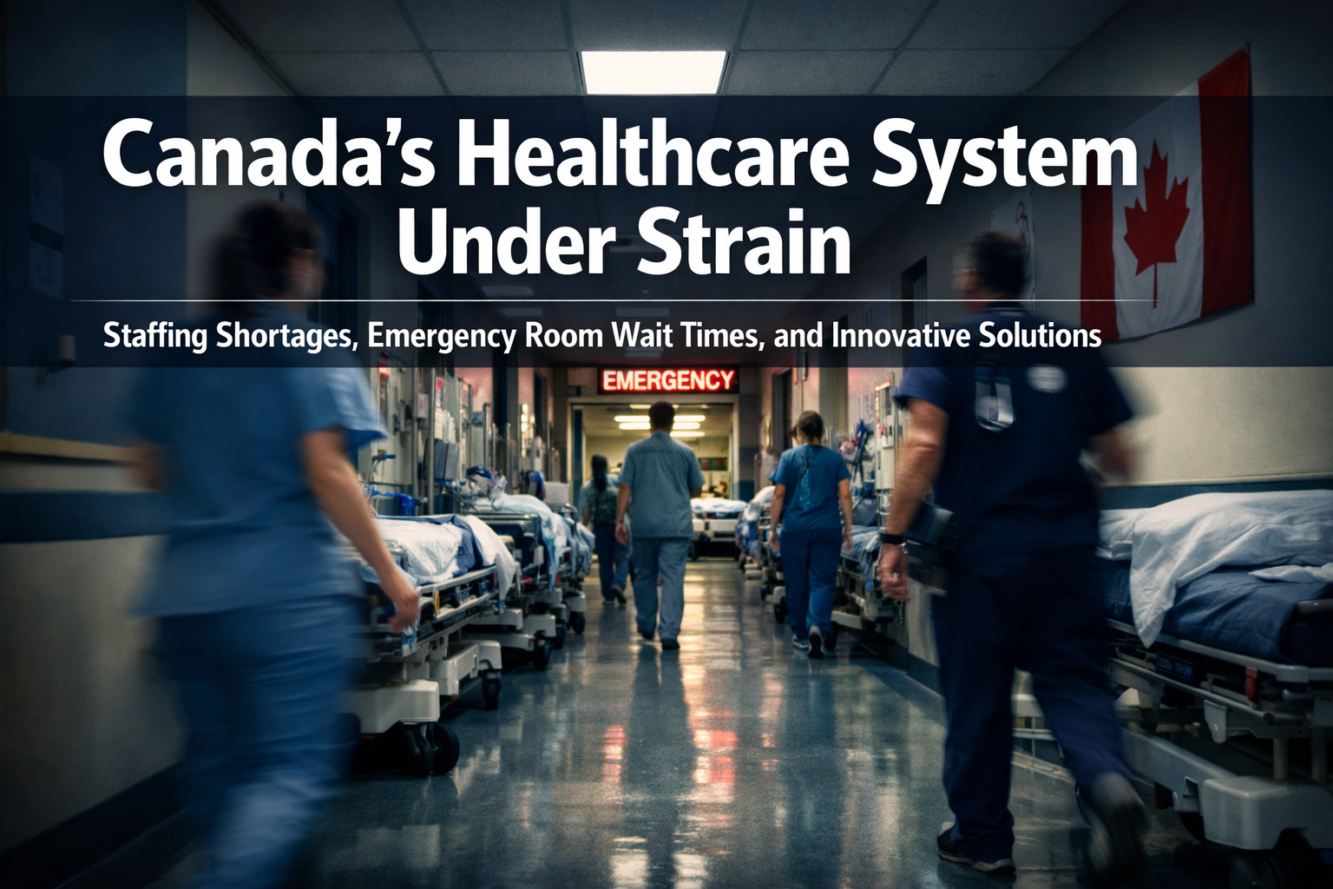
Canada’s Healthcare System Under Strain: Staffing Shortages, Emergency Room Wait Times, and Innovative Solutions

Sharing is SO MUCH APPRECIATED!


In 2026, millions of Canadians are struggling to see a doctor. Emergency rooms are closing without warning. Nurses are burning out faster than they can be replaced. Canada’s healthcare system is no longer a future concern—it is the defining crisis of this generation. From coast to coast, the pressures that built during the pandemic have only deepened, leaving patients, providers, and policymakers searching for answers.
This article examines the root causes behind the crisis, the human toll of long wait times, and the bold strategies—both provincial and federal—being rolled out to turn things around.
Key Takeaways 📋
- Canada faces a projected shortage of 117,600 nurses by 2030, threatening care across every province and territory [1].
- 5.7 million Canadians (17% of adults) lack a regular healthcare provider, pushing more patients into already overwhelmed emergency rooms [3].
- British Columbia alone saw up to 250 emergency room closures in 2025 due to staffing gaps [4].
- The federal government is funding 120 new family medicine training positions for international medical graduates and streamlining credential recognition [5].
- Workforce stabilization, digital accountability, and system integration are the top priorities for healthcare leaders heading into 2026 and beyond [6].
Understanding Why Canada’s Healthcare System Is Under Strain: Staffing Shortages, Emergency Room Wait Times, and Innovative Solutions Are Urgently Needed
The Staffing Crisis by the Numbers 📊
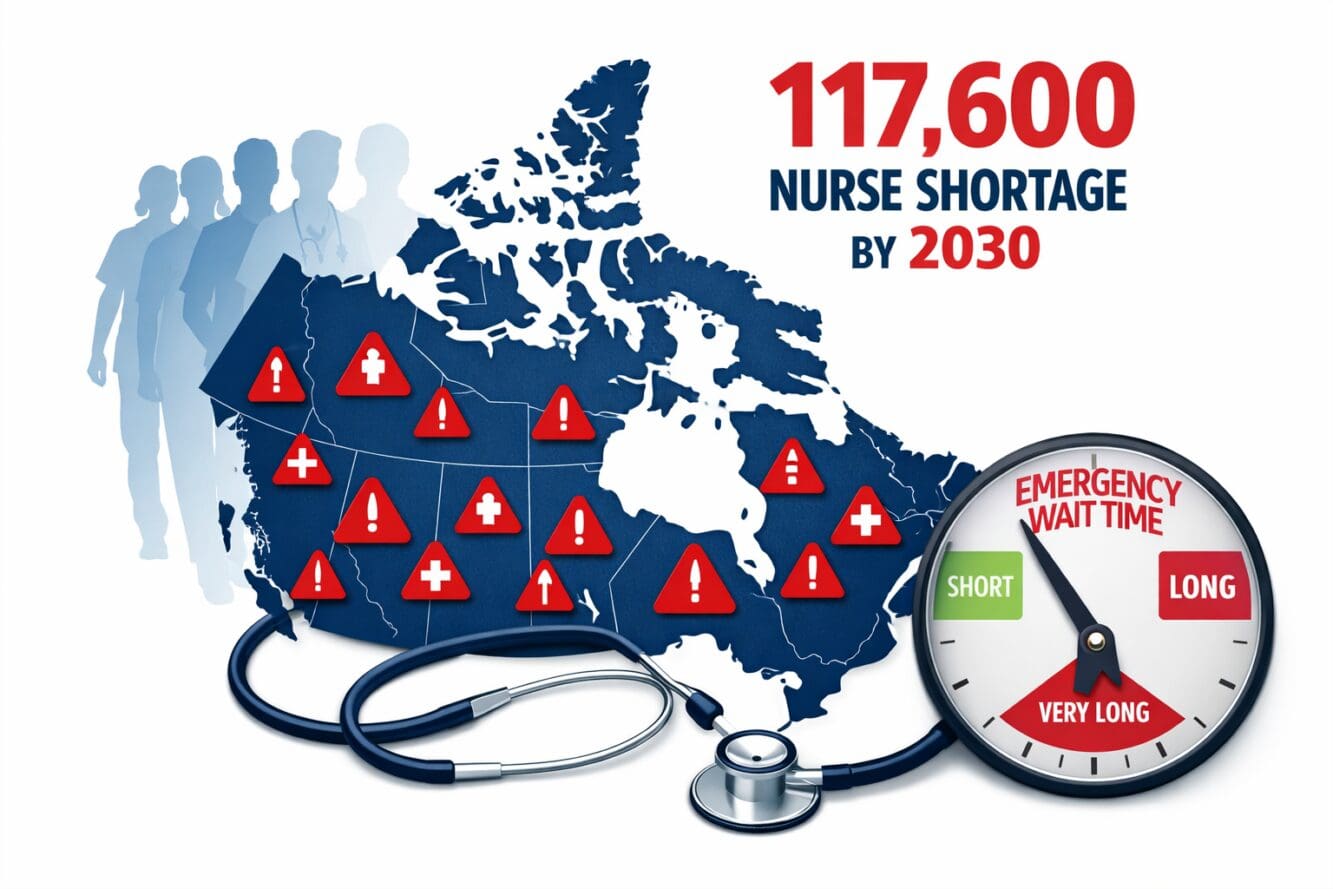
The numbers paint a stark picture. Canada is projected to be short 117,600 nurses by 2030 [1]. This shortage is driven by three converging forces:
| Factor | Impact |
|---|---|
| 🏥 Retirements | Thousands of experienced nurses and physicians are leaving the workforce each year |
| 😓 Burnout | Pandemic-era exhaustion continues to push workers out of healthcare entirely |
| 👴 Aging Population | Growing demand for care from an older demographic strains existing capacity |
But the gap extends well beyond nursing. Personal Support Workers (PSWs), healthcare aides, sonographers, and administrative staff are all in critically short supply [2]. Hospitals and clinics across the country are operating with skeleton crews, and the ripple effects touch every patient who walks through the door.
“Only 17% of medical school applicants gained admission last year, despite many being fully qualified.” — Macdonald Laurier Institute [4]
This bottleneck at the training level means Canada is not producing enough healthcare professionals to replace those who leave, let alone meet growing demand.
The Family Doctor Shortage 🩺
Perhaps the most visible symptom of the crisis is the family physician shortage. As of 2024, 17% of Canadian adults—approximately 5.7 million people—reported having no regular healthcare provider [3]. Experts estimate that Canada must increase the number of family physicians by 49% just to meet current demand [3].
Without a family doctor, patients have nowhere to turn for routine care, chronic disease management, or preventive health. Many end up in emergency departments for issues that could be handled in a clinic—creating a dangerous cycle of overcrowding.
This shortage is felt acutely in smaller communities. Residents in areas like the Georgian Bay region understand the challenges of accessing timely care. When a beloved community member experiences a medical emergency, the strain on local healthcare resources becomes deeply personal.
Emergency Room Closures and Wait Times: The Human Cost
A System at Breaking Point 🚨
The staffing crisis has a direct and devastating impact on emergency care. In British Columbia, up to 250 emergency room closures occurred in 2025 alone due to a lack of available staff [4]. These were not minor disruptions—they included a six-week closure of inpatient pediatrics in Kelowna, leaving families scrambling for alternatives.
When ERs close or operate at reduced capacity, patients face:
- Longer ambulance wait times as paramedics are diverted to facilities farther away
- Extended hours in waiting rooms, sometimes exceeding 12 hours for non-critical cases
- Delayed diagnoses that can turn manageable conditions into life-threatening emergencies
- Increased pressure on neighboring hospitals, creating a domino effect across regions
The shortage of primary care doctors is the root cause of much of this ER overcrowding. Without access to a family physician, patients flood emergency departments for conditions that do not require emergency-level intervention [3]. This creates bottlenecks that slow care for everyone—including those with genuine emergencies.
The Emotional Toll
Behind every statistic is a real person. A parent waiting hours with a sick child. A senior sitting in a hallway on a gurney. A nurse working a double shift because there is no one to relieve them.
The pressures from the pandemic—workforce shortages, capacity constraints, and rising patient acuity—remain the backdrop for every healthcare decision made in 2026 [6]. For communities that value wellness and quality of life, these challenges hit close to home. Even simple practices like stress-relieving stretches and somatic exercises have become essential coping tools for both patients and overworked healthcare staff.
Innovative Solutions: How Canada Is Fighting Back
Federal Strategies 🇨🇦
The federal government has recognized the urgency of the situation and is taking concrete steps through Health Canada’s 2026-27 Departmental Plan [5]:
- 120 new family medicine training positions specifically for international medical graduates (IMGs)
- Increased assessment capacity to expedite the integration of foreign-trained doctors into the Canadian system
- Improved labour mobility between provinces and territories, making it easier for healthcare workers to practice wherever they are needed
- Enhanced health workforce data sharing to better track shortages and deploy resources strategically
- Streamlined credential recognition for internationally educated health professionals
These measures aim to address both the immediate shortage and the long-term pipeline of healthcare workers entering the system.
Recruiting from Abroad 🌍
In a creative twist, Canada is actively recruiting U.S. doctors and nurses through grassroots social media campaigns [3]. With shifting immigration policies south of the border restricting opportunities for foreign healthcare workers, Canada is positioning itself as a welcoming alternative. The message is simple: there are healthcare jobs waiting, and Canada wants you.
This approach mirrors the kind of innovative thinking seen in other sectors. Just as communities explore the hidden costs of technological innovation, the healthcare system is learning to adapt by looking beyond traditional recruitment methods.
Expanding Training Capacity 🎓
Policy analysts argue that Canada must at least double training spaces for doctors, nurses, sonographers, and other healthcare workers [4]. The current system is turning away qualified applicants at an alarming rate—83% of medical school applicants are rejected despite meeting the necessary qualifications.
Expanding training capacity requires:
- More medical school seats across Canadian universities
- Additional clinical placement opportunities in hospitals and community clinics
- Financial incentives for students entering high-demand specialties like family medicine and geriatrics
- Mentorship programs to reduce dropout rates during training
Prioritizing Workplace Readiness ⚡
Healthcare employers are shifting how they evaluate new hires. In 2026, workplace readiness matters more than credentials alone [2]. Many hospitals and clinics are operating with limited capacity for extended onboarding, so they need candidates who can contribute from day one.
This means healthcare students and new graduates should focus on:
- Hands-on clinical experience during training
- Familiarity with electronic health records and digital tools
- Strong communication and teamwork skills
- Adaptability in fast-paced, high-pressure environments
Digital Transformation and System Integration 💻
Workforce stabilization, digital accountability, system integration, and public trust have emerged as the defining priorities for Canada’s health system in 2026 [6]. Technology plays a central role in these efforts:
| Innovation | Benefit |
|---|---|
| Virtual care platforms | Reduce ER visits for non-urgent issues |
| AI-powered triage tools | Help prioritize patients based on severity |
| Centralized health records | Improve coordination between providers |
| Workforce scheduling software | Optimize staffing and reduce burnout |
Digital solutions will not replace the need for more healthcare workers, but they can help the existing workforce operate more efficiently. As communities across Canada engage with civic decision-making, advocating for smart healthcare investments becomes an essential part of the conversation.
What Canadians Can Do Right Now
While systemic change takes time, individuals can take steps to navigate the current healthcare landscape:
- Register for a family doctor waitlist in your province if you do not have one
- Use virtual care services for non-emergency health concerns
- Stay informed about local ER closures and alternative care options
- Support community health initiatives and local organizations providing rapid rehousing and social support
- Advocate for healthcare funding by contacting elected representatives
- Prioritize preventive health—regular exercise, mental wellness, and routine screenings reduce the need for emergency care
Community resilience matters. Whether it is celebrating local culture and connection or supporting neighbors in need, strong communities help bridge the gaps that a strained healthcare system cannot always fill.
Conclusion
Canada’s healthcare system under strain: staffing shortages, emergency room wait times, and innovative solutions define the most pressing domestic challenge of 2026. The numbers are sobering—117,600 nurses short by 2030, 5.7 million Canadians without a family doctor, and hundreds of ER closures in a single year. But the response is gaining momentum.
From federal investments in international medical graduate training to creative recruitment campaigns targeting U.S. healthcare workers, Canada is deploying a multi-pronged strategy to stabilize and strengthen its health system. Expanding training capacity, embracing digital tools, and prioritizing workplace readiness are all part of the solution.
The path forward requires action at every level—from federal policy to provincial implementation to individual advocacy. Canadians who stay informed, engage with their communities, and push for meaningful reform can help ensure that the healthcare system serves everyone, not just those lucky enough to have a doctor.
The crisis is real. But so is the determination to fix it. 💪
References
[1] Start Strong 2026 Healthcare Workforce – https://nacc.ca/start-strong-2026-healthcare-workforce/
[2] Preparing Canadas Healthcare Workforce For 2026 What Students And Candidates Need To Know – https://www.caringsupport.com/blog/preparing-canadas-healthcare-workforce-for-2026-what-students-and-candidates-need-to-know
[3] Health Care Jobs In Canada Are Waiting For U S Doctors And Nurses – https://thebeaconnews.org/stories/2026/02/25/health-care-jobs-in-canada-are-waiting-for-u-s-doctors-and-nurses/
[4] Canadas Healthcare System Is On Life Support Heres How To Save It J Edward Les For Inside Policy – https://macdonaldlaurier.ca/canadas-healthcare-system-is-on-life-support-heres-how-to-save-it-j-edward-les-for-inside-policy/
[5] 2026 2027 Departmental Plan – https://www.canada.ca/en/health-canada/corporate/transparency/corporate-management-reporting/report-plans-priorities/2026-2027-departmental-plan.html
[6] Looking Ahead To 2026 – https://hospitalnews.com/looking-ahead-to-2026/
Content, illustrations, and third-party video appearing on GEORGIANBAYNEWS.COM may be generated or curated with AI assistance or reproduced pursuant to the fair dealing provisions of the Copyright Act, R.S.C. 1985, c. C-42. Attribution and hyperlinks to original sources are provided in acknowledgment of applicable intellectual property rights. Such referencing is intended to direct traffic to and support the original rights holders’ platforms.
Sharing is SO MUCH APPRECIATED!