















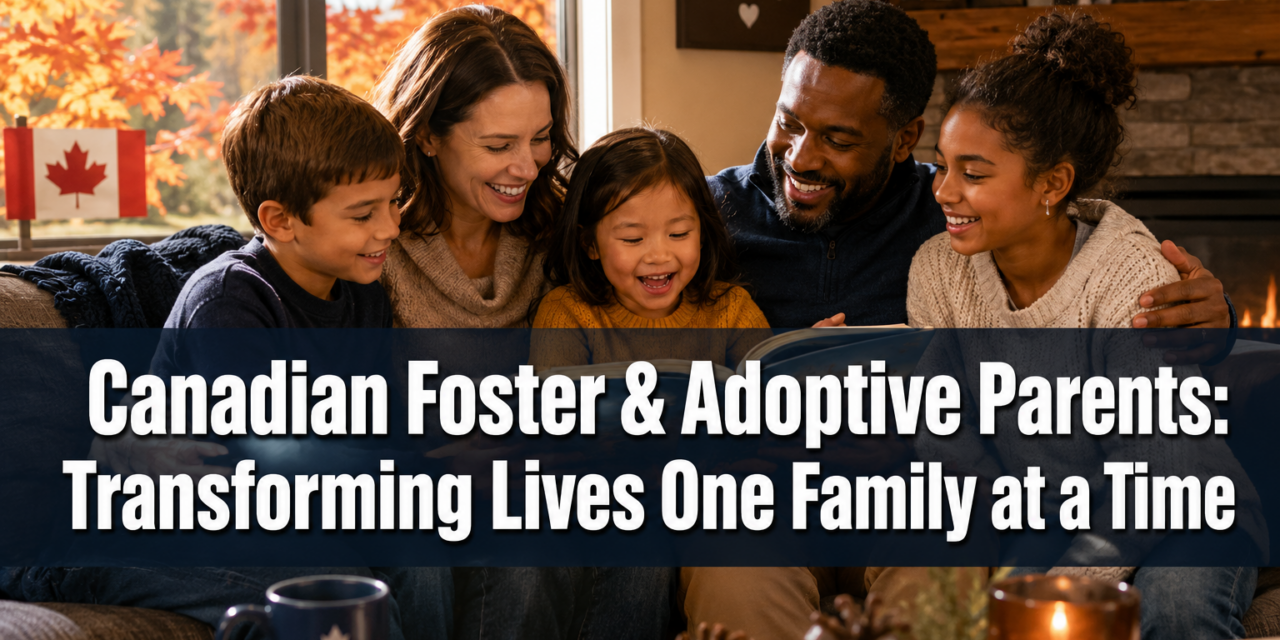
Canadian Foster and Adoptive Parents Transforming Lives One Family at a Time
Last updated: June 12, 2026
Quick Answer: As of March 31, 2022, at least 61,104 children and youth were in out-of-home care across Canada, with roughly 84% placed in family-based settings such as foster homes [10]. Canadian foster and adoptive parents transforming lives one family at a time are the backbone of that system — ordinary people who open their homes to children who need stability, safety, and belonging. Understanding the requirements, financial realities, and emotional demands of this path helps prospective caregivers make an informed decision.
Key Takeaways
- At least 61,104 Canadian children were in out-of-home care as of March 2022, and approximately 2,000 are adopted annually — far fewer than those who need permanent homes [5][10].
- Indigenous children are significantly overrepresented: they made up 53.7% of children in foster care in 2021, up from 47.8% in 2011 [6].
- Foster parents receive a monthly maintenance allowance that varies by province; Manitoba raised its basic rate by 10% in February 2025 — the first increase in nearly 13 years [7].
- Requirements to foster include a home study, criminal record check, references, and mandatory training; single people are eligible in every province.
- The adoption process in Canada typically takes one to three years, depending on the type of adoption and province.
- Foster care is temporary by design; adoption transfers full legal parenthood permanently.
- Placement breakdowns happen, and most provinces have support services and respite care to help families through difficult transitions.
- Abuse cases, while a small fraction of placements, underscore why rigorous screening, training, and oversight matter [1][2][3].
What Is the Difference Between Foster Care and Adoption
Foster care is a temporary arrangement; adoption is permanent. In foster care, a child welfare agency retains legal guardianship while a child lives with a foster family. Adoption transfers full legal parental rights to the adoptive parents, ending the agency’s involvement.
Key distinctions at a glance:
FactorFoster CareAdoptionLegal guardianshipAgency retains itTransferred to parentsDurationTemporary (weeks to years)PermanentGoalReunification or permanencyPermanent familyFinancial supportMonthly maintenance rateSome post-adoption subsidiesBirth parent contactOften ongoingVaries by arrangement
Choose foster care if your goal is to provide short-term stability while a child’s situation is resolved. Choose adoption if you want to provide a permanent legal family. Many adoptive parents in Canada first fostered the child they later adopted — a path sometimes called “foster-to-adopt.”
What Are the Requirements to Become a Foster Parent
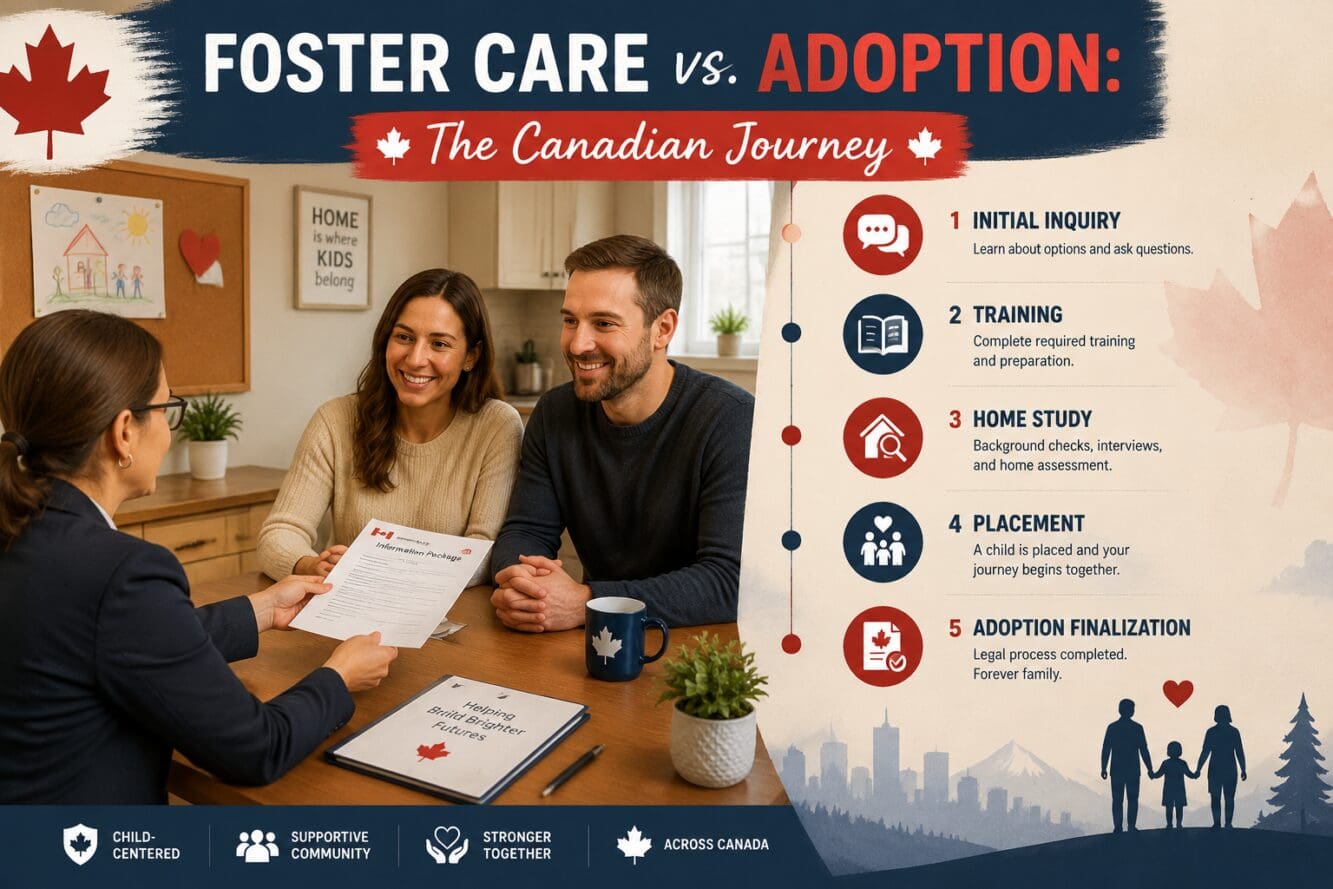
Most provinces require applicants to be at least 18 to 19 years old, pass a criminal record check, complete a home study, and finish a pre-service training program. Beyond those basics, agencies look for stable housing, adequate income to meet your own needs, and genuine commitment to a child’s well-being.
Standard requirements across Canadian provinces:
- Minimum age (typically 18–19, varies by province)
- Criminal record check and vulnerable sector screening for all adults in the home
- Child abuse registry check
- Home study conducted by a social worker
- References from non-family members
- Pre-service training (hours vary; 27–30 hours is common)
- Proof of adequate living space (a private bedroom for the child is usually required)
Common mistake: Assuming you need to own your home. Renters can foster in every province, provided the space meets safety standards and the landlord permits it.
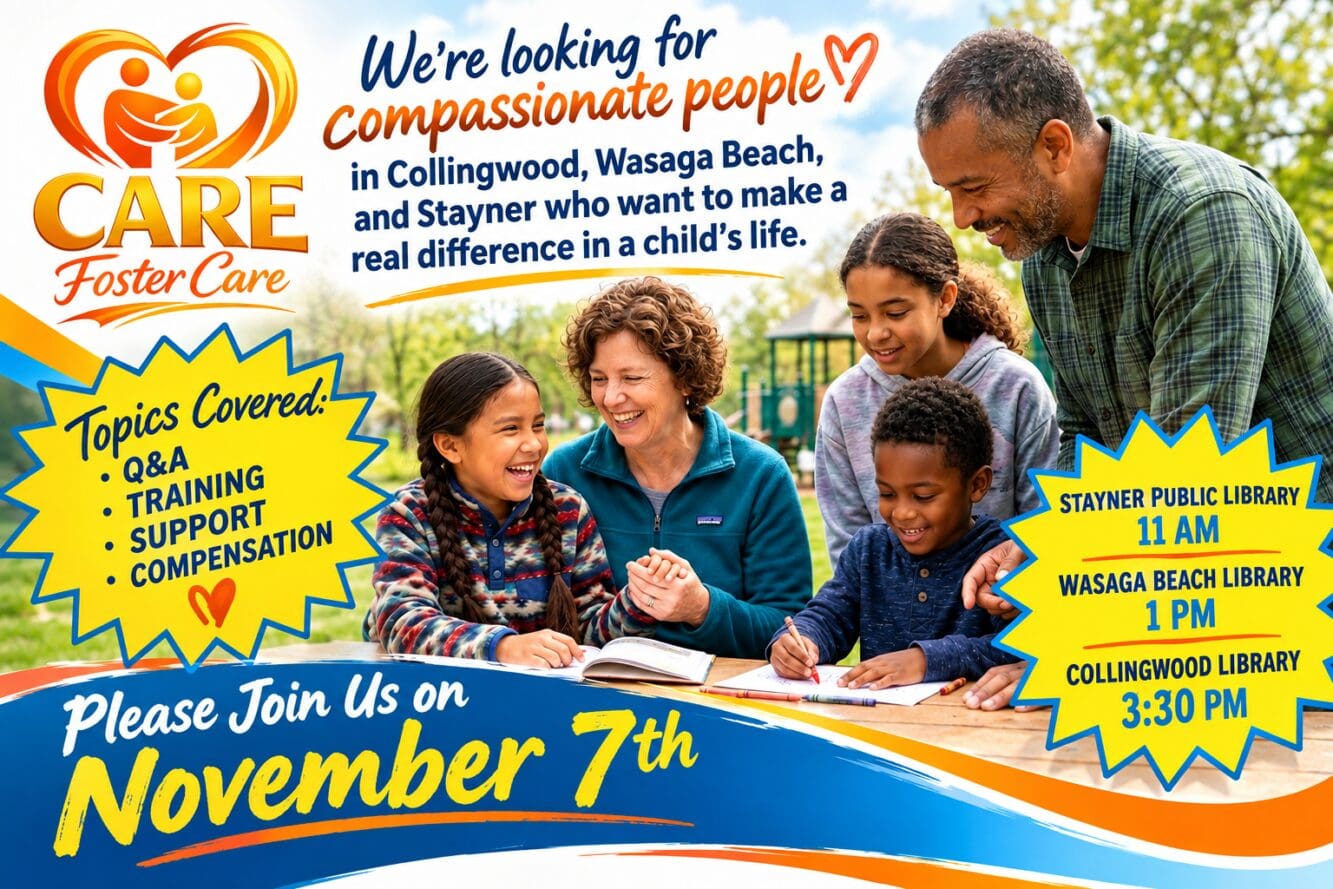
Have you ever felt that gentle tug at your heart, the kind that whispers, “You could make a real difference in someone’s life”? That’s the feeling that draws so many wonderful people into the rewarding world of foster care.
At CARE Foster Care, we’re so much more than just an organization—we’re a close-knit family of kind-hearted folks, all coming together to embrace and nurture the precious children who truly need our love and support the most.
If you’re in the Barrie, Orillia, or Stayner area, we’re extending a warm invitation to you: join our supportive team.
For more information please contact
us at: infocarefoster at gmail.com
Can Single People Become Foster Parents in Canada
Yes. Single adults can become foster parents in every Canadian province and territory. Agencies assess applicants on their support network, stability, and capacity to meet a child’s needs — not on marital status.
Single foster and adoptive parents are actively recruited in many regions, particularly for older children and sibling groups. Having a strong circle of family and friends matters more than household composition. Many single parents also find that connecting with community social programs helps build the support network agencies want to see.
How Much Financial Support Do Foster Parents Receive
Foster parents receive a monthly maintenance allowance to cover the child’s basic needs — food, clothing, transportation, and activities. Rates are set provincially and vary considerably.
- Ontario: Rates range roughly from $850 to over $2,000 per month depending on the child’s age and needs level.
- Manitoba: In February 2025, the province announced a 10% increase to basic maintenance rates, the first raise in nearly 13 years. Advocacy groups noted the increase, while welcome, still falls short of actual costs [7].
- British Columbia and Alberta: Rates are tiered by the child’s assessed needs, with enhanced rates for children with complex medical or behavioural needs.
Important: Maintenance payments are not income for the foster parent — they are meant to cover the child’s expenses. Foster parenting is not a paid profession in the traditional sense, though some specialized care roles do include a professional fee on top of the maintenance rate.
How Much Does Fostering a Child Cost in Canada
Fostering a child should cost foster parents very little out of pocket when maintenance rates are adequate, but many families report covering gaps themselves. Initial costs — home safety modifications, a car seat, bedroom furnishings — can run several hundred dollars before the first placement.
Ongoing out-of-pocket costs arise when maintenance rates do not keep pace with inflation, which has been a recurring concern across provinces. Manitoba’s advocacy community made exactly this point after the 2025 rate increase [7]. Prospective foster parents should budget for:
- Initial home preparation (safety latches, smoke detectors, spare bedroom setup)
- Clothing and school supplies not fully covered by the allowance
- Transportation to appointments and visits with birth family
- Respite care costs if not provincially funded
How Long Does the Adoption Process Take in Canada
The Canadian adoption process typically takes one to three years from application to finalization, though timelines vary widely by adoption type and province.
- Public (Crown ward) adoption: Often 12–24 months after a child is legally freed for adoption.
- Private domestic adoption: Varies by agency and birth parent matching; can be 1–3 years.
- International adoption: Timelines have lengthened significantly; many countries have closed or restricted programs, making this route considerably longer and less predictable.
- Foster-to-adopt: Timeline depends on when — or whether — parental rights are terminated; this can take several years.
Approximately 2,000 children find adoptive families in Canada each year, but the number needing permanent homes is substantially higher [5].
What Kind of Training Do Foster Parents Need
All provinces require pre-service training before a first placement, and most require ongoing education. The content covers child development, trauma-informed care, attachment, cultural competency, and managing challenging behaviours.
Ontario’s PRIDE (Parent Resources for Information, Development, and Education) model is widely used. It typically involves 27 hours of group sessions plus home preparation activities. British Columbia uses a similar structured curriculum. Training is provided at no cost to applicants through the licensing agency or Children’s Aid Society.
Ongoing training — usually 6–15 hours per year — is required to maintain a foster care license. Topics often include de-escalation, supporting children who have experienced trauma, and understanding the child welfare system.
What Challenges Do Foster Parents Typically Face
Foster parents commonly face emotional exhaustion, attachment difficulties, behavioural challenges in children who have experienced trauma, and frustration with bureaucratic processes. These are real, documented barriers — not reasons to avoid fostering, but realities to prepare for.
Most frequently reported challenges:
- Managing trauma-related behaviours (aggression, withdrawal, sleep disruption)
- Navigating relationships with birth families, which can be tense
- Uncertainty about placement length and outcomes
- Feeling unsupported by the child welfare system
- Grief when a child is reunified or moved to another placement
The overrepresentation of Indigenous children in care — 53.7% of foster children in 2021 [6] — also means foster parents must be prepared to support a child’s cultural identity and connections, which requires humility, learning, and active effort. Cases like the B.C. foster family’s court battle over a Métis toddler’s placement illustrate how complex cultural and legal considerations can become [4].
Concerns about social isolation are also common among foster parents, particularly in rural areas, where peer support networks are harder to access.
What Happens If a Foster Placement Does Not Work Out
Placement breakdowns — when a child must be moved to a different home — happen, and they are not automatically a sign of failure. Agencies have protocols for managing transitions, and most provinces offer respite care, crisis support lines, and therapeutic services to help families through difficult periods.
If a placement ends, the agency will work to find a more suitable match for the child. Foster parents are encouraged to debrief with their worker and, if appropriate, maintain contact with the child if it serves the child’s best interests.
Steps to take if a placement is struggling:
- Contact your assigned social worker immediately — do not wait for a crisis.
- Request a placement support meeting to identify additional resources.
- Ask about respite care to give everyone a short break.
- Access therapeutic supports for both the child and your household.
- Document concerns in writing so the agency has a clear record.
Are There Age Limits for Becoming a Foster Parent
There is no maximum age limit to become a foster parent in Canada. Minimum age is typically 18 or 19 depending on the province. Agencies assess applicants on health, energy, and capacity to meet a child’s needs rather than age alone.
Older adults — including grandparents and retirees — are frequently approved, particularly for kinship placements where a relative steps in to care for a child. The key question agencies ask is whether the applicant can provide consistent, active caregiving for the duration of a placement.
Are There Special Programs for Adopting Older Children
Yes. Most provinces have targeted recruitment programs for families willing to adopt children aged 10 and older, sibling groups, and children with complex needs — the groups least likely to be matched through standard processes.
Ontario’s “Waiting Children” photo listings and similar provincial registries highlight children who have been waiting the longest. Some provinces offer enhanced adoption subsidies and post-adoption support services specifically for older child placements. These programs recognize that older children often bring more complex histories and that families need more preparation and ongoing support.
What Rights Do Birth Parents Have in Foster Care Situations
Birth parents retain significant legal rights during foster care. Unless a court has terminated parental rights, birth parents typically have the right to regular access visits, involvement in major decisions about their child’s education and medical care, and the right to work toward reunification.
Child welfare agencies are legally required in most provinces to make reasonable efforts to support family reunification before pursuing other permanency options. This means foster parents may be asked to facilitate visits, communicate with birth parents, and support the child’s relationship with their family of origin — even when that relationship is complicated.
Rights change when a child is made a Crown ward (legally freed for adoption). At that point, parental rights are terminated by court order, and the path to adoption opens.
How Do I Know If I Am Emotionally Ready to Foster a Child
Emotional readiness means being able to provide consistent care for a child who may be grieving, angry, or distrustful — without taking those responses personally. It also means tolerating uncertainty, because foster care timelines and outcomes are rarely predictable.
Honest questions to ask yourself before applying:
- Can you support a child’s relationship with birth family, even if you disagree with those parents?
- Are you prepared for a child to leave your home — possibly after years — and process that grief?
- Does everyone in your household, including other children, genuinely support this decision?
- Do you have a support network — friends, family, or a faith community — that can help during hard stretches?
- Are you financially stable enough that the maintenance allowance covers the child’s needs without straining your household?
Pre-service training helps answer many of these questions. Talking to experienced foster parents through local associations is one of the most practical steps a prospective caregiver can take.
The Accountability Side: When the System Fails
Canadian foster and adoptive parents transforming lives one family at a time represent the vast majority of caregivers — but the system is not without serious failures that demand transparency.
In April 2026, two foster parents in The Pas, Manitoba, were charged in connection with the 2024 death of a six-year-old girl who died from a traumatic head injury [1]. In Smiths Falls, Ontario, two foster parents faced aggravated assault charges after a 14-month-old in their care sustained injuries [3]. Earlier, an Ontario case involved allegations that a foster child was tortured and found emaciated in a basement [2]. In British Columbia, siblings of an 11-year-old boy killed by his foster parents in 2021 filed a lawsuit against the provincial Ministry of Children and Family Development in May 2026 [9].
These cases are not representative of the broader foster care community, but they underscore why rigorous screening, unannounced home visits, mandatory reporting, and robust oversight are not bureaucratic inconveniences — they are child safety tools. Manitoba’s government issued ministerial mandate letters to child-welfare authorities in January 2026 following a severe abuse case, outlining accountability expectations [8].
Prospective foster parents should expect scrutiny. That scrutiny exists to protect children.
Conclusion: How to Take the Next Step
Canadian foster and adoptive parents transforming lives one family at a time do so through a combination of commitment, preparation, and ongoing support. The need is real: tens of thousands of children are in out-of-home care, and thousands more wait for permanent families each year [5][10].
Actionable next steps for anyone considering this path:
- Contact your local Children’s Aid Society or provincial child welfare authority to request an information session — no commitment required.
- Attend a foster/adoptive parent information night to hear from experienced caregivers directly.
- Review your province’s specific requirements for training, home study, and financial support rates.
- Talk honestly with everyone in your household about what fostering or adopting will mean day to day.
- Connect with a foster parent association in your region for peer support before, during, and after placement.
The path is demanding. It is also one of the most consequential things a family can do for a child who has nowhere else to turn. For communities across Simcoe County and Georgian Bay, and indeed across the country, every family that opens its door moves Canada closer to a system where every child has a safe, stable place to grow.
FAQ
How many children are in foster care in Canada?
As of March 31, 2022, at least 61,104 children and youth were in out-of-home care in Canada, with roughly 84% in family-based settings like foster homes [10].
Can I foster if I rent my home?
Yes. Renters can foster in every province, provided the home meets safety standards and there is adequate space for the child.
Do foster parents get paid in Canada?
Foster parents receive a monthly maintenance allowance to cover the child’s costs, not a salary. Rates vary by province and the child’s needs level. Manitoba raised its basic rate by 10% in early 2025 [7].
What is the age limit to become a foster parent?
There is no maximum age. The minimum is typically 18–19 depending on the province. Older adults, including retirees, are regularly approved.
How long does it take to be approved as a foster parent?
The approval process — including training, home study, and background checks — typically takes three to six months from initial inquiry.
What is a home study?
A home study is an assessment conducted by a social worker that includes interviews with all household members, a home safety inspection, and a review of references and background checks.
Can I adopt a child I am fostering?
Yes. Foster-to-adopt is a recognized path in all provinces. It requires that the child be legally freed for adoption (made a Crown ward) before the adoption can proceed.
Are Indigenous children overrepresented in Canadian foster care?
Yes. Indigenous children made up 53.7% of children in foster care in 2021, up from 47.8% in 2011, despite representing a much smaller share of the overall child population [6].
What support is available if a placement is difficult?
Most provinces offer respite care, crisis support lines, therapeutic services, and placement support meetings through the child welfare agency.
Is international adoption still an option for Canadians?
International adoption remains legally possible but has become significantly more difficult. Many countries have closed or restricted their programs, making timelines unpredictable and the process more complex than domestic options.
References
[1] Foster Parents In The Pas Charged In 2024 Head Trauma Death Of Six Year Old In Their Care – https://www.winnipegfreepress.com/breakingnews/2026/04/21/foster-parents-in-the-pas-charged-in-2024-head-trauma-death-of-six-year-old-in-their-care
[2] Canadian Foster Moms Allegedly Tortured 224243577 – https://www.aol.com/canadian-foster-moms-allegedly-tortured-224243577.html
[3] Two Foster Parents Charged In Smiths Falls Child Abuse Investigation – https://lanarkleedstoday.ca/2026/04/09/two-foster-parents-charged-in-smiths-falls-child-abuse-investigation/
[4] B C Foster Parents Want Court Order Stopping Province From Removing Metis Girl – https://www.inkl.com/news/b-c-foster-parents-want-court-order-stopping-province-from-removing-metis-girl
[5] Thousands Of Children Are Adopted Every Year But Far More Need Homes – https://vanierinstitute.ca/families-count-2024/thousands-of-children-are-adopted-every-year-but-far-more-need-homes/
[6] Statistics Canada — Indigenous Children in Foster Care – https://www150.statcan.gc.ca/n1/pub/41-20-0002/412000022024001-eng.htm
[7] Frontline Association Says New Manitoba Foster Parent Funds Not Enough – https://winnipeg.citynews.ca/2025/02/19/frontline-association-says-new-manitoba-foster-parent-funds-not-enough/
[8] Abominable Case Of Child Abuse Prompts Ministerial Reminder – https://www.winnipegfreepress.com/breakingnews/2026/01/19/abominable-case-of-child-abuse-prompts-ministerial-reminder
[9] Siblings Of Child Killed By Foster Parents In 2021 Sue BC Govt – https://unpublished.ca/news-feed-item/2026-05-08/siblings-of-child-killed-by-foster-parents-in-2021-sue-bc-govt-for
[10] Out Of Home Care — Health Infobase Canada – https://health-infobase.canada.ca/children-youth/out-of-home-care.html