














Comox-Strathcona 2026: Vancouver Island’s Beach Lover Paradise with Mountains, Surf, and Local Flavors

Last updated: February 24, 2026
Comox-Strathcona is the part of Vancouver Island that most visitors haven’t found yet, and that’s exactly what makes it worth the trip. Airbnb recently named this region one of its top “hidden gem” winter destinations for 2026, putting it on the radar as a quieter alternative to overcrowded spots like Whistler and Banff. But the appeal goes far beyond winter. Comox-Strathcona 2026: Vancouver Island’s Beach Lover Paradise with Mountains, Surf, and Local Flavors is a year-round destination where you can hike through old-growth forest in the morning, surf or kayak after lunch, and finish the day with a craft beer brewed from local ingredients. The region stretches from the coastal communities of Comox and Courtenay through Strathcona Provincial Park’s rugged interior, offering a range of experiences that larger resort towns simply can’t match without the crowds.
Key Takeaways
- Airbnb has listed Comox-Strathcona as a top “hidden gem” destination for 2026, drawing new attention to the region.
- The Comox Valley includes Courtenay, Comox, and Cumberland, plus smaller communities like Royston, Union Bay, and Fanny Bay [5].
- Strathcona Provincial Park, Mount Washington, and the Comox Glacier anchor the outdoor adventure scene [3].
- The region has a growing craft beverage scene with breweries, wineries, and distilleries throughout the valley.
- A 10-year tourism strategy is being developed to manage growth sustainably, with significant public engagement already completed [1].
- Property values remain stable, with the median home in Comox assessed at roughly $838,000 in 2026.
- The Comox Valley Airport (YQQ) offers direct flights via Air Canada, Pacific Coastal Airlines, and WestJet.
- The 2026 budget marks the final year of Visitor Centre mortgage payments, freeing funds for future tourism investment [7].
- An Events & Experiences Fund has been established to attract visitors through new festivals and programming [5].
Quick Answer
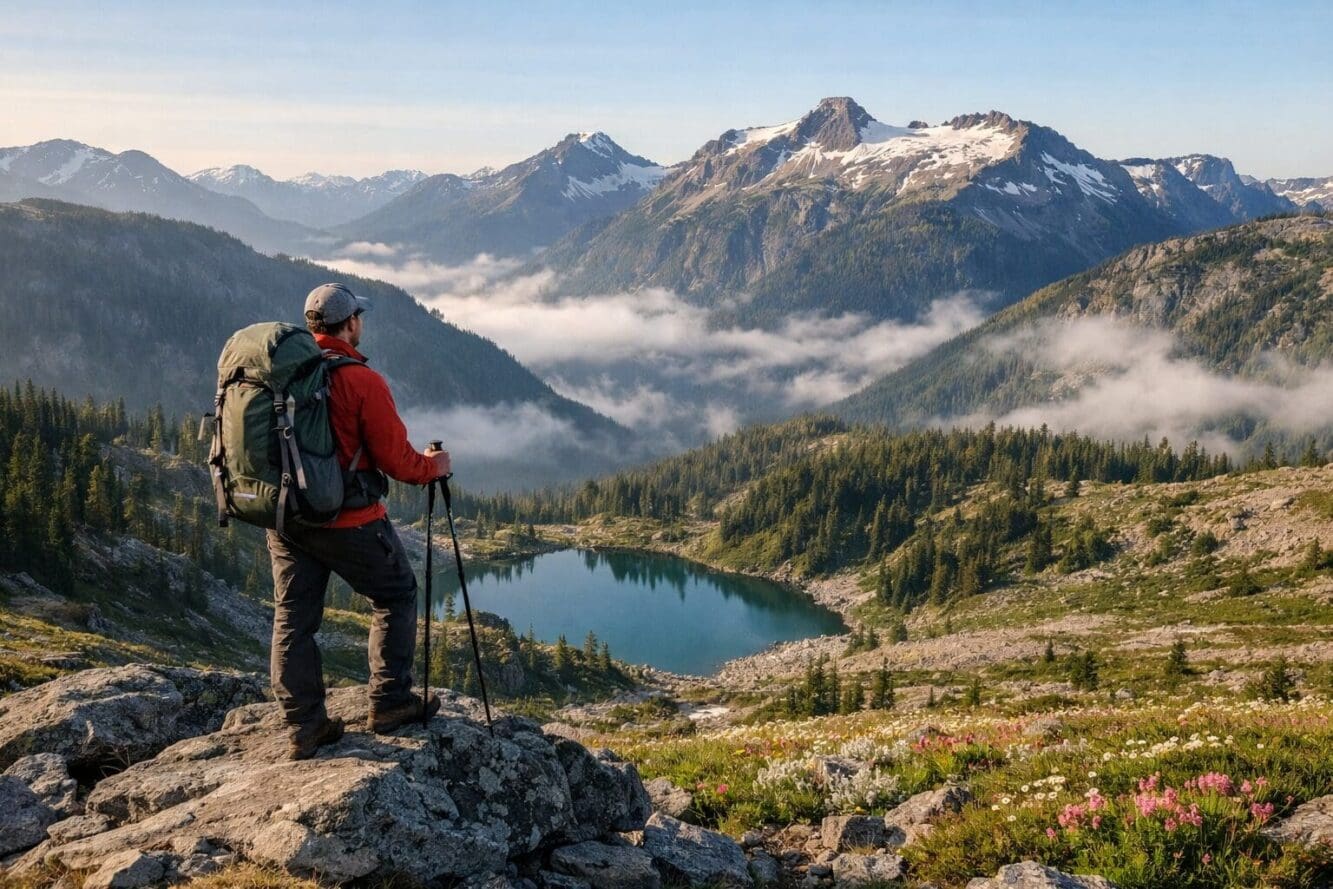
Comox-Strathcona is a mid-Vancouver Island region combining pristine beaches (Kye Bay, Air Force Beach, Miracle Beach), serious mountain terrain (Strathcona Provincial Park, Mount Washington), and a craft food-and-drink scene that rivals larger BC destinations. It’s best suited for travelers who want outdoor adventure without resort-town congestion. Direct flights into Comox Valley Airport make access straightforward from major western Canadian cities.
Why Is Comox-Strathcona Getting So Much Attention in 2026?
The short answer: Airbnb’s “hidden gem” designation and a broader Canadian trend toward domestic travel have put Comox-Strathcona on more people’s radar than ever before.
Several factors are converging:
- Domestic travel surge. More Canadians are seeking distinctive getaways closer to home rather than flying internationally. Comox-Strathcona fits that demand perfectly because it feels remote without actually being hard to reach.
- Nature-based accommodation demand. The region is well positioned for cozy, nature-based stays, from beachfront vacation rentals at Kye Bay to forest cabins near Cumberland [5].
- Strategic tourism planning. The Comox Valley Regional District is developing a comprehensive 10-year tourism strategy in partnership with 4VI and Experience Comox Valley. The process has included five steering committee meetings, two major public engagement sessions (with 40 and 70 attendees respectively), and interviews with more than 60 stakeholders [1].
- Infrastructure investment. The 2026 budget marks the final year of Visitor Centre mortgage payments, which will free up resources for future tourism projects [7]. A new Events & Experiences Fund is already channeling money into festivals and programming designed to attract visitors [5].
The region isn’t trying to become the next Whistler. The strategy is focused on sustainable growth that protects the natural assets drawing people here in the first place [1]. For travelers, that means the experience still feels authentic and uncrowded.
Choose Comox-Strathcona if you want a beach-and-mountain trip without fighting for parking spots or restaurant reservations. Skip it if you’re looking for a large-scale resort experience with nightlife and shopping malls.
What Beaches Should You Visit in Comox-Strathcona?
The coastline here ranges from wide sandy stretches perfect for families to rocky shorelines ideal for tide-pooling and wildlife watching. Here are the standout beaches:
Top Beaches at a Glance
| Beach | Location | Best For | Difficulty |
|---|---|---|---|
| Kye Bay / Air Force Beach | Comox | Families, swimming, sandcastles | Easy |
| Goose Spit | Comox | Walking, windsurfing, bird watching | Easy |
| Miracle Beach | Black Creek | Camping, beachcombing, swimming | Easy |
| Morning Beach Park | Denman Island | Exploring Sandy Islands at low tide | Easy to moderate |
| Royston Shipwrecks | Royston | Photography, history, unique scenery | Easy |
| Tribune Bay | Hornby Island | White sand, warm water, snorkeling | Easy |
Kye Bay (Air Force Beach) is the region’s signature beach: a 2-kilometer stretch of sand just outside Comox that’s warm enough for swimming in summer and dramatic enough for storm watching in winter vancouverislandbucketlist.com. Morning Beach Park on Denman Island offers something completely different. When the tide drops, you can walk out to the Sandy Islands and explore kilometers of exposed sand flats vancouverislandbucketlist.com.
The Royston Shipwrecks are worth a stop even if you’re not a beach person. The decomposing hulls of old ships sit just offshore, creating an eerie, photogenic scene that’s unlike anything else on Vancouver Island vancouverislandbucketlist.com.
Common mistake: Visiting Morning Beach Park without checking tide tables. The Sandy Islands are only accessible at low tide, and getting caught out there as the water rises is both dangerous and surprisingly easy to do. Always check tide charts before heading out.
If you’re someone who appreciates community events and outdoor gatherings, the Comox Valley’s beach communities host regular pop-up markets and seasonal festivals along the waterfront.
What Mountain and Hiking Adventures Are Available?
Strathcona Provincial Park is the anchor of the mountain experience, and it’s British Columbia’s oldest provincial park. Combined with Mount Washington, the Forbidden Plateau, and the Comox Glacier, the region offers hiking, skiing, and alpine exploration across all seasons.
Key Mountain Destinations
- Strathcona Provincial Park: Over 250,000 hectares of wilderness with trails ranging from easy lakeside walks to multi-day backcountry routes. Della Falls, one of Canada’s tallest waterfalls at 440 meters, is located here [3].
- Mount Washington Alpine Resort: The main ski destination in winter, offering alpine and Nordic skiing with ocean views. In summer, the mountain converts to a hiking and mountain biking hub. For those interested in mountain resort companies and their operations, Mount Washington operates independently from the major chains, which contributes to its more relaxed atmosphere.
- Forbidden Plateau: A high-elevation area with meadows, lakes, and moderate hiking trails accessible from Mount Washington’s base.
- Comox Glacier: Visible from much of the valley, this glacier is a defining landmark. Reaching it requires a challenging multi-day hike, but viewing it from below is effortless.
- Nymph Falls Nature Park: A family-friendly spot with swimming holes, short trails, and a waterfall, located just outside Courtenay vancouverislandbucketlist.com.
Trail systems development is identified as a key strategic theme for Vancouver Island tourism going forward [3]. The region is actively investing in trail infrastructure, which means conditions are improving steadily.
Edge case: Winter hiking in Strathcona Park requires proper backcountry gear and avalanche awareness training. The park doesn’t have the groomed, patrolled terrain you’d find at a resort. If you’re not experienced with winter backcountry travel, stick to Mount Washington’s managed trails or hire a local guide.
Destination BC identifies outdoor adventure experiences and soft outdoor activities as the primary tourism drivers for this part of Vancouver Island [3]. That means the infrastructure, from trailheads to parking to signage, is getting consistent attention and funding.
What About Surfing and Water Sports in Comox-Strathcona?
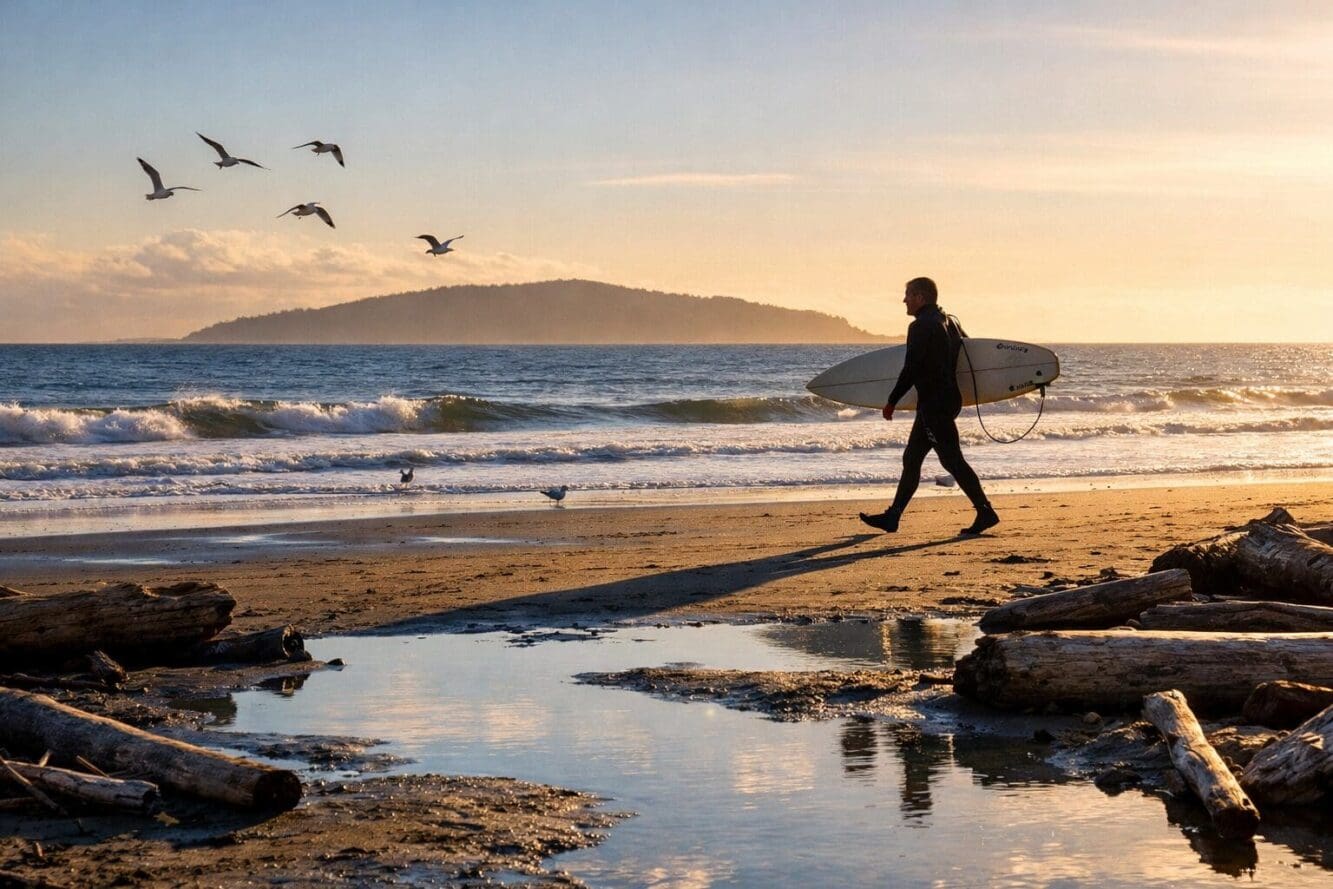
The surf scene here is smaller and less known than Tofino’s, but that’s part of the appeal. The Comox Valley’s marine activities center on kayaking, paddleboarding, and exploring the harbour and surrounding islands rather than big-wave surfing.
Water Activities Worth Trying
- Kayaking: Paddle along the coastline from Comox Harbour, exploring hidden coves and watching for sea lions. The harbour is sheltered enough for beginners but connects to open water for more experienced paddlers britishcolumbia.com.
- Whale watching: The waters around the Comox Peninsula are home to orcas, humpbacks, and gray whales, particularly from spring through fall vancouverislandbucketlist.com.
- Fishing: Salmon fishing is a major draw, with both guided and independent options available from Comox Harbour and Campbell River (the self-proclaimed “Salmon Capital of the World”) britishcolumbia.com.
- Scuba diving: Crystal-clear waters and diverse marine life make the Comox Valley a legitimate cold-water diving destination vancouverisland.travel.
- Stand-up paddleboarding: Calm mornings on Comox Lake or along the protected coastline offer ideal SUP conditions.
Choose kayaking if you want a self-guided, quiet experience close to wildlife. Choose a whale watching tour if you want a guided experience with a higher chance of seeing marine mammals up close.
For those who enjoy learning about environmental conservation and water quality, the Comox Valley’s marine ecosystem benefits from active local stewardship programs that keep these waters healthy and clear.
How Does the Local Food and Craft Beverage Scene Compare?
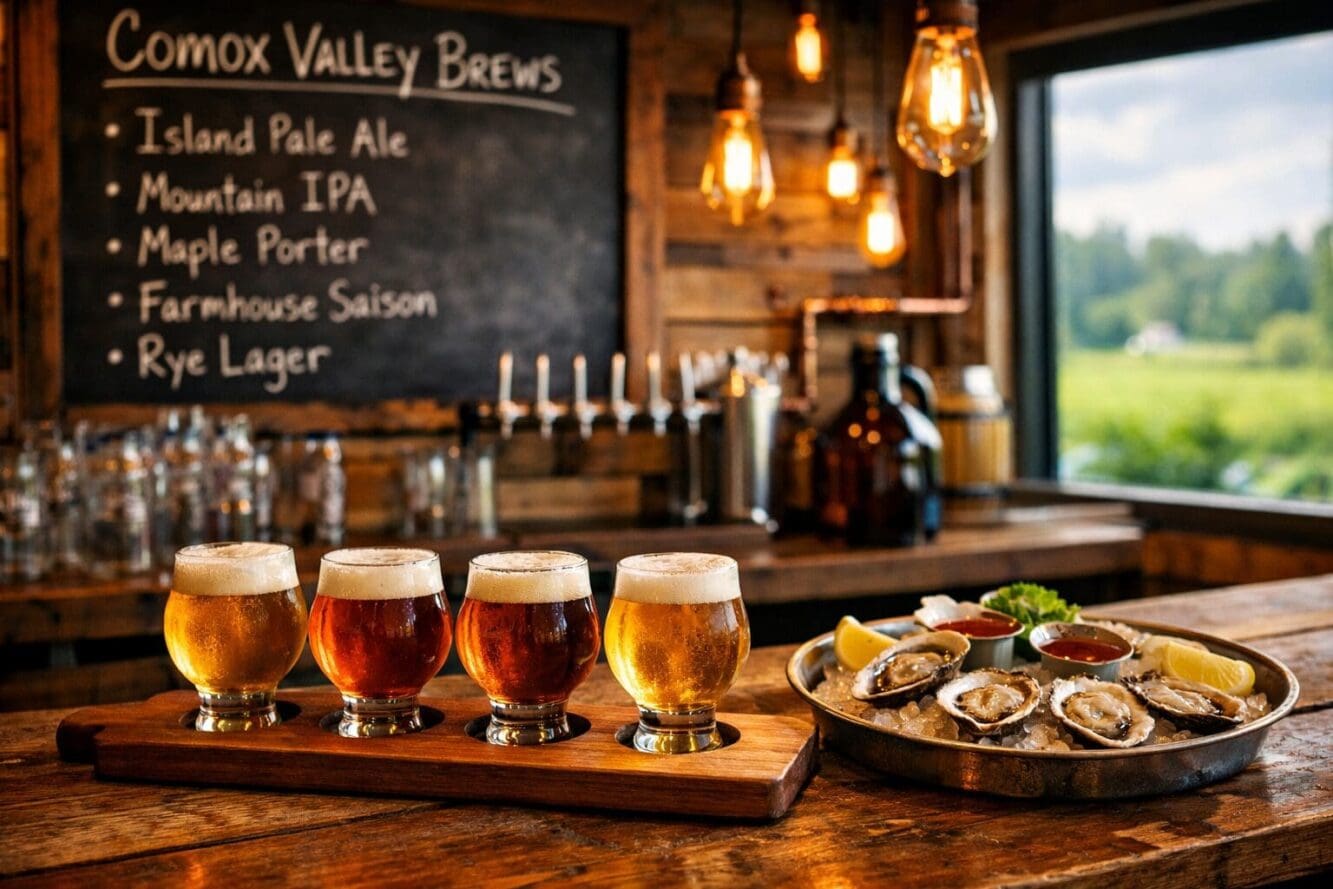
The Comox Valley’s food scene punches well above its weight for a community of its size. The combination of fertile farmland, ocean access, and a culture that values local sourcing creates a food-and-drink experience that feels genuinely connected to the landscape.
Craft Beverages
The valley has a dense cluster of craft producers for a region this size:
- Gladstone Brewing Company (Courtenay)
- Cumberland Brewing Company (Cumberland)
- Ace Brewing (Courtenay)
- Land & Sea Brewing (Comox)
- 40 Knots Winery (Comox)
- Coastal Black Winery (Black Creek)
- Wayward Distillery (Courtenay)
vancouverisland.travel lists these as highlights of the region’s beverage scene, and there are more opening regularly. The craft beer culture here leans toward approachable, sessionable styles that pair well with seafood, though you’ll find everything from IPAs to barrel-aged stouts.
Farm-to-Table Dining and Markets
The Comox Valley Farmers’ Market runs year-round on Saturdays (9 a.m. to 1 p.m.) and adds Wednesday evening markets in summer (4 to 8 p.m.) in downtown Courtenay vancouverisland.travel. Expect seasonal produce, wild-harvested foods, small-scale meat and seafood, artisan food products, and ready-to-eat meals.
The region is known for its shellfish, particularly oysters and clams. Several restaurants serve them straight from local waters, and the annual shellfish festival is one of the valley’s signature events.
If you appreciate local food entrepreneurs and community dining experiences, the Comox Valley’s food scene has a similar grassroots energy, with chefs and producers who know each other and collaborate regularly.
Common mistake: Assuming you need reservations everywhere. While a few popular spots do fill up on summer weekends, most of the valley’s restaurants and tasting rooms are walk-in friendly, especially midweek.
Where Should You Stay in Comox-Strathcona in 2026?
Accommodation options range from beachfront vacation rentals to campgrounds in provincial parks. The region doesn’t have large chain hotels dominating the landscape, which is part of its charm.
Accommodation Types
| Type | Best For | Price Range (per night, CAD) | Example Areas |
|---|---|---|---|
| Beach house rentals | Families, groups | $200–$500+ | Kye Bay, Comox |
| Forest cabins | Couples, solo travelers | $120–$300 | Cumberland, Courtenay |
| Campgrounds | Budget travelers, adventurers | $25–$60 | Miracle Beach, Strathcona Park |
| B&Bs and guest suites | Couples, short stays | $100–$250 | Comox, Courtenay |
| Glamping | Comfort-seeking adventurers | $100–$250 | Various locations |
Kye Bay is the prime location for beach house rentals, with properties sleeping up to eight guests vancouverislandbucketlist.com. For camping, Miracle Beach Provincial Park offers waterfront sites, and several private campgrounds near Courtenay provide RV hookups and tent sites hipcamp.com.
Property values in Comox remain stable, with the median assessment sitting around $838,000 in 2026 (a roughly 1 percent increase from 2025). This stability suggests the area isn’t experiencing the kind of speculative boom that can distort a community’s character.
Decision rule: Book a Kye Bay rental if beach access is your top priority. Choose Cumberland if you want to be closer to mountain biking trails and the village’s walkable brewery-and-café scene. Pick a campground if you’re on a budget and want to maximize time outdoors.
Is Comox-Strathcona a Good Destination for Families?
Yes. The combination of safe, shallow beaches, easy hiking trails, and family-oriented community events makes Comox-Strathcona one of Vancouver Island’s best family destinations.
Family-Friendly Highlights
- Nymph Falls Nature Park: Swimming holes, short trails, and a waterfall that kids love vancouverislandbucketlist.com.
- Seal Bay Nature Park: Forest trails with boardwalks leading to a quiet beach.
- Filberg Heritage Lodge and Park: Gardens, heritage buildings, and the annual Filberg Festival britishcolumbia.com.
- Comox Valley Farmers’ Market: Kid-friendly with food vendors, live music, and open space.
- Royston Shipwrecks: A short, easy walk to see something genuinely unusual that sparks kids’ imaginations.
The region also hosts festivals throughout the year celebrating everything from music and shellfish to fine art and aviation vancouverisland.travel. The new Events & Experiences Fund established by the Comox Valley Regional District is specifically designed to create and enhance these kinds of visitor experiences [5].
For families interested in community-oriented events and seasonal fairs, the Comox Valley’s calendar is packed with accessible, all-ages programming.
How Do You Get to Comox-Strathcona?
The Comox Valley Airport (YQQ) is the easiest way in, with daily non-stop flights from Vancouver, Calgary, and Edmonton via Air Canada, Pacific Coastal Airlines, and WestJet vancouverisland.travel.
Other Access Options
- Drive from Victoria: Approximately 3 hours north via Highway 19.
- Drive from Nanaimo: About 1.5 hours north via Highway 19.
- BC Ferries: Service to Denman and Hornby Islands departs from Buckley Bay, about 20 minutes south of Courtenay. The Powell River ferry connects from Comox (Little River terminal).
Tip: If you’re flying into Vancouver International Airport (YVR), you can take a short connecting flight to YQQ or drive to Nanaimo and catch the ferry, then drive north. The connecting flight saves significant time and is often surprisingly affordable when booked in advance.
Sustainable travel is becoming a priority for the region. Global sustainable tourism leaders are increasingly looking to Vancouver Island as a model for responsible destination management [6]. For travelers who care about environmental stewardship, choosing Comox-Strathcona supports a community actively working to balance tourism growth with ecological protection.
What’s the Best Time to Visit Comox-Strathcona?
Every season offers something different, and the region genuinely functions as a year-round destination.
Seasonal Guide
| Season | Temperature Range | Top Activities | Crowd Level |
|---|---|---|---|
| Summer (Jun–Aug) | 15–25°C | Beaches, hiking, kayaking, festivals | Moderate |
| Fall (Sep–Nov) | 8–18°C | Salmon runs, harvest markets, hiking | Low |
| Winter (Dec–Feb) | 0–8°C (coast) / -5–0°C (mountains) | Skiing, storm watching, cozy stays | Low to moderate |
| Spring (Mar–May) | 8–16°C | Wildflowers, whale watching, cycling | Low |
Summer is the most popular season, but winter is gaining traction thanks to the Airbnb recognition and Mount Washington’s ski season. Fall is arguably the best-kept secret: mild weather, salmon spawning in the rivers, harvest-season farmers’ markets, and almost no crowds.
Comox-Strathcona 2026: Vancouver Island’s Beach Lover Paradise with Mountains, Surf, and Local Flavors — Planning Checklist
Use this checklist to plan a well-rounded trip:
- Book flights into Comox Valley Airport (YQQ) or plan your driving route
- Reserve accommodation (beach rental, cabin, campground, or B&B)
- Check tide tables if visiting Morning Beach Park or Royston Shipwrecks
- Research trail conditions for Strathcona Provincial Park hikes
- Book whale watching or fishing charters in advance (summer fills up)
- Plan at least one brewery or winery visit
- Check the Comox Valley Farmers’ Market schedule
- Pack layers (coastal weather changes quickly, even in summer)
- Bring binoculars for wildlife watching (sea lions, eagles, whales)
- Download offline maps for backcountry areas with limited cell service
Conclusion
Comox-Strathcona in 2026 is a destination that rewards the kind of traveler who wants substance over spectacle. The beaches are genuinely beautiful, the mountains are serious enough to challenge experienced hikers, and the food-and-drink scene reflects a community that cares about what it produces. With Airbnb’s recognition bringing new attention and a 10-year tourism strategy guiding sustainable growth [1], the region is positioned to welcome more visitors without losing the qualities that make it special.
Actionable next steps:
- Search flights to YQQ on Air Canada, WestJet, or Pacific Coastal Airlines for your preferred dates.
- Browse accommodation on Airbnb, VRBO, or local rental sites, focusing on Kye Bay for beach access or Cumberland for mountain proximity.
- Build a loose itinerary using the seasonal guide and checklist above, leaving room for spontaneous exploration.
- Check the Experience Comox Valley website for current events, festivals, and market schedules.
- Set meaningful goals for your trip by deciding whether you’re prioritizing beach time, mountain adventure, culinary exploration, or a mix. For tips on setting meaningful goals for a new season, a bit of pre-trip planning goes a long way.
The best time to go is whenever you can. But if you’re looking for the sweet spot between good weather, low crowds, and peak natural beauty, aim for September or early October.
FAQ
Q: Is Comox-Strathcona expensive to visit?
A: It’s moderate by BC standards. Accommodation ranges from $25/night for camping to $500+/night for premium beach houses. Dining and activities are generally less expensive than Victoria or Tofino.
Q: Can you surf in Comox-Strathcona?
A: The region is better known for kayaking, paddleboarding, and sheltered-water activities than open-ocean surfing. For serious surf, Tofino (about 3 hours west) is the go-to. However, windsurfing and kiteboarding are popular at Goose Spit.
Q: How far is Comox-Strathcona from Victoria?
A: About 220 kilometers, or roughly 3 hours by car via Highway 19.
Q: Is the Comox Valley Airport well-connected?
A: Yes. Daily non-stop flights operate from Vancouver, Calgary, and Edmonton via Air Canada, Pacific Coastal Airlines, and WestJet.
Q: What’s the best beach for families with young children?
A: Kye Bay (Air Force Beach) is ideal: shallow water, sandy bottom, and easy parking. Nymph Falls Nature Park is also excellent for families who want a river swimming experience.
Q: Do you need a car to explore the region?
A: Strongly recommended. Public transit exists within Courtenay and Comox, but reaching beaches, trailheads, and rural attractions requires a vehicle.
Q: When does Mount Washington’s ski season run?
A: Typically from early December through early April, depending on snowfall. The resort offers both alpine and Nordic skiing.
Q: Are dogs allowed on beaches?
A: Policies vary by beach and season. Goose Spit and some sections of Kye Bay allow dogs, but Miracle Beach Provincial Park has restrictions. Check local signage.
Q: What’s the K’omoks First Nation’s connection to the area?
A: The K’omoks First Nation are the original inhabitants of the Comox Valley. The name “Comox” derives from a Kwakwala word meaning “plenty,” reflecting the area’s abundant natural resources britishcolumbia.com.
Q: Is there a tourism strategy to manage growth?
A: Yes. The Comox Valley Regional District is developing a 10-year tourism strategy with extensive community input, focused on sustainable development [1].
Q: Can you visit Denman and Hornby Islands from Comox?
A: Yes. BC Ferries runs service from Buckley Bay (about 20 minutes south of Courtenay) to Denman Island, and a second ferry connects Denman to Hornby Island.
Q: What sustainable tourism efforts are underway?
A: The region hosted sustainable travel and tourism leaders in early 2026 [6], and the 10-year strategy explicitly addresses balancing visitor growth with environmental and community well-being [1].
References
[1] Tourism Strategy Plan – https://engagecomoxvalley.ca/tourismstrategyplan
[3] Vancouver Island – https://www.destinationbc.ca/what-we-do/destination-management/destination-development/vancouver-island/
[5] Tourism – https://www.comoxvalleyrd.ca/services/tourism
[6] Sustainable Travel And Tourism Global Leaders To Flock To Vancouver Island – https://comoxvalleyrecord.com/2026/01/17/sustainable-travel-and-tourism-global-leaders-to-flock-to-vancouver-island/
[7] 2026-2030 Financial Planning Briefing: Tourism Service Overview – https://www.comoxvalleyrd.ca/sites/default/files/2026-01/550%20-%202026-2030%20Financial%20Planning%20Briefing%20_%20%20Tourism%20Service%20Overview_0.pdf
Content, illustrations, and third-party video appearing on GEORGIANBAYNEWS.COM may be generated or curated with AI assistance or reproduced pursuant to the fair dealing provisions of the Copyright Act, R.S.C. 1985, c. C-42. Attribution and hyperlinks to original sources are provided in acknowledgment of applicable intellectual property rights. Such referencing is intended to direct traffic to and support the original rights holders’ platforms.