




















Cooking Mushrooms Properly: A Practical Guide for Better Flavour | Orion Moonsong
Last updated: April 5, 2026
Quick Answer
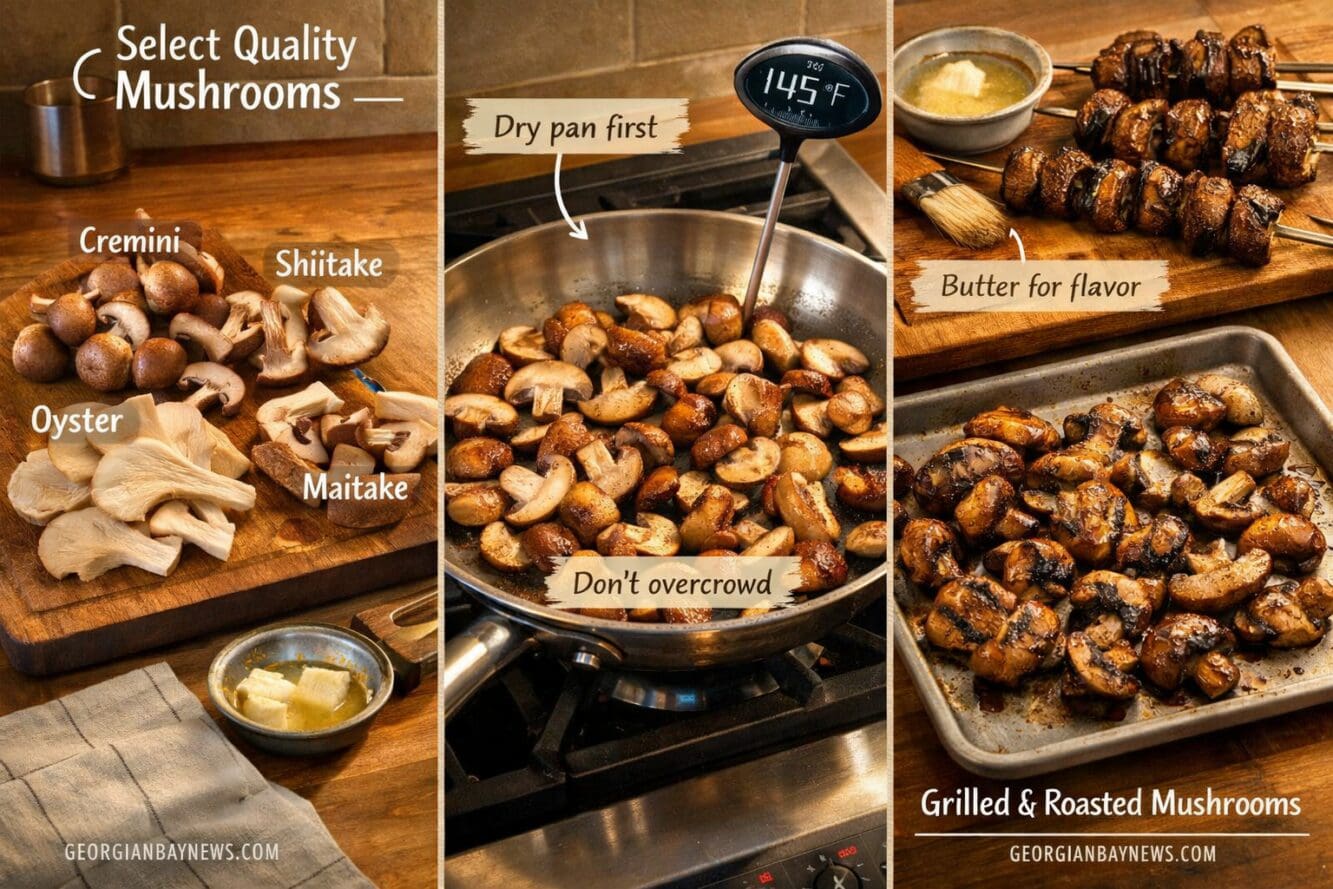
Cooking mushrooms properly means managing moisture, heat, and pan space. For most home cooks, the best method is to clean mushrooms gently, cook them in a hot pan without crowding, let their water evaporate, then add fat and seasoning for deep browning and richer flavor. Mushrooms are generally considered sufficiently cooked at 145°F internal temperature [5].
Key Takeaways
- Cooking mushrooms properly starts with high heat and enough space in the pan.
- Mushrooms release a lot of water, so overcrowding causes steaming instead of browning.
- Sautéing with butter works especially well for flavor, especially with delicate varieties [3].
- Roast mushrooms first when using them in burgers, bowls, or blends to concentrate umami and reduce sogginess [1].
- Smaller mushrooms like cremini and shiitake are easier to grill when skewered [4].
- Whole maitake or oyster mushrooms can be pressed on a hot surface for crispy edges [1].
- Fresh mushrooms should smell earthy and sweet, not sour or fishy [3].
- Wood ear mushrooms hold up especially well in high-heat stir-fries [3].
What does cooking mushrooms properly actually mean?
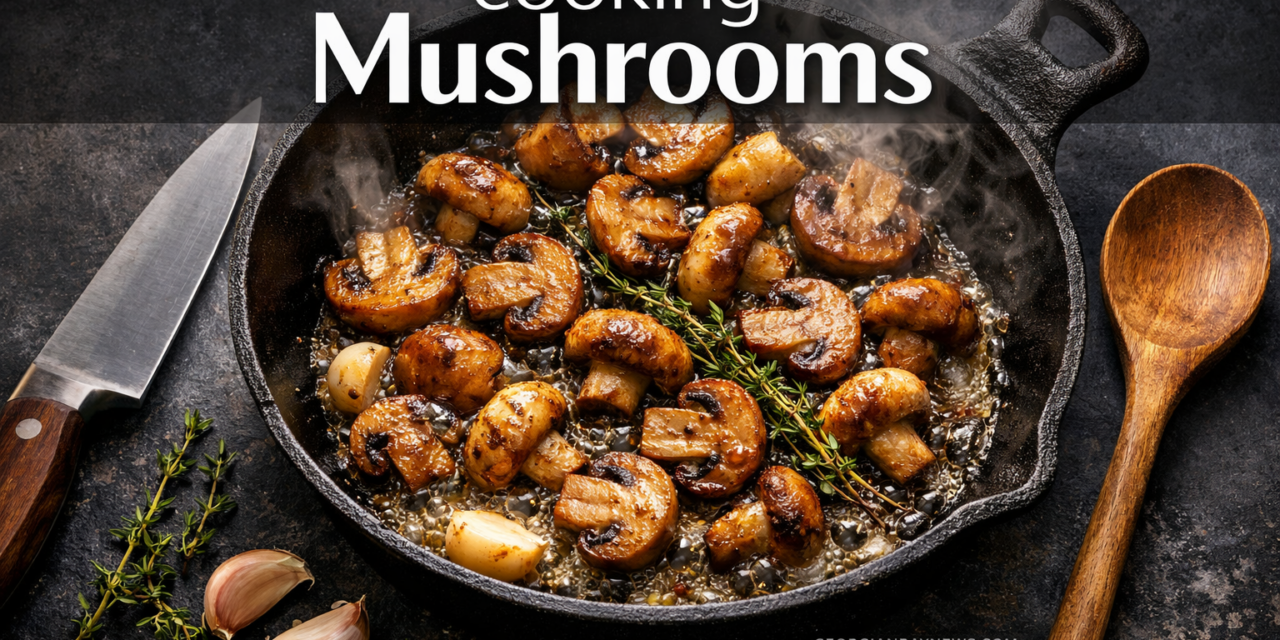
Cooking mushrooms properly means cooking off excess water first, then building color and flavor. That matters for beginners, busy home cooks, and anyone frustrated by pale, rubbery mushrooms.
Mushrooms are mostly water, so technique changes the result more than seasoning does. A cook at a neighborhood dinner party once dumped a full box into a small skillet, then wondered why the mushrooms tasted boiled. The fix was simple: same mushrooms, bigger pan, more heat, patience.
A good result usually looks like this:
- Edges browned
- Centers tender
- No puddle of liquid left in the pan
- Earthy, savory aroma
“If mushrooms are crowded, they steam first and brown poorly.”
For buying tips, official mushroom grades and standards can help explain quality terms [2].
How should mushrooms be cleaned and prepped before cooking?
Clean mushrooms lightly and keep them as dry as possible. Most mushrooms do best with a quick wipe or rinse followed by immediate drying.
Basic prep works like this:
- Trim any tough stem ends.
- Wipe dirt off with a damp towel, or rinse briefly if needed.
- Dry well with paper towels.
- Slice only if the recipe needs faster cooking or more surface area.
Choose prep based on the goal:
- Slice mushrooms if faster browning matters.
- Keep mushrooms whole or halved if a meatier bite matters.
- Tear oyster or maitake mushrooms for rustic edges that crisp well.
A common mistake is soaking mushrooms in water. A quick rinse is fine, but soaking adds moisture that slows browning. If meal prep is the goal, pair mushroom prep with other simple routines, like the calm habits in finding peace through breathing, because calmer cooks usually rush less and brown food better.
What is the best pan method for Cooking mushrooms properly?
The best pan method is to start mushrooms in a hot skillet, spread them in one layer, and wait until they release and lose moisture before adding much fat. Then finish with butter, oil, salt, and herbs.
America’s Test Kitchen notes that sautéing mushrooms with good butter is especially effective, and a simple approach lets the mushroom’s own flavor stand out [3].
Quick skillet checklist
- Preheat skillet well
- Add mushrooms in a single layer
- Don’t stir constantly
- Wait for water to cook off
- Add butter or oil after moisture drops
- Season near the end to control moisture
Choose butter if flavor is the priority.
Choose oil first if cooking at very high heat.
Use both if you want browning plus richness.
For cooks planning food around gatherings, mushroom sides fit naturally with event meals like Le Dîner en Blanc in Collingwood, where simple, elegant dishes travel well.
Which cooking method is best for each mushroom type?
Different mushrooms need slightly different handling. The best method depends on texture, size, and water content.
| Mushroom type | Best method | Why |
|---|---|---|
| Button/cremini | Sauté or roast | Easy browning, everyday use |
| Shiitake | Sauté, roast, grill | Strong flavor, firm texture |
| Oyster | Tear and sear or press | Crispy edges develop well |
| Maitake | Roast or press-sear | Frilly edges get deeply browned |
| Wood ear | Stir-fry | Texture stays pleasant under high heat [3] |
| Chanterelle | Butter sauté | Delicate flavor shines with simple prep [3] |
Smaller mushrooms such as cremini or shiitake are easier to grill when skewered, lightly oiled, and cooked over medium-high heat [4].
A useful decision rule: Use dry heat for flavor, fast stir-fry for texture.
Why do mushrooms turn soggy, and how can that be fixed?
Mushrooms turn soggy when the pan is crowded, the heat is too low, or too much salt is added too early. The fix is usually more space, more heat, and a little more patience.
Common mistakes:
- Using a pan that is too small
- Stirring too often
- Covering the pan
- Adding sauce before mushrooms brown
If mushrooms already released too much liquid, keep cooking. The water can still evaporate, and browning can still happen after. That rescue method works well for weeknight meals and food prep, much like practical routines in 10-minute stress-relieving stretch chair yoga help reset a rushed day.
Is roasting better than sautéing for Cooking mushrooms properly?
Roasting is better for large batches and concentrated flavor, while sautéing is better for speed and more direct control. Both work well when moisture is managed correctly.
SouthMill recommends roasting mushrooms first for burgers, koftas, and other high-volume dishes because roasting removes extra moisture and concentrates umami [1].
Choose roasting if:
- Cooking for a group
- Adding mushrooms to grain bowls
- Mixing mushrooms into meat
- Wanting hands-off cooking
Choose sautéing if:
- Cooking one pan for dinner
- Wanting a quick topping
- Building sauce in the same skillet
A smart blend for mixed dishes is a 30/70 mushroom-to-meat ratio, which SouthMill recommends for performance and structure in cooked items [1]. For community-style outdoor meals, ideas like summer party food events show why batch-friendly roasted mushrooms are useful.
Can mushrooms be grilled, smashed, or blended into other dishes?
Yes. Mushrooms grill well, smash well, and blend well, especially when cooked first to control moisture.
Useful options:
- Grill: Skewer smaller mushrooms so they don’t fall through the grates [4].
- Smash: Press maitake or oyster mushrooms on a hot flat top or heavy skillet for crisp, browned edges [1].
- Blend: Roast first, then mix into burgers, meatballs, bowls, or pasta filling [1].
A strong kitchen trick is a triple-umami blend of white, cremini, and shiitake mushrooms, sautéed together for topping burgers, grains, or toast [1].
If local food culture is the inspiration, Hunny’s Cookies and other sweet spots are a reminder that savory depth matters just as much as dessert appeal.
How do you know when mushrooms are fresh and safely cooked?
Fresh mushrooms should smell earthy and slightly sweet, not sour or fishy [3]. For doneness, mushrooms are generally sufficiently cooked at 145°F [5].
Check freshness before cooking:
- Firm texture
- No slimy surface
- No strong sour smell
- Minimal discoloration or drying [3]
USDA grading resources can also help readers understand appearance and market quality [2]. If mushrooms look dried out around the edges but still smell good, trim and cook them soon.
FAQ
Should mushrooms be washed or wiped?
Either works. A quick rinse is fine if mushrooms are dried right away, but soaking is best avoided.
Do mushrooms need oil right away?
No. Mushrooms can start in a dry hot pan, then get fat added after moisture begins to cook off.
When should salt be added to mushrooms?
Usually near the end or after some browning starts, because early salt can pull out moisture faster.
Can mushrooms be undercooked?
Yes. Undercooked mushrooms may stay watery and less digestible for some people; 145°F is a practical doneness target [5].
Why do restaurant mushrooms taste better?
Restaurants often use higher heat, larger pans, enough fat, and they avoid crowding.
Are butter or olive oil better?
Butter gives richer flavor. Olive oil handles heat well. Many cooks use both.
What mushrooms are best for stir-fry?
Wood ear mushrooms are especially good because their texture holds up well under high heat [3].
Can mushrooms replace meat?
Mushrooms can replace some meat or blend with meat well, especially after roasting to reduce water [1].
Conclusion
Cooking mushrooms properly is less about fancy technique and more about heat, space, and timing. Dry them well, avoid crowding, let moisture evaporate, and then build browning with butter or oil. For bigger meals, roast first. For faster meals, sauté in a hot pan.
Next steps are simple:
- Try one mushroom type this week, such as cremini or shiitake
- Use a larger skillet than usual
- Cook in one layer
- Taste for browning, not just softness
Once that habit clicks, mushrooms stop being watery filler and start becoming the best part of the plate.
References
[1] 2026 Mushroom Culinary Trends For Chefs – https://southmill.com/blog/2026-mushroom-culinary-trends-for-chefs/
[2] Mushrooms Grades And Standards – https://www.ams.usda.gov/grades-standards/mushrooms-grades-and-standards
[3] Watch – https://www.youtube.com/watch?v=XzD5gqpLUCY
[4] How To Prepare Mushrooms – https://www.nonfungiblemushrooms.com/en-gb/blogs/guides-tips-videos/how-to-prepare-mushrooms
[5] Preparation – https://extension.illinois.edu/mushrooms/preparation
Content, illustrations, and third-party video appearing on GEORGIANBAYNEWS.COM may be generated or curated with AI assistance or reproduced pursuant to the fair dealing provisions of the Copyright Act, R.S.C. 1985, c. C-42. Attribution and hyperlinks to original sources are provided in acknowledgment of applicable intellectual property rights. Such referencing is intended to direct traffic to and support the original rights holders’ platforms.