



















Creemore Artisan Cheese Trail 2026: New Producers, Tastings, and Farm-to-Table Pairings
Last updated: March 2, 2026
The Creemore Artisan Cheese Trail 2026: New Producers, Tastings, and Farm-to-Table Pairings is revitalizing Ontario’s dairy heritage by connecting local cheesemakers with food lovers through curated tasting experiences, farm visits, and seasonal pairings. This self-guided culinary route showcases emerging producers, celebrates traditional cheese-making methods, and supports the region’s farm-to-table economy.
Key Takeaways
- The Creemore Artisan Cheese Trail features six new producers joining the route in 2026, expanding tasting options and farm experiences
- Visitors can access guided tastings, farm tours, and pairing workshops throughout spring and summer 2026
- The trail supports local dairy farmers by creating direct-to-consumer sales channels and boosting regional food tourism
- Self-guided routes connect cheese producers with nearby farmers markets, restaurants, and specialty food shops
- Seasonal events include cheese-making demonstrations, recipe workshops, and farm-to-table dinners
- The initiative ties into broader artisan cheese movements gaining momentum across North America
- Economic impact benefits include increased farm revenue, job creation, and enhanced regional food security
Quick Answer
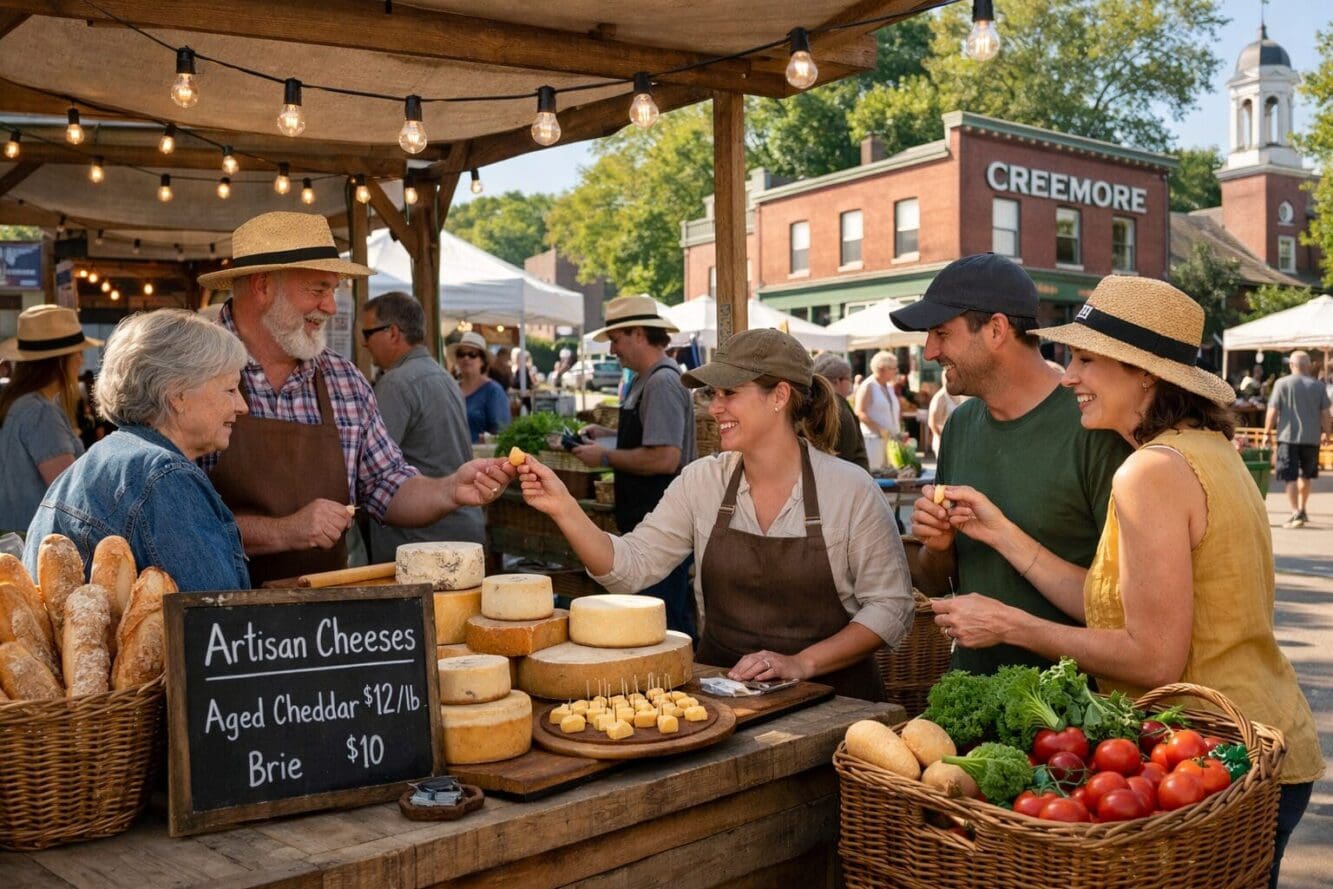
The Creemore Artisan Cheese Trail 2026 is a self-guided culinary route featuring local cheese producers, tasting rooms, and farm experiences in Ontario’s Creemore region. Six new producers joined in 2026, offering expanded tastings, farm tours, and seasonal pairing events that connect visitors directly with cheesemakers while supporting the local dairy economy and farm-to-table movement.
What Is the Creemore Artisan Cheese Trail 2026?
The Creemore Artisan Cheese Trail is a curated network of local cheese producers, dairy farms, and tasting venues that allows visitors to explore Ontario’s artisan cheese scene through self-guided tours and organized events. The 2026 edition expands the trail with new producers and enhanced farm-to-table experiences.
The trail operates as a regional food tourism initiative that benefits both producers and consumers. Cheesemakers gain direct access to customers, while visitors experience authentic farm environments and taste cheeses made from local milk. The model mirrors successful cheese trail programs emerging across North America, including the Route 66 Cheese & Food Trail launching in spring 2026[1][3].
Key features include:
- Self-guided maps showing producer locations, hours, and specialties
- Tasting room experiences with cheese samples and pairing recommendations
- Farm tours that demonstrate cheese-making processes and animal husbandry
- Seasonal events coordinated across multiple producers
- Educational workshops on cheese selection, storage, and cooking
Choose the Creemore trail if you want hands-on access to cheesemakers and prefer regional, small-batch products over mass-market options. The trail works best for visitors who can dedicate a full day or weekend to exploring multiple stops.
Who Are the New Producers Joining in 2026?
Six new cheese producers joined the Creemore Artisan Cheese Trail in 2026, bringing specialized offerings that range from traditional cheddar to experimental aged varieties. These additions expand the trail’s diversity and provide more tasting options across different price points and flavor profiles.
The new producers include:
- Heritage Dairy Creamery – Specializes in raw milk cheddars aged 12-36 months
- Maple Ridge Cheese Company – Produces soft-ripened cheeses with local herb infusions
- Clearview Farmstead – Offers goat milk cheeses and seasonal chèvre varieties
- Nottawasaga Valley Cheese – Focuses on European-style washed rind cheeses
- Georgian Bay Dairy Collective – Creates blended milk cheeses combining cow, goat, and sheep milk
- Simcoe Highlands Creamery – Makes flavored cream cheeses and fresh curds
Each producer maintains different visiting hours and requires advance booking for farm tours. Most offer retail sales on-site, with prices ranging from $8-$25 per cheese depending on aging and production methods.
Common mistake: Assuming all producers accept walk-in visitors. Many small operations require 24-48 hour advance notice for tours and tastings to ensure staff availability and proper sample preparation.
What Tasting Experiences Are Available on the Trail?
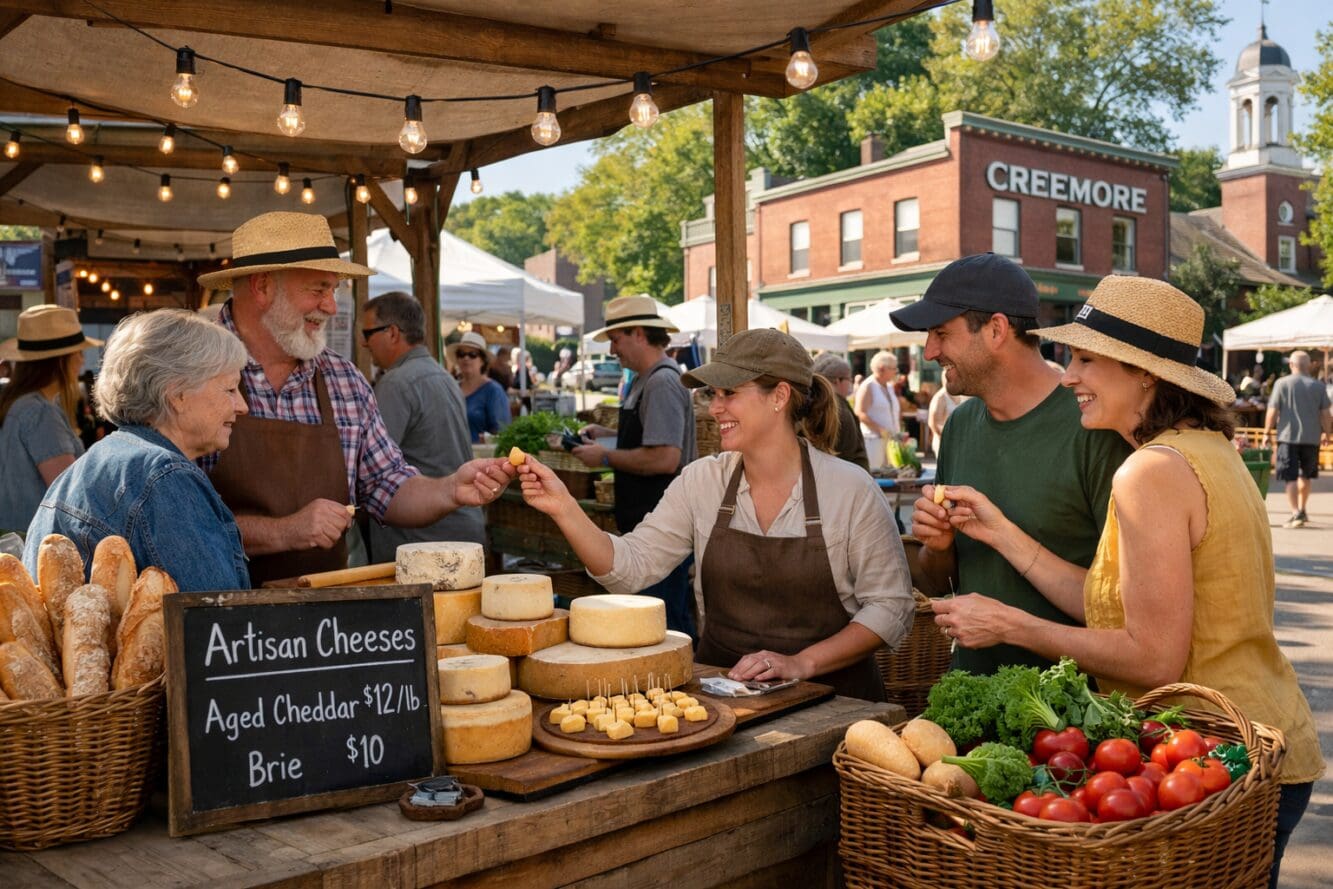
Tasting experiences on the Creemore Artisan Cheese Trail range from simple sample tastings to multi-course pairing dinners. Most producers offer complimentary samples of 3-5 cheeses, while premium tasting flights cost $15-$35 per person.
Available tasting formats:
- Basic samples – Free 3-5 cheese tastings at retail locations
- Guided flights – $15-$25 curated tastings with flavor notes and pairing suggestions
- Pairing workshops – $35-$50 sessions combining cheese with local wines, beers, or preserves
- Farm-to-table dinners – $75-$125 multi-course meals featuring cheese in every course
- Cheese-making demonstrations – $40-$60 hands-on sessions teaching basic techniques
The Collingwood Downtown Farmers Market provides another venue for sampling trail cheeses, with several producers maintaining regular market stalls during peak season.
Tasting availability varies by season. Spring and fall offer the widest selection, while winter tastings may be limited to pre-scheduled group bookings. Summer weekend tastings often require reservations due to high visitor volume.
How Do Farm-to-Table Pairings Work?
Farm-to-table pairings on the Creemore trail combine local cheeses with complementary ingredients sourced from nearby farms, creating complete tasting experiences that showcase regional food systems. These pairings demonstrate how cheese integrates into broader culinary applications.
Common pairing categories:
- Cheese + preserves – Local jams, chutneys, and honey matched to specific cheese profiles
- Cheese + charcuterie – Regional meats paired with complementary cheese textures
- Cheese + bread – Artisan bakery products designed to enhance cheese flavors
- Cheese + beverages – Local wines, craft beers, and ciders selected for flavor harmony
- Cheese + produce – Seasonal fruits, vegetables, and nuts that balance cheese richness
Many producers collaborate with nearby farms to create pre-packaged pairing boxes ($45-$85) that include cheese, accompaniments, and pairing guides. These boxes support multiple local businesses while providing convenient gift options.
For cooking inspiration, explore creamy roasted cauliflower soup recipes that incorporate local artisan cheeses for added depth and regional flavor.
Decision rule: Choose guided pairing workshops if you’re new to cheese tasting and want expert instruction. Select pre-packaged boxes if you prefer exploring pairings at your own pace or need portable options for picnics.
What Economic Impact Does the Trail Generate?
The Creemore Artisan Cheese Trail generates economic benefits through direct farm sales, tourism spending, and job creation across the regional food sector. Cheese trails create measurable impacts by connecting producers with consumers who pay premium prices for local, small-batch products.
Economic benefits include:
- Direct farm revenue – Producers retain 100% of retail sales versus 40-60% through wholesale channels
- Tourism multiplier effects – Visitors spend on accommodations, restaurants, and other local businesses
- Job creation – Cheese production, retail operations, and farm tours require additional staff
- Market differentiation – Trail membership helps producers command premium pricing
- Supply chain support – Increased cheese production benefits feed suppliers, equipment vendors, and dairy farmers
Similar artisan cheese initiatives demonstrate strong economic potential. The California Artisan Cheese Festival, celebrating its 20th year in 2026, has become a significant regional economic driver[2][5]. The Route 66 Cheese & Food Trail expects to create a national directory supporting cheesemakers across multiple states[3].
Local dairy farmers benefit most when cheese producers source milk regionally rather than importing from distant suppliers. This creates closed-loop economic systems that keep more money circulating within the community.
How Can Visitors Plan a Cheese Trail Experience?
Planning a Creemore Artisan Cheese Trail visit requires advance research, reservations, and route mapping to maximize the experience. Most visitors need 4-8 hours to explore 3-5 producers, depending on tasting depth and travel distances between stops.
Planning steps:
- Review producer profiles – Check specialties, hours, and reservation requirements
- Book tastings – Reserve spots 1-2 weeks ahead for peak season visits
- Map your route – Group nearby producers to minimize driving time
- Check seasonal availability – Confirm which cheeses are currently available
- Plan meal timing – Schedule lunch or dinner at a farm-to-table partner restaurant
- Bring coolers – Transport cheese purchases safely, especially in warm weather
- Budget appropriately – Expect $50-$150 per person for tastings and purchases
Common mistakes to avoid:
- Visiting without reservations during peak season (May-October weekends)
- Underestimating travel time between rural producer locations
- Failing to bring proper storage for cheese purchases
- Scheduling too many stops without adequate tasting time
- Ignoring producer-specific visiting guidelines and etiquette
The trail pairs well with other regional attractions. Consider combining cheese visits with stops at local farmers markets or cultural events to create full-day itineraries.
What Makes Creemore’s Cheese Scene Unique?
Creemore’s cheese scene stands out through its concentration of small-batch producers, commitment to traditional methods, and integration with the broader local food movement. The region benefits from quality dairy farms, favorable climate conditions, and a community culture that values artisan food production.
Distinctive characteristics:
- Small-batch production – Most producers make fewer than 500 wheels weekly, ensuring quality control
- Traditional techniques – Many cheesemakers use heritage recipes and aging methods
- Local milk sourcing – Producers prioritize relationships with nearby dairy farmers
- Experimental innovation – New producers test unique flavor combinations and aging processes
- Community integration – Cheesemakers actively participate in farmers markets and food events
- Educational focus – Many producers offer workshops and apprenticeships
The region’s approach mirrors broader artisan cheese trends while maintaining local character. Unlike industrial cheese production, Creemore producers emphasize terroir—the idea that local environment and practices create distinctive flavors.
This focus on place-based food production connects to larger movements in sustainable agriculture and regional food security, topics explored in discussions about local food systems and community resilience.
What Are the Best Seasonal Visiting Times?
Spring and fall offer optimal conditions for visiting the Creemore Artisan Cheese Trail, with comfortable temperatures, peak cheese availability, and coordinated special events. Each season provides different advantages depending on visitor priorities.
Seasonal considerations:
Spring (April-June)
- Fresh chèvre and soft cheeses at peak production
- Farm tours showcase newborn animals and spring pastures
- Moderate crowds and easier reservation availability
- Wildflowers and green landscapes enhance farm visits
Summer (July-August)
- Longest operating hours and most consistent availability
- Outdoor tasting events and farm-to-table dinners
- Higher visitor volume requires advance planning
- Heat requires careful cheese transport and storage
Fall (September-November)
- Aged cheeses reach optimal maturity
- Harvest season provides abundant pairing ingredients
- Comfortable temperatures for outdoor activities
- Coordinated trail-wide events and festivals
Winter (December-March)
- Limited hours and reduced tasting availability
- Focus on aged cheeses and preserved pairings
- Lowest crowds and most intimate experiences
- Some producers close for annual maintenance
Edge case: Visiting during cheese-making days (typically early morning) provides the most educational experience but requires special arrangements and may limit tasting availability.
How Does the Trail Support Local Dairy Farmers?
The Creemore Artisan Cheese Trail supports dairy farmers by creating premium markets for local milk, establishing long-term supply relationships, and demonstrating the economic viability of small-scale dairy operations. This support helps maintain working farms and agricultural land use in the region.
Support mechanisms:
- Premium milk pricing – Cheesemakers pay 15-30% above commodity rates for quality local milk
- Stable contracts – Long-term agreements provide farmers with predictable revenue
- Quality incentives – Farmers receive bonuses for milk that meets specific standards
- Reduced transportation – Local sourcing cuts costs and environmental impact
- Market diversification – Farmers gain alternatives to volatile commodity markets
- Educational partnerships – Collaborative workshops teach sustainable dairy practices
This model addresses challenges facing small dairy operations that struggle to compete with industrial-scale producers. By creating direct connections between cheesemakers and dairy farmers, the trail helps preserve regional agricultural heritage and food production capacity.
The economic benefits extend beyond individual farms to support feed suppliers, veterinary services, and agricultural equipment providers throughout the region.
Frequently Asked Questions
How much does it cost to visit the Creemore Artisan Cheese Trail?
Visiting the trail is free, but individual tastings cost $15-$35 per person for guided experiences. Basic samples are often complimentary with purchase. Budget $50-$150 per person for a full day including tastings and cheese purchases.
Do I need reservations to visit cheese producers?
Most producers require 24-48 hour advance reservations for farm tours and guided tastings, especially during peak season (May-October). Retail shops may accept walk-ins, but calling ahead ensures availability and prevents wasted trips.
Can I buy cheese directly from producers?
Yes, all trail producers offer on-site retail sales. Prices range from $8-$25 per cheese depending on variety and aging. Many producers also ship products or maintain relationships with local retailers for convenient purchasing.
What’s the best way to transport cheese purchases?
Bring insulated coolers with ice packs, especially during warm months. Most producers provide basic packaging, but proper temperature control ensures cheese quality during transport. Plan cheese purchases as your final stops when possible.
Are the cheese producers family-friendly?
Many producers welcome families and offer educational experiences suitable for children. Farm tours provide opportunities to see animals and learn about food production. Confirm age-appropriate activities when making reservations.
How long does a typical cheese trail visit take?
Plan 4-8 hours to visit 3-5 producers with adequate tasting time. Single-producer visits take 1-2 hours including tours and tastings. Full-day experiences allow for leisurely exploration and meal breaks at partner restaurants.
What payment methods do producers accept?
Most producers accept cash, debit, and credit cards. Smaller operations may prefer cash for retail sales. Confirm payment options when booking to avoid inconvenience.
Can I visit during winter months?
Some producers maintain limited winter hours or operate by appointment only. Winter visits offer intimate experiences with smaller crowds but reduced cheese variety and fewer special events. Contact producers directly for seasonal schedules.
Are there vegetarian-friendly cheese options?
Many producers offer vegetarian cheeses made with non-animal rennet. Confirm rennet sources when booking if this is important. Most cheesemakers clearly label vegetarian products or can provide detailed ingredient information.
How does this compare to other cheese trails in North America?
The Creemore trail emphasizes small-batch production and farm access similar to Vermont’s cheese programs. It’s more intimate than large-scale events like the California Artisan Cheese Festival but offers deeper producer connections and educational opportunities.
What should I bring on a cheese trail visit?
Bring coolers with ice packs, reusable shopping bags, water bottles, comfortable walking shoes for farm tours, and cash for small purchases. A notebook helps track favorite cheeses and pairing ideas for future reference.
Can I arrange private group tastings?
Most producers accommodate private groups of 8-20 people with advance notice. Private tastings cost $25-$50 per person and can include customized pairings, extended tours, and cheese-making demonstrations. Book 2-4 weeks ahead for best availability.
Conclusion
The Creemore Artisan Cheese Trail 2026: New Producers, Tastings, and Farm-to-Table Pairings represents a thriving regional food movement that connects consumers directly with local cheesemakers while supporting sustainable dairy farming. With six new producers joining the trail, expanded tasting experiences, and coordinated farm-to-table events, 2026 offers the most comprehensive cheese trail experience yet.
Visitors gain authentic access to artisan food production, educational opportunities, and distinctive local flavors that reflect Ontario’s dairy heritage. The economic benefits extend throughout the community, supporting farmers, creating jobs, and strengthening regional food systems.
Next steps for planning your visit:
- Review producer profiles and select 3-5 stops based on cheese preferences
- Book tastings and farm tours 1-2 weeks ahead for peak season visits
- Map your route to group nearby producers and minimize travel time
- Prepare proper cheese storage and transportation
- Explore pairing options and coordinate visits with local farmers markets
- Consider seasonal timing based on cheese availability and weather preferences
The Creemore Artisan Cheese Trail demonstrates how regional food tourism can preserve agricultural traditions, support local economies, and provide memorable culinary experiences that connect people to the sources of their food.
References
[1] Joinroute66 – https://www.cheesetrail.org/joinroute66
[2] cheesetrail – https://www.cheesetrail.org
[3] Looking Ahead To 2026 Whats Next For The Cheese Trail – https://www.cheesetrail.org/blog/looking-ahead-to-2026-whats-next-for-the-cheese-trail
[5] artisancheesefestival – https://artisancheesefestival.com
Content, illustrations, and third-party video appearing on GEORGIANBAYNEWS.COM may be generated or curated with AI assistance or reproduced pursuant to the fair dealing provisions of the Copyright Act, R.S.C. 1985, c. C-42. Attribution and hyperlinks to original sources are provided in acknowledgment of applicable intellectual property rights. Such referencing is intended to direct traffic to and support the original rights holders’ platforms.