





















Last updated: March 18, 2026
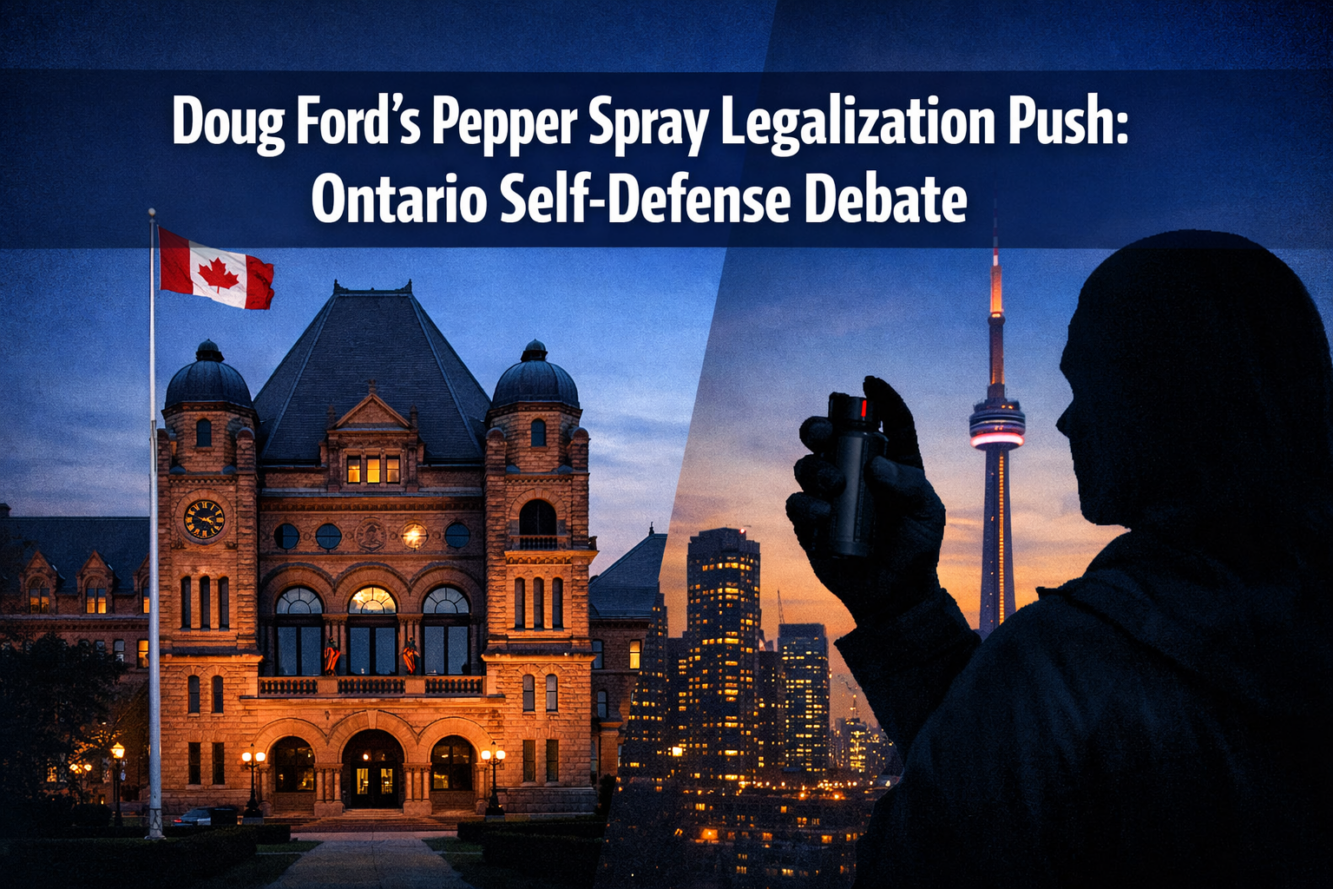
Ontario Premier Doug Ford submitted a formal request to the federal government last week asking to legalize pepper spray for civilian self-defense, particularly targeting protection for women in vulnerable situations. The proposal requires federal Criminal Code amendments and faces significant opposition from police organizations and public safety experts who warn about potential violence escalation. As of March 2026, the federal government has not responded to Ontario’s request, and implementation remains uncertain.
Premier Doug Ford announced last week that Ontario has formally requested the federal government legalize pepper spray for civilian self-defense purposes. The proposal specifically frames pepper spray as a tool to help “people, especially women in vulnerable situations, to protect themselves and their family” [2].
The timing connects directly to public concerns about safety on Toronto’s transit system and broader frustration with repeat offenders. Ford stated at a March press conference: “Criminals are out on the streets repeating, and repeating, and repeating offences” [2]. The proposal emerged alongside other justice reform initiatives including:
Key context: This represents Ontario’s attempt to address public safety concerns through federal legislative change, not provincial action alone. Choose this approach if you believe current criminal justice protections are inadequate—but understand it requires federal cooperation that may never materialize.
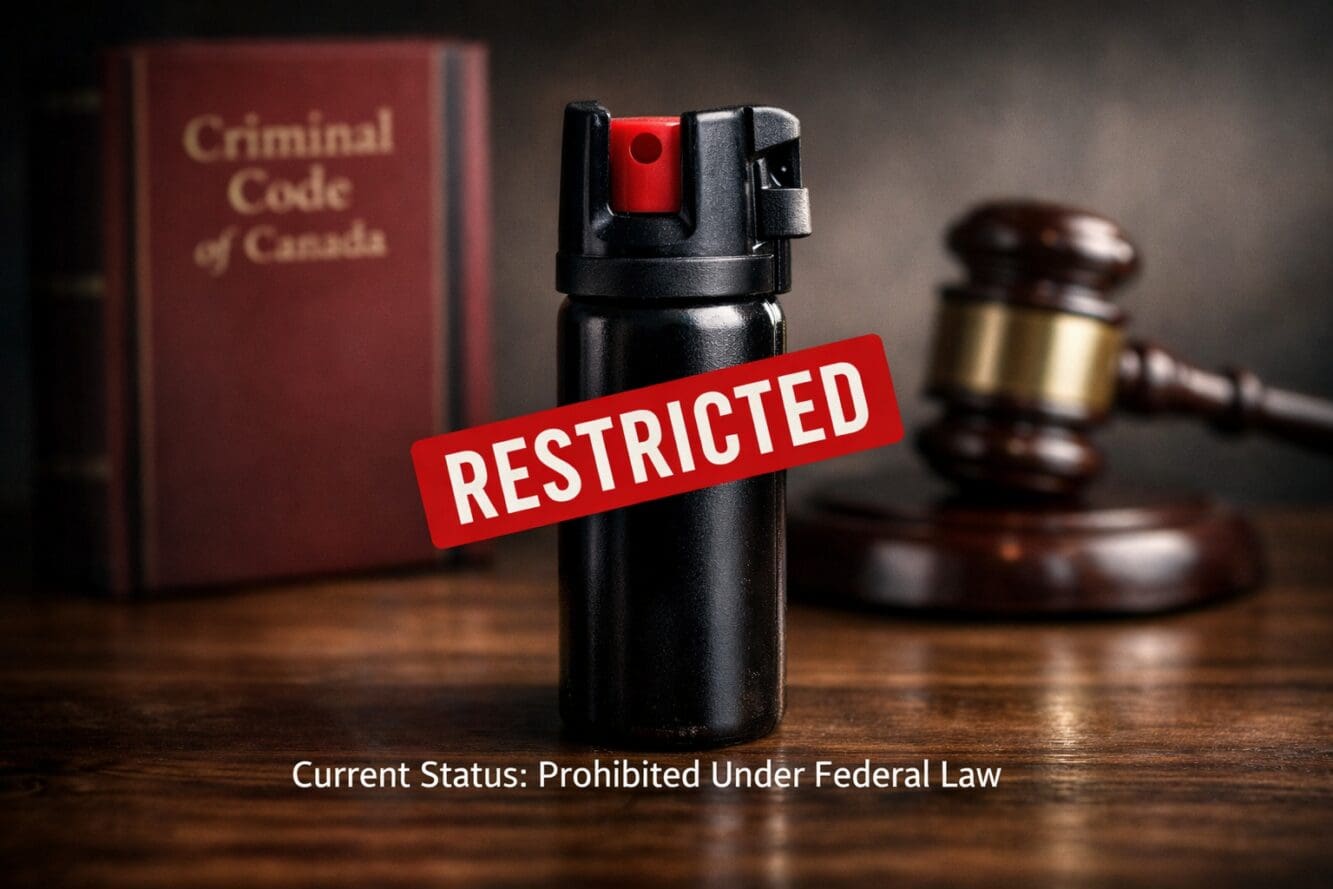
Pepper spray possession and use for self-defense remain prohibited under Canadian federal law. Unlike some U.S. jurisdictions where civilians can legally carry pepper spray, Canada classifies it as a prohibited weapon when intended for use against people [1].
Current legal status includes:
Common mistake: Assuming bear spray provides legal self-defense protection. While you can legally purchase bear spray, using it against a person—even in self-defense—may result in criminal charges because you’re using it outside its intended legal purpose.
Doug Ford’s pepper spray legalization push has created sharp divisions between those prioritizing personal protection and those concerned about public safety escalation.
Personal empowerment advocates argue:
Scenario example: A woman leaving work at 11 PM in downtown Toronto could carry pepper spray for the walk to her car or transit stop, potentially deterring assault attempts.
Public safety experts and police raise concerns about:
Police opposition is significant. Law enforcement experts predict strong resistance from frontline officers, police chiefs, and police unions who must manage the consequences of widespread pepper spray availability [3].
Police organizations represent the most significant institutional opposition to pepper spray legalization. Legal and law enforcement experts interviewed about the proposal predict resistance across multiple levels of policing [3].
Key opposition groups include:
Their primary concerns:
Critical question experts raise: Does pepper spray actually prevent attacks, or does it simply add another weapon to confrontations that escalate violence? [3] Research from jurisdictions with legal pepper spray shows mixed results, with some studies suggesting increased injury rates in altercations.
Beyond the philosophical debate about self-defense rights, practical safety concerns emerge from widespread pepper spray availability.
Pepper spray causes:
Vulnerable populations face higher risks:
Real-world misuse includes:
Edge case to consider: In confined spaces like TTC subway cars or buses, pepper spray deployment affects everyone in the enclosed area, not just the intended target. This creates mass exposure incidents that could cause panic and injuries beyond the original confrontation.
If pepper spray becomes legal for civilians, criminals gain easier access through:
Public response to Doug Ford’s pepper spray legalization push reveals deep divisions along gender, geographic, and ideological lines.
Women’s safety advocates show mixed reactions:
TTC riders and urban commuters:
Rural vs. urban perspectives differ:
Political divisions emerge:
Common public questions include:
For insights on community safety discussions in Ontario, see coverage of local community engagement initiatives.
Ontario’s pepper spray legalization request faces significant constitutional and jurisdictional barriers that make implementation far from certain.
Criminal law is exclusively federal in Canada, meaning:
Legislative process required:
This process typically takes months or years—if it happens at all.
Federal Liberal government may resist because:
As of March 17, 2026, no federal response has been announced [1]. The silence suggests either careful consideration or lack of interest in pursuing Ontario’s request.
Alternative outcome: The federal government could propose a compromise, such as:
For context on how government policy debates unfold, explore discussions on public safety and community protection.
While Ontario awaits federal response on pepper spray, several legal self-defense options and safety strategies already exist.
Canadians can legally carry:
Self-defense training options:
Modern alternatives include:
Proven safety approaches:
For TTC riders specifically:
Choose these alternatives if: You want immediate protection options without waiting for legislative changes, or if you’re uncomfortable with weapon-based self-defense approaches.
For wellness and personal safety perspectives, see articles on mental health and stress management.
Doug Ford’s pepper spray legalization push represents one component of a comprehensive justice reform strategy targeting what the Premier views as inadequate criminal justice protections.
Ford’s government is simultaneously pursuing:
The Premier frames these initiatives around:
Political calculation: Ford positions himself as tough on crime and responsive to public safety concerns, particularly valuable heading toward potential election periods. The federal request allows him to advocate for change while placing responsibility for inaction on the federal Liberal government.
Opponents argue Ford’s agenda:
Alternative perspective: Critics suggest investing in social services, affordable housing, mental health treatment, and community support would more effectively reduce crime than expanding weapon access or increasing incarceration.
Is pepper spray currently legal in Ontario?
No. Pepper spray for self-defense against people is prohibited under federal Canadian law. Ontario cannot change this without federal Criminal Code amendments [1].
When will pepper spray become legal if Ford’s request succeeds?
Unknown. The federal government has not responded to Ontario’s request as of March 17, 2026, and any legislative process would take months or years [1].
Can I legally carry bear spray for self-defense?
No. While bear spray is legal for animal deterrence, using it against people—even in self-defense—can result in criminal charges because you’re using it outside its legal purpose.
Why do police oppose pepper spray legalization?
Police organizations predict increased violence escalation, officer safety risks, enforcement challenges, and more weapons in circulation leading to worse outcomes [3].
Would pepper spray help prevent TTC attacks?
Uncertain. Experts debate whether pepper spray prevents attacks or escalates confrontations. In enclosed subway cars, deployment could harm many innocent bystanders beyond the intended target.
What can I legally carry for self-defense in Ontario right now?
Personal alarms, flashlights, whistles, and other non-weapon safety tools are legal. Self-defense training and situational awareness strategies are also effective legal options.
Who decides if pepper spray becomes legal—Ontario or the federal government?
The federal government has exclusive authority over criminal law. Ontario can request changes but cannot implement them without federal Criminal Code amendments [1].
What happens if someone uses pepper spray illegally in Canada now?
Possession and use of prohibited weapons can result in criminal charges, potential jail time, fines, and a criminal record depending on circumstances and intent.
Does pepper spray work in all situations?
No. Wind can blow it back at the user, attackers may be resistant or enraged, enclosed spaces create mass exposure, and it requires close range and proper aim to be effective.
What other provinces support Ontario’s pepper spray request?
As of March 2026, no other provinces have publicly joined Ontario’s request or announced similar initiatives.
Could the federal government approve pepper spray with restrictions?
Possibly. The federal government might propose compromises like licensing requirements, training mandates, or limited availability rather than full legalization.
What should TTC riders do for safety while this debate continues?
Use Designated Waiting Areas, stay alert, travel in groups when possible, sit near drivers, use passenger assistance alarms, and report suspicious behavior to transit security.
Doug Ford’s pepper spray legalization push has ignited crucial conversations about personal safety, women’s protection, and the balance between individual rights and public security. Ontario’s formal request to the federal government represents a significant policy proposal, but implementation remains entirely uncertain as of March 2026.
The debate reveals fundamental tensions in Canadian society: the desire for personal empowerment versus concerns about violence escalation, provincial frustrations with federal criminal law versus constitutional jurisdiction limits, and reactive policy responses versus evidence-based prevention strategies.
Key considerations moving forward:
Actionable next steps for Ontario residents:
The pepper spray debate will likely continue throughout 2026 and beyond, shaped by federal political calculations, public safety data, and ongoing concerns about crime and personal security. Whether legalization ultimately occurs depends less on Ontario’s advocacy and more on federal willingness to amend criminal law—a decision that remains pending as Canadians navigate complex questions about safety, rights, and the role of weapons in civil society.
For ongoing coverage of Ontario policy debates and community safety issues, explore local government initiatives and public engagement opportunities.
[1] Ontario Pepper Spray Legalization 2026 – https://www.ullaw.ca/news/ontario-pepper-spray-legalization-2026
[2] Watch – https://www.youtube.com/watch?v=4BdUZDa16AY
[3] Watch – https://www.youtube.com/watch?v=KpDpYqcHlvQ
Content, illustrations, and third-party video appearing on GEORGIANBAYNEWS.COM may be generated or curated with AI assistance or reproduced pursuant to the fair dealing provisions of the Copyright Act, R.S.C. 1985, c. C-42. Attribution and hyperlinks to original sources are provided in acknowledgment of applicable intellectual property rights. Such referencing is intended to direct traffic to and support the original rights holders’ platforms.