


















Former Prime Minister Stephen Harper Warned Canada Faces Critical Moment in U.S. Relations
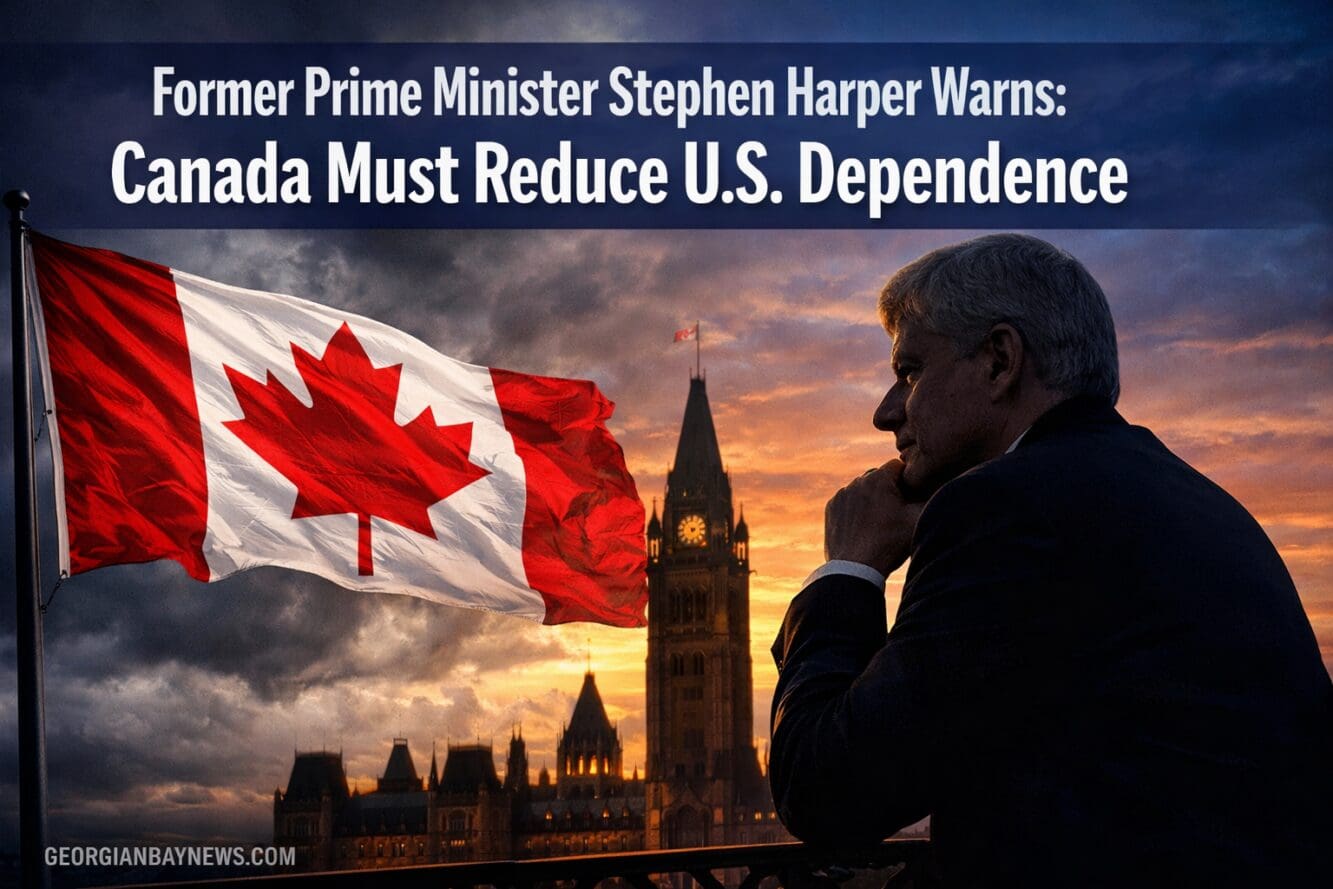
In a stunning political moment that transcended party lines, Former Prime Minister Stephen Harper warned that Canada must make “any sacrifice necessary” to preserve its independence from the United States. The unprecedented statement came as current Prime Minister Mark Carney navigated increasingly turbulent waters with America’s unpredictable administration in 2026. Harper’s stark warning represents a watershed moment in Canadian political discourse—a rare instance where the nation’s conservative icon aligned with progressive voices on a fundamental question: How much is Canadian sovereignty worth?
Key Takeaways
- 🇨🇦 Former Prime Minister Stephen Harper warned Canada must prioritize independence over economic convenience in relations with the United States
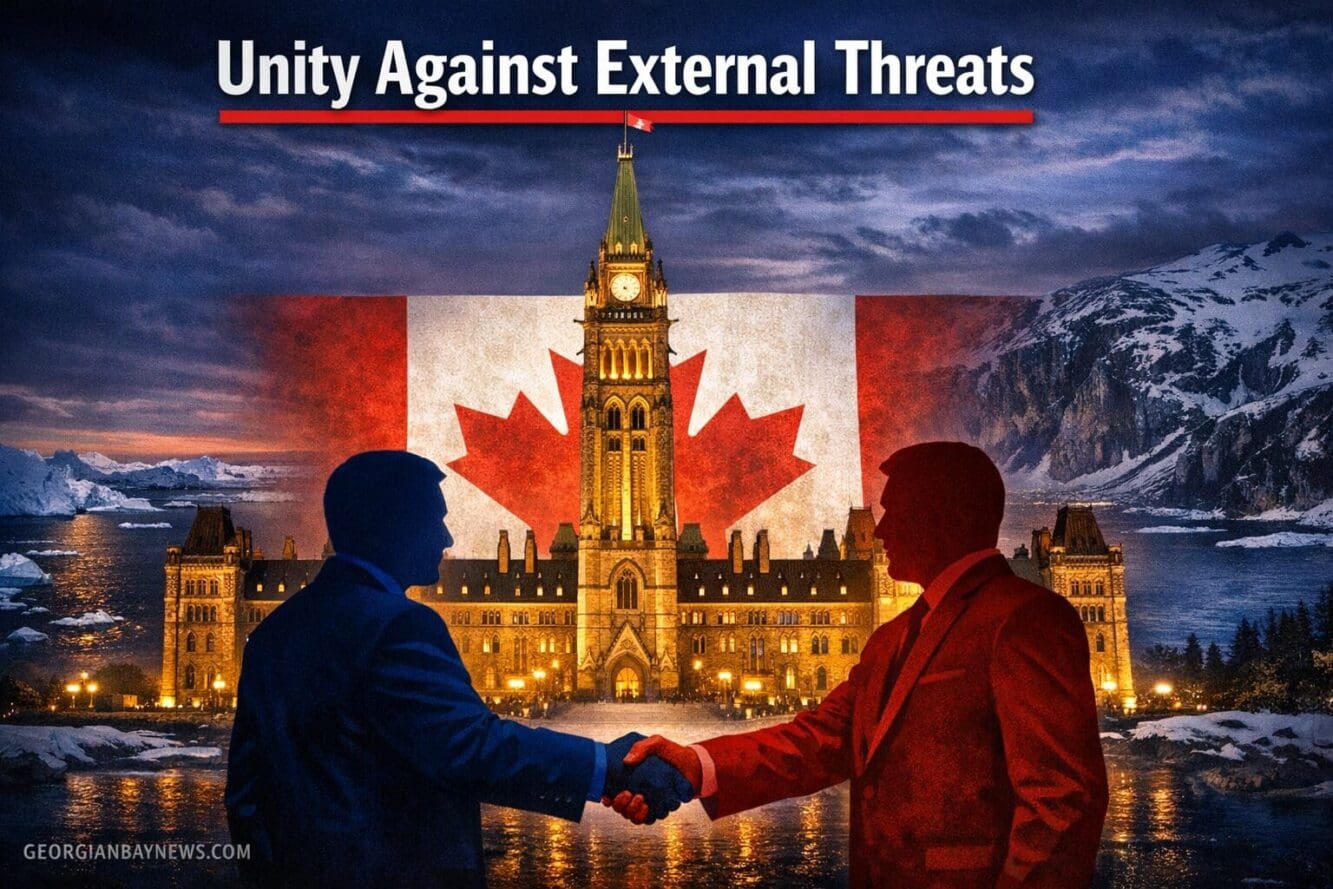
- 🤝 Bipartisan unity urged: Harper called for both Liberal and Conservative parties to stand together against external sovereignty threats
- 📊 Economic sacrifice accepted: The former PM stated Canada should make “any sacrifice necessary” to maintain independence from U.S. pressure
- 🌍 Arctic sovereignty concerns: Trump’s Greenland ambitions have heightened Canadian security worries along the 3,000-kilometer maritime border
- ⚠️ Dual threats identified: Harper highlighted both external U.S. pressure and internal separatist movements as dangers to national unity
The Context Behind Harper’s Historic Warning
The political landscape of 2026 has forced unlikely alliances. When Former Prime Minister Stephen Harper warned about the dangers of excessive U.S. dependence, he wasn’t speaking to his traditional conservative base alone. His message resonated across the political spectrum, from progressive voices calling for climate courage to those celebrating Mark Carney’s inspiring leadership in these turbulent times.
The immediate catalyst? Former U.S. President Trump’s renewed rhetoric about making Canada the “51st state” and his administration’s threats of punitive tariffs. These weren’t mere political theater—they represented genuine pressure on Canada’s economic and political autonomy.[1]
Trump’s Provocations and Canadian Response
Trump’s aggressive posture toward Canada included:
- Statehood rhetoric: Repeated suggestions that Canada should become part of the United States
- Tariff threats: Economic coercion through trade barriers
- Greenland ambitions: Attempts to acquire Greenland, straining NATO alliances and alarming Canada[1]
The Greenland situation particularly concerned Canadian security analysts. Canada shares a 3,000-kilometer maritime border with Greenland in the Arctic—a region of increasing strategic importance as climate change opens new shipping routes and resource extraction possibilities.[1]
Former Prime Minister Stephen Harper Warned: “Any Sacrifice Necessary”
Harper’s language was deliberately uncompromising. Speaking about Canadian independence, he stated the nation should make “any sacrifice necessary” to preserve sovereignty rather than succumb to U.S. pressure.[1] This wasn’t the measured, economic-focused Harper of his prime ministerial years. This was a statesman confronting what he perceived as a genuine crisis.
Current Prime Minister Mark Carney paraphrased Harper’s position as a call to “build a stronger Canada less dependent on the U.S.”[1] This framing resonated with Canadians who had already begun boycotting American products and travel amid the escalating trade tensions.
What “Any Sacrifice” Means in Practice
For ordinary Canadians, Harper’s warning translates into concrete realities:
| Economic Sector | Potential Sacrifice | Alternative Strategy |
|---|---|---|
| 🚗 Automotive | Higher vehicle prices from tariffs | Diversify to Asian, European markets |
| 🛢️ Energy | Reduced oil exports to U.S. | Expand LNG exports to Asia |
| 🌾 Agriculture | Loss of U.S. market access | Strengthen CPTPP relationships |
| 💼 Services | Reduced cross-border business | Focus on domestic innovation |
The message was clear: short-term economic pain might be necessary for long-term sovereignty preservation. This perspective challenged decades of Canadian economic policy that prioritized seamless North American integration.
Bipartisan Unity: Harper’s Call to Liberals and Conservatives
Perhaps most remarkably, Former Prime Minister Stephen Harper warned that partisan divisions must be set aside. He urged both major Canadian parties—Liberals and Conservatives—to unify against external threats to sovereignty, despite their many other policy differences.[1]
This call for unity echoed throughout Canadian political discourse. From debates about Canada’s economic strength to discussions about maintaining national independence, the message was consistent: external threats require internal cohesion.
Historical Precedents for Canadian Unity
Canada has faced similar moments before:
- 1812: United against American invasion
- 1867: Confederation partly motivated by U.S. expansion fears
- 1988: Free Trade Agreement debates
- 2001: Post-9/11 border security negotiations
Each crisis forced Canadians to define themselves against American influence while maintaining the world’s longest undefended border.
The Dual Threat: External Pressure and Internal Division
Harper’s warning addressed more than just U.S. pressure. He also highlighted domestic unity threats, particularly separatist movements in Alberta that could trigger independence referendums.[1]
The Alberta situation presented a cruel irony: while Harper urged unity against external threats, internal fractures threatened to accomplish what U.S. pressure alone could not—the fragmentation of Canada.
Alberta Separatism in 2026
Western alienation has deep roots in Canadian politics, but 2026’s unique circumstances intensified these tensions:
- Energy policy conflicts: Federal climate policies versus provincial resource interests
- Economic disparities: Wealth distribution between regions
- Political representation: Western provinces’ influence in federal politics
- U.S. opportunism: Potential American encouragement of Canadian fragmentation
The convergence of external U.S. pressure and internal separatist sentiment created what Harper clearly viewed as a perfect storm threatening Canadian sovereignty.
Economic Independence: Beyond Rhetoric
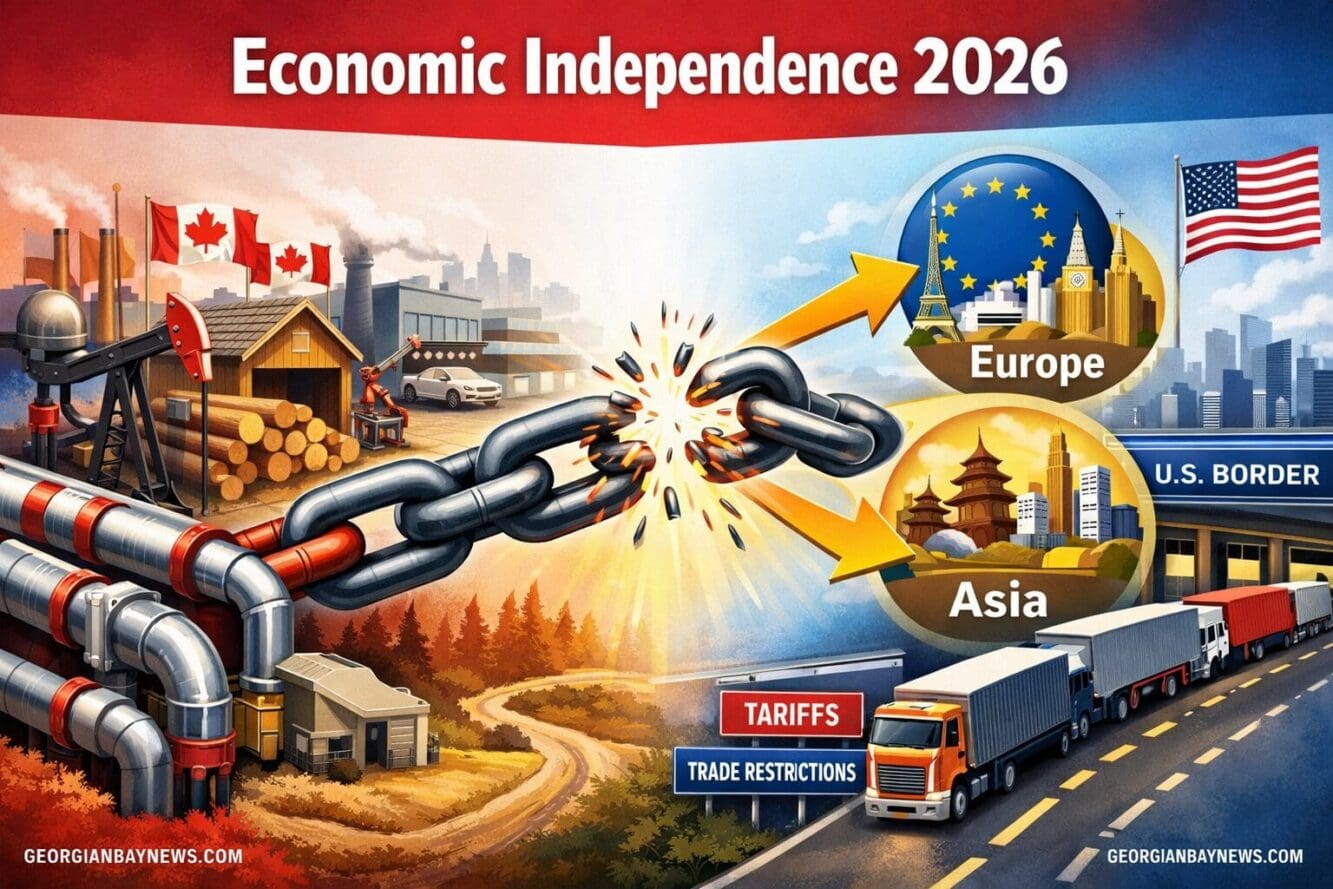
When Former Prime Minister Stephen Harper warned about U.S. dependence, he was addressing concrete economic realities. Canada sends approximately 75% of its exports to the United States, creating massive vulnerability to American political whims.
Diversification Strategies for 2026
Smart Canadians and businesses were already adapting:
- Asian market expansion: Strengthening trade relationships with China, Japan, South Korea
- European partnerships: Leveraging CETA (Canada-European Union Comprehensive Economic and Trade Agreement)
- Domestic resilience: Solving housing crises to strengthen internal economy
- Technology independence: Reducing reliance on U.S. tech platforms
- Energy diversification: Expanding renewable energy to reduce fossil fuel export dependence
These weren’t just government policies—they represented fundamental shifts in how Canadians thought about their place in the world.
Arctic Sovereignty and the Greenland Factor
Trump’s interest in acquiring Greenland wasn’t merely eccentric posturing—it represented genuine strategic ambitions that directly threatened Canadian interests. The Arctic region contains:
- Untapped natural resources: Oil, gas, minerals worth trillions
- New shipping routes: Climate change opening Northwest Passage
- Military strategic value: Control over polar approaches to North America
- Environmental significance: Critical ecosystems and climate regulation
Canada’s 3,000-kilometer maritime border with Greenland meant that any change in Greenland’s status directly affected Canadian security.[1] Harper understood that American control of Greenland would fundamentally alter the strategic balance in the Arctic, potentially encircling Canadian northern territories.
Lessons for World Leaders and Citizens
Harper’s warning transcended Canadian borders. It offered lessons for any nation navigating relationships with more powerful neighbors:
For Political Leaders
✅ Sovereignty has a price: Economic efficiency shouldn’t trump political independence
✅ Unity matters: Internal divisions invite external exploitation
✅ Long-term thinking: Short-term economic pain may preserve long-term freedom
✅ Alliances diversify risk: Over-dependence on any single partner creates vulnerability
For Citizens
📌 Consumer choices matter: Boycotts and purchasing decisions shape international relations
📌 Political engagement counts: Democracy requires active participation
📌 Economic literacy helps: Understanding trade relationships enables informed voting
📌 National identity matters: Cultural sovereignty supports political independence
The Road Ahead: Building a More Independent Canada
As 2026 unfolds, Harper’s warning continues to resonate. Building genuine independence requires coordinated action across multiple fronts:
Infrastructure and Innovation
Canada must invest in:
- Transportation networks: Reducing reliance on U.S. transit routes
- Digital infrastructure: Building sovereign technology platforms
- Energy systems: Developing independent energy security
- Manufacturing capacity: Reducing supply chain vulnerabilities
Cultural and Social Cohesion
Beyond economics, independence requires:
- Educational investment: Training skilled workers domestically
- Cultural production: Supporting Canadian media and arts
- Social programs: Addressing healthcare workforce needs independently
- Community building: Strengthening local and regional connections
International Relationships
Strategic diversification means:
- Commonwealth connections: Leveraging historical relationships
- Francophone partnerships: Building on linguistic and cultural ties
- Pacific engagement: Deepening Asian economic relationships
- European cooperation: Strengthening transatlantic bonds
Conclusion: A Wake-Up Call for a Nation
When Former Prime Minister Stephen Harper warned that Canada must reduce its dependence on the United States, he articulated what many Canadians felt but few politicians dared say so bluntly. The warning wasn’t about rejecting America—it was about rejecting the assumption that Canadian interests and American interests always align.
The path forward requires difficult choices. Economic sacrifices may be necessary. Political unity across traditional partisan lines becomes essential. Long-term strategic thinking must replace short-term convenience.
Actionable Next Steps for Canadians
For Individuals:
- ✅ Support Canadian businesses and products when possible
- ✅ Engage in political processes at local and national levels
- ✅ Educate yourself about trade relationships and sovereignty issues
- ✅ Build community connections that strengthen social cohesion
For Businesses:
- ✅ Diversify customer bases beyond U.S. markets
- ✅ Invest in Canadian supply chains and partnerships
- ✅ Develop products and services for global markets
- ✅ Support workforce development and training programs
For Policymakers:
- ✅ Prioritize strategic independence in economic planning
- ✅ Build bipartisan consensus on sovereignty issues
- ✅ Invest in infrastructure that reduces U.S. dependence
- ✅ Strengthen relationships with diverse international partners
Harper’s warning in 2026 may be remembered as a pivotal moment—the point when Canada chose to chart a more independent course, or the missed opportunity before sovereignty slipped away. The choice belongs to this generation of Canadians.
The question isn’t whether Canada can afford independence from excessive U.S. dependence. The question Harper posed is far more fundamental: Can Canada afford not to pursue it?
References
[1] Leader Harper Canada Make Sacrifice Preserve Independence Us 129832048 – https://abcnews.go.com/International/wireStory/leader-harper-canada-make-sacrifice-preserve-independence-us-129832048
Some content and illustrations on GEORGIANBAYNEWS.COM are created with the assistance of AI tools.
GEORGIANBAYNEWS.COM shares video content from YouTube creators under fair use principles. We respect creators’ intellectual property and include direct links to their original videos, channels, and social media platforms whenever we feature their content. This practice supports creators by driving traffic to their platforms.