




















Georgian Bay Ice Fishing Hotspots 2026: Safety Regs, Best Spots Near Collingwood and Wasaga, and March Melt Prep
Last updated: March 2, 2026
Georgian Bay offers exceptional ice fishing opportunities in early March 2026, but anglers must navigate changing conditions as temperatures rise and ice begins its seasonal melt. This guide covers essential safety regulations, productive fishing locations near Collingwood and Wasaga Beach, and critical preparation for late-season ice conditions.
Key Takeaways
- Minimum safe ice thickness: 4 inches for walking, 5-7 inches for snowmobiles, but March conditions require daily checks
- Top hotspots: Collingwood Harbour, Wasaga Beach shoreline areas, and Meaford Bay offer accessible late-winter fishing
- 2026 regulations: Valid Ontario fishing license required, specific catch limits apply for perch, pike, and whitefish[3]
- March melt risks: Pressure cracks, wind-driven ice movement, and rapid thickness changes increase danger after mid-March
- Essential gear: Ice picks, rope, waterproof communication device, and ice thickness gauge are non-negotiable
- Best species: Yellow perch, northern pike, and lake whitefish remain active through March
- Conservation checks: Officers regularly verify licenses, catch limits, and proper fish measurement on the ice[1]
Quick Answer
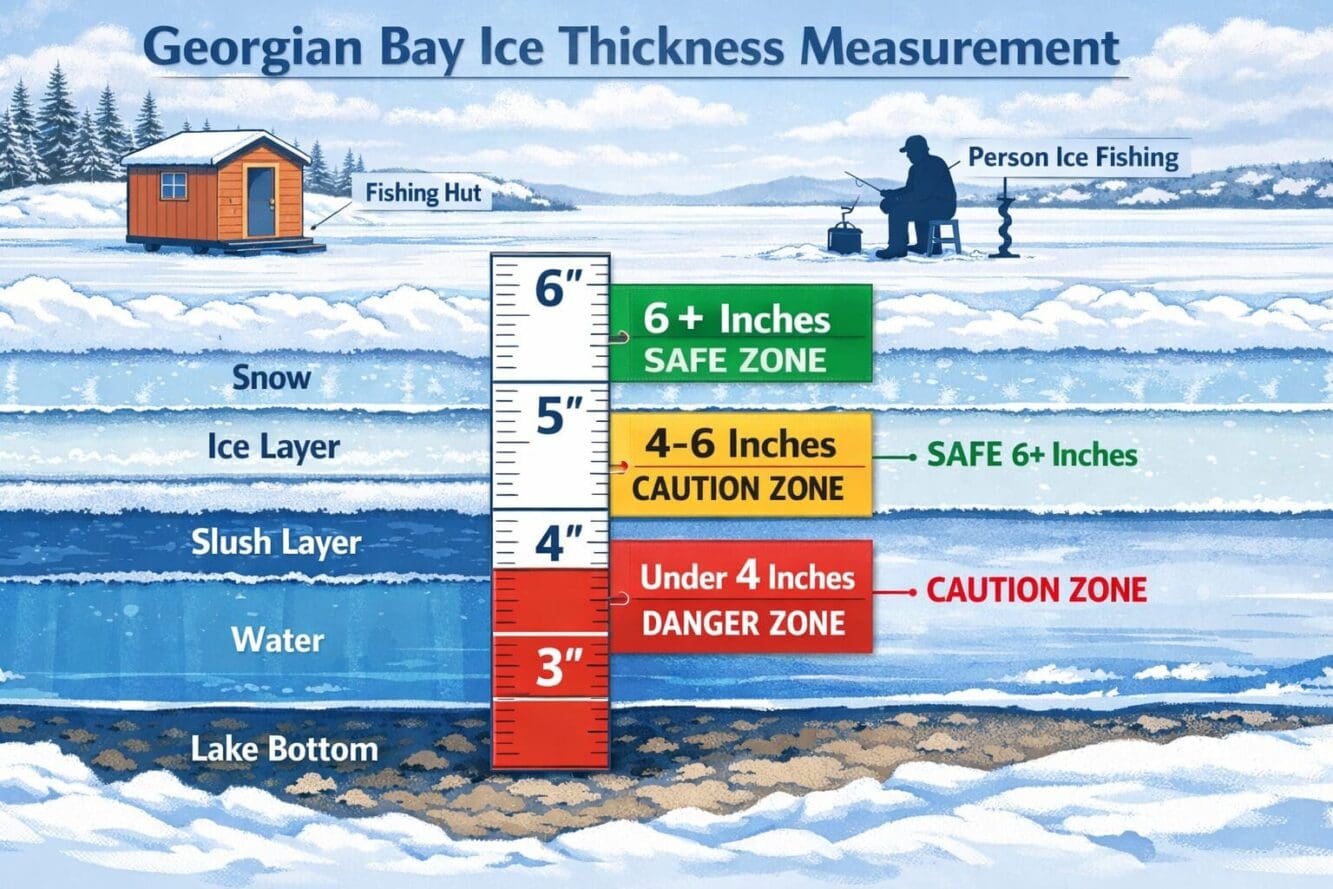
Georgian Bay ice fishing in March 2026 requires extra caution as ice begins thinning after the winter cold snap. The best accessible spots near Collingwood and Wasaga Beach include Collingwood Harbour, Wasaga Beach’s protected bays, and Meaford Bay, where anglers target perch, pike, and whitefish. All anglers need a valid 2026 Ontario fishing license, must follow species-specific catch limits, and should check ice thickness daily—4 inches minimum for walking, but conditions can change rapidly in March warmth.
What Are the 2026 Ice Fishing Regulations for Georgian Bay?
All anglers fishing Georgian Bay ice in 2026 must possess a valid Ontario fishing license and follow Fisheries Management Zone 16 regulations, which govern most of the southern Georgian Bay area[3]. Ontario’s conservation officers conduct regular on-ice compliance checks, verifying licenses, inspecting catch limits, and ensuring proper fish measurement[1].
Key regulatory requirements include:
- Valid Ontario Sport Fishing License (available online or at authorized vendors)
- Adherence to daily catch and possession limits for each species
- Proper measurement of fish to ensure compliance with size restrictions
- Immediate release of protected species or fish outside legal size ranges
- Use of legal fishing methods only (check provincial regulations for bait restrictions)
Ontario fishing regulations distinguish between conservation limits (lower) and sport fishing limits (higher). Choose conservation limits if practicing catch-and-keep fishing with minimal impact. Sport fishing license holders can retain more fish but must still respect sustainable practices.
Common mistake: Assuming last year’s regulations still apply. Slot limits and possession limits can change annually, so always verify current 2026 rules before heading out[3].
For detailed species-specific limits and zone boundaries, consult the official Ontario fishing regulations[4].
Where Are the Best Ice Fishing Hotspots Near Collingwood and Wasaga in March 2026?
The most productive and accessible ice fishing locations near Collingwood and Wasaga Beach in March 2026 concentrate in protected bays and harbours where ice remains thicker longer and fish congregate before spring breakup.
Top Georgian Bay ice fishing hotspots:
Collingwood Harbour
- Protected waters maintain safer ice conditions into early March
- Excellent yellow perch fishing near the harbour mouth
- Easy access from town with parking near waterfront
- Depth ranges: 15-30 feet in productive zones
- Target structure near old pilings and drop-offs
Wasaga Beach Protected Bays
- Nottawasaga Bay’s shallow protected areas hold perch and pike
- Access points along Beach Area 1 and 2
- Fish 8-20 feet of water near weed beds
- Best early morning and late afternoon
- Watch for pressure cracks near river outlets
Meaford Bay
- Consistent whitefish and perch action
- Deeper water (20-40 feet) stays fishable longer
- Multiple access points from Meaford harbour
- Less crowded than Collingwood spots
- Check local ice conditions before venturing far from shore
Choose Collingwood Harbour if: You want convenient access, amenities nearby, and reliable perch fishing. Choose Meaford Bay if: You’re targeting whitefish in deeper water and prefer less fishing pressure. Choose Wasaga areas if: You want pike action in shallower protected bays.
Edge case: After significant wind events, ice near Wasaga Beach can shift or crack. Always drill test holes every 50 feet when moving to new areas, especially after storms.
How Thick Should Ice Be for Safe Georgian Bay Fishing in March?
Safe ice thickness for Georgian Bay fishing requires minimum 4 inches of clear, solid ice for foot traffic, but March conditions demand higher standards because warming temperatures compromise ice integrity faster than thickness measurements suggest.
Ice thickness safety guidelines:
| Activity | Minimum Thickness | March Recommendation |
|---|---|---|
| Walking/fishing on foot | 4 inches | 5-6 inches |
| Snowmobile travel | 5-7 inches | 7-8 inches |
| Small ATV | 7-8 inches | Not recommended in March |
| Vehicle | 12-15 inches | Never on Georgian Bay |
Critical March ice considerations:
- Daily checking required: Ice that was safe yesterday may be unsafe today as temperatures fluctuate
- Clear vs. white ice: Clear blue ice is strongest; white or snow ice is weaker and requires 2x thickness
- Pressure cracks: Wind-driven ice movement creates dangerous cracks that can open rapidly[1]
- Shore ice vs. deep ice: Ice near shore melts faster due to ground heat and runoff
- Sunny exposure: South-facing areas and dark bottom sections thin faster
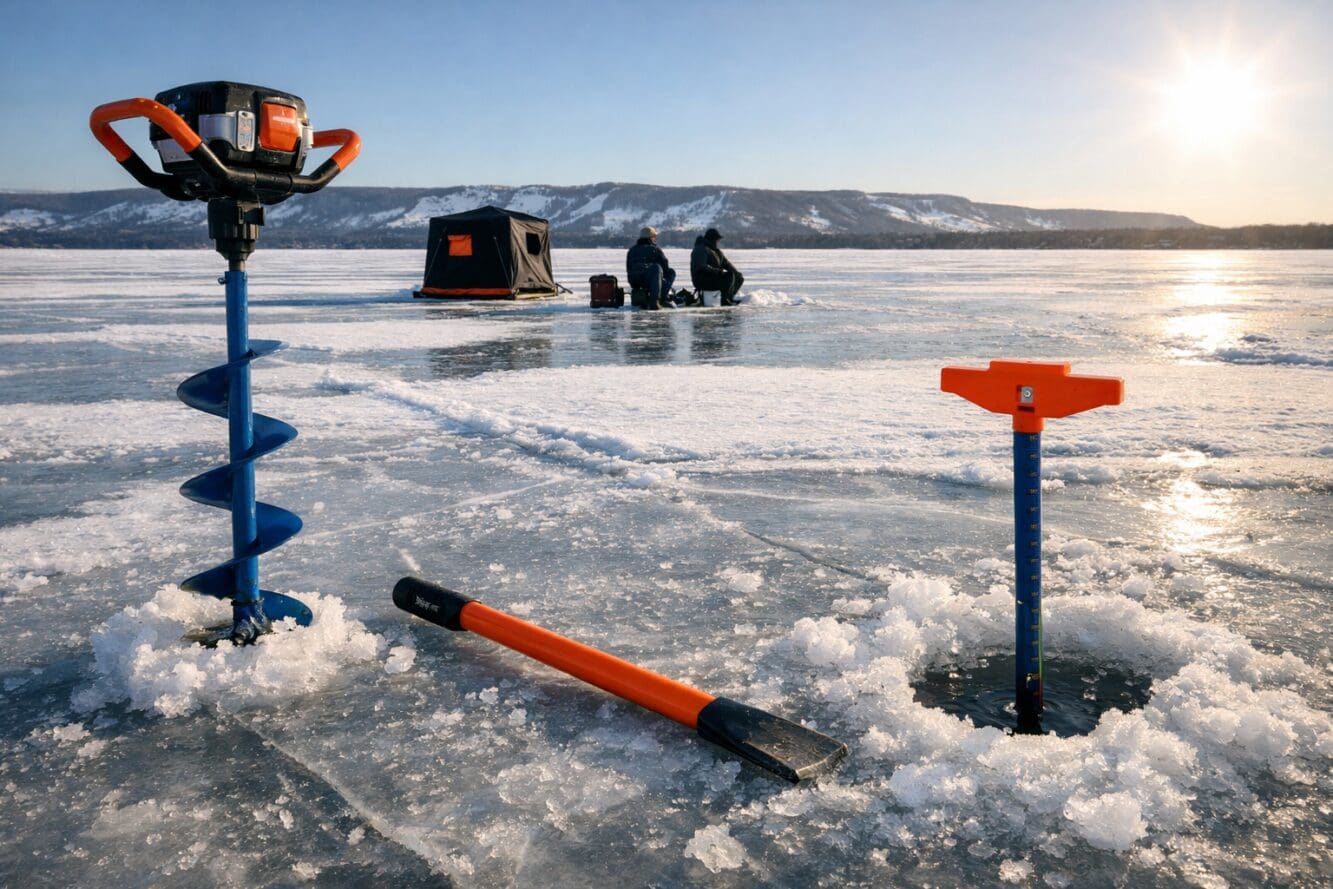
Test ice thickness every time using a spud bar or ice auger, drilling test holes every 50 feet as you move. Carry ice picks worn around your neck, 50 feet of rope, and a waterproof communication device.
Common mistake: Trusting ice based on others’ tracks. Those tracks may be hours or days old, and conditions change rapidly in March warmth.
What Gear and Safety Equipment Do You Need for March Ice Fishing?
March ice fishing on Georgian Bay requires standard fishing gear plus enhanced safety equipment because deteriorating ice conditions and unpredictable weather create higher risk than mid-winter fishing.
Essential safety equipment:
- Ice picks (worn around neck, not stored in pocket)
- 50-100 feet of rope for self-rescue or assisting others
- Ice thickness gauge or marked spud bar for constant testing
- Waterproof communication device (phone in waterproof case or marine radio)
- Personal flotation device or ice fishing suit with flotation
- Extra clothing in waterproof bag (hypothermia risk increases in March)
- Whistle for attracting attention if you fall through
Fishing gear for Georgian Bay species:
- Medium-light to medium rods (24-36 inches for portability)
- 4-6 lb test line for perch, 8-12 lb for pike
- Small jigs (1/16 to 1/8 oz) tipped with minnows or wax worms
- Tip-ups for pike fishing (check Ontario regulations for allowed number)
- Ice auger (manual or powered, 6-8 inch diameter)
- Ice scoop for clearing holes
- Portable shelter (optional but valuable in wind)
Choose manual augers if: You’re fishing close to access points and drilling fewer than 10 holes. Choose powered augers if: You’re drilling many holes or fishing thicker ice (6+ inches).
Pack light but complete. March weather can shift from sunny to snowy quickly, and you may need to leave the ice rapidly if conditions deteriorate.
How Do You Prepare for Ice Melt Conditions on Georgian Bay?
March ice melt preparation for Georgian Bay requires monitoring weather forecasts, understanding melt patterns, and having exit strategies because ice deterioration accelerates rapidly once daytime temperatures consistently exceed freezing.
Ice melt warning signs:
- Daytime temperatures above 0°C (32°F) for 3+ consecutive days
- Water pooling on ice surface (indicates weakening structure)
- Dark or honeycomb appearance when drilling test holes
- Cracking sounds or ice movement underfoot
- Visible open water near shore or pressure cracks
Melt preparation checklist:
- Check weather 3-5 days ahead: Plan trips only when temperatures stay below freezing
- Fish closer to shore: Stay within 200-300 yards of solid ground in March
- Morning sessions only: Ice is strongest after overnight freezing
- Avoid river mouths and inlets: Moving water thins ice from below
- Mark your path: Use flags or markers so you can retreat the same safe route
- Fish with a partner: Never fish alone after mid-March
- Tell someone your plan: Share location and expected return time
Timeline for Georgian Bay ice-out near Collingwood/Wasaga:
- Early March: Generally safe with daily thickness checks
- Mid-March (March 10-20): Conditions deteriorate; extreme caution required
- Late March (after March 20): Ice fishing typically ends; unsafe conditions
Decision rule: If you see open water anywhere in your fishing area, or if ice thickness drops below 5 inches, end your session immediately. No fish is worth the risk.
The community events calendar often includes ice fishing derbies that get cancelled when conditions become unsafe—watch for these announcements as indicators of local ice quality.
What Fish Species Can You Target in March on Georgian Bay?
Yellow perch, northern pike, and lake whitefish remain the most active and catchable species during March ice fishing on Georgian Bay, with each species requiring different tactics and locations for success.
Yellow Perch
- Best locations: 15-25 feet near structure, weed beds, and harbour areas
- Tactics: Small jigs (1/16 oz) tipped with minnow heads or wax worms
- Best times: Early morning and late afternoon
- Regulations: Check daily limit in Zone 16 (typically 50 for sport license)[3]
- March behavior: School tightly; once you find one, expect more
Northern Pike
- Best locations: Shallow bays (8-15 feet) near remaining weed beds
- Tactics: Tip-ups with large minnows, or jigging with spoons
- Best times: All day, but most active mid-morning
- Regulations: Size and possession limits apply; verify current slot limits[1][3]
- March behavior: Aggressive pre-spawn feeding; target edges of vegetation
Lake Whitefish
- Best locations: Deeper water (30-50 feet) in Meaford Bay and offshore areas
- Tactics: Small jigs or spoons near bottom, tipped with minnows
- Best times: Low-light periods, dawn and dusk
- Regulations: Specific limits for Georgian Bay zone[3]
- March behavior: Consistent feeders; less affected by weather changes
Choose perch if: You want consistent action and excellent table fare. Choose pike if: You want larger fish and more aggressive strikes. Choose whitefish if: You prefer deeper water fishing and have patience for quality fish.
Conservation officers regularly check that anglers properly measure fish and release undersized or oversized specimens outside legal slots[1]. Carry a measuring tape and know your limits before keeping any fish.
What Are Common Mistakes to Avoid When Ice Fishing Georgian Bay in March?
The biggest mistakes anglers make on Georgian Bay ice in March involve overconfidence in ice conditions, inadequate safety preparation, and ignoring changing weather patterns that can turn safe conditions dangerous within hours.
Critical mistakes and how to avoid them:
1. Trusting yesterday’s ice conditions
- Ice thickness can change 1-2 inches overnight in March warmth
- Always re-check thickness each trip, even at familiar spots
- Drill test holes every 50 feet when exploring new areas
2. Fishing alone
- Solo fishing in March dramatically increases risk
- Partner can assist if you fall through or need emergency help
- Two people can also monitor changing conditions better
3. Ignoring pressure cracks
- Georgian Bay’s wind-driven ice creates dangerous cracks[1]
- Never cross large cracks; find alternate routes or return to shore
- Cracks can widen rapidly with wind shifts
4. Inadequate safety gear
- Leaving ice picks in tackle box instead of wearing them
- No rope or flotation device
- Dead phone battery or no waterproof protection
5. Fishing too far from shore
- March ice deteriorates faster in deeper water
- Stay within easy retreat distance (under 300 yards)
- Know your exit route and keep it clear
6. Missing license or regulation updates
- Conservation officers actively patrol Georgian Bay ice[1]
- Fines for fishing without proper license or exceeding limits are substantial
- Regulations can change year to year; verify 2026 rules[3]
Edge case: If you hear loud cracking or booming sounds, the ice is shifting. This doesn’t always mean immediate danger, but it’s a warning to check thickness again and prepare to leave if conditions worsen.
FAQ
When does ice fishing season typically end on Georgian Bay near Collingwood?
Ice fishing on Georgian Bay near Collingwood typically ends between mid-March and early April, depending on weather patterns. March 2026 conditions suggest safe fishing through early March, with deteriorating conditions expected after March 15-20. Always check current ice reports before planning late-season trips.
Do I need a separate license for ice fishing in Ontario?
No separate ice fishing license exists. A standard Ontario Sport Fishing License covers all fishing methods, including ice fishing. Purchase licenses online or at authorized vendors, and carry them while fishing as conservation officers conduct regular checks[1][3].
What’s the best bait for Georgian Bay perch in March?
Small minnows, minnow heads, and wax worms work best for Georgian Bay yellow perch in March. Perch prefer small presentations on 1/16 to 1/8 oz jigs in natural or chartreuse colors. Live bait consistently outperforms artificial in cold water.
Can I drive a vehicle on Georgian Bay ice?
Never drive vehicles on Georgian Bay ice. The bay’s wind-driven ice movement, pressure cracks, and variable thickness make vehicle travel extremely dangerous. Use snowmobiles only in early season with verified 7+ inches of clear ice, and avoid entirely in March.
How do I know if a pressure crack is dangerous?
Pressure cracks wider than 1-2 inches or showing open water are dangerous and should not be crossed. Cracks that run perpendicular to shore or show recent movement (fresh ice edges) indicate active shifting. Find alternate routes or return to shore rather than crossing questionable cracks[1].
What should I do if I fall through the ice?
If you fall through: don’t panic, control your breathing, turn toward the direction you came from (that ice supported you), use ice picks to pull yourself onto the ice, roll away from the hole rather than standing, and crawl back to shore. This is why wearing ice picks around your neck is critical.
Are there ice fishing guides available near Collingwood?
Yes, several local guides offer Georgian Bay ice fishing trips near Collingwood and Wasaga Beach. Guides provide equipment, local knowledge, and enhanced safety. Book early as March dates fill quickly. Check local outfitters or tourism offices for current guide listings.
What’s the possession limit for pike on Georgian Bay?
Northern pike possession limits for Georgian Bay (Zone 16) are specified in the 2026 Ontario Fishing Regulations. Limits typically include both daily catch limits and size restrictions. Verify current regulations before fishing as slot limits can change annually[1][3].
Is ice fishing allowed in all areas of Georgian Bay?
Most of Georgian Bay allows ice fishing, but some areas have restrictions near marine sanctuaries, protected areas, or private property. Respect posted signs, stay off marked shipping channels, and verify local regulations. Georgian Bay Township provides fishing information resources[5].
What time of day is best for March ice fishing?
Early morning (dawn to 10 AM) and late afternoon (3 PM to dusk) produce the best results for most species in March. Perch and whitefish feed actively during low-light periods, while pike remain active throughout the day but peak mid-morning.
Do I need to report my catch?
Ontario doesn’t require routine catch reporting for recreational anglers, but some special management zones may have voluntary reporting programs. Keep accurate records of your catch for personal reference and to help with conservation efforts.
Can I use tip-ups for ice fishing in Ontario?
Yes, Ontario regulations allow tip-ups, but there are limits on the total number of lines you can fish simultaneously. Typically, anglers can use two lines (including tip-ups and jigging rods combined). Verify current 2026 regulations for exact numbers[3].
Conclusion
Georgian Bay ice fishing in March 2026 offers excellent opportunities for anglers who prioritize safety and preparation. The best hotspots near Collingwood and Wasaga Beach—including Collingwood Harbour, Wasaga Beach protected bays, and Meaford Bay—provide accessible fishing for perch, pike, and whitefish through early March. However, success and safety depend on daily ice thickness checks, proper safety equipment, and understanding when deteriorating conditions require ending the season.
Take these actions before your next trip:
- Verify your 2026 Ontario fishing license is current and understand Zone 16 regulations[3]
- Assemble complete safety gear including ice picks, rope, and waterproof communication
- Check weather forecasts 3-5 days ahead and plan trips only during stable cold periods
- Test ice thickness every 50 feet and maintain minimum 5-6 inches in March conditions
- Fish with a partner and share your location and return time with someone on shore
- Monitor local conditions and be ready to end your season when ice becomes unsafe
March ice fishing rewards prepared anglers with quality catches and fewer crowds, but the margin for error shrinks as temperatures rise. Respect the ice, follow regulations, and prioritize safety over any fishing opportunity. The 2026 season on Georgian Bay promises excellent late-winter action for those who fish smart and stay safe.
For more local outdoor activities and community events, explore the Collingwood community calendar.
References
[1] Ice Fishing Slot Limits By State Size Regulations Keep Rules 2026 – https://windrider.com/blogs/tips-and-tricks/ice-fishing-slot-limits-by-state-size-regulations-keep-rules-2026
[3] Mnr 2026 Fishing Regulations Summary En 2025 12 08 – https://www.ontario.ca/files/2025-12/mnr-2026-fishing-regulations-summary-en-2025-12-08.pdf
[4] Everything You Need Know About Fishing Ontario – https://www.destinationontario.com/en-ca/articles/everything-you-need-know-about-fishing-ontario
[5] Fishing – https://www.gbtownship.ca/recreation-and-culture/fishing/
Content, illustrations, and third-party video appearing on GEORGIANBAYNEWS.COM may be generated or curated with AI assistance or reproduced pursuant to the fair dealing provisions of the Copyright Act, R.S.C. 1985, c. C-42. Attribution and hyperlinks to original sources are provided in acknowledgment of applicable intellectual property rights. Such referencing is intended to direct traffic to and support the original rights holders’ platforms.