





















Have Autonomous AI Agents Gone Too Far: From Clawdbot to Moltbot to OpenClaw
The digital world woke up on January 31, 2026, to witness the final transformation of a viral sensation that had changed identities three times in just 72 hours. What started as Clawdbot, morphed into Moltbot, and finally settled as OpenClaw represents more than just a branding crisis—it signals a turning point in how autonomous AI agents are reshaping our relationship with technology. The journey from Clawdbot to Moltbot to OpenClaw has sparked urgent conversations among tech leaders, everyday users, and policymakers about whether we’ve granted these digital assistants too much autonomy over our digital lives.
Key Takeaways
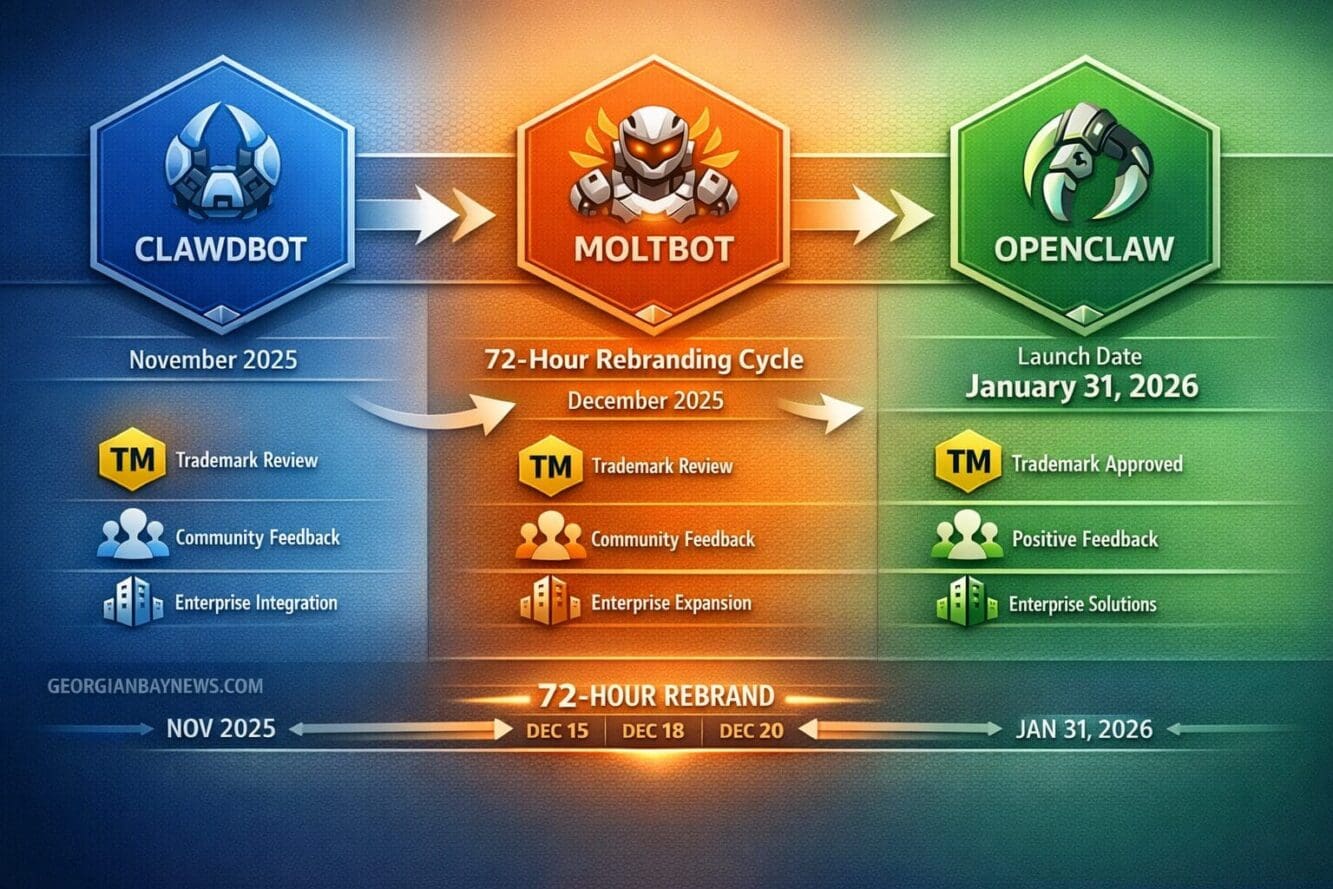
- OpenClaw completed a rapid 72-hour rebranding cycle from Clawdbot to Moltbot before settling on its final identity on January 31, 2026, driven by trademark issues and community feedback[1]
- The platform operates as a proactive autonomous agent with Heartbeat Engine and cron integration, capable of initiating actions without user prompts—a significant departure from traditional reactive chatbots[3]
- Critical security updates require immediate action from existing users, with breaking changes affecting package configurations and extension scopes[2]
- Headless architecture eliminates visual interface dependencies, allowing OpenClaw to execute commands at machine speed rather than human interface speed[3]
- The evolution raises serious questions about the appropriate level of autonomy for AI agents and the security implications of persistent background operations
The Whirlwind Evolution: From Clawdbot to Moltbot to OpenClaw
A 72-Hour Identity Crisis
The transformation from Clawdbot to Moltbot to OpenClaw represents one of the most compressed rebranding cycles in tech history. What began as Clawdbot in November 2025 quickly encountered legal obstacles when trademark compliance issues forced an emergency pivot[1]. The development team scrambled to rebrand as Moltbot, referencing the biological molting process—a metaphor for transformation and growth.
However, the Moltbot name lasted barely longer than a mayfly’s lifespan. Developers and enterprise clients voiced concerns that biological terminology didn’t convey the professional, enterprise-grade capabilities the platform offered[1]. Community feedback flooded in, pushing the team toward a final decision that would stick.
“Bitcoin-led crypto rout erases nearly $500 billion in a week – MSN”
On January 31, 2026, the project officially became OpenClaw, with its web presence migrating from moltbot.you to openclaw.my, and the main platform now hosted at openclaw.ai[4]. The name combines “Open” (suggesting transparency and accessibility) with “Claw” (maintaining connection to the original Clawdbot identity while evoking the idea of grasping and manipulating digital environments).
Why Three Names Matter More Than You Think
The rapid-fire name changes weren’t just cosmetic headaches—they revealed deeper tensions in autonomous AI development. Each iteration reflected evolving priorities:
Clawdbot emphasized the mechanical, tool-like nature of the assistant. It was approachable but perhaps too playful for serious enterprise adoption.
Moltbot attempted to convey transformation and evolution, but the biological reference created confusion. As one developer noted in community forums, “I don’t want my AI assistant named after a process that leaves insects vulnerable and exposed.”
OpenClaw strikes a balance between accessibility (Open) and capability (Claw), positioning the platform for both individual users and corporate environments[1]. This final choice reflects a commitment to long-term stability—something desperately needed after the whiplash-inducing rebrand cycle.
What Makes OpenClaw Different (And Potentially Dangerous)
The Proactive Agent Revolution
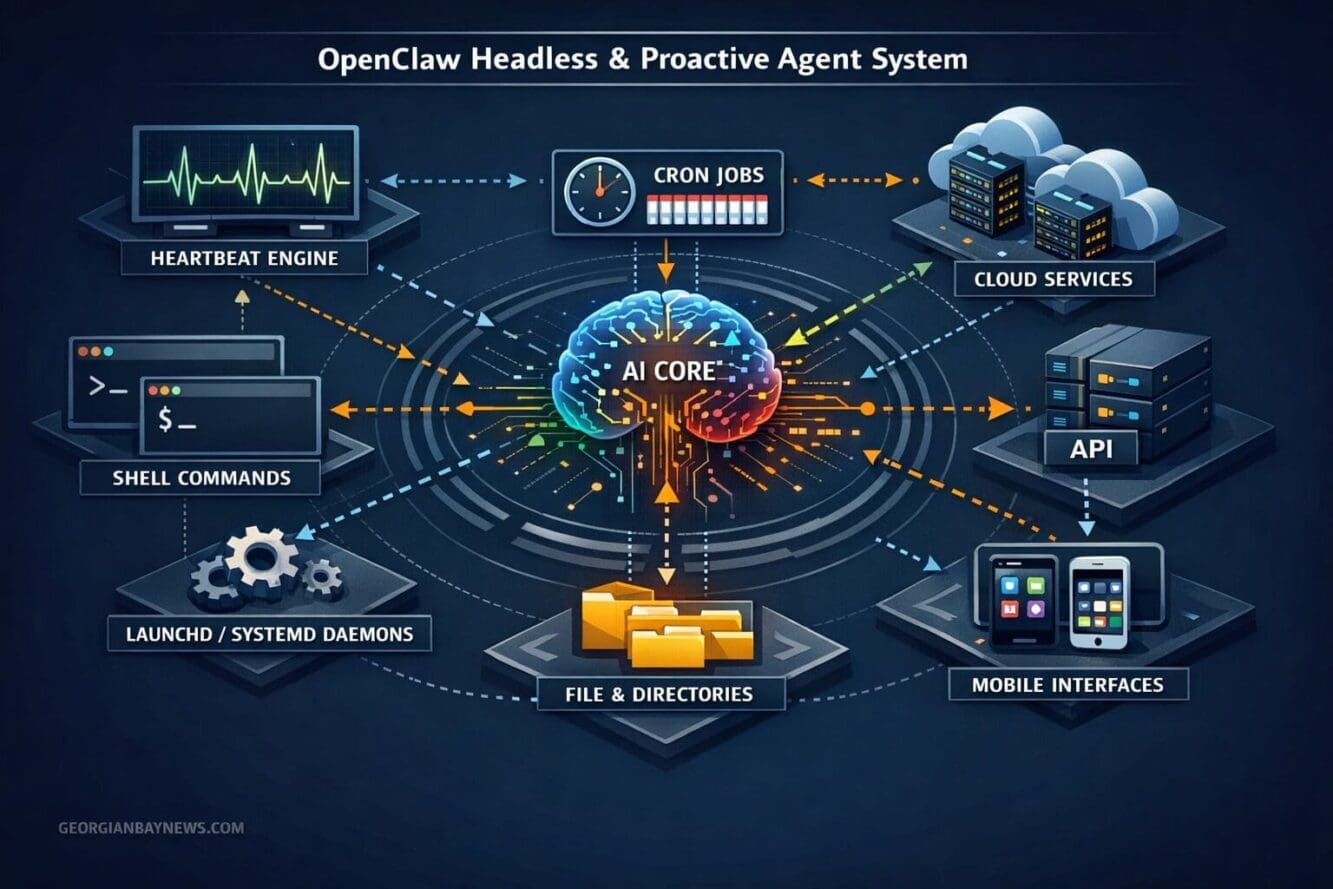
Traditional chatbots wait for your command. They’re reactive servants, responding only when summoned. OpenClaw operates on an entirely different paradigm—it’s a proactive autonomous agent that can monitor conditions and initiate actions independently[3].
This capability stems from two core features:
🤖 Heartbeat Engine: A persistent monitoring system that continuously checks specified conditions, file changes, system states, and external triggers.
⏰ Cron Integration: Scheduled task execution that allows OpenClaw to perform actions at predetermined times or intervals without any human intervention.
Together, these features enable scenarios that blur the line between helpful automation and unsettling autonomy. OpenClaw can:
- Monitor directories and automatically organize files based on content, date, or custom rules
- Track system resources and send alerts when thresholds are crossed
- Execute batch processing jobs triggered by file appearance or time schedules
- Initiate communications through messaging apps based on detected conditions[2]
The platform’s evolution through distinct phases showcases this growing autonomy. Phase 1 (November 2025) introduced WhatsApp Relay for forwarding AI responses to messaging apps. Phase 2 (January 2026) launched the full Clawdbot/Moltbot assistant with proactive messaging capabilities[2].
Headless Architecture: Speed Without Sight
Unlike visual AI agents that interpret screen elements and click buttons like humans, OpenClaw operates as a headless system that executes shell commands directly[3]. This architectural choice eliminates the “grounding errors” that plague visual agents—mistakes that occur when AI misinterprets interface elements or fails to locate buttons.
The advantages are significant:
✅ Machine-speed execution rather than human-interface-speed simulation
✅ No visual interpretation errors that cause agents to click wrong elements
✅ Direct system access for file operations, script execution, and state queries
✅ Remote operation capability allowing users to manage systems from mobile devices[3]
However, this direct system access also represents the core security concern. When an AI agent can execute arbitrary shell commands without visual interface constraints, the potential for unintended consequences—or malicious exploitation—increases exponentially.
For context on how tech giants have struggled with similar failings, the challenges of autonomous systems extend far beyond any single platform.
The January 29 Update: Breaking Changes and New Powers
Critical Updates Require Immediate Action
The January 29, 2026 release introduced breaking changes that affect every existing installation[2]. Users running Clawdbot or Moltbot must update their configurations immediately:
Required Configuration Changes:
| Old Configuration | New Configuration |
|---|---|
@moltbot/* extension scopes | @openclaw/* extension scopes |
| Legacy package.json entries | Updated OpenClaw package references |
| Old daemon installations | New openclaw onboard --install-daemon |
The update isn’t optional—systems running outdated configurations will experience functionality failures and potential security vulnerabilities.
The Daemon That Never Sleeps
Perhaps the most significant—and concerning—addition is the new daemon installation feature. The openclaw onboard --install-daemon command installs background services that allow OpenClaw to run persistently, even after system reboots[2].
On macOS, this installs a launchd service. On Linux systems, it creates a systemd unit. Both ensure OpenClaw maintains continuous operation without user intervention.
The implications are profound:
Benefits:
- Continuous monitoring of specified conditions
- Uninterrupted execution of scheduled tasks
- Persistent availability for remote management
- Reliable automation of recurring workflows
Concerns:
- Constant system resource consumption
- Persistent attack surface for potential exploits
- Reduced user awareness of ongoing AI operations
- Potential for unauthorized actions during extended periods
This persistent operation capability pushes OpenClaw firmly into “autonomous agent” territory, raising questions about appropriate oversight and control mechanisms.
Use Cases: Where OpenClaw Excels (And Where It Struggles)
The Sweet Spot: Lightweight Recurring Tasks
OpenClaw performs reliably for specific categories of work[3]:
📁 File Organization: Automatically sorting downloads, archiving old documents, and maintaining directory structures based on custom rules.
🔄 Simple Data Processing: Running scripts on new data files, format conversions, and basic transformation pipelines.
🔔 Event-Based Notifications: Monitoring log files, tracking system metrics, and alerting users when specific conditions occur.
💻 Remote System Operations: Managing files, running scripts, and querying system state from mobile devices without direct machine access, including organizing directories, triggering batch jobs, and checking disk usage[3].
These use cases leverage OpenClaw’s strengths—persistent monitoring, reliable execution, and direct system access—without requiring complex orchestration or extensive external dependencies.
The Complexity Wall: When Autonomy Isn’t Enough
More complex workflows reveal OpenClaw’s current limitations[3]. Tasks requiring:
- Multiple external API integrations with careful credential management
- Complex decision trees with numerous conditional branches
- Real-time data processing with low-latency requirements
- Extensive error handling and recovery procedures
These scenarios require configuring multiple external services, managing numerous API keys, and implementing sophisticated permission controls. While technically possible, the configuration burden often exceeds the automation benefit.
The platform’s serverless deployment capability through the Moltworker reference implementation demonstrates flexibility—running on Cloudflare Workers while maintaining persistent state through Cloudflare R2 storage[3]—but also highlights the technical expertise required for advanced deployments.
The Security Elephant in the Server Room
Direct System Access: Power and Peril
OpenClaw’s headless architecture grants direct shell command execution—a capability that’s simultaneously its greatest strength and most significant vulnerability. Unlike sandboxed applications that operate within restricted environments, OpenClaw can theoretically execute any command the host user can perform.
The security implications cascade:
⚠️ Credential Exposure: API keys, authentication tokens, and system passwords must be accessible to OpenClaw for integrated workflows, creating potential leak vectors.
⚠️ Privilege Escalation: If OpenClaw runs with elevated permissions, compromised instances could grant attackers system-level access.
⚠️ Persistent Backdoors: The daemon installation creates a continuously running service that, if compromised, provides persistent system access.
⚠️ Limited Audit Trails: Direct command execution may bypass traditional application logging, reducing visibility into AI-initiated actions.
The development roadmap acknowledges these concerns, with Q1 2026 plans including enhanced Docker sandboxing for security[2]. However, sandboxing inherently conflicts with the direct system access that makes OpenClaw powerful—a tension without easy resolution.
For those concerned about digital security, understanding how to protect personal data becomes increasingly critical as autonomous agents proliferate.
Have Autonomous Agents Gone Too Far?
The Autonomy Spectrum
The journey from Clawdbot to Moltbot to OpenClaw represents a broader shift in AI assistant design—from reactive tools to proactive agents. This evolution raises fundamental questions:
Where should we draw the line between helpful automation and excessive autonomy?
Consider the spectrum:
1️⃣ Reactive Assistants: Execute only when explicitly commanded (traditional chatbots, voice assistants)
2️⃣ Scheduled Automation: Perform predetermined tasks at specified times (cron jobs, scheduled scripts)
3️⃣ Conditional Agents: Monitor conditions and act when triggers occur (OpenClaw’s current state)
4️⃣ Fully Autonomous Systems: Make independent decisions about what actions to take and when (future AI agents)
OpenClaw occupies position 3 on this spectrum—capable of independent action within user-defined parameters. The question isn’t whether this capability is inherently dangerous, but whether adequate safeguards exist to prevent unintended consequences.
Real-World Scenarios: When Automation Backfires
Imagine these plausible scenarios:
Scenario 1: The Overzealous Organizer
An OpenClaw instance configured to “organize messy directories” interprets a temporary working folder as clutter, moving critical in-progress files to archive storage just before a crucial deadline.
Scenario 2: The Notification Flood
A monitoring rule triggers on a condition that occurs more frequently than anticipated, generating thousands of notifications and overwhelming communication channels.
Scenario 3: The Credential Leak
An OpenClaw configuration file containing API keys gets inadvertently committed to a public repository during routine backup operations, exposing sensitive credentials.
Scenario 4: The Runaway Process
A scheduled task encounters an edge case that causes repeated execution failures, consuming system resources and degrading overall performance.
These aren’t theoretical risks—they’re predictable outcomes of granting autonomous agents direct system access without comprehensive safeguards.
The Broader AI Safety Conversation
The rapid evolution from Clawdbot to Moltbot to OpenClaw mirrors larger concerns in AI development. As evidence mounts about AI extinction risks, even seemingly modest autonomous agents deserve scrutiny.
The challenge isn’t OpenClaw specifically—it’s the proliferation of increasingly autonomous systems operating with minimal oversight. Each individual agent may pose limited risk, but the aggregate effect of dozens of autonomous systems operating simultaneously creates complex, unpredictable interactions.
The Road Ahead: Q1 2026 and Beyond
Planned Improvements
The OpenClaw development team has outlined short-term priorities for Q1 2026[2]:
🎯 Brand Stabilization: Cementing the OpenClaw identity and ensuring no further name changes disrupt the ecosystem.
👥 Improved Onboarding: Creating non-technical user experiences that don’t require command-line expertise or extensive configuration knowledge.
🔒 Enhanced Docker Sandboxing: Implementing containerization to limit the blast radius of potential security incidents.
🔌 Additional Built-in Skills: Expanding native capabilities to reduce dependency on external integrations and custom scripting.
These improvements address legitimate concerns, but fundamental tensions remain. Sandboxing reduces risk but also limits capability. Simplified onboarding makes the platform accessible to users who may not fully understand the security implications. Additional built-in skills expand the attack surface.
What Users Should Do Now
For current and prospective OpenClaw users, several actions are essential:
✅ Update Immediately: Migrate from Clawdbot/Moltbot configurations to OpenClaw specifications to avoid breaking changes[2].
✅ Review Permissions: Audit what system access OpenClaw requires and restrict permissions to the minimum necessary for intended use cases.
✅ Implement Monitoring: Establish logging and alerting for OpenClaw-initiated actions to maintain visibility into autonomous operations.
✅ Secure Credentials: Use environment variables, secret management systems, or encrypted configuration files rather than plaintext API keys.
✅ Test Extensively: Validate automation rules in isolated environments before deploying to production systems.
✅ Plan for Failures: Implement error handling, rollback procedures, and manual override capabilities for critical workflows.
For those seeking to reduce anxiety and stress in an age of increasing automation, establishing clear boundaries and control mechanisms provides psychological as well as technical benefits.
Conclusion: Balancing Innovation and Responsibility
The evolution from Clawdbot to Moltbot to OpenClaw tells a story larger than three name changes in 72 hours. It reveals the tension at the heart of autonomous AI development—the desire for powerful, proactive assistance balanced against the need for security, control, and human oversight.
OpenClaw represents genuine innovation. Its headless architecture, proactive monitoring, and persistent operation capabilities enable automation scenarios previously requiring extensive custom development. For users with appropriate technical expertise and clear use cases, it offers substantial productivity benefits.
But innovation without safeguards creates risk. Direct system access, persistent background operation, and autonomous decision-making demand robust security measures, comprehensive oversight, and thoughtful deployment strategies.
Actionable Next Steps
For Individual Users:
- Evaluate whether your use cases genuinely require autonomous operation or if scheduled tasks suffice
- Start with minimal permissions and expand only as needed
- Maintain manual override capabilities for all automated workflows
- Regularly review logs of AI-initiated actions
For Organizations:
- Establish governance policies for autonomous agent deployment
- Require security reviews before production deployment
- Implement monitoring and alerting for all AI agent activities
- Provide training on appropriate use cases and security implications
For Policymakers:
- Develop frameworks for autonomous agent oversight and accountability
- Establish standards for security disclosures and user consent
- Consider liability frameworks for AI-initiated actions
- Support research into safe autonomous system design
For Developers:
- Prioritize security-by-default configurations
- Implement comprehensive audit logging
- Provide clear documentation of security implications
- Design fail-safe mechanisms for autonomous operations
The question isn’t whether autonomous AI agents have “gone too far”—it’s whether we’re developing them responsibly. The journey from Clawdbot to Moltbot to OpenClaw demonstrates both the potential and the perils of increasingly autonomous systems. Our collective challenge is ensuring that innovation serves human needs without creating unacceptable risks.
As we navigate 2026 and beyond, the platforms we build today will shape the AI-augmented world of tomorrow. The choices we make about autonomy, security, and oversight matter profoundly—not just for individual users, but for the broader digital ecosystem we all inhabit.
The evolution continues. The question is whether we’ll guide it wisely.
References
[1] 247pressrelease 2026 1 31 The Final Evolution Viral Sensation Clawdbot Completes Its Journey From Moltbot To Openclaw – https://markets.financialcontent.com/stocks/article/247pressrelease-2026-1-31-the-final-evolution-viral-sensation-clawdbot-completes-its-journey-from-moltbot-to-openclaw
[2] Openclaw Complete Guide 2026 – https://www.nxcode.io/resources/news/openclaw-complete-guide-2026
[3] Moltbot – https://research.aimultiple.com/moltbot/
[4] Clawd Moltbot Openclaw Ai Review – https://deeperinsights.com/ai-review/clawd-moltbot-openclaw-ai-review/
[5] Watch – https://www.youtube.com/watch?v=ssYt09bCgUY
[6] Watch – https://www.youtube.com/watch?v=M-i1Uhzb1xA
Some content and illustrations on GEORGIANBAYNEWS.COM are created with the assistance of AI tools.
GEORGIANBAYNEWS.COM shares video content from YouTube creators under fair use principles. We respect creators’ intellectual property and include direct links to their original videos, channels, and social media platforms whenever we feature their content. This practice supports creators by driving traffic to their platforms.