




















Holistic Senior Wellness Plans: How to Build a Personalized Routine for Your 60s, 70s, and 80s

Last updated: May 21, 2026
Quick Answer: A well-designed senior wellness plan covers six interconnected areas: movement, nutrition, sleep, social connection, emotional health, and preventive medical care. Building one means matching activities and goals to your current decade of life, your existing health conditions, and your daily schedule — not copying a generic program. The result is a practical weekly routine you can actually maintain at home, with or without a gym membership.
Key Takeaways
- Wellness plans for seniors work best when they address physical, mental, and social health together — not just exercise alone.
- The right routine looks different at 62 than it does at 78 or 85, so age-specific adjustments matter.
- Most foundational wellness habits cost little to nothing; professional guidance adds value but is not always required.
- Medicare and some supplemental insurance plans cover several wellness-related services, including annual wellness visits and certain fitness programs.
- Common mistakes include starting too intensely, ignoring sleep, and skipping social connection as a health priority.
- Seniors with chronic conditions can and should build wellness routines — with modifications, not avoidance.
- Routine adjustments every three to six months keep a plan aligned with changing health and energy levels.
- Certain activities, such as high-impact cardio or unsupervised heavy lifting, carry real risks for seniors with heart disease and should be replaced with safer alternatives.
What Exactly Is a Holistic Wellness Plan for Seniors?
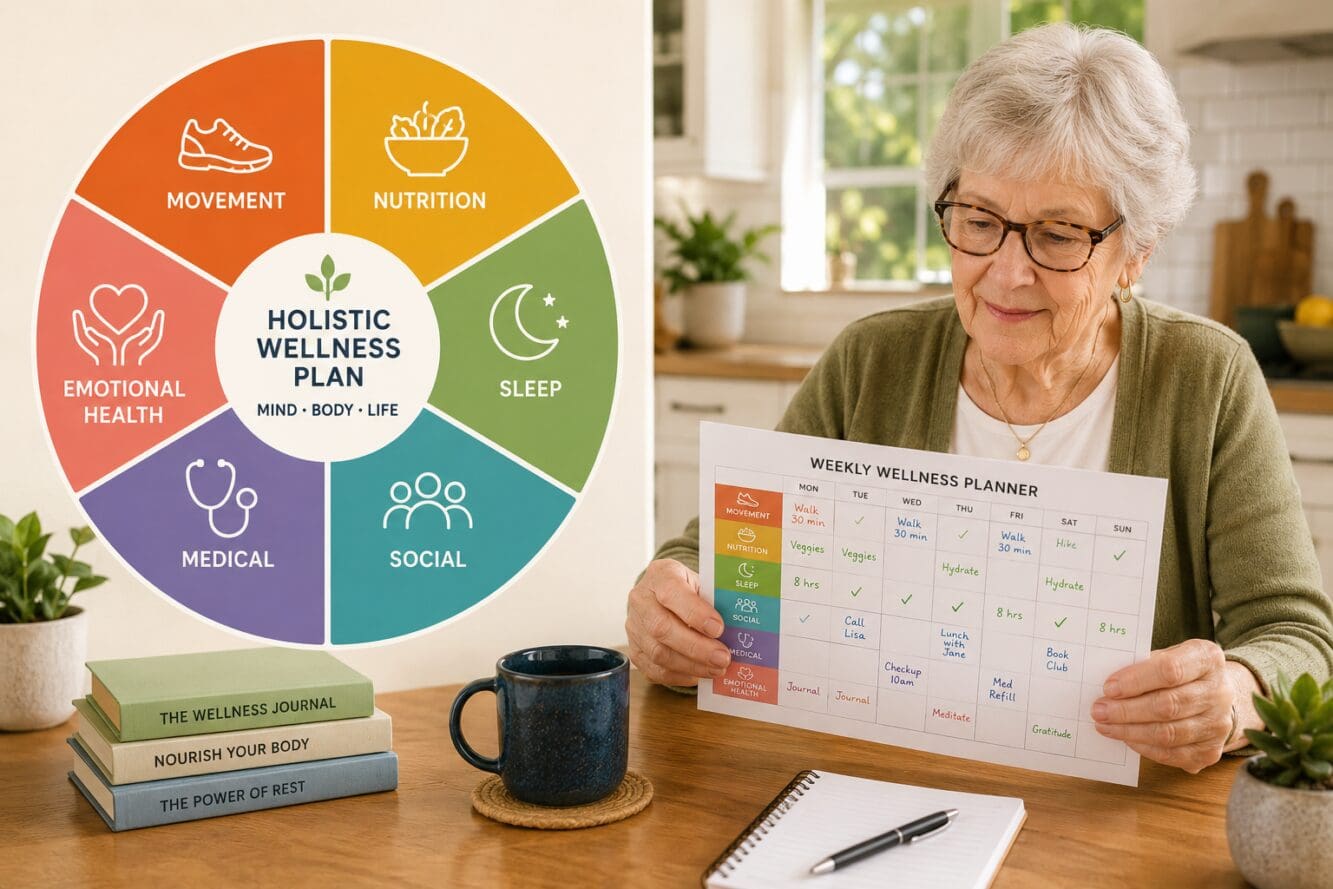
A senior wellness plan is a structured, personalized schedule that addresses every major driver of healthy aging — not just physical fitness. For adults in their 60s, 70s, and 80s, that means weaving together movement, food choices, sleep habits, social activity, emotional wellbeing, and regular health screenings into one manageable weekly routine.
The word “holistic” here simply means whole-person. A plan that only tracks steps but ignores loneliness, poor sleep, or skipped screenings will deliver limited results. Holistic Senior Wellness Plans: How to Build a Personalized Routine for Your 60s, 70s, and 80s is the framework that ties all six pillars into a single, livable system.
The six core pillars:
PillarWhat It CoversMovementCardio, strength, balance, flexibilityNutritionProtein intake, hydration, micronutrientsSleepDuration, quality, sleep hygiene habitsSocial ConnectionRelationships, community, purposeEmotional HealthStress management, mental health supportPreventive Medical CareScreenings, vaccinations, medication reviews
How Is a Wellness Plan Different for Someone in Their 60s Versus 80s?
The core pillars stay the same, but the emphasis and intensity shift significantly across decades. A 62-year-old who is largely healthy can focus on building habits and preventing future decline. An 82-year-old may need to prioritize fall prevention, cognitive engagement, and managing multiple medications.
By decade, the focus shifts like this:
- 60s: Build the foundation. Establish consistent movement habits, address nutrition gaps, get baseline screenings done, and shore up sleep quality before issues compound.
- 70s: Maintain and adapt. Strength training becomes critical for muscle preservation. Balance exercises reduce fall risk. Social engagement takes on greater importance as networks naturally shrink.
- 80s: Protect function and independence. Low-impact movement, cognitive activities, caregiver coordination, and frequent medical check-ins become the priority. Intensity drops; consistency matters more than ever.
“The biggest mistake is applying a 65-year-old’s routine to an 80-year-old’s body. Adaptation isn’t optional — it’s the plan.”
Best Exercises for People in Their 70s With Limited Mobility
For adults in their 70s with limited mobility, the best exercises are chair-based strength work, water aerobics, resistance band training, and slow walking — all of which build muscle and improve balance without stressing fragile joints.
Recommended options:
- Chair squats (sit-to-stand repetitions): builds leg strength without balance risk
- Resistance band rows and presses: maintains upper body muscle with low joint load
- Water aerobics: near-zero impact, excellent for arthritis and joint pain
- Tai chi: improves balance, coordination, and mental focus simultaneously
- Slow walking on flat surfaces: 20 to 30 minutes daily remains highly effective
Avoid: High-impact aerobics, unsupported balance exercises on unstable surfaces, or any activity that causes sharp joint pain.
Choose water aerobics if you have knee or hip arthritis. Choose resistance bands if you need to exercise at home. Choose tai chi if balance is your primary concern.
Nutrition Guidelines for Seniors Trying to Maintain Muscle Mass
Older adults need more protein per kilogram of body weight than younger adults to maintain muscle — most nutrition researchers suggest a target of roughly 1.2 to 1.6 grams of protein per kilogram of body weight per day for active seniors, though individual needs vary and a registered dietitian can give a precise target.
Practical nutrition priorities for seniors:
- Protein at every meal: eggs, Greek yogurt, legumes, fish, lean poultry
- Calcium and Vitamin D: critical for bone density; found in dairy, fortified foods, and fatty fish
- Hydration: thirst sensation decreases with age — aim for at least 6 to 8 cups of water daily
- Fiber: supports gut health and reduces cardiovascular risk; beans, oats, and vegetables are reliable sources
- Limit ultra-processed foods: high sodium content worsens blood pressure and fluid retention
Common mistake: Cutting calories too aggressively. Under-eating accelerates muscle loss in older adults, which is harder to reverse than in younger people.
What Health Screenings Do I Need in My 60s and 70s?
Adults in their 60s and 70s need a specific set of preventive screenings that go well beyond an annual physical. Missing these is one of the most common gaps in senior wellness routines.
Core screenings by age group:
Screening60s70sBlood pressureAnnuallyAnnuallyColorectal cancerEvery 1–10 years (method-dependent)Continue per doctor’s guidanceBone density (DEXA)Women at 65; men if at riskRepeat every 1–2 years if lowDiabetes (A1C)Every 3 years if normalEvery 1–3 yearsVision and hearingEvery 1–2 yearsAnnuallyCognitive assessmentBaseline at 65AnnuallyVaccinationsShingles, flu, COVID-19 boostersSame, plus pneumococcal
Talk to a primary care provider about which screenings apply based on personal and family history.
Are Holistic Wellness Plans Covered by Medicare or Insurance?
Medicare covers several components of a senior wellness plan at no additional cost, but it does not cover everything. Understanding what’s included prevents unexpected bills.
What Medicare typically covers:
- Annual Wellness Visit (AWV): a free yearly appointment to create or update a personalized prevention plan
- Preventive screenings: many of the screenings listed above are covered under Medicare Part B
- SilverSneakers and similar fitness programs: covered under many Medicare Advantage plans (not Original Medicare)
- Mental health visits: covered under Part B with applicable cost-sharing
What is generally not covered: personal training, nutritional counseling (except for specific diagnoses like diabetes), massage therapy, or most supplements.
Check your specific plan’s Summary of Benefits or call 1-800-MEDICARE to confirm coverage for your situation.
Top Recommended Supplements for Senior Health and Energy
Several supplements have consistent support in the medical literature for older adults, though no supplement replaces a balanced diet or medical care. Always discuss new supplements with a doctor, especially if taking prescription medications.
Supplements with the strongest evidence for seniors:
- Vitamin D3: supports bone density and immune function; deficiency is common in older adults
- Calcium (if dietary intake is low): works with Vitamin D for bone health
- Omega-3 fatty acids (fish oil): associated with cardiovascular and cognitive support
- Magnesium: supports sleep quality and muscle function; many seniors are mildly deficient
- B12: absorption decreases with age; deficiency affects energy and nerve function
Supplements to approach cautiously: High-dose antioxidants, iron (unless deficient), and any product marketed as an “energy booster” without clinical backing.
Common Mistakes Seniors Make When Starting a Wellness Routine
The most common mistake is starting too hard and quitting within three weeks. A sustainable senior wellness routine builds gradually, not all at once.
Other frequent errors:
- Skipping strength training in favor of cardio only — muscle loss is the bigger threat for most seniors
- Treating social connection as optional — isolation is associated with cognitive decline and increased mortality risk
- Ignoring sleep as a health priority — poor sleep undermines every other wellness effort
- Not adjusting for chronic conditions — a generic plan that ignores arthritis, diabetes, or heart disease can cause harm
- Avoiding medical care to “wait and see” — delayed screenings mean delayed treatment
Can I Create a Wellness Plan If I Have Chronic Conditions?
Yes — in fact, seniors with chronic conditions benefit most from a structured wellness plan. The key is building the plan around those conditions, not ignoring them.
For example:
- Type 2 diabetes: prioritize consistent meal timing, low-glycemic foods, and post-meal walking
- Osteoporosis: emphasize weight-bearing exercises and calcium/Vitamin D intake; avoid high fall-risk activities
- Heart disease: focus on low-intensity aerobic activity, sodium reduction, and stress management (see the section below on heart-safe activities)
- Arthritis: water-based exercise, gentle stretching, and anti-inflammatory nutrition are the foundation
Work with a primary care provider or specialist to identify any activity or dietary restrictions before starting. Many communities also offer staying safe resources and programs tailored to seniors with health conditions.
What Wellness Activities Are Not Recommended for Seniors With Heart Issues?
Seniors with diagnosed heart disease, uncontrolled hypertension, or recent cardiac events should avoid high-intensity interval training, heavy competitive sports, unsupervised isometric exercises (like heavy static holds), and activities that cause breathlessness or chest discomfort.
Safer alternatives for heart health:
- Slow to moderate walking (flat terrain)
- Chair yoga or gentle stretching
- Light resistance band exercises (cleared by a cardiologist)
- Swimming or water walking at low intensity
- Breathing exercises and meditation for stress reduction
Red flags to stop immediately: chest pain, dizziness, unusual shortness of breath, or heart palpitations during any activity. These warrant immediate medical attention.
How Much Does a Personalized Senior Wellness Routine Cost?
A basic senior wellness routine can cost as little as $0 per month if built around free resources: walking, bodyweight exercises, community programs, and Medicare-covered screenings. Professional support adds cost but also adds precision.
Estimated cost ranges (2026):
ComponentLow CostMid-RangePremiumExerciseFree (walking, home)$20–$50/mo (gym)$80–$150/mo (trainer)Nutrition guidanceFree (online resources)$50–$100 (one-time RD visit)$150+/mo (ongoing coaching)ScreeningsCovered by MedicareCopays varyPrivate clinic feesSupplements$15–$30/mo (basic)$40–$80/mo$100+/moMental healthCommunity programs$20–$50/session copay$100–$200/session private
Many communities offer free or low-cost senior wellness programs through local recreation centers, libraries, and non-profits. Community resources and local health initiatives are worth exploring before paying for premium services.
Signs My Current Wellness Routine Isn’t Working for Me
A wellness routine that isn’t working shows clear warning signs within four to eight weeks. Persistent fatigue, no improvement in strength or endurance, worsening mood, disrupted sleep, or increasing pain are all signals that something needs to change.
Specific signs to watch for:
- You dread the routine most days (not just occasionally)
- Energy levels are lower than before you started
- You’ve had two or more minor injuries in a short period
- Weight, blood pressure, or blood sugar hasn’t moved despite consistent effort
- Social isolation has increased, not decreased
What to do: Don’t quit entirely. Instead, scale back intensity, swap one or two activities, or consult a healthcare provider to rule out an underlying issue.
How Often Should Seniors Adjust Their Wellness Routine?
Seniors should review and adjust their wellness routine every three to six months, or immediately after any significant health change such as a new diagnosis, surgery, or major change in energy or mobility.
A simple quarterly check-in works well:
- Review what’s working and what feels forced
- Assess any new physical limitations or improvements
- Update one or two elements (a new exercise, a dietary swap, a new social activity)
- Confirm upcoming screenings and medical appointments
Staying connected to community wellness events and local health programs can also introduce fresh ideas and social motivation during routine reviews. For those interested in spiritual wellness and mindfulness as part of their routine, many community centers offer low-cost classes worth adding at the six-month mark.
FAQ
Q: What is the single most important thing a senior can do for their health?
Consistent moderate movement — even 20 to 30 minutes of walking daily — has the broadest positive impact on cardiovascular health, mood, cognitive function, and longevity for most older adults.
Q: Can seniors build muscle after age 70?
Yes. Research consistently shows that adults in their 70s and 80s can build meaningful muscle with regular resistance training, though the rate of gain is slower than in younger adults. Adequate protein intake is essential for results.
Q: Is it safe to start a new exercise routine at 80?
Generally yes, with a doctor’s clearance. Starting at low intensity and progressing slowly is key. Chair-based and water-based exercises are ideal starting points for those who have been sedentary.
Q: How much sleep do seniors need?
Most adults over 60 need seven to nine hours of sleep per night. Quality matters as much as quantity — fragmented sleep is a common and underaddressed problem in older adults.
Q: Does Medicare cover a gym membership?
Original Medicare does not. However, many Medicare Advantage plans include SilverSneakers or similar fitness program benefits. Check your plan’s benefits summary.
Q: What’s the best way to stay socially connected as I age?
Joining a class, club, faith community, or volunteer group provides regular, structured social contact. Even one or two meaningful social interactions per week have measurable mental health benefits.
Q: Should seniors take a multivitamin?
A multivitamin can fill gaps but should not replace food. Seniors with poor appetite or restricted diets benefit most. A doctor or dietitian can identify specific deficiencies more accurately than a general multivitamin addresses.
Q: How do I know if a supplement is safe with my medications?
Always ask a pharmacist or physician before starting any supplement. Drug-supplement interactions are common — for example, fish oil can affect blood thinners, and St. John’s Wort interacts with many prescriptions.
Q: Is mental health care part of a senior wellness plan?
Absolutely. Depression and anxiety are underdiagnosed in older adults and have direct physical health consequences. Therapy, peer support groups, and stress-reduction practices are core wellness components, not extras.
Q: What’s a realistic timeline to see results from a new wellness routine?
Most people notice improved energy and mood within two to four weeks. Physical changes like strength gains or better blood pressure readings typically take eight to twelve weeks of consistency.
Conclusion: Build Your Plan One Pillar at a Time
Holistic Senior Wellness Plans: How to Build a Personalized Routine for Your 60s, 70s, and 80s doesn’t require a personal trainer, an expensive program, or a complete lifestyle overhaul starting Monday. It requires choosing one or two actions in each of the six pillars and building from there.
Actionable next steps:
- This week: Schedule an Annual Wellness Visit with your doctor if you haven’t had one in the past year.
- This month: Add 20 minutes of daily walking and one protein-rich food to each meal.
- This quarter: Identify one social activity to join and one new health screening to complete.
- Every six months: Review your routine, adjust what isn’t working, and add one new element.
Small, consistent actions compound over months and years into dramatically better health outcomes. The best wellness plan is the one that fits your life right now — and evolves as your needs change. For local inspiration and community wellness opportunities, explore what’s happening in southern Georgian Bay and connect with programs near you.
Content, illustrations, and third-party video appearing on GEORGIANBAYNEWS.COM may be generated or curated with AI assistance or reproduced pursuant to the fair dealing provisions of the Copyright Act, R.S.C. 1985, c. C-42. Attribution and hyperlinks to original sources are provided in acknowledgment of applicable intellectual property rights. Such referencing is intended to direct traffic to and support the original rights holders’ platforms.