


















How to Exercise Safely With Peripheral Neuropathy: Foot Checks, Balance Adaptations, and Low-Impact Cardio

Nearly half of people with diabetes develop some degree of peripheral neuropathy, yet many stop exercising out of fear of falling or injuring numb feet. That fear is understandable, but it is also costly, because inactivity accelerates muscle weakness and worsens balance. Learning how to exercise safely with peripheral neuropathy: foot checks, balance adaptations, and low-impact cardio can help seniors with diabetic or non-diabetic neuropathy stay active while protecting their feet and reducing fall risk.
This guide breaks down practical, evidence-informed steps for walking, cycling, strength training, and balance work, all adapted for nerve damage in the feet and legs.
Key Takeaways
- Daily foot checks before and after exercise catch blisters, cuts, or redness before they become serious wounds [1][2].
- Low-impact cardio like walking, cycling, and pool exercise improves glycemic control and reduces neuropathy pain when done consistently [3][4].
- Balance training, including single-leg stands and varied-surface practice, meaningfully improves stability and lowers fall risk [5][6].
- Strengthening exercise and whole-body vibration rank among the most effective tools for reducing diabetic neuropathy pain [6].
- Exercise intensity should stop short of muscle fatigue to avoid overworking already-weakened nerves.
Why Foot Checks Come First
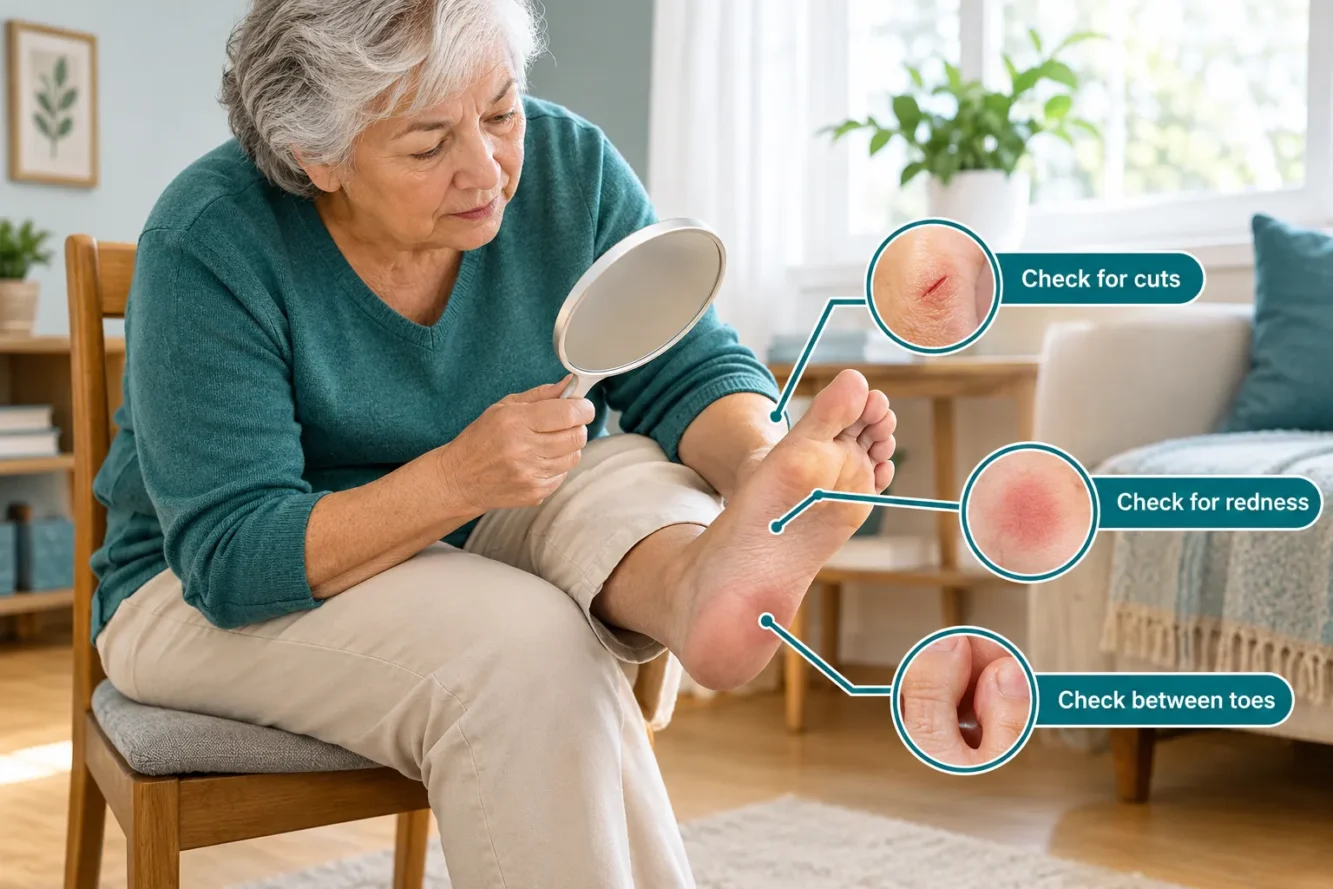
Numbness and reduced sensation mean injuries can go unnoticed until they become infected. Specialty neuropathy organizations recommend daily foot checks as a core part of “exercise therapy,” alongside protective footwear and safe walking surfaces [1][2].
Before any workout, seniors should:
- Inspect both feet, including between toes, for cuts, blisters, or redness
- Check for swelling or unusual warmth, which can signal inflammation
- Confirm socks are seamless and shoes fit snugly without pressure points
- Repeat the inspection after exercise, since new irritation may not hurt right away
Patients managing diabetic complications often find it useful to track skin changes over time, similar to how other chronic condition communities monitor recurring symptoms, as discussed in broader health and lifestyle coverage.
Low-Impact Cardio Options for Peripheral Neuropathy
Major medical centers consistently recommend low-impact cardio, walking, pool exercise, cycling, yoga, and tai chi, for peripheral neuropathy, starting light and building toward about 30 minutes three times a week [3][4]. Mayo Clinic’s current guidance highlights walking three times weekly and pool-based exercise specifically for painful feet [3].
| Activity | Why It Helps | Safety Note |
|---|---|---|
| Walking | Improves circulation and glucose control | Use supportive shoes, check feet after |
| Stationary cycling | Reduces impact on numb feet | Adjust pedal straps for stability |
| Pool exercise | Buoyancy reduces joint stress | Non-slip pool shoes recommended |
| Tai chi / yoga | Builds proprioception and calm | Use a chair or wall for support |
Strengthening exercise is ranked as the single most effective modality for reducing diabetic neuropathy pain, with whole-body vibration close behind, according to a recent network meta-analysis [6]. Combining aerobic work with light strength training, resistance bands, seated leg lifts, supports both glycemic control and muscle resilience.
Balance Adaptations That Reduce Fall Risk
Balance decline is one of the most dangerous consequences of peripheral neuropathy. A 2025 systematic review found that stabilometric platforms using virtual reality and feedback significantly improved static and dynamic balance and lowered fall risk in non-diabetic neuropathy patients [5]. For diabetic peripheral neuropathy, targeted rehabilitation combining balance, strength, and gait training reliably improves balance measures, though not every program reduces fall incidence equally [6].
Practical balance adaptations include:
- Single-leg stands held about 10 seconds near a counter or sturdy chair [7]
- Tandem standing (heel-to-toe) practiced with support nearby [7]
- Perturbation training, practicing on foam, rocker boards, or grass to train reactive balance [1][2]
- Heel and toe raises held roughly 5 seconds to build ankle control [7]
- Ankle “alphabet” movements to maintain mobility and circulation [7]
A 2025 pilot study on geriatric patients with diabetic peripheral neuropathy found dynamic neuromuscular stabilization exercises reduced fall risk significantly more than conventional training, based on fall-related confidence scores [8]. Combined balance-plus-aerobic programs also improve postural control while aerobic work boosts cardiovascular capacity and walking performance [4].
A 2026 analysis reported structured exercise reduced Timed Up and Go time by nearly one second and raised Berg Balance Scale scores meaningfully, confirming clinically relevant gains from consistent training [6].
Pacing, Intensity, and When to Modify
Rehabilitation guidance stresses one critical rule: exercise should never reach muscle fatigue, since overworking weakened nerves and muscles can cause further damage. Seniors with acute nerve injury or severe sensory loss may need non-weight-bearing alternatives, such as seated cycling or pool work, instead of walking.
Other pacing tips:
- Increase duration before increasing intensity
- Rest between sets, especially during strength or balance drills
- Track symptoms like tingling, numbness, or pain changes in a simple log
- Stop immediately if new skin breakdown or swelling appears
Expert commentary notes that the balance, strength, and symptom-relief benefits of exercise for peripheral neuropathy remain under-used in routine care, pointing to multi-component programs blending cardio, proprioceptive training, and mind-body practices like tai chi as the most promising path forward [9].
Conclusion
Learning how to exercise safely with peripheral neuropathy: foot checks, balance adaptations, and low-impact cardio gives seniors a structured way to stay active without unnecessary risk. Start each session with a foot inspection, choose low-impact cardio like walking, cycling, or pool exercise, add balance drills such as single-leg stands and varied-surface practice, and always pace intensity below the point of fatigue. Speak with a physical therapist or physician before starting a new routine, especially if sensory loss is severe. Consistency, not intensity, is what protects both feet and independence over time.
References
- Peripheral Neuropathy Exercise Therapy How IT Works Results and What to Expect. acibademhealthpoint.com.
- Regain Your Balance Oct. 22 Final. foundationforpn.org.
- Drc 20352067. mayoclinic.org.
- Download. ejournal2.unud.ac.id.
- pubmed.ncbi.nlm.nih.gov.
- pubmed.ncbi.nlm.nih.gov.
- Exercisesperipheralneuropathy. healthsystem.osumc.edu.
- 02703181.2025.2467803. tandfonline.com.
- Peripheral Neuropathy Therapy. drsensory.com.
Meta Title: How to Exercise Safely With Peripheral Neuropathy: A Guide
Meta Description: Learn how to exercise safely with peripheral neuropathy using foot checks, balance adaptations, and low-impact cardio tailored for seniors with nerve damage.
Tags: peripheral neuropathy, diabetic neuropathy, foot checks, balance training, low-impact cardio, fall prevention, senior fitness, exercise therapy, nerve damage, glycemic control, strength training, tai chi