






















JD Vance Accuses Canada of Taking Advantage of US: Trade War Escalation, Tariff Threats, and Strategies for Canadian Businesses

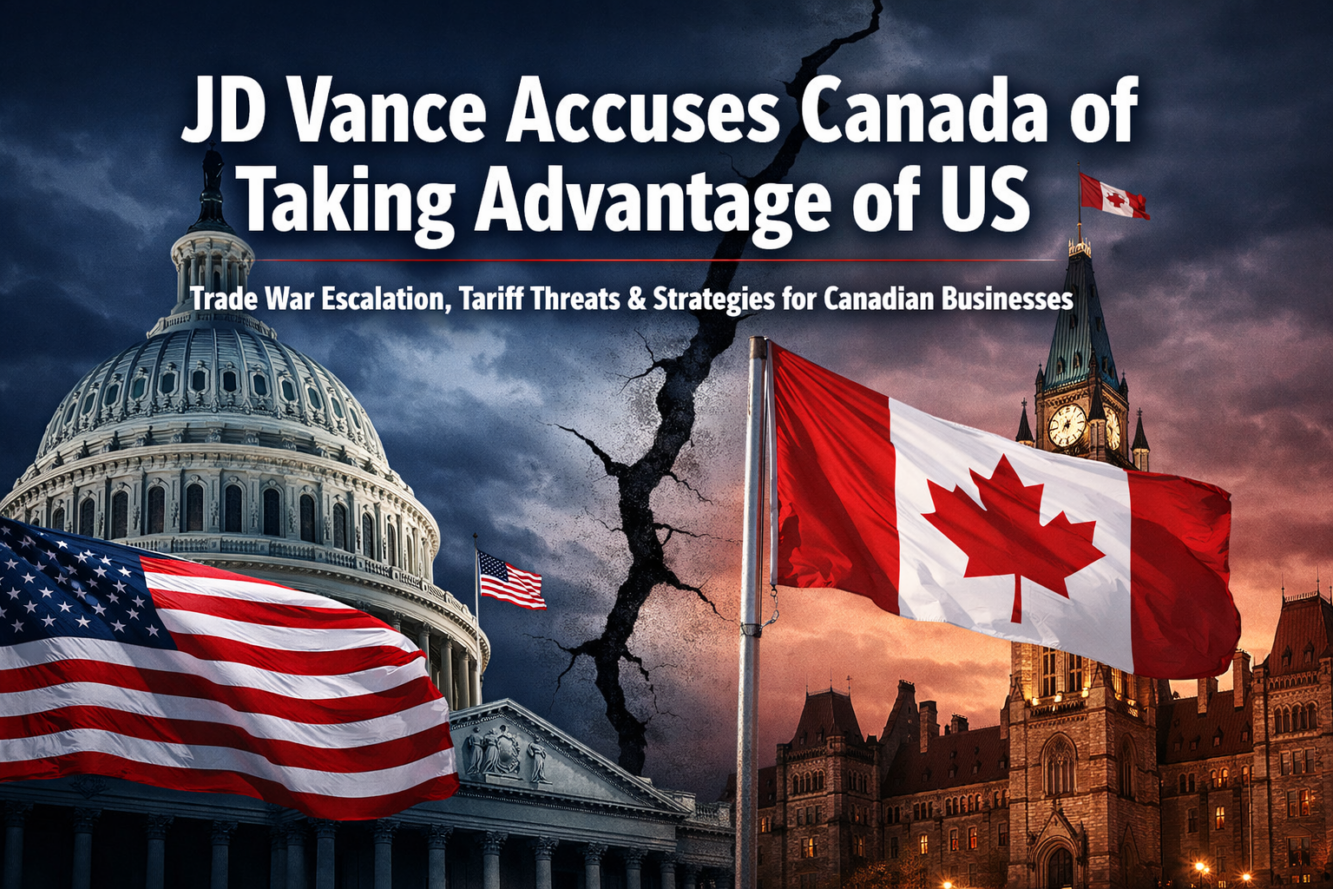
On March 18, 2026, U.S. Vice President JD Vance delivered pointed remarks accusing Canada of exploiting its relationship with the United States — and the fallout has been swift. The topic of JD Vance accuses Canada of taking advantage of US has dominated headlines on both sides of the border, raising urgent questions about the future of North American trade. With reciprocal tariffs already in play, a critical USMCA review approaching this summer, and global energy markets in turmoil, the stakes for Canadian businesses have never been higher [2][3].
Key Takeaways
- 🇺🇸 VP Vance’s core claims: Canada allegedly free-rides on U.S. military spending and maintains unfair tariff practices against American workers.
- 💰 Tariff escalation is real: The Trump administration has imposed reciprocal tariffs on Canadian goods, framing them as “basic fairness.”
- 🌉 Infrastructure as leverage: The Gordie Howe Bridge has become a bargaining chip in trade negotiations.
- 🛢️ Canada holds resource leverage: Rising global oil prices and supply chain disruptions have strengthened Canada’s negotiating position.
- 📋 Businesses must act now: Canadian companies should diversify markets, audit supply chains, and prepare for USMCA renegotiation outcomes.
What Did JD Vance Actually Say About Canada?
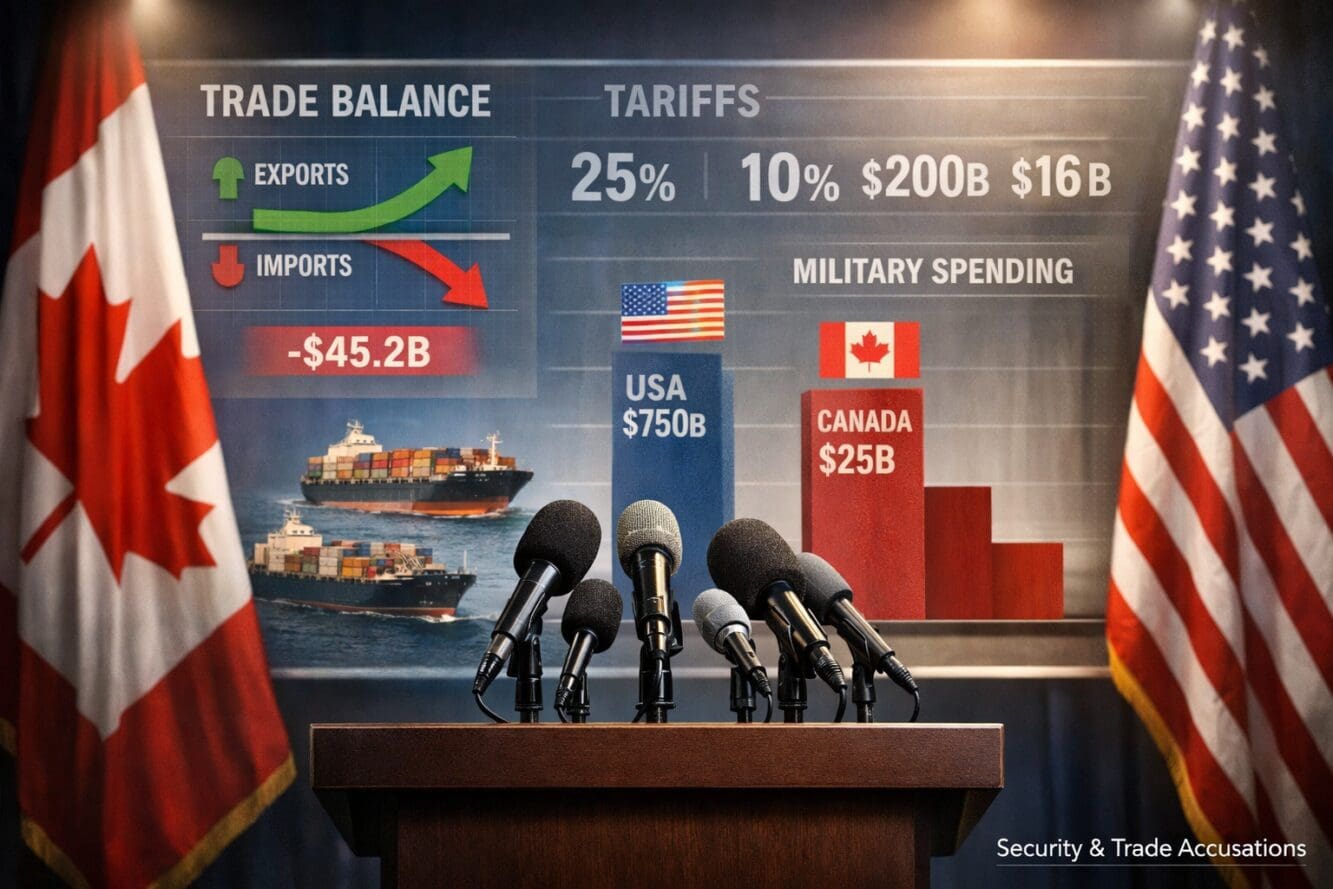
Vice President JD Vance made his accusations during public remarks on March 18, 2026. He outlined two main grievances against Canada [2][4]:
Military spending: Vance argued that Canada “pays virtually nothing” for its own security, forcing American taxpayers to “foot the bill” for a foreign country’s defense. He framed this as deeply unfair to U.S. families and children [3].
Trade imbalances: Vance claimed Canadian tariff policies treat American workers unfairly, and that Canada has exploited the trade relationship “for most of his whole life” — referencing dynamics stretching back nearly 40 years [2].
“We’ve been subsidizing Canada’s entire military and security spending while their tariffs hurt American workers. That’s not a partnership — that’s being taken advantage of.” — JD Vance (paraphrased) [3]
The Trump administration responded by implementing reciprocal tariffs on Canadian goods, which Vance described as a matter of “basic fairness” [3]. Understanding how American consumers will be hammered by tariffs is essential context for grasping the full economic picture.
The Broader Trade War: Escalation Timeline
The current tensions did not appear overnight. Here is a simplified timeline of key developments:
| Date | Event |
|---|---|
| Early 2025 | Trump administration begins threatening new tariffs on Canadian imports |
| Late 2025 | Reciprocal tariffs formally imposed on select Canadian goods |
| March 18, 2026 | VP Vance publicly accuses Canada of exploiting the U.S. |
| Summer 2026 | USMCA formal review scheduled |
| Ongoing | Trump threatens to withdraw from USMCA entirely |
President Trump has repeatedly threatened to abandon the trilateral USMCA framework and pursue separate bilateral deals with Canada and Mexico instead [1][5]. This threat alone has created enormous uncertainty for businesses on both sides of the border.
Adding to the pressure, the Trump administration has used the Gordie Howe Bridge — the major infrastructure project connecting Detroit, Michigan, to Windsor, Ontario — as a negotiating tool, threatening to prevent its opening during trade discussions [3]. This kind of geopolitical maneuvering has broader implications, similar to concerns raised in discussions about America’s economic trajectory and rising tensions.
Canada’s Surprising Leverage in 2026
Here is where the story takes an unexpected turn. Despite the aggressive U.S. posture, Canada’s negotiating position has actually strengthened — and significantly so [1][5].
🛢️ Energy Market Disruptions Work in Canada’s Favor
A conflict involving Iran has triggered major disruptions to global energy markets, particularly affecting the Strait of Hormuz. Oil prices have surged sharply as a result. Canada — with its vast reserves of oil, natural gas, and fertilizer — has suddenly become an even more critical supplier [1].
📊 Resource Leverage at a Glance
| Canadian Resource | Why It Matters in 2026 |
|---|---|
| Oil sands & crude | Global supply disruptions make Canadian energy essential |
| Natural gas | U.S. heating and industrial demand remains high |
| Fertilizer (potash) | Global food security depends on stable supply |
| Minerals & lumber | Critical for U.S. construction and manufacturing |
Analysts have openly acknowledged that Canada’s combination of resource abundance and geopolitical stability has become “incredibly powerful” at a time of global supply chain stress [5]. Canada’s energy infrastructure, including projects like the massive $12B mega dam, further underscores the country’s resource strength.
The Paradox of U.S. Pressure
The Trump administration’s escalation strategy has created an ironic outcome. The U.S. can no longer credibly threaten to abandon trade with Canada without causing serious harm to itself. Walking away would mean:
- ⬆️ Higher energy prices for American consumers
- 📉 Supply shortages across multiple industries
- 💸 Domestic economic pressure that would hurt the very workers Vance claims to protect [1][5]
“No deal is better than a bad deal for Canada.” — Prime Minister Mark Carney’s stated position [1]
Prime Minister Carney has refused to capitulate to U.S. pressure, maintaining a firm negotiating stance. This resolve has been bolstered by the reality that the U.S. now faces internal economic vulnerability while trying to project external strength [5].
Strategies for Canadian Businesses Navigating Tariff Threats
For Canadian businesses, the current environment demands proactive planning — not panic. Here are concrete strategies to weather the trade war escalation:
1. Diversify Export Markets 🌍
Relying heavily on the U.S. market has always carried risk. Now that risk is front and center. Canadian businesses should explore opportunities in:
- European Union markets (through CETA)
- Asia-Pacific markets (through CPTPP)
- United Kingdom (through the Canada-UK trade agreement)
2. Audit Your Supply Chain
Identify every point where tariffs could increase costs. Map out:
- Raw materials sourced from the U.S.
- Components crossing the border multiple times
- Finished goods subject to new reciprocal tariffs
Businesses relying on cross-border logistics should also monitor developments around the Gordie Howe Bridge, which remains a potential chokepoint [3].
3. Prepare for USMCA Renegotiation
The summer 2026 USMCA review is a pivotal moment [1]. Businesses should:
- Stay informed through industry associations
- Engage with government trade representatives
- Model scenarios for both continuation and dissolution of the agreement
4. Leverage Canada’s Strengths
Canadian companies in energy, agriculture, and natural resources hold cards that the U.S. genuinely needs. Understanding this leverage can inform pricing strategies and contract negotiations.
5. Build Financial Resilience 💪
- Maintain larger cash reserves to absorb tariff-related cost increases
- Explore hedging strategies for currency fluctuations
- Consider tariff insurance products where available
For small business owners exploring alternative business models, understanding trends like the advantages of simpler, community-based approaches can offer creative inspiration during uncertain times.
What Happens Next? The Summer 2026 USMCA Review
The formal USMCA review scheduled for summer 2026 will be the defining moment in this trade dispute [1][5]. Both sides are preparing their positions, and the outcome will shape North American commerce for years to come.
Key questions heading into the review:
- Will Trump follow through on threats to withdraw from USMCA?
- Can Canada leverage its resource position to secure favorable terms?
- Will Mexico’s separate negotiations create a precedent that affects Canada?
- How will ongoing global energy disruptions influence the talks?
Canadian unity will also play a role. Events like the Collingwood Festival for Canada and understanding the history of Canada Day remind citizens of the shared values that strengthen the country’s resolve during challenging times.
The broader geopolitical landscape — including concerns outlined in analyses of Project 2025 and its implications — adds another layer of complexity to these negotiations.
Conclusion
The situation surrounding JD Vance’s accusations that Canada is taking advantage of the US represents far more than political rhetoric. It signals a fundamental shift in North American trade relations that Canadian businesses cannot afford to ignore.
However, the picture is not entirely bleak. Canada’s resource leverage, strengthened by global energy disruptions, has created a stronger negotiating position than many expected. Prime Minister Carney’s firm stance reflects this reality.
Actionable next steps for Canadian businesses:
- ✅ Begin diversifying export markets immediately
- ✅ Conduct a full supply chain tariff audit before summer 2026
- ✅ Engage with industry associations tracking USMCA developments
- ✅ Build financial buffers to absorb potential cost increases
- ✅ Stay informed — the situation is evolving rapidly
The trade war escalation and tariff threats are real, but so is Canada’s ability to navigate them strategically. Preparation, not panic, is the path forward.
References
[1] Watch – https://www.youtube.com/watch?v=ZqjM2ulna1A
[2] Jd Vance Says Canada Has Taken Advantage Of The U S – https://ottawa.citynews.ca/video/2026/03/18/jd-vance-says-canada-has-taken-advantage-of-the-u-s/
[3] Watch – https://www.youtube.com/watch?v=w4CwFISZ-GM
[4] Jd Vance Says Canada Has Taken Advantage Of The U S – https://vancouver.citynews.ca/video/2026/03/18/jd-vance-says-canada-has-taken-advantage-of-the-u-s/
[5] Watch – https://www.youtube.com/watch?v=ZqjM2ulna1A
Content, illustrations, and third-party video appearing on GEORGIANBAYNEWS.COM may be generated or curated with AI assistance or reproduced pursuant to the fair dealing provisions of the Copyright Act, R.S.C. 1985, c. C-42. Attribution and hyperlinks to original sources are provided in acknowledgment of applicable intellectual property rights. Such referencing is intended to direct traffic to and support the original rights holders’ platforms.
Much Appreciate You Sharing This Post - It Helps MUCH!!!