























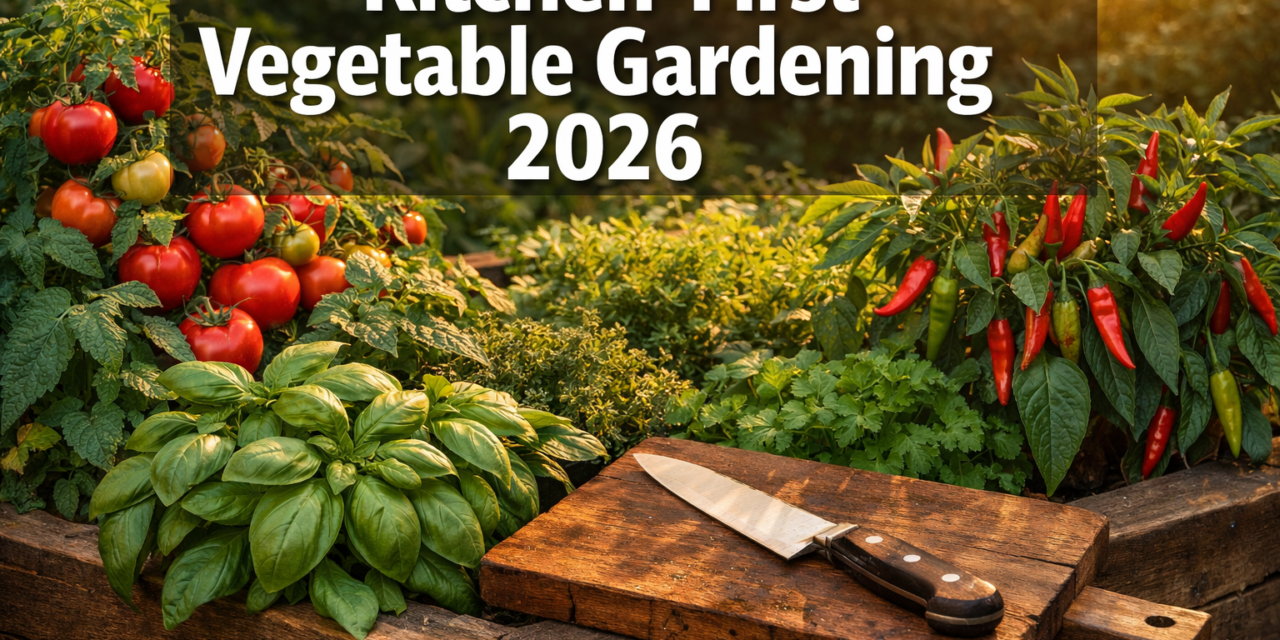
Kitchen-First Vegetable Gardening: Growing Flavor-Focused Crops That Match Your Cooking Style in 2026

Last updated: April 3, 2026
Quick Answer: Kitchen-first vegetable gardening means planning your garden around the specific ingredients you actually cook with, rather than growing whatever is easiest or most common. By matching crop selection to your daily cooking style, home gardeners in 2026 get harvests they genuinely use, which reduces food waste and increases satisfaction. Start by auditing your weekly recipes, then build your planting list from that foundation.
Key Takeaways 🌱
- Audit your kitchen first: List the vegetables, herbs, and peppers you buy most often before choosing a single seed.
- Cooking style drives crop choice: Italian-style cooks need San Marzano tomatoes and basil; Asian-inspired cooks need Thai basil, shishito peppers, and daikon.
- Flavor variety matters: Heirloom and specialty cultivars often deliver better flavor than standard grocery-store varieties.
- Small space, big return: A 4×8 raised bed planted with kitchen-matched crops outperforms a large generic garden in usable yield.
- Succession planting extends supply: Staggered plantings of high-use herbs prevent feast-or-famine harvests.
- Avoid common beginner errors: Overplanting zucchini and underplanting herbs is the most frequent mismatch between garden and kitchen.
- Monthly planning pays off: Aligning your planting calendar with seasonal cooking patterns ensures peak harvests arrive when you need them most [3].
What Is Kitchen-First Vegetable Gardening?
Kitchen-first vegetable gardening is a planning philosophy where the kitchen, not the catalog, determines what gets planted. Instead of choosing crops based on ease or popularity, gardeners start with a simple question: What do I cook every week?
This approach flips the traditional model. Most gardeners plant tomatoes, zucchini, and lettuce by default, then scramble to find recipes for the surplus. Kitchen-first gardening reverses that logic, so every plant in the ground has a clear destination on the plate.

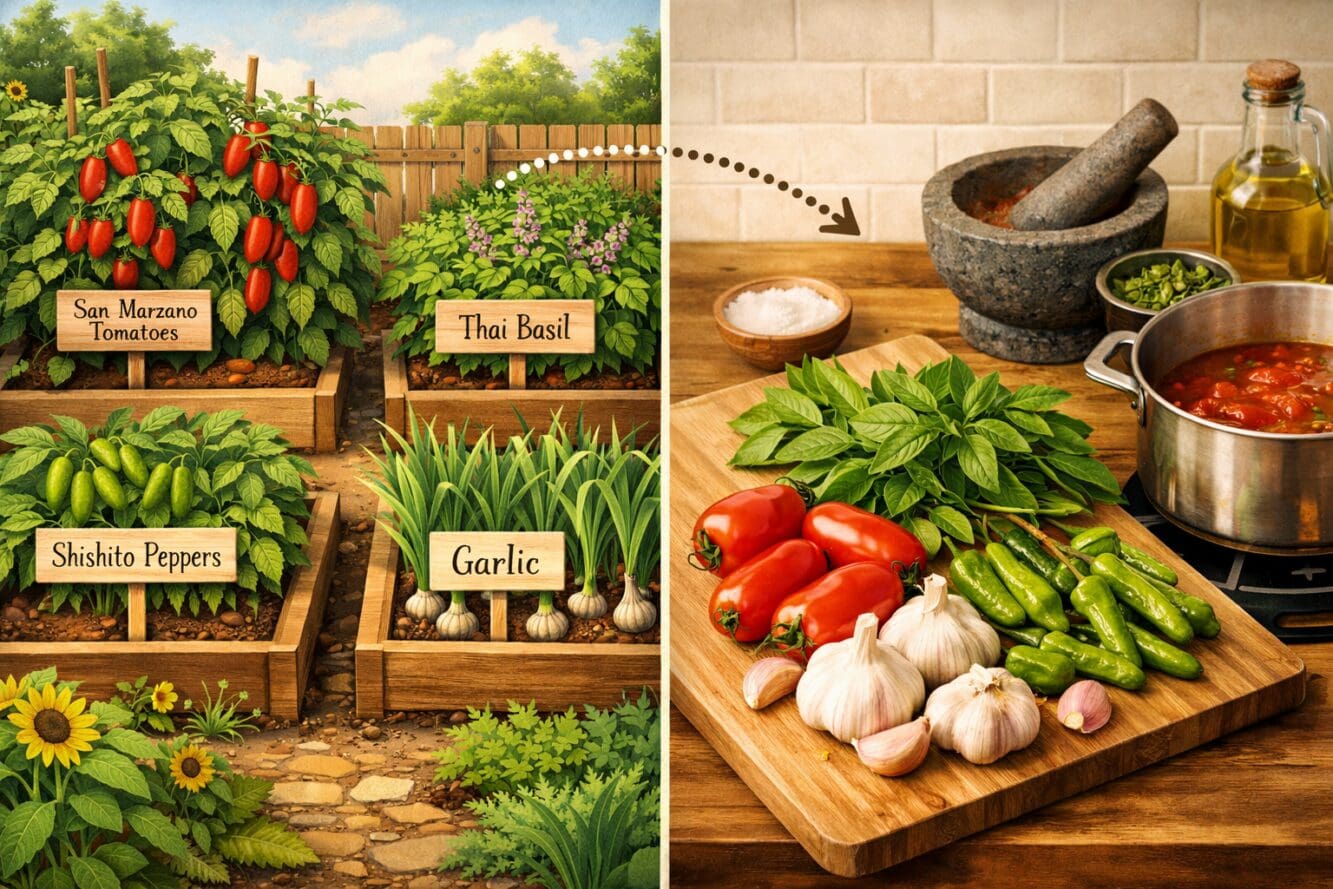
Who benefits most: Home cooks who follow a consistent cuisine style (Italian, Mexican, South Asian, East Asian, Mediterranean) get the clearest gains. Households that cook varied cuisines can still benefit by identifying the 10 to 15 ingredients that appear most often across their meals.
How Do You Match Crops to Your Cooking Style in 2026?
Match crops to cooking style by categorizing your most-used ingredients, then finding garden-friendly equivalents with superior flavor compared to store-bought versions.
Step-by-Step Matching Process
- Track purchases for two weeks. Note every vegetable, herb, and pepper bought at the grocery store or farmers market.
- Identify your cuisine anchor. Do most meals lean Italian, Mexican, Thai, Indian, or something else?
- Find the flavor gap. Which of those ingredients taste noticeably better fresh or homegrown? Tomatoes, basil, peppers, and garlic top most lists.
- Check grow-ability. Cross-reference your climate zone with each crop’s requirements. Local farmers markets are a useful benchmark for what thrives nearby. The Collingwood Downtown Farmers Market is a great place to see what local growers succeed with in cooler northern climates.
- Build your final list. Aim for 8 to 12 crops maximum for a standard home garden.
Cuisine-to-Crop Quick Reference
| Cooking Style | Must-Grow Crops | Skip or Buy |
|---|---|---|
| Italian | San Marzano tomatoes, basil, flat-leaf parsley, garlic | Canned artichokes |
| Mexican | Jalapeño, serrano, tomatillo, cilantro, epazote | Dried chiles |
| Thai/Vietnamese | Thai basil, lemongrass, shishito, long beans | Galangal |
| Indian | Fenugreek, curry leaf, green chili, coriander | Dried spices |
| Mediterranean | Cherry tomatoes, eggplant, oregano, thyme | Capers |
“The most useful garden is not the largest one. It’s the one where almost nothing goes to waste.”
Which Flavor-Focused Crops Deliver the Biggest Kitchen Payoff?
The highest-return crops for kitchen-first vegetable gardening are those where homegrown flavor dramatically exceeds store-bought quality and where the plant is used frequently enough to justify garden space.
Top five high-payoff crops for 2026:
- Paste tomatoes (San Marzano, Amish Paste): Far superior flavor for sauces; store versions are often picked underripe.
- Fresh basil (Genovese or Thai): Loses aroma within 24 hours of harvest, making homegrown almost incomparably better.
- Hot peppers (jalapeño, serrano, Fresno): Easy to grow, prolific, and far cheaper homegrown than purchased fresh.
- Garlic: Plant in fall, harvest in summer; homegrown heads are larger and more pungent than imported grocery varieties.
- Salad greens mix: Cut-and-come-again varieties like arugula, mizuna, and oak leaf lettuce provide daily harvests from a small footprint.
For gardeners new to raised beds, avoiding common structural mistakes early makes a significant difference in yield. See this guide to beginner raised bed garden mistakes to avoid before finalizing your layout.
How Should You Plan Planting Timing Around Your Cooking Calendar?
Align planting dates with the months when you cook most heavily with each crop. A monthly gardening checklist [3] helps, but the kitchen-first version adds one extra layer: note when each ingredient peaks in your cooking, not just when it grows.
Practical example: If you make large batches of tomato sauce every August and September for freezing, your San Marzano transplants need to go in by late May (in most temperate zones) to ensure a late-summer peak. Planting in June means harvesting in October, after the canning window has closed.
Succession planting for herbs: Sow basil every three weeks from late spring through midsummer. This prevents a single massive flush that wilts before it can be used, and ensures steady supply through peak cooking season [2].
For gardeners interested in broader seasonal structure, the 2026 garden upgrade plan offers useful ideas on bed design and garden layout that complement a kitchen-first approach [1].
What Are the Most Common Mistakes in Flavor-Focused Gardening?
The most frequent mistake is planting for volume rather than culinary utility. Zucchini is the classic example: one plant produces far more than most households can use, while the herb bed gets one small basil plant that bolts in July and never gets replaced.
Other common errors:
- Ignoring cultivar selection: “Tomato” is not a single flavor. A Brandywine and a Roma taste nothing alike. Choose the cultivar that matches your recipe, not just the species.
- Skipping perennial herbs: Thyme, oregano, rosemary, and chives return every year with minimal effort and provide consistent kitchen supply. Most gardeners underplant these.
- No harvest plan: Growing tomatillos without a salsa verde recipe ready means they rot on the vine. Kitchen-first gardening requires cooking intent, not just planting intent.
- Underestimating space for peppers: Hot pepper plants need full sun and consistent warmth. Placing them in partial shade produces small, mild fruit, which defeats the purpose.
If you’re also thinking about low-maintenance outdoor spaces that support biodiversity alongside your food garden, the concept of ditching the lawn and going natural pairs well with a kitchen-first philosophy.
FAQ: Kitchen-First Vegetable Gardening in 2026
Q: How many crops should a beginner kitchen-first garden include?
Start with 6 to 8 crops. Fewer choices mean better focus, less overwhelm, and a higher chance that every plant gets proper care.
Q: Can apartment dwellers use a kitchen-first approach?
Yes. Container gardening on a balcony works well for herbs, cherry tomatoes, and compact pepper varieties. Prioritize the highest-flavor-gap crops: basil, chili peppers, and salad greens.
Q: Is it worth growing garlic if space is limited?
Garlic is a fall-planted, spring-harvested crop that occupies ground during the off-season for most summer vegetables. It’s one of the most space-efficient high-value crops for a kitchen garden.
Q: How do I handle a surplus harvest?
Plan for it in advance. If you grow paste tomatoes, have a sauce-freezing system ready. If you grow hot peppers, know whether you’ll ferment, dry, or pickle the excess before the harvest arrives.
Q: What’s the difference between kitchen-first and a standard vegetable garden?
A standard garden is plant-driven: you grow what’s easy or popular. A kitchen-first garden is recipe-driven: you grow what you cook, prioritizing flavor quality over yield volume.
Q: Do heirloom varieties always taste better?
Not always, but for tomatoes, peppers, and many herbs, heirloom and open-pollinated varieties are bred for flavor rather than shelf life or shipping durability, which often means better taste when grown at home.
Q: How does kitchen-first gardening reduce food waste?
Because every crop has a planned use, there’s less chance of harvesting vegetables with no recipe in mind. Intentional planting leads to intentional cooking and fewer forgotten harvests.
Q: Can kitchen-first gardening work in a community garden plot?
Absolutely. The same audit-and-match process applies regardless of where the garden is located. Community plots often benefit from this approach because space is limited and every square foot needs to earn its place.
Conclusion: Start With Your Recipe Box, Not the Seed Catalog
Kitchen-First Vegetable Gardening: Growing Flavor-Focused Crops That Match Your Cooking Style in 2026 is fundamentally about intention. The most productive home garden is not the one with the most plants; it’s the one where almost every harvest goes directly into a meal you already love making.
Actionable next steps:
- This week: Spend 15 minutes listing the vegetables and herbs you buy most often. Note which ones taste noticeably better fresh.
- This month: Choose 6 to 8 crops from that list, select cultivars matched to your cuisine style, and map them to a planting calendar [3].
- Before planting: Read up on raised bed layout mistakes to avoid structural errors that limit yield.
- Ongoing: Visit local growers and markets, like the Collingwood Farmers Market, to see what thrives in your region and to taste varieties before committing to seed orders.
The garden that feeds your cooking style is the garden you’ll actually tend, harvest from, and return to every season.
References
[1] The 2026 Garden Upgrade Plan – https://olericulture.substack.com/p/the-2026-garden-upgrade-plan
[2] Vegetables To Plant In March 2026 – https://www.homesandgardens.com/gardens/vegetables-to-plant-in-march-2026
[3] What To Do In The Garden In 2026 Month By Month Checklist – https://www.gardenary.com/blog/what-to-do-in-the-garden-in-2026-month-by-month-checklist
Content, illustrations, and third-party video appearing on GEORGIANBAYNEWS.COM may be generated or curated with AI assistance or reproduced pursuant to the fair dealing provisions of the Copyright Act, R.S.C. 1985, c. C-42. Attribution and hyperlinks to original sources are provided in acknowledgment of applicable intellectual property rights. Such referencing is intended to direct traffic to and support the original rights holders’ platforms.
Much Appreciate You Sharing This Post - It Helps MUCH!!!