



















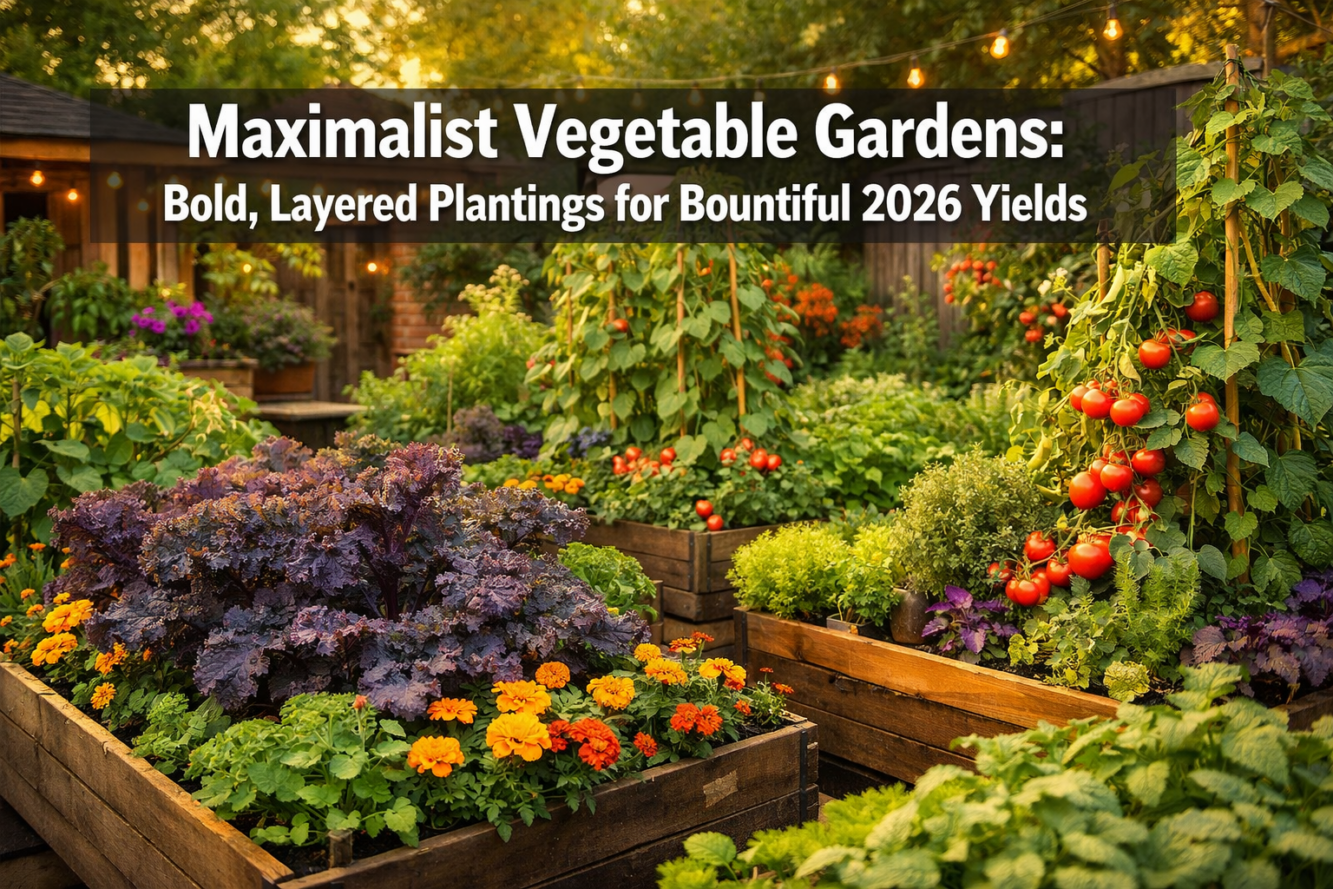
Maximalist Vegetable Gardens: Bold, Layered Plantings for Bountiful 2026 Yields in Small Canadian Spaces
Last updated: March 12, 2026
Quick Answer: Maximalist vegetable gardens use dense, layered planting strategies to pack more food, color, and biodiversity into compact Canadian spaces. By stacking tall climbers, mid-height producers, and low ground covers, gardeners can dramatically increase yields without expanding their footprint. The approach works especially well in 2026, when heat-tolerant varieties and foodscaping techniques make small plots more productive than ever.
Key Takeaways
- Layering by height (tall, mid, low) is the core strategy for maximalist small-space gardens
- Compact, high-performing varieties like Blue Lake 274 Bush Bean and Patio Choice Yellow Hybrid Tomato are ideal for Canadian urban plots [2]
- Weaving edible plants into ornamental spaces (foodscaping) adds beauty and production simultaneously [1]
- Heat-tolerant varieties like Heatmaster Tomato and Marketmore 76 Cucumber help Canadian gardeners manage unpredictable weather [2]
- Native plants and pollinator corridors boost biodiversity and improve yields in layered gardens [1]
- Soil sensors and weather-tracking tools help avoid overwatering and overfertilizing in dense plantings [3]
- Flavor-first selection (heirloom tomatoes, peppers, fresh herbs) keeps the garden connected to everyday cooking [2]
- “Edimental” gardens, which are both edible and ornamental, are a defining 2026 trend [3]
What Is a Maximalist Vegetable Garden?
A maximalist vegetable garden fills every available inch of growing space with intentional, layered plantings rather than leaving bare soil between rows. The goal is maximum biodiversity and production, not minimalist tidiness.
This approach is especially suited to small Canadian backyards, balconies, and urban lots where space is limited but ambition is not. Think dense raised beds with climbing beans reaching upward, bushy peppers filling the middle tier, and trailing herbs spilling over the edges, all in one 4×8 foot bed.
Choose this approach if: space is tight, yields matter, and aesthetics are important. It’s not ideal for gardeners who prefer low-maintenance, widely spaced plantings.
How Do Layered Plantings Work in Small Canadian Spaces?
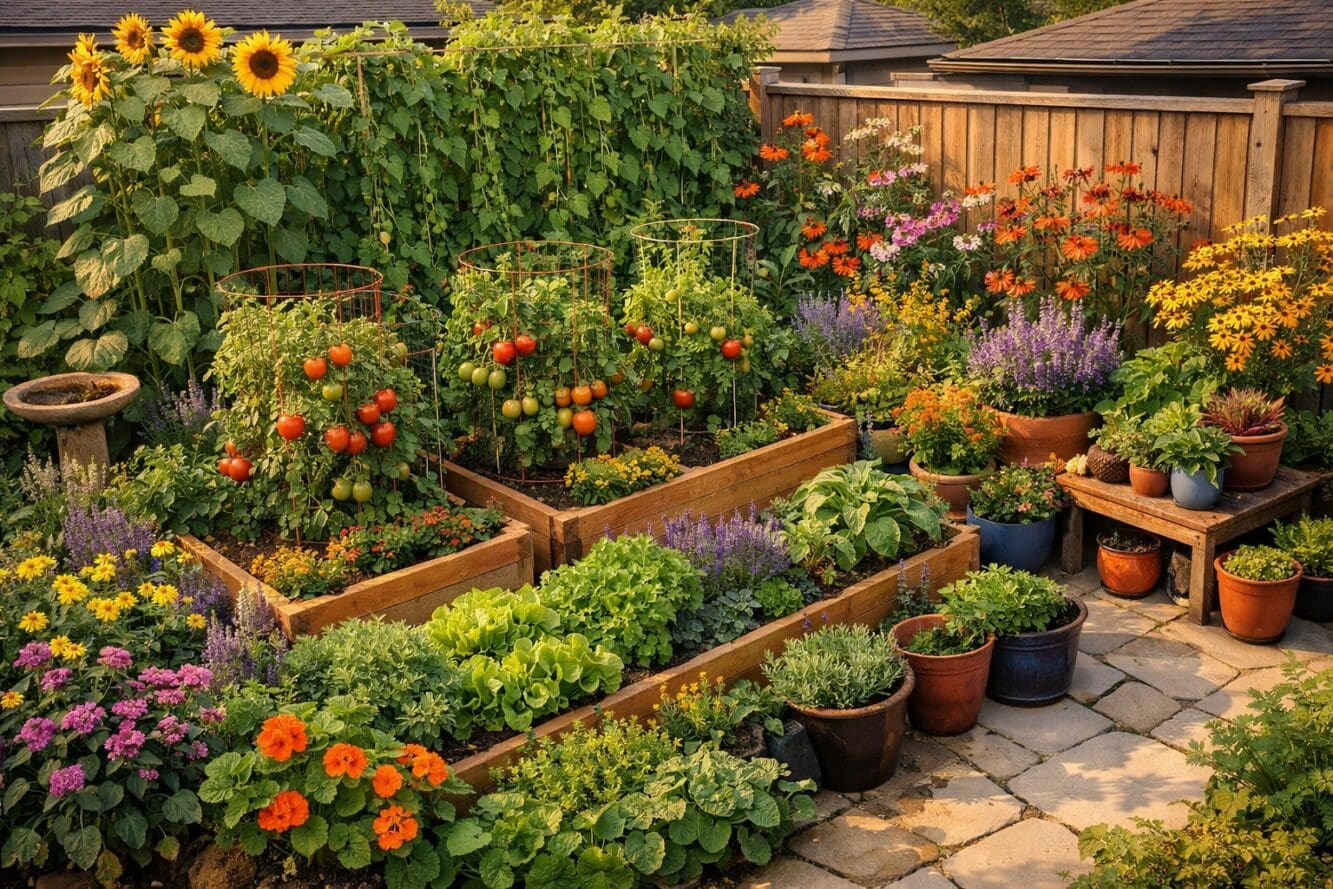
Layered planting divides a garden into three vertical zones that work together. Each layer uses different light levels and root depths, so plants compete less and produce more.
The three-layer framework:
| Layer | Height | Example Plants | Function |
|---|---|---|---|
| Canopy | 4–6 ft | Pole beans, sunflowers, staked tomatoes | Shade, vertical yield |
| Mid-story | 1–3 ft | Peppers, bush beans, kale, compact tomatoes | Main production zone |
| Ground cover | Under 12 in | Lettuce, herbs, strawberries, nasturtiums | Weed suppression, flavor |
For Canadian gardeners in shorter growing zones (3–5), prioritize fast-maturing canopy crops like climbing beans over slow indeterminate tomatoes unless using a greenhouse or cold frame extension.
“Limited space doesn’t have to mean limited harvests.” — Seeds ‘N Such, 2026 [2]
Which Varieties Deliver the Best Yields in 2026?
Compact, proven varieties outperform novelty picks in small spaces. For Maximalist Vegetable Gardens: Bold, Layered Plantings for Bountiful 2026 Yields in Small Canadian Spaces, variety selection is as important as design.
Top picks for Canadian small-space gardens in 2026:
- 🍅 Heatmaster Tomato — stress-resilient, sets fruit in hot or cool spells [2]
- 🫑 California Wonder Bell Pepper — reliable producer in containers and beds [2]
- 🥒 Marketmore 76 Slicing Cucumber — compact vines, disease-resistant [2]
- 🫘 Blue Lake 274 Bush Bean — no staking needed, heavy producer [2]
- 🥬 Black-Seeded Simpson Lettuce — fast-growing, bolt-resistant for ground layer [2]
- 🌿 Italian Plain Leaf Parsley — flavor-forward, fills gaps beautifully [2]
Common mistake: Choosing large indeterminate tomato varieties for a 4×4 raised bed. They crowd out every other plant by midsummer. Use patio or determinate types instead.
How Does Foodscaping Fit Into a Maximalist Garden?
Foodscaping integrates edible plants directly into ornamental spaces, so the garden looks intentional rather than chaotic. This is a core principle of maximalist design in 2026.
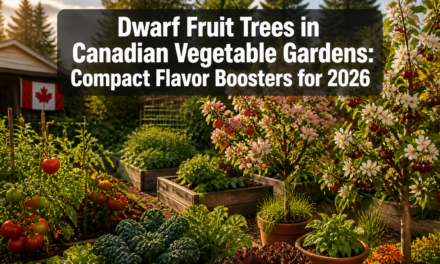
Practical foodscaping ideas for Canadian spaces include blueberry hedges along property lines, espaliered apple trees against south-facing brick walls, perennial herbs (thyme, sage, chives) bordering front walkways, and pollinator-friendly vegetables mixed with flowering shrubs [1]. Visiting a local plant sale like the Collingwood Garden Club’s annual event is a great way to find regionally appropriate edibles and ornamentals in one place.
The Collingwood Downtown Farmers Market is also an excellent source for heirloom seedlings, native plants, and local growing advice specific to Georgian Bay-area climates.
What Role Do Native Plants and Pollinators Play?
Native plants are no longer optional in a well-designed maximalist garden. They anchor the ecosystem, support pollinators, and reduce maintenance.
In 2026, mainstream nurseries across Canada now stock affordable native varieties, making it easier than ever to weave keystone species into vegetable beds [1]. Gardeners are also building coordinated pollinator corridors that link yards, boulevards, and community green spaces using long-blooming native species alongside edibles [1].
Why this matters for yields: More pollinators mean better fruit set on tomatoes, cucumbers, squash, and beans. A single native plant like wild bergamot or purple coneflower placed at the edge of a raised bed can meaningfully increase nearby vegetable production.
Environmental advocates like David Suzuki have long championed native plant integration as a foundation for sustainable growing, and that message has clearly reached mainstream gardening culture in 2026.
How Can Precision Tools Help Maximize a Small Plot?
Data-driven gardening is a 2026 trend that pairs well with maximalist planting. Soil sensors, weather-tracking apps, and plant-monitoring devices help gardeners avoid the two most common dense-planting mistakes: overwatering and overfertilizing [3].
Simple precision tools worth using:
- Soil moisture sensors — prevent root rot in densely planted beds
- Weather apps with frost alerts — critical for Canadian gardeners extending the season
- pH meters — ensure soil stays in the 6.0–7.0 range most vegetables prefer
- Garden planning apps — map layers before planting to avoid spacing errors
Edge case: In very dense plantings, fungal disease spreads faster. Use drip irrigation rather than overhead watering, and ensure at least some airflow between canopy-layer plants.
Conclusion: Start Layering for a More Productive 2026 Garden
Maximalist Vegetable Gardens: Bold, Layered Plantings for Bountiful 2026 Yields in Small Canadian Spaces are achievable for any gardener willing to plan vertically and choose varieties strategically. The payoff is a garden that produces more food, supports more biodiversity, and looks genuinely beautiful, all within the same footprint.
Actionable next steps:
- Map your space in three vertical layers before buying any plants
- Select 2026-proven compact varieties suited to your Canadian hardiness zone
- Add at least two native pollinator plants per raised bed or container cluster
- Incorporate one foodscaping element (a herb border, an espalier, a blueberry hedge)
- Use a soil sensor to manage watering in dense plantings
- Visit a local farmers market or plant sale to source regionally tested seedlings
Small spaces reward bold thinking. A layered, maximalist approach turns even a balcony or a 10×10 backyard plot into a genuinely productive kitchen garden.
FAQ
Q: What is a maximalist vegetable garden?
A: It’s a densely planted garden that uses vertical layering, diverse species, and every available inch of space to maximize food production and biodiversity, especially in small urban or suburban plots.
Q: Is maximalist gardening suitable for Canadian climates?
A: Yes. With heat-tolerant, stress-resilient varieties and season-extension tools like cold frames, maximalist gardens work well across Canadian hardiness zones 3–8.
Q: How many plants can fit in a 4×8 raised bed using layered planting?
A: A well-planned 4×8 bed can hold 1–2 canopy plants (staked tomatoes or pole beans), 4–6 mid-story plants (peppers, kale), and 8–12 ground-cover plants (lettuce, herbs). Exact numbers depend on variety size.
Q: Do I need to buy expensive tools for a maximalist garden?
A: No. A basic soil moisture meter (under $20) and a free garden planning app cover most precision needs. Sensors become more valuable as bed density increases.
Q: What’s the biggest mistake in maximalist vegetable gardens?
A: Skipping the planning stage and planting by feel. Dense gardens need mapped spacing before planting, or dominant plants crowd out smaller ones by midsummer.
Q: Can maximalist vegetable gardens work on a balcony?
A: Yes. Use deep containers (12 inches minimum), vertical trellises, and compact varieties like Patio Choice Tomato and Black-Seeded Simpson Lettuce. A south-facing balcony in most Canadian cities gets enough sun for a productive layered setup.
Q: What are “edimental” plants?
A: Edimentals are plants that are both edible and ornamental, like rainbow chard, purple basil, or nasturtiums. They’re a key element of 2026 maximalist and foodscaping design [3].
Q: How do I prevent disease in a dense maximalist garden?
A: Use drip irrigation, space canopy plants to allow some airflow, rotate crops annually, and choose disease-resistant varieties like Marketmore 76 Cucumber and Heatmaster Tomato [2].
References
[1] 2026 Sustainable Garden Trends – https://www.gardenalchemist.ca/post/2026-sustainable-garden-trends
[2] What Gardeners Are Growing Next 2026 Trends To Know – https://seedsnsuch.com/blogs/gardeners-greenroom/what-gardeners-are-growing-next-2026-trends-to-know
[3] 2026 Garden Trends – https://gardenculturemagazine.com/2026-garden-trends/